Salzburg, Austria: The Ultimate Travel Guide 2026
The Complete Guide to Salzburg

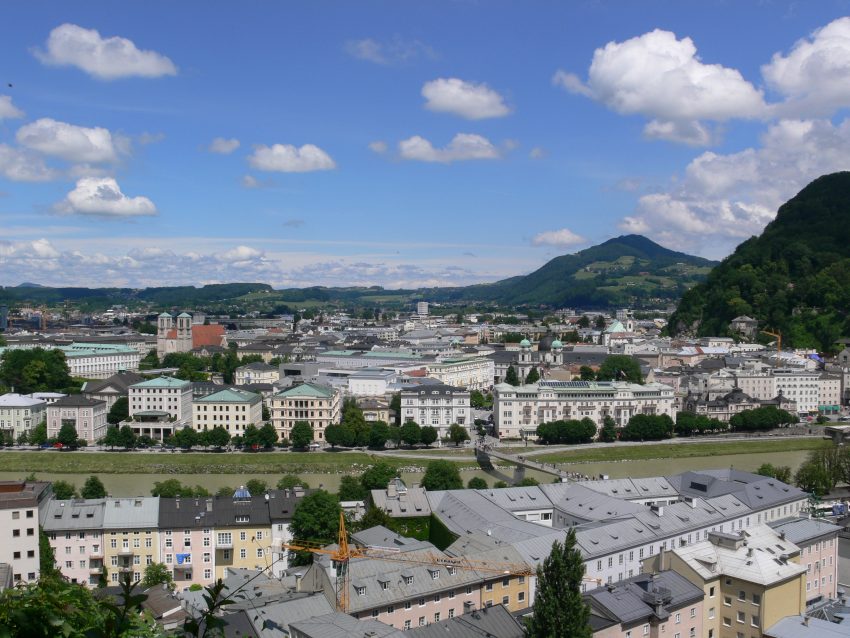
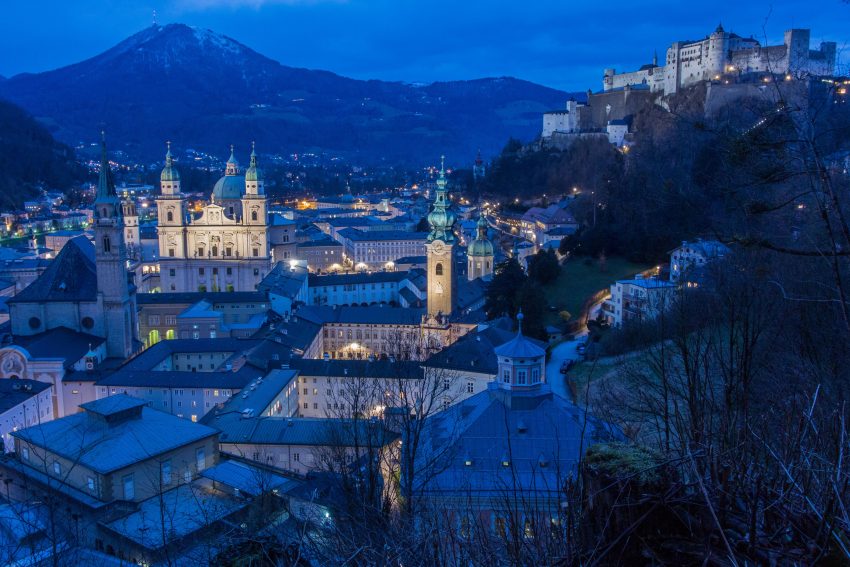
Salzburg is a compact, walkable city that feels tailor-made for a long weekend: a riverfront Old Town of baroque streets and church domes, a fortress perched above the rooftops, and café culture that rewards slow afternoons. Set in Salzburg Land, it’s easy to pair city sightseeing with quick escapes to lakes, alpine viewpoints, and storybook villages-often within the same day.

Start with the UNESCO-listed Altstadt, where ornate facades, hidden courtyards, and lively squares make wandering the main event. Classical music is part of daily life here, from concert halls to churches, and the city’s food scene balances traditional Austrian comfort dishes with modern bistros and excellent pastries.

Salzburg also works beautifully as a base: you can do the headline sights on foot, then hop on a short bus or train ride for panoramic mountain scenery. Whether you're here for culture, shopping, Christmas markets, or a summer festival atmosphere, Salzburg delivers a polished, scenic city break without the big-city sprawl.

History of Salzburg

Salzburg in Roman and Early Christian Times

Long before Salzburg became a baroque showpiece, the area was shaped by Roman-era settlement and trade routes. After the decline of Roman influence, early Christian communities and mission activity helped establish religious institutions that would later define the city’s identity.

Salzburg in the Prince-Archbishop Era (Middle Ages to 1803)

For centuries, Salzburg was governed by powerful prince-archbishops who combined spiritual authority with secular rule. This period saw major building campaigns, the strengthening of fortifications, and the growth of Salzburg as a regional center of administration, learning, and commerce. The city’s skyline—domes, towers, and the fortress—owes much to this long era of ecclesiastical power.

Salzburg in the Baroque Transformation (17th–18th Centuries)

Salzburg’s most recognizable look emerged when ambitious rulers and architects reshaped streets and squares in the baroque style. Grand churches, palaces, and formal urban planning created the harmonious cityscape visitors associate with Salzburg today, while court culture supported music and the arts.

Salzburg in the Napoleonic Upheaval and 19th Century

The early 1800s brought political reorganization as church rule ended and Salzburg’s governance changed hands amid wider European upheaval. Over the 19th century, modernization accelerated through infrastructure improvements and the arrival of rail connections, which helped integrate Salzburg more tightly into regional and international travel and trade.

Salzburg in the 20th Century to Today

Salzburg experienced the turbulence of the 20th century, followed by postwar recovery and a growing focus on cultural tourism. International festivals, heritage preservation, and a strong music identity helped position Salzburg as a leading European destination, balancing historic character with contemporary city life.

Moira & Andy
Moira & Andy

Hey! We're Moira & Andy. From hiking the Camino to trips around Europe in Bert our campervan — we've been traveling together since retirement in 2020!

Read our full story here

Visiting Salzburg for the first time and wondering what are the top places to see in the city? In this complete guide, I share the best things to do in Salzburg on the first visit. To help you plan your trip, I have also included an interactive map and practical tips for visiting!

This website uses affiliate links which earn a small commission at no additional cost to you.
Powered by GetYourGuide

30 Best places to See in Salzburg

This complete guide to Salzburg not only tells you about the very best sights and tourist attractions for first-time visitors to the city but also provide insights into a few of our personal favorite things to do.

This is a practical guide to visiting the best places to see in Salzburg and is filled with tips and info that should answer all your questions!

1. Kapuzinerberg
Kapuzinerberg
Kapuzinerberg
CC BY-SA 4.0 / Isiwal
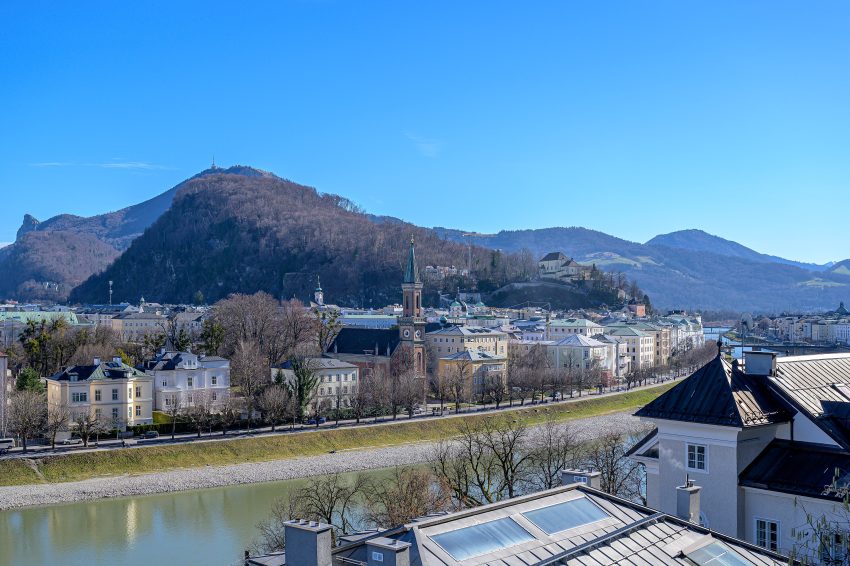
Kapuzinerberg is Salzburg’s wooded hill on the east bank of the Salzach, rising to about 640 meters and acting as the city’s quiet “green lung” above the Old Town. A Capuchin Monastery (1599–1605) sits on the remains of the medieval Trompeterschlössl, founded as a Catholic stronghold during the Reformation. Climbing from Linzergasse, you pass 13 small oratories built in 1736–1744 for the Way of the Cross, then reach paths like the Basteiweg that trace old fortification walls and artillery bastions from 1629. Viewpoints open suddenly through the trees, framing church domes and the fortress ridge, and a drawbridge leads to the hilltop Franziskischlössl restaurant.
Location: Kapuzinerberg, 5020 Salzburg, Austria | Hours: 24 Hours. | Price: Free. | Distance: 0.1km

We recommend to rent a car in Austria through Discover Cars, they compare prices and review multiple car rental agencies. Book your rental car here.

2. Mozarts Geburtshaus

Mozarts Geburtshaus
Mozarts Geburtshaus
CC BY-SA 2.5 / Andrew Bossi
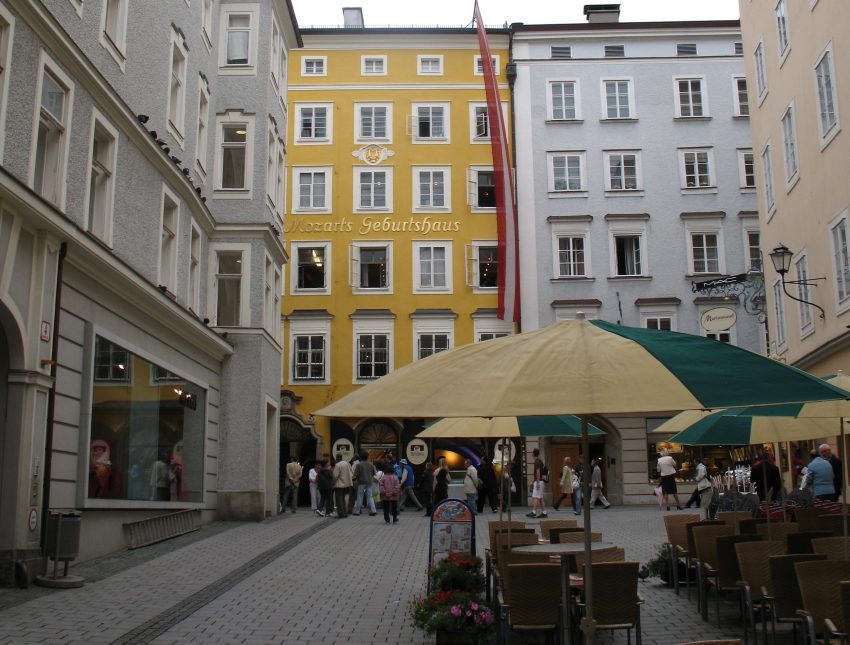
Mozarts Geburtshaus on Getreidegasse 9 is the cramped Old Town apartment where Wolfgang Amadeus Mozart was born on January 27, 1756, and where his family lived from 1747 to 1773. Since 1880 it has been a museum spread over several floors, with rooms staged in 18th-century style so you can sense the tight domestic scale behind the prodigy’s early years. Displays include family letters and documents, an unfinished portrait by Joseph Lange, and instruments such as a clavichord associated with The Magic Flute. Visitors tend to spend time reading labels and scanning QR codes for self-guided audio, rather than looking for big spectacle. The building still carries traces of earlier uses, including an Asclepius emblem from its apothecary period.
Location: Getreidegasse 9, 5020 Salzburg, Austria | Hours: Daily: 09:00–17:30. | Price: Adults: €15.00; Students/Seniors/Groups (10+): €12.00; Youths (15–18): €5.00; Children (6–14): €4.50; Under 6: free. | Website | Distance: 0.2km

Here is a complete selection of hotel options in Salzburg. Feel free to review each one and choose the stay that best suits your needs.

3. Mozart Residence

Mozart Residence
Mozart Residence
CC BY-SA 2.5 / Andrew Bossi
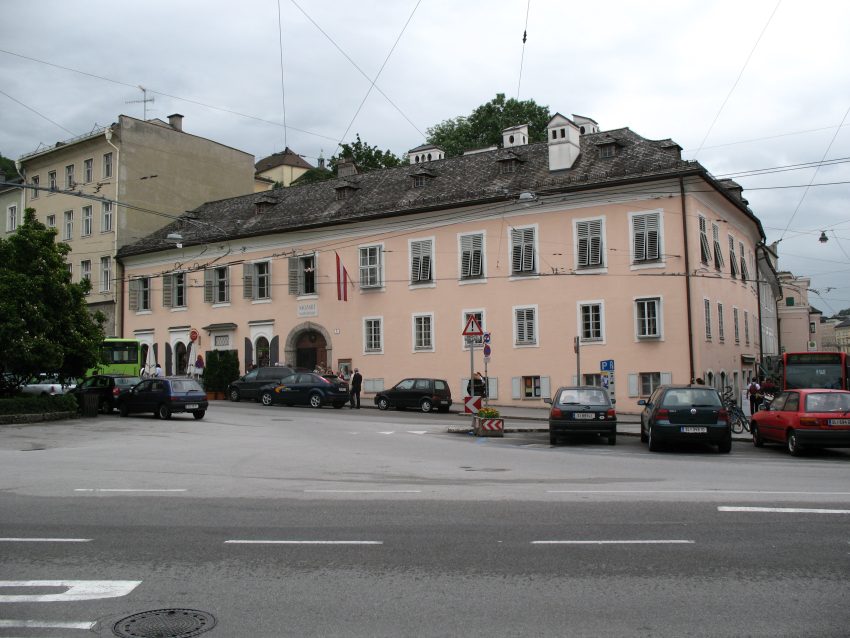
Mozart Residence (Mozart-Wohnhaus) in Salzburg is the former Tanzmeisterhaus on Makartplatz 8, where Leopold Mozart’s family lived from 1773 to 1787 and where Wolfgang stayed from about 17 to 25 before leaving for Vienna. Now a museum opened in 1996, it places Mozart’s Salzburg years in a lived-in setting, with rooms arranged around documents, instruments, and vivid family context. Visitors often remember the relocated “Magic Flute House,” linked to the opera’s composition, and a large family painting showing Leopold with violin and Nannerl at the keyboard while Mozart’s mother appears separately above. Quirkier artifacts include wall-mounted shooting targets and the family’s air rifle, plus multimedia tracing Mozart’s European travels.
Location: Makartplatz 8, 5020 Salzburg, Austria | Hours: Daily: 09:00–17:30. | Price: Adults: €15; Reduced (groups of 10+, students & seniors): €12; Ages 15–18: €5; Ages 6–14: €4.50; Under 6: free; Family (2 adults with children): €30; Salzburg Card: free entry. | Website | Distance: 0.2km

Traveling to a country with a different currency? Avoid ATM transaction fees and pay in local currency with a Wise Card. Having used it for over 5 years, we've saved loads on fees!

4. Makartplatz

Makartplatz
Makartplatz
CC BY-SA 4.0 / -wuppertaler
Makartplatz is a compact, busy square in Salzburg’s right-bank Neustadt, framed by cultural institutions and memorable façades. Its main draw is the Mozart Residence at No. 8, the rebuilt Tanzmeisterhaus where the Mozart family lived in his youth after the original was destroyed in World War II, now a museum devoted to the composer. Next door stands the Doppler House, birthplace of physicist Christian Doppler in 1803, adding an unexpected scientific footnote to the area. The front of the Church of the Holy Trinity faces the square, and the Landestheater traces back to Archbishop Colloredo, giving Makartplatz a layered, lived-in feel rather than a grand-plaza scale.
Location: Makartplatz, 5020 Salzburg, Austria | Hours: 24 Hours. | Price: Free. | Distance: 0.2km

Explore Salzburg at your own pace with our self-guided walking tour! Follow our curated route to discover must-see sights and local secrets that makes Salzburg one of the best places to visit in Austria.

5. Alter Markt

Alter Markt
Alter Markt
CC BY-SA 4.0 / -wuppertaler
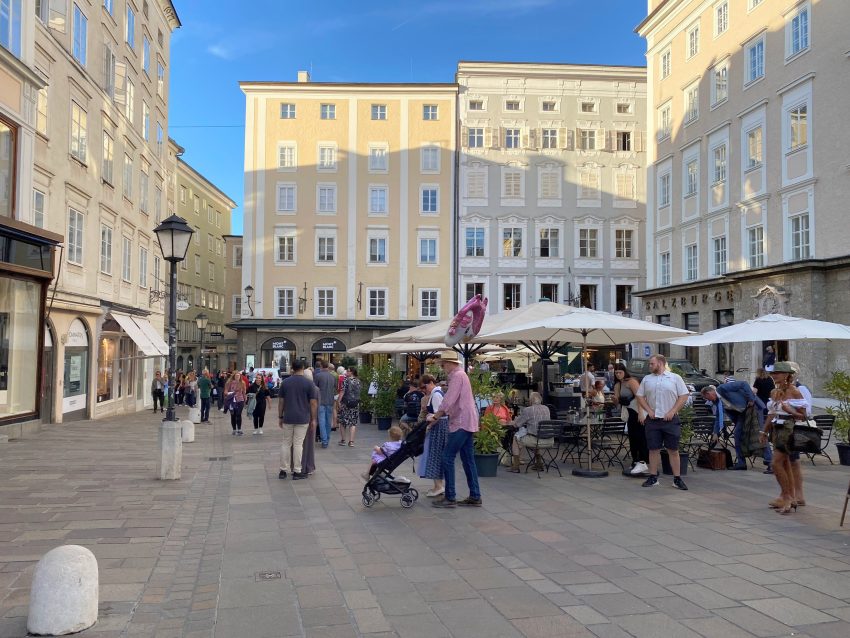
Alter Markt is Salzburg’s small Old Town “Old Market” square, a 13th-century trading pocket that still feels like a lived-in crossroads. Baroque burgher houses ring the space, and the centerpiece is the Floriani fountain, built in stages: an ironwork fence from 1583 with whimsical figures like unicorns, an octagonal marble basin added by 1687, and a Saint Florian statue (1734) meant to guard against fire. Look for the Old Court Pharmacy at Nos. 6–7, operating since the 1500s with preserved Rococo and Baroque details, and Café Tomaselli at Nos. 9–10, long-running in Central Europe. Visitors remember it as a compact place to pause for a drink and people-watch—though prices can run high.
Location: Alter Markt, 5020 Salzburg, Austria | Hours: 24 Hours. | Price: Free. | Distance: 0.2km

6. Buchhandlung Höllrigl
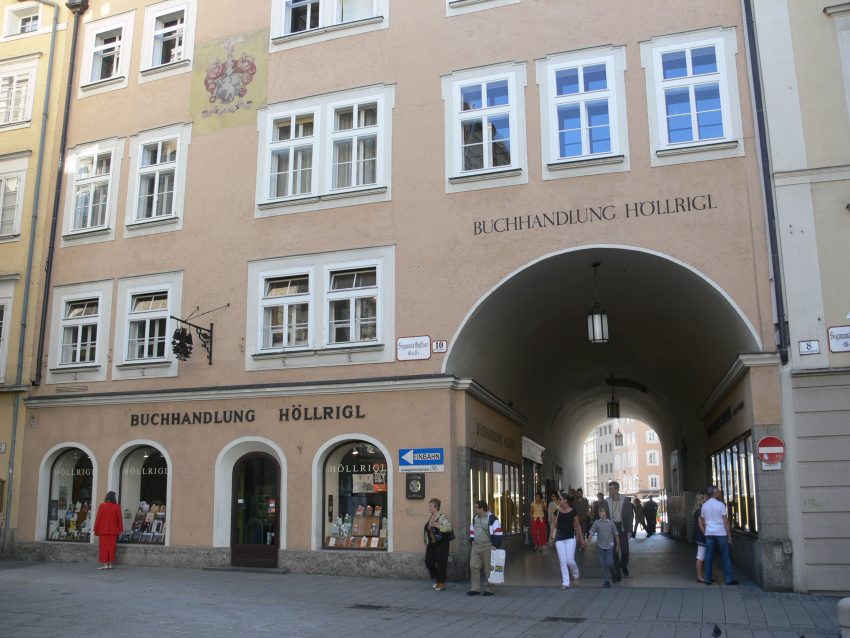
Buchhandlung Höllrigl
CC BY-SA 3.0 / Andreas Praefcke
Buchhandlung Höllrigl is a long-running bookstore in Salzburg, set inside the Old Town’s Ritzerbogenhaus building and known as Austria’s oldest bookshop, founded in 1598 by Konrad Kürner. Its appeal is as much atmosphere as inventory: shelves tucked into an old interior, plus small visual traces of the past like a portrait of Archbishop Wolf Dietrich and his coat of arms, echoed even on the price tags. Browsers find a strong Salzburg-focused selection alongside travel literature in a dedicated room, and sections ranging from music and art to gardening and science. There are also audiobooks, children’s titles, and a useful English-language corner, with a bargain “Restseller” shop next door.
Location: Sigmund-Haffner-Gasse 10, 5020 Salzburg, Austria | Hours: Monday – Friday: 10:00–18:00. Saturday: 09:00–17:00. Closed on Sunday. | Price: Free. | Website | Distance: 0.2km

7. Old University

Old University
Old University
CC BY-SA 3.0 / Andreas Praefcke
Salzburg’s Old University (Alte Universität) is a baroque university complex beside Universitätsplatz, built on the site of a former convent once called the Women’s Garden. Founded in 1623 by Prince-Archbishop Paris Lodron, it took on its present form in 1627 when architect Santino Solari designed the main buildings and the ceremonial Große Aula. Visitors mostly experience it from the square—formal façades, courtyards, and the sense of an academic quarter woven into the Old Town. The Große Aula is the memorable interior: Mozart appeared here as a five-year-old dancer, and his Apollo et Hyacinthus premiered in the hall in 1767. Today the auditorium typically opens only for concerts and events.
Location: Kapitelgasse 4/6, 5020 Salzburg, Austria | Hours: Check official website. | Price: Free. | Distance: 0.3km

8. Steingasse

Steingasse
Steingasse
CC BY-SA 2.0 / Jorge Franganillo
Steingasse is a narrow medieval lane in Salzburg squeezed between the Salzach River and the rock face of Kapuzinerberg, with old houses pressed close to the pavement. It matters because it traces a much older route back to Roman-era Juvavum and later served as a key trade corridor, including salt shipments coming in from Hallein. You still feel that “throughway” past the tight Steintor Gate (built in 1280), where travelers once entered the city on the way south. Look for small, specific landmarks: the Engelwirtsbrunnen marble fountain from 1660 and No. 9, birthplace of “Silent Night” composer Josef Mohr, now a small private museum. Today the street’s bars, bookshops, and galleries keep it lively without losing its hushed, tucked-away mood.
Location: Steingasse, 5020 Salzburg, Austria | Hours: 24 Hours. | Price: Free. | Distance: 0.3km

9. Residenz

Residenz
Residenz
CC BY-SA 4.0 / Matthias Süßen
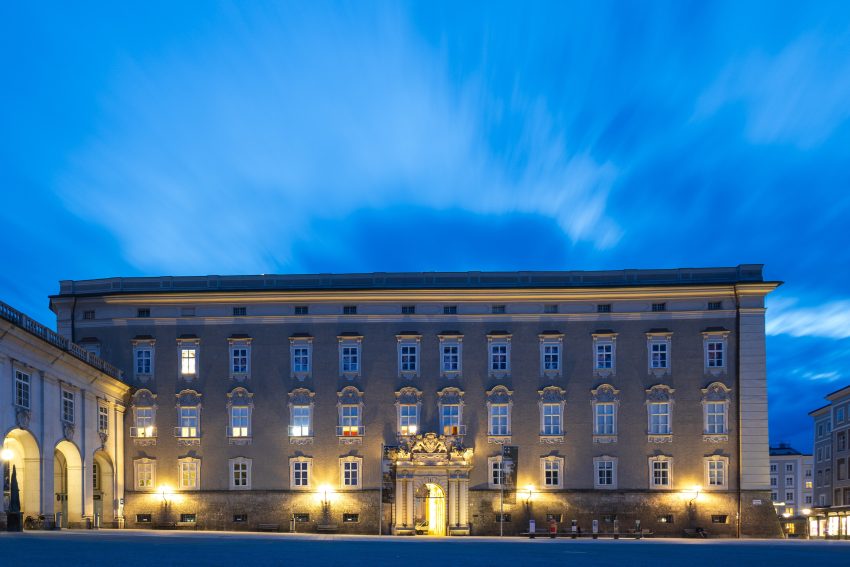
Salzburg’s Residenz (Alte Residenz) is the former palace of the prince-archbishops, facing Residenzplatz and Domplatz in the heart of the Old Town. First recorded in 1120 and reshaped around 1600 under Wolf Dietrich von Raitenau—complete with the Wallistrakt wing added in 1604—it still reads as a stage set for court power in its formal state rooms. The visit is memorable for how the palace links into the cathedral precinct through corridors and terraces, with open-air passages that frame rooftop and square views. Inside, the Residenzgalerie (founded in 1923) displays European painting from the 16th–19th centuries, including works associated with Rembrandt, Rubens, and Brueghel. Mozart’s early court performances here add a personal Salzburg thread.
Location: Residenzpl. 1, 5020 Salzburg, Austria | Hours: Monday: 10:00–17:00. Tuesday: Closed. Wednesday: 10:00–17:00. Thursday: 10:00–17:00. Friday: 10:00–17:00. Saturday: 10:00–17:00. Sunday: 10:00–17:00. (July – August) Daily: 10:00–18:00. (December – January 6) Daily: 10:00–17:00. Closed on December 24. | Price: Adults: €15; Reduced: €12; Youth (7–25): €5; Children (0–6): free; Family ticket: €32. | Website | Distance: 0.3km

10. Mirabell Palace and Gardens

Mirabell Palace and Gardens
CC BY-SA 4.0 / Isiwal
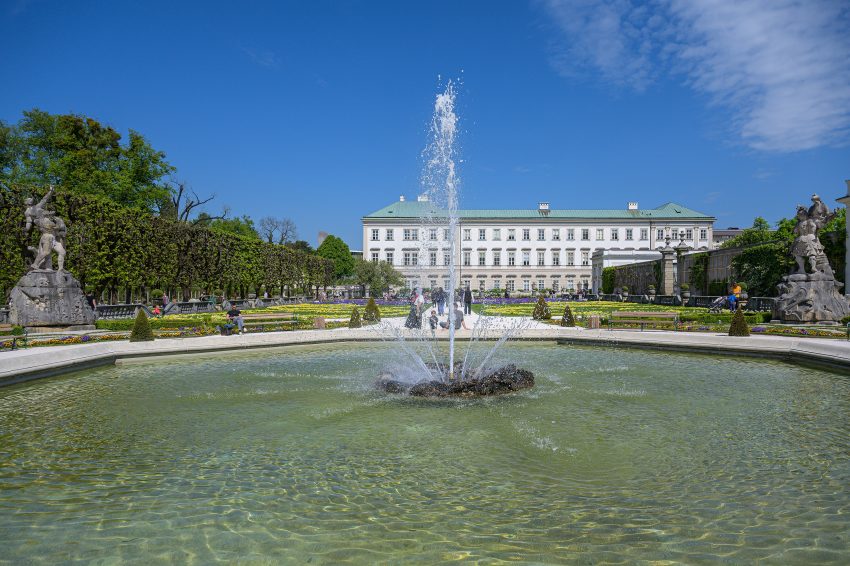
Mirabell Palace and Gardens in Salzburg’s Neustadt is a former archbishop’s residence turned civic building, best experienced as a theatrical Baroque garden walk. The palace began in 1606 under Prince-Archbishop Wolf Dietrich von Raitenau and later received a major Baroque overhaul, with a grand curving staircase leading to the Marble Hall where Mozart once performed. Outside, visitors remember the strict geometry of parterres, mythic statues, and the Pegasus Fountain—still a magnet for “Do-Re-Mi” film-location photos. Follow the central garden axis for postcard views of the fortress, then slip into quieter corners like the vine tunnel, hedge maze, and the slightly eerie Dwarf Park. Reviews often mention how immaculate and calming the paths feel.
Location: Mirabellplatz 3, 5020 Salzburg, Austria | Hours: Monday – Saturday: 08:00–18:00. Sunday: Closed. Monday: 08:00–16:00. Tuesday: 13:00–16:00. Wednesday: 08:00–16:00. Thursday: 08:00–16:00. Friday: 13:00–16:00. Saturday: Closed. Sunday: Closed. Daily: 06:00–Dusk. Daily: 09:00–16:00. | Price: Free. | Website | Distance: 0.3km

11. Mozartsteg

Mozartsteg
Mozartsteg
CC BY-SA 1.0 / Leonhard Lenz
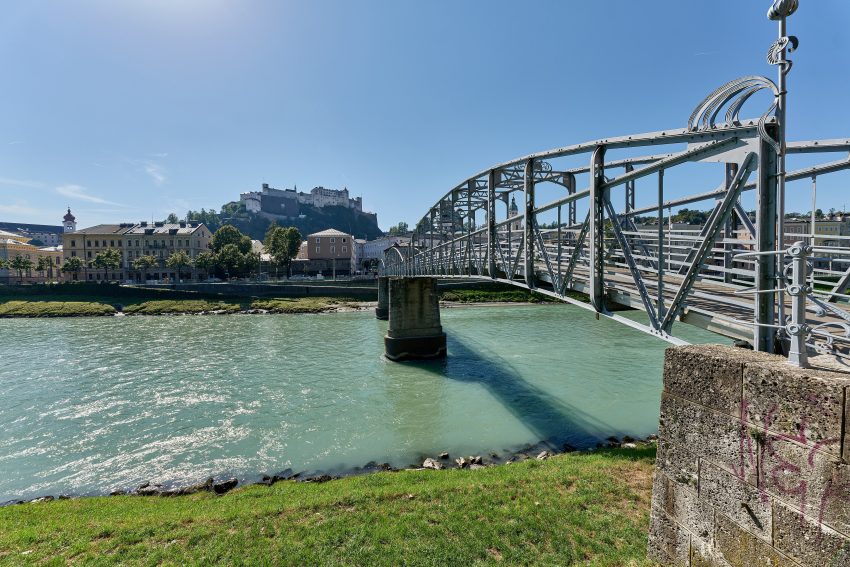
Mozartsteg is a slim Art Nouveau-style footbridge over Salzburg’s Salzach River, built in 1903 as a privately run toll crossing—reportedly commissioned by a café owner keen to funnel more pedestrians his way. Made of steel with airy curves and latticework, it feels like a small piece of early-20th-century design you can walk through in minutes. Pause mid-span and the city opens up: the river’s alpine-green flow below, Baroque rooftops and church towers ahead, and Hohensalzburg Fortress looming above the Old Town. It also links the historic center to the quieter right bank and the slopes of Kapuzinerberg, and film fans recognize the riverside setting from “The Sound of Music.”
Location: Mozartsteg, 5020 Salzburg, Austria | Hours: 24 Hours. | Price: Free. | Distance: 0.4km

12. Salzburg Festival Halls Complex

Salzburg Festival Halls Complex
CC BY-SA 3.0 / Andreas Praefcke
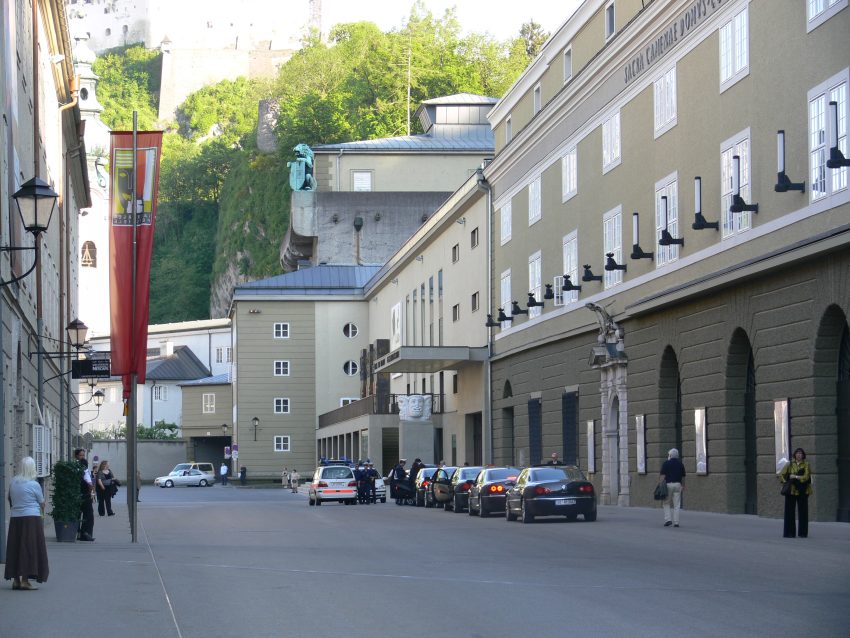
The Salzburg Festival Halls Complex is the city’s main performance hub, combining the Large Festival Hall with newer halls and the cliff-backed Rock Riding School. Built into Mönchsberg (Monk’s Hill), the Großes Festspielhaus feels partly hewn from rock, and its enormous stage—about 100 meters wide—signals the scale Salzburg expects from opera and orchestral nights. The Rock Riding School began in the 1600s as a princely riding arena before being repurposed for theatre in 1926, and its dramatic arcades still read like an outdoor set. Opened in 1960 with Richard Strauss’ “Der Rosenkavalier” under Herbert von Karajan, the complex remains prized for acoustics and smooth front-of-house routines.
Location: Hofstallgasse 1, 5020 Salzburg, Austria | Hours: Monday – Friday: 09:00–13:00. Monday – Friday: 10:00–17:00 (from March 27). Saturday: Closed. Sunday: Closed. | Price: Prices vary by show. | Website | Distance: 0.4km

13. Mozartplatz

Mozartplatz
Mozartplatz
CC BY-SA 2.5 / Andrew Bossi
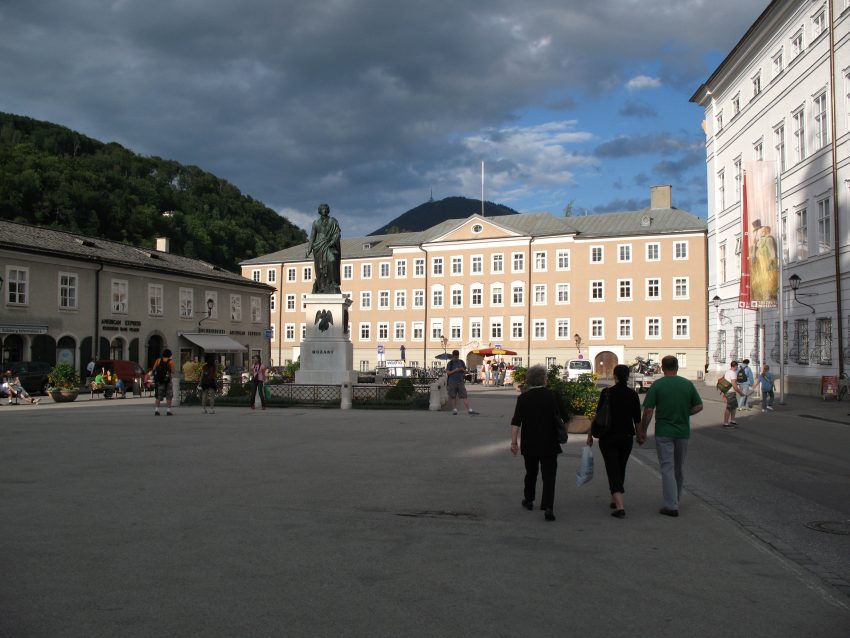
Mozartplatz is a calm Old Town square in Salzburg centered on the Mozart Monument, set up in 1842 for the 50th anniversary of the composer’s death and unveiled with his two surviving sons present. Look closely at the base: a Roman mosaic discovered during construction is embedded there, and the marble pedestal was donated by King Ludwig I of Bavaria. The space itself was reshaped in the early 1600s under Prince-Archbishop Wolf Dietrich von Raitenau, when it was still known as Michaelsplatz. Around the edges you’ll notice the New Residence (home to the Salzburg Museum), uniform 17th-century façades, and the Imhofstöckl by a surviving stretch of city wall that now houses tourist information.
Location: Mozartpl., 5020 Salzburg, Austria | Hours: 24 Hours. | Price: Free. | Distance: 0.4km

14. Domplatz

Domplatz
Domplatz
CC BY-SA 1.0 / Leonhard Lenz
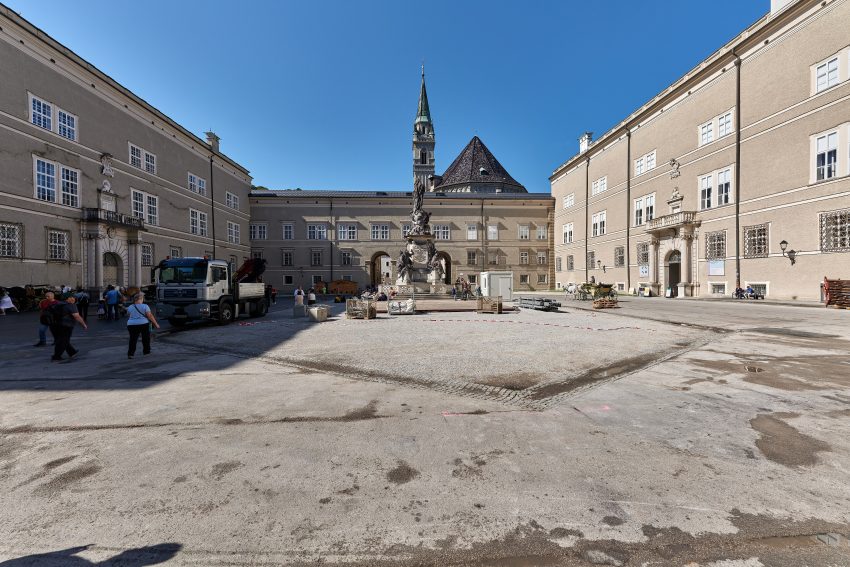
Domplatz is Salzburg’s Cathedral Square, an enclosed Baroque plaza that feels like an outdoor stage set between the cathedral and church-owned buildings. Three large arches on the north, south, and west sides stitch the space to the Residence and St. Peter’s precinct, creating a surprisingly self-contained rectangle of pale stone and towering walls. In the middle rises the Immaculate Mary column from the 1760s, piled with marble clouds, iron angels, and a Virgin Mary poised above a globe. Stand in the rear arcade and you can watch the column line up precisely with the cathedral façade, a piece of deliberate “divine” perspective. In winter, the square fills with a centuries-old Christmas market and Christmas Eve Turmblasen brass music from above.
Location: Domplatz, 5020 Salzburg, Austria | Hours: 24 Hours. | Price: Free. | Distance: 0.4km

15. Residenzplatz

Residenzplatz
Residenzplatz
CC BY-SA 4.0 / Karl Gruber
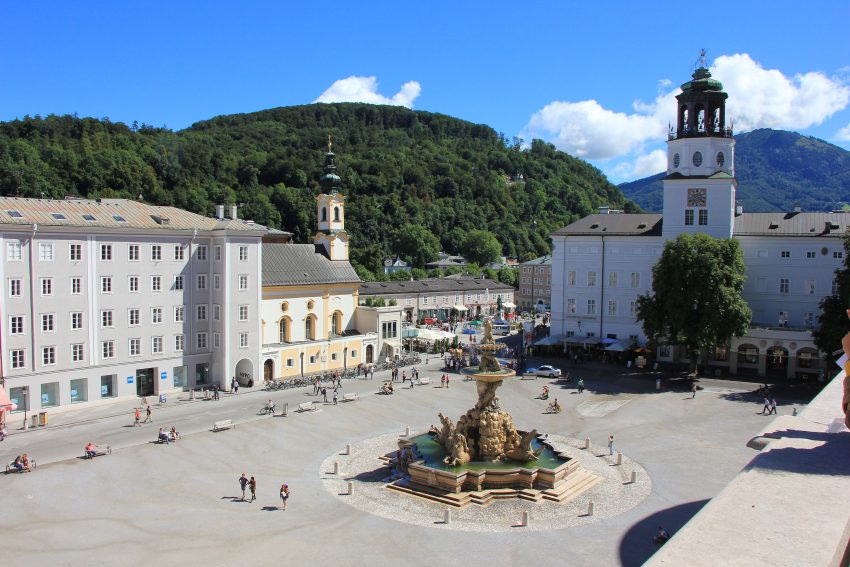
Residenzplatz is Salzburg’s ceremonial Baroque square, created from 1587 under Prince-Archbishop Wolf Dietrich von Raitenau as part of his plan to remake the city into a “Rome of the North,” even clearing medieval houses and a cemetery above a former Roman forum. It’s framed by the Alte Residenz and the Neue Residenz, with the cathedral just to the south, so standing here feels like stepping into the city’s old power center. The eye goes straight to the 45-foot Residenzbrunnen, carved from Untersberg limestone and topped with a Triton blasting water skyward—an Italianate flourish said to rival fountains outside Italy. The square still doubles as a stage for public life, from open-air cinema and Advent markets to memorials marking the 1938 Nazi book burning.
Location: Residenzpl., 5020 Salzburg, Austria | Hours: 24 Hours. | Price: Free. | Distance: 0.4km

16. Getreidegasse

Getreidegasse
Getreidegasse
CC BY-SA 2.0 / Jorge Franganillo
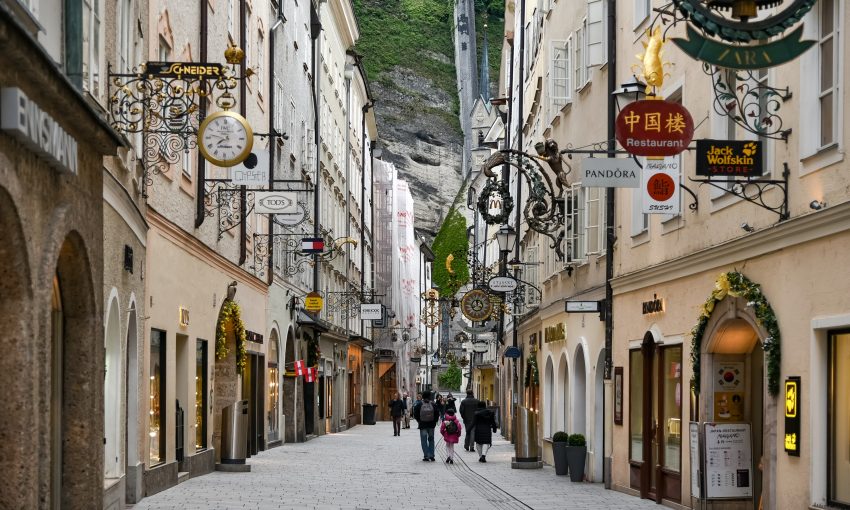
Getreidegasse is Salzburg’s narrow Old Town shopping lane, part of the UNESCO-listed historic center, where tall, slim townhouses rise because there was little room to build outward between river and mountain. It has served as a trading route since the Middle Ages, beginning around 1150 as a path linking the city’s commercial core to the suburb of Mülln. What visitors remember most are the ornate wrought-iron guild signs hanging over the street, designed to be read in a tight corridor of buildings. At No. 9 you’ll find Mozart’s Birthplace, and the street still mixes long-established local names with international chain storefronts. Look for the small side alleys and courtyards that slip away from the main flow.
Location: Getreidegasse, 5020 Salzburg, Austria | Hours: 24 Hours. | Price: Free. | Distance: 0.4km

17. Salzburg Museum

Salzburg Museum
Salzburg Museum
CC BY-SA 3.0 / Peterburg23
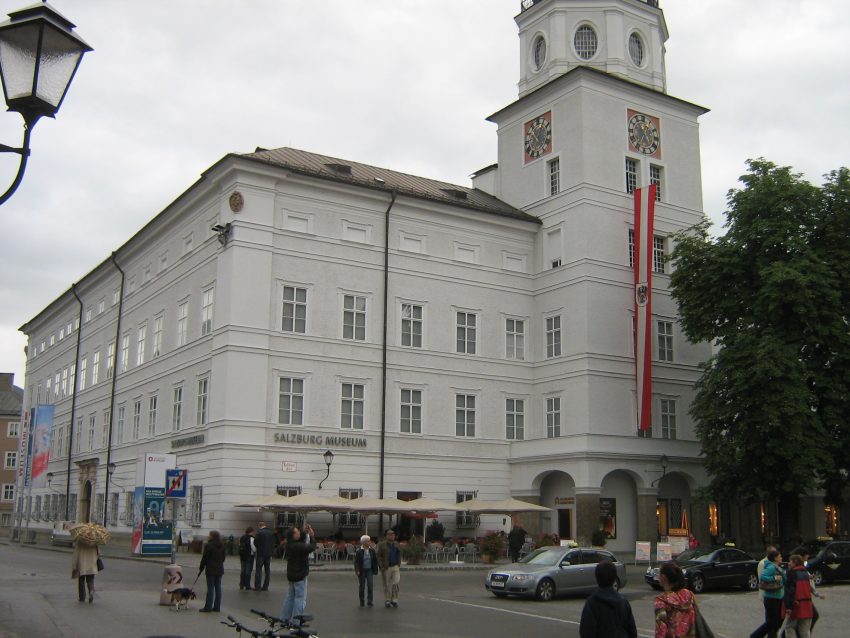
Salzburg Museum in Salzburg, Austria, is the city’s umbrella museum, tracing local art and culture from Roman-era beginnings (around 15 BC) through the prince-archbishops and into modern themes. Founded in 1834 as the Provincial Museum with Napoleonic-war memorabilia, it later became the town museum, was badly bombed in World War II, and reopened in 1967. Since 2005 it has been housed in the Neue Residenz, where visitors move through rooms of archbishop portraits, Roman finds, and everyday objects that make the city’s past tangible. A memorable stop is the Sattler Panorama, a rare 360-degree painting showing Salzburg in 1829. Musical heritage appears in displays on the Haydn and Mozart families, with instruments you can listen to via headphones and touchscreens.
Location: Mozartpl. 1, 5020 Salzburg, Austria | Hours: Check official website. | Price: Check official website. | Website | Distance: 0.4km

18. Winkler Terrace

Winkler Terrace
Winkler Terrace
CC BY-SA 3.0 / Andreas Praefcke
Winkler Terrace is a panoramic lookout on Salzburg’s Mönchsberg, perched above the Old Town beside the Museum of Modern Art, where Baroque domes and spires line up with the fortress on its ridge. It’s remembered for the big, stage-set view—rooftops below, the Hohensalzburg silhouette, and on clear days the Alps hovering in the distance. The terrace sits where the old Hotel Winkler and its café once stood, later replaced by today’s M32 café, so the setting mixes modern minimalism with the city’s older stone backdrop. Many visitors reach it via stairs, bridges, and forest paths, and linger for photos, especially in softer sunset light.
Location: Am Mönchsberg 32, 5020 Salzburg, Austria | Hours: 24 Hours. | Price: Free. | Distance: 0.4km

19. Horse Bath

Horse Bath
Horse Bath
CC BY-SA 4.0 / Diego Delso
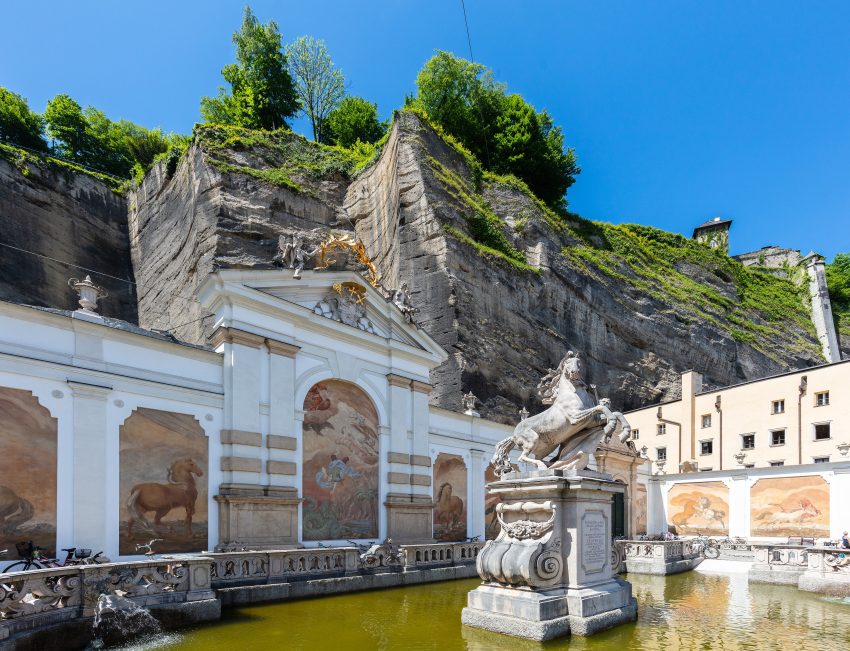
Beside Salzburg’s Festival District at the foot of Mönchsberg, the Horse Bath (Pferdeschwemme) is a grand Baroque basin built in 1693 to wash and water the prince-archbishop’s horses—proof that even utilitarian city life was staged with theatrical flair. Its stone trough is crowned by a dramatic sculpture of a rearing horse restrained by a handler, carved by Michael Bernhard Mandl. Look, too, for Johann Michael Rottmayr’s lively horse frescoes, which turn the setting into an outdoor gallery. Water once arrived through older underground channels later adapted in medieval times, and the spot even flashes by in The Sound of Music during “My Favorite Things.”
Location: Herbert-von-Karajan-Platz 11, 5020 Salzburg, Austria | Hours: 24 Hours. | Price: Free. | Distance: 0.4km

20. Franziskanerkirche
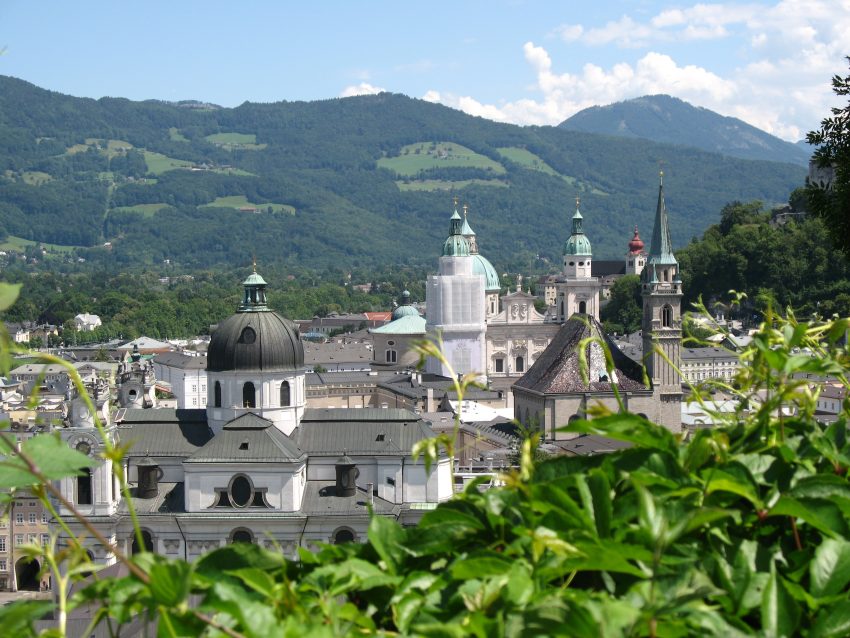
Franziskanerkirche
Franziskanerkirche
CC BY-SA 2.5 / Andrew Bossi
Franziskanerkirche is one of Salzburg’s oldest surviving churches, with origins reaching back to the early Middle Ages and a parish church recorded in 1139. Step inside and you’ll feel the building’s layered structure: a late Romanesque nave consecrated in 1221 leads to a taller Gothic chancel created in 1450, where the ceiling suddenly rises. The Baroque high altar (1709) glows with red marble and gold, centered on a late-Gothic Madonna carved around 1495–1498. Look for small, memorable details like the 12th-century marble lion on the pulpit stairs and frescoes on the triumphal arch. On Sundays, the 9 am musical Mass can fill the cool stone interior with Mozart.
Location: Sigmund-Haffner-Gasse 13, 5020 Salzburg, Austria | Hours: Monday – Friday: 08:00–11:30. | Price: Free; donations appreciated. | Website | Distance: 0.4km

21. Salzburger Dom
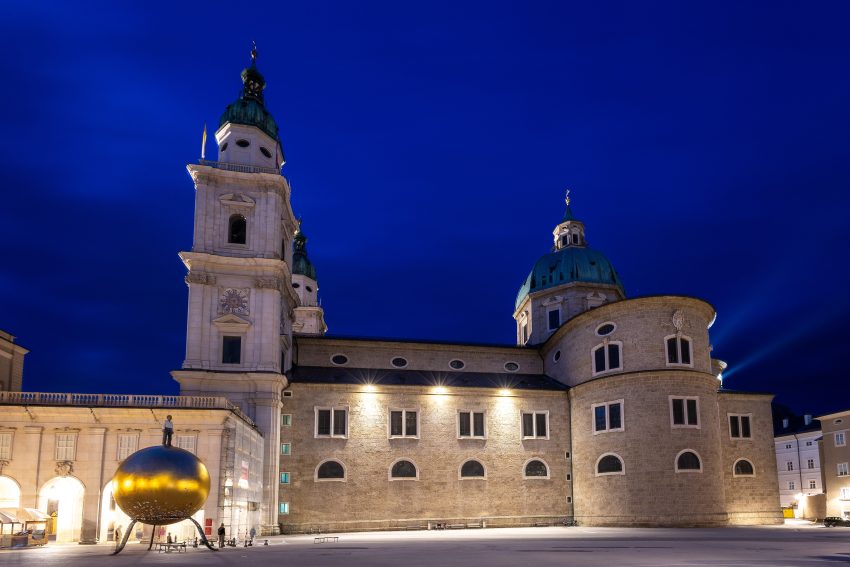
Salzburger Dom
Salzburger Dom
CC BY-SA 4.0 / Matthias Süß
Salzburger Dom is Salzburg’s 17th-century Baroque Roman Catholic cathedral, dedicated to Saints Rupert and Vergilius, and it still anchors the enclosed square of Domplatz beneath its twin towers. The dark stone façade is picked out with pale Untersberg marble and leads through three portals to bronze doors, with saints and evangelists looking down from above. Inside, the space feels bright and orderly, and visitors often seek out the 14th-century Gothic baptismal font used for Wolfgang Amadeus Mozart’s baptism. Look up to the central dome—rebuilt after a WWII bomb—and listen for the cathedral’s deep bells, including the huge Salvator. Don’t miss the crypt for a quieter, underground counterpoint to the grand nave.
Location: Domplatz 1a, 5020 Salzburg, Austria | Hours: (Winter) January 1 – February 28: Monday – Saturday: 08:00–17:00; Sunday: 13:00–17:00. (Spring/Summer) March 1 – July 31: Monday – Saturday: 08:00–18:00; Sunday: 13:00–18:00. (Summer) August 1 – August 31: Monday – Saturday: 08:00–19:00; Sunday: 13:00–19:00. (Autumn) September 1 – October 31: Monday – Saturday: 08:00–18:00; Sunday: 13:00–18:00. (Winter) November 1 – November 30: Monday – Saturday: 08:00–17:00; Sunday: 13:00–17:00. (Winter) December 1 – December 31: Monday – Saturday: 08:00–18:00; Sunday: 13:00–18:00. | Price: Adults: €5; Under 18: free. | Website | Distance: 0.4km

22. Salzburger Heimatwerk
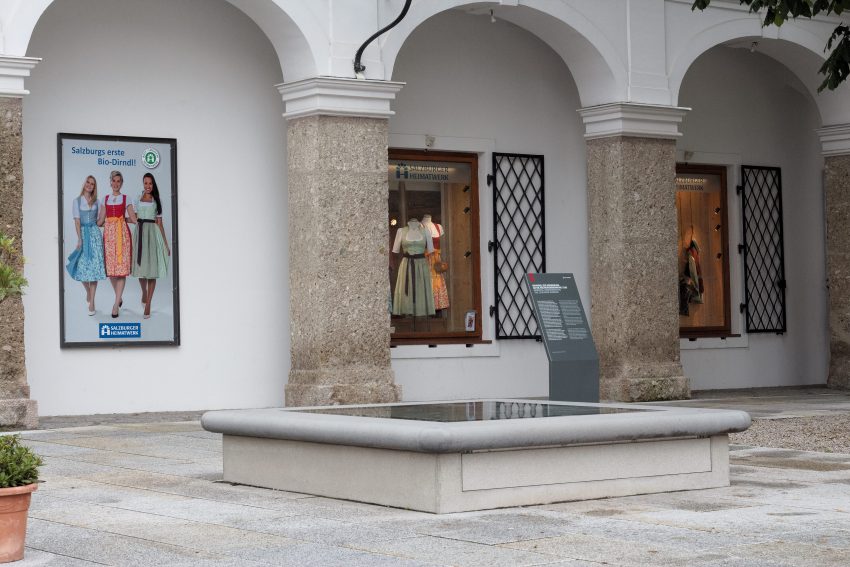
Salzburger Heimatwerk
CC BY-SA 4.0 / Ewald Ehtreiber
Salzburger Heimatwerk, set under the vaulted rooms of the New Residenz on Residenzplatz, is a boutique and cultural institution dedicated to Salzburg’s living folk traditions. Operating since 1946, it preserves and develops regional Tracht and crafts, with consultants often dressed in Salzburg dirndls and an in-house tailoring workshop known for handmade dirndls that balance tradition with modern lines. Visitors linger over shelves of hand-woven and hand-printed fabrics—silk, coarse linen, and leather pieces—alongside regional handicrafts, home décor, and carefully chosen gifts. In the cellar vaults, temporary special exhibitions add an unexpected museum-like layer to a shopping stop. Reviews often mention the central location, strong selection, and generally high quality.
Location: Residenzpl. 9, 5010 Salzburg, Austria | Hours: Monday – Friday: 10:00–18:00. Saturday: 10:00–17:00. | Price: Free. | Website | Distance: 0.4km

23. Kapitelplatz
Kapitelplatz
Kapitelplatz
CC BY-SA 4.0 / Strubbl
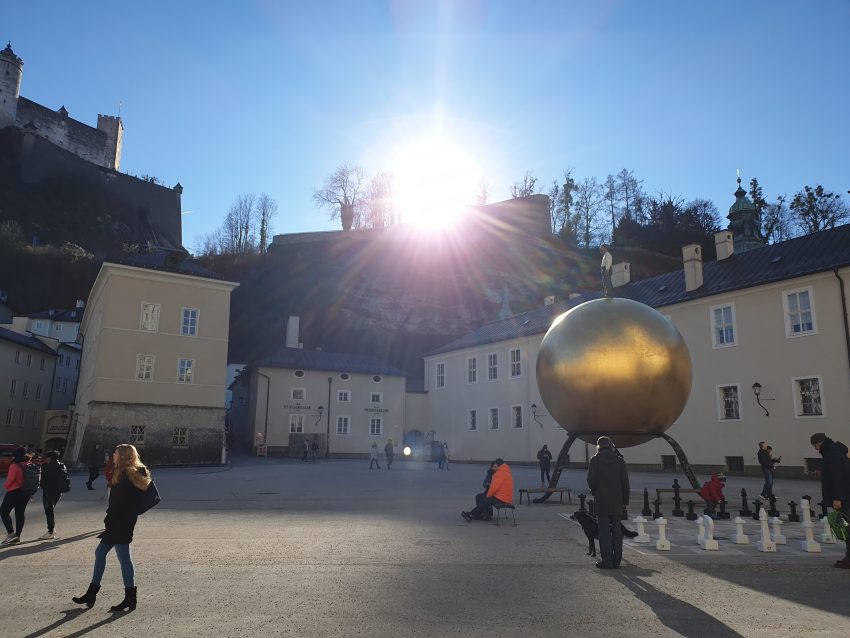
Kapitelplatz (Chapter Square) is a broad, diamond-shaped square in Salzburg’s Old Town, pressed up against the north side of Salzburg Cathedral and ringed by former cathedral-chapter buildings that once anchored the archdiocese’s power. What visitors remember most is the mix of solemn stone façades with playful elements: the 2007 “Sphaera” artwork, a figure balanced atop a gleaming golden globe, and a giant outdoor chessboard that often gathers a small crowd. In one corner, Neptune’s Fountain (1732) splashes within the Kapitelschwemme ensemble, with the sea god riding a seahorse as coins collect in the shallow basin. Look up from the open center for a clean view of Hohensalzburg Fortress above the rooftops.
Location: Kapitelpl., 5020 Salzburg, Austria | Hours: 24 Hours. | Price: Free. | Distance: 0.5km

24. St. Peter's Abbey and Cemetery
St. Peter’s Abbey and Cemetery
CC BY-SA 4.0 / Michael Burgholzer
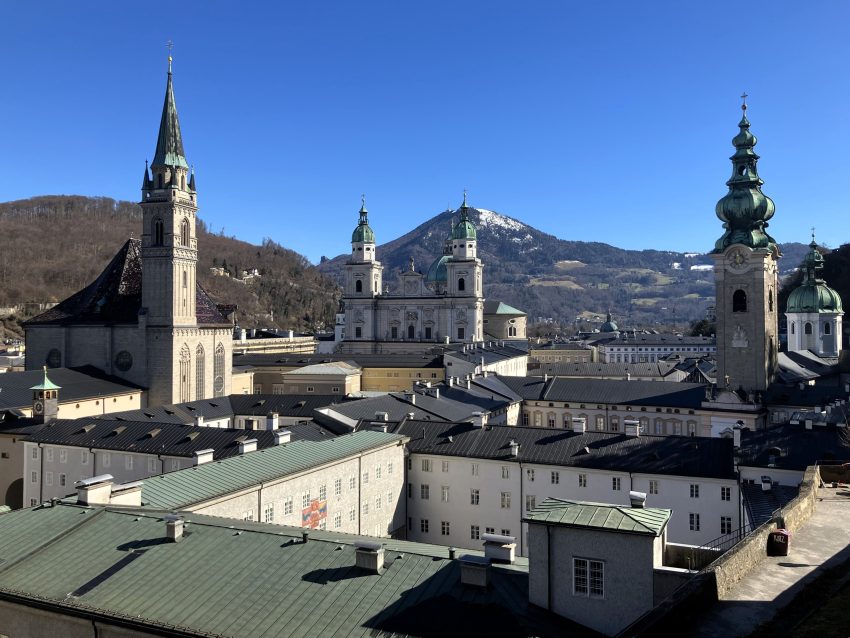
St. Peter’s Abbey and Cemetery (Stift Sankt Peter/Petersfriedhof) is a working Benedictine monastery in Salzburg’s Old Town, founded in 696 by Saint Rupert, with a burial ground established around 700 and graves dating back to the late 1200s. The Abbey Church began as a Romanesque building dedicated in 1147, later reshaped into an airy Rococo interior, while outside the cemetery feels like a quiet garden beneath the cliff. Visitors remember the ornate wrought-iron crosses, flowered family plots, and the rock-cut catacombs with worn altars, murals, and inscriptions. The abbey also holds Austria’s oldest library—about 100,000 volumes, including music manuscripts linked to Mozart and Haydn—though access is restricted. The atmosphere is notably calm, even in the center of town.
Location: Sankt-Peter-Bezirk 1, 5020 Salzburg, Austria | Hours: (Summer) April 1 – September 30; St. Peter Cemetery: 06:30–20:00; Abbey Church: 08:00–20:00; Catacombs: 10:00–12:30 & 13:00–18:00. (Winter) October 1 – March 31; St. Peter Cemetery: 06:30–18:00; Abbey Church: 08:00–20:00; Catacombs: 10:00–12:30 & 13:00–17:00. | Price: Cemetery: Free. Catacombs: Adults €2.00; Children/youths (6–18) €1.50. | Website | Distance: 0.5km

25. Hohensalzburg
Hohensalzburg
Hohensalzburg
CC BY-SA 4.0 / GFreihalter
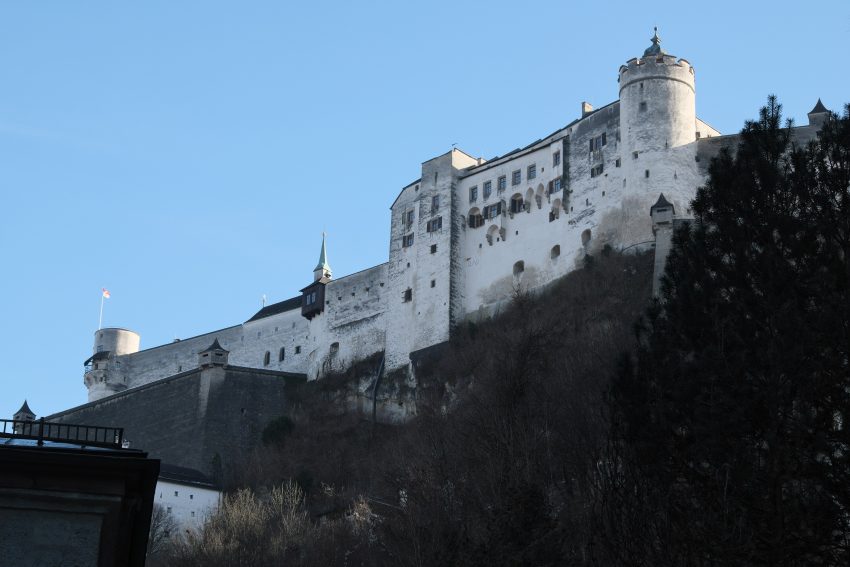
Hohensalzburg is the vast whitewashed fortress crowning Salzburg’s Festungsberg, looming above the Old Town at about 506 meters and shaping the city’s skyline from the Salzach valley. Begun in 1077 by the prince-archbishops as a statement of church power, it expanded into one of Europe’s largest medieval castles—roughly 250 meters long—its layered walls and bastions still easy to read as you circle the ramparts. Inside, the state apartments include the Golden Hall and Golden Chamber, where marble columns and a ceiling studded with gold stars feel unexpectedly sumptuous. Listen for the “Salzburg Bull,” a 1502 mechanical organ that sounds at set times in season, and linger on terraces for city-and-Alps panoramas.
Location: Mönchsberg 34, 5020 Salzburg, Austria | Hours: (January – April) Daily: 09:30–17:00. (May – September) Daily: 08:30–20:00. (October – December) Daily: 09:30–17:00. December 24: 09:30–14:00. Easter & Advent weekends: 09:30–18:00. | Price: Basic Ticket with funicular: Adults: €15.50; Children (6–14): €6.30. All-inclusive ticket with funicular: Adults: €19.20; Children (6–14): €7.30. | Website | Distance: 0.7km

26. Fortress Museum
Fortress Museum
Fortress Museum
CC BY-SA 2.5 / Andrew Bossi
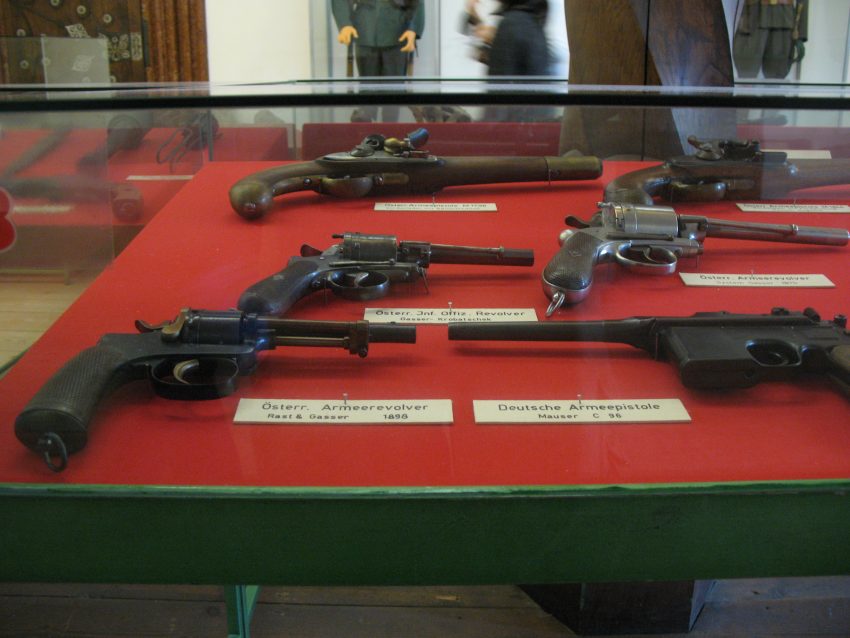
The Fortress Museum sits inside the keep of Hohensalzburg Fortress, turning the stone stronghold into a lived-in place with objects and rooms that explain how it functioned. Refurbished and expanded in the early 2000s, it mixes excavation finds from around Salzburg—Roman coins, ceramics, and even traces of a Roman wall—with medieval features like a working heating system and 12th-century Romanesque arcades. Displays range from a medieval gold hoard and arms and armor to darker corners with torture instruments, plus reconstructions of the castle kitchen, furniture, and military-band instruments. Sections on the 1526 siege and Prince Archbishop Leonhard von Keutschach add specific stories, and windows frame sweeping city views.
Location: Mönchsberg 34, 5020 Salzburg, Austria | Hours: (Summer) May – September; Daily: 09:00–19:00. (Winter) October – April; Daily: 09:30–17:00. | Price: Adults: €12.00–€19.20; Children (6–14): €4.90–€7.30 (museum included with Hohensalzburg Fortress admission; price depends on ticket type and whether you use the funicular). | Website | Distance: 0.7km

27. Nonnberg Convent
Nonnberg Convent
Nonnberg Convent
CC BY-SA 3.0 / Manfred Werner
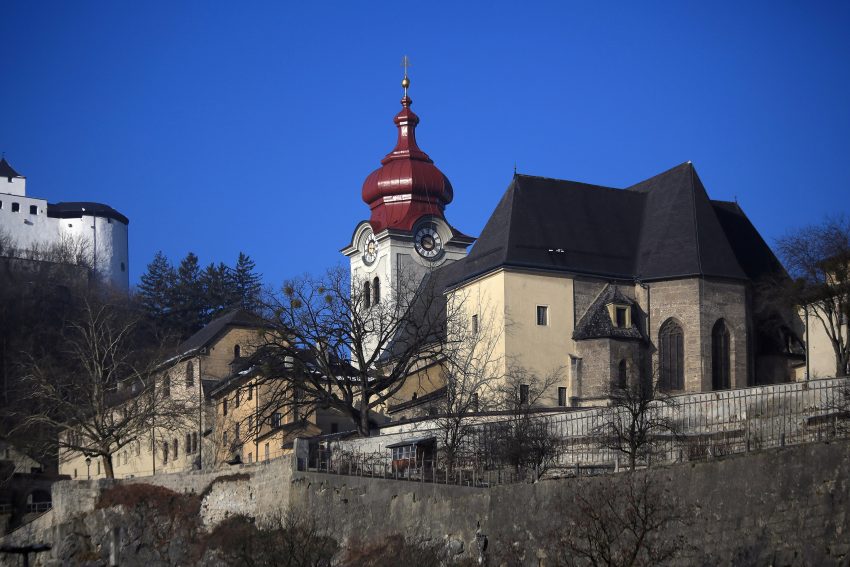
Nonnberg Convent in Salzburg, Austria is a working Benedictine abbey founded around 712, considered the oldest women’s monastery in the German-speaking world, and still home to a small community of nuns. Visitors remember the hush of the hillside church and cloisters, and—if you arrive early—the chance to hear sung prayer at dawn (around 6:45 am) echoing through the stone. Sound of Music fans come for the exterior gate used in key scenes, though the real Maria Augusta Kutschera entered here in 1924 before leaving to tutor the von Trapp family. A restrained cemetery and elevated viewpoints over rooftops and the Festungsberg add to the sense of stepping briefly out of the city’s bustle.
Location: Nonnberggasse 2, 5020 Salzburg, Austria | Hours: Daily: 06:30–18:00. | Price: Free. | Website | Distance: 0.8km

28. Augustiner Brewery
Augustiner Brewery
Augustiner Brewery
CC BY-SA 3.0 / Eweht
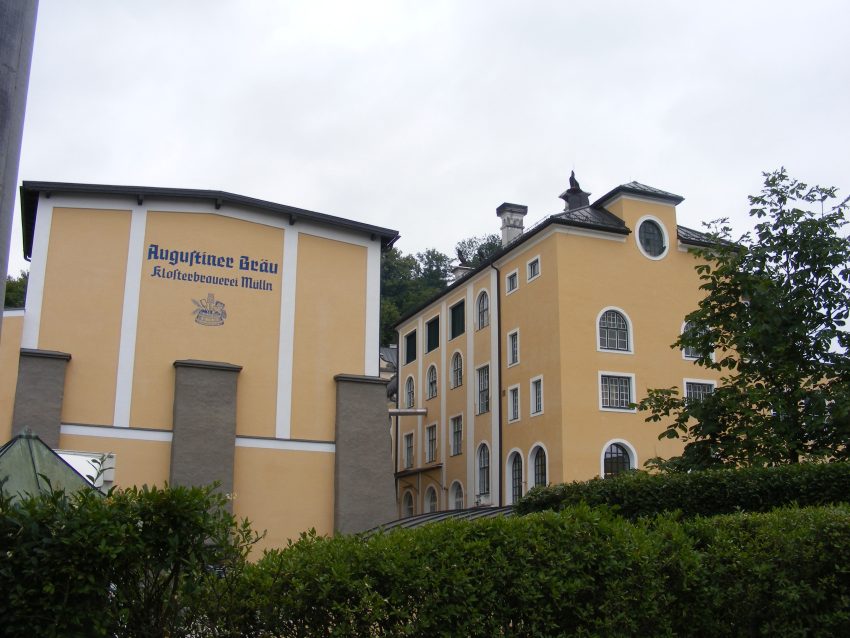
Augustiner Brewery (Augustiner Bräu Kloster Mülln) is a working monastery beer hall and garden set inside an old Augustinian abbey complex in Salzburg’s Mülln district, founded in 1605 under Archbishop Wolf Dietrich von Raitenau. The experience is hands-on: you choose a stoneware stein, rinse it at the fountain, then have beer poured from barrels—an old self-service tradition that’s part of the atmosphere. Look for the grand entrance gate decorated by Diego Francesco Carlone, flanked by statues of St. Benedict and St. Augustinus and the archbishop’s coat of arms. The beer is made by traditional methods to the 1516 purity rules, and in warmer months people linger under chestnut trees at long communal tables.
Location: Lindhofstraße 7, 5020 Salzburg, Austria | Hours: Monday – Friday: 15:00–23:00. Saturday – Sunday: 14:30–23:00. | Price: Free. | Website | Distance: 0.9km

29. Leopoldskron Castle
Leopoldskron Castle
Leopoldskron Castle
CC BY-SA 4.0 / Matthias Süßen
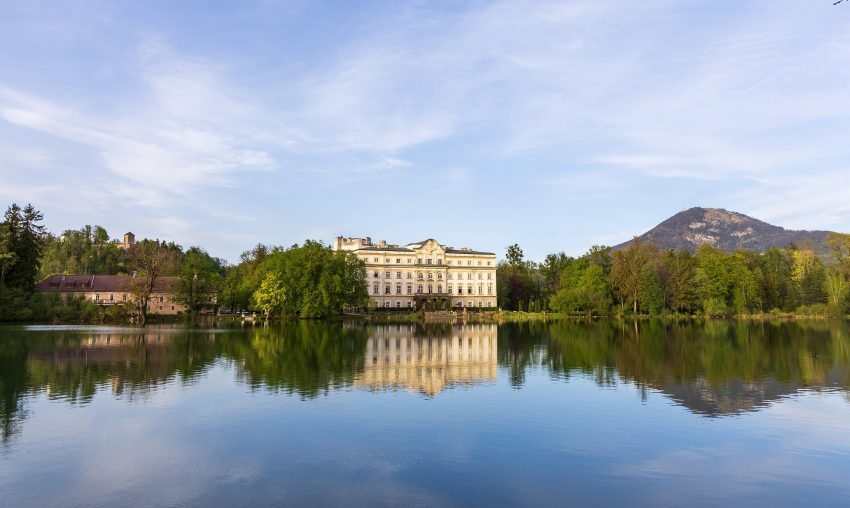
Leopoldskron Castle is a rococo lakeside palace just outside Salzburg’s Old Town, built in the 1730s for Prince-Archbishop Leopold Anton von Firmian. What visitors remember most is the view across Leopoldskroner Weiher: the pale façade mirrored in the water, clipped grounds, and Untersberg rising behind it. In the early 20th century, theatre director Max Reinhardt turned it into a gathering place for artists and ideas, linking the estate to Salzburg’s festival culture. Movie fans come for its role as the Von Trapp home in The Sound of Music, including the lakeside scenes and the stone horses by the terrace.
Location: Leopoldskronstraße 56/58, 5020 Salzburg, Austria | Hours: Daily: 07:30–10:00. | Price: Check official website. | Website | Distance: 1.5km

30. Hellbrunn Palace
Hellbrunn Palace
Hellbrunn Palace
CC BY-SA 3.0 / Przemek Pietrak
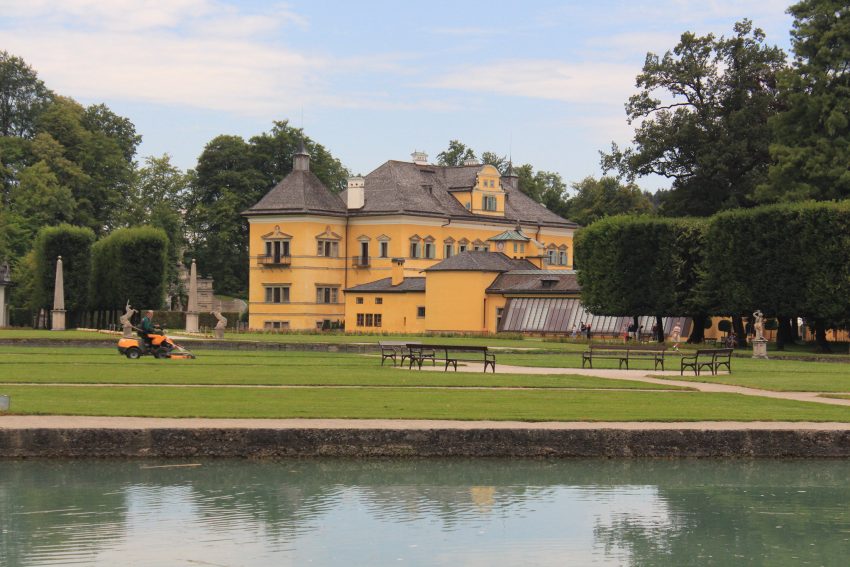
Hellbrunn Palace is an early Baroque pleasure villa built in 1613–1619 as a stage for the prince-archbishop’s entertainments, set in a broad park fed by a “clear spring” that gave the estate its name. What visitors remember most are the water games: a route of hidden jets, grotto tricks, and water-powered figures devised as practical jokes, where you should expect a splash or two. Inside, the palace rooms and museum add context after the outdoor theatrics. The grounds also include a stone theatre and the small Monatschlössl, and in winter many come for the atmospheric Christmas market. Reviews often note the easy bus ride from central Salzburg and that the fountains don’t run in winter.
Location: Fürstenweg 37, 5020 Salzburg, Austria | Hours: (Summer) March 28 – November 1, 2026; Daily: 09:30–17:30 (March 28 – April) / 09:30–18:30 (May – June) / 09:30–19:00 (July – August) / 09:30–18:30 (September) / 09:30–17:30 (October – November 1). | Price: Adults: €16.50; Kids/pupils (4–18): €6.50; Students (19–26): €9.50; Family (2 adults + 1 kid): €36.50 (each additional kid: €3.50); Groups (20+): €14.50. | Website | Distance: 4.5km

Best Day Trips from Salzburg

A day trip from Salzburg offers the perfect opportunity to escape the urban rhythm and discover the surrounding region's charm. Whether you're drawn to scenic countryside, historic villages, or cultural landmarks, the area around Salzburg provides a variety of easy-to-reach destinations ideal for a one-day itinerary. If you are looking to rent a car in Austria I recommend having a look at Discover Cars, first, as they compare prices and review multiple car rental agencies for you.

1. Berchtesgaden
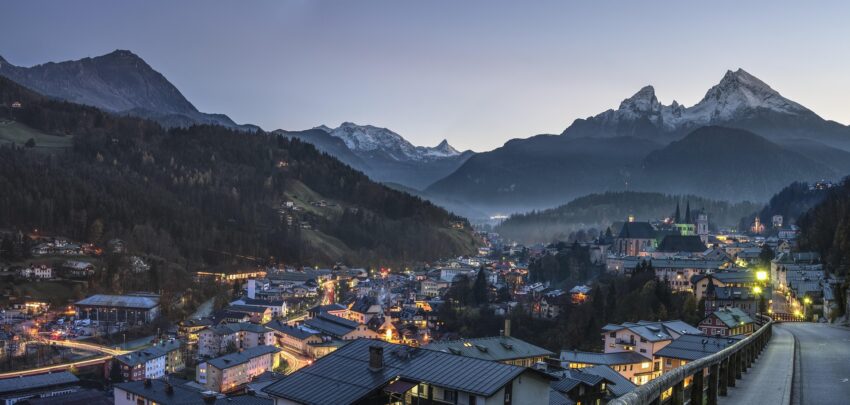
The Complete Guide to Berchtesgaden
Berchtesgaden is a mountain town in southeastern Germany, set in the Bavarian Alps near the Austrian border. It makes an ideal base for exploring Berchtesgaden National Park, with dramatic limestone peaks, clear lakes, and well-marked trails that start close to town. The center is compact and easy to navigate, with cafés, bakeries, and practical services that make day trips simple.…
Visiting Berchtesgaden

2. Hohenwerfen Castle
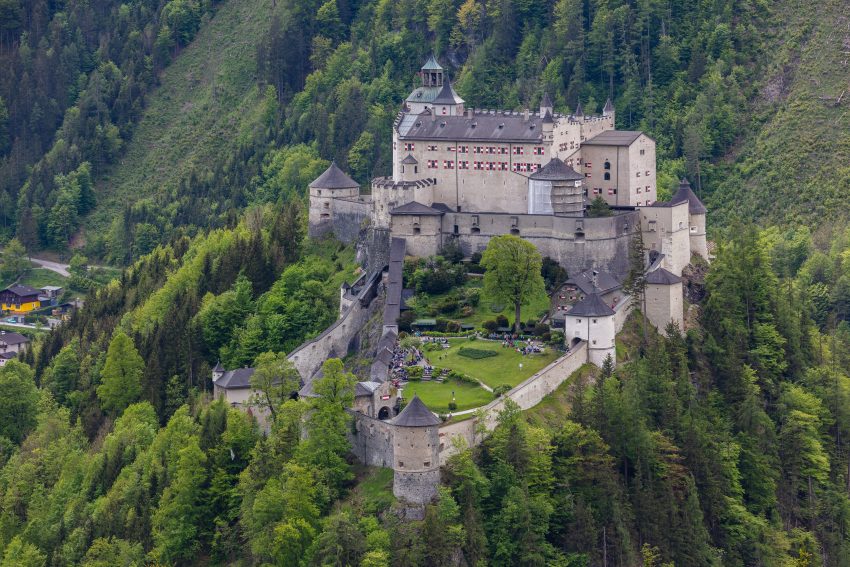
Hohenwerfen Castle
Hohenwerfen Castle
CC BY-SA 4.0 / Diego Delso
Hohenwerfen Castle is one of those places that looks almost too cinematic to be real. Rising on a rocky spur above the market town of Werfen, around 40 kilometres south of Salzburg, it combines the visual drama of a classic medieval fortress with a striking Alpine backdrop of cliffs, forests, and high peaks. It is the kind of place that…
Location: Burg Hohenwerfen, Burgstraße, Werfen, Austria | Hours: April, October & November: 09:30–16:00. Closed on Mondays, except public holidays. May – September: Daily: 09:00–17:00. July 20 – August 21: Daily: 09:00–18:00. | Price: From €13.90 adult basic footpath ticket; from €20.90 adult all-inclusive ticket with lift. | Website | Distance: 37km
Visiting Hohenwerfen Castle
Powered by GetYourGuide

3. Hallstatt

View of Hallstatt Austria ove lake.
Hallstatt Austria
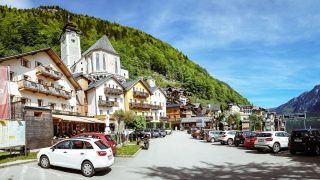
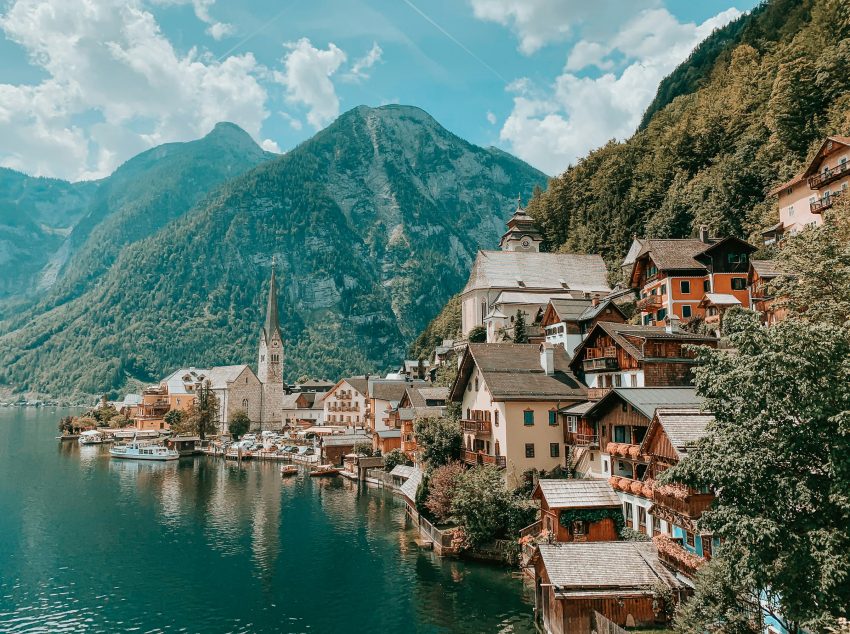
Hallstatt is one of the most memorable places to visit in the Salzkammergut region of Upper Austria, and much of its appeal comes from the way the village sits between the lake and the steep mountain slopes. It is compact enough to explore on foot, yet every corner seems to open onto another striking view, whether that is the waterfront,…
Visiting Hallstatt
Powered by GetYourGuide

4. Zell am See

The Complete Guide to Zell am See
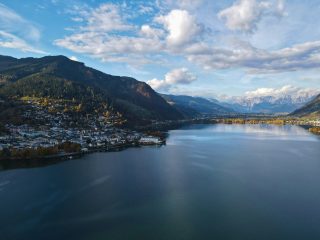
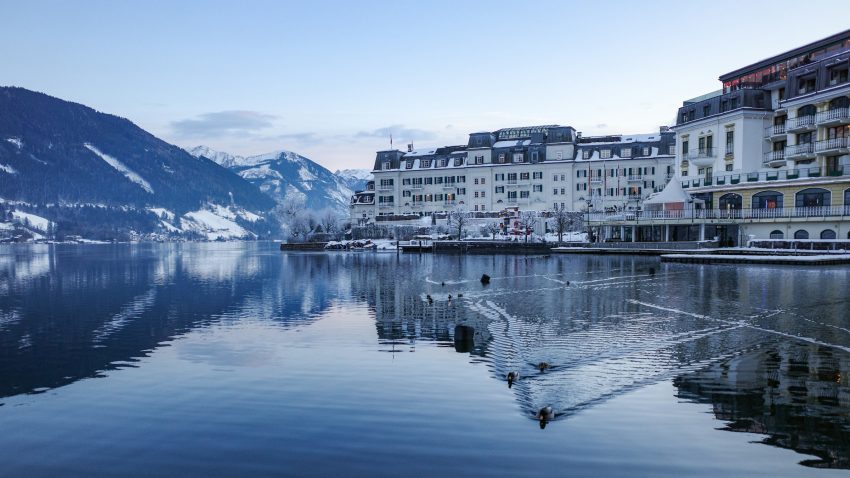
Zell am See is a classic Alpine lakeside town in the Pinzgau area of Salzburg Land, where a walkable old centre meets a broad waterfront promenade and mountain views in every direction. It’s the kind of place that works equally well for a relaxed weekend—coffee by the lake, a gentle cruise, a sunset stroll—or as a base for bigger mountain…
Visiting Zell am See
Powered by GetYourGuide

5. Linz

The Complete Guide to Linz
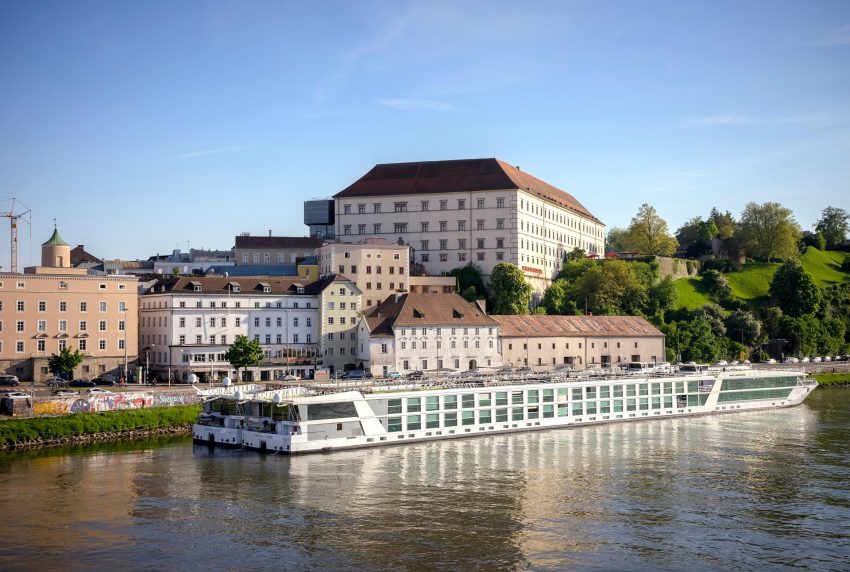
Linz is a lively Danube city that blends contemporary culture with an easy, walkable core, making it a great base for a short city break or a longer stay. You’ll find a strong mix of museums, riverfront promenades, modern architecture, and classic Austrian cafés, with plenty to do both day and night. The city feels creative and student-influenced, yet it’s…
Visiting Linz
Powered by GetYourGuide

6. Munich

Munich
Munich
Munich is one of the easiest German cities to enjoy on a first visit because it balances “big-city” culture with a relaxed, walkable core. You can spend the morning moving between grand squares, museums, and coffee houses, then switch to parks, river paths, and beer gardens without ever feeling like you need to plan every minute. It is a city…
Visiting Munich

7. Innsbruck

The Complete Guide to Innsbruck
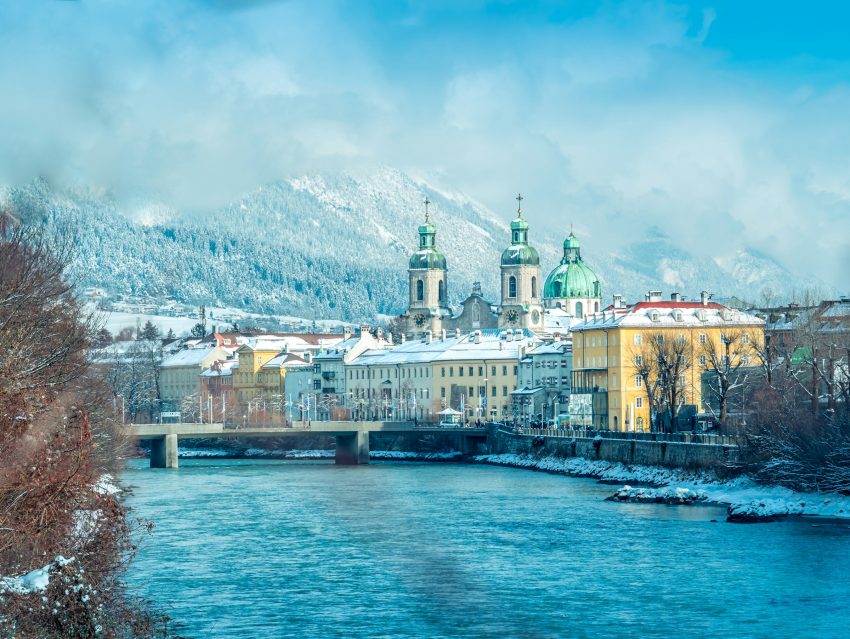
Innsbruck is a compact, mountain-framed city that makes it easy to combine culture, cafés, and alpine scenery in a single day. Set in the Inn Valley in the heart of Tyrol, it’s the kind of place where you can stroll a historic old town in the morning, ride a cable car into high alpine views after lunch, and still be…
Visiting Innsbruck
Powered by GetYourGuide

8. Villach

The Complete Guide to Villach
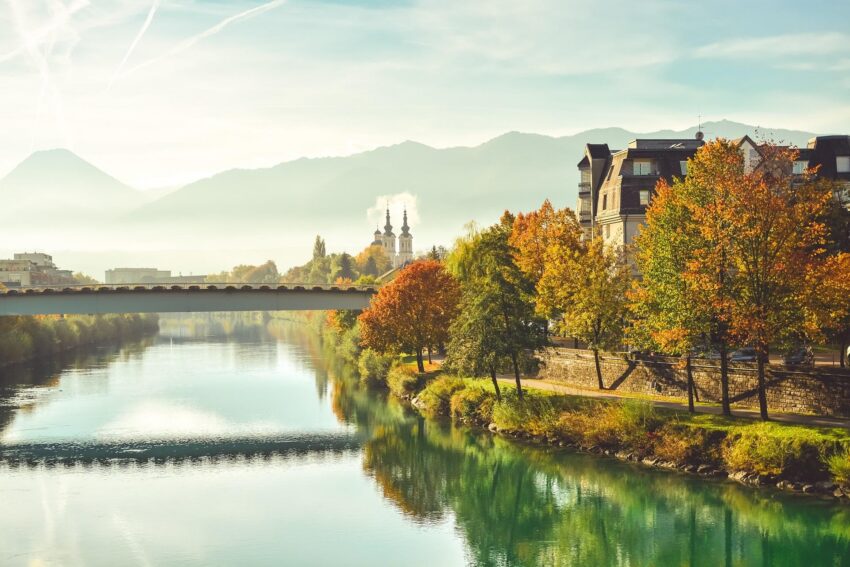
Villach is a relaxed, outdoorsy city in southern Austria, set in the state of Carinthia near the borders with Italy and Slovenia. It makes an excellent base for combining a walkable old town with quick access to lakes, mountains, and cross-border day trips. The River Drau runs through the center, and the surrounding landscape gives the city a bright, open…
Visiting Villach

9. Český Krumlov

Český Krumlov
Český Krumlov
Český Krumlov, set in the South Bohemian Region of the Czech Republic, is one of the country’s most picturesque towns. Surrounded by rolling hills and nestled in a bend of the Vltava River, it has the charm of a fairytale destination, with winding cobblestone streets, pastel-coloured houses, and a skyline dominated by its castle tower. Its compact size makes it…
Visiting Český Krumlov
Powered by GetYourGuide

Where to Stay in Salzburg

For first-time visitors, staying in Salzburg’s Altstadt (Old Town) is the most convenient choice because you can walk to the cathedral, fortress funicular, Getreidegasse, and riverside promenades in minutes, and you’ll be surrounded by the city’s most atmospheric streets in the evenings after day-trippers leave. A strong classic option is Hotel Sacher Salzburg, which suits travelers who want a refined riverside location, polished service, and easy access to both the Old Town and the modern center. Another excellent Old Town base is Hotel Goldener Hirsch, a Luxury Collection Hotel, ideal if you want to stay right on Salzburg’s most iconic street with historic character and a truly central address.

If you prefer a slightly quieter, elegant area with quick access to the Old Town, the Neustadt around Mirabell is a smart pick: it’s flatter, often easier for taxis and transfers, and still walkable to the main sights across the river. Consider IMLAUER HOTEL PITTER Salzburg, which is well suited for comfort-focused stays and is known for its rooftop dining and convenient transport links. For a contemporary, design-led stay near the station while remaining close to the center, HYPERION Hotel Salzburg works well for travelers who want modern rooms and an easy arrival/departure without sacrificing walkability to Salzburg’s highlights.

Using the our Hotel and Accomodation map, you can compare hotels and short-term rental accommodations in Salzburg. Simply insert your travel dates and group size, and you’ll see the best deals for your stay.

Salzburg Accommodation Map

Best Time to Visit Salzburg

Salzburg in Spring (March–May)

Spring is a pleasant time to visit as days lengthen and gardens and riverside paths come back to life. Expect changeable weather—some crisp mornings and occasional rain—but fewer crowds than peak summer, making it ideal for sightseeing in the Old Town and day trips.

Salzburg in Summer (June–August) (Best)

Summer brings the warmest temperatures and the most vibrant atmosphere, with long daylight hours for fortress views, beer gardens, and lakeside excursions. It’s also the headline season for culture: the Salzburg Festival is a major highlight, drawing international audiences for opera, concerts, and theatre—book accommodation and popular performances well ahead.

Salzburg in Autumn (September–November)

Early autumn is often mild and scenic, with golden light on the baroque facades and clearer days for viewpoints. As the season progresses it becomes cooler and wetter, but it’s a rewarding time for museums, concerts, and cozy café stops, typically with more availability than summer.

Salzburg in Winter (December–February)

Winter is cold and can be snowy, creating a festive, postcard feel in the Old Town. Christmas markets are a standout seasonal draw, and the city’s concert calendar continues strongly; pack warm layers and plan for shorter daylight hours, especially if you want evening strolls after market visits.

Annual Weather Overview

  • January 4°C
  • February 8°C
  • March 11°C
  • April 16°C
  • May 19°C
  • June 24°C
  • July 24°C
  • August 24°C
  • September 20°C
  • October 16°C
  • November 9°C
  • December 6°C

How to get to Salzburg

Getting to Salzburg by air

Nearest airports: Salzburg Airport (SZG) is the closest option, with additional choices including Munich Airport (MUC) and Vienna International Airport (VIE) for wider long-haul connections. From Munich or Vienna, onward travel by train is straightforward.

Getting to Salzburg by train

Main rail hub: Salzburg Hauptbahnhof connects to frequent services from Vienna, Munich, Innsbruck, and beyond.

Useful operator links: ÖBB (Austrian Federal Railways) https://www.oebb.at/en/ ; Deutsche Bahn https://www.bahn.com/en ; WESTbahn https://www.westbahn.at/en/

Getting to Salzburg by Car

Driving notes: Salzburg is well connected by motorways, but the historic center has restricted access and limited parking; using park-and-ride facilities and garages on the edge of the center is often easier than trying to park in the Altstadt. If you’re arriving from Germany or traveling on Austrian motorways, check vignette (toll sticker) requirements and any seasonal traffic peaks. If you are looking to rent a car in Austria I recommend having a look at Discover Cars, first, as they compare prices and review multiple car rental agencies for you.

Travelling around Salzburg

On foot: The Old Town and riverbanks are best explored walking.

Public transport: City buses and local rail links make it easy to reach viewpoints, museums, and nearby towns; tickets are available via machines, apps, and sales points.

Taxis and rides: Taxis are widely available, and short trips are convenient for evenings or bad weather.

Day trips: Regional trains and buses connect quickly to lakes and mountain areas, making Salzburg a practical base without needing a car.
More from this area