Templo Romano de Córdoba
Roman Site in Córdoba
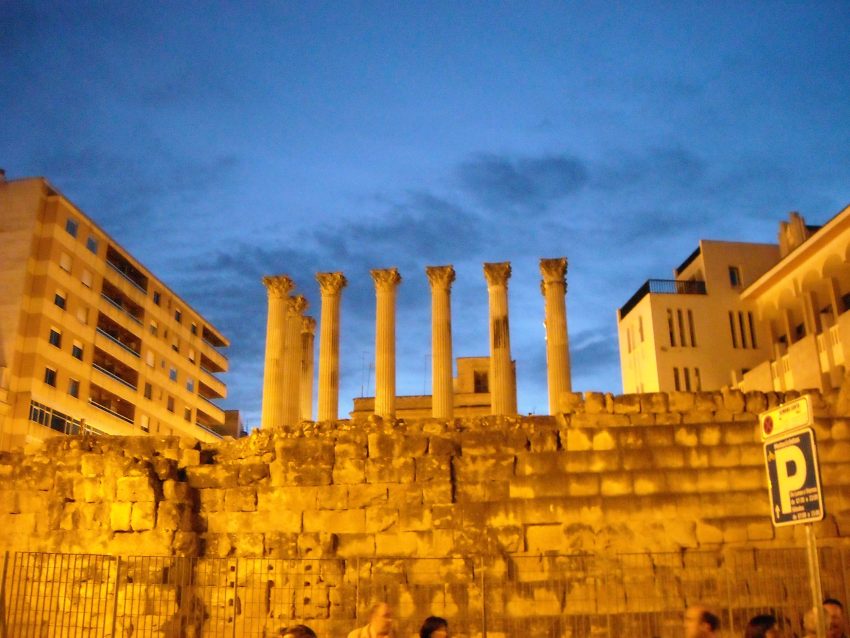
The Templo Romano de Córdoba is one of the city's most striking archaeological discoveries, found unexpectedly in the 1950s during the expansion of City Hall. Although only parts of the structure survive, the scale of the remains - especially its towering columns - reveals that this was once one of the most important buildings in ancient Corduba. The temple was dedicated to the cult of the Emperor and formed part of the great Provincial Forum together with the Circus Maximus, making it one of the essential places to visit in Córdoba for Roman history enthusiasts.
Today, the reconstructed columns rise dramatically beside the Ayuntamiento (Town Hall), offering a rare glimpse into the grandeur of Córdoba during the Roman Empire. It is a highlight of any walking tour of Córdoba's historic centre, especially since the temple sits between Plaza de las Tendillas and Plaza de la Corredera, two of the city's busiest and most atmospheric squares.
Table of Contents
- Short History of the Templo Romano de Córdoba
- What Does the Roman Temple of Córdoba Look Like?
- Visiting the Templo Romano de Córdoba
- How to Get to the Roman Temple of Córdoba
- Practical Tips on Visiting the Roman Temple of Córdoba
- Where to Stay near the Roman Temple of Córdoba
- FAQs for Visiting the Roman Temple of Córdoba
- Nearby Attractions to the Roman Temple of Córdoba
Short History of the Templo Romano de Córdoba
Construction of the Roman Temple began during the reign of Emperor Claudius (41-54 AD) and was completed some forty years later under Emperor Domitian (81-96 AD), when the building was finally supplied with water. Archaeologists believe the temple was dedicated to the imperial cult, a common practice in provincial capitals to reinforce loyalty to the emperor.
In the 2nd century, structural reforms coincided with the relocation of the colonial forum to the area around today’s Convento de Santa Ana. The entire structure was built almost entirely of marble - columns, walls, flooring, and roof - demonstrating the high status of the building and the skill of the craftsmen who worked on it. Such extravagance signals that the temple was meant to rival the finest architecture of the Roman world.
The temple once stood at the edge of Colonia Patricia (Roman Córdoba), where a section of the western wall was demolished to create space. Engineers levelled the land to form an artificial terrace enclosed on three sides, leaving the west open to visually connect the temple with the circus. If still functioning in the 4th century, it would have been closed when Christian emperors banned pagan worship.
Many recovered pieces from the site are now housed in the Museo Arqueológico y Etnológico de Córdoba, while others appear throughout the city - such as the fluted column lying in Plaza de la Doblas.
What Does the Roman Temple of Córdoba Look Like?
The temple originally stood on a high podium with a grand staircase leading to a façade of six free-standing Corinthian columns. These columns framed the entrance, behind which stood the cella (inner sanctuary). In front of the temple lay the altar, likely used for public ceremonies related to the imperial cult.
What you see today is a partial reconstruction carried out by architect Félix Hernández in the late 20th century. The soaring white columns reveal the impressive scale of the original structure and help visitors imagine the temple as it appeared nearly two thousand years ago - a gleaming marble monument rising above Roman Córdoba.
Visiting the Templo Romano de Córdoba
Although the temple is generally not open for interior visits and there are no guided tours available, you can view the remains freely from the street. Its location makes it easy to incorporate into any walking itinerary through the city centre.
The temple stands beside Córdoba City Hall, halfway between Plaza de las Tendillas and Plaza de la Corredera, two major landmarks that are always lively with shops, cafés, and daily activity. The illuminated columns also look particularly impressive at night.
Next to the ruins you will also find the statue of Claudio Marcelo, the Roman founder of Córdoba (Corduba). Made of Carrara marble and standing nearly three metres tall, it was commissioned in 2015 as a tribute to the man who established the Roman colony that would become one of the great cities of Hispania.
How to Get to the Roman Temple of Córdoba
Travelling by air, visitors generally arrive via Seville Airport or Málaga Airport before continuing to Córdoba by high-speed train or bus. For the best deals and a seamless booking experience, check out these flights to Córdoba on Booking.com.
If travelling by train, the temple is about a 15-20 minute walk from Córdoba's main station along Avenida de América and the city centre streets; frequent buses also connect the station with Plaza de las Tendillas. Train schedules and bookings can be found on Omio.
If travelling within the city by bus, numerous lines stop near Tendillas or Capitulares, both just a short walk from the temple.
If travelling by car, you can park in several public car parks around the city centre, then walk to City Hall. Driving directly to the temple is discouraged due to narrow streets and restricted-access zones. If you are looking to rent a car in Spain I recommend having a look at Discover Cars, first, as they compare prices and review multiple car rental agencies for you.
Practical Tips on Visiting the Roman Temple of Córdoba
- Best time to visit the Roman Temple of Córdoba:
Late afternoon or at night when the columns are beautifully illuminated. - Entrance fee in Euros:
Viewing the temple is free as it is an open-air site. - Opening hours:
Always visible from the street; no internal access. - Official website:
Check the Córdoba tourism website for updates on nearby attractions and exhibitions. - How long to spend:
A quick 10-15 minutes is enough, though combine it with Tendillas and Corredera for a full experience. - Accessibility:
Fully accessible from the surrounding streets. - Photography tip:
Shoot from the southeast corner for the best perspective of the full column line. - Guided tours:
While the temple itself has no tours, many Córdoba city tours include it as a stop. - Nearby food options:
Plaza de las Tendillas and nearby streets offer excellent tapas bars and cafés. - Combine with other Roman sites:
Visit the Archaeological Museum to see original fragments from the temple.
Where to Stay near the Roman Temple of Córdoba
The temple sits in the modern heart of Córdoba, close to many hotels. A reliable nearby option is Soho Boutique Capuchinos, a stylish hotel within walking distance of Tendillas and the old town. Another excellent choice is Eurostars Patios de Córdoba, which blends modern comfort with archaeological remains. For more luxury, consider Hospes Palacio del Bailío, located a bit further north but still within an easy walk of the temple.
What Other Travellers Say...

Templo Romano sits in a small square at C. Capitulares 1 in Córdoba, where Roman temple ruins with reconstructed pillars and visible brick supports are set among modern buildings; visitors say the site is compact and easily seen from the square where you can sit, eat or drink, it looks particularly attractive when lit at night, and while some expected closer access, parts have been closed or under work so viewing from outside is common.


FAQs for Visiting the Roman Temple of Córdoba
Nearby Attractions to the Roman Temple of Córdoba
- Plaza de las Tendillas - Córdoba's central square and commercial heart.
- Plaza de la Corredera - An impressive rectangular plaza with cafés and a lively atmosphere.
- Ayuntamiento de Córdoba - The modern City Hall beside the temple.
- Templo de Claudio Marcelo statue - Monument honouring Corduba’s Roman founder.
- Museo Arqueológico y Etnológico de Córdoba - Displays original temple fragments and Roman artefacts.
The Templo Romano de Córdoba appears in our Complete Guide to Visiting Córdoba!

Moira & Andy
Hey! We're Moira & Andy. From hiking the Camino to trips around Europe in Bert our campervan — we've been traveling together since retirement in 2020!
This website uses affiliate links which may earn a commission at no additional cost to you!
Planning Your Visit
24 Hours
Free
Nearby Attractions
- Plaza de la Corredera (0.2) km
Square - Palacio de Orive (0.2) km
Palace - Plaza de las Tendillas (0.3) km
Square - Córdoba Archaeological Museum (0.4) km
Museum - Museo de Bellas Artes de Córdoba (0.4) km
Historic Building and Museum - Museo Julio Romero de Torres (0.4) km
Museum - Plaza del Potro (0.4) km
Square - Posada del Potro (0.5) km
Square - Centro Flamenco Fosforito (0.5) km
Museum - Palacio de los Marqueses de Viana (0.5) km
Palace