Odeon, Ephesus
Roman Site, Ruins and Theatre in Ephesus
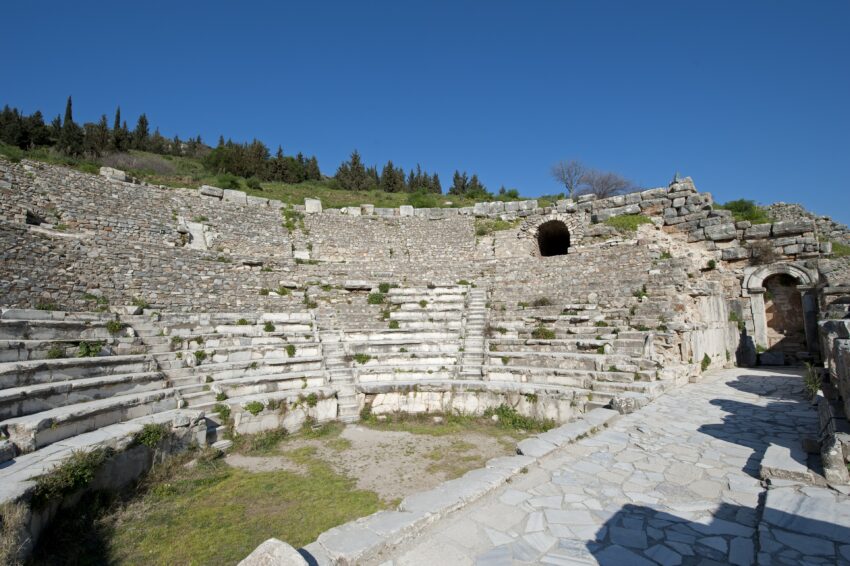
Tucked inside the UNESCO-listed ruins of Ephesus, the Odeon (also called the Odeum) is a small, roofed theatre-like building that once hosted both music performances and civic meetings. It sits along the main visitor routes, making it an easy, high-impact stop even if you're short on time.
Most travelers see the Odeon as part of a broader Ephesus walking tour, often soon after entering from the upper (north) gate and before continuing toward the Library of Celsus and the Great Theatre. It's best appreciated up close: step into the seating area, look toward the stage, and imagine the acoustics of a covered hall designed for speeches and concerts.
History and Significance of the Odeon
The Odeon of Ephesus dates to the Roman Imperial period and was designed as an intimate, multi-purpose venue rather than a massive open-air arena. Unlike the Great Theatre, which was built for large crowds and spectacle, the Odeon was meant for smaller audiences, clearer sound, and more formal gatherings.
One of the most interesting aspects of the building is its dual role. It functioned as a bouleuterion (council house) where city leaders met, and also as an odeon used for musical performances and recitations. That blend of politics and culture is part of what makes it such a telling snapshot of daily life in a major Roman city.
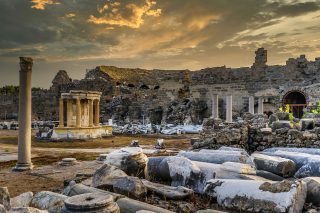
Architecturally, the Odeon’s defining feature was that it was roofed (historically with a wooden roof), which helped control acoustics and made events possible in less-than-perfect weather. Today, even in its ruined state, the compact layout still reads clearly: seating tiers, orchestra area, and the stage zone that anchored the performances.
Things to See and Do in the Odeon
Start by taking in the overall shape: it looks like a small theatre, but the proportions feel more “hall” than “stadium.” Stand at different points in the seating to see how sightlines were optimized for speeches and music, then walk down toward the orchestra area to appreciate the scale from the performers’ perspective.
Look for the relationship between the stage building and the seating bowl. Because the Odeon was designed for clarity and presence, it rewards slow looking: notice how close the audience would have been to the action compared with Ephesus's larger venues.
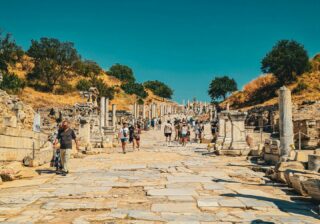
If you're doing Ephesus as a self-guided walk, the Odeon is also a great “orientation stop.” Pause here early in your route to get your bearings, then continue onward to the showstoppers like the Curetes Street monuments, the Library of Celsus, and finally the Great Theatre.
How to Get to the Odeon
The nearest major airports are İzmir Adnan Menderes Airport (ADB) and, for some itineraries, Milas-Bodrum Airport (BJV). For the best deals and a seamless booking experience, check out these flights to Ephesus on Booking.com.
To reach the Ephesus/Selçuk area by rail, you can take regional trains to Selçuk station (typically via İzmir), then continue by taxi or local transport toward the archaeological site entrances. You can use the official TCDD Taşımacılık website to check schedules, compare routes, and purchase tickets for Türkiye’s national and regional trains operated by TCDD. For a more streamlined experience (especially if you prefer an English interface or want to compare across countries), we recommend using Omio, which allows you to easily compare prices, schedules, and book train tickets across Türkiye and the rest of Europe — all in one place.
If you're traveling by car, drive to Selçuk and follow signs for Efes; parking is available near the upper and lower gates, and you can choose your entry based on the walking direction you prefer. If you are looking to rent a car in Türkiye I recommend having a look at Discover Cars, first, as they compare prices and review multiple car rental agencies for you.
Practical Tips on Visiting the Odeon
- Official website: https://muze.gov.tr/urun-ekle?catalogNo=WEB-EFS01-87-009
- Entrance fee: Included with Ephesus with Ephesus Experience Museum (40 Euro per person); Ephesus with Ephesus Experience Museum + Terrace Houses: 52 Euro p.p.
- Opening hours: (Summer) April 1 – October 1; Daily: 08:00–19:00. (Winter) October 1 – April 1; Daily: 08:00–18:00.
- Best time to visit: Aim for early morning for cooler temperatures and fewer tour groups, especially in warmer months. If you enter from the upper gate, the Odeon is often one of the first major structures you'll reach.
- How long to spend: Plan 10-20 minutes if you're moving steadily through Ephesus, or 30 minutes if you like to linger for photos and architectural details.
- Accessibility: Surfaces around Ephesus are uneven with stone paving and steps; the Odeon area may be challenging for wheelchairs and anyone with limited mobility. Consider entering with a guide who can suggest the smoothest route.
- Facilities: Restrooms, a café, and small shops are available within the broader Ephesus visitor area, but not necessarily right beside the Odeon itself. Bring water and sun protection.
Where to Stay Close to the Odeon
Base yourself in Selçuk town center for the easiest access to Ephesus, restaurants, and transport connections.
Ayasoluk Hotel A boutique pick with a strong sense of place, ideal if you want comfort and style after a long day walking the ruins.
Cella Boutique Hotel & Spa A good choice for travelers who want a spa and a more resort-like feel while still being close to the archaeological sites.
Ephesus Centrum A practical, central base that suits short stays and early starts for beating the crowds at Ephesus.
Akanthus Hotel Ephesus A smaller, personable option that works well if you value a quiet night and a simple, well-located stay.
Kalehan Hotel A classic Selçuk stay with a relaxed garden atmosphere, great for unwinding between sightseeing days.
Is the Odeon Worth Visiting?
Yes, the Odeon is worth visiting because it adds texture to Ephesus beyond the headline monuments. It's compact, easy to understand at a glance, and it tells a compelling story about how the city balanced governance and entertainment in a single, purpose-built space.
Honest Pivot: If you're extremely time-limited and only want the biggest “wow” moments, you could skip lingering here and prioritize the Library of Celsus, Curetes Street, and the Great Theatre instead. The Odeon shines most for travelers who enjoy the quieter, more human-scale corners of ancient cities.
What Other Travellers Say...
Reviews are overwhelmingly positive, with travelers describing the Odeon as a beautiful, worthwhile stop within the wider Ephesus ruins. Visitors like that it's easy to understand as a small theatre-shaped building and appreciate learning about its dual use as a council chamber and concert hall, including the fact it was once roofed. Common tips include reading up beforehand or hiring a guide to get more out of the visit. The main drawback mentioned is that it can feel less impressive when compared directly to the much larger Great Theatre nearby, so some people treat it as a quick stop rather than a headline attraction.





For Different Travelers
The Odeon is a flexible stop: quick for fast-paced itineraries, but also rewarding if you like to slow down and imagine how a space was used. Because it's part of the main Ephesus route, it fits naturally into most day trips without extra logistics.
Families with Kids
Kids often enjoy the “mini-theatre” feel because it’s easier to grasp than sprawling ruins. Make it interactive by having them stand on the stage area and speak softly while others listen from the seats.
Pair the Odeon with a scavenger-hunt style walk through Ephesus: find columns, arches, and carved stones. Keep expectations realistic in hot weather, and plan shade and water breaks.
Couples & Romantic Getaways
The Odeon is a calmer photo stop compared with the busiest landmarks, and it's a nice place to pause and take in the atmosphere. If you're visiting as a couple, it's a good moment to slow down before rejoining the main flow of the site.
For a more romantic pace, consider timing your Ephesus walk to avoid peak midday crowds. A guide can add storytelling that makes the Odeon feel less like “just another ruin” and more like a living venue.
Budget Travelers
The Odeon doesn't require a separate ticket from the main Ephesus entry, so it's a high-value stop once you're inside. If you're watching costs, skip paid add-ons and focus on the core route that includes the Odeon, Curetes Street, and the Great Theatre.
Bring your own water and snacks (where permitted) and plan transport carefully, since taxis and transfers can add up. A self-guided visit works well here if you read up beforehand.
History Buffs
History lovers will appreciate the Odeon's civic function as much as its performance role. It's a tangible reminder that Ephesus wasn't only temples and grand façades; it was also administration, debate, and public life.
Spend time comparing it mentally to the Great Theatre: scale, purpose, and audience. The Odeon is one of the best places in Ephesus to think about how sound, space, and authority were designed into architecture.
FAQs for Visiting Odeon
Getting There
Tickets & Entry
Visiting Experience
Tours, Context & Itineraries
Photography
Accessibility & Facilities
Food & Breaks Nearby
Safety & Timing
The Odeon appears in our Complete Guide to Visiting Ephesus!

Moira & Andy
Hey! We're Moira & Andy. From hiking the Camino to trips around Europe in Bert our campervan — we've been traveling together since retirement in 2020!
This website uses affiliate links which may earn a commission at no additional cost to you!
Planning Your Visit
(Summer) April 1 - October 1; Daily: 08:00-19:00.
(Winter) October 1 - April 1; Daily: 08:00-18:00.
Included with Ephesus with Ephesus Experience Museum (40 Euro per person); Ephesus with Ephesus Experience Museum + Terrace Houses: 52 Euro p.p.
Nearby Attractions
- State Agora (0) km
Ancient City, Ruins and Square - Prytaneion (0.1) km
Ancient City, Historic Site and Ruins - Baths of Varius (0.1) km
Baths, Roman Site and Ruins - Temple of Domitian (0.1) km
Historic Site, Roman Site and Ruins - Memmius Monument (0.1) km
Monument, Roman Site and Ruins - Heracles Gate (0.2) km
City Gate, Historic Site and Ruins - Curetes Street (0.2) km
Ancient City, Ruins and Street - Trajan Fountain (0.3) km
Fountain, Roman Site and Ruins - Temple of Hadrian (0.3) km
Historic Site, Roman Site and Ruins - Public Roman Latrines (0.4) km
Historic Site, Roman Site and Ruins