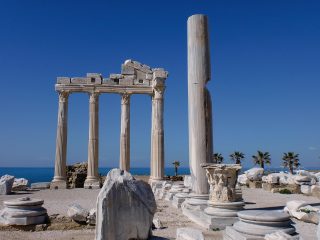
Trajan Fountain, Ephesus
Fountain, Roman Site and Ruins in Ephesus
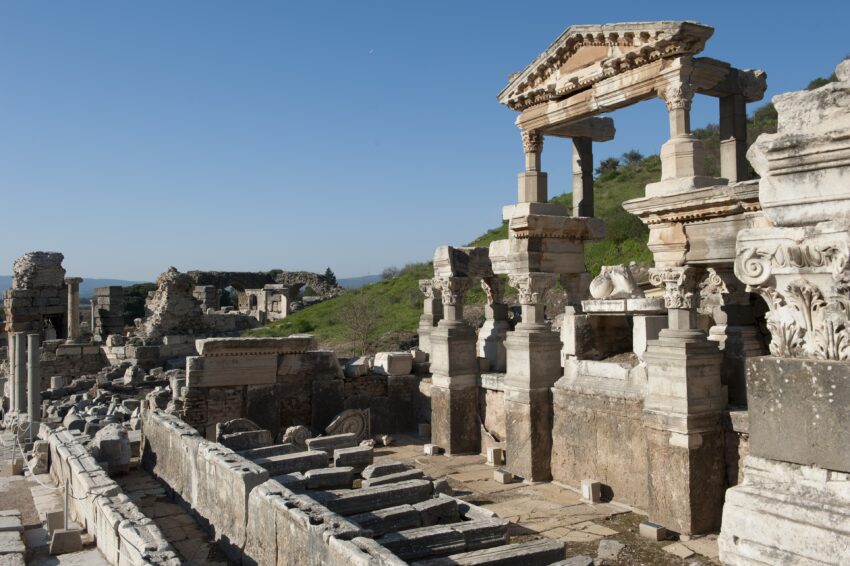
Trajan Fountain (often called the Fountain of Trajan) is a Roman-era monument set along Curetes Street inside the Ephesus Archaeological Site in Türkiye. Even though much of what you see today is partial and weathered, the fountain still reads as a grand piece of city infrastructure-built to impress, cool the streetscape, and celebrate imperial power.
Most visitors encounter it naturally on a walking tour through Ephesus, usually between major highlights like the Temple of Hadrian and the upper stretches of Curetes Street. It's not a standalone destination so much as a memorable “pause point” where you can slow down, imagine the original statuary and water display, and take in the layered feel of the ruins around you.
Table of Contents
- History and Significance of the Trajan Fountain
- Things to See and Do in the Trajan Fountain
- How to Get to the Trajan Fountain
- Practical Tips on Visiting the Trajan Fountain
- Where to Stay Close to the Trajan Fountain
- Is the Trajan Fountain Worth Visiting?
- For Different Travelers
- FAQs for Visiting Trajan Fountain
History and Significance of the Trajan Fountain
The Trajan Fountain was constructed in the early 2nd century CE, during the reign of Emperor Trajan, when Ephesus was one of the most prominent cities of Roman Asia. Monumental fountains in Roman cities were more than decoration: they were civic statements about engineering, wealth, and the benefaction culture that kept public life running.
In its prime, this nymphaeum-style fountain would have combined architecture, sculpture, and flowing water into a theatrical façade. The overall effect reinforced the idea of Rome's order and prosperity-especially powerful in a busy urban corridor like Curetes Street.
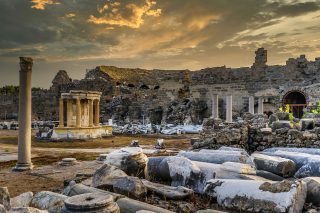
Today, the remains are a reminder that Ephesus wasn't only about temples and libraries; it was also a highly serviced city with carefully designed public spaces. Even in a fragmentary state, the site helps you picture how everyday movement through the city was shaped by water, shade structures, and monumental “street furniture.”
Things to See and Do in the Trajan Fountain
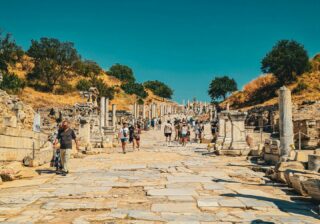
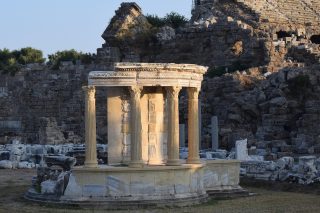
Start by orienting yourself on Curetes Street and viewing the fountain from a few angles-front-on for symmetry, then from the side to understand how it related to the street's slope and surrounding buildings. Look for surviving architectural elements that hint at the original multi-level façade and the basin area where water would have collected.
If you’re visiting with a guide (or using an audio guide), this is a great spot to ask about what’s original versus reconstructed and where key statues and decorative pieces ended up. The fountain is also a useful “mental reset” point on the uphill walk: it’s close enough to other highlights that you can keep momentum, but distinct enough to feel like a new chapter in the route.
Finally, use it as a photography stop for context shots: frame the fountain with the stone paving of Curetes Street, or step back to include nearby ruins so your images show scale and setting rather than only close-up fragments.
How to Get to the Trajan Fountain
The nearest major airport is İzmir Adnan Menderes Airport (ADB); Milas-Bodrum Airport (BJV) is another option if you're combining the Aegean coast with inland stops. For the best deals and a seamless booking experience, check out these flights to Ephesus on Booking.com.
To reach the area by train, head for Selçuk station (services run from İzmir and other regional hubs), then continue by taxi or local transport toward the Ephesus Archaeological Site entrances. You can use the official TCDD Taşımacılık website to check schedules, compare routes, and purchase tickets for Türkiye’s national and regional trains operated by TCDD. For a more streamlined experience (especially if you prefer an English interface or want to compare across countries), we recommend using Omio, which allows you to easily compare prices, schedules, and book train tickets across Türkiye and the rest of Europe — all in one place.
By car, Ephesus is an easy drive from İzmir and Kuşadası, with parking available near the site's main entry points; arriving early helps you avoid both heat and tour-bus congestion. If you are looking to rent a car in Türkiye I recommend having a look at Discover Cars, first, as they compare prices and review multiple car rental agencies for you.
Practical Tips on Visiting the Trajan Fountain
- Official website: https://muze.gov.tr/urun-ekle?catalogNo=WEB-EFS01-87-009
- Entrance fee: Included with Ephesus with Ephesus Experience Museum (40 Euro per person); Ephesus with Ephesus Experience Museum + Terrace Houses: 52 Euro p.p.
- Opening hours: (Summer) April 1 – October 31; Daily: 08:00–19:30. (Winter) November 1 – March 31; Daily: 08:30–17:00.
- Best time to visit: Aim for early morning or late afternoon for softer light and cooler temperatures, especially in summer when the stones radiate heat. If you can, time it for a quieter window between large tour groups.
- How long to spend: Plan 10-20 minutes at the fountain itself, or longer if you're sketching, photographing, or listening to detailed interpretation. It fits naturally into a 2-4+ hour Ephesus walk.
- Accessibility: Expect uneven ancient paving, steps, and slopes along Curetes Street; strollers can be difficult and wheel access is limited in parts. Families may find it easier to focus on a shorter, highlight-driven route.
- Facilities: Facilities are concentrated near the main entrances rather than at individual monuments, so carry water and sun protection. Shade is limited on the main walking corridors.
Where to Stay Close to the Trajan Fountain
The best area to base yourself is Selçuk town center for easy access to Ephesus, restaurants, and transport connections.
Ayasoluk Hotel Choose this for a boutique feel and a location that makes early starts simple-ideal if you want to beat the crowds and heat.
Saint John Hotel A practical, comfortable option in town that works well for travelers who want straightforward logistics and good value.
Ephesus Centrum Good for travelers who prioritize being walkable to cafés and evening meals after a long day on the ruins.
Akanthus Hotel Ephesus A strong pick if you want a modern, polished stay with a calm atmosphere-nice for couples and light packers.
Kalehan Hotel A classic Selçuk stay with a relaxed garden vibe, great if you want downtime between Ephesus and nearby sights.
Is the Trajan Fountain Worth Visiting?
Yes-if you're already in Ephesus, Trajan Fountain is absolutely worth a stop. It's one of those monuments that adds texture to the visit: you're not just ticking off headline attractions, you're seeing how a Roman city staged daily life with water, architecture, and imperial messaging.
Honest Pivot: if you're short on time, traveling with a stroller, or struggling with heat and crowds, it's reasonable to prioritize the Library of Celsus, the Great Theatre, and one or two “must-see” streetscapes instead of lingering here. The fountain's impact depends on imagination and context, and it can feel underwhelming if you're expecting a fully preserved showpiece.
What Other Travellers Say...
Travelers rate Trajan Fountain very highly overall (4.8/5 from 263 reviews). Visitors commonly describe it as a memorable stop on a full Ephesus walk, praising the atmosphere and the sense of history, and many note it's enjoyable in cooler weather. The most frequent downsides are intense sun exposure and the challenge of navigating with kids, strollers, or buggies, plus occasional comments that parts aren't as well preserved as expected.





For Different Travelers
Trajan Fountain works best as a flexible add-on: you can make it a quick photo stop or a deeper interpretation moment depending on your pace. Because it sits on a common walking route, it's easy to include without major detours.
Families with Kids
For kids, the fountain is easiest to enjoy as a short “story stop” about how Romans brought water into cities and used fountains as public gathering points. Keep it brief and pair it with more visually dramatic nearby landmarks to maintain attention.
If you're using a stroller, be prepared to reroute or take turns on rough paving and steps. A child carrier is often more practical than wheels along Curetes Street.
Couples & Romantic Getaways
Couples tend to enjoy this spot most in quieter light-early or later in the day-when the stone textures photograph beautifully and the street feels less hectic. It’s a nice place to slow down and take in the atmosphere between bigger set pieces.
If you like travel photography, use the fountain as a backdrop for wider “in-place” portraits that show the ancient street context. It’s less about a single perfect angle and more about mood.
Budget Travelers
Budget travelers will appreciate that it's included as part of the broader Ephesus walk-no extra ticket just to see the fountain once you're inside the archaeological site. It's a high-value moment for anyone who likes ruins and doesn't need a museum-style presentation.
Bring your own water and snacks so you’re not forced into pricier convenience buys near entrances. Planning your route helps you avoid backtracking (which costs energy more than money).
History Buffs
History lovers will enjoy comparing Trajan Fountain to other Roman nymphaea and thinking about patronage, urban planning, and the “theater” of public space. It's also a good prompt to look for how monuments were positioned along movement corridors to shape what citizens and visitors saw.
If you're building an itinerary, pair this stop with the Terrace Houses (for elite domestic life) and the Ephesus Archaeological Museum in Selçuk (for sculpture and finds) to connect street-level infrastructure with the art and objects that once animated it.
FAQs for Visiting Trajan Fountain
Getting There
Tickets & Entry
Visiting Experience
Tours, Context & Itineraries
Photography
Accessibility & Facilities
Food & Breaks Nearby
Safety & Timing
The Trajan Fountain appears in our Complete Guide to Visiting Ephesus!

Moira & Andy
Hey! We're Moira & Andy. From hiking the Camino to trips around Europe in Bert our campervan — we've been traveling together since retirement in 2020!
This website uses affiliate links which may earn a commission at no additional cost to you!
Planning Your Visit
(Summer) April 1 - October 31; Daily: 08:00-19:30.
(Winter) November 1 - March 31; Daily: 08:30-17:00.
Included with Ephesus with Ephesus Experience Museum (40 Euro per person); Ephesus with Ephesus Experience Museum + Terrace Houses: 52 Euro p.p.
Nearby Attractions
- Curetes Street (0) km
Ancient City, Ruins and Street - Temple of Hadrian (0.1) km
Historic Site, Roman Site and Ruins - Heracles Gate (0.1) km
City Gate, Historic Site and Ruins - Public Roman Latrines (0.1) km
Historic Site, Roman Site and Ruins - Terrace Houses of Ephesus (0.1) km
Historic Room, Historic Site and Roman Site - House of Pleasure (0.1) km
Ancient City, Historic Site and Ruins - Memmius Monument (0.1) km
Monument, Roman Site and Ruins - Temple of Domitian (0.2) km
Historic Site, Roman Site and Ruins - Library of Celsus (0.2) km
Library, Roman Site and Ruins - Gate of Mazaeus and Mithridates (0.2) km
City Gate, Historic Site and Ruins