Self-Guided Walking Tour of Selçuk (+Maps!)
This website uses affiliate links which earn a small commission at no additional cost to you.
Selçuk is one of Turkey's most rewarding small towns for travelers interested in history, archaeology, and the layered cultures of the Aegean. Best known as the gateway to Ephesus, it offers far more than a practical base: the town sits among remains of Greek, Roman, Byzantine, Seljuk, and Ottoman life, with major landmarks scattered within easy reach. From the Basilica of St. John and Ayasuluk Castle to the İsa Bey Mosque and the surviving column of the Temple of Artemis, Selçuk gives visitors a compact but remarkable introduction to the region's long past.
The town itself has a relaxed, local feel, with cafés, guesthouses, markets, and quiet streets that make it a pleasant place to stay rather than simply pass through. Its location is especially useful, with Ephesus, the House of the Virgin Mary, Şirince village, and the Aegean coast all close by. For many visitors, Selçuk works best as a slower alternative to staying in larger resort towns, combining easy sightseeing with a more grounded sense of place.
How to Get to Selçuk
By Air: The closest major airport is İzmir Adnan Menderes Airport (ADB), which has frequent domestic flights and seasonal international routes. From the airport, the simplest DIY option is to take rail or shuttle/taxi into İzmir and continue south to Selçuk; private transfers are also common if you're traveling as a pair or with luggage. If you're arriving late, consider going straight to Selçuk and starting the walking tour the next morning. For the best deals and a seamless booking experience, check out these flights to Selçuk on Booking.com.
By Train: Selçuk is on the regional rail line connecting İzmir with towns further south, making it a straightforward arrival if you're coming from İzmir city center or from the airport rail connections. Trains are generally comfortable, affordable, and avoid the “where do I park?” problem you'll face on an Ephesus day. Once you arrive, the town is compact enough that most hotels are a short walk or quick taxi from the station. You can use the official TCDD Taşımacılık website to check schedules, compare routes, and purchase tickets for Türkiye’s national and regional trains operated by TCDD. For a more streamlined experience (especially if you prefer an English interface or want to compare across countries), we recommend using Omio, which allows you to easily compare prices, schedules, and book train tickets across Türkiye and the rest of Europe — all in one place.
By Car: Driving can work well if Selçuk is part of a wider Aegean road trip (Kușadası, Șirince, Pamukkale, Bodrum, etc.). Roads are generally good, but the main consideration is parking-especially around Ephesus at peak hours-so aim to arrive early. A car also makes it much easier to add the House of the Virgin Mary or other rural stops without juggling minibuses or taxis. If you are looking to rent a car in Türkiye I recommend having a look at Discover Cars, first, as they compare prices and review multiple car rental agencies for you.
By Bus: Long-distance coaches and regional buses connect Selçuk with İzmir, Kușadası, and other Aegean hubs. Services are frequent in summer, and the bus station is typically an easy taxi ride or a manageable walk depending on where you're staying. If you're arriving by coach with a tight schedule, factor in a short transfer time to drop bags before starting your walk.
How to get around the city: Selçuk itself is walkable, and that's the point of this route-most town sights are within easy strolling distance. For Ephesus and out-of-town stops like the House of the Virgin Mary, you'll usually use a taxi, local minibus (dolmuş), or a short drive if you have a car; many travelers mix walking in town with a taxi hop to Ephesus early, then return to Selçuk for a late lunch and a gentler afternoon.
A Short History of Selçuk
Selçuk and the Ancient World of Ephesus
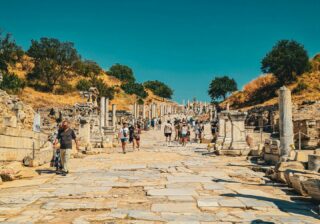
Selçuk's story is inseparable from nearby Ephesus, which grew into a major Greco-Roman city whose public buildings still define the visitor experience today. The monumental plan of the city-its State Agora and Commercial Agora, civic spaces like the Prytaneion, and entertainment venues such as the Odeon-reflects the wealth and administrative importance the area accumulated over centuries. As you walk Curetes Street, you're following a ceremonial and commercial spine shaped by empire-era priorities: procession routes, water display, and civic grandeur, seen in features like the Trajan Fountain and the imposing Temple of Domitian.
Selçuk and Roman Ephesus at Its Peak
The Roman period left Selçuk’s wider landscape with an almost theatrical concentration of landmarks, designed to impress both citizens and visitors arriving by land or sea. The Library of Celsus became an icon of elite patronage and urban identity, while the Ancient Greek Theater (expanded in Roman times) anchored large-scale performances and public gatherings; nearby, the Theater Gymnasium hints at how daily life blended fitness, culture, and status. Along the same walking logic, practical infrastructure shaped the experience too: the Public Roman Latrines, the Baths of Varius, and the Gate of Mazaeus and Mithridates show how engineered comfort and ceremonial entrances were baked into city planning.
Selçuk, Daily Life, and the Intimate City
Beyond the headline monuments, Ephesus also preserves the texture of private life, which deepens the story for anyone willing to slow down. The Terrace Houses of Ephesus reveal domestic luxury-mosaics, frescoes, and elite layouts-while the Temple of Hadrian, the Memmius Monument, and the passage through Heracles Gate help you picture the rhythm of movement through the city's terraces and streets. Even the more provocative stops-like the House of Pleasure-point to a port-city reality where commerce, entertainment, and travel blended in ways that still feel surprisingly modern.
Selçuk and Late Antiquity to Early Christianity
As the classical world shifted, religious life and legends became central to how the area was remembered and visited. Sites such as the Grotto of the Seven Sleepers tie Selçuk's landscape to enduring Christian tradition, while the House of the Virgin Mary on the wooded slopes above Ephesus became a powerful pilgrimage focus for many visitors. In this period, the meaning of the ruins changed: temples and civic buildings didn't just fade-they were repurposed, quarried, reinterpreted, and woven into new spiritual geographies that still shape modern itineraries.
Selçuk and the Modern Visitor Experience
Modern Selçuk developed as the gateway town for exploring these layers, turning archaeology and heritage into a living local economy of guides, museums, cafés, and small hotels. Newer additions like the Ephesus Experience Museum reflect how storytelling has evolved-moving beyond stones and street grids to immersive interpretation that helps first-time visitors connect names and ruins to real human lives. Today, Selçuk's appeal is precisely this: you can sip coffee in a Turkish town square in the morning, spend midday inside an ancient metropolis of marble and shadow, then finish with sunset views and dinner back in town.
Where to Stay in Selçuk
To make the most of visiting Selçuk and this walking tour then you consider stay overnight at the centre. The town centre is ideal if you want everything on your doorstep-restaurants, cafés, the station, and an easy start for early departures to Ephesus before the crowds arrive. This area suits travelers who like to wander in the evenings and keep logistics minimal, with a mix of characterful guesthouses and small hotels that can help arrange taxis or local tips. Consider options like Ayasoluk Hotel and Cella Boutique Hotel & Spa if you want comfort close to the action, or Kalehan Hotel for a classic garden-hotel feel near the station.
If you prefer a quieter base with postcard views, look around Ayasuluk Hill, where the atmosphere feels more residential and evenings are calmer, while still being walkable to the centre. Staying here can be especially nice if you want sunrise or sunset walks and a slightly slower rhythm between town stops, museum visits, and long lunches. For this style of stay, consider Ephesus Centrum Palace and Livia Hotel Ephesus as convenient, well-located picks.
For a more countryside feel, you can base yourself just outside town toward Șirince or the rural lanes around Selçuk, which works well if you have a car and want evenings to be genuinely quiet. This is best for travelers building a broader Aegean road trip who plan to start early at Ephesus, then retreat to a more scenic setting afterward. In that case, options like Șirince Taș Konak or Nişanyan Houses can pair well with a Selçuk walking day, with the trade-off that you’ll rely on driving or taxis rather than walking everywhere.
Your Self-Guided Walking Tour of Selçuk
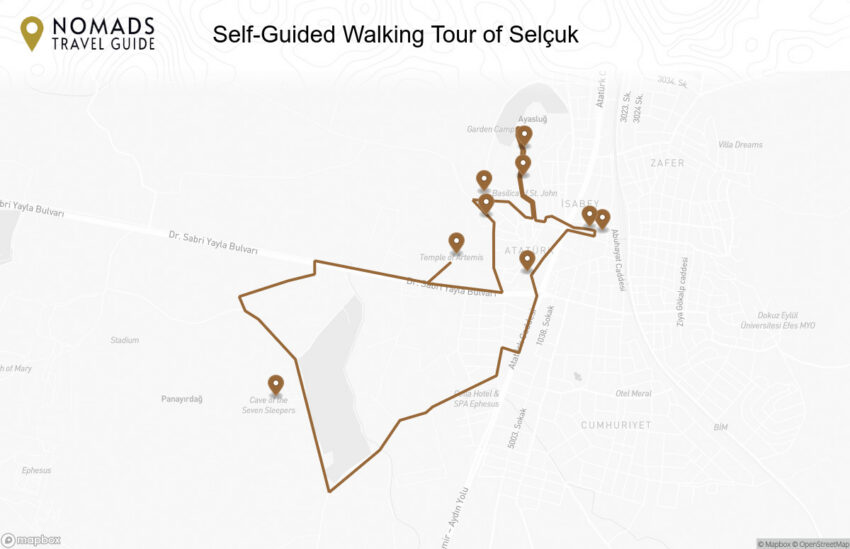
Discover Selçuk on foot with our walking tour map guiding you between each stop as you explore its historic streets, lively local corners, and the gateway sights that make this area one of Türkiye's most rewarding heritage hubs. The route is built to feel natural: a relaxed start in town, a smooth build toward the headline attractions, and plenty of opportunities to pause for shade, snacks, and museum time without breaking the flow.
1. Ephesus Archaeological Museum
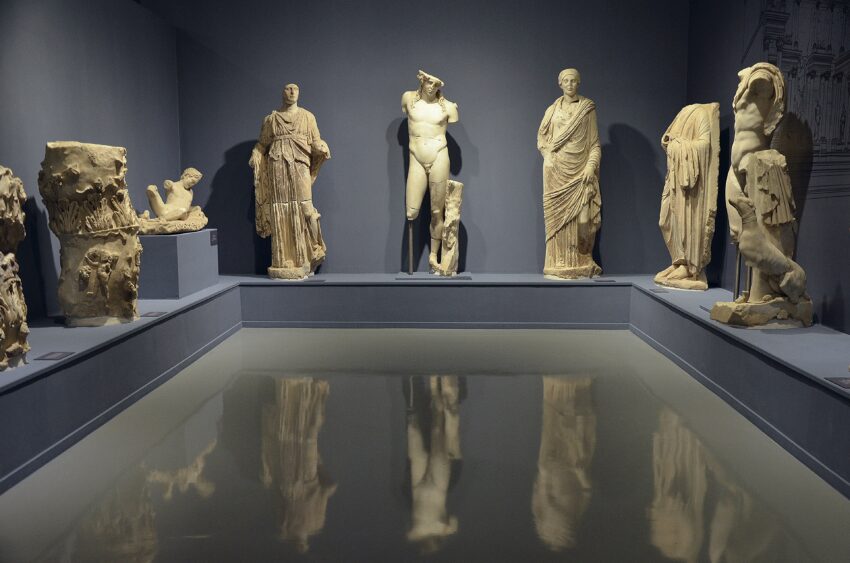
The Ephesus Archaeological Museum was established in 1964 to house and display artifacts from Ephesus and surrounding sites. Its creation is linked to policies of the Turkish Republic that prohibited the export of antiquities and pushed for the return and preservation of objects within the country. The collection also reflects the earlier history of excavation, when many items were sent abroad between 1867 and 1923.
Rather than organising displays strictly by chronology, the museum arranges its collection thematically. Visitors move through galleries that include sculptures from ancient fountains, material from the Terrace Houses, and a coin collection illustrating early currency use. Additional themed sections mentioned include “Ephesus through the Ages,” “The Hall of Imperial Cult,” and “The Hall of the Mother Goddess Cult,” along with a courtyard showing tombs and carved column capitals.
A short 3D simulation video is available before the galleries, described as running about 10 minutes and offered in Turkish, English, and German. Among the highlighted objects are the statue of Ephesus Artemis, the Priapos statue, a sculpted head of Socrates, a figure of an Egyptian priest, and “Eros with a rabbit.” The oldest item mentioned is a stamp from Çukuriçi Mound dated to 6200 BC.
Location: Atatürk, Uğur Mumcu Sevgi Yolu No: 26, 35920 Selçuk/İzmir, Türkiye | Hours: Daily: 08:00–17:30. | Price: Adults: 10 Euro | Website


2. Byzantine Aqueducts
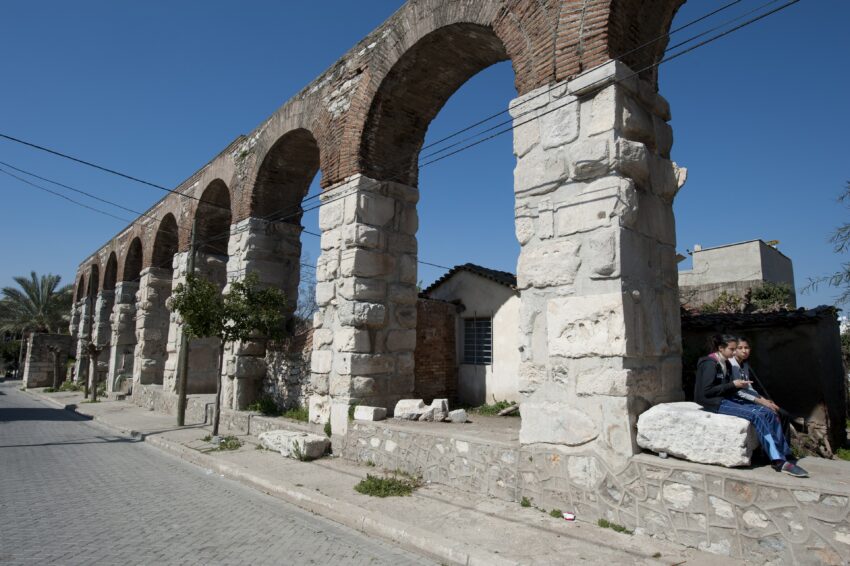
The Byzantine Aqueducts of Ephesus were built to carry spring water from near eastern Selçuk and Belevi up to Ayasuluk Hill, supplying Saint John’s Basilica and nearby settlements on higher ground. Their construction reused marble blocks from the ruins of ancient Ephesus and the Temple of Artemis, which reflects both practicality and the layered history of the area. What survives today is part of a later phase of water infrastructure that remained vital after the city’s classical peak.
Although Ephesus already had extensive Greek and Roman water systems, the sections most visible now date to the Byzantine period. Water was first delivered to Ayasuluk Hill and then distributed through pipes and channels for everyday needs such as drinking, bathing, and irrigation. The high abutments, with some rising to around 15 meters, underline the scale and ambition of the engineering.
The most striking remains are the tall stone arches stretching from Ayasuluk Hill toward the modern town center and the train station area, which have become iconic landmarks in Selçuk. Some arches are well preserved while others were lost or dismantled over the centuries, and modern alteration is prohibited. In recent years, the pillars have also become nesting points for Selçuk’s storks, adding a living layer to the ruins.
Location: İsa Bey, Namık Kemal Cd. No:25, 35920 Selçuk/İzmir, Türkiye | Hours: 24 Hours. | Price: Free.
3. Urban Memory Museum
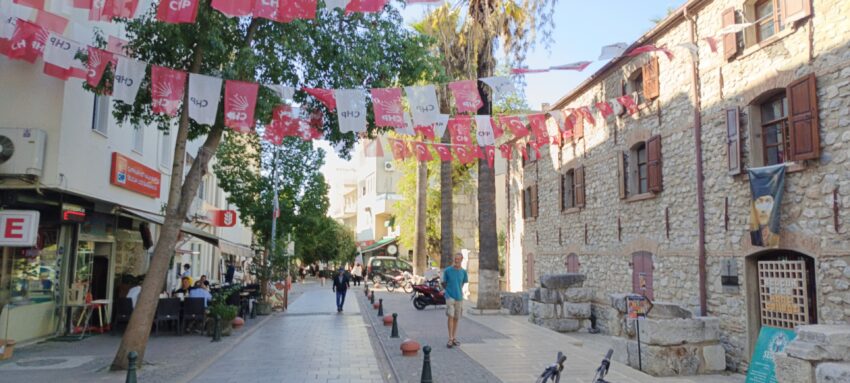
The Selçuk Ephesus Urban Memory Museum is housed in a late 19th-century building originally built by a British tobacco company, giving it a distinct place in the town’s modern history. Its origins are tied to global trade shifts, with the American Civil War disrupting tobacco supplies and prompting British interests to establish operations in the region. Today, the restored building serves as a museum focused on Selçuk’s collective memory.
Inside, the museum presents a historical timeline tracing Selçuk’s development from early settlement to the present. While the timeline is described as being in Turkish, the exhibits rely heavily on photographs, artifacts, and visual displays that communicate beyond language. The overall emphasis is on daily life, local traditions, and key social and cultural moments.
The approach blends traditional objects with modern curatorial techniques to create a compact but varied experience. Exhibits cover themes including agriculture, urban development, religious change, and the recent impact of tourism. It’s best seen as a place to understand how modern Selçuk evolved alongside, and in the shadow of, ancient Ephesus.
Location: Efes Antik Kenti, Antik Tiyatro Karşısı, Atatürk, 35920 Selçuk/İzmir, Türkiye | Hours: (Summer) April 1 – October 31; Daily: 08:00–19:30. (Winter) October 31 – April 1; Daily: 08:30–17:00. | Price: Check official website.
4. Basilica of Saint John
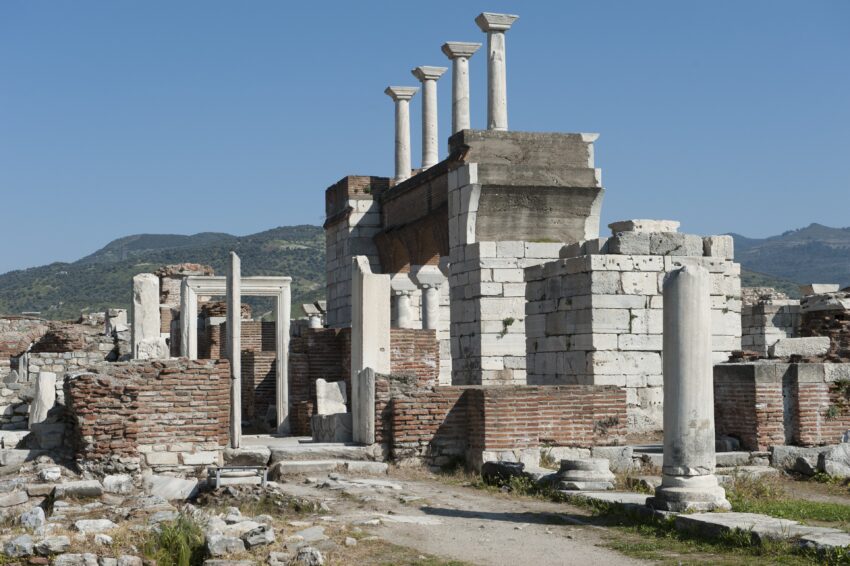
The Basilica of Saint John was one of the great Byzantine churches of the 6th century, built under Emperor Justinian I and Empress Theodora on Ayasuluk Hill, above the believed burial place of John the Evangelist. Long before the grand basilica was raised, a smaller 4th-century chapel stood on the same sacred site, reflecting the early importance of this place for Christian worship. Over time, the basilica became a major pilgrimage destination, closely tied to traditions that John lived, taught, and was buried in Ephesus.
The church was designed on an impressive cross-shaped plan and was once crowned by six domes, with the central dome rising directly above the apostle’s tomb. Although much of the structure is now in ruins, its surviving remains still give a strong sense of its former scale. Visitors can see the tomb area, traces of marble decoration, columns marked with the monograms of Justinian and Theodora, the apse with its synthronon, and a distinctive keyhole-shaped baptistery dating from the 5th century. Mosaics, chapel spaces, and architectural fragments add to the sense that this was once a richly decorated and highly symbolic religious complex.
In later centuries, the basilica was adapted to meet changing needs. During the 7th and 8th centuries, it was strengthened as part of the area’s defences against Arab raids, and by the 10th century it had gained fresco decoration. Its decline came after the Turkish conquest in the 14th century, when it was briefly used as a mosque before earthquake damage left it largely ruined. Today, the Basilica of Saint John is best appreciated for its monumental layout, surviving stonework, and powerful setting, which together reveal the importance of Ephesus as a centre of early Christianity.
Location: Atatürk, St. Jean Cd. No:4, 35920 Selçuk/İzmir, Türkiye | Hours: (Summer) Daily: 08:00–19:00. (Winter) Daily: 08:30–17:00. | Price: Adults: €6 | Website
5. Ayasuluk Castle
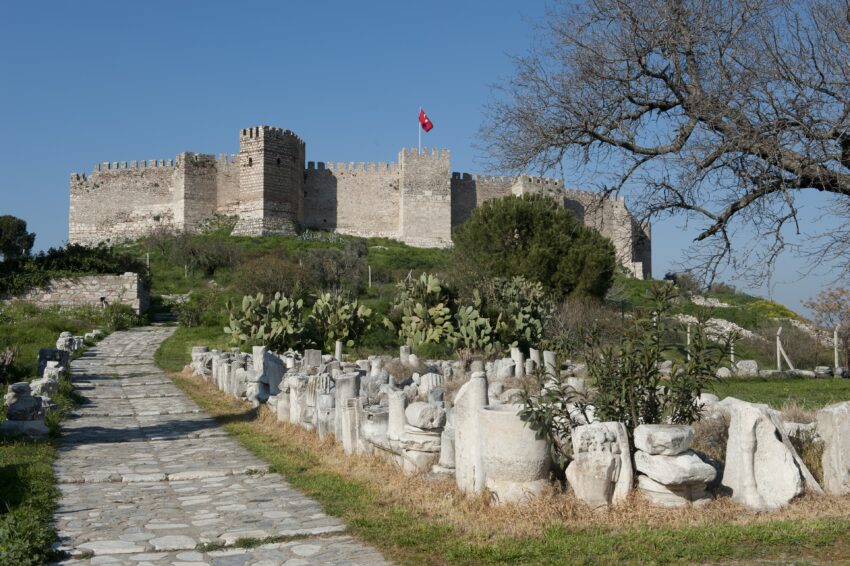
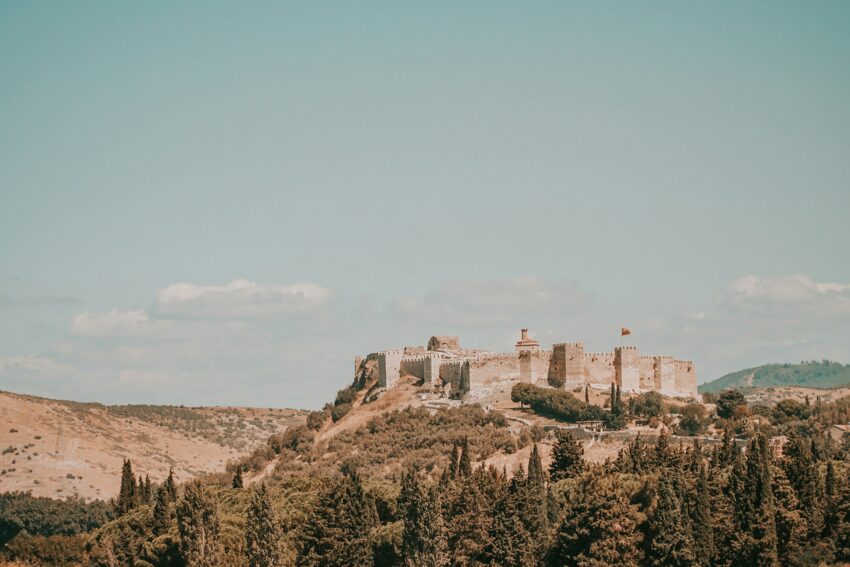
Ayasuluk Castle, also known as Selçuk Castle, stands on Ayasuluk Hill above the modern town of Selçuk, overlooking the area where ancient Ephesus gradually gave way to a new hilltop settlement. The fortress has its origins in the Byzantine period, with a 6th-century citadel built using stone taken from earlier Greek and Roman structures. As the ancient harbour of Ephesus silted up and the old city declined, the hill became increasingly important, offering a more defensible position and helping to protect the Basilica of Saint John on the southern slope below.
The castle’s surviving fortifications give a strong impression of its former military strength. Its walls are around 4 metres thick in places, stretching for roughly 1.5 kilometres and reinforced by 17 towers. Entry was historically connected with the Gate of Persecution, which led first into the precinct of the Basilica of Saint John before reaching the fortress above. After the Seljuks captured the site in 1090, the castle was repaired and reused, becoming part of a renewed settlement that flourished for a time before further silting of the harbour again reduced the area’s commercial importance.
In later centuries, Ayasuluk Castle continued to serve as a strategic and administrative stronghold under both the Seljuks and the Ottomans, with use as a garrison lasting into the 17th century. Within the walls, visitors can still see traces of this layered history, including the remains of the Kale Mosque, Ottoman-era cisterns, a Turkish bath, and former residential areas. The two main gates are also worth looking out for, with the west gate now serving as the usual visitor entrance. Today, the castle is best appreciated for its commanding position, surviving walls, and the way it brings together Byzantine, Seljuk, and Ottoman history in one compact hilltop site.
Location: İsa Bey, 35920 Selçuk/İzmir, Türkiye | Hours: (Summer) April 1 – October 31; Daily: 08:00–19:30. (Winter) November 1 – March 31; Daily: 08:30–17:00. | Price: Check official website. | Website
6. İsa Bey Mosque
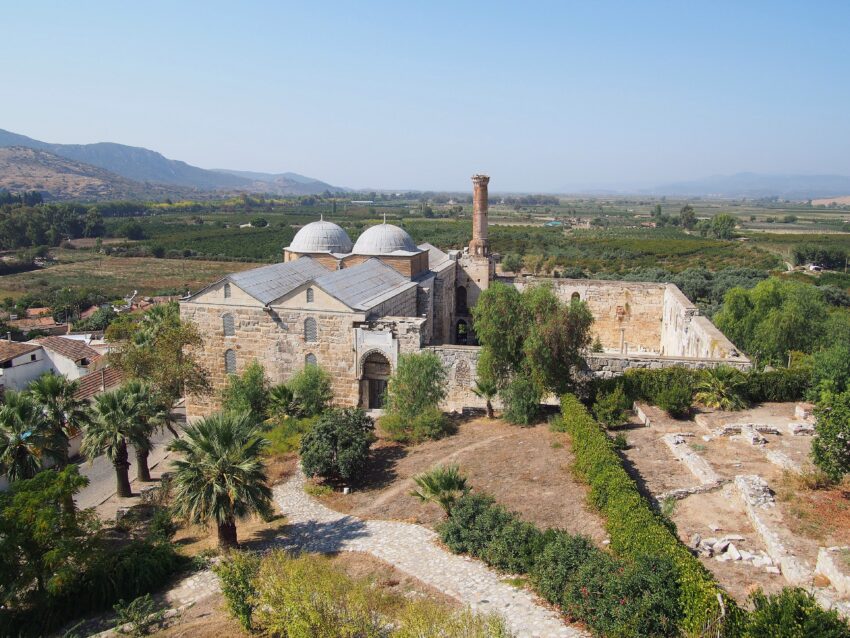
The İsa Bey Mosque was built in 1375 by order of İsa Bey, ruler of the Aydınoğulları Emirate, and is one of the most important early examples of Anatolian mosque architecture. It stands in Ayasuluk, at the base of the hill crowned by Ayasuluk Castle and close to the Basilica of Saint John, placing it within one of Selçuk’s richest historical landscapes. Designed by the Syrian architect Ali ibn al-Dimashqi, the mosque also reflects the long history of the area through its reuse of columns and stone from earlier ancient sites, including Ephesus and the Temple of Artemis.
Architecturally, the mosque is especially striking for its asymmetrical layout, richly decorated western façade, and monumental entrance doorway. The doorway is framed with elegant mouldings and an Arabic inscription, giving the exterior a strong sense of ceremony. The mosque originally had two minarets, though only one survives today after earthquake damage. Inside, visitors can see the colonnaded courtyard with its central ablution fountain, along with a prayer hall arranged around aisles and a central transept. The domed structure, supported by pendentives, shows clear links with wider Islamic architectural traditions, including comparisons with the Great Mosque of Damascus.
Decorative details add greatly to the mosque’s appeal, from muqarnas-style window mouldings to traces of turquoise and blue faience tilework. The building has been restored several times, including major work in 1934, 1970, and 2005, and it remains an active place of worship today. For visitors, the main interest lies in the contrast between the finely cut stone exterior and the layered interior spaces, as well as the visible reuse of classical materials. The İsa Bey Mosque is not only a beautiful historic monument, but also a living reminder of Selçuk’s Byzantine, classical, and Turkish-Islamic heritage.
Location: İsabey mahallesi, 2040. Sk. no:2, 35920 Selçuk/İzmir, Türkiye | Hours: Daily: 08:30–22:00. | Price: Free.
7. Isa Bey Hamam
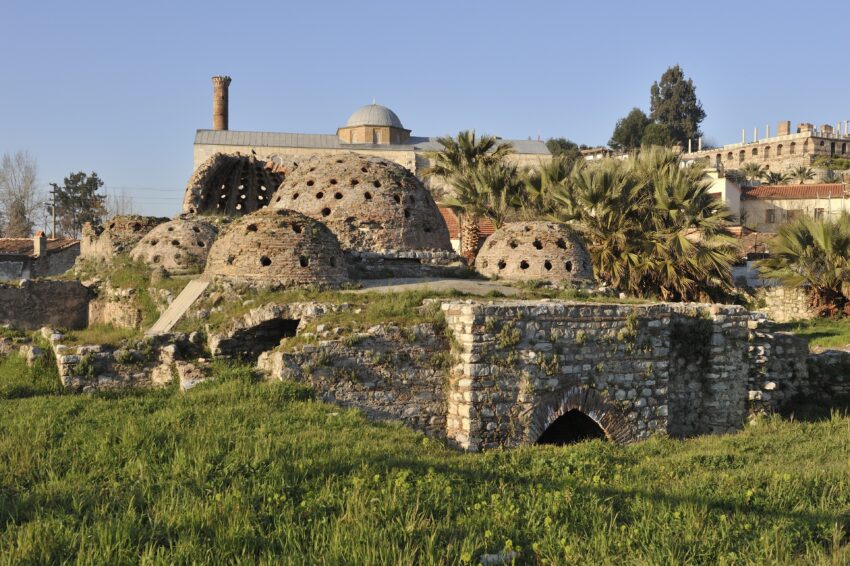
The İsa Bey Hamam is a 14th-century Turkish bath in Selçuk, located close to the İsa Bey Mosque and tied to the period of İsa Bey’s rule. Although its direct patronage is not completely certain, an inscription records that construction was overseen by Hoca Ali in late 1364. His connection to the wider mosque complex is strengthened by a gravestone dated 1378 in the courtyard of the İsa Bey Mosque, suggesting that the hamam formed part of the same historic urban setting at the foot of Ayasuluk Hill.
The building was constructed from cut stone and brick and once had ten domes, five of which survive today, giving the ruins their distinctive beehive-like appearance. Inside, the layout followed the traditional sequence of a Turkish bath, moving from the changing room into the warm room and then the hot room. The hot chamber was arranged beneath a central dome, with a cruciform plan that helped organise the bathing spaces around it. Light entering through openings in the domes would have created a soft, filtered atmosphere, while surviving traces of decoration hint at the care once given to the interior.
Archaeological evidence suggests that the bath was first built for men, with a women’s section added later and provided with its own entrance. Around the main bathing rooms are additional chambers thought to have served as shops, while a northern extension may have been used as a felt-making workshop. Today, the İsa Bey Hamam is partly ruined and fenced, but it remains an atmospheric stop for visitors exploring the historic sites of Selçuk. The uneven ground and exposed setting mean sturdy shoes, water, and sun protection are useful, especially when visiting during the hotter months.
Location: Atatürk, 1055. Sk. No:1, 35920 Selçuk/İzmir, Türkiye | Hours: Check official website. | Price: Check official website. | Website
8. Temple of Artemis
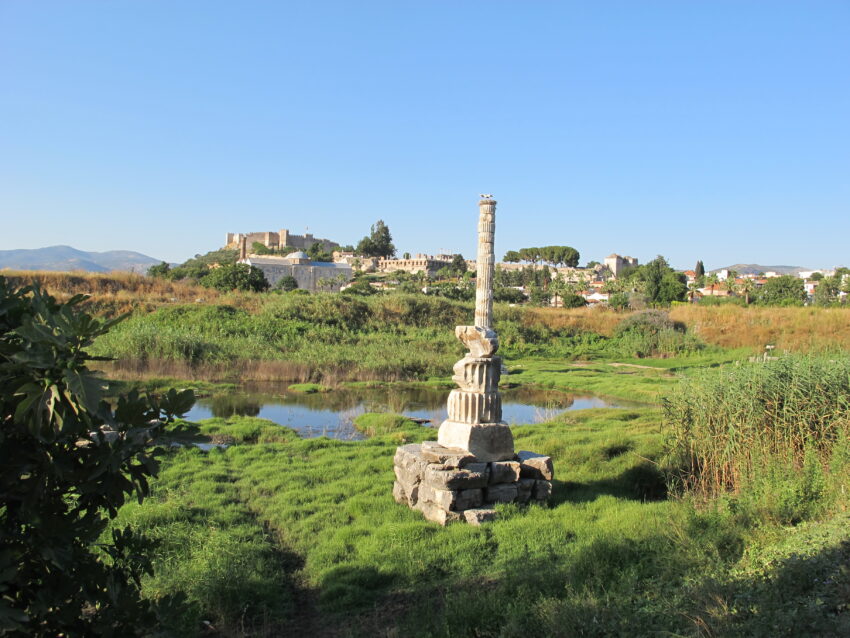
The Temple of Artemis, also known as the Artemision, was one of the Seven Wonders of the Ancient World and the great sanctuary of Artemis at Ephesus. Its most famous early monumental phase was commissioned around 550 BCE by Croesus of Lydia, whose wealth helped create a temple celebrated for its immense scale, sculptural decoration, and religious prestige. More than just a place of worship, the sanctuary was central to the identity of Ephesus, drawing pilgrims, patrons, and visitors from across the ancient Mediterranean.
The temple’s history was marked by destruction and rebuilding. In 356 BCE, it was famously burned by Herostratus, an act of arson that became notorious in the ancient world. The Ephesians later rebuilt the sanctuary on an even grander scale, creating a version of the temple that reinforced its reputation as one of antiquity’s most remarkable monuments. Its final major destruction came in 262 CE during a Gothic invasion, after which the temple was never fully reconstructed.
Today, the Temple of Artemis is a quiet but important archaeological site, where visitors can see the foundations and traces of the great temple phases, along with evidence of smaller earlier sanctuaries. Much of the surviving sculptural material, including decorated column fragments, is now held in the British Museum. Although the original cult statue has been lost, surviving copies of the distinctive Ephesian Artemis help convey the unusual character and importance of her worship. The ruins may be modest compared with the temple’s ancient fame, but they remain one of the most historically significant stops in Ephesus.
Location: Atatürk, Park İçi Yolu No:12, 35920 Selçuk/İzmir, Türkiye | Hours: Daily: 08:00–19:30. | Price: Free.
9. Seven Sleepers of Ephesus
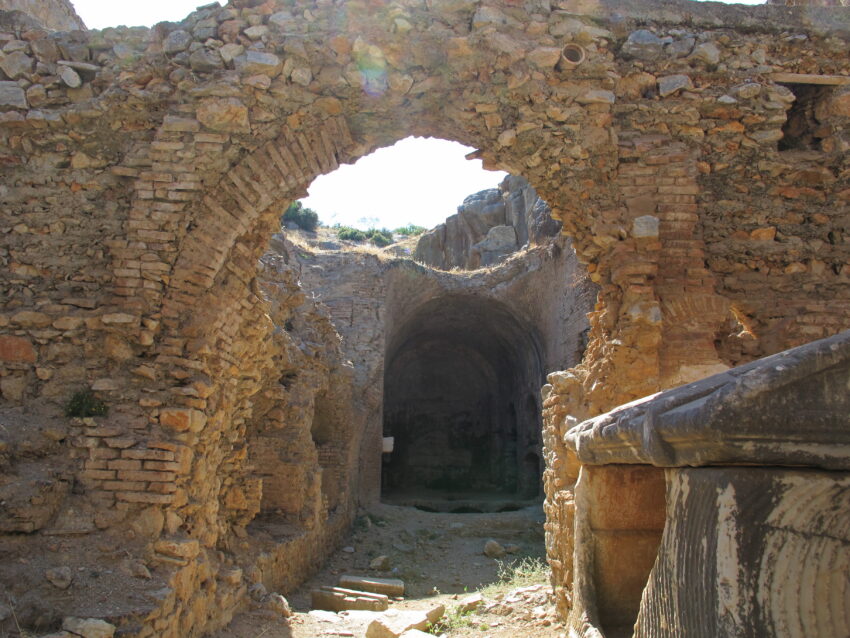
The Seven Sleepers, often called the “Seven Sleepers of Ephesus,” is a legend about seven young Christians living in Ephesus in the 3rd century CE, during the reign of the Roman Emperor Decius—a period associated with persecution of Christians. To escape arrest, the youths hid in a cave outside the city around 250 CE. There, they fell into an extraordinary sleep said to last roughly 150–200 years, awakening during the reign of Theodosius II.
Famished, they sent one companion to buy bread, but the ancient coin he offered immediately aroused suspicion. The shopkeeper alerted the authorities, and the young men were brought in for questioning. In the tradition, their story was seen as miraculous, and they came to be regarded as holy figures. Theodosius II reportedly wished to meet them, but by the time he arrived they had died—often explained as the toll of age catching up with them at once. They were then buried in the same cave where they had slept, and in later centuries many sought burial nearby out of reverence.
A parallel version of the story also appears in the Qur’an. While the Qur’anic account does not specify the number of youths, it broadly follows the same outline, and includes an additional detail: a dog said to have accompanied them into the cave and kept watch at the entrance. In Islamic tradition, they are commonly referred to as “The People of the Cave” (Ashab al-Kahf).

Moira & Andy
Hey! We're Moira & Andy. From hiking the Camino to trips around Europe in Bert our campervan — we've been traveling together since retirement in 2020!
This website uses affiliate links which earn a small commission at no additional cost to you.
Walking Tour Summary
Distance: 7 km
Sites: 9
Walking Tour Map