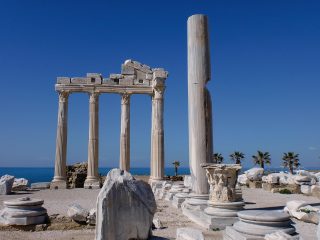
Temple of Hadrian, Ephesus
Historic Site, Roman Site and Ruins in Ephesus
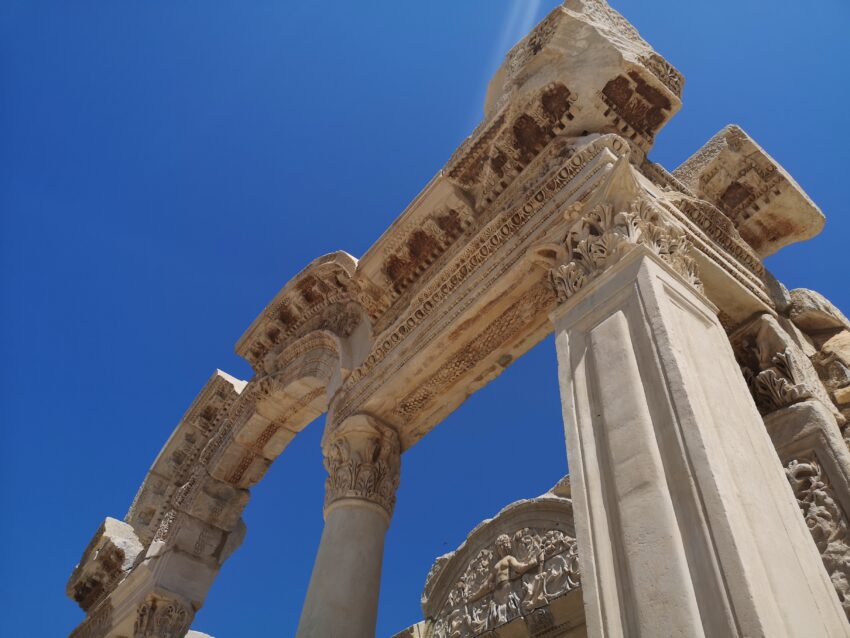
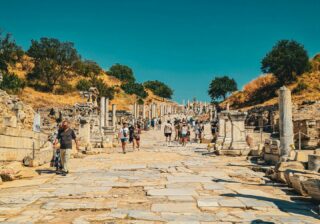
Set along Ephesus's famous Curetes Street, the Temple of Hadrian is one of the archaeological site's most eye-catching stops: a compact, elegant Roman monument with a richly decorated facade that rewards a slow, close look.
Most visitors encounter it naturally on a walking tour through the ruins, typically between major highlights like the Library of Celsus and the Terrace Houses area. Because it sits right on the main route, it's easy to “walk past” in a hurry-so it's worth planning a short pause here to appreciate the carvings and proportions.
Table of Contents
- History and Significance of the Temple of Hadrian
- Things to See and Do in the Temple of Hadrian
- How to Get to the Temple of Hadrian
- Practical Tips on Visiting the Temple of Hadrian
- Where to Stay Close to the Temple of Hadrian
- Is the Temple of Hadrian Worth Visiting?
- For Different Travelers
- FAQs for Visiting Temple of Hadrian
History and Significance of the Temple of Hadrian
The Temple of Hadrian dates to the Roman Imperial period and is traditionally linked to Emperor Hadrian, whose reign marked a high point of stability and monumental building across the empire. In Ephesus, the temple's placement on Curetes Street underscores how civic pride, religion, and imperial politics blended into the city's everyday public spaces.
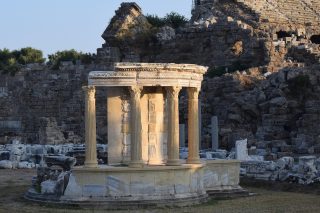
While what you see today is not a full temple complex, the surviving facade still communicates the original intent: to impress. Its columns, arch, and sculptural details functioned as a visual statement of Ephesus’s status and its relationship with Rome.
Visitors often notice that parts of the decorative program are restored or replicated. Even so, the temple remains one of the best “at-a-glance” examples in Ephesus for understanding Roman architectural style, street-level monumentality, and how art was used to tell stories about power and identity.
Things to See and Do in the Temple of Hadrian
Start with the facade itself: the Corinthian columns and the curved arch create a striking frame that stands out even among Ephesus's grander ruins. Step to the side and look back up Curetes Street for a classic perspective that shows how the monument fits into the city's main ceremonial thoroughfare.
Next, spend a minute on the reliefs and decorative elements. Even if some panels are replicas, they're still useful for reading the “visual language” of the site-myth, symbolism, and civic storytelling-especially if you're pairing your visit with the nearby Terrace Houses or the Ephesus Museum in Selçuk.
Finally, use this stop as a pacing point on your route. Ephesus can feel like a highlight overload; the Temple of Hadrian is a perfect place to slow down, hydrate, and reset before continuing toward the Library of Celsus and the lower sections of the site.
How to Get to the Temple of Hadrian
The nearest major airport is İzmir Adnan Menderes Airport (ADB), with additional options via Milas-Bodrum Airport (BJV) depending on your itinerary. For the best deals and a seamless booking experience, check out these flights to Ephesus on Booking.com.
To reach the Ephesus area by rail, you can take a train to Selçuk (served by regional services from İzmir), then continue by taxi, local minibus, or tour transport to the Ephesus entrances. You can use the official TCDD Taşımacılık website to check schedules, compare routes, and purchase tickets for Türkiye’s national and regional trains operated by TCDD. For a more streamlined experience (especially if you prefer an English interface or want to compare across countries), we recommend using Omio, which allows you to easily compare prices, schedules, and book train tickets across Türkiye and the rest of Europe — all in one place..
If you're traveling by car, Selçuk is straightforward to reach via the İzmir-Aydın corridor, and you can drive to the Ephesus parking areas at the upper or lower gate depending on your preferred walking direction. If you are looking to rent a car in Türkiye I recommend having a look at Discover Cars, first, as they compare prices and review multiple car rental agencies for you.
Practical Tips on Visiting the Temple of Hadrian
- Official website: https://muze.gov.tr/urun-ekle?catalogNo=WEB-EFS01-87-009
- Entrance fee: Included with Ephesus with Ephesus Experience Museum (40 Euro per person); Ephesus with Ephesus Experience Museum + Terrace Houses: 52 Euro p.p.
- Opening hours: (Summer) April 1 – October 31; Daily: 08:00–19:30. (Winter) October 31 – April 1; Daily: 08:30–17:00.
- Best time to visit: Go early for cooler temperatures and fewer groups on Curetes Street; late afternoon can also be calmer for photos.
- How long to spend: Plan 10-20 minutes here, or longer if you like architectural details and want multiple angles.
- Accessibility: The approach is within a large open-air ruin with uneven marble paving and slopes; sturdy shoes help, and some areas may be challenging for wheelchairs.
- Facilities: Facilities are at the broader Ephesus site entrances (restrooms, ticketing, and small services), not at the monument itself-carry water.
Where to Stay Close to the Temple of Hadrian
Base yourself in Selçuk town center for the easiest logistics to Ephesus, restaurants, and the train station.
Akanthus Hotel Ephesus A boutique-style option that's popular for its calm atmosphere and convenient access to Ephesus and Selçuk's sights.
Ayasoluk Hotel A characterful stay near Ayasuluk Hill, great if you want a more scenic, historic-feeling base after a day in the ruins.
Cella Boutique Hotel & Spa A comfortable pick with a spa angle-nice if you want a recovery-friendly hotel after lots of walking on stone streets.
Ephesus Centrum A practical, central choice that works well for travelers prioritizing location and simple day-trip planning.
Korumar Ephesus Beach & Spa Resort A resort-style option closer to the coast, ideal if you're combining Ephesus with beach time and want on-site amenities.
Is the Temple of Hadrian Worth Visiting?
Yes-definitively. Even though it's not the largest structure in Ephesus, it's one of the most memorable because it's so well-positioned on the main street and still shows refined Roman design up close. It's also a quick “high impact” stop: you don't need a long detour or extra planning to enjoy it.
Honest Pivot: If you're short on time and mainly want the biggest headline sights (like the Library of Celsus and the Great Theatre), you could treat the Temple of Hadrian as a brief photo stop rather than a deep-dive. And if you're not comfortable walking on uneven stone streets, you may prefer focusing on fewer highlights with easier footing.
What Other Travellers Say...
Travelers rate the Temple of Hadrian extremely highly and often call it one of the most beautiful, best-preserved stops along Curetes Street. Common highlights include the elegant facade, impressive carvings and details for its age, and how easy it is to spot on the main route through Ephesus. A few visitors note that only part of the original structure remains and that some reliefs are reconstructed or replicas, but most still find it a standout moment within the wider ruins.





For Different Travelers
The Temple of Hadrian is a flexible stop: it works as a quick wow-moment for fast itineraries and as a detail-rich subject for travelers who like to linger. Because it's on the main route, it's easy to fit into almost any Ephesus plan without extra navigation.
Families with Kids
Kids often enjoy this stop because it’s visually striking and easy to “spot” on the street-columns, arch, and carvings feel like a real-life adventure set. It’s also a good place for a short break because you can keep moving without losing your place on the main path.
To keep it engaging, turn it into a quick scavenger hunt: count columns, look for decorative patterns, and compare this facade to other buildings you pass. Pair it with a shorter overall Ephesus route to avoid fatigue.
Couples & Romantic Getaways
For couples, the Temple of Hadrian is one of the most photogenic corners of Ephesus, especially when the light is softer. It's a natural pause point for taking portraits without needing to step away from the main flow of the site.
If you're building a romantic day, combine an early visit to Ephesus with a relaxed lunch in Selçuk afterward. The temple's street setting also makes it feel cinematic-like you're walking through a living museum.
Budget Travelers
Budget travelers will appreciate that this is a major highlight included within the standard Ephesus site visit-no separate ticket just to see it. Because it's right on the route, you won't need extra transport or add-ons to include it.
To keep costs down, consider visiting independently from Selçuk and pacing your day so you don't feel pushed into paid extras. Bring water and sun protection so you're not relying on higher-priced on-site purchases.
History Buffs
History buffs should treat this as more than a photo stop: it's a great place to think about how imperial power was presented in a provincial city. The temple's location on Curetes Street is part of the story-monuments weren't isolated; they were embedded in daily urban life.
If you want more context, pair this stop with the Terrace Houses (for elite domestic life) and the Ephesus Museum in Selçuk (for artifacts and interpretation). Together, they help connect architecture, art, and lived experience.
FAQs for Visiting Temple of Hadrian
Getting There
Tickets & Entry
Visiting Experience
Tours, Context & Itineraries
Photography
Accessibility & Facilities
Food & Breaks Nearby
Safety & Timing
The Temple of Hadrian appears in our Complete Guide to Visiting Ephesus!

Moira & Andy
Hey! We're Moira & Andy. From hiking the Camino to trips around Europe in Bert our campervan — we've been traveling together since retirement in 2020!
This website uses affiliate links which may earn a commission at no additional cost to you!
Planning Your Visit
(Summer) April 1 - October 31; Daily: 08:00-19:30.
(Winter) October 31 - April 1; Daily: 08:30-17:00.
Included with Ephesus with Ephesus Experience Museum (40 Euro per person); Ephesus with Ephesus Experience Museum + Terrace Houses: 52 Euro p.p.
Nearby Attractions
- Terrace Houses of Ephesus (0) km
Historic Room, Historic Site and Roman Site - Public Roman Latrines (0) km
Historic Site, Roman Site and Ruins - Trajan Fountain (0.1) km
Fountain, Roman Site and Ruins - House of Pleasure (0.1) km
Ancient City, Historic Site and Ruins - Curetes Street (0.1) km
Ancient City, Ruins and Street - Library of Celsus (0.1) km
Library, Roman Site and Ruins - Gate of Mazaeus and Mithridates (0.1) km
City Gate, Historic Site and Ruins - Heracles Gate (0.1) km
City Gate, Historic Site and Ruins - Memmius Monument (0.2) km
Monument, Roman Site and Ruins - Commercial Agora (0.2) km
Ancient City, Historic Site and Square