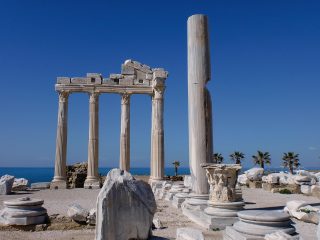
Curetes Street, Ephesus
Ancient City, Ruins and Street in Ephesus
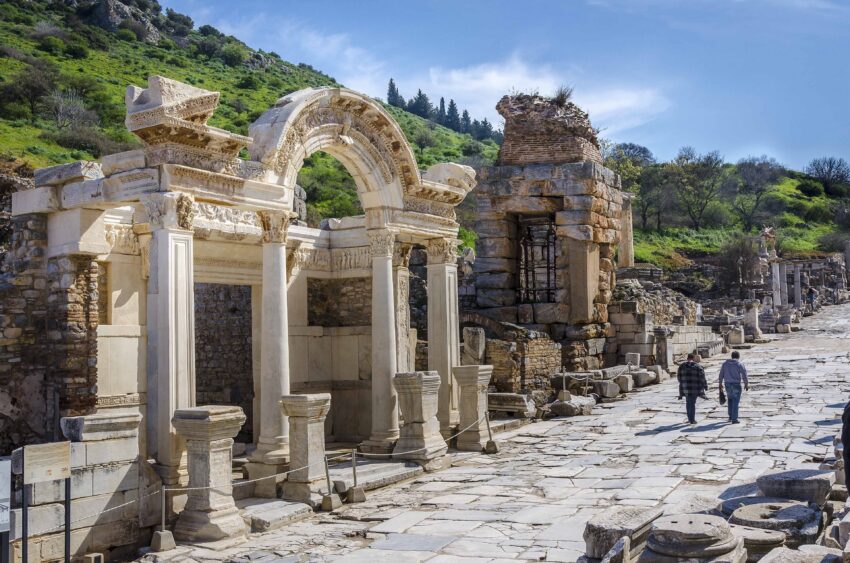
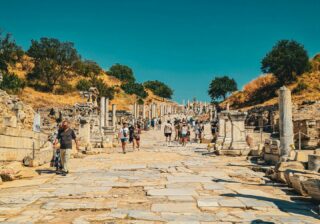
Curetes Street is the gently sloping, marble-paved main street that cuts through the heart of ancient Ephesus, linking major monuments and giving you that unmistakable “I'm walking through history” feeling with every step. It's not a modern shopping street so much as the city's ceremonial spine, lined with columns, statues, fountains, and temple fronts that still read clearly even as ruins.
Most visitors experience Curetes Street as part of a one-way walk through the Ephesus archaeological site, often on a guided walking tour that starts at one gate and finishes at the other. The best views and photo moments come from pausing at the street's landmark buildings, then ducking into side areas (like the Terrace Houses) when the main flow gets busy.
Table of Contents
History and Significance of the Curetes Street
Curetes Street took shape during Ephesus's Roman-era peak, when the city was a powerhouse port and a major cultural center in the eastern Mediterranean. As a principal thoroughfare, it wasn't just for getting from A to B; it was designed to impress, framing civic life with monumental architecture, inscriptions, and public spaces.
Walking it today helps you understand how Ephesus functioned as a living city. You can read the hierarchy of spaces in the stone: grand façades and public fountains on the main route, with elite residences and specialized buildings branching off.
It's also significant because it connects some of Ephesus's most iconic sights into a single, coherent “storyline.” Even if you're not a history specialist, Curetes Street is where the site's scale and sophistication become easiest to grasp.
Things to See and Do in the Curetes Street
The joy of Curetes Street is that it's both a route and a destination. As you walk, look for the rhythm of the ancient city: the way the street curves, how the paving stones catch the light, and how the monuments are positioned to create dramatic reveals as you move.
Plan to pause at the major landmarks along or just off the street, including the Temple of Hadrian area and the nearby Library of Celsus viewpoint (depending on your walking direction). If you want the most “wow” details, add the Terrace Houses for mosaics, frescoes, and a closer look at daily life among Ephesus's wealthier residents.
If you're visiting without a guide, Curetes Street is still easy to enjoy, but context helps. Consider an audio guide or a short guided tour so the carved reliefs, inscriptions, and building functions don't blur together into “beautiful ruins.”
How to Get to the Curetes Street
The nearest major airports are İzmir Adnan Menderes Airport (ADB) and, farther south, Milas-Bodrum Airport (BJV); from either, you'll typically base yourself around Selçuk or Kuşadası for access to Ephesus. For the best deals and a seamless booking experience, check out these flights to Ephesus on Booking.com.
For rail, you can take a train to Selçuk (commonly via İzmir), then continue by taxi or local transport to the Ephesus entrance gates depending on your planned walking direction through the site. You can use the official TCDD Taşımacılık website to check schedules, compare routes, and purchase tickets for Türkiye’s national and regional trains operated by TCDD. For a more streamlined experience (especially if you prefer an English interface or want to compare across countries), we recommend using Omio, which allows you to easily compare prices, schedules, and book train tickets across Türkiye and the rest of Europe — all in one place.
By car, Ephesus is an easy drive from İzmir and Kuşadası, with parking available near the main entrances; aim to arrive early to beat tour-bus waves and midday heat. If you are looking to rent a car in Türkiye I recommend having a look at Discover Cars, first, as they compare prices and review multiple car rental agencies for you.
Practical Tips on Visiting the Curetes Street
- Official website: https://muze.gov.tr/urun-ekle?catalogNo=WEB-EFS01-87-009
- Entrance fee: Included with Ephesus with Ephesus Experience Museum (40 Euro per person); Ephesus with Ephesus Experience Museum + Terrace Houses: 52 Euro p.p.
- Opening hours: (Summer) April 1 – October 31: 08:00–19:30. (Winter) October 31 – April 1: 08:30–17:00.
- Best time to visit: Go right at opening for cooler temperatures and fewer crowds; late afternoon can also be calmer with softer light on the marble.
- How long to spend: Budget 2-4 hours for the broader Ephesus walk that includes Curetes Street; add extra time if you're doing the Terrace Houses and frequent photo stops.
- Accessibility: Expect uneven marble, slopes, and steps; sturdy shoes are essential, and the route can be challenging for wheelchairs or anyone with limited mobility.
- Facilities: Entrances typically have ticketing and basic services; bring water and sun protection, and plan restroom stops near the gates rather than mid-route.
Where to Stay Close to the Curetes Street
Base yourself in Selçuk for the easiest access to Ephesus, early starts, and a more relaxed small-town feel after the day-trippers leave.
Ayasoluk Hotel A stylish boutique option with a calm atmosphere that suits early mornings; it’s a great pick if you want comfort and character close to the ruins.
Cella Boutique Hotel & Spa Chosen for travelers who want a spa-style wind-down after walking on stone all day, plus a polished, modern boutique vibe.
Ephesus Centrum A practical, central base that keeps logistics simple for buses, taxis, and quick meals before or after your site visit.
Akanthus Hotel Ephesus Included for its boutique feel and traveler-friendly comfort, ideal if you want a quieter stay without being isolated.
Korumar Ephesus Beach & Spa Resort A strong choice if you'd rather pair Ephesus with a resort-style beach break; it's convenient for combining ruins in the morning and downtime later.
Is the Curetes Street Worth Visiting?
Yes, Curetes Street is absolutely worth visiting because it's the walk that makes Ephesus feel like a real city rather than a scattered set of ruins. The marble paving, the monumental façades, and the steady sequence of landmarks deliver that rare travel experience where the setting alone tells a story.
Honest Pivot: If you dislike crowds, heat, or long walks on uneven stone, you may find Curetes Street more tiring than inspiring, especially in peak season. In that case, consider visiting in winter or shoulder months, or choose a shorter, guide-led highlights tour that reduces time spent in the busiest stretches.
What Other Travellers Say...
Reviews are overwhelmingly positive, with visitors describing the walk through Ephesus (including Curetes Street) as breathtaking and time-travel-like thanks to the marble streets and standout monuments. Common highlights include the site's impressive preservation, major landmarks such as the Library of Celsus and the Great Theatre, and the value of adding the Terrace Houses for extra detail. The most frequent downsides are heavy crowds (even early in the day during peak months) and limited English information on-site for independent visitors; several reviewers also note that entry can feel expensive.





For Different Travelers
Curetes Street works well as a “choose your own depth” attraction: you can breeze through for the big views, or slow down for details, side rooms, and context. The key is matching your pace and add-ons (like Terrace Houses) to your travel style.
Families with Kids
Kids often enjoy Curetes Street most when it's framed as a scavenger hunt: columns, carvings, ancient “sidewalks,” and big theatrical spaces nearby. Keep the visit shorter and prioritize a few dramatic stops rather than trying to cover every plaque and ruin.
Bring snacks and water, and plan breaks at the entrances rather than expecting frequent stops inside the site. If your family is sensitive to heat, an early start is the difference between fun and meltdown.
Couples & Romantic Getaways
For couples, Curetes Street is at its best early or late in the day when the light is warm and the crowds thin out. The marble textures and grand façades make it one of the most cinematic walks in the region.
Pair it with a relaxed meal in Selçuk afterward, or combine it with a sunset viewpoint nearby for a full, unhurried day. A private guide can also make the experience feel more personal and less like a conveyor-belt sightseeing stop.
Budget Travelers
Budget travelers can get huge value here because Curetes Street is part of the main Ephesus visit and delivers a lot without needing extra paid add-ons. Save money by bringing your own water and sun protection, and consider visiting in the off-season for a calmer experience.
If you’re choosing one paid extra, the Terrace Houses can be the most “worth it” for detail and preservation, but it’s optional. You can still have a memorable visit by focusing on the main route and taking your time.
History Buffs
History lovers should treat Curetes Street as a framework for understanding Ephesus: civic life, elite housing, public religion, and urban design all intersect here. Slow down and look for how buildings relate to each other rather than ticking off monuments.
A knowledgeable guide (or a well-structured audio guide) pays off because many of the most interesting details are easy to miss without context. If you can, visit early for better photos of inscriptions and architectural fragments.
FAQs for Visiting Curetes Street
Getting There
Tickets & Entry
Visiting Experience
Tours, Context & Itineraries
Photography
Accessibility & Facilities
Food & Breaks Nearby
Safety & Timing
The Curetes Street appears in our Complete Guide to Visiting Ephesus!

Moira & Andy
Hey! We're Moira & Andy. From hiking the Camino to trips around Europe in Bert our campervan — we've been traveling together since retirement in 2020!
This website uses affiliate links which may earn a commission at no additional cost to you!
Planning Your Visit
(Summer) April 1 - October 31: 08:00-19:30.
(Winter) October 31 - April 1: 08:30-17:00.
Included with Ephesus with Ephesus Experience Museum (40 Euro per person); Ephesus with Ephesus Experience Museum + Terrace Houses: 52 Euro p.p.
Nearby Attractions
- Heracles Gate (0) km
City Gate, Historic Site and Ruins - Trajan Fountain (0) km
Fountain, Roman Site and Ruins - Memmius Monument (0.1) km
Monument, Roman Site and Ruins - Temple of Hadrian (0.1) km
Historic Site, Roman Site and Ruins - Temple of Domitian (0.1) km
Historic Site, Roman Site and Ruins - Public Roman Latrines (0.1) km
Historic Site, Roman Site and Ruins - Terrace Houses of Ephesus (0.1) km
Historic Room, Historic Site and Roman Site - Prytaneion (0.2) km
Ancient City, Historic Site and Ruins - House of Pleasure (0.2) km
Ancient City, Historic Site and Ruins - Odeon (0.2) km
Roman Site, Ruins and Theatre