Temple of Domitian, Ephesus
Historic Site, Roman Site and Ruins in Ephesus
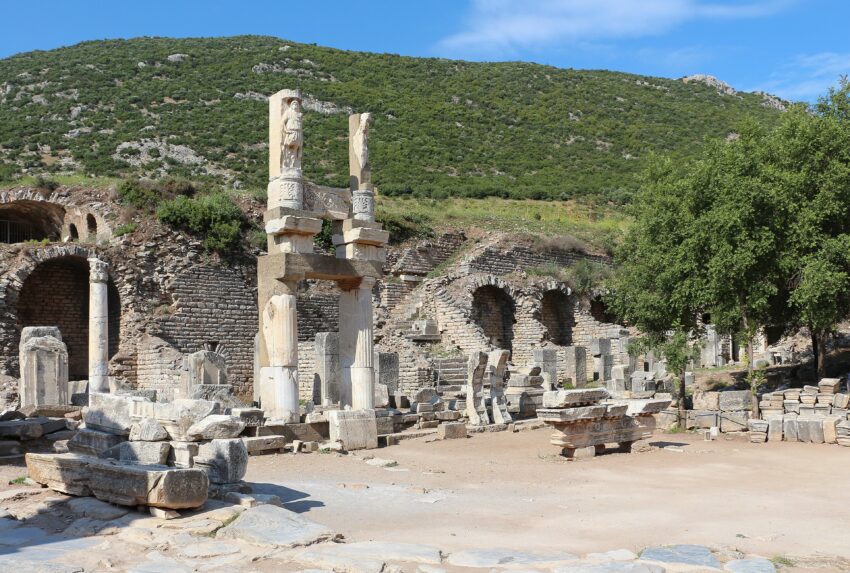
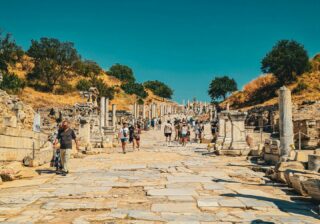
Set within the vast UNESCO-listed ruins of Ephesus, the Temple of Domitian is one of the ancient city's most historically loaded stops, even if the surviving remains are modest. You'll find it along the main visitor route, making it an easy add-on whether you're exploring independently or following a guide through Ephesus' headline monuments.
Most travelers encounter the Temple of Domitian as part of a classic top-to-bottom walking tour that links the Upper Gate to the Lower Gate (or the reverse), passing major landmarks like Curetes Street and the Library of Celsus. It's also a good place to pause and look around for carved stone fragments and inscriptions nearby, which help bring the site back to life.
Table of Contents
- History and Significance of the Temple of Domitian
- Things to See and Do in the Temple of Domitian
- How to Get to the Temple of Domitian
- Practical Tips on Visiting the Temple of Domitian
- Where to Stay Close to the Temple of Domitian
- Is the Temple of Domitian Worth Visiting?
- For Different Travelers
- FAQs for Visiting Temple of Domitian
History and Significance of the Temple of Domitian
The Temple of Domitian is traditionally associated with the imperial cult in Roman Ephesus, when honoring the emperor was both a political statement and a civic duty. In a city as wealthy and influential as Ephesus, monumental architecture wasn't just decoration; it was a public declaration of status, loyalty, and identity within the empire.
Although the structure you see today is largely fragmentary, the temple's importance lies in what it represented: the intersection of religion, power, and urban life. Ephesus was a major provincial center, and imperial cult spaces like this helped anchor Roman authority in daily rituals and public ceremonies.
To appreciate the significance, it helps to think beyond the remaining columns and foundations. The temple once sat within a carefully designed sacred precinct, framed by terraces and public spaces that guided movement and attention, much like a stage set for civic life.
Things to See and Do in the Temple of Domitian
Start by orienting yourself to the temple platform and the surrounding layout. Even if the superstructure is mostly gone, the scale of the terrace and the positioning within the city plan hint at how prominent this complex once was.
Next, look for architectural fragments and carved stones in the immediate area. Many visitors miss these details while rushing between bigger “photo-op” landmarks, but they’re often the most tangible clues to craftsmanship, decoration, and the temple’s original grandeur.
Finally, use this stop as a pacing point in your Ephesus walk. It's a natural breather between denser clusters of sights, and it's particularly rewarding on a guided walking tour where a good guide can help you visualize what stood here and why it mattered.
How to Get to the Temple of Domitian
The nearest major airport is İzmir Adnan Menderes Airport (ADB), with additional flight options sometimes available via Milas-Bodrum Airport (BJV) depending on your itinerary. For the best deals and a seamless booking experience, check out these flights to Ephesus on Booking.com.
To reach the area by rail, take a train to Selçuk (served by regional services from İzmir), then continue by taxi, local transport, or a tour transfer to the Ephesus entrances. You can use the official TCDD Taşımacılık website to check schedules, compare routes, and purchase tickets for Türkiye’s national and regional trains operated by TCDD. For a more streamlined experience (especially if you prefer an English interface or want to compare across countries), we recommend using Omio, which allows you to easily compare prices, schedules, and book train tickets across Türkiye and the rest of Europe — all in one place.
If you're driving, Ephesus is an easy day trip from İzmir or Kuşadası, and you can park near either the Upper Gate or the Lower Gate depending on your planned walking direction. If you are looking to rent a car in Türkiye I recommend having a look at Discover Cars, first, as they compare prices and review multiple car rental agencies for you.
Practical Tips on Visiting the Temple of Domitian
- Official website: https://muze.gov.tr/urun-ekle?catalogNo=WEB-EFS01-87-009
- Entrance fee: Included with Ephesus with Ephesus Experience Museum (40 Euro per person); Ephesus with Ephesus Experience Museum + Terrace Houses: 52 Euro p.p.
- Opening hours: (Winter) Monday – Sunday: 08:00–18:00.
- Best time to visit: Go early in the morning for cooler temperatures and fewer tour groups, or aim for later in the day when the light is softer for photos and the crowds thin out.
- How long to spend: Plan 10-20 minutes here on a standard Ephesus route, or longer if you like studying stonework and inscriptions and want time to imagine the original layout.
- Accessibility: Expect uneven stone surfaces, steps, and limited shade; sturdy shoes are essential, and mobility can be challenging in this part of the archaeological site.
- Facilities: Basic facilities (toilets, ticketing, and small kiosks) are typically concentrated near the main entrances rather than at individual monuments, so plan water and breaks accordingly.
Where to Stay Close to the Temple of Domitian
Base yourself in Selçuk for the easiest access to Ephesus early in the day, plus a calmer evening scene than the coastal resort areas.
Ayasoluk Hotel Chosen for its boutique feel and strong sense of place, making it a great match if you want a quieter, characterful base near Ephesus.
Cella Boutique Hotel & Spa Included for travelers who want a comfortable, modern stay with spa-style downtime after long hours walking on stone streets and ruins.
Akanthus Hotel Ephesus A good pick if you like smaller hotels with attentive service and an easy, low-stress start for early entry to the archaeological site.
Ephesus Centrum Recommended for its practical location and straightforward comfort, ideal if you’re prioritizing logistics and value over resort amenities.
Kalehan Hotel Added for its classic, garden-like atmosphere that feels relaxing after a full day of sightseeing, plus a convenient base for Selçuk’s walkable center.
Is the Temple of Domitian Worth Visiting?
Yes, it's worth visiting because it sits right on the natural flow of an Ephesus walk and adds an important layer of context about Roman power and civic religion. Even if the remains are limited, it's one of those stops where a little historical framing makes the surrounding cityscape feel more coherent.
Honest Pivot: If you're short on time, not especially interested in Roman history, or you prefer “complete” buildings over fragmentary ruins, you can treat this as a quick pass-through and spend your attention on the Library of Celsus, the Terrace Houses, and the Grand Theatre instead.
What Other Travellers Say...
Reviews are very positive overall, with travelers praising the sense of history and the way the temple fits naturally into a broader walk through Ephesus. Visitors like the chance to reflect on Roman engineering and often mention nearby inscriptions and stone fragments that add context. The main downside is that relatively little remains standing today, so some people feel it's visually underwhelming unless you enjoy imagining the original structure.





For Different Travelers
Different travelers experience the Temple of Domitian differently: some see a brief stop with a couple of columns, while others enjoy it as a puzzle piece that explains how Ephesus functioned as a Roman city. The key is setting expectations and using the stop to enrich the bigger Ephesus story.
Families with Kids
For kids, this stop works best as a short, imaginative challenge: “What do you think this looked like?” Keep it quick and pair it with more visually dramatic landmarks nearby so attention doesn’t fade.
If you're doing Ephesus as a family walking tour, use the Temple of Domitian as a rest-and-reset point. A snack and water break here can make the rest of the route feel much easier.
Couples & Romantic Getaways
Couples will appreciate this as a quieter pause between Ephesus’ headline sights, especially if you time your visit to avoid the busiest mid-morning wave. It’s a good spot to slow down and take in the scale of the ancient city around you.
If you enjoy shared “storytelling” moments, this is a fun place to compare what each of you notices: stone fragments, layout, and how the temple terrace relates to the surrounding streets.
Budget Travelers
Budget travelers will like that this is included within the broader Ephesus archaeological site visit, so it doesn't require an extra ticket on its own. It's also a good reminder that some of the most meaningful stops aren't the most photogenic.
To keep costs down, consider staying in Selçuk and arriving early to maximize your day without needing a private transfer. A self-guided route with a downloaded map can still make this stop feel purposeful.
History Buffs
History lovers should absolutely stop here and linger. The temple’s association with the imperial cult opens up bigger questions about how Rome governed provinces through ritual, architecture, and local elites.
To deepen the experience, pay attention to the surrounding stones and inscriptions and how the terrace is engineered into the hillside. It's a compact lesson in how Ephesus blended politics, religion, and urban planning.
FAQs for Visiting Temple of Domitian
Getting There
Tickets & Entry
Visiting Experience
Tours, Context & Itineraries
Photography
Accessibility & Facilities
Food & Breaks Nearby
Safety & Timing
The Temple of Domitian appears in our Complete Guide to Visiting Ephesus!

Moira & Andy
Hey! We're Moira & Andy. From hiking the Camino to trips around Europe in Bert our campervan — we've been traveling together since retirement in 2020!
This website uses affiliate links which may earn a commission at no additional cost to you!
Planning Your Visit
(Winter) Monday - Sunday: 08:00-18:00.
Included with Ephesus with Ephesus Experience Museum (40 Euro per person); Ephesus with Ephesus Experience Museum + Terrace Houses: 52 Euro p.p.
Nearby Attractions
- Memmius Monument (0) km
Monument, Roman Site and Ruins - Heracles Gate (0.1) km
City Gate, Historic Site and Ruins - Prytaneion (0.1) km
Ancient City, Historic Site and Ruins - Curetes Street (0.1) km
Ancient City, Ruins and Street - State Agora (0.1) km
Ancient City, Ruins and Square - Odeon (0.1) km
Roman Site, Ruins and Theatre - Trajan Fountain (0.2) km
Fountain, Roman Site and Ruins - Baths of Varius (0.2) km
Baths, Roman Site and Ruins - Temple of Hadrian (0.2) km
Historic Site, Roman Site and Ruins - Terrace Houses of Ephesus (0.3) km
Historic Room, Historic Site and Roman Site