Public Roman Latrines, Ephesus
Historic Site, Roman Site and Ruins in Ephesus
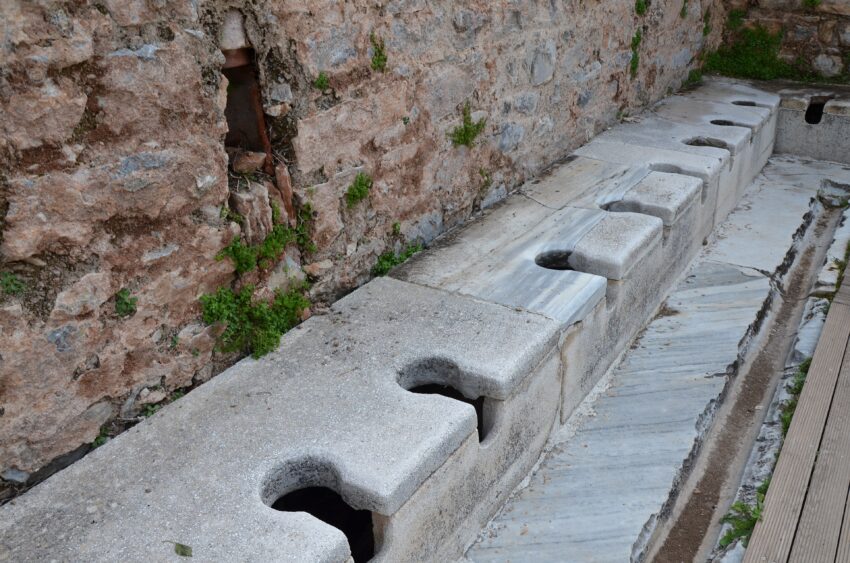
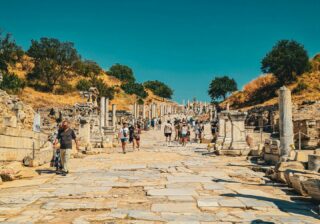
The Public Roman Latrines are one of those Ephesus sights that instantly makes the ancient city feel human: not emperors and marble facades, but the everyday routines that kept a Roman metropolis running. You'll find them within the Ephesus archaeological site (near the main marble streets and major monuments), making them an easy stop as you wander between headline attractions.
Most visitors see the latrines as part of a broader Ephesus walking route, either on a guided walking tour from Selçuk or Kuşadası, or on a self-guided stroll that also takes in the Library of Celsus, the Terrace Houses area, and the Great Theatre. They're quick to visit, but memorable-especially if you like the details that bring ancient life into focus.
Table of Contents
- History and Significance of the Public Roman Latrines
- Things to See and Do in the Public Roman Latrines
- How to Get to the Public Roman Latrines
- Practical Tips on Visiting the Public Roman Latrines
- Where to Stay Close to the Public Roman Latrines
- Is the Public Roman Latrines Worth Visiting?
- For Different Travelers
- FAQs for Visiting Public Roman Latrines
History and Significance of the Public Roman Latrines
Roman public latrines weren't just practical infrastructure; they were a window into how cities functioned and how people socialized. In a place as wealthy and cosmopolitan as Ephesus, communal facilities like these sat alongside bath complexes, fountains, and paved streets-evidence of a city that invested heavily in public life.
What makes the Public Roman Latrines in Ephesus especially interesting is their setting within a dense cluster of civic and commercial spaces. They help explain the rhythm of the ancient city: visitors moving through the agora and main streets, stopping at baths, shops, and public buildings, and using shared amenities that were engineered to handle crowds.
Seen in context, the latrines also underline a key point about Roman urbanism: comfort and convenience were part of the “brand” of empire. Even ruins that look modest at first glance can represent sophisticated planning, water management, and a surprisingly modern approach to public services.
Things to See and Do in the Public Roman Latrines
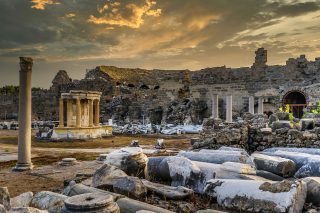
Start by looking for the overall layout-where people would have sat, how the space was arranged, and how it connects to nearby structures. Even if only parts survive, it's easy to imagine the original scale when you notice how the latrines fit into the flow of foot traffic through Ephesus.
Next, pay attention to the engineering clues: channels, stonework, and the way the facility is positioned relative to other water-related buildings. If you’re visiting with a guide, this is often where you’ll get the most entertaining (and surprisingly informative) explanations about Roman hygiene, social norms, and how communal spaces actually worked.
Finally, use the latrines as a “slow travel” moment in Ephesus. After the big-photo stops like the Library of Celsus, this is a great place to pause, rehydrate, and notice smaller details-inscriptions, worn paving stones, and the everyday design choices that make the site feel like a real city rather than a movie set.
How to Get to the Public Roman Latrines
The nearest airports are İzmir Adnan Menderes Airport (ADB) and, for some itineraries, Milas-Bodrum Airport (BJV); from either, you'll typically continue to Selçuk and then on to the Ephesus archaeological site. For the best deals and a seamless booking experience, check out these flights to Ephesus on Booking.com.
To reach the area by rail, take a train to Selçuk (commonly via İzmir), then use a taxi, minibus, or a tour pickup to get to the Ephesus entrances. You can use the official TCDD Taşımacılık website to check schedules, compare routes, and purchase tickets for Türkiye’s national and regional trains operated by TCDD. For a more streamlined experience (especially if you prefer an English interface or want to compare across countries), we recommend using Omio, which allows you to easily compare prices, schedules, and book train tickets across Türkiye and the rest of Europe — all in one place..
If you're driving, Ephesus is straightforward to reach from Selçuk and Kuşadası, with signed roads leading to the main gates and paid parking near the entrances. If you are looking to rent a car in Türkiye I recommend having a look at Discover Cars, first, as they compare prices and review multiple car rental agencies for you.
Practical Tips on Visiting the Public Roman Latrines
- Official website: https://muze.gov.tr/urun-ekle?catalogNo=WEB-EFS01-87-009
- Entrance fee: Included with Ephesus with Ephesus Experience Museum (40 Euro per person); Ephesus with Ephesus Experience Museum + Terrace Houses: 52 Euro p.p.
- Opening hours: (Summer) April 1 – October 1; Daily: 08:00–19:00. (Winter) October 1 – April 1; Daily: 08:00–18:00.
- Best time to visit: Go early in the morning for cooler temperatures and fewer tour groups, especially in late spring and summer when the sun is intense.
- How long to spend: Plan 10-20 minutes for the latrines themselves, or longer if you're stopping for photos and context as part of a full Ephesus loop.
- Accessibility: Expect uneven stone surfaces and steps in parts of the archaeological site; comfortable shoes are essential, and some areas may be challenging for wheelchairs.
- Facilities: Bring water and sun protection; restrooms, small kiosks, and services are typically concentrated near the main entrances rather than deep inside the ruins.
Where to Stay Close to the Public Roman Latrines
Base yourself in Selçuk town center for the easiest logistics-quick access to Ephesus, walkable restaurants, and simple transport connections.
For a comfortable, well-located stay with a classic boutique feel, consider: Ayasoluk Hotel It's popular for its central Selçuk location and relaxed atmosphere, making early starts to Ephesus easy.
If you want a stylish boutique option with a warm, personal vibe: Cella Boutique Hotel & Spa It’s a good pick for travelers who like a bit more comfort after a long day walking on stone streets.
For a charming, smaller property that feels intimate and local: Ephesus Centrum It’s included for its convenient base and straightforward access to tours and taxis.
If you’re after a friendly, good-value stay with a homier feel: Amazon Petite Palace It’s a solid choice for travelers who prioritize location and a welcoming host style.
For a resort-style option closer to the coast (useful if you're combining Ephesus with beach time): Charisma De Luxe Hotel It’s included for travelers who want sea views and amenities, then day-trip into Ephesus.
Is the Public Roman Latrines Worth Visiting?
Yes-especially because they add personality to Ephesus. The big monuments impress, but the latrines make the ancient city feel lived-in, and they're an easy, low-effort stop on the standard walking route.
Honest Pivot: If you're short on time, heat-sensitive, or mainly chasing the iconic postcard shots, you can skip lingering here and focus on the Library of Celsus, the Great Theatre, and the Terrace Houses. But if you enjoy the “how people actually lived” side of history, this is absolutely worth a few minutes.
What Other Travellers Say...
Reviews are overwhelmingly positive, with visitors calling the ruins impressive and highlighting the sheer scale of Ephesus's bath-and-public-building complexes nearby. Many mention that it's an easy stop on a full-day Ephesus itinerary and appreciate how the site brings everyday Roman life into focus. The most common downside is the intense heat and sun exposure, so timing and hydration matter.





For Different Travelers
The Public Roman Latrines work best as a quick, curiosity-driven stop within a broader Ephesus visit. They're not a standalone destination, but they're a great example of how the site rewards travelers who look beyond the headline ruins.
Families with Kids
Kids often find the concept instantly relatable, which can be a surprisingly helpful way to keep them engaged during a long walk through ancient stones. It’s also a good moment to take a short break from the biggest crowds.
To make it work well, keep the stop brief and pair it with nearby “wow” sights like the Library of Celsus or the Great Theatre. Bring water and a hat so the day doesn't turn into a heat battle.
Couples & Romantic Getaways
For couples, the latrines are more of a fun, quirky talking point than a romantic highlight. They add texture to the visit and can be a lighthearted pause between the grand, photo-heavy monuments.
If you want a more atmospheric experience, consider timing your Ephesus walk for softer light (morning or late afternoon) and use the latrines as one of several short stops rather than a focal point.
Budget Travelers
This is a budget-friendly “extra” because it's included within the main Ephesus archaeological site visit-no separate ticket just for the latrines. It's also a good reminder that you can get a richer experience by slowing down, not by paying for add-ons.
To stretch value, do a self-guided route with a downloaded map or a simple guidebook and spend time noticing smaller structures like this one. Your best savings will come from smart timing and carrying your own water/snacks.
History Buffs
History lovers will appreciate how the latrines connect infrastructure, social customs, and city planning in one small space. It’s a tangible example of Roman public life that complements the more monumental architecture.
For extra context, pair this stop with nearby bath-related structures and the main streets to understand how water, movement, and public services were integrated. A guide can be especially worthwhile for these “everyday life” details.
FAQs for Visiting Public Roman Latrines
Getting There
Tickets & Entry
Visiting Experience
Tours, Context & Itineraries
Photography
Accessibility & Facilities
Food & Breaks Nearby
Safety & Timing
The Public Roman Latrines appears in our Complete Guide to Visiting Ephesus!

Moira & Andy
Hey! We're Moira & Andy. From hiking the Camino to trips around Europe in Bert our campervan — we've been traveling together since retirement in 2020!
This website uses affiliate links which may earn a commission at no additional cost to you!
Planning Your Visit
(Summer) April 1 - October 1; Daily: 08:00-19:00.
(Winter) October 1 - April 1; Daily: 08:00-18:00.
Included with Ephesus with Ephesus Experience Museum (40 Euro per person); Ephesus with Ephesus Experience Museum + Terrace Houses: 52 Euro p.p.
Nearby Attractions
- Terrace Houses of Ephesus (0) km
Historic Room, Historic Site and Roman Site - House of Pleasure (0) km
Ancient City, Historic Site and Ruins - Temple of Hadrian (0) km
Historic Site, Roman Site and Ruins - Library of Celsus (0.1) km
Library, Roman Site and Ruins - Gate of Mazaeus and Mithridates (0.1) km
City Gate, Historic Site and Ruins - Trajan Fountain (0.1) km
Fountain, Roman Site and Ruins - Curetes Street (0.1) km
Ancient City, Ruins and Street - Commercial Agora (0.2) km
Ancient City, Historic Site and Square - Heracles Gate (0.2) km
City Gate, Historic Site and Ruins - Ephesus Experience Museum (0.2) km
Attraction and Museum