Complete Guide to Aegean Türkiye (2026)
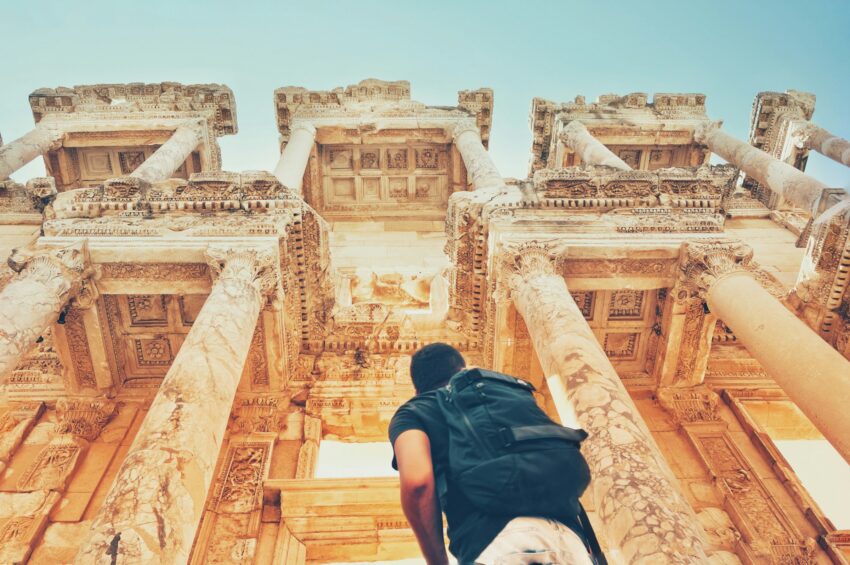
Aegean Türkiye feels like one of those rare regions where daily life still moves between archaeology, agriculture, and the sea without seeming staged for visitors. Olive groves, vineyards, fishing harbours, resort peninsulas, market towns, and major cities all sit within the same broader landscape, so a trip here can shift quickly from a Roman theatre to a beach club, from a mountain village breakfast to a waterfront promenade at sunset. The appeal is not just variety but density: there is a great deal to see in relatively short distances, which is why the region works equally well for a road trip, a cultural itinerary, or a slower coastal holiday.
What makes Aegean Türkiye especially rewarding is the balance between famous headline sights and the places in between. Towns such as İzmir, Bodrum, Marmaris, Kuşadası, Selçuk, Alaçatı, Foça, Ayvalık, and Denizli each give the region a different rhythm, whether that means urban culture, yachting, archaeology, thermal travel, food, or beach time. Even when the big draws are ancient cities like Ephesus, Pergamon, Miletus, and Aphrodisias, the modern experience is anchored by lively town centres, ferry quays, seaside restaurants, local bazaars, and a very strong café culture.
It is also one of the easiest parts of Türkiye to shape around your own interests. History lovers can spend days moving between classical, Roman, Byzantine, and Ottoman layers; beach-focused travellers can base themselves around Bodrum, Çeşme, Marmaris, or quieter corners of the coast; food-focused visitors get seafood, olive oil dishes, herbs, village breakfasts, wines, figs, and regional market produce. Because the region has multiple airports, intercity bus links, rail corridors around western Türkiye, and well-developed resort infrastructure, it is much less difficult to navigate than its size might suggest.
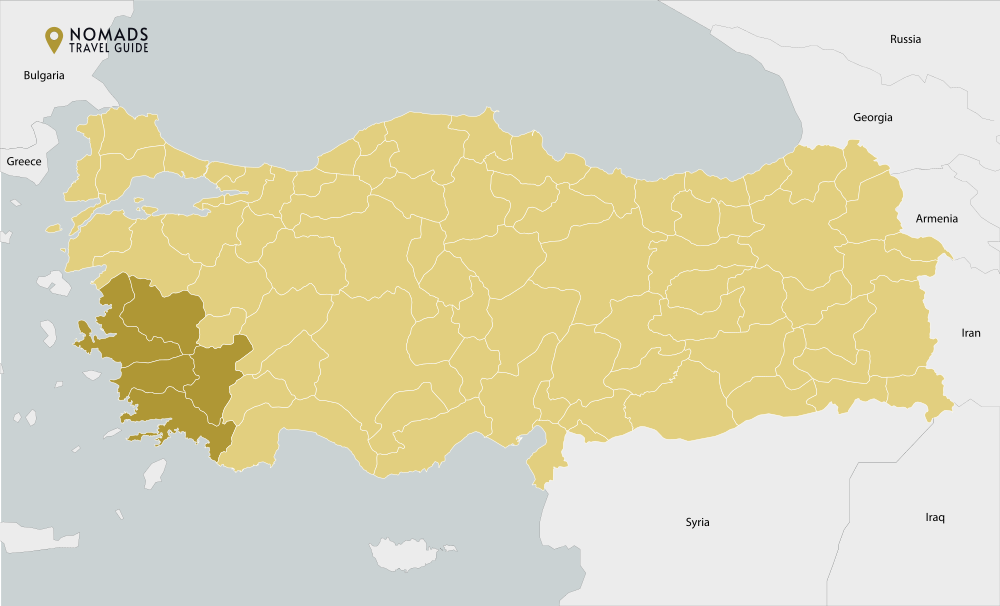
Cities of Aegean Türkiye
Selçuk
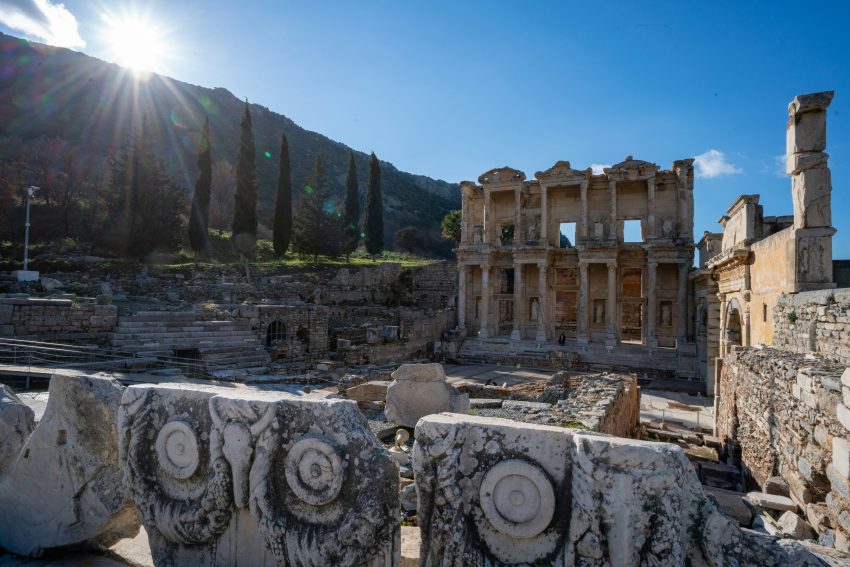
Nestled in the fertile plains of western Türkiye’s Izmir Province, Selçuk is a peaceful yet fascinating town that captures the essence of the Aegean. It’s a place where olive groves meet ancient ruins, and where quiet village life coexists with the echoes of one of the world’s greatest archaeological sites. Small, welcoming, and beautifully situated near the coast, Selçuk offers travelers an ideal blend of relaxation and discovery - one of the best places to visit in Türkiye for those who love history, culture, and countryside charm.
Visiting Selçuk is a breath of fresh air after the bustle of big cities. The town’s compact center is easy to explore on foot, filled with local cafés, boutique guesthouses, and traditional markets. From here, you can venture out to the magnificent ruins of Ephesus, enjoy local wines in nearby Şirince Village, or wander the serene hills dotted with olive trees. Everything feels unhurried, inviting you to slow down and savor the Aegean lifestyle.
What makes Selçuk so special is its sense of authenticity. Despite its proximity to famous sites, it remains a working Turkish town where daily life unfolds naturally - from farmers selling fresh produce to locals sharing tea under the shade of ancient stone walls. Whether you come for the archaeology, the food, or the relaxed pace, Selçuk offers an experience that feels both timeless and warmly genuine.
View our Selçuk Guide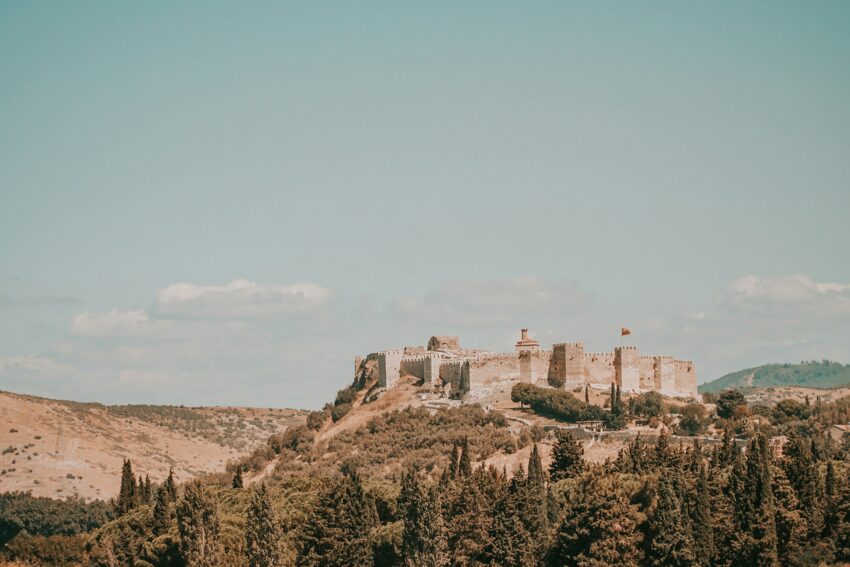
Izmir

Perched on Türkiye’s western Aegean coast, İzmir is a city that perfectly blends modern life with seaside ease. Known for its palm-lined promenades, open-air cafés, and welcoming atmosphere, it’s a place where every day feels touched by the sea breeze. The city offers a refreshing alternative to Istanbul’s intensity - vibrant yet laid-back, with a cosmopolitan feel shaped by centuries of trade and culture.
Strolling along the Kordon, İzmir’s famous waterfront promenade, is one of the city’s simplest pleasures. Locals gather here to walk, cycle, and watch the sunset over the bay while sipping Turkish tea or cold lemonade. The surrounding neighborhoods - like Alsancak and Karşıyaka - are filled with colorful markets, lively restaurants, and art-filled cafés, giving İzmir a youthful, creative energy that continues late into the evening.
With its easy-going pace and perfect balance of culture, cuisine, and coastline, İzmir has become one of the best places to visit in Türkiye. It’s also an excellent base for exploring nearby treasures like Ephesus, Çeşme, and Alaçatı - making it a must for anyone traveling along the country’s Aegean coast.
View our Izmir Guide


Ephesus
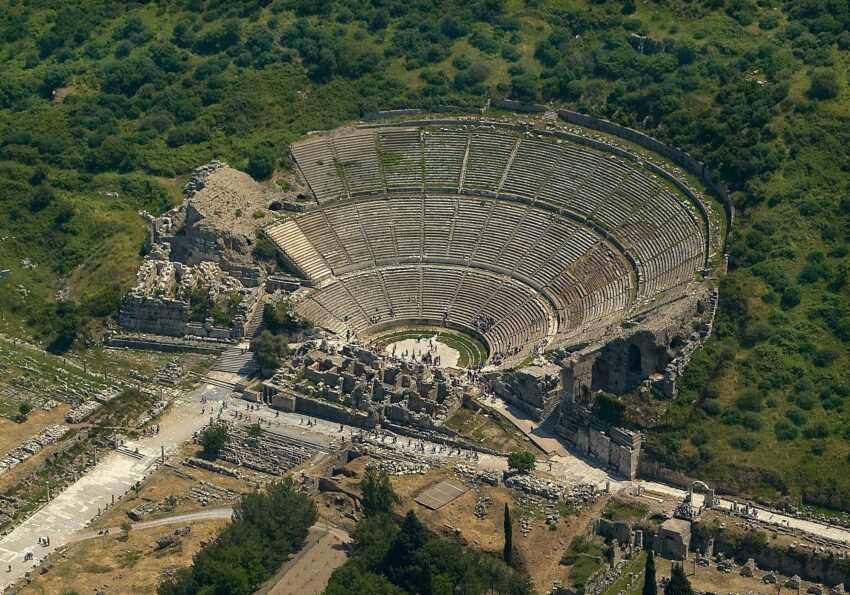
Ephesus is one of Türkiye’s most impressive open-air archaeological sites, set in Aegean Türkiye amid olive groves, low hills, and wide skies. Walking its marble streets feels like moving through a purpose-built museum: monumental gates, colonnaded avenues, and grand public buildings appear in quick succession, with clear sightlines that make the scale easy to grasp even on a first visit. Plan to arrive early for softer light and fewer crowds, then take your time-there’s a lot to absorb even without diving deep into the backstory.
A typical visit focuses on the main route between the Upper and Lower Gates, where highlights cluster close together and the terrain slopes gently downhill. Comfortable shoes are essential because the stone paving can be slick, and there’s limited shade across the core ruins. If you want a calmer pace, build in pauses at the quieter edges-lookouts, side streets, and smaller structures-where you can step away from tour groups and appreciate the site’s atmosphere.
Ephesus pairs well with nearby stops in the same day, especially if you base yourself in the surrounding towns and countryside. Many travelers combine the ruins with a visit to a local museum, a hillside sanctuary, or a coastal sunset, making it easy to turn a single-site excursion into a full Aegean day out. Whether you come independently or with a guide, the experience is most rewarding when you allow enough time for unhurried wandering and a few moments of stillness among the stones.
View our Ephesus Guide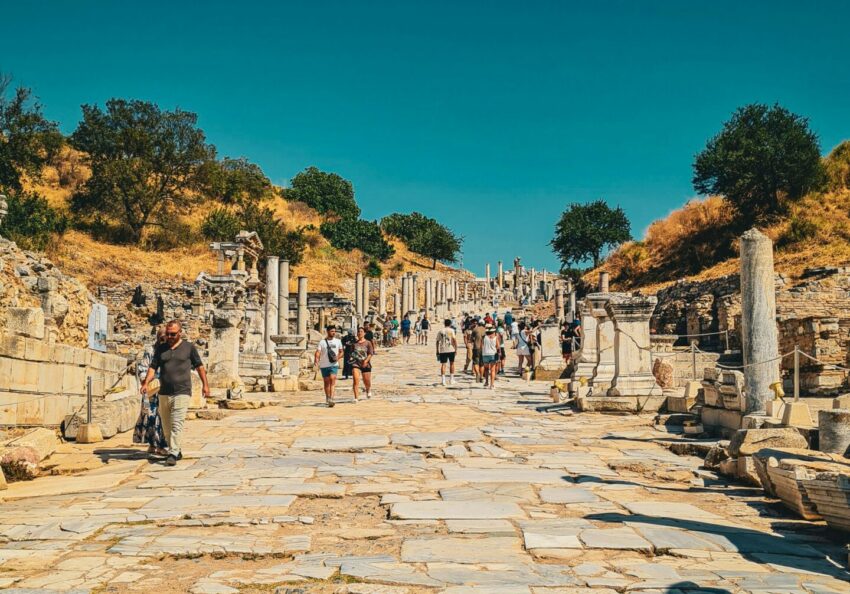
Kusadasi
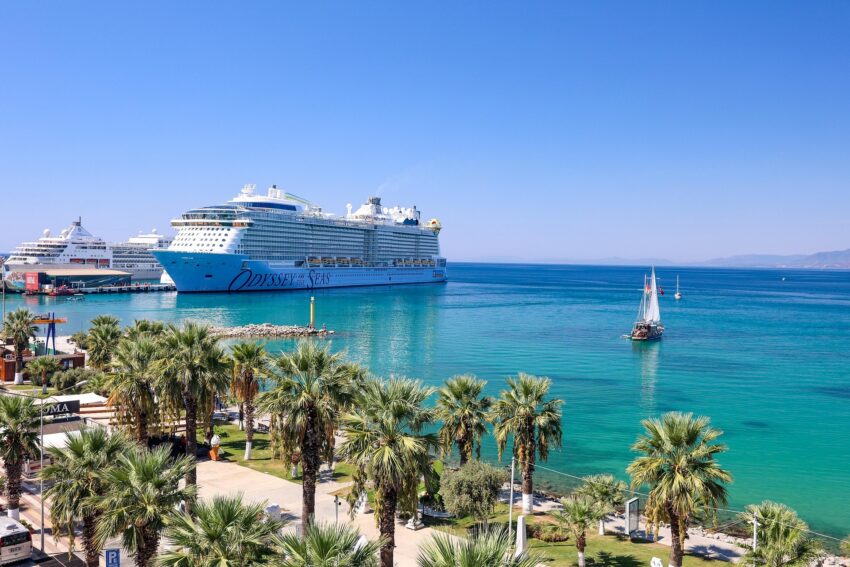
Kusadasi is one of the Aegean coast’s easiest bases for a beach-and-ruins holiday, pairing a lively seafront with quick access to standout ancient sites and national-park scenery. The town’s palm-lined promenade, marina, and café-filled streets make it simple to settle in, whether you want a relaxed week of swimming and sunset dinners or a busier itinerary with day trips.
The waterfront is the natural starting point: ferries and boat tours come and go, the cruise port brings a cosmopolitan buzz, and the evenings feel festive without being hard to navigate. You can spend the day on nearby sandy bays, then return for seafood, meze, and a stroll past the harbor lights. If you like shopping, Kusadasi’s bazaars and modern stores sit close to the center, so you can mix beach time with browsing.
What makes Kusadasi especially appealing is how quickly you can switch from resort mode to exploration. Within a short drive you can reach major archaeological highlights, hillside viewpoints, and protected coastal landscapes, then be back in town for a late swim. It’s a practical choice for couples, families, and first-time visitors to the Aegean who want variety without constant packing and unpacking.
View our Kusadasi Guide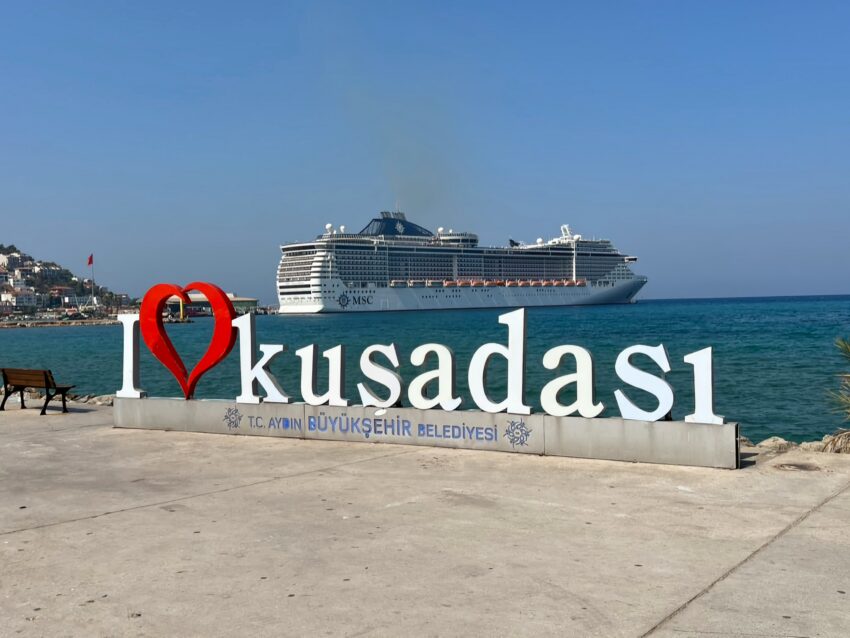
History of Aegean Türkiye
Aegean Türkiye in Prehistory and Antiquity
The deep history of Aegean Türkiye begins long before the classical cities that now dominate most itineraries. Bronze Age and earlier settlement is well attested across the wider region, and by antiquity the coast and inland valleys had become one of the most important cultural zones in Anatolia. Over time, areas associated with Ionia, Aeolis, Caria, Lydia, and Phrygia developed urban centres, ports, sanctuaries, and trade networks that tied the region to the wider eastern Mediterranean.
Aegean Türkiye became especially influential during the Greek and Hellenistic eras, when cities such as Ephesus, Miletus, Priene, and others emerged as centres of philosophy, commerce, urban planning, and religion. The Ionian cities were not simply prosperous ports; they helped shape intellectual history, civic culture, and artistic exchange across the ancient world. This is one reason the region still feels so historically weighty today: many of its ruins are tied not just to local history, but to ideas and institutions that travelled far beyond the coast.
Aegean Türkiye Under Rome and Byzantium
Roman rule transformed Aegean Türkiye into one of the most prosperous parts of Asia Minor. Ephesus in particular rose to major prominence after the incorporation of Asia Minor into the Roman sphere, becoming the capital of the province of Asia and one of the leading cities of the eastern Mediterranean. Roads, theatres, baths, agoras, temples, aqueducts, and harbours linked the region's settlements into a highly urbanized landscape, much of which still shapes the visitor experience today.
In the Byzantine centuries, some cities retained religious and administrative importance while others declined as coastlines shifted, harbours silted up, and trade patterns changed. Christianity left a lasting imprint through churches, pilgrimage traditions, and sacred associations, while fortified settlements became more significant in periods of insecurity. The region never lost its strategic value, but its urban map evolved, and some of the great classical ports gradually became inland archaeological sites rather than active maritime centres.
Aegean Türkiye in the Seljuk and Ottoman Periods
From the medieval period onward, Turkish principalities and then the Ottomans reshaped the region politically, commercially, and architecturally. Coastal trade remained important, inland market towns expanded, and new layers of mosques, hans, baths, bridges, and neighbourhoods were added over older classical and Byzantine foundations. In many towns across the region, this is why the built environment feels cumulative rather than belonging to a single era.
Under Ottoman rule, port cities and agricultural hinterlands became tightly connected through export trade in goods such as figs, olives, tobacco, textiles, and other produce. Maritime exchange, caravan routes, and later rail connections strengthened the region’s economic role. The Aegean’s character as a place of movement, trade, and cultural mixing is therefore not just an ancient story; it continued well into the early modern period and still underpins much of the region’s identity.
Aegean Türkiye in the Modern Era
The modern history of Aegean Türkiye is marked by urban growth, transport development, tourism expansion, and a renewed emphasis on heritage. One of the most significant milestones in the history of railways within today’s Türkiye was the İzmir–Aydın line, which began in the nineteenth century and reflected the region’s importance in trade and connectivity. Over time, ports, roads, airports, resorts, and archaeological conservation projects turned the area into one of the country’s most visited and economically dynamic regions.
Today, Aegean Türkiye combines internationally known resort towns with major heritage sites and working cities that are still evolving. UNESCO-recognized places, protected ruins, yacht marinas, festival calendars, and strong domestic transport links all contribute to a region that feels both historic and contemporary. Its modern appeal comes from that overlap: it is not preserved in amber, but lived in, travelled through, and continuously reinterpreted.
Best Time to Visit Aegean Türkiye
Visiting Aegean Türkiye in Spring (Best)
Spring is one of the strongest times to visit Aegean Türkiye because the weather is generally mild, landscapes are greener, and sightseeing is more comfortable than in peak summer. Archaeological sites, market towns, and coastal walks are easier to enjoy without the intense heat that can make midday exploration harder later in the year. It is also a particularly good season for food-focused travel, village detours, and scenic drives through olive country and vineyard landscapes.
Spring also brings some of the region’s most appealing festival energy, especially around April with the Alaçatı Herb Festival. That makes the season a good choice for travellers who want culture and atmosphere without the full crush of high-summer resort crowds. Sea temperatures may still be a little cool early in the season, but for mixed itineraries combining towns, ruins, and coast, spring is often the most balanced option.
Visiting Aegean Türkiye in Summer
Summer is the classic season for Aegean Türkiye if your priorities are beaches, boat trips, nightlife, open-air dining, and resort life. Bodrum, Çeşme, Marmaris, and the more popular coastal areas are at their liveliest, and the long daylight hours make it easy to combine swimming, late dinners, and evening walks along the water. It is also the season when the region’s international profile is most visible.
The trade-off is heat and crowd levels, especially in headline destinations and major archaeological sites. Early starts become important if you want to visit places such as Ephesus or inland ruins comfortably, and accommodation in the top resort towns tends to be at its busiest. Summer is ideal for travellers who actively want atmosphere and late-night energy, especially if festivals such as the International İzmir Festival, the Ephesus Opera and Ballet Festival, or the Bodrum Ballet Festival appeal to you.
Visiting Aegean Türkiye in Autumn
Autumn is an excellent alternative to spring, especially in September and October when the sea is still warm in many coastal areas but the most intense summer pressure begins to ease. This is a very good time for travellers who still want beach weather but would prefer a little more room in popular towns and on the roads. The quality of light, harvest season atmosphere, and generally more settled rhythm make it particularly attractive for photography, food, and slower touring.
It is also a strong festival season, with events such as the İzmir International Fair, the Bodrum Cup, and Marmaris International Race Week giving the region a lively but slightly more mature atmosphere than midsummer. For many travellers, autumn offers the best beach-to-culture ratio after spring. It works especially well if you want to combine resort towns with heritage sites rather than choose one or the other.
Visiting Aegean Türkiye in Winter
Winter shows a quieter, more local side of Aegean Türkiye. Coastal resorts are much calmer, some tourism businesses reduce operations, and the focus shifts toward everyday town life, museums, food, and low-season wandering rather than beach time. This can actually be very rewarding if you prefer places when they feel less polished and more lived-in.
It is also the season for more traditional and regional events, with the Selçuk Camel Wrestling Festival standing out as a notable highlight. Winter is best for travellers interested in culture, local atmosphere, lower crowd levels, and a different perspective on the region, but it is less suitable if your main goal is swimming, marina life, or fully active resort infrastructure.
Annual Weather Overview
- January 13°C 59°F
- February 15°C 62°F
- March 17°C 66°F
- April 22°C 76°F
- May 26°C 83°F
- June 32°C 98°F
- July 34°C 102°F
- August 33°C 100°F
- September 31°C 91°F
- October 25°C 80°F
- November 19°C 70°F
- December 14°C 61°F
How to get to Aegean Türkiye
Getting to Aegean Türkiye by Air
The main international gateway for much of Aegean Türkiye is İzmir Adnan Menderes Airport, which is especially useful for İzmir, Selçuk, Ephesus, Şirince, Kuşadası, Manisa, and parts of Aydın. For travellers heading toward the southwest coast, Milas–Bodrum Airport is the most practical choice for Bodrum and nearby peninsula resorts, while Dalaman Airport is commonly used for Marmaris and the southern reaches of the wider Aegean travel zone. Denizli Çardak Airport works well for Denizli and Pamukkale, and Zafer Airport can be relevant for Kütahya, Uşak, and Afyonkarahisar.
Getting to Aegean Türkiye by Train
Rail travel in Aegean Türkiye is most useful for journeys radiating from İzmir and for selected inland links rather than for the full coastline. From İzmir, trains are relevant for places such as Selçuk, Denizli, Ödemiş, Söke, Aydın, Alaşehir, and Manisa, which makes rail a realistic option for travellers combining city stays with archaeological sites and regional towns. The official national rail operator is TCDD Taşımacılık trains, and it is the main place to check routes, schedules, and tickets.
Getting to Aegean Türkiye by Road and Coach
For many visitors, intercity coaches and self-driving are the most flexible ways to reach and move around the region. Coaches connect major hubs such as İzmir, Bodrum, Marmaris, Kuşadası, Aydın, Denizli, Manisa, Muğla, and smaller inland towns, while the road network makes it straightforward to combine beach resorts with archaeological sites and rural stops. Driving is particularly useful if you want to link places such as Alaçatı, Foça, Ayvalık, Bergama, Selçuk, Bodrum, and Marmaris in one trip without depending on local transfer timings.
Getting Around Aegean Türkiye in the Main Towns
İzmir is the easiest city in the region to navigate without a car thanks to its urban rail, buses, ferries, and airport rail connection. Around Bodrum and Marmaris, local minibuses and short taxi rides are often enough if you are staying in or near the main resort areas, though a car becomes more useful for coves, ruins, and outlying villages. In places such as Selçuk, Kuşadası, Denizli, and Çeşme, many travellers mix walking, taxis, local buses, and occasional private transfers depending on whether the focus is beaches, ruins, or intercity day trips.
Getting Around Aegean Türkiye for Island-Hopping and Coastal Travel
In coastal towns, ferries and excursion boats can be part of the experience, but they are supplementary rather than a complete regional transport system. Bodrum, Marmaris, Çeşme, Foça, Ayvalık, and Kuşadası all have strong maritime identities, and boat trips often make sense for bays, islands, or scenic outings. For most practical overland movement between towns, however, travellers still rely on road transport first and then use ferries or local cruises as an added coastal layer.
Festivals in Aegean Türkiye
- Alaçatı Herb Festival, Alaçatı / Çeşme — April. This is one of the region’s best-known food and lifestyle festivals, built around wild herbs, local produce, cooking traditions, and the stylish streets of Alaçatı. It is especially important because it brings together gastronomy, local identity, and spring travel in one event.
- Selçuk Camel Wrestling Festival, Selçuk — January. This is one of the most distinctive traditional events in western Türkiye and draws large crowds during the winter festival season. It offers a very different side of the region from the summer resort image, with strong links to local custom and rural culture.
- International İzmir Festival, İzmir and Ephesus venues — June and July. This is one of the Aegean’s major arts festivals, known for staging performances in historic settings as well as urban cultural venues. It stands out because it connects high culture with the region’s archaeological atmosphere.
- İzmir International Fair, İzmir — September. More than a trade fair, it functions as a major urban event with concerts, cultural programming, and a broad public atmosphere. Its long history makes it one of the most established annual events in the region.
- Bodrum Cup, Bodrum — October. This famous sailing regatta is one of Bodrum’s signature events and reflects the town’s maritime identity. Even for non-sailors, it brings energy to the harbour, the waterfront, and the wider peninsula.
- Marmaris International Race Week, Marmaris — October. This is one of the strongest fixtures on the regional sailing calendar and attracts significant participation from across Türkiye and abroad. It gives Marmaris a competitive, international atmosphere at the end of the main beach season.
- International Ephesus Opera and Ballet Festival, Selçuk / Ephesus — June and July. Performances in the ancient theatre give this festival a setting that is difficult to match anywhere else in the region. It is particularly appealing for travellers who want a cultural evening tied directly to one of the Aegean’s greatest classical sites.
- Bodrum International Ballet Festival, Bodrum — August. This is one of Bodrum’s most prominent cultural events and adds a refined performance calendar to a town otherwise known mainly for beaches, nightlife, and sailing. The combination of ballet and historic venues gives it a distinctive identity.
- Olive harvest celebrations across Aegean towns — November and December. These are not one single festival but a seasonal pattern of local events, tastings, and market activity tied to one of the defining products of the region. They are important because they reveal the agricultural backbone behind the polished resort image.
- Summer music and cultural events in resort towns such as Bodrum, Çeşme, and İzmir — July and August. Even beyond the named flagship festivals, the high summer period is packed with concerts, open-air performances, and waterfront celebrations. This matters for visitors because the region’s atmosphere changes markedly in summer, with nightlife and culture extending well beyond the beach.