Córdoba Archaeological Museum
Museum in Córdoba
The Córdoba Archaeological Museum is one of the most fascinating cultural sites in the city, beautifully blending traditional museum galleries with a live archaeological excavation underneath. Set within the elegant 16th-century Palace of Páez de Castillejo, the museum preserves more than 33,000 artefacts that trace Córdoba's evolving identity from the Bronze Age to the Late Middle Ages. It is one of the best places to visit in Córdoba for travellers who want to understand the deep roots of the city's history, and it is often visited on walking tours of Córdoba's old town.
What makes this museum unique is its location above the remains of Córdoba’s Roman theatre - one of the largest ever built in Hispania. Visitors can explore the modern galleries and then descend to see part of the ancient structure, creating a memorable connection between the exhibits and the city beneath your feet.
Table of Contents
- History and Significance of the Córdoba Archaeological Museum
- Things to See and Do in the Córdoba Archaeological Museum
- How to Get to the Córdoba Archaeological Museum
- Practical Tips on Visiting the Córdoba Archaeological Museum
- Where to Stay close to the Córdoba Archaeological Museum
- Is the Córdoba Archaeological Museum Worth Visiting?
- FAQs for Visiting the Córdoba Archaeological Museum
- Nearby Attractions to the Córdoba Archaeological Museum
History and Significance of the Córdoba Archaeological Museum
The museum’s origins date back to 1844, when artworks and antiquities seized from convents were assembled into the “Antiques Collection.” This collection was initially housed in the Provincial Museum of Fine Arts before gaining its own identity and, in 1960, a new home in the Renaissance Palacio de Páez de Castillejo.
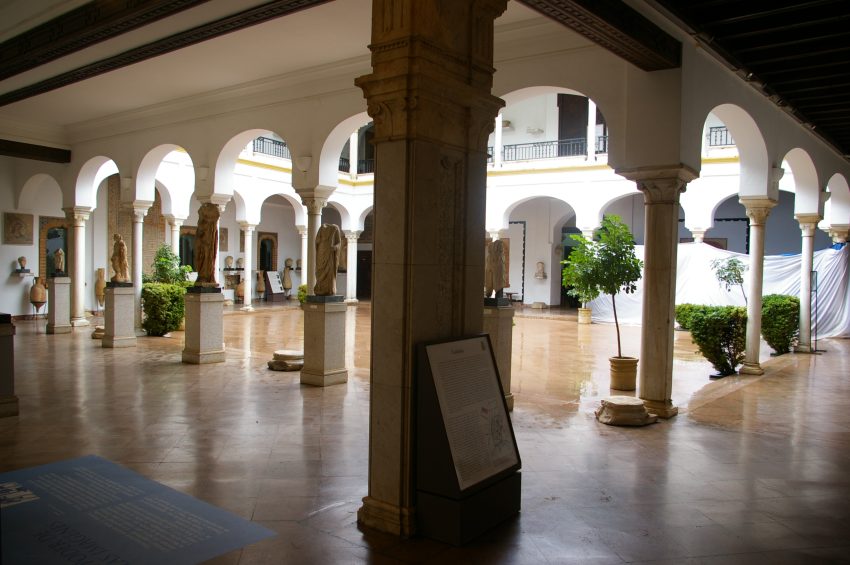
The palace itself dates to the 16th century and was declared a Historic-Artistic Monument alongside the museum’s collection in 1962. Its courtyards, stone columns, and graceful stairways make it an attraction in its own right. Beneath the palace lie the remains of the Roman theatre - discovered and incorporated into the museum - demonstrating the building’s extraordinary location within Córdoba’s ancient urban fabric.
In 2011, a contemporary extension was added next to the palace to provide modern, spacious galleries, enhancing the museum’s ability to present its vast archaeological and ethnographic collections. Today, it stands as one of Spain’s most complete museums dedicated to the ancient world.
Things to See and Do in the Córdoba Archaeological Museum
The museum’s eight halls and three courtyards are organised into thematic sections that guide visitors through thousands of years of local history.
Córdoba and its Territory introduces the province from Prehistory to the Renaissance, providing essential context for understanding the region.
The thematic block Córdoba, Power and Centrality covers several eras:
- Before Córdoba - Prehistoric and protohistoric periods.
- Colonia Patricia Corduba - Roman Córdoba, including sculptures, mosaics, ceramics, and parts of the theatre.
- Córdoba between Rome and Islam - Artefacts from the Visigothic period and the city's transformation after the fall of Rome.
- Qurtuba - Displays on Islamic Córdoba, its urbanism, state symbols, and daily life.
- Córdoba of the Late Middle Ages - The Christian reconquest and subsequent changes.
Living in Córdoba explores private life, beliefs, and leisure:
- The House - Everyday objects from Iberian, Roman, and Andalusian homes.
- Religious Beliefs - Ritual objects reflecting spiritual traditions across eras.
- Leisure and Shows - From Roman public entertainments to Islamic recreation.
One of the museum’s most impressive features is the access to part of the Roman theatre, visible beneath the palace. This unique archaeological setting helps visitors appreciate the scale of ancient Corduba.
How to Get to the Córdoba Archaeological Museum
Travelling by air usually involves flying into Seville or Málaga airports, followed by train or bus connections to Córdoba. For the best deals and a seamless booking experience, check out these flights to Córdoba on Booking.com.
If travelling by train, the museum is about a 20-25 minute walk from Córdoba’s main station, heading toward the old town. Several local buses also link the station with nearby streets, making access easy. Train schedules and bookings can be found on Omio.
Several bus routes serve the area. Lines 1, 3, 4, 7, 12, and 16 stop within a short walk of the museum.
If travelling by car, it’s usually best to park in a car park in the modern centre and walk into the old town, as the streets near the museum are narrow and often restricted. If you are looking to rent a car in Spain I recommend having a look at Discover Cars, first, as they compare prices and review multiple car rental agencies for you.
Practical Tips on Visiting the Córdoba Archaeological Museum
- Best time to visit the Museo Arqueológico:
Late morning or early afternoon when it’s quieter. - Entrance fee in Euros:
Typically free for EU citizens; small fee for others. - Opening hours:
Vary by season; closed on some Mondays and holidays. - Official website:
Check Córdoba’s museum network for updated information. - How long to spend:
1-1.5 hours, longer if you enjoy archaeology. - Accessibility:
The modern extension is accessible; some older palace areas have steps. - Facilities:
Toilets, reception area, and shaded courtyards. - Photography tip:
Capture the palace courtyard from the upper level for the best angles. - Guided tours:
Some city tours include the museum; audio guides are occasionally available. - Nearby food options:
Plenty of tapas bars around Plaza de la Corredera and Calle San Fernando.
Where to Stay close to the Córdoba Archaeological Museum
Staying near the Jewish Quarter or Tendillas area gives easy access to the museum. A great nearby option is Eurostars Patios de Córdoba, built over archaeological remains. For something more traditional, Las Casas de la Judería de Córdoba offers courtyards and historic charm. Another comfortable choice is Soho Boutique Capuchinos, within walking distance of the old town and museum.
Is the Córdoba Archaeological Museum Worth Visiting?
Yes - the museum is absolutely worth visiting. It's one of the top attractions in Córdoba for anyone interested in the ancient past, offering a combination of artefacts, architecture, and in-situ ruins. From Roman sculptures to Islamic ceramics, from medieval objects to the remains of a monumental theatre, the museum brings the entire history of Córdoba into focus.
What Other Travellers Say...

Córdoba Archaeological Museum sits on Plaza de Jerónimo Páez and offers a compact, well‑curated walk through the area's past from prehistoric times through the Middle Ages, with notable Roman and Moorish artifacts and a section on mosaics; the building preserves excavated Roman ruins and an on‑site theatre to explore, and visitors praise clear timelines and household-focused displays. The layout typically starts on the upper level and moves down to the archaeological remains; accessibility is generally good with an elevator, stairlift and an accessible restroom. Entrance is very low cost but cash only, there's a small or limited gift offering, and some visitors have noted basic upkeep issues with the facilities. Overall it's an easy hour visit set on a pleasant, tree‑lined square, handy if you have time to kill before continuing your day.


FAQs for Visiting the Córdoba Archaeological Museum
Nearby Attractions to the Córdoba Archaeological Museum
- Plaza de la Corredera - One of Córdoba's most vibrant squares.
- Templo Romano - Impressive surviving columns from a major Roman temple.
- Museo de Bellas Artes - Córdoba’s fine arts museum located nearby.
- Posada del Potro - Historic inn connected with Cervantes.
- Jewish Quarter - Narrow lanes, patios, and medieval atmosphere.
The Córdoba Archaeological Museum appears in our Complete Guide to Visiting Córdoba!

Moira & Andy
Hey! We're Moira & Andy. From hiking the Camino to trips around Europe in Bert our campervan — we've been traveling together since retirement in 2020!
This website uses affiliate links which may earn a commission at no additional cost to you!
Planning Your Visit
9am-8pm Tue-Sat & 9am-3pm Sun mid-Sep-mid-Jun, 9am-3pm Tue-Sun mid-Jun-mid-Sep
E.U. citizens free, all others 1.50 EUR
Nearby Attractions
- Calleja de las Flores (0.2) km
Street - Baños Árabes de Santa María (0.2) km
Baths - Museo de Bellas Artes de Córdoba (0.3) km
Historic Building and Museum - Museo Julio Romero de Torres (0.3) km
Museum - Alminar de San Juan (0.3) km
Minaret - Plaza del Potro (0.3) km
Square - Plaza de las Tendillas (0.3) km
Square - Posada del Potro (0.3) km
Square - Centro Flamenco Fosforito (0.3) km
Museum - Templo Romano de Córdoba (0.4) km
Roman Site