Murallas de Ronda
City Walls in Ronda
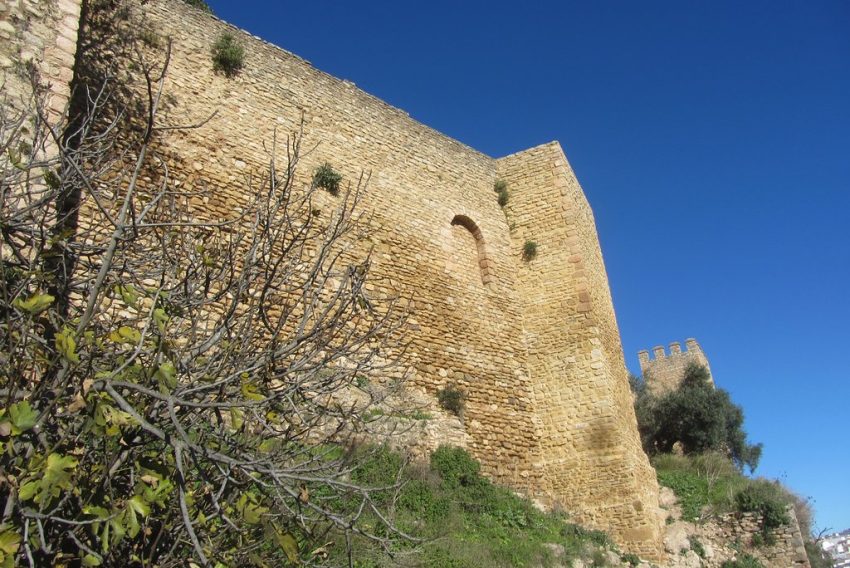
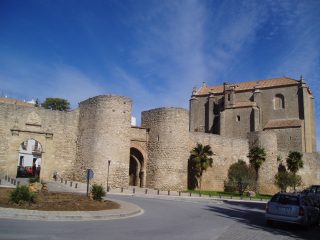
The Murallas de Ronda are the city's historic defensive walls, beginning near Iglesia del Espíritu Santo by Puerta de Almocábar and tracing the eastern flank of the old town. This side of Ronda lacked the natural protection of sheer gorge cliffs, so the walls had to do the hard work-running along a hillside rise, sometimes above a slope that climbs right up toward the summit, and elsewhere above short rock faces that still feel daunting today.
Walking these walls is one of the top attractions in Ronda because it turns the old town into a living map of strategy: gates funnel movement, outer walls back up the main line of defense, and the terrain explains why some sections are heavily fortified while others lean on nature. It's also an ideal thread to follow on a walking tour of Ronda, especially if you want something more textured and local than the headline viewpoints alone.
Table of Contents
- History and Significance of the Murallas de Ronda
- Things to See and Do in the Murallas de Ronda
- How to Get to the Murallas de Ronda
- Practical Tips on Visiting the Murallas de Ronda
- Where to Stay Close to the Murallas de Ronda
- Is the Murallas de Ronda Worth Visiting?
- For Different Travelers
- FAQs for Visiting the Murallas de Ronda
- Nearby Attractions to the Murallas de Ronda
History and Significance of the Murallas de Ronda
Ronda’s wall system is best understood as a set of named sections rather than a single continuous monument. Along the eastern edge you’ll hear references to the Murallas de Levante, which then connect into other stretches commonly identified as the Murallas del Carmen and Murallas de la Cijara. Together, they protected what was historically considered the most open approach to the town-an area where attackers could reach the walls without having to cross the gorge.
One of the most revealing aspects is the presence of multiple defensive lines. In places, there is evidence of a main wall on the upper rise and an outer wall running parallel below, closer to the valley road, creating depth and redundancy in the defenses. The clearest example of this “layered” approach is near the area of the Arabic Baths, where the geography and infrastructure below made protection especially important.
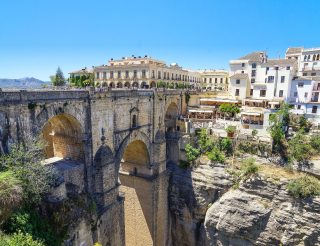
The gates are where the story becomes most vivid. A gate once stood on the city side of the Puente Árabe, guarding what had been the main route toward Granada before later urban development shifted the city's center of gravity. From that approach, visitors and traders would typically pass toward Puerta de la Cijara to enter the city proper, with the walls converging and tightening into a choke point that would have been extremely difficult to force without overwhelming firepower.
Things to See and Do in the Murallas de Ronda
Start near Puerta de Almocábar and Iglesia del Espíritu Santo, where the walls immediately make sense in the landscape. The streets here still feel like an “edge,” and as you move along, you can see how the defenses sit on top of the hillside rise, controlling the easiest line of approach to the old town.
Follow the idea of the named sections rather than trying to “walk every meter.” The Murallas de Levante are the spine of the eastern defenses, and the surrounding stretches-Murallas del Carmen and Murallas de la Cijara-show how the fortifications adapt to subtle changes in slope, access routes, and sightlines. Where you can identify parallel walls, pause and imagine how defenders could fall back while still controlling the road and the valley below.
Pay special attention to the gates, because they explain how the city functioned. The historical gateway near the Puente Árabe is a reminder that walls weren't only barriers-they were also control points for trade and movement. Farther along, Puerta de la Cijara connects directly to the logic of arriving visitors: cross the river corridor, bathe, reset, then ascend through the gate into the town's core.
For a more hidden detail, look for the Puerta de los Esparteros (also known as La Mancebia). It’s an enigmatic arch dating to the late 13th or early 14th century, now appearing almost swallowed by later construction, like a piece of the medieval city fossilized into someone’s foundations. It’s the kind of find that makes the walls feel less like a museum piece and more like a living city that grew around its own defenses.
How to Get to the Murallas de Ronda
Most visitors reach Ronda via Málaga Airport and then continue inland to the city by train, bus, or car. For the best deals and a seamless booking experience, check out these flights to Ronda on Booking.com. Seville Airport can also be a practical option if you're combining Ronda with other stops in Andalusia. For the best deals and a seamless booking experience, check out these flights to Ronda on Booking.com.
Ronda is well connected by train, and arriving this way makes it easy to explore the old town on foot once you're in the centre. Train schedules and bookings can be found on Omio. From the station, you can walk into town or take a short taxi ride to the historic quarter and begin your wall route near Puerta de Almocábar.
Buses also arrive close enough to central areas that you can continue on foot into the old town without much hassle. If you're driving, park once in a central car park and treat the walls as a walking route, since narrow streets and one-way lanes make stop-and-start driving inefficient. If you are looking to rent a car in Spain I recommend having a look at Discover Cars, first, as they compare prices and review multiple car rental agencies for you.
Practical Tips on Visiting the Murallas de Ronda
- Entrance fee: Free to view externally
- Opening hours: 24 Hours
- Best time to visit: Early morning is ideal for a quieter walk and cleaner light on the stonework, especially along the eastern side. Late afternoon can feel atmospheric too, but popular gateways and viewpoints tend to get busier.
- How long to spend: Plan 60-120 minutes depending on how many wall sections and gates you want to link together. If you’re adding cafés, viewpoints, and detours for hidden arches, a half-day loop feels unhurried.
- Accessibility: Expect steep gradients, uneven historic paving, and occasional steps, particularly near gates and older lanes. If mobility is limited, focus on the most accessible street-level stretches and viewpoints rather than trying to connect every section.
- Facilities: The walls themselves have minimal on-site facilities, so plan restrooms and water stops around nearby plazas and cafés. Good shoes and a small bottle of water make the walk far more comfortable in warmer months.
Where to Stay Close to the Murallas de Ronda
For a culture-heavy itinerary, base yourself centrally near the old town and main sights so you can walk to the walls at quieter times and connect them easily with museums, churches, and viewpoints; if your trip is built around transport convenience and onward travel, staying nearer the train station can simplify arrivals and departures while keeping the historic quarter reachable.
If you want to be close to the old town’s core and the gorge-edge promenades, Parador de Ronda puts you in a prime position for early walks. For a comfortable stay with a classic Ronda feel and easy access to both viewpoints and historic streets, Catalonia Reina Victoria is a strong option. If you prefer something smaller and characterful within easy reach of the old quarter’s lanes, Soho Boutique Palacio San Gabriel fits well.
Is the Murallas de Ronda Worth Visiting?
Yes, especially if you want to understand Ronda as a fortified city rather than only a scenic one. The walls explain why the eastern side mattered, how gates controlled movement, and how multiple defensive lines protected both the town and the working infrastructure below.
They're also worth it because the experience is flexible. You can do a quick, satisfying walk between two gates, or build a deeper route that stitches together named wall sections, hidden arches, and the broader story of how Ronda grew around its defenses.
What Other Travellers Say...

Walls of Ronda, C. Goleta 10, 29400 Ronda, Málaga, Spain — Wander along the ancient city walls for outstanding views of surrounding fields and the town's whitewashed houses; reviewers praise the exceptional panoramas and recommend strolling the town's winding streets. Expect some crowds and limited parking; the south part near a smaller bridge is quieter and worth exploring, and a bit of walking is rewarded.


For Different Travelers
Families with Kids
This can be a great history walk for families if you turn it into a “find the gates” route, with short goals and frequent stops. Kids often engage more when the walls feel like part of a real city rather than a fenced-off ruin, and the idea of layered defenses and secret arches is naturally compelling.
The main consideration is terrain: slopes, steps, and uneven paving can be tiring, so it’s best to keep the route short and finish with a plaza break. A good strategy is to choose one clear start gate and one clear end point, then reward everyone with a snack stop.
Couples & Romantic Getaways
For couples, the walls offer a quieter kind of romance: wandering old lanes, discovering hidden remnants, and watching the city change character from street to street. It’s especially enjoyable when you’re not rushing, letting the gates and wall lines guide you rather than aiming for a strict checklist.
Pair the wall walk with a slow café break and then a viewpoint promenade later in the day. The contrast between close-up stonework and wide landscapes is part of what makes Ronda feel so complete as a destination.
Budget Travelers
The Murallas de Ronda are ideal for budget travelers because much of the experience is simply walking, observing, and connecting dots between free urban spaces. You can build a high-impact half day around wall sections, gates, and viewpoints without stacking entry fees.
To get the most value, focus on the story: identify the vulnerable eastern flank, look for signs of multiple wall lines, and treat each gate as a chapter. When you travel this way, the city becomes your museum.
History Buffs
History buffs will appreciate the walls as a defensive system rather than a single monument. The named sections, the parallel outer wall in places, and the way gates converge near key approaches give you a coherent picture of medieval urban strategy shaped by terrain.
The most rewarding approach is to walk slowly and think like a defender: where would you force visitors to pass, where would you station watch points, and where would you build redundancy. Ronda makes that logic unusually legible, especially on the eastern side.
FAQs for Visiting the Murallas de Ronda
Getting There
Routes, Gates & Viewpoints
History & Context
Visiting Experience
Photography
Accessibility & Comfort
Food & Breaks Nearby
Safety & Timing
Nearby Attractions to the Murallas de Ronda
- Puerta de Almocábar: The main southern gate complex and a powerful introduction to Ronda's fortified character.
- Iglesia del Espíritu Santo: A severe, fortress-like church built after the Christian reconquest, closely tied to the nearby defenses.
- Baños Árabes de Ronda: Exceptionally preserved medieval baths that connect directly to the lower defensive approaches.
- Puente Árabe: A historic crossing point associated with key access routes and defensive convergence in the lower approaches.
- Puente Nuevo: The iconic bridge and the best place to appreciate how natural cliffs and manmade defenses shaped the city.
The Murallas de Ronda appears in our Complete Guide to Visiting Ronda!

Moira & Andy
Hey! We're Moira & Andy. From hiking the Camino to trips around Europe in Bert our campervan — we've been traveling together since retirement in 2020!
This website uses affiliate links which may earn a commission at no additional cost to you!
Planning Your Visit
24 Hours
Free to view externally
Nearby Attractions
- Museo del Bandolero (0.0) km
Museum - Town Hall of Ronda (0.1) km
Historic Building - San Sebastian Minaret (0.1) km
Minaret - Church of Santa María la Mayor (0.1) km
Church and Historic Building - Plaza Duquesa de Parcent (0.1) km
Square - Puerte de la Cijara (0.2) km
City Gate - Castillo del Laurel (0.2) km
Castle - Casa del Gigante (0.2) km
Museum and Palace - Baños Árabes (0.2) km
Baths and Convent - Iglesia del Espíritu Santo (0.2) km
Church