Puerte de la Cijara, Ronda
City Gate in Ronda

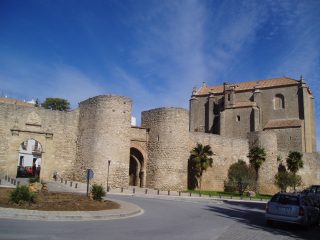
Puerta de la Cijara in Ronda, Spain, is a historic city gate on the eastern wall line of the old town. It belongs to the Murallas de Levante, where the defenses were built to protect a side of Ronda that did not have the gorge's natural drop-offs. Today it is a straightforward place to pause on foot, with stone walls, a narrow passage, and the feel of an entrance point rather than a separate monument.
It matters because it shows how Ronda was defended and how movement into the city was controlled. Visitors notice the wall line more than decorative detail, along with the uphill approach and the quieter atmosphere compared with the better-known central streets. It suits people interested in historic urban layouts, short self-guided walks, and practical stops that add context to the old town. If you prefer major interiors or large viewpoints, this will feel brief, but it rewards anyone tracing the city's edge.
Table of Contents
- History and Significance of the Puerta de la Cijara
- Things to See and Do in the Puerta de la Cijara
- How to Get to the Puerta de la Cijara
- Practical Tips on Visiting the Puerta de la Cijara
- Where to Stay Close to the Puerta de la Cijara
- Is the Puerta de la Cijara Worth Visiting?
- For Different Travelers
- FAQs for Visiting the Puerta de la Cijara
History and Significance of the Puerta de la Cijara
Puerta de la Cijara belongs to the defensive system that reached its greatest extent during Arab rule, when Ronda’s walls wrapped the city’s more vulnerable sides. The Murallas de Levante, along with the Carmen and Cijara sections, formed a vital protective belt on the eastern approach, where slopes and access lines made an attack more plausible than on the gorge-protected edges.
Historically, this gate made sense as a principal point of entry after crossing the Guadalevín. Traders and visitors would typically come in from the Puente Árabe, stop at the Baños Árabes as a practical and social ritual of arrival, and then pass by a small mosque that likely stood close to the gate area before ascending into the city proper through Puerta de la Cijara.
What you see today looks impressively intact, but that “well preserved” appearance is part of its modern story. The gate was reconstructed in 1975 by Pons Sorolla, after the original was demolished, and the current design was made in the likeness of the Arco del Cristo on the western walls-so the site carries both medieval memory and modern restoration choices in the same silhouette.
Things to See and Do in the Puerta de la Cijara
Approach the gate slowly and treat it as a transition point rather than a quick photo stop. The real payoff is noticing how the walls guide you: you can feel the logic of a controlled ascent from the river corridor into the defensive heart of the old town, as if the city is narrowing your path on purpose.
Look closely at how the masonry and wall line sit against the landscape. On this side of Ronda, the walls do the work that cliffs do elsewhere, and the gate marks a spot where entry would have been watched, managed, and potentially closed in moments of tension.
If you’re building a small route, pair the gate with the lower eastern approach: start near the river-side landmarks, then climb toward the wall line and finish by stepping back into the old town streets. Even without a long visit, it gives you that satisfying sense of “arrival” that historic gates were designed to create.
How to Get to the Puerta de la Cijara
Most visitors reach Ronda via Málaga Airport, then continue inland to the city. For the best deals and a seamless booking experience, check out these flights to Ronda on Booking.com. Seville Airport can also work well if Ronda is part of a wider Andalusia loop. For the best deals and a seamless booking experience, check out these flights to Ronda on Booking.com.
Ronda is accessible by train, and it's an easy option if you prefer to skip driving on historic streets. Train schedules and bookings can be found on Omio. From central Ronda, you can walk into the old quarter and then follow routes that descend toward the eastern wall side before climbing back up toward the gate.
Local buses and taxis are useful if you want to save your legs for the slopes around the walls. If you’re driving, park once in a central car park and do this as a walking loop, because the narrow lanes and one-way routes make short car hops inefficient. If you are looking to rent a car in Spain I recommend having a look at Discover Cars, first, as they compare prices and review multiple car rental agencies for you.
Practical Tips on Visiting the Puerta de la Cijara
- Entrance fee: Free
- Opening hours: 24 Hours
- Best time to visit: Go in the morning for calmer streets and cleaner photos along the wall line, especially if you want the gate without people passing through. Late afternoon is also rewarding for atmosphere as the old town warms up and the light softens on the stone.
- How long to spend: Plan 15-30 minutes at the gate itself, then allow extra time if you’re linking it with the eastern walls and the lower approach route. It’s most satisfying when it becomes a chapter in a longer defensive-history walk.
- Accessibility: Expect steep gradients and uneven paving on the approaches, especially if you’re coming up from the lower eastern side. If mobility is limited, approach from the easiest old-town streets and treat it as a short, targeted stop.
- Facilities: There are no dedicated facilities at the gate, so plan cafés and restrooms in the old town before or after your walk. Carry water in warm months, as the climbs can feel deceptively tiring.
Where to Stay Close to the Puerta de la Cijara
For a culture-heavy itinerary, the best area to base yourself is in or near Ronda’s historic old town so you can walk to gates, walls, and churches early and late with minimal effort; if your priority is shops, restaurants, and easy connections to the main viewpoints, basing yourself in the newer central areas around the bridge routes is often the most convenient.
For gorge-edge convenience and a classic Ronda base, Parador de Ronda places you close to the main promenades while still keeping the old quarter walkable. If you want to stay right in the historic atmosphere, Hotel Montelirio is a strong choice for old-town wandering. For a smaller, characterful stay that suits exploring lanes and wall routes on foot, Soho Boutique Palacio San Gabriel fits nicely.
Is the Puerta de la Cijara Worth Visiting?
Yes, especially if you care about how Ronda actually worked as a fortified city rather than only how it looks from viewpoints. Puerta de la Cijara helps you understand the eastern approach-where visitors arrived, how movement was controlled, and why this side needed layered walls.
It’s also a high-value stop because it’s easy to combine with nearby wall stretches and the lower approach landmarks. Even a short visit adds context that makes the rest of the old town feel more intentional and historically legible.
What Other Travellers Say...
Puerta de la Cijara, on C. Marqués de Salvatierra in Ronda, is a well-preserved Andalusi gate once serving as an entrance to the old medina; visitors describe a pleasant, cobbled walk along its double wall with attractive views of whitewashed houses and nearby fields, a quieter part of the city near Arab baths that offers shade in the afternoon.





For Different Travelers
Families with Kids
This works well for families as a short “city gate” moment, especially if you frame it as a story about entering a walled town and why certain sides needed stronger defenses. Kids often engage more when you make it a simple mission: spot the gate, trace the wall line, then move on to a more open plaza for a break.
The main watch-out is the terrain, since slopes and uneven paving can tire smaller legs quickly. Keep it short, take it slowly on the climbs, and plan a snack stop afterward so the walk stays enjoyable.
Couples & Romantic Getaways
For couples, Puerta de la Cijara is a quiet, story-rich stop that feels more local than the headline viewpoints. It’s ideal for a slower pace day where you’re letting the city reveal itself through lanes, gates, and wall lines rather than rushing between big-ticket sights.
Pair it with a gentle wander back into the old town streets for a café break. The contrast between the defensive edge and the lived-in center is part of what makes Ronda feel layered and memorable.
Budget Travelers
This is a strong budget-friendly addition because it’s experienced as part of public streets and walking routes rather than as a ticketed interior attraction. If you’re building a day around free viewpoints and self-guided wandering, the gate gives you a clear historical anchor without adding cost.
To get the most out of it, link it into a loop: approach via the eastern side, pause at the gate, then continue along the wall-adjacent streets back toward a central square. That simple structure makes the stop feel purposeful rather than incidental.
FAQs for Visiting the Puerta de la Cijara
Getting There
Visiting Experience
Tours, Context & Itineraries
Photography
Accessibility & Facilities
Food & Breaks Nearby
Safety & Timing
The Puerte de la Cijara appears in our Complete Guide to Visiting Ronda!

Moira & Andy
Hey! We're Moira & Andy. From hiking the Camino to trips around Europe in Bert our campervan — we've been traveling together since retirement in 2020!
This website uses affiliate links which may earn a commission at no additional cost to you!
Planning Your Visit
24 Hours
Free
Nearby Attractions
- San Sebastian Minaret (0.1) km
Minaret - Arco de Felipe V (0.1) km
City Gate - Baños Árabes (0.1) km
Baths and Convent - Palacio del Marqués de Salvatierra (0.1) km
Palace - Puente Árabe (0.1) km
Bridge - Museo Lara (0.1) km
Museum - Casa del Rey Moro (0.1) km
Gardens and Historic Building - Puente Viejo (0.1) km
Bridge - Murallas de Ronda (0.2) km
City Walls - Museo del Bandolero (0.2) km
Museum