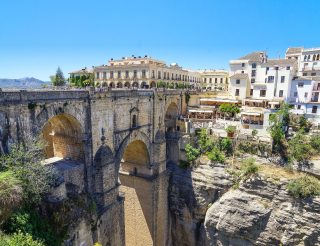
Puerta de Almocabar, Ronda
City Gate and City Walls in Ronda

Puerta de Almocábar in Ronda, Spain, is one of the city's main surviving gateways and a clear example of how the old town was defended. Set on the southern side of the historic centre, it belongs to the former Islamic fortifications that shaped access into the hilltop settlement.
Visitors come here to see the thick city walls, the recessed arches, and the gate's simple military logic up close. The nearby later gate adds a useful comparison between medieval and Renaissance-era Ronda. This stop works best for people who want a short, low-key visit that adds context to the town's better-known viewpoints, and for anyone interested in fortifications, urban history, or walking through the old quarter on foot.
Table of Contents
- History and Significance of the Puerta de Almocábar
- Things to See and Do in the Puerta de Almocábar
- How to Get to the Puerta de Almocábar
- Practical Tips on Visiting the Puerta de Almocábar
- Where to Stay Close to the Puerta de Almocábar
- Is the Puerta de Almocábar Worth Visiting?
- For Different Travelers
- FAQs for Visiting Puerta de Almocábar
History and Significance of the Puerta de Almocábar
Ronda's reputation as a strong defensive city was never just about the dramatic landscape; it was also about the engineering of its walls, gates, and controlled entry points. Puerta de Almocábar dates to the 13th century and belongs to the Islamic period fortifications, when the city's walls and gates were built to make access slow, exposed, and difficult for attackers.
The gate’s name comes from the Moorish term Al maqabir, meaning cemetery, a reminder of how towns were organised beyond the walls as well as within them. By tradition, Moorish cemeteries were placed outside city walls, and the area opposite the gate became associated with this function, giving the gate and the surrounding Almocábar walls their enduring identity.
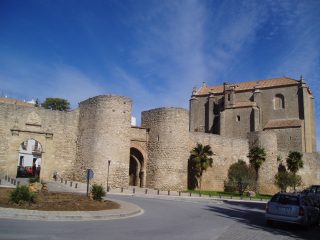
Next to the older gate you also see the later Charles V Gate, built in the 16th century with a Renaissance character and imperial symbolism, including the crest with the Spanish imperial eagle above the arch. Together, the two gates create a clear timeline in stone: the older defensive logic of medieval Ronda beside the newer political language of early modern Spain.
Things to See and Do in the Puerta de Almocábar
Start by viewing both gates as a pair, because the contrast is part of the experience. The 13th-century Puerta de Almocábar feels heavy and defensive, while the Charles V Gate reads as more ceremonial, even though it still sits within a fortified setting.
Look closely at the structure of the older gate, designed as three consecutive doors flanked by two semicircular towers. The layered entry created a controlled passage, and the mechanism described as a sliding gate between the second and third door is a good reminder that medieval gates were engineered systems, not just arches in a wall.
Then take time to walk along the well-preserved Almocábar walls themselves. Even a short walk helps you understand how the walls shaped movement around the southern side of the city, and it gives you a different kind of Ronda experience than the miradores: less panoramic, more tactile, and more connected to the city's lived history.
How to Get to the Puerta de Almocábar
Most travelers arrive in the region via Málaga Airport, which is the most convenient gateway for reaching Ronda from the Costa del Sol. For the best deals and a seamless booking experience, check out these flights to Ronda on Booking.com. Seville Airport is also a practical option if you are building a wider Andalusia route that includes multiple cities. For the best deals and a seamless booking experience, check out these flights to Ronda on Booking.com.
Ronda has train connections that make it easy to arrive without a car, then explore the historic centre on foot once you are in town. Train schedules and bookings can be found on Omio. From central Ronda, you can walk to Puerta de Almocábar as part of an old town circuit, allowing a little extra time if you are also stopping at viewpoints and churches along the way.
Buses also connect Ronda with nearby cities and can work well if train times do not suit your schedule. If you are traveling by car, park once in a central lot and walk to the gate, since the old town streets are better enjoyed on foot than navigated by vehicle. If you are looking to rent a car in Spain I recommend having a look at Discover Cars, first, as they compare prices and review multiple car rental agencies for you.
Practical Tips on Visiting the Puerta de Almocábar
- Entrance fee: Free
- Opening hours: 24 Hours
- Best time to visit: Late morning is ideal for clear light on the stonework and an easy flow into the rest of the old town. If you want a calmer feel, come earlier and treat it as your first stop before the main sightseeing routes fill up.
- How long to spend: Plan 20-40 minutes to view both gates, take photos, and do a short walk along the walls. If you enjoy slow exploring and reading the architecture, an hour feels comfortably unhurried.
- Accessibility: Expect uneven historic paving and some changes in level around the walls, which can be uncomfortable for limited mobility. If you want the easiest experience, focus on the main viewpoints near the gates rather than longer wall walks.
- Facilities: There are no dedicated facilities at the gates, so use cafés and restrooms in the old town before or after your visit. This stop works best as part of a wider walking loop rather than a long standalone linger.
Where to Stay Close to the Puerta de Almocábar
For a culture-heavy itinerary, the best area to base yourself is the old town near Puente Nuevo and the main monuments so you can walk everywhere early and late; if your trip focuses on transport links and day trips, staying closer to the station side can make arrivals and departures easier. If you want a classic, central stay close to the main sights, Parador de Ronda is a strong choice for convenience and views. For a smaller, characterful base in the historic lanes, Soho Boutique Palacio San Gabriel suits travelers who prefer atmosphere over a large-hotel feel. If you want a comfortable option with a calmer setting while remaining walkable into the centre, Catalonia Reina Victoria works well.
Is the Puerta de Almocábar Worth Visiting?
Yes, especially if you want to understand Ronda as a fortified city rather than only a viewpoint destination. The paired gates give you a clear visual story of how power and architecture shifted from the Islamic period to Renaissance Spain, all in a single, walkable stop.
It is also worth it because the walls here are not just remnants; they are readable, approachable, and easy to integrate into a broader old town route without adding much time.
What Other Travellers Say...
Walls of Ronda, C. Goleta 10, 29400 Ronda, Málaga, Spain — Walkable city walls offering exceptional views over nearby fields and whitewashed houses; visitors praise the brilliant panoramas and say the area can be magical despite some crowds and limited parking, with quieter spots near a smaller bridge on the southern side and a recommendation to stroll the town's windy streets.





For Different Travelers
Families with Kids
This is a good stop for families because it is visual and easy to grasp: big gates, thick walls, and a clear sense of “castle city” defenses. It works best as a quick, energetic visit where kids can focus on spotting the two different gates and imagining how entrances were protected.
If you plan a longer walls walk, keep it flexible and turn back when interest drops, since the best part is the first stretch where the architecture feels most immediate.
Couples & Romantic Getaways
For couples, Puerta de Almocábar is a quieter, more atmospheric counterpoint to the busiest gorge viewpoints. The stonework and the sense of threshold into the old town create a naturally cinematic mood, especially if you visit outside peak hours.
It also pairs well with a slow old-town wander afterward, using the gate as the “start line” for a gentle route through lanes, plazas, and a final viewpoint stop.
Budget Travelers
This is a strong budget-friendly highlight because the main experience is outdoors and walkable, and you can get real depth without paying for a ticketed attraction. It is an easy way to add variety to a Ronda day that might otherwise be dominated by viewpoints and cafés.
To maximise value, combine it with other free old town stops nearby, keeping paid entries for just one priority monument elsewhere.
FAQs for Visiting Puerta de Almocábar
Getting There
Tickets & Entry
Visiting Experience
Tours, Context & Itineraries
Photography
Food & Breaks Nearby
Safety & Timing
The Puerta de Almocabar appears in our Complete Guide to Visiting Ronda!

Moira & Andy
Hey! We're Moira & Andy. From hiking the Camino to trips around Europe in Bert our campervan — we've been traveling together since retirement in 2020!
This website uses affiliate links which may earn a commission at no additional cost to you!
Planning Your Visit
24 Hours
Free
Nearby Attractions
- Iglesia del Espíritu Santo (0.1) km
Church - Castillo del Laurel (0.1) km
Castle - Plaza Duquesa de Parcent (0.3) km
Square - Town Hall of Ronda (0.3) km
Historic Building - Murallas de Ronda (0.3) km
City Walls - Museo del Bandolero (0.3) km
Museum - Church of Santa María la Mayor (0.3) km
Church and Historic Building - San Sebastian Minaret (0.4) km
Minaret - Palacio de Mondragon (0.4) km
Gardens, Museum and Palace - Casa del Gigante (0.4) km
Museum and Palace