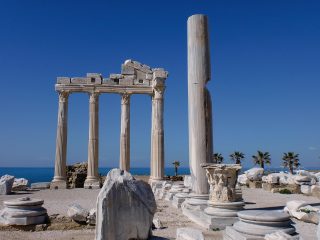
House of Pleasure, Ephesus
Ancient City, Historic Site and Ruins in Ephesus
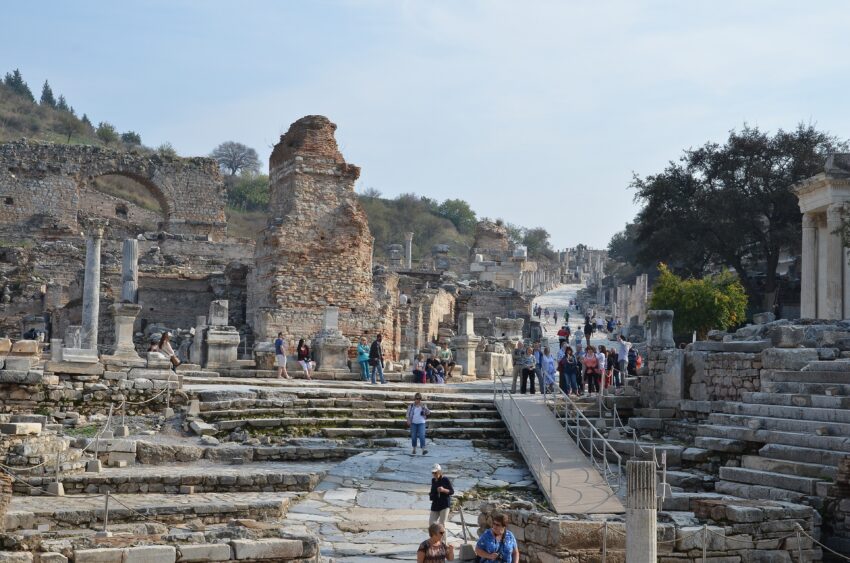
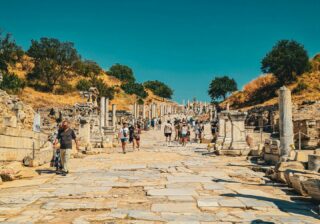
The House of Pleasure is one of Ephesus's smaller, conversation-starting ruins, tucked along the main visitor route through the ancient city in Türkiye. It's not a standalone “museum room” with a ticket booth of its own; instead, you'll typically encounter it as part of your broader walk through Ephesus, near the showstoppers like Curetes Street and the Library of Celsus.
Most travelers see it on a guided walking tour or a self-guided loop from one of Ephesus's gates, pausing briefly for context and photos before continuing downhill toward the marble streets and monumental façades. If you're prioritizing the best places to see in Ephesus, treat the House of Pleasure as a short, atmospheric stop that adds texture to the city's everyday life beyond temples and theaters.
Table of Contents
- History and Significance of the House of Pleasure
- Things to See and Do in the House of Pleasure
- How to Get to the House of Pleasure
- Practical Tips on Visiting the House of Pleasure
- Where to Stay Close to the House of Pleasure
- Is the House of Pleasure Worth Visiting?
- For Different Travelers
- FAQs for Visiting House of Pleasure
History and Significance of the House of Pleasure
Ephesus was a major port city of the Roman world, and like other large urban centers, it had a full spectrum of public and private spaces: civic buildings, elite residences, shops, baths, and entertainment. The House of Pleasure is commonly associated with the city's more adult side of urban life, and it's often discussed in the same breath as Ephesus's social venues and street-level commerce.
What makes this stop meaningful isn’t a single intact room you can walk into, but the way it helps you imagine how busy and layered this city once was. Along the main streets, people weren’t only heading to grand monuments; they were also meeting friends, buying goods, visiting bath complexes, and moving between spaces that blended business, leisure, and status.
Because much of Ephesus is experienced as an outdoor, open-air ruin, places like the House of Pleasure are valuable as “human-scale” anchors. They encourage you to look past the postcard angles and think about daily routines, social norms, and the kinds of services that clustered around major thoroughfares.
Things to See and Do in the House of Pleasure
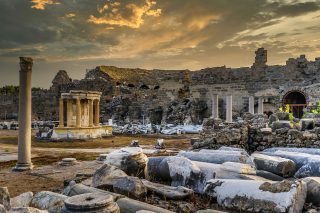
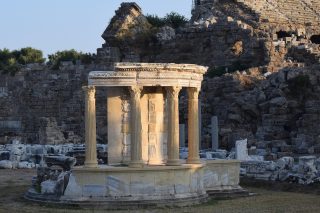
The best way to experience the House of Pleasure is to approach it as a quick interpretive pause: stop, look for remaining wall lines and room outlines, and then orient yourself to what's around you on the street. Even when structures are partially collapsed, the footprint and setting can be surprisingly evocative-especially when you imagine the noise and foot traffic that once flowed through this corridor.
Bring your attention to the views and sightlines. This area of Ephesus is full of dramatic “then and now” contrasts: a modest ruin in the foreground, and a headline monument (like the Library of Celsus area) pulling your eye down the route. It's also a good spot to listen to a guide's explanation (or your audio guide) because the surrounding landmarks help the story stick.
If you’re visiting during an evening opening, the lighting can change the mood completely. Ruins that feel purely archaeological in midday sun can become more theatrical at night, and short stops like this one often feel more atmospheric when the crowds thin and the stones are floodlit.
How to Get to the House of Pleasure
The nearest major airports are İzmir Adnan Menderes Airport (ADB) and, for some itineraries, Milas-Bodrum Airport (BJV); from either, you'll continue to Selçuk for Ephesus access. For the best deals and a seamless booking experience, check out these flights to Ephesus on Booking.com.
You can reach Selçuk by train from İzmir (and some other regional connections), then use a taxi or local transport to the Ephesus entrances depending on your route for the day. You can use the official TCDD Taşımacılık website to check schedules, compare routes, and purchase tickets for Türkiye’s national and regional trains operated by TCDD. For a more streamlined experience (especially if you prefer an English interface or want to compare across countries), we recommend using Omio, which allows you to easily compare prices, schedules, and book train tickets across Türkiye and the rest of Europe — all in one place.
If you're driving, Selçuk is straightforward to reach via the regional highways, and there are signed approaches to the Ephesus area with parking near the gates. If you are looking to rent a car in Türkiye I recommend having a look at Discover Cars, first, as they compare prices and review multiple car rental agencies for you.
Practical Tips on Visiting the House of Pleasure
- Official website: https://muze.gov.tr/urun-ekle?catalogNo=WEB-EFS01-87-009
- Entrance fee: Included with Ephesus with Ephesus Experience Museum (40 Euro per person); Ephesus with Ephesus Experience Museum + Terrace Houses: 52 Euro p.p.
- Opening hours: (Summer) Daily: 08:00–19:00. (Winter) Daily: 08:00–18:00.
- Best time to visit: Arrive early for cooler temperatures and clearer photos, or aim for late afternoon if you want softer light and fewer tour groups.
- How long to spend: Plan 5-10 minutes here, but budget 2-4 hours overall for Ephesus so you're not rushing the main monuments.
- Accessibility: Expect uneven stone paving and occasional steps; the marble streets can be slick, so sturdy shoes with grip make a big difference.
- Facilities: Use restrooms and water points when you see them near the entrances; inside the ruins, shade and services are limited.
Where to Stay Close to the House of Pleasure
Base yourself in Selçuk town center for the easiest logistics, the widest choice of restaurants, and quick access to Ephesus in the morning.
For a comfortable, well-located stay with a classic traveler-friendly setup, consider: Ayasoluk Hotel It’s a strong pick for couples and first-timers who want style plus proximity to Selçuk’s sights.
If you want a boutique feel and a quieter, more personal atmosphere, try: Cella Boutique Hotel & Spa It’s a good choice when you want to recover after long hours on stone streets.
For a friendly, good-value base that’s popular with independent travelers, look at: Ephesus Centrum It’s included for its practical location and easy, no-fuss comfort.
If you’re after a warm, local guesthouse vibe with a personal touch, consider: Amazon Petite Palace It’s a nice fit for travelers who like hosts who help with day planning.
For a budget-leaning option that still keeps you close to transport and town life, check: Boomerang Guesthouse It’s included for sociable energy and solid value for short stays.
Is the House of Pleasure Worth Visiting?
Yes-if you're already visiting Ephesus, it's worth the brief stop because it adds a more human, street-level dimension to a site that can otherwise feel like a parade of grand façades. It won't be the highlight of your day, but it rounds out the story and gives you a reason to slow down and notice how the city functioned beyond its monuments.
Honest Pivot: If you're short on time, traveling with someone who only wants the “top 5” photo spots, or you're uncomfortable with the theme implied by the name, you can skip lingering here and focus on the Library of Celsus area, the Great Theatre, and the main streets.
What Other Travellers Say...
Reviews are overwhelmingly positive, with visitors describing the area as a must-see stop on the Ephesus walk and praising the impressive scale of the ruins. Common highlights include the charm of the ancient house area, strong viewpoints toward major landmarks (especially around the Library of Celsus), and the atmosphere created during evening/illuminated visits. The main drawback mentioned is that many structures are partially collapsed, so expectations should be set for ruins rather than fully intact buildings.





For Different Travelers
Ephesus works best when you mix headline monuments with smaller interpretive stops, and the House of Pleasure fits that role well. Think of it as a quick add-on that helps different travelers connect the dots between architecture, daily life, and the social fabric of the ancient city.
Families with Kids
For families, this is usually a “short explanation and move on” stop. Keep it simple and age-appropriate by framing it as part of how ancient cities had different kinds of businesses and social spaces.
Kids tend to engage more with what they can see clearly, so pair this stop with nearby big-impact sights like the theater and the library area. Turning it into a quick scavenger hunt for columns, carvings, and street layouts can keep momentum.
Couples & Romantic Getaways
Couples often enjoy this stop most when it’s quiet-early, late, or during an evening opening-because the atmosphere feels more cinematic. It’s a good place to pause, take a few photos, and then continue toward the most iconic viewpoints.
If you're doing Ephesus as part of a day trip, this is also a nice reminder that the city wasn't only ceremonial; it was lived-in. That contrast can make the grand monuments feel even more impressive.
Budget Travelers
Budget travelers will appreciate that this is part of the main Ephesus visit rather than a separate paid attraction. You can get plenty out of it with a self-guided approach if you've read a little context beforehand.
To keep costs down, bring your own water, sun protection, and snacks for before/after the site (where allowed), and spend your “splurge” on one value-add: either a short guided tour or an audio guide to make smaller stops like this more meaningful.
History Buffs
History buffs will like this stop as a prompt to think about social history, not just monumental architecture. It’s a chance to discuss how Roman-era cities organized commerce, leisure, and public behavior along major streets.
Pair it with the Terrace Houses (for elite domestic life) and the baths (for public social life) to build a fuller picture. The contrast between spaces is where Ephesus really starts to feel like a functioning city rather than a collection of ruins.
FAQs for Visiting House of Pleasure
Getting There
Tickets & Entry
Visiting Experience
Tours, Context & Itineraries
Photography
Accessibility & Facilities
Food & Breaks Nearby
Safety & Timing
The House of Pleasure appears in our Complete Guide to Visiting Ephesus!

Moira & Andy
Hey! We're Moira & Andy. From hiking the Camino to trips around Europe in Bert our campervan — we've been traveling together since retirement in 2020!
This website uses affiliate links which may earn a commission at no additional cost to you!
Planning Your Visit
(Summer) Daily: 08:00-19:00.
(Winter) Daily: 08:00-18:00.
Included with Ephesus with Ephesus Experience Museum (40 Euro per person); Ephesus with Ephesus Experience Museum + Terrace Houses: 52 Euro p.p.
Nearby Attractions
- Public Roman Latrines (0) km
Historic Site, Roman Site and Ruins - Terrace Houses of Ephesus (0) km
Historic Room, Historic Site and Roman Site - Library of Celsus (0.1) km
Library, Roman Site and Ruins - Gate of Mazaeus and Mithridates (0.1) km
City Gate, Historic Site and Ruins - Temple of Hadrian (0.1) km
Historic Site, Roman Site and Ruins - Trajan Fountain (0.1) km
Fountain, Roman Site and Ruins - Commercial Agora (0.1) km
Ancient City, Historic Site and Square - Curetes Street (0.2) km
Ancient City, Ruins and Street - Ephesus Experience Museum (0.2) km
Attraction and Museum - Heracles Gate (0.2) km
City Gate, Historic Site and Ruins