Puente Viejo, Ronda
Bridge in Ronda
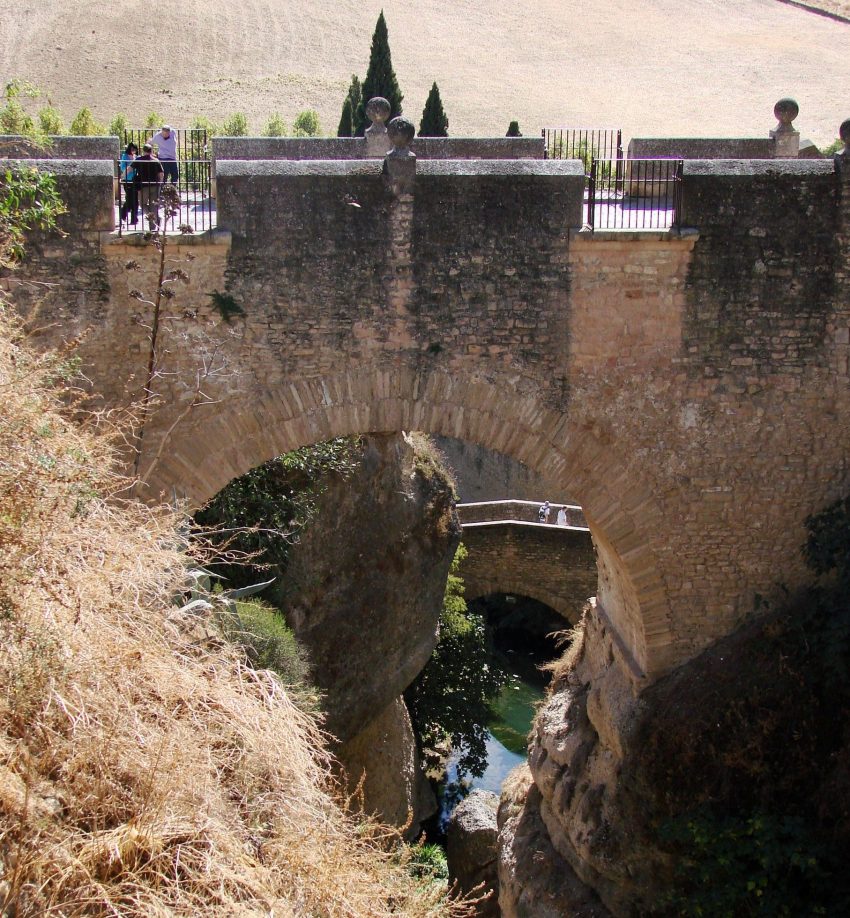
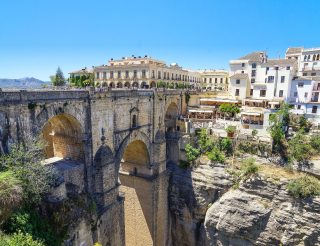
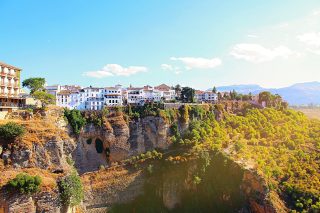
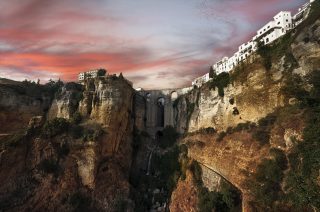
Puente Viejo de Ronda, also called the Old Bridge, is the smallest and oldest of the three bridges that cross the deep El Tajo gorge in Ronda. Set low in the chasm above the Guadalevín River, it feels more intimate than the headline-grabbing Puente Nuevo, and its location gives you a front-row seat to the sheer cliffs that make this city so unforgettable.
Built on the remnants of an earlier crossing and associated with early 17th-century construction, the bridge once carried the main link between Mercadillo and La Ciudad before later bridges transformed how people moved around town. Today it's pedestrian-only, which makes it one of the top sights in Ronda for travelers who want to slow down, listen to the river below, and appreciate how the city's geography shaped its everyday life. It's also an easy, rewarding detour on a walking tour of Ronda, especially if you want a route that dips below the busiest viewpoints and feels more like discovery than checklist sightseeing.
Table of Contents
- History and Significance of the Puente Viejo de Ronda
- Things to See and Do in the Puente Viejo de Ronda
- How to Get to the Puente Viejo de Ronda
- Practical Tips on Visiting the Puente Viejo de Ronda
- Where to Stay Close to the Puente Viejo de Ronda
- Is the Puente Viejo de Ronda Worth Visiting?
- For Different Travelers
- FAQs for Visiting Puente Viejo de Ronda
- Nearby Attractions to the Puente Viejo de Ronda
History and Significance of the Puente Viejo de Ronda
Puente Viejo mattered because it was once the practical crossing that stitched together two halves of Ronda: Mercadillo on one side and La Ciudad on the other. Long before the Puente Nuevo became the city's most famous symbol, this lower bridge and its approach road represented the most navigable link across the gorge, turning a dramatic natural barrier into a usable route for daily life, trade, and movement.
The bridge you see today is tied to early modern construction and was built on the remnants of an earlier bridge, which hints at how long this crossing point has been considered essential. Its survival also reflects a pattern you'll notice across Ronda: the city repeatedly reuses and reinforces the same strategic places, because the landscape leaves you only a few sensible options.
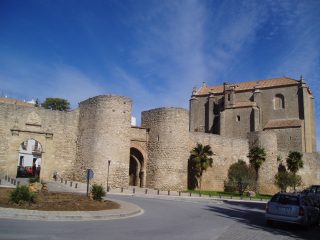
Just as important as the bridge itself is the gate that anchors its story on this side of the gorge: the Arco de Felipe V. Built in the same era as the bridge's later evolution, it would have functioned as the key entrance into the old town from this direction, making the bridge-and-arch combination feel like a controlled threshold rather than a casual walkway.
Things to See and Do in the Puente Viejo de Ronda
Start by approaching the bridge from the old town side so you naturally encounter the Arco de Felipe V, which frames the transition beautifully. It's one of those spots where you can feel the logic of historic movement: the arch is the checkpoint, the bridge is the crossing, and the gorge is the barrier everything had to negotiate.
On the bridge itself, pause at the balconied niches and look outward into the gorge. They read as defensive at first glance, but they were introduced during an 18th-century renovation, which makes them a fascinating reminder that monuments often gain features later that change how we interpret them today. They also happen to be excellent places to stop, breathe, and take in the river far below.
If you enjoy walking routes with a bit of drama, continue up toward the Cuesta de Santo Domingo. The steep hairpin bend on the climb gives you shifting angles back toward the bridge and cliffs, and it’s a satisfying way to connect the lower gorge experience back into the upper streets and plazas.
How to Get to the Puente Viejo de Ronda
Most visitors arrive via Málaga Airport, then travel onward to Ronda as part of an Andalusia road trip or a multi-city route. For the best deals and a seamless booking experience, check out these flights to Ronda on Booking.com. Seville Airport is another practical option if you're combining Ronda with western Andalusia and want flexible onward connections. For the best deals and a seamless booking experience, check out these flights to Ronda on Booking.com.
Ronda is well connected by rail, and arriving by train is one of the easiest ways to start exploring without needing a car once you're in town. Train schedules and bookings can be found on Omio. From the station, you can walk into the historic centre and follow signs or map directions down toward the gorge crossings, turning the journey into part of your day rather than a separate transfer.
Local buses and taxis can shorten the walking if you prefer to save energy for the gorge paths. If you’re traveling by car, the simplest approach is to park once in a central lot and explore the bridges on foot, since the historic streets are narrow and the best viewpoints involve walking anyway. If you are looking to rent a car in Spain I recommend having a look at Discover Cars, first, as they compare prices and review multiple car rental agencies for you.
Practical Tips on Visiting the Puente Viejo de Ronda
- Entrance fee: Free
- Opening hours: 24 Hours
- Best time to visit: Early morning is ideal for quiet atmosphere and clear photos without foot traffic. Late afternoon is excellent for moodier light in the gorge and a more dramatic sense of depth.
- How long to spend: Allow 20-40 minutes to cross, stop at the niches, and take in viewpoints on both sides. If you combine it with the Arco de Felipe V and the climb toward Cuesta de Santo Domingo, plan closer to an hour.
- Accessibility: The approaches can be steep with uneven historic paving, and the climb out of the gorge is physically demanding. If mobility is limited, focus on the bridge and the nearest viewpoints rather than committing to longer uphill loops.
- Facilities: There are no dedicated facilities on the bridge, so plan cafés, restrooms, and longer breaks in the old town above. Bring water if you’re doing the gorge-level routes, especially in warmer months.
Where to Stay Close to the Puente Viejo de Ronda
For a culture-heavy itinerary, base yourself in central Ronda near the old town and main viewpoints so you can walk everywhere and enjoy the city in the quieter early and late hours; if your trip is built around transport convenience and day trips, consider staying closer to the station side for smoother arrivals and departures.
If you want a landmark location right by the gorge and an easy walk to all three bridges, Parador de Ronda is a strong choice. For a more characterful stay in the historic lanes with a boutique feel, Soho Boutique Palacio San Gabriel fits the old-town atmosphere well. If you prefer a comfortable base with a calmer setting while staying walkable to the centre, Catalonia Reina Victoria is a reliable option.
Is the Puente Viejo de Ronda Worth Visiting?
Yes, especially if you want to understand Ronda beyond its most famous postcard angle. The Puente Viejo places you lower in the gorge where the cliffs feel taller, the river feels closer, and the city's engineering choices feel more tangible.
It's also worth visiting because it connects naturally to the Arco de Felipe V and the steep lanes around the gorge, giving you a route that feels like you're moving through the city's older, more practical geography rather than just hopping between viewpoints.
What Other Travellers Say...

Puente Viejo in Ronda is a charming pedestrian stone bridge that offers expansive, picturesque views over the Guadalevín gorge and the town's whitewashed buildings; visitors praise its peaceful atmosphere for photos and walks, note it links different parts of Ronda and nearby sights (including palaces and the bull ring area), and recommend seeing it both by day and lit up at night while bearing in mind the steep walks down and back up.



For Different Travelers
Families with Kids
This can be a great stop for families if you treat it as a short, story-led crossing rather than a long hike. Kids often love the idea of “the old bridge” being the original way people crossed the gorge, and the niches offer natural pause points to look down at the river.
The main consideration is the steepness of nearby approaches. If you want to keep it easy, cross the bridge, enjoy the views, and return the same way rather than committing to a full uphill loop.
Couples & Romantic Getaways
For couples, Puente Viejo has a quieter, more atmospheric feel than the busiest viewpoints, with a sense of being tucked into the gorge rather than standing above it. It's ideal for slow walking, lingering in the niches, and letting the scenery do the work without a crowd pressing you onward.
Pair it with a gentle old-town wander afterward and it becomes one of those small experiences that feels personal and memorable, especially in softer late-afternoon light.
Budget Travelers
This is a high-value stop because it's an experience of place rather than a ticketed attraction. You get dramatic gorge views, historic context, and a satisfying walking route without paying anything beyond your time and energy.
Use it to build a low-cost “gorge circuit” day: bridges, viewpoints, plazas, and a single paid highlight elsewhere only if you want it. It's an easy way to make Ronda feel rich without stacking entry fees.
FAQs for Visiting Puente Viejo de Ronda
Getting There
Tickets & Entry
Visiting Experience
Tours, Context & Itineraries
Photography
Accessibility & Facilities
Food & Breaks Nearby
Safety & Timing
Nearby Attractions to the Puente Viejo de Ronda
- Arco de Felipe V: The historic gate above the bridge that frames the old-town approach and adds a strong sense of threshold.
- Puente Nuevo: Ronda's iconic bridge with the city's most famous gorge views and classic photo angles.
- Baños Árabes de Ronda: The best-preserved medieval baths in Spain, offering a quieter, atmospheric heritage stop.
- Palacio de Mondragón: A Mudéjar-Renaissance palace with a courtyard, museum spaces, and gorge-edge gardens.
- Plaza Duquesa de Parcent: A beautiful old-town square surrounded by major monuments and a calmer, historic ambience.
The Puente Viejo appears in our Complete Guide to Visiting Ronda!

Moira & Andy
Hey! We're Moira & Andy. From hiking the Camino to trips around Europe in Bert our campervan — we've been traveling together since retirement in 2020!
This website uses affiliate links which may earn a commission at no additional cost to you!
Planning Your Visit
24 Hours
Free
Nearby Attractions
- Puente Árabe (0) km
Bridge - Arco de Felipe V (0) km
City Gate - Palacio del Marqués de Salvatierra (0.1) km
Palace - Casa del Rey Moro (0.1) km
Gardens and Historic Building - Baños Árabes (0.1) km
Baths and Convent - Jardines de Cuenca (0.1) km
Gardens - Puerte de la Cijara (0.1) km
City Gate - Museo Lara (0.2) km
Museum - Mirador de Aldehuela (0.2) km
Viewing Point - Puente Nuevo (0.2) km
Bridge