Baños Árabes, Ronda
Baths and Convent in Ronda
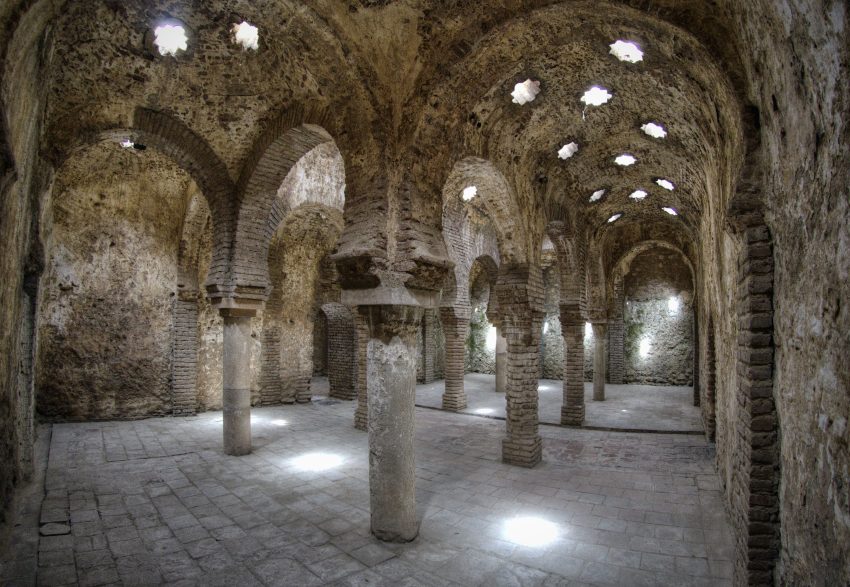
The Baños Árabes de Ronda are the best-preserved 13th-century Arabic baths in Spain, tucked down in the San Miguel quarter near the old Arab Bridge at the bottom of the gorge. Reaching them feels like slipping out of “postcard Ronda” into something quieter and older: a stone-and-brick bathhouse where the light is dim, the air feels cool, and the architecture does most of the storytelling before you read a single sign.
This is one of the top attractions in Ronda because it offers a rare, intact glimpse into everyday life in medieval Al-Andalus, not just grand palaces and fortress walls. It also works perfectly within a walking tour of Ronda if you want a route that drops you down into the gorge and rewards you with a genuinely different atmosphere from the viewpoints above.
Table of Contents
- History and Significance of the Baños Árabes de Ronda
- Things to See and Do in the Baños Árabes de Ronda
- How to Get to the Baños Árabes de Ronda
- Practical Tips on Visiting the Baños Árabes de Ronda
- Where to Stay Close to the Baños Árabes de Ronda
- Is the Baños Árabes de Ronda Worth Visiting?
- For Different Travelers
- FAQs for Visiting Baños Árabes de Ronda
- Nearby Attractions to the Baños Árabes de Ronda
History and Significance of the Baños Árabes de Ronda
The baths date to the late 13th century, built during the reign of King Abomelik, when Ronda was an important town in the Islamic south. Their location in the old Arab quarter makes sense: hammams were practical infrastructure for hygiene and social life, but also part of religious culture, where cleanliness and ritual preparation mattered.
Structurally, the bathhouse follows principles that echo Roman bathing traditions, organised into cold, warm, and hot rooms, yet adapted to Islamic architectural language and the hammam tradition. What makes Ronda’s baths especially significant is how much of the hydraulic logic remains readable today, including the water supply system that once drew from the Arroyo de las Culebras via a waterwheel.
After the Christian conquest, the baths fell out of use and were gradually buried by river swellings and sediment, which ironically helped preserve them. Their rediscovery unfolded over time, with early remains coming to light during landscaping works in the area and the site ultimately entering public ownership in the 20th century, shifting from forgotten utility to protected heritage.
Things to See and Do in the Baños Árabes de Ronda
The highlight is the central hall, where you can stand under star-shaped roof vents and feel the deliberate calm of the space. The room is organised in three bodies, divided by pairs of horseshoe arches resting on brick-and-stone columns, and topped by vaults and domes that create a soft, enclosed ambience. It’s the kind of architecture that feels both engineered and intimate, designed for rhythm and relaxation rather than spectacle.
Move through the sequence of rooms and notice how the bathhouse is arranged to guide temperature and experience: cold, warm, then hot. Even without steam and water, the logic still reads clearly, and you can imagine how these spaces once worked together as a social routine rather than a quick wash.
Outside the main halls, look for the preserved elements of the working system, including the waterwheel that once helped lift water from the stream. And don’t skip the short video if it’s available during your visit-it helps you visualise the baths in operation and gives the space a “before and after” clarity that makes the ruins feel alive.
How to Get to the Baños Árabes de Ronda
The nearest major airport is Málaga Airport, with Seville Airport also a common option if you're touring Andalusia. For the best deals and a seamless booking experience, check out these flights to Ronda on Booking.com. From either, Ronda is a manageable onward journey, and many visitors choose to stay overnight to experience the old town outside day-trip hours.
Ronda is reachable by train, and arriving by rail is often the simplest way to keep your visit walkable once you're in town. Train schedules and bookings can be found on Omio. From the historic centre, you can walk down to the baths, enjoying the shift from the busy plaza-and-viewpoint zone to the quieter lower neighbourhoods.
Buses also connect Ronda with surrounding cities and towns and can work well if train times don't fit your schedule. If you're driving, park centrally and approach the baths on foot, because the most enjoyable route is the scenic descent into the gorge and back. If you are looking to rent a car in Spain I recommend having a look at Discover Cars, first, as they compare prices and review multiple car rental agencies for you.
Practical Tips on Visiting the Baños Árabes de Ronda
- Entrance fee: Adults: €4.50; Free Tuesday After 15:00
- Opening hours: Monday: 10:00 - 14:00, 15:00 - 18:00; Tuesday - Friday 09:30 - 20:00; Saturday 10:00 - 14:00, 15:00 - 18:00; Sunday & Bank Holiday10:00 - 15:00.
- Official website: https://www.juntadeandalucia.es/cultura/enclaves/enclave-arqueologico-banos-arabes-ronda
- Best time to visit: Late morning is a good balance of light and calm, and it gives you time to enjoy the walk down before midday heat. If you want the most atmospheric experience, go later in the day when the baths feel cooler and quieter, then plan a slow climb back up.
- How long to spend: Allow 45-75 minutes for the baths themselves, including the video and time to pause in the central hall. Add extra time for the walk down and the steep return climb if you’re coming from the main square.
- Accessibility: The approach includes a descent into the gorge and the return is a steep uphill walk, so it’s not ideal for limited mobility. Inside, expect uneven surfaces and low light in places, so sturdy shoes and careful footing help.
- Facilities: Facilities are limited on-site, so plan restrooms and a café stop in the centre before you descend. Bring water, especially in warmer months, because the climb back up can feel surprisingly demanding.
Where to Stay Close to the Baños Árabes de Ronda
For a culture-heavy itinerary, the best area to base yourself is the old town near Puente Nuevo so you can walk to main sights early and late and build an easy route down to the baths; if your priority is transport links for day trips and onward travel, staying closer to the train station area can make arrivals and departures simpler.
For a gorge-edge base with easy access to the old town lanes, Parador de Ronda keeps you close to the main promenade routes. If you prefer a refined stay with character and strong walkability in the historic centre, Soho Boutique Palacio San Gabriel is a good fit. For a comfortable option that still walks well into the centre while giving you a calmer feel, Catalonia Reina Victoria works reliably.
Is the Baños Árabes de Ronda Worth Visiting?
Yes, especially if you want a heritage site that feels intimate and unusually well preserved. The baths offer a different kind of Ronda experience: less panoramic and more immersive, with architecture that's designed to be felt rather than simply photographed.
They’re also worth visiting because the walk down and back gives your day a satisfying shape. You get a scenic descent, a cool, contemplative interior experience, and then the “earned” return to the old town above.
What Other Travellers Say...

Baños Árabes Yacimiento Arqueológico in Ronda is an excavated 13th-century bathhouse where you can wander preserved rooms, vaulted spaces and parts of the original water system; visitors recommend watching the short English/Spanish video with 3D animation before touring to understand how the baths were supplied with water and heat, note the pleasant cool interior compared with hot outside temperatures, and expect modest gardens and a small entrance fee that helps support site upkeep.


For Different Travelers
Families with Kids
For families, the baths can be surprisingly engaging because the space feels like a discovery: arches, domes, star-shaped ceiling vents, and hidden engineering. The visit works best when kept short and curious-spot the star vents, talk about how water was moved, then head back up before attention fades.
The main consideration is the walk and the return climb, which can be tiring for smaller kids. If you plan a snack break and keep the pace relaxed, it becomes a mini-adventure rather than a slog.
Couples & Romantic Getaways
For couples, the baths are one of Ronda’s most atmospheric stops, with dim light and quiet spaces that naturally slow you down. It’s a good contrast to the busy viewpoints, and it feels especially intimate if you arrive when the site is calm and you can linger without being rushed.
Pair it with a slow walk back up through the old town and an early evening drink. The shift from cool stone interiors to warm street life can make the day feel more layered and memorable.
Budget Travelers
This is a strong value stop because it offers a distinctive experience you won’t get from free viewpoints alone, and it doesn’t require a guide to be meaningful. The best budget strategy is to treat it as your main paid heritage site, then build the rest of your day around free miradores and promenades.
To save energy and money, walk down at a comfortable pace and plan your breaks in the centre rather than buying extras around the gorge. A refillable water bottle makes the return climb far easier.
History Buffs
For history-focused travelers, the baths are a standout because the layout and architectural logic remain legible: you can “read” how the rooms worked together, how heat was managed, and how the structure supported social ritual. The preserved waterwheel and heating elements deepen the experience beyond pure aesthetics.
It's also a meaningful window into medieval urban life in Al-Andalus, where bathhouses were not luxuries but essential infrastructure. The fact that the site was later buried and preserved adds another historical layer about how cities erase and rediscover their own past.
FAQs for Visiting Baños Árabes de Ronda
Getting There
Tickets & Entry
Visiting Experience
Tours, Context & Itineraries
Photography
Accessibility & Facilities
Food & Breaks Nearby
Safety & Timing
Nearby Attractions to the Baños Árabes de Ronda
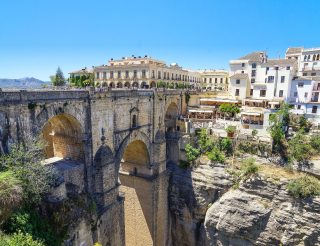
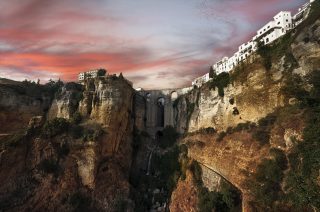
- Puente Nuevo: The iconic bridge above the gorge, delivering the classic panoramic perspective over El Tajo.
- Casa del Rey Moro: A cliffside site with terraced gardens and a dramatic descent into the historic water mine.
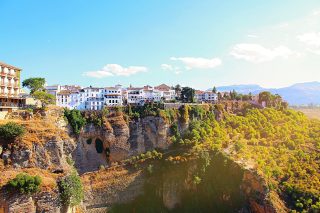
- Mirador de Ronda: A gorge-edge viewpoint near Alameda del Tajo with wide Serranía views and changing light.
- Iglesia de Santa María la Mayor: A major old-town church blending Gothic, Renaissance, Baroque, and Moorish traces.
- Puerta de los Molinos: A historic wall gate on the gorge path with strong lower-angle viewpoints for bridge photos.
The Baños Árabes appears in our Complete Guide to Visiting Ronda!

Moira & Andy
Hey! We're Moira & Andy. From hiking the Camino to trips around Europe in Bert our campervan — we've been traveling together since retirement in 2020!
This website uses affiliate links which may earn a commission at no additional cost to you!
Planning Your Visit
Monday: 10:00 – 14:00, 15:00 – 18:00; Tuesday – Friday 09:30 – 20:00; Saturday 10:00 – 14:00, 15:00 – 18:00; Sunday & Bank Holiday10:00 – 15:00.
Adults: €4.50; Free Tuesday After 15:00
Nearby Attractions
- Puente Árabe (0.1) km
Bridge - Arco de Felipe V (0.1) km
City Gate - Puerte de la Cijara (0.1) km
City Gate - Puente Viejo (0.1) km
Bridge - Palacio del Marqués de Salvatierra (0.1) km
Palace - Casa del Rey Moro (0.2) km
Gardens and Historic Building - San Sebastian Minaret (0.2) km
Minaret - Jardines de Cuenca (0.2) km
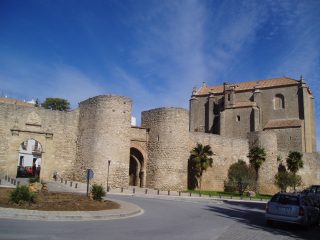
Gardens - Murallas de Ronda (0.2) km
City Walls - Museo Lara (0.2) km
Museum