Avignon, France: The Ultimate Travel Guide 2026
avignon
avignon

Avignon is one of those places that instantly makes you slow down and look around. The stone streets, shaded squares, and dramatic medieval architecture feel like something out of a film set. Walking through the old town is a joy in itself-cafés spill into plazas, musicians play under centuries-old archways, and the golden light bouncing off the Rhône makes everything feel warm and timeless. It's also incredibly walkable, which makes exploring feel easy and unhurried.

Beyond the famous landmarks, there's a creative, lived-in energy here. I loved wandering through the covered Les Halles market, filled with regional specialties and colorful local produce. Whether you're catching a performance during the summer theatre festival or enjoying a quiet meal tucked behind an old stone wall, Avignon feels deeply French in all the right ways-authentic, soulful, and full of life.

History of Avignon

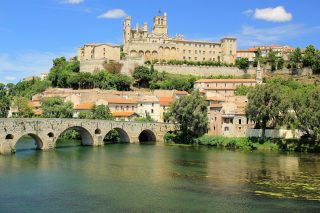
Avignon is a lively and atmospheric city in the Provence-Alpes-Côte d’Azur region of southern France—not in Germany, as is sometimes mistakenly assumed. Its walled old town, dramatic riverfront setting, and impressive collection of historic buildings make it one of the most popular destinations in inland Provence. The Palais des Papes, medieval bridges, and cobbled squares provide a stunning backdrop for a visit, especially in the golden light of late afternoon. The city is also compact and walkable, making it easy to explore its winding alleys and charming markets at a relaxed pace.

Visitors are often drawn to Avignon for its culture and festivals. The most famous is the Festival d’Avignon, held every July, which transforms the city into a giant stage for theatre, performance art, and music. Even outside of festival season, Avignon offers a rich cultural life, with art galleries, live music venues, and regional cuisine served in bustling cafés. The Rhône River adds a tranquil natural element, with parks and boat rides providing pleasant escapes from the urban energy.

Avignon is also a great base for exploring the wider region of Provence. Day trips to the Luberon villages, Pont du Gard, Châteauneuf-du-Pape, and the lavender fields of the Vaucluse are all easily arranged. The city’s TGV station connects it quickly to Paris, Lyon, and Marseille, while rental cars make it simple to access the surrounding countryside. Whether you’re interested in architecture, performance, food, or scenery, Avignon is a versatile and rewarding destination.

Moira & Andy
Moira & Andy

Hey! We're Moira & Andy. From hiking the Camino to trips around Europe in Bert our campervan — we've been traveling together since retirement in 2020!

Read our full story here

Visiting Avignon for the first time and wondering what are the top places to see in the city? In this complete guide, I share the best things to do in Avignon on the first visit. To help you plan your trip, I have also included an interactive map and practical tips for visiting!

This website uses affiliate links which earn a small commission at no additional cost to you.
Powered by GetYourGuide

41 Best places to See in Avignon

This complete guide to Avignon not only tells you about the very best sights and tourist attractions for first-time visitors to the city but also provide insights into a few of our personal favorite things to do.

This is a practical guide to visiting the best places to see in Avignon and is filled with tips and info that should answer all your questions!

1. Place de l'Horloge
Place de l’Horloge
Place de l’Horloge
CC BY-SA 2.0 / Elliott Brown
Place de l’Horloge (Clock Square) is Avignon’s busiest central plaza, where café terraces spill into a broad pedestrian space and street artists set up easels among the crowds. Its crescent-like layout—shaped for defensive reasons—creates a natural stage for people-watching, with cobbled lanes and alleys peeling off toward churches, galleries, bistros, and nightspots. The square takes its name from a monumental clock at its center, inaugurated in April 1908 by Édouard Herriot. Beneath today’s patisseries and restaurants lies older Avignon: this was once the Roman forum of Avenio, later a medieval butchers’ market, and during the Revolution the guillotine briefly stood here, leaving a bittersweet undertone to an otherwise lively scene.
Location: Pl. de l'Horloge, 84000 Avignon, France | Hours: 24 Hours. | Price: Free. | Distance: 0.1km

We recommend to rent a car in France through Discover Cars, they compare prices and review multiple car rental agencies. Book your rental car here.

2. Opéra Théâtre

Opéra Théâtre
Opéra Théâtre
CC BY-SA 3.0 / Vinko Rajic
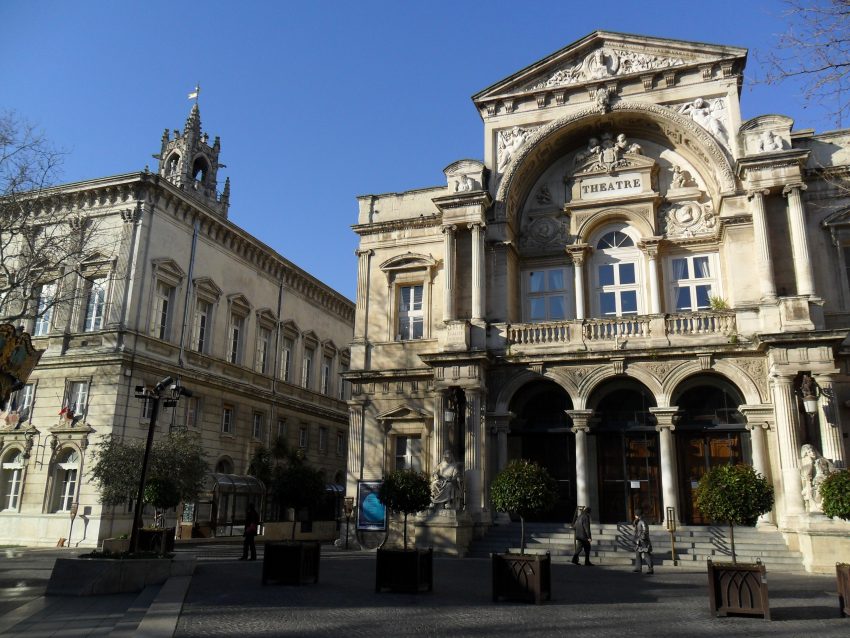
Opéra Théâtre (Opéra Grand Avignon) is Avignon’s 19th-century opera house, fronting Place de l’Horloge and still functioning as a working performance venue. The current building rose quickly in 1846–1847 after a fire destroyed the earlier Greco-Roman-style theatre (opened in 1825), and its restrained façade was admired from the start for elegant sculpture without heaviness. Look closely at the exterior: medallions show bas-relief portraits of King René and Petrarch, and the original statues of Molière and Corneille were replaced with copies when the first material failed in the weather. Inside, visitors often remember the intimate Italian-style hall and clear acoustics; recent renovations in 2020 refreshed the experience.
Location: Pl. de l'Horloge, 84000 Avignon, France | Hours: Tuesday – Saturday: 10:00–17:00. Closed on Monday, Sunday. | Price: Prices vary by show. | Website | Distance: 0.1km

Here is a complete selection of hotel options in Avignon. Feel free to review each one and choose the stay that best suits your needs.

3. Hôtel de Ville

Hôtel de Ville
Hôtel de Ville
CC BY-SA 4.0 / Holger Uwe Schmitt
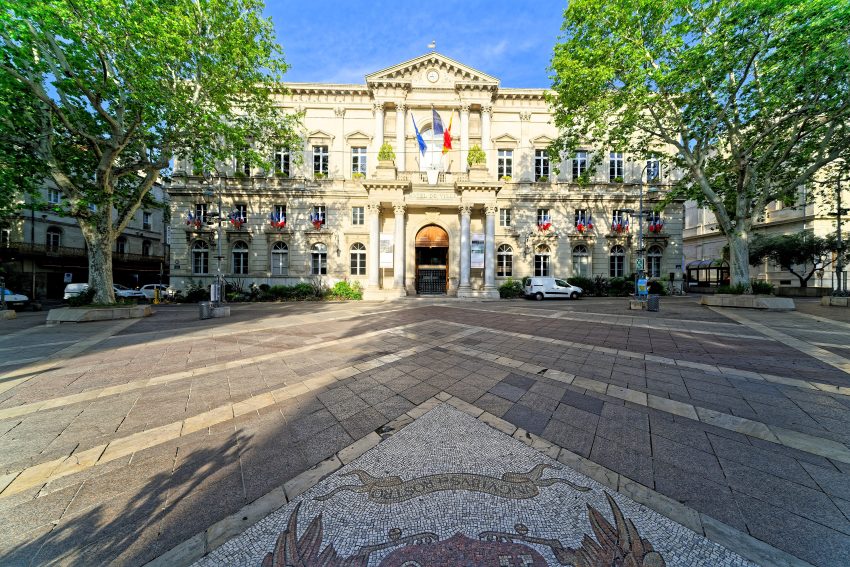
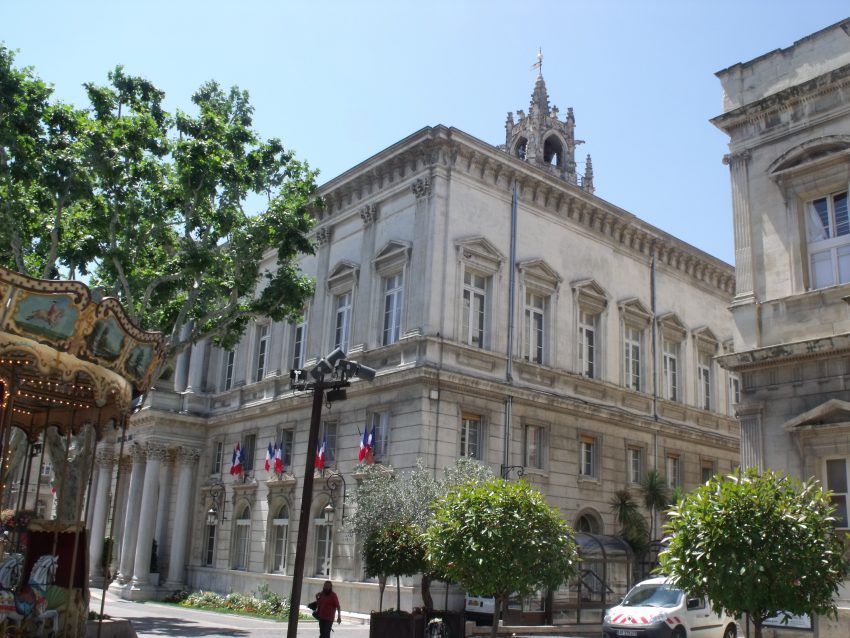
Avignon’s Hôtel de Ville is the city’s working town hall, anchoring Place de l’Horloge with a formal 19th-century makeover layered onto an older civic site. Rebuilt around 1846 to designs by Joseph‑Auguste Joffry, its Classical façade stands out for Corinthian columns, a balcony, and a peristyle, often hung with the flags of Avignon and France. Most visitors experience it from the open square, where the clock tower’s chimes and the building’s symmetry make for easy photos. After dark, the front can be dramatically lit, and some evenings bring a short laser light show that draws a small crowd. Inside access is limited, but memorials and painted ceilings are the memorable rewards when doors are open.
Location: Pl. de l'Horloge, 84000 Avignon, France | Hours: Monday – Friday: 08:00–17:30. Closed on Saturday, Sunday. | Price: Free. | Website | Distance: 0.1km

Traveling to a country with a different currency? Avoid ATM transaction fees and pay in local currency with a Wise Card. Having used it for over 5 years, we've saved loads on fees!

4. Eglise Saint-Agricol

Eglise Saint-Agricol
CC BY-SA 3.0 / Henk Monster
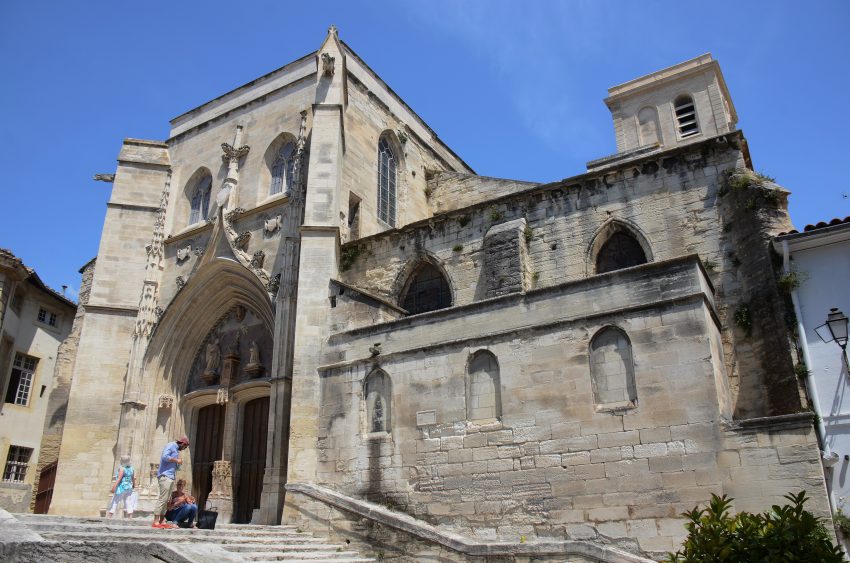
Eglise Saint-Agricol (Collégiale Saint-Agricol) is a Gothic church in Avignon’s old Fustiers quarter, and one of the city’s oldest active places of worship after Notre-Dame des Doms. The present building was raised in 1321 on the site of a much earlier sanctuary linked to Saint Agricol, a 7th-century bishop; his relics remain here, keeping local devotion tangible. Inside, visitors notice the unusual 14th-century layout with side aisles, plus layers of memorial life—tombs, epitaphs, and carved inscriptions set into the fabric of the church. Look closely at the ornate side altars and paintings by artists such as Nicolas Mignard, and enjoy the cool, hushed atmosphere—sometimes punctuated by singing during a service or rehearsal.
Location: Rue Saint-Agricol, 84000 Avignon, France | Hours: Monday: 10:00–19:00. Tuesday: 10:00–19:00. Wednesday: 10:00–19:00. Thursday: 10:00–19:00. Friday: 10:00–19:00. Saturday: 10:00–17:00. Sunday: 09:30–12:00. | Price: Free; donations appreciated. | Website | Distance: 0.1km

Explore Avignon at your own pace with our self-guided walking tour! Follow our curated route to discover must-see sights and local secrets that makes Avignon one of the best places to visit in France.

5. Palais du Roure

Palais du Roure
Palais du Roure
CC BY-SA 4.0 / Finoskov
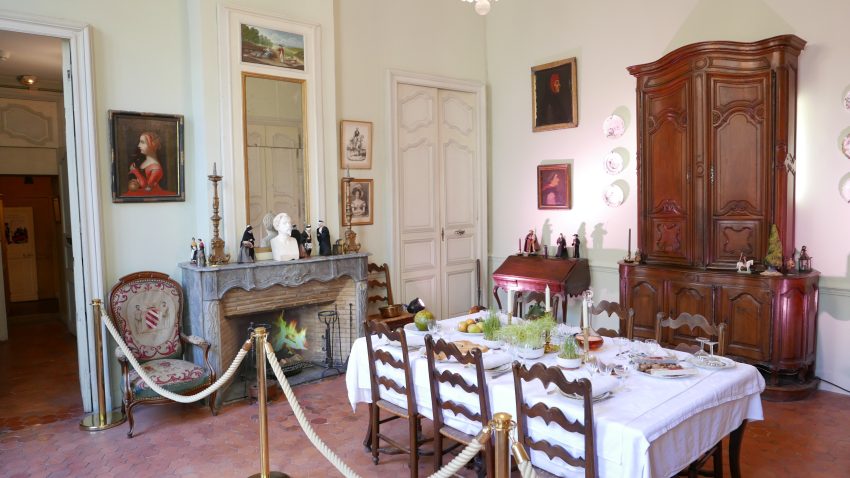
Palais du Roure is a 15th-century private mansion in Avignon’s old town, now a museum devoted to Provençal and Mediterranean popular arts, traditions, and literature. It began in 1469 when Pierre Baroncelli, a Florentine Ghibelline, bought the Mulberry Tavern and adjoining houses and turned them into a residence later linked to the Baroncelli family’s rise in the city. Visitors remember the lived-in feel: a stone staircase, a sequence of intimate rooms, and objects that read like a household archive rather than a grand gallery. The poet Frédéric Mistral coined the name “Roure” (“oak”) and the house became a Félibrige meeting place, while Jeanne de Flandreysy’s 1918 restoration added curiosities such as her large bell collection. Entry is often free, making it an easy, unhurried stop.
Location: 3 Rue Collège du Roure, 84000 Avignon, France | Hours: (Summer) April 1 – October 31; Tuesday – Sunday: 10:00–18:00. (Winter) November 1 – March 31; Tuesday – Friday: 13:00–18:00; Saturday – Sunday: 10:00–18:00; Closed on Monday. | Price: Free. | Website | Distance: 0.1km

6. Maison du Jean Vilar
Maison du Jean Vilar
CC BY-SA 2.0 / ell brown
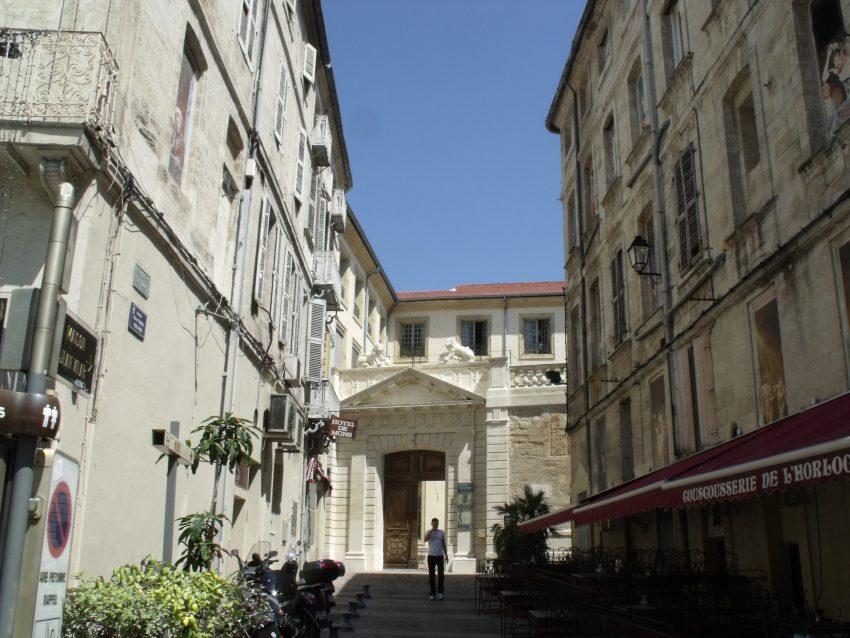
Maison du Jean Vilar is a theatre archive and cultural center in Avignon, set inside the Hôtel de Crochans, that keeps the city’s stage life tangible beyond performance nights. Created after Jean Vilar’s death and inaugurated on 18 July 1979, it grew from Andrée Vilar’s donation of his papers, forming a library-museum and a theatre documentation hub. Exhibitions and displays lean into the material culture of performance—posters, photographs, and production traces that map the Festival d’Avignon’s evolution. Alongside the exhibits, the house hosts readings, meetings, and occasional events that make it feel like a working memory of French theatre rather than a static museum.
Location: 8 Rue de Mons, 84000 Avignon, France | Hours: Tuesday – Saturday: 14:00–18:00. Closed on Sunday, Monday. | Price: Adults: €6; Reduced: €3 (under 26, seniors 65+, and other eligible visitors with proof). | Website | Distance: 0.1km

7. Rue de la Republique
Rue de la Republique
CC BY-SA 4.0 / Txllxt TxllxT
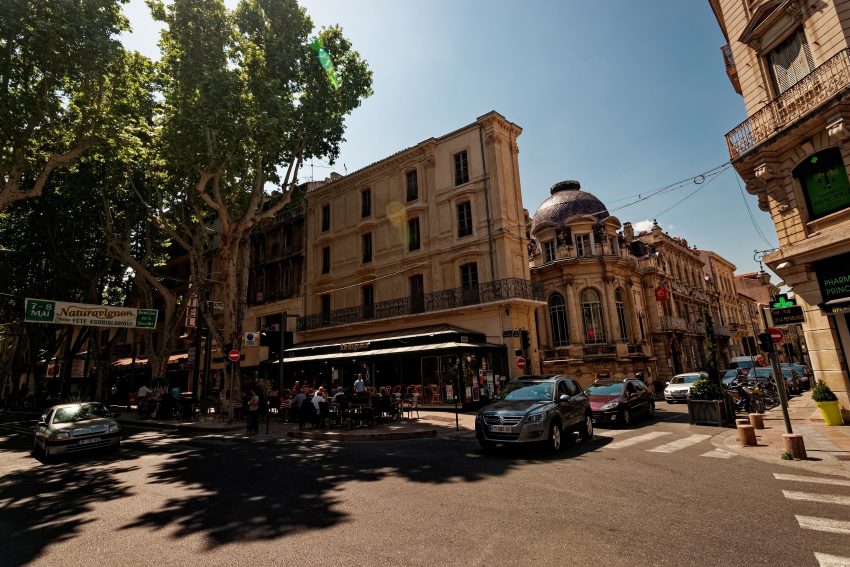
Rue de la République is Avignon’s straight, 390‑meter main street through the intramuros, running from Place de l’Horloge to Cours Jean Jaurès near the Tourist Office. It matters because it’s a 19th‑century modernization project—built in phases from 1856 to 1867 after the rail link to Paris—cutting a wide boulevard through a city otherwise defined by tight medieval lanes. As you walk, you’ll notice broader sidewalks, grander façades, and a busy, everyday rhythm of shops and cafés. Look for small, specific markers of its past: the Paul Pamard fountain with a bronze figure, and the former Jesuit college chapel that now houses the Lapidary Museum.
Location: Rue de la République, 84000 Avignon, France | Hours: 24 Hours. | Price: Free. | Distance: 0.2km

8. Palais des Papes
Palais des Papes
Palais des Papes
CC BY-SA 4.0 / Holger Uwe Schmitt
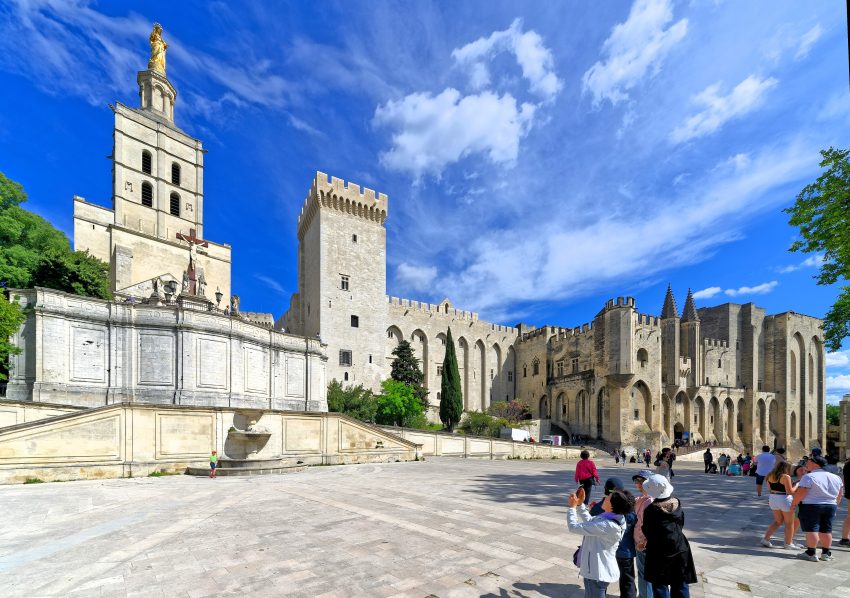
Avignon’s Palais des Papes is a vast 14th-century Gothic palace-fortress that served as the seat of the Avignon Papacy, housing seven popes and hosting six conclaves during the era of schism. It’s actually two linked complexes—the older palace of Benedict XII and the newer expansion commissioned by Clement VI—ringed by twelve crenellated towers built to withstand siege. Inside, visitors remember the sheer scale of the stone halls and chapels, plus flashes of artistry such as Clement VI’s frescoed “Deer Room” and other International Gothic decoration tied to Simone Martini and Matteo Giovanetti. Today the largely unfurnished interiors can feel austere, but rotating art installations and the terrace views keep the experience vivid.
Location: Pl. du Palais, 84000 Avignon, France | Hours: (January 1 – January 4) Daily: 10:00–18:00. (January 5 – February 6) Daily: 10:00–17:00. (February 7 – February 28) Daily: 10:00–18:00. (March 1 – November 1) Daily: 09:00–19:00. (November 2 – December 18) Daily: 10:00–17:00. (December 19 – December 31) Daily: 10:00–18:00. | Price: Adults: €12; Reduced: €10; Children (8–17): €6.50; Under 8: free. | Website | Distance: 0.2km

9. St. Peter's Basilica
St. Peter’s Basilica
CC BY-SA 4.0 / Jorge Franganillo
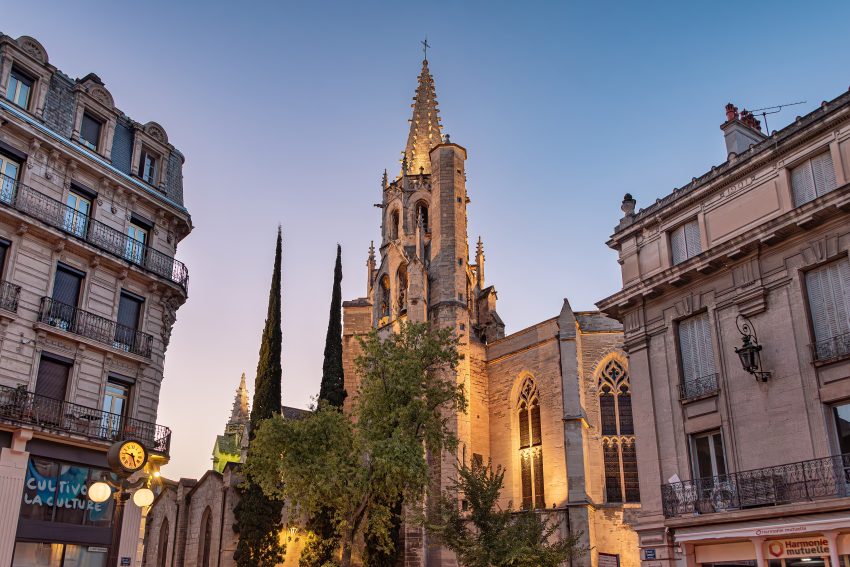
St. Peter’s Basilica (Basilique Saint-Pierre) is a working Gothic church in the heart of Avignon, set on the cobbles of Place Saint-Pierre just behind the Palais des Papes. Begun in the late 14th century on earlier foundations, it’s a compact lesson in flamboyant Provençal Gothic, crowned by an octagonal bell tower and expanded with six side chapels in the 15th and 16th centuries. Most visitors linger at the towering Renaissance walnut doors—about 13 feet high—densely carved by Antoine Volard. Inside, the mood turns hushed and dim, with painted vaulting, gilded choir balconies, Renaissance paintings, and a stone altar; you may also spot Cardinal Pierre de Prés’ preserved vestments in a glass case.
Location: Pl. Saint-Pierre, 84000 Avignon, France | Hours: Monday – Saturday: 09:30–13:00 & 14:30–17:00. Sunday: Closed. | Price: Free; donations appreciated. | Website | Distance: 0.2km

10. Eglise Saint Didier
Eglise Saint Didier
Eglise Saint Didier
CC BY-SA 4.0 / Marianne Casamance
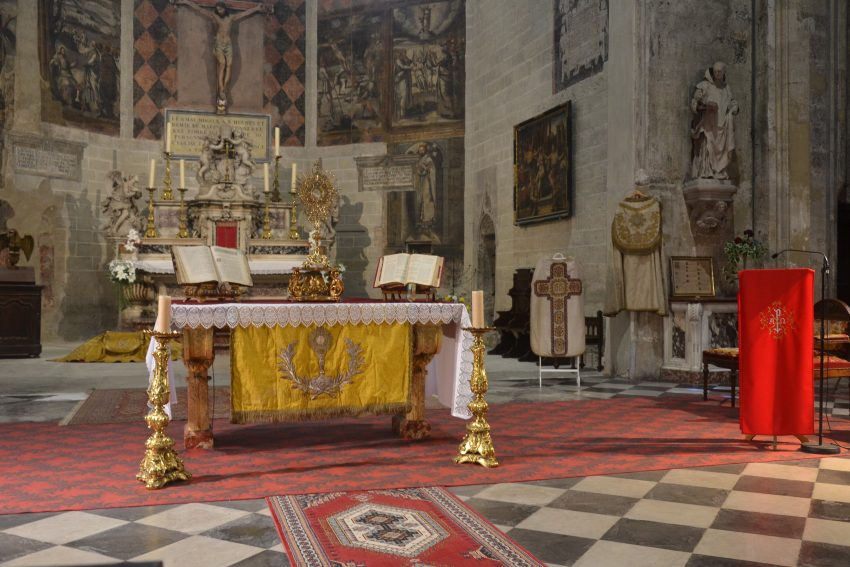
Eglise Saint Didier is a mid-14th-century Gothic church tucked into Place Saint-Didier in central Avignon, built during the Avignon papacy and consecrated in 1359 after a remarkably fast construction. Commissioned through Cardinal Bertrand de Deaux’s estate and executed under master mason Jaume Alasaud (also associated with the Palais des Papes), it’s a clear example of local Avignon Gothic with a tall, cooling interior that quickly muffles street noise. Inside, look for Simon de Châlons’s paintings of The Flagellation and The Descent of the Holy Spirit. The most unexpected piece is Francesco Laurana’s 1478 Renaissance bas-relief, The Carrying of the Cross, made for King René and now set in the first right chapel. Visitors often remember the quiet, prayerful atmosphere.
Location: 10 Pl. Saint-Didier, 84000 Avignon, France | Hours: Monday – Saturday: 09:00–12:00 & 14:00–17:30. Sunday: Closed. | Price: Free; donations appreciated. | Website | Distance: 0.2km

11. City Wall - Porte de l'Oulle
City Wall – Porte de l’Oulle
CC BY-SA 4.0 / Txllxt TxllxT
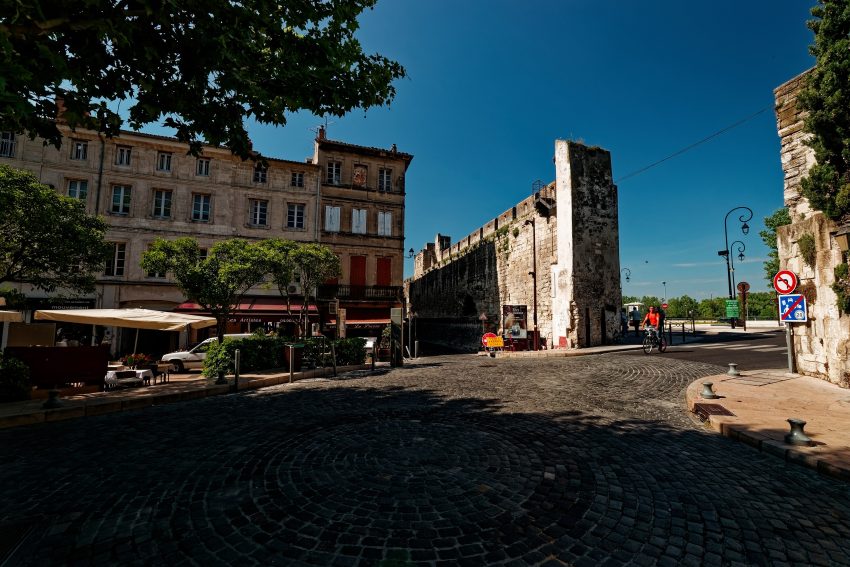
City Wall – Porte de l’Oulle marks a river-facing access point in Avignon’s 14th-century ramparts, the 4.3 km defensive ring built during the Avignon papacy to enclose an expanded town. Along the Rhône side, you’ll notice the wall’s heavy stone rhythm—towers, buttresses, and subtle changes in masonry—best appreciated as it curves toward the water. The gate’s story is unusually changeable: first known as Porte Sainte-Jacques, later Porte du Limas, it was sealed during the Wars of Religion, reopened in 1663, rebuilt in 1785–1786 about 20 meters from its earlier position, then demolished in 1900. “Oulle” nods to Provençal cooking pots once sold nearby.
Location: Prte de l'Oulle, 84000 Avignon, France | Hours: 24 Hours. | Price: Free. | Website | Distance: 0.3km

12. Les Halles d'Avignon
Les Halles d’Avignon
CC BY-SA 2.0 / Guilhem Vellut
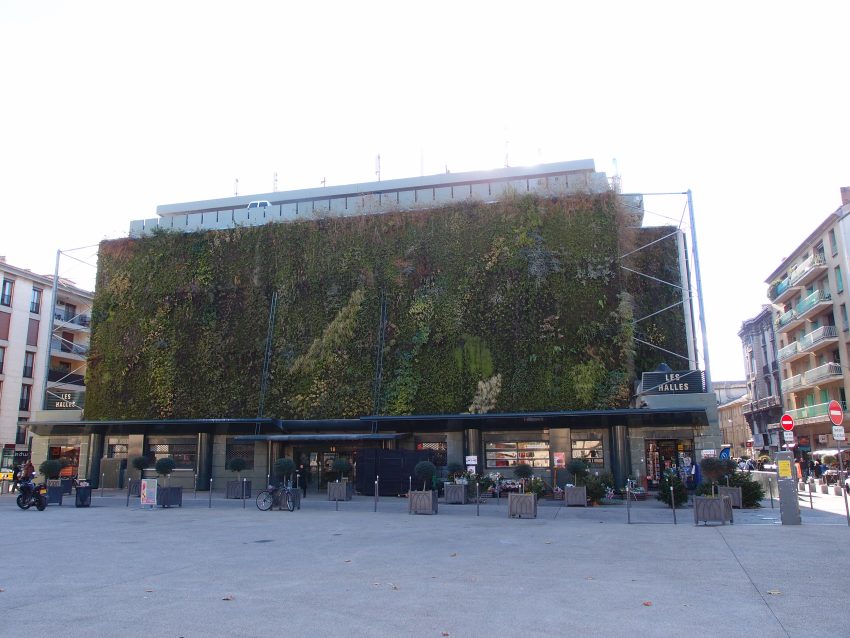
Les Halles d’Avignon is the city’s covered food market on Place Pie, a daily hub for local shopping and Provençal cooking. Inside, around fifty traders pack the aisles with bread, cheeses, fruit and vegetables, charcuterie, shellfish, pastries, flowers, and a mix of organic and more unusual imports, creating a loud, delicious crush of aromas and chatter. Outside, the north façade is hard to miss thanks to a 600 m² living green wall designed by botanist Patrick Blanc. The site’s market roots go back centuries, with the current halls inaugurated in 1899 after earlier iron-and-stone iterations. On Saturdays, chefs often run live cooking demonstrations using ingredients bought on the spot.
Location: 18 Pl. Pie, 84000 Avignon, France | Hours: Tuesday – Sunday: 06:00–14:00. Closed on Monday. | Price: Free. | Website | Distance: 0.3km

13. Place Crillon
Place Crillon
Place Crillon
CC BY-SA 4.0 / Chris Wood
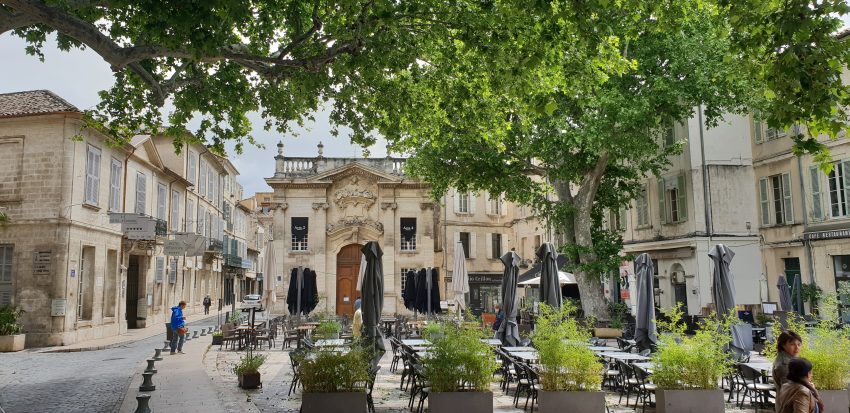
Place Crillon is a compact square on the edge of Avignon’s old town, long used as a public crossroads and later tied to the city’s early theatre life. On a 1618 city plan it appears as Avignon’s second-largest square, and its first name, Place du Limas, pointed to the once-muddy ground reclaimed from the Rhône. It became Place de la Comédie before taking the name “Crillon” in 1843, honoring Louis des Balbes de Berton de Crillon, who died in Avignon in 1615. Visitors notice the calm, polished atmosphere and the Hôtel d’Europe on the north side, built over centuries and welcoming Napoleon in 1799.
Location: Pl. Crillon, 84000 Avignon, France | Hours: 24 Hours. | Price: Free. | Distance: 0.3km

14. Place Pie
Place Pie
Place Pie
Public Domain / Véronique PAGNIER
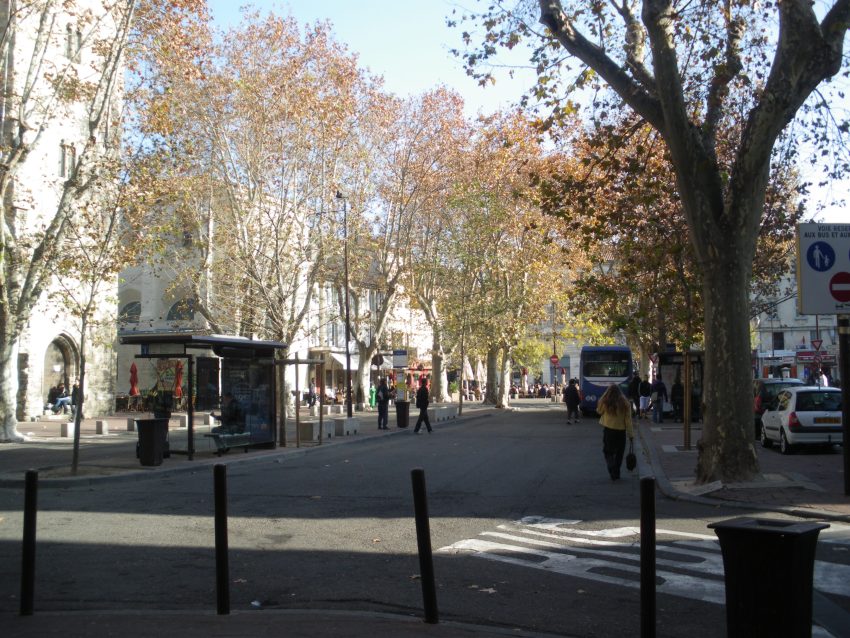
Place Pie is Avignon’s everyday market square inside the city walls, anchored by Les Halles and surrounded by café terraces where errands and aperitifs mingle. The site began as the demolished home of Jean-Perrin Parpaille, a 16th-century Protestant whose name helped inspire the nickname “parpaillots,” and the new square was named for the reigning Pope. In 1563 a vice-legate blessed the start of a sheltering colonnade for market gardeners, later completed with shops, a guardhouse, and a chapel. You can still feel its long market rhythm in the current Halles, built in 1896–1898 after earlier market structures were replaced.
Location: Pl. Pie, 84000 Avignon, France | Hours: 24 Hours. | Price: Free. | Distance: 0.3km

15. Place du Palais
Place du Palais
Place du Palais
CC BY-SA 4.0 / Holger Uwe Schmitt
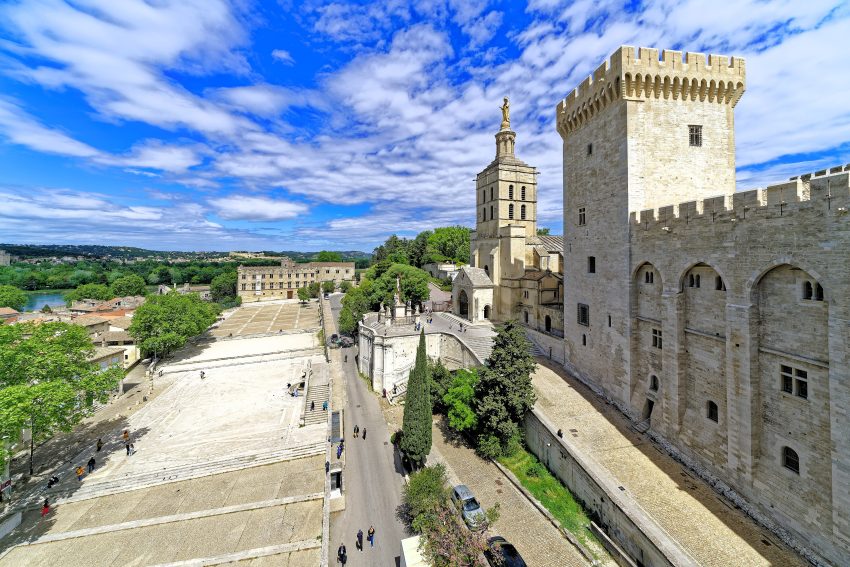
Place du Palais is the broad, sloping square at the foot of Avignon’s Palais des Papes, created as a defensive buffer when Pope Benedict XIII ordered the houses packed against the palace walls torn down in 1404. The cleared “glacis” left attackers exposed, and the rubble lingered for centuries before the space was cleaned up and planted with an avenue of mulberry trees in the early 1600s. It later became a public stage in a harsher way, used for executions under the Old Regime and during the Revolution’s Terror. Today, what visitors remember is the sheer open foreground it gives the fortress-like palace, the ring of formal buildings, and the parking garage hidden beneath the paving.
Location: Pl. du Palais, 84000 Avignon, France | Hours: 24 Hours. | Price: Free. | Distance: 0.3km

16. Galerie Ducastel
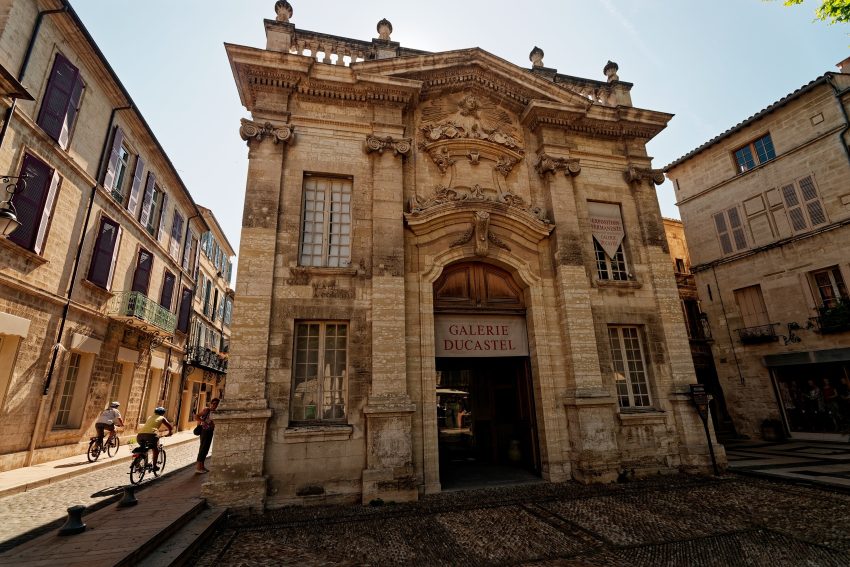
Galerie Ducastel
Galerie Ducastel
CC BY-SA 4.0 / Txllxt TxllxT
Galerie Ducastel is Avignon’s oldest art gallery, founded in 1962 by Philippe Ducastel and his wife Madeleine, and still run by their daughter Emmanuelle. Set in the Old Town near the city walls, it faces Crillon Square, and many visitors linger outside for the carved bas-reliefs and traces of a 17th‑century theater embedded in the facade. Inside, the experience is deliberately changeable: rotating shows mix figurative and abstract work by regional, French, and international artists, across paintings, sculpture, and engravings. The gallery also provides expert framing, so it feels like a working part of Avignon’s art life rather than a static display.
Location: 9 Rue Folco de Baroncelli, 84000 Avignon, France | Hours: Daily: 00:00–23:59. | Price: Check official website. | Website | Distance: 0.3km

17. Synagogue
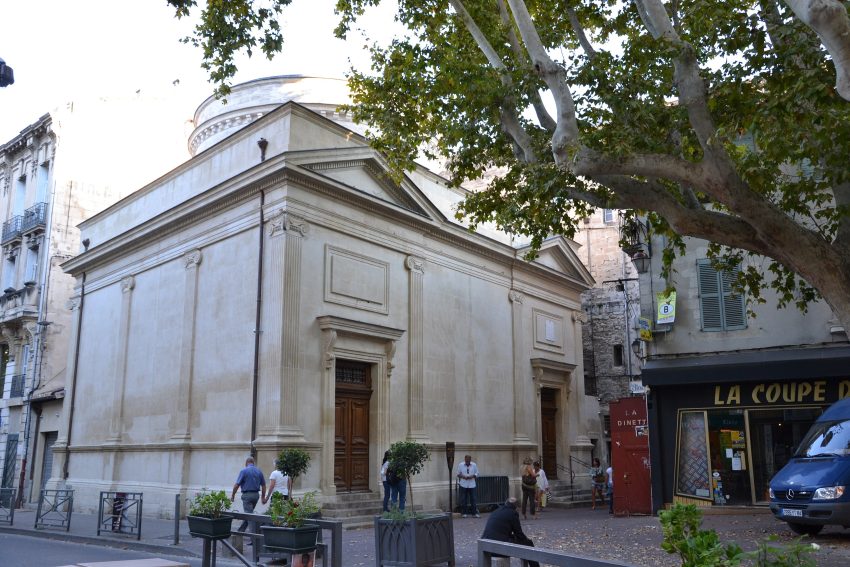
Synagogue
Synagogue
CC BY-SA 3.0 / Marianne Casamance
Avignon’s Synagogue is a still-active 19th-century neo-Classical house of worship (1846), rebuilt after a fire and long tied to the city’s former Jewish quarter in the Papal territories. From the street its exterior is plain, but inside visitors remember the domed rotunda and the two-level colonnade of white Ionic and Corinthian columns set against dark walnut fittings. The site sits on centuries of Jewish presence in Avignon, where a synagogue served the community from 1221 and later life was shaped by ghetto rules, protection under popes, and periodic persecution. Access can feel like entering a lived-in community space—often by ringing a buzzer—and some people seek out small details like the traditional challah oven near the rabbi’s study.
Location: 2 Pl. Jérusalem, 84000 Avignon, France | Hours: Monday – Friday: 10:00–12:00. Saturday: Closed. Sunday: Closed. | Price: Free. | Distance: 0.3km

18. Musee Requien
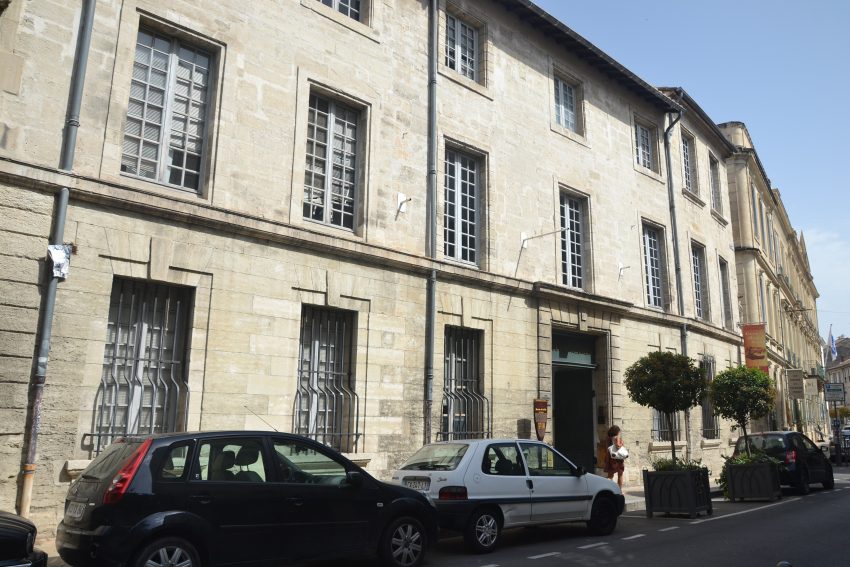
Musee Requien
Musee Requien
CC BY-SA 4.0 / Marianne Casamance
Muséum Requien is Avignon’s natural history museum, founded in 1840 after local naturalist Esprit Requien donated his collections. Set in the former Hôtel Raphélis de Soissans (home to the museum since 1943), it packs geology, paleontology, mineralogy, zoology, and botany into a compact, walkable set of galleries. Visitors tend to linger over the fossil cases and the carefully arranged animal specimens, especially the vivid butterfly and insect drawers, and there’s even a T. rex skull noted by reviewers. Beyond the displays, the museum still supports research, backed by a specialist library of around 18,000 volumes and collections tied to the Vaucluse region from prehistory to today.
Location: 67 Rue Joseph Vernet, 84000 Avignon, France | Hours: (Summer) April 1 – October 31; Tuesday – Sunday: 10:00–18:00. Closed on Monday. (Winter) November 1 – March 31; Tuesday – Friday: 11:00–18:00; Saturday – Sunday: 10:00–18:00. Closed on Monday. | Price: Free. | Website | Distance: 0.3km

19. Musee Calvet
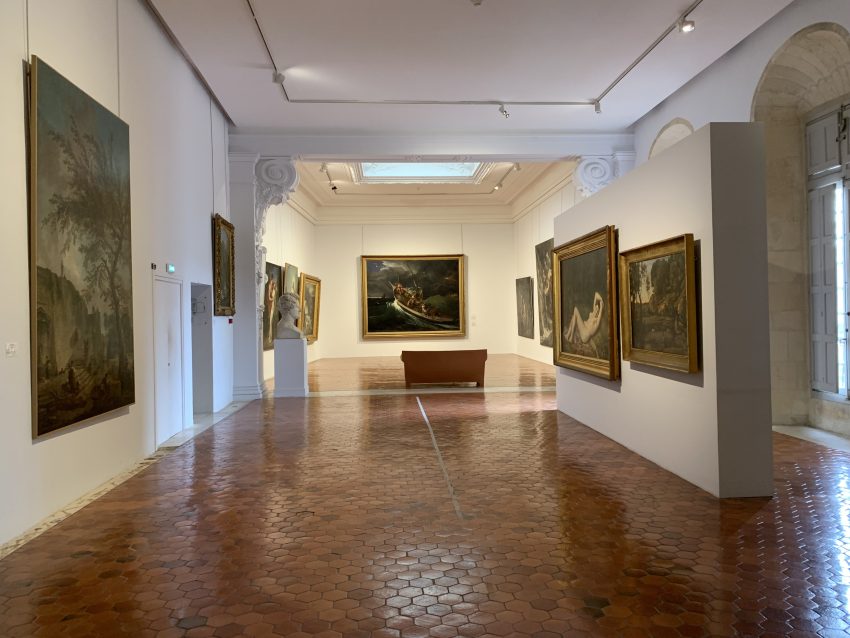
Musee Calvet
Musee Calvet
CC BY-SA 4.0 / Dragonfruit2
Musée Calvet is Avignon’s principal fine-arts museum, run by the Fondation Calvet and set in the 18th‑century hôtel de Villeneuve‑Martignan, a former aristocratic residence later bought by the city to become a museum. Its rooms feel like a grand home—formal staircases, period proportions, and a calm garden—so the building becomes part of what you remember. The collection ranges widely: French painting from the 1500s to the 1900s, Italian Baroque and Rococo canvases, Northern Renaissance and Spanish works, plus drawings by artists such as Cézanne, Renoir, Toulouse‑Lautrec, and Chagall. Decorative arts and ethnographic objects (from Asia, Oceania, and Africa) add unexpected variety, and visitors often linger over artworks that picture Avignon itself.
Location: 65 Rue Joseph Vernet, 84000 Avignon, France | Hours: (Summer) April 1 – October 31; Tuesday – Sunday: 10:00–18:00. Closed on Monday. (Winter) November 1 – March 31; Tuesday – Friday: 11:00–18:00. Saturday – Sunday: 10:00–18:00. Closed on Monday. | Price: Free. | Website | Distance: 0.3km

20. Musee Lapidaire
Musee Lapidaire
Musee Lapidaire
CC BY-SA 2.0 / Elliott Brown
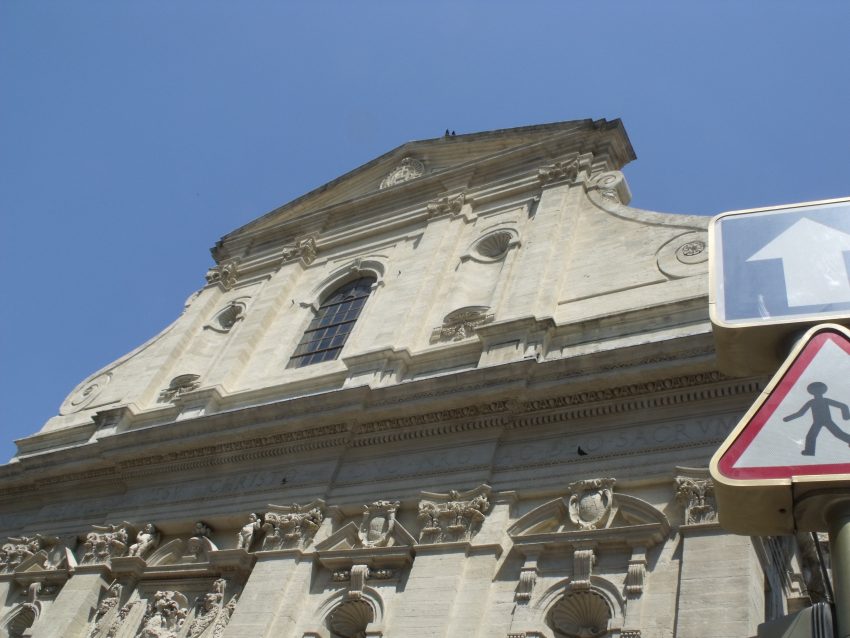
Musée Lapidaire is Avignon’s lapidarium and an annex of the Musée Calvet, displaying archaeology and stonework inside a former 17th-century Jesuit College chapel on Rue de la République. The church-like nave, designed by Étienne Martelange and finished under François de Royers de la Valfenière, turns sculpture and inscriptions into a theatrical encounter beneath high vaulting. Collections range from prehistory through Greek, Etruscan, Roman, Gallo-Roman, and Early Christian material, with cases of vases, lamps, bas-reliefs, and Etruscan funerary monuments. Look for specific pieces such as the Lauris–Puyvert stela in limestone, and don’t be surprised if a temporary summer exhibition adds unexpected themes—visitors often remember the striking contrast of antiquities and contemporary interventions in the same space.
Location: 27 Rue de la République, 84000 Avignon, France | Hours: (Summer) April 1 – October 31; Tuesday – Sunday: 10:00–18:00. (Winter) November 1 – March 31; Tuesday – Friday: 11:00–18:00; Saturday – Sunday: 10:00–18:00. Closed on Monday. | Price: Free. | Website | Distance: 0.3km

21. Musée Angladon-Dubrujeaud
Musée Angladon-Dubrujeaud
CC BY-SA 2.0 / ell brown
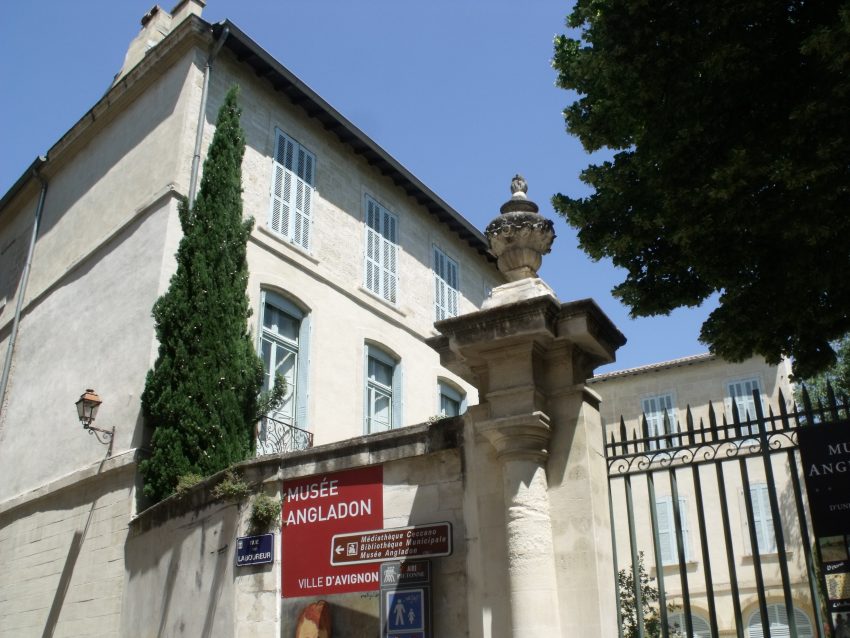
Musée Angladon-Dubrujeaud is a small house-museum in Avignon, set inside the Hôtel de Massilian, a 1694 mansion designed by Jean Péru with an elegant staircase and period salons. Opened in 1996 by the Angladon-Dubrujeaud Foundation, it preserves the collecting legacy of haute couture pioneer Jacques Doucet and his heirs Jean and Paulette Angladon-Dubrujeaud. The rooms feel domestic and intimate, encouraging slow looking rather than gallery-hopping. Visitors come for the compact spread of 18th–20th century works—often spotting names like Van Gogh, Picasso, Modigliani, Degas, and Sisley in a surprisingly small space. Reviews note it can feel dim, but many still describe it as a quiet little gem.
Location: 5 Rue Laboureur, 84000 Avignon, France | Hours: (Summer) April 1 – October 31: Tuesday – Sunday: 13:00–18:00. (Winter) November 1 – March 31: Tuesday – Saturday: 13:00–18:00; Closed on Sunday, Monday. | Price: Adults: €8; Reduced: €6.50; Ages 15–25: €3; Ages 4–14: €1.50; Under 4: free. | Website | Distance: 0.3km

22. Saint-Martial Eglise
Saint-Martial Eglise
CC BY-SA 4.0 / Chris06
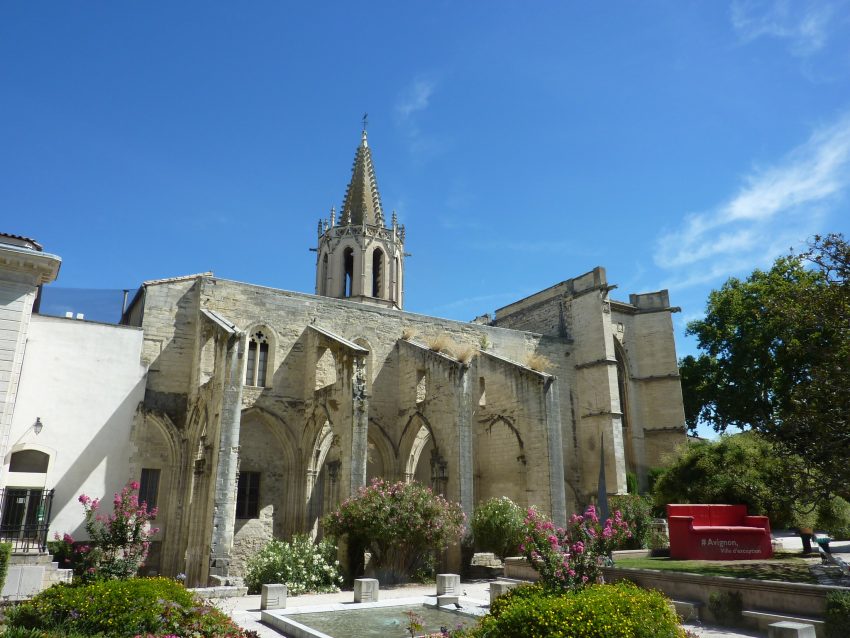
Saint-Martial Eglise (Temple Saint-Martial) in Avignon is a Protestant church with a layered past that mirrors the city’s shifting civic life. Completed in 1388, it began as a Cluniac Benedictine monastery and school, then cycled through surprising roles—linked to Queen Jeanne, later a cardinal’s residence, and after the Revolution even serving as museums, a teachers’ college, a post office, and a tourism office before being assigned to the Protestant community in 1881. Visitors tend to remember the calm courtyard and nearby leafy square, plus the building’s pronounced buttresses and tower. Inside, when open, it’s spare and stone-led, with stained glass adding restrained color.
Location: 2 Rue Jean Henri Fabre, 84000 Avignon, France | Hours: Sunday: 10:30–11:30. | Price: Free. | Website | Distance: 0.4km

23. Musee Vouland
Musee Vouland
Musee Vouland
CC BY-SA 4.0 / Rvalette
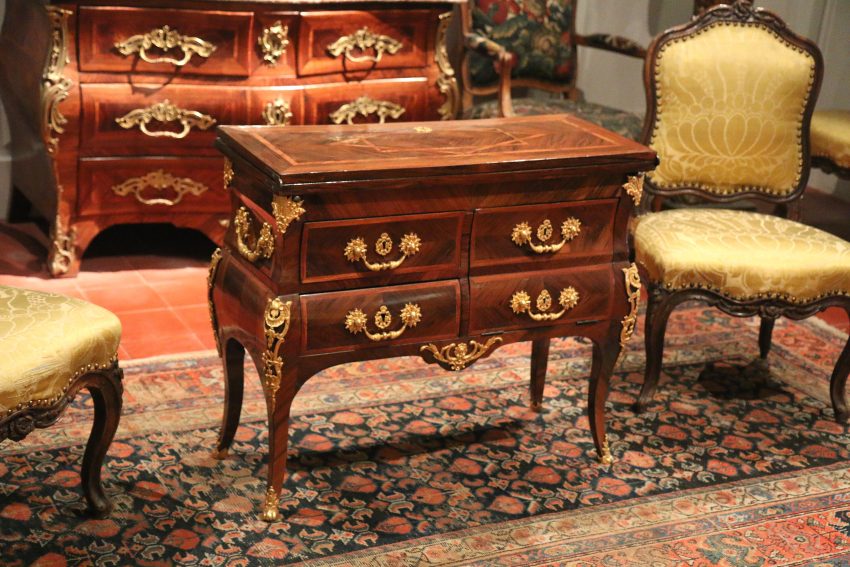
Musee Vouland in Avignon is a private-mansion museum that preserves Louis Vouland’s carefully staged world of 17th- and 18th-century decorative arts, opened to the public after his 1973 bequest to the Fondation de France. Rooms feel like a lived-in house rather than a gallery, with Parisian furniture set among Marseille and Moustiers earthenware, fine goldsmithing, and tapestries and paintings. Visitors often linger upstairs in intimate, color-saturated rooms and bedrooms where the arrangement makes small details—marquetry, textiles, and clocks—stand out. The collection also brings in works from Provence and Languedoc linked to the “new school of Avignon,” sometimes shown in rotation alongside contemporary pieces. A restored south-facing garden adds a quiet pause at the end.
Location: 17 Rue Victor Hugo, 84000 Avignon, France | Hours: Tuesday – Sunday: 14:00–18:00. Closed on Monday. | Price: Adults: €8; Reduced: €6; Under 12: free. | Website | Distance: 0.4km

24. Musée du Petit Palais
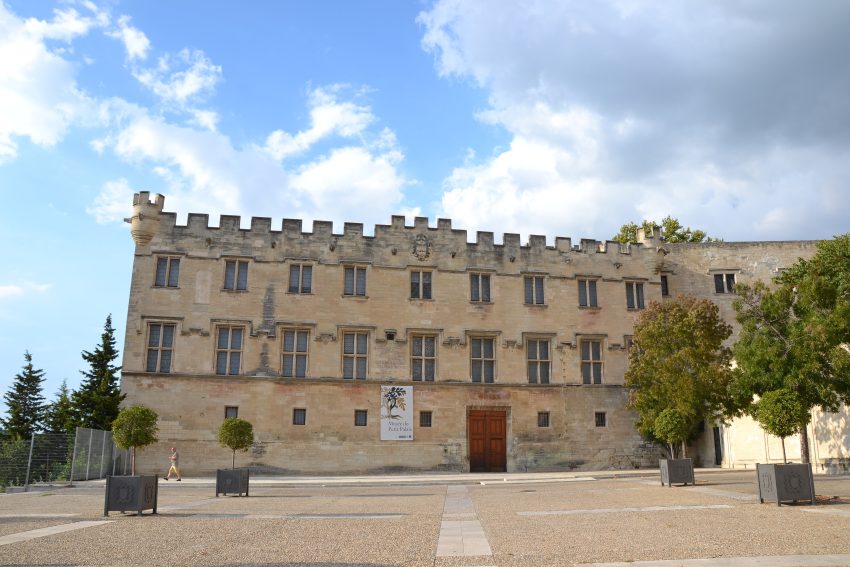
Musée du Petit Palais
CC BY-SA 3.0 / Marianne Casamance
Musée du Petit Palais in Avignon is an art museum opened in 1976 inside a 14th‑century episcopal palace built in 1318–1320, with layers of Avignon Papacy history still visible in its fortified, restored architecture. Its galleries concentrate on early Italian “primitives” and early Renaissance painting, anchored by works from the Giampietro Campana collection once kept at the Louvre, alongside paintings from the Avignon school. Visitors linger over gold-ground panels and devotional images, and also notice sculpted church capitals and other religious carvings that tie the collection to local stonework. Reviews often mention the calm, free entry, and that some rooms may be dim or occasionally closed.
Location: Palais des archevêques, Pl. du Palais, 84000 Avignon, France | Hours: (Summer) April 1 – October 31; Tuesday – Sunday: 10:00–18:00. (Winter) November 1 – March 31; Tuesday – Friday: 11:00–18:00; Saturday – Sunday: 10:00–18:00; Closed on Monday. | Price: Free. | Website | Distance: 0.4km

25. Notre Dame des Doms
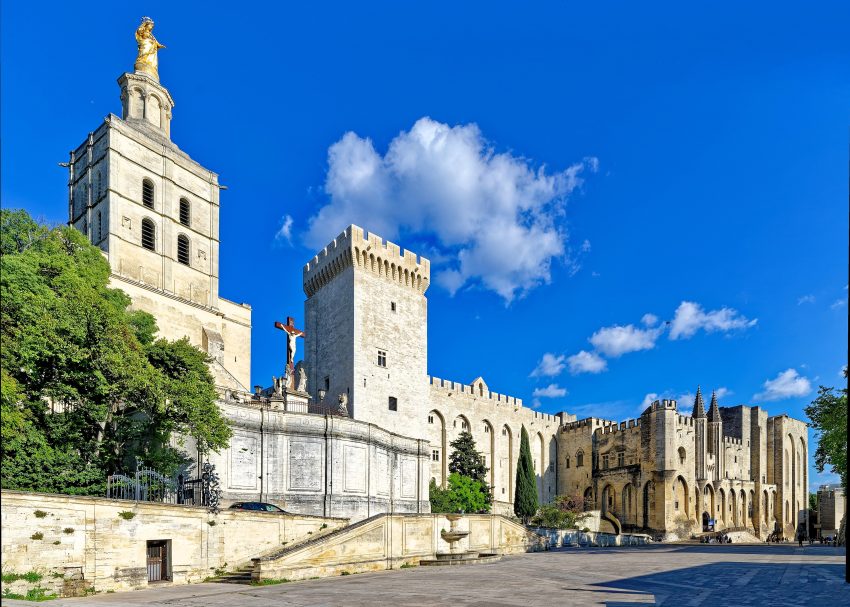
Notre Dame des Doms
Notre Dame des Doms
CC BY-SA 4.0 / Holger Uwe Schmitt
Notre Dame des Doms is Avignon’s Romanesque cathedral and the seat of the archbishop, set shoulder-to-shoulder with the Palais des Papes on the Palace Square. Consecrated in 1111 on a site long used for worship, it has an architectural “stew” of Provençal Romanesque with later Gothic and Baroque touches, including 14th-century chapels added during the Avignon papacy. After a recent refurbishment, the interior feels notably brighter, making its sculptures and paintings easier to take in. Look for the octagonal dome, the 12th-century marble papal throne, and the bell tower crowned by a gilded Virgin, plus a 35-bell carillon that hints at the building’s ceremonial role.
Location: Pl. du Palais, 84000 Avignon, France | Hours: Tuesday – Sunday: 08:30–17:30. Closed on Monday. | Price: Free; donations appreciated. | Website | Distance: 0.4km

26. Pont Saint-Bénézet
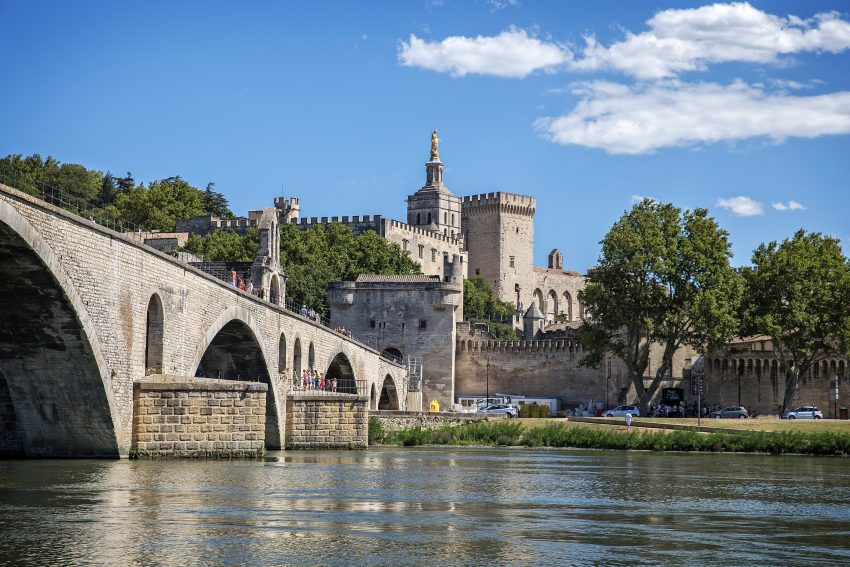
Pont Saint-Bénézet
Pont Saint-Bénézet
CC BY-SA 1.0 / gillag
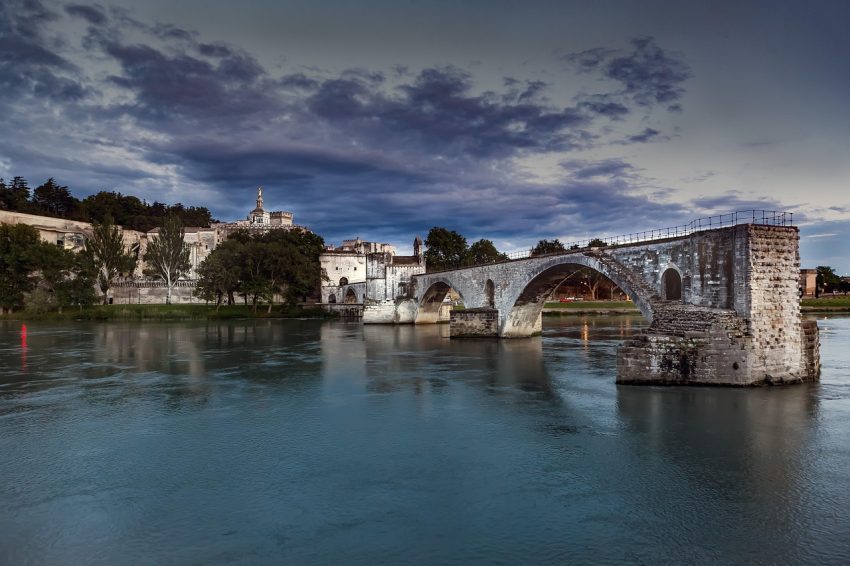
Pont Saint-Bénézet, the “Pont d’Avignon,” is a broken medieval stone bridge on the Rhône in Avignon, remembered as much for legend as for its surviving arches. Tradition links it to Bénézet, an illiterate shepherd who, after a vision in 1177, persuaded the bishop to begin a crossing where the river ran strongest, with stories of healings sealing his credibility. The later bridge stretched about 980 yards with 22 arches and 21 piers, but repeated floods tore it apart, leaving just four arches and the small Saint Nicholas Chapel. Today you walk out over the water to read the river’s scale and see the city walls and rooftops framed behind you.
Location: Bd de la Ligne, 84000 Avignon, France | Hours: Daily: 10:00–17:00. | Price: Adults: €5; Reduced: €4; Under 8: free. | Website | Distance: 0.5km

27. Saint-Michel Chapel
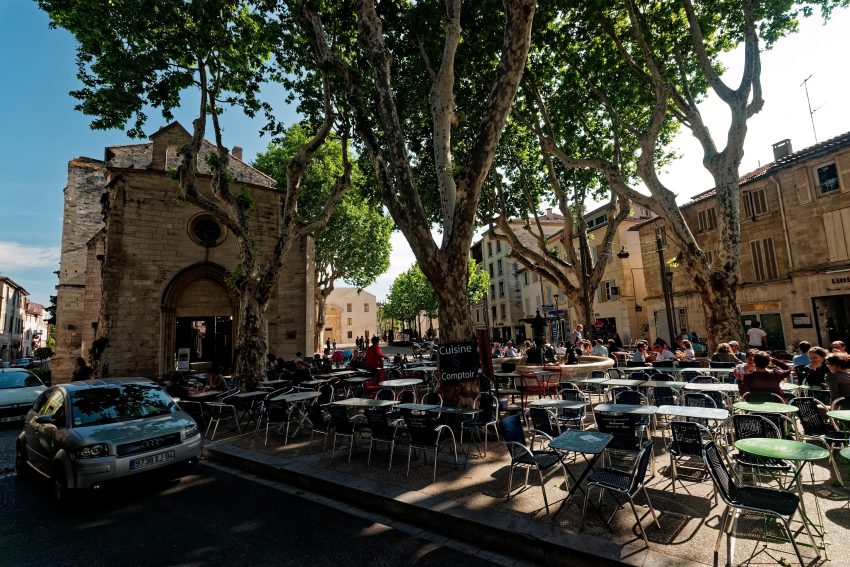
Saint-Michel Chapel
Saint-Michel Chapel
CC BY-SA 4.0 / Txllxt TxllxT
Saint-Michel Chapel is a small Gothic chapel in central Avignon, built between 1369 and 1378 and notable for its unusual pentagonal plan. Dedicated to the Archangel Michael, it originally stood beside the city cemetery for the indigent, giving the site a quietly communal past. It also carries a layered identity: its name recalls another Saint-Michel chapel nearby that was destroyed in the 16th century, while this one endured upheavals such as the French Revolution. Today the restored interior is often repurposed as an art-gallery space, where contemporary works sit against thick stone walls and subdued light. When it’s open, the experience is brief but intimate and calm.
Location: 31 Pl. des Corps Saints, 84000 Avignon, France | Hours: Monday – Saturday: 14:00–18:00. Sunday: Closed. | Price: Free; donations appreciated. | Distance: 0.5km

28. Rocher des Doms Gardens
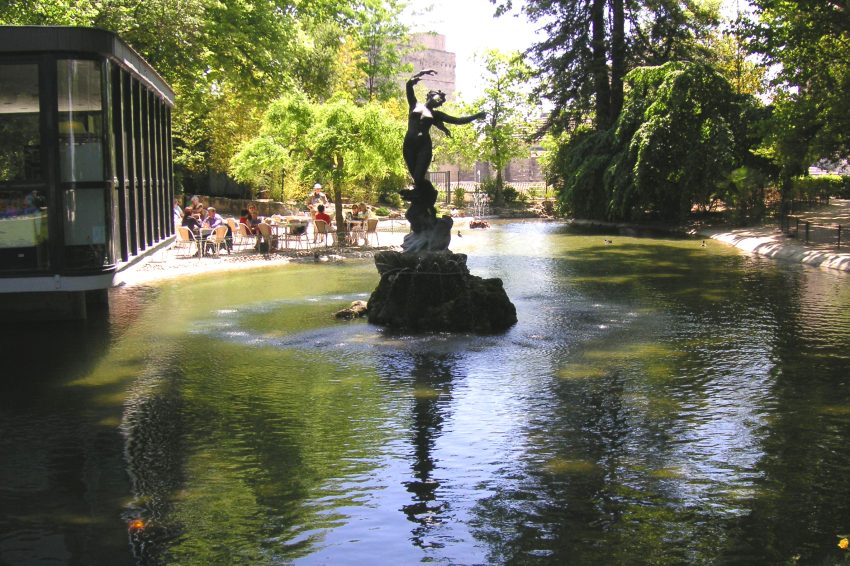
Rocher des Doms Gardens
CC BY-SA 2.0 / Nikater
Rocher des Doms Gardens is a shady hilltop park in Avignon, set on the limestone “Doms Rock” about 100 feet above the Rhône plain, where the city’s earliest fortified settlement once stood. Today it’s a cooling pause above the palace district, with an overlook platform framing the Rhône, the Saint-Bénézet Bridge, Fort Saint-André, and the broad valley beyond. Inside the 95,000-square-foot green space, paths loop past fountains and a large carp pond with resident geese and a small café nearby. In the pond, a nude Venus statue—moved here in 1894—sits on a stage with swans, a detail many visitors remember as much as the views.
Location: 2 Mnt des Moulins, 84000 Avignon, France | Hours: Check official website. | Price: Free. | Distance: 0.5km

29. Jean Althen Sculpture
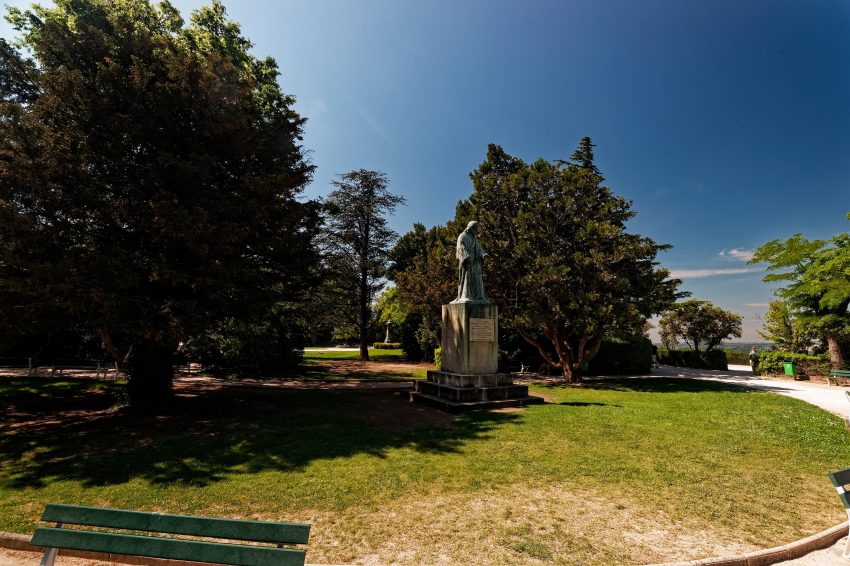
Jean Althen Sculpture
CC BY-SA 4.0 / Txllxt TxllxT
In Avignon’s Jardin des Doms, the Jean Althen Sculpture honors Jean-Baptiste Joannis Althen (1709–1774), an Armenian agronomist whose experiments turned madder (garance)—the plant used for red dye—into a major Provençal crop. The statue, erected in 1846, commemorates a life marked by upheaval: after the Afghan invasion of the Safavid Empire, he was enslaved, escaped in 1736, and eventually tried his luck in France. Here, he shifted from failed cotton schemes to cultivating “Oriental” madder, producing about 2,500 kilograms by 1769, yet dying poor. Set among shady paths and greenery, it’s a quiet stop some visitors linger at to read the story on-site.
Location: 84000 Avignon, France | Hours: 24 Hours. | Price: Free. | Distance: 0.5km

30. Chapelle des Pénitents Noirs
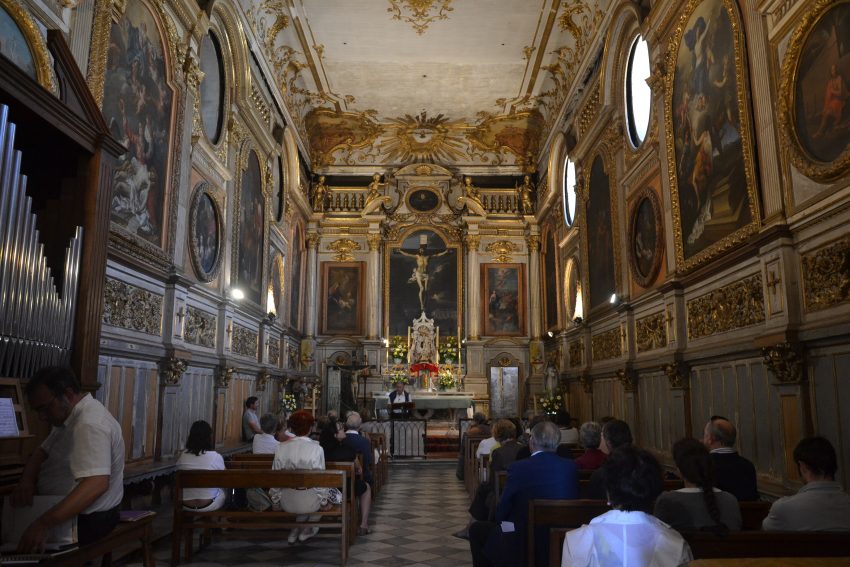
Chapelle des Pénitents Noirs
CC BY-SA 4.0 / Marianne Casamance
Chapelle des Pénitents Noirs is a compact Baroque chapel in Avignon’s old town, created as the home of the Brotherhood of the Black Penitents of Mercy, founded in 1586 by the Florentine noble Pompey Catiline. Step inside and the small scale gives way to theatrical 17th‑century ambitions: carved woodwork, a chancel-focused layout, and later paintings replacing works lost during the Revolution. On the façade, look for Pierre Bondon’s sculpture of angels bearing the head of Saint John the Baptist, a pointed nod to the confraternity’s devotion. The chapel was listed as a historic monument in 1906, and its revived brotherhood still helps keep the space alive.
Location: 57 Rue Banasterie, 84000 Avignon, France | Hours: Saturday: 14:00–17:00. Friday: 14:00–17:00. | Price: Free. | Website | Distance: 0.5km

31. Place des Carmes
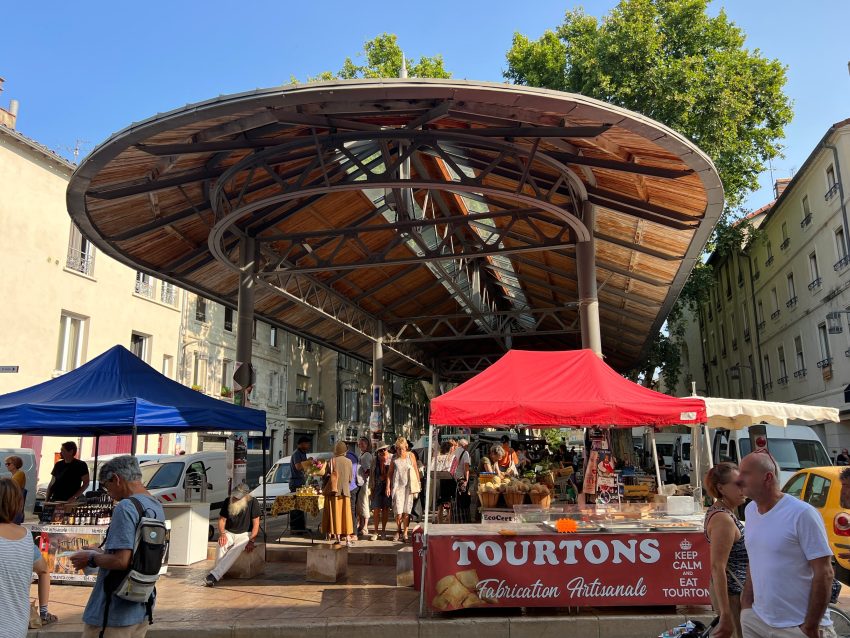
Place des Carmes
Place des Carmes
CC BY-SA 4.0 / Chabe01
Place des Carmes is a lived-in square inside Avignon’s old town, where daily routines mix with layers of religious and cultural history. It grew around the former Carmelite convent cemetery, and traces of the square’s market past remain in partially restored metal hall structures. On Sundays, stalls turn it into a busy flea market, while café terraces keep the edges animated the rest of the week. Next to Saint-Symphorien Church, the Carmelite Cloister’s rib-vaulted chapter house becomes a performance space during the Avignon Festival, and the nearby Carmelite Theater helped shape the Off scene. Look for the 1723 Gleize Crivelly House at No. 25, tied to a curious Revolutionary-era procession.
Location: Pl. des Carmes, 84000 Avignon, France | Hours: Daily: 08:00–17:00. | Price: Free. | Distance: 0.6km

32. Church of the Cordeliers
Church of the Cordeliers
CC BY-SA 3.0 / Sinuhe20
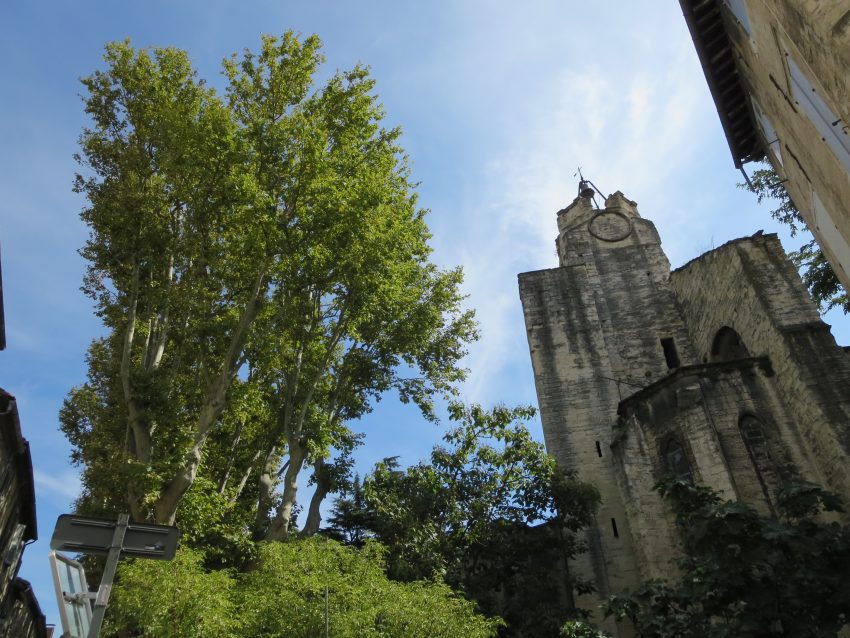
The Church of the Cordeliers in Avignon is what remains of a vast Franciscan convent founded in the 13th century beside the Sorgue, now reduced to a surviving apse chapel and a heavily worn bell tower. Built up from 1233 and finished by about 1350, it later became a sought-after burial place for elite families—local lore links it to Laure de Noves, Petrarch’s Laura. The mood here is shaped as much by absence as by architecture: you’re looking at fragments after Revolution-era seizures and demolition that erased most of the complex by 1806. On Rue des Teinturiers, the Gothic stonework and the tower’s rough silhouette feel like a quiet, time-stained interruption in the living city.
Location: 3 Rue des Teinturiers, 84000 Avignon, France | Hours: (Winter) February 1 – March 31; Monday, Wednesday, Thursday, Friday, Saturday, Sunday: 10:00–13:00 & 14:00–17:00. Closed on Tuesday. (Summer) April 1 – October 31; Monday, Wednesday, Thursday, Friday, Saturday, Sunday: 10:00–13:00 & 14:00–18:00. Closed on Tuesday. (Winter) November 1 – December 31; Saturday – Sunday: 10:00–13:00 & 14:00–17:00. | Price: Free; donations appreciated. | Distance: 0.6km

33. Eglise du Couvent des Celestins
Eglise du Couvent des Celestins
CC BY-SA 4.0 / Txllxt TxllxT
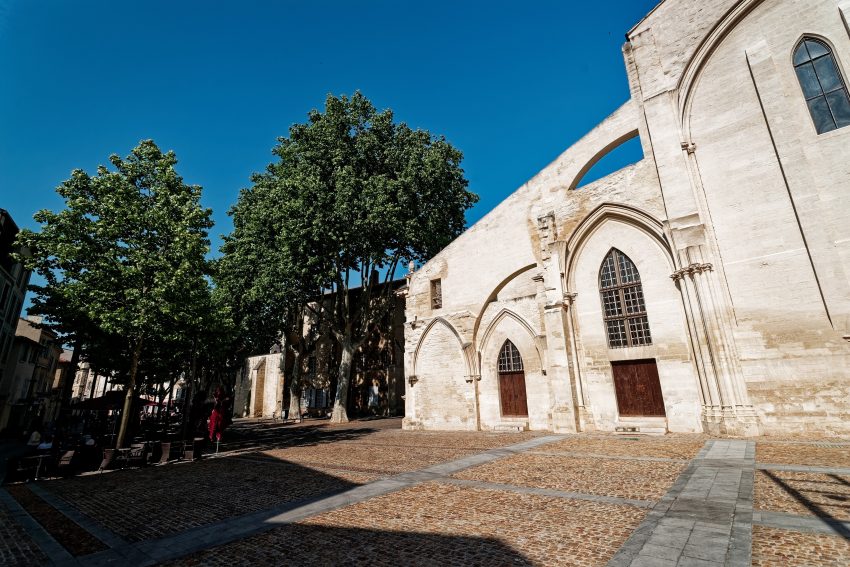
Eglise du Couvent des Celestins is a late-medieval Gothic church and former Celestine convent on Place des Corps Saints in Avignon, founded in 1389 at the request of Antipope Clement VII as the last major foundation of the Avignon papacy. Built from the 1390s into the mid-15th century, it remains unusually intact for a monastic complex, with the church, cloister, and substantial convent buildings still readable despite an austere, timeworn interior. Look for the site’s layered afterlives: a Baroque rebuild of the Saint Peter of Luxembourg chapel altar in 1625 and the transfer of Saint Benezet’s relics here in 1693. Today the vast stone shell often hosts exhibitions and seasonal events—visitors sometimes find contemporary art or even a small Christmas market inside.
Location: 84000 Pl. des Corps Saints, 84000 Avignon, France | Hours: Check official website. | Price: Free; donations appreciated. | Website | Distance: 0.6km

34. Église Saint Symphorien
Église Saint Symphorien
Public Domain / Véronique PAGNIER
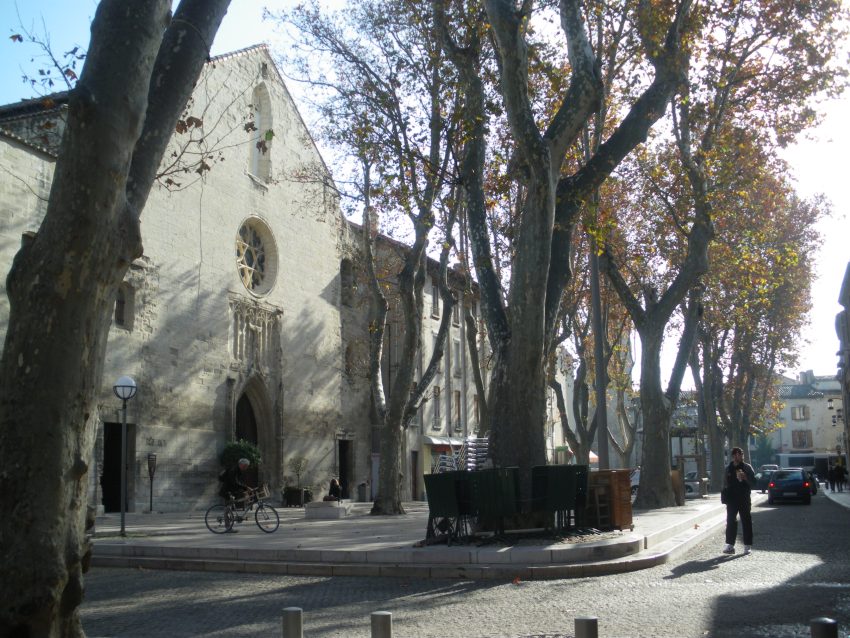
Église Saint Symphorien is a Roman Catholic church on Place des Carmes in central Avignon, rooted in the Grand Carmelite community that settled here in 1267. Rebuilt from 1320 under Pope John XXII and supported by Clement VI, it was consecrated in 1520—then partially collapsed in 1672, leaving the façade, choir, and side chapels before reconstruction finished in 1678. The exterior keeps a mendicant restraint: a simple portal with pinnacles and a small rose window. Inside, southern Gothic proportions dominate—a broad nave without aisles or transept, lined with separate side chapels and tall Doric pilasters under a brick barrel vault added in 1836. Many visitors remember the dim, hushed atmosphere.
Location: 14 Pl. des Carmes, 84000 Avignon, France | Hours: Monday – Friday: 08:00–17:00. Saturday: Closed. Sunday: 09:30–12:00. | Price: Free. | Distance: 0.6km

35. Remparts d'Avignon
Remparts d’Avignon
Remparts d’Avignon
CC BY-SA 2.0 / Véronique PAGNIER
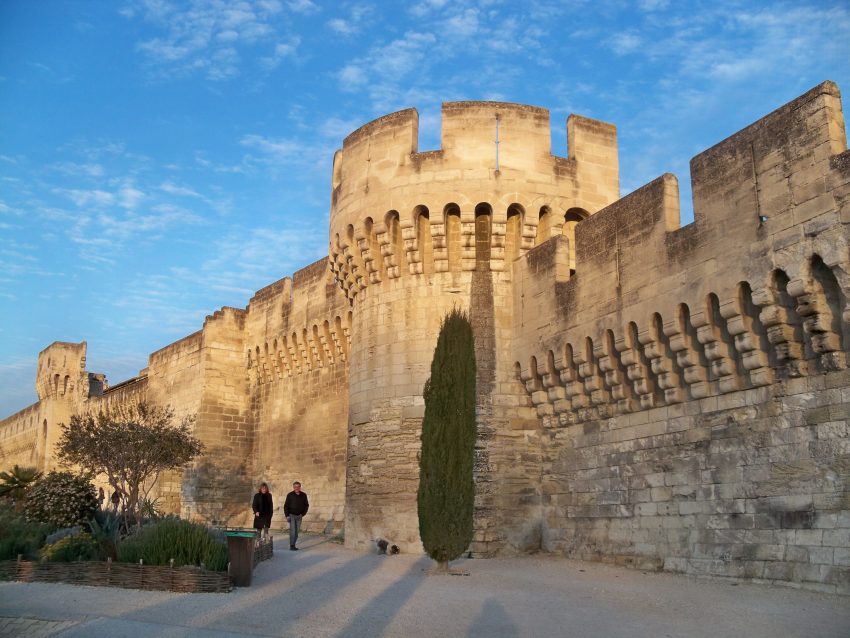
The Remparts d’Avignon are the 14th-century defensive walls that still ring Avignon’s historic center, built when the papacy moved here and the city needed serious protection during the Hundred Years’ War. Stretching about 4.3 km and enclosing roughly 150 hectares, the ramparts read as a continuous band of pale stone broken by towers and gates. Their story includes an earlier 13th-century fortification dismantled after the 1226 siege by Louis VIII, before the later wall was begun in 1357 under Pope Innocent VI and built over nearly two decades. Today you feel their scale most where they rise from open space, and you still enter the old town through multiple vehicular and pedestrian openings.
Location: 84000 Avignon, France | Hours: 24 Hours. | Price: Free. | Website | Distance: 0.7km

36. La Rue des Teinturiers
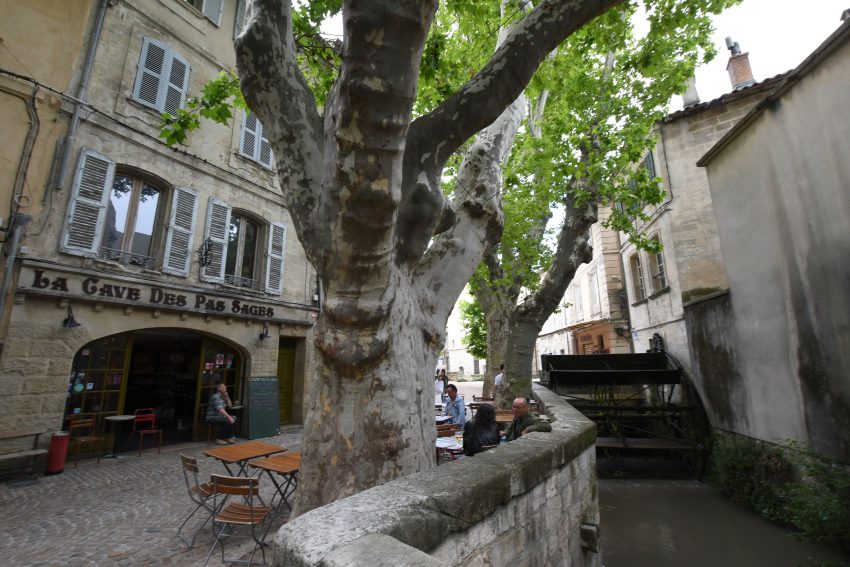
La Rue des Teinturiers
CC BY-SA 2.0 / Herbert Frank
La Rue des Teinturiers is Avignon’s old “dyers’ street,” a narrow cobbled lane where the Vaucluse canal slips through the city walls and once powered a busy textile quarter. From the 14th to 19th centuries, 23 waterwheels drove washing and dyeing; only four remain today, but their hulking paddles still define the canal-side stroll. Look for the odd Maison du IV de Chiffre (1493), a Gothic house with a crenellated cornice, gargoyle drainpipes, and a mysterious “IV” carving on its façade. Along the way you’ll also pass the Chapel of the Grey Penitents, whose doorway painting hints at the hooded order inside. Cafés and bars add a relaxed, lived-in feel.
Location: Rue des Teinturiers, 84000 Avignon, France | Hours: 24 Hours. | Price: Free. | Distance: 0.7km

37. Maison de Jean-Henri Fabre
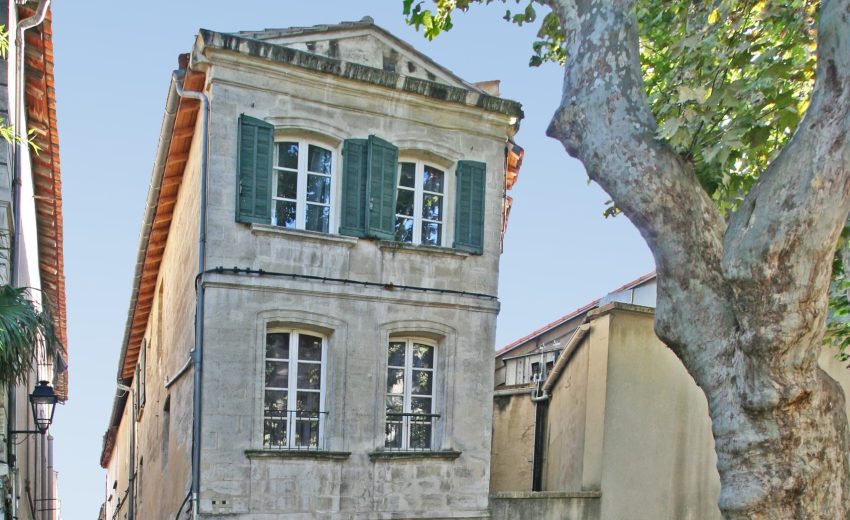
Maison de Jean-Henri Fabre
CC BY-SA 3.0 / Jean-Marc Rosier
Maison de Jean-Henri Fabre is the restored one-story Avignon home of the naturalist and entomologist who made close observation of insects a form of storytelling. On Rue des Teinturiers, the house is easy to recognize by the large wheel out front, and inside it keeps a lived-in feel with period rooms, a glass-front bookcase, and even Fabre’s harmonium. Displays move between art and science: more than 100 of his watercolors and thousands of herbarium plates sit alongside research tools, specimens, and a small “cinema” room showing early educational films, including a 1912 short on cicadas. Visitors often remember the friendly, hands-on atmosphere and the quiet garden break.
Location: 445 Rte d'Orange, 84830 Sérignan-du-Comtat, France | Hours: Tuesday – Saturday: 09:30–12:30 & 13:30–17:00. Closed on Sunday, Monday. | Price: Adults: €10; Reduced: €7; Under 3: free. | Website | Distance: 0.7km

38. Pénitents Gris d'Avignon
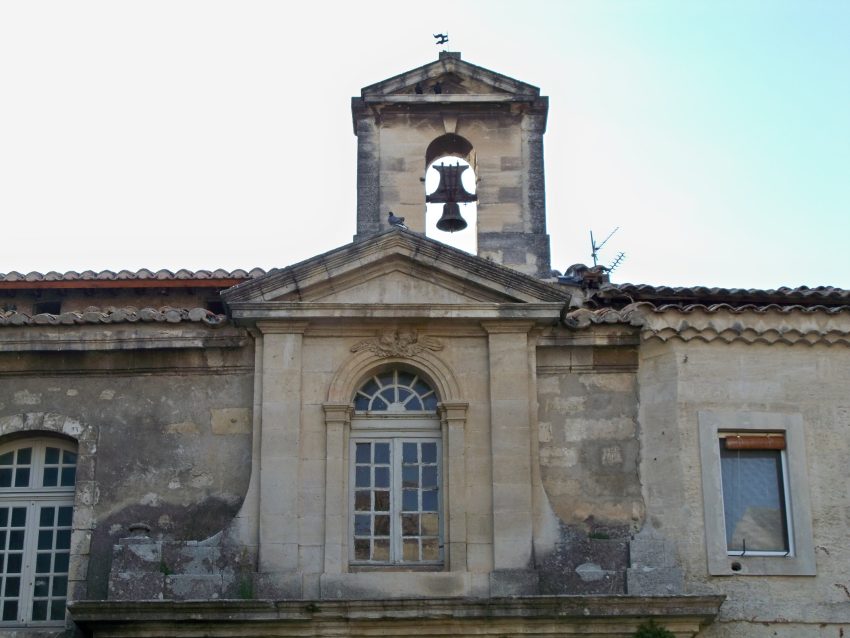
Pénitents Gris d’Avignon
CC BY-SA 3.0 / Véronique PAGNIER
Pénitents Gris d’Avignon is a discreet confraternity chapel tucked behind an unassuming entrance, shaped by centuries of lay devotion and charity in the region. Built in 1758 by architect Jean-Baptiste Franque on the site of an earlier Holy Cross oratory, it reads like an architectural timeline: a long vestibule with a 1631 paneled ceiling leads to a late-16th-century hexagonal room. The main nave—rebuilt in 1816–1818—holds 19th-century stained glass scenes, including a royal procession and a “miracle of the waters,” and is flanked by side chapels with galleries. Visitors often remember the contrast between the modest exterior and a surprisingly baroque interior, especially the ornate altarpiece noted in reviews.
Location: 8 Rue des Teinturiers, 84000 Avignon, France | Hours: Sunday: 10:00–12:00. Saturday: 14:00–18:00 (first Saturday of the month). Closed on Monday, Tuesday, Wednesday, Thursday, Friday. | Price: Free. | Website | Distance: 0.7km

39. Maison du IV de Chiffre
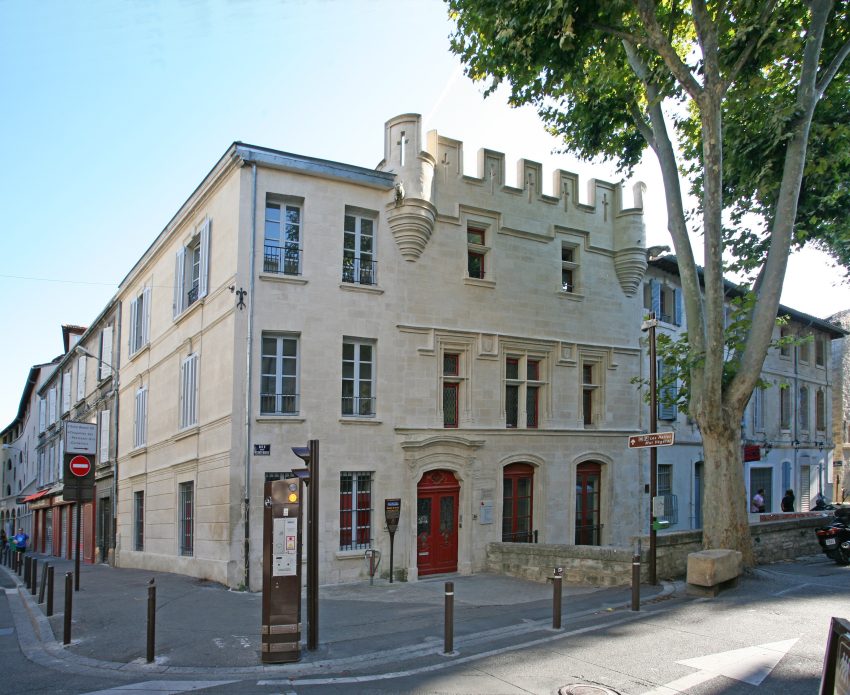
Maison du IV de Chiffre
CC BY-SA 3.0 / Jean-Marc Rosier
Maison du IV de Chiffre is a late-Gothic town house from 1493, one of Avignon’s oldest surviving medieval residences, tucked inside the walls at the corner of Rue des Teinturiers and Rue Guillaume Puy. What visitors remember is its fortress-like silhouette: a crenellated pediment, corner turrets, and tall windows that still read as high-status craftsmanship. Between the first-floor windows once sat the puzzling “Figure IV” emblem—described as a heart pierced by a dart and marked with crosses—later lost in restoration but long copied onto objects from pottery to playing cards, and even linked to plague-era talisman lore. Look closely and you’ll also spot details tied to its original plan, including a spiral stair serving the floors and heavy timber structure behind the stone skin.
Location: 34 Rue Louis Pasteur, 84000 Avignon, France | Hours: 24 Hours. | Price: Free. | Distance: 0.8km

40. Barthelasse Island
Barthelasse Island
Barthelasse Island
CC BY-SA 4.0 / Txllxt TxllxT
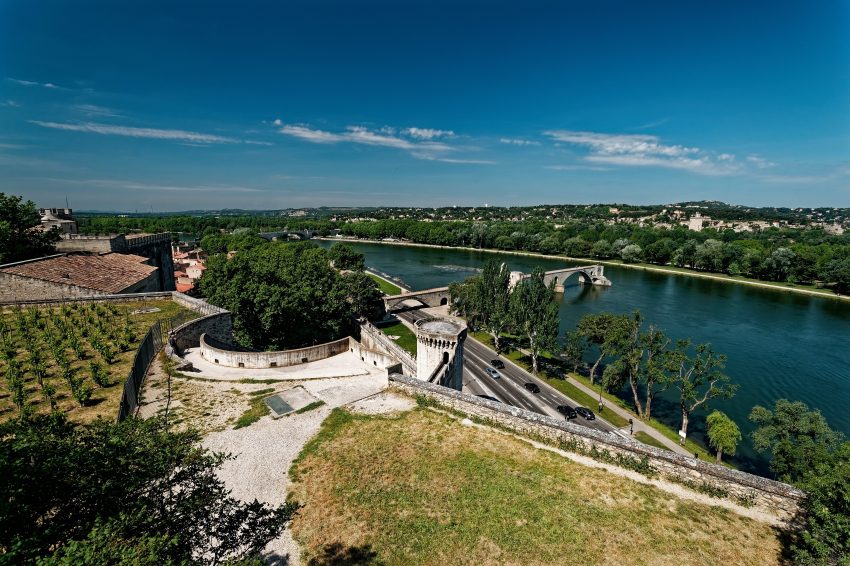
Barthelasse Island (Île de la Barthelasse) is a broad, green river island in the Rhône that forms one of Avignon’s districts, with farmland and leisure spaces spread across about 9.8 km². Its flat towpaths make it easy to wander or cycle, and the riverbank delivers clear, open views back to Avignon’s walls and skyline. Beyond the scenery, you’ll notice a lived-in landscape: cultivated fields, small recreation areas, and a quieter pace with only around a thousand residents. Along the banks, protected nature zones shelter wildlife such as herons and cormorants, and you may spot signs of beavers. Many visitors cross on the free ferry, a simple hop that feels like stepping into countryside.
Location: île de la Barthelasse, 84000 Avignon, France | Hours: 24 Hours. | Price: Free. | Website | Distance: 1km

41. Porte Saint-Lazare
City Wall – Porte Saint-Lazare
CC BY-SA 4.0 / Chabe01
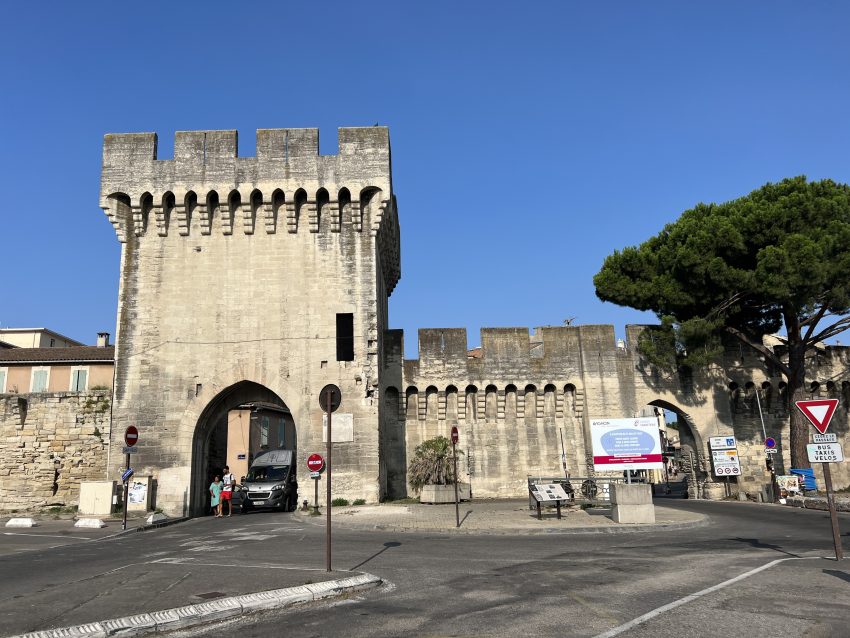
Porte Saint-Lazare is a 14th-century gate in Avignon’s ramparts, built during the Avignon papacy as part of the city’s defensive ring. Its design is relatively plain compared with more elaborate medieval gateways, but the attached exterior boulevard/barbican once let troops assemble under cover—sources note space for hundreds of men, flanked by nearby towers. The gate kept evolving: a fortified avant-corps was added in 1488, replaced by a ravelin in 1568 during the Wars of Religion, and altered again in 1882 with restoration and a second entrance as the ravelin remnants disappeared. Today visitors remember the sheer wall mass and the calm, less crowded feel compared with busier entrances.
Location: Porte Saint Lazare Prte Saint-Lazare 84000 Avignon France | Hours: 24 Hours. | Price: Free. | Website | Distance: 1.1km

Best Day Trips from Avignon

A day trip from Avignon offers the perfect opportunity to escape the urban rhythm and discover the surrounding region's charm. Whether you're drawn to scenic countryside, historic villages, or cultural landmarks, the area around Avignon provides a variety of easy-to-reach destinations ideal for a one-day itinerary. If you are looking to rent a car in France I recommend having a look at Discover Cars, first, as they compare prices and review multiple car rental agencies for you.

1. Saint-Rémy-de-Provence
france St Remy de Provence
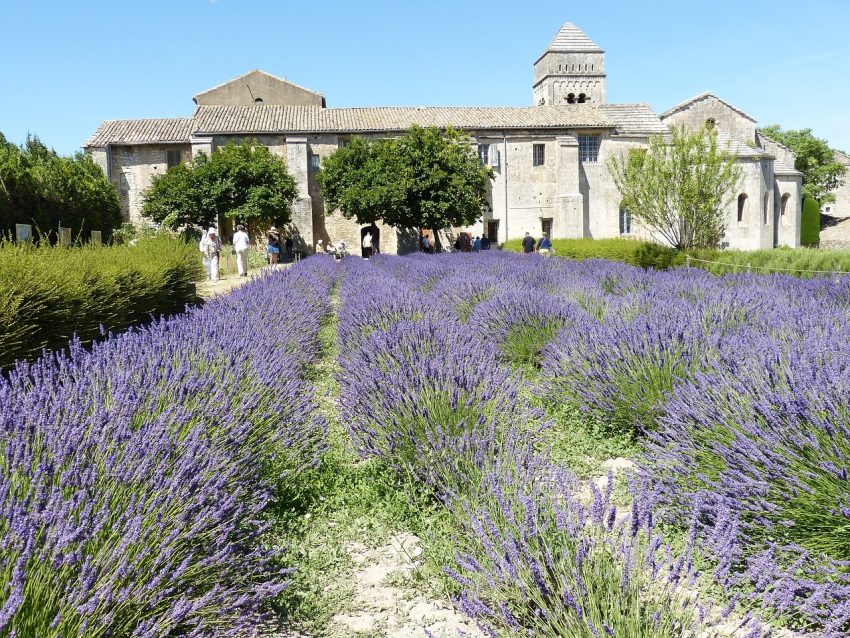
Saint-Rémy-de-Provence is a picturesque town in the Provence-Alpes-Côte d’Azur region of southern France, beloved for its sun-drenched charm, winding stone streets, and atmospheric markets. Surrounded by olive groves and vineyards at the foot of the Alpilles mountains, it's an ideal destination for those looking to experience the slower rhythms and sensory pleasures of Provençal life. Weekly markets fill the town…
Visiting Saint-Rémy-de-Provence
Powered by GetYourGuide

2. Cavaillon

Cavaillon
Cavaillon
CC BY-SA 4.0 / Julien Pelissier
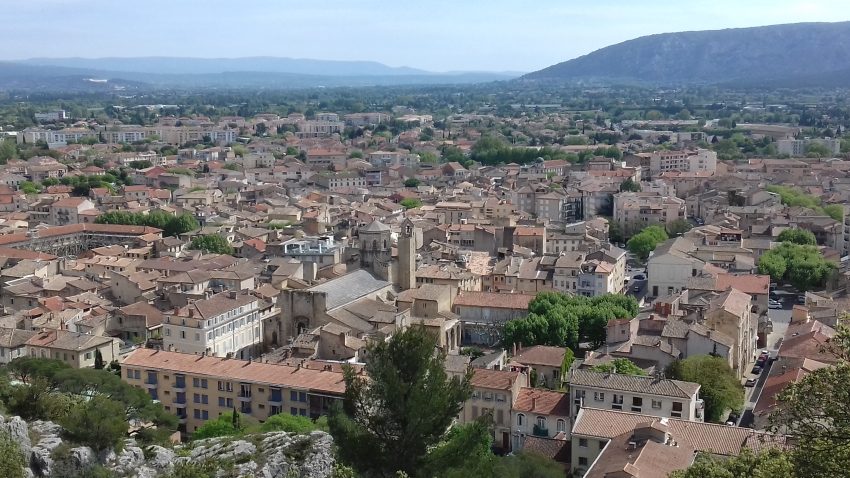
Visiting Cavaillon offers a delightful mix of small-town charm and access to the beautiful landscapes of the Provence-Alpes-Côte d'Azur region. The town is known for its stunning surroundings, including the nearby Luberon mountains and vast fields of fruit orchards, particularly its famous melons. With its warm Mediterranean climate, Cavaillon is an excellent spot for those who enjoy outdoor activities like…
Visiting Cavaillon
Powered by GetYourGuide

3. Uzes

Uzes France
Uzes France
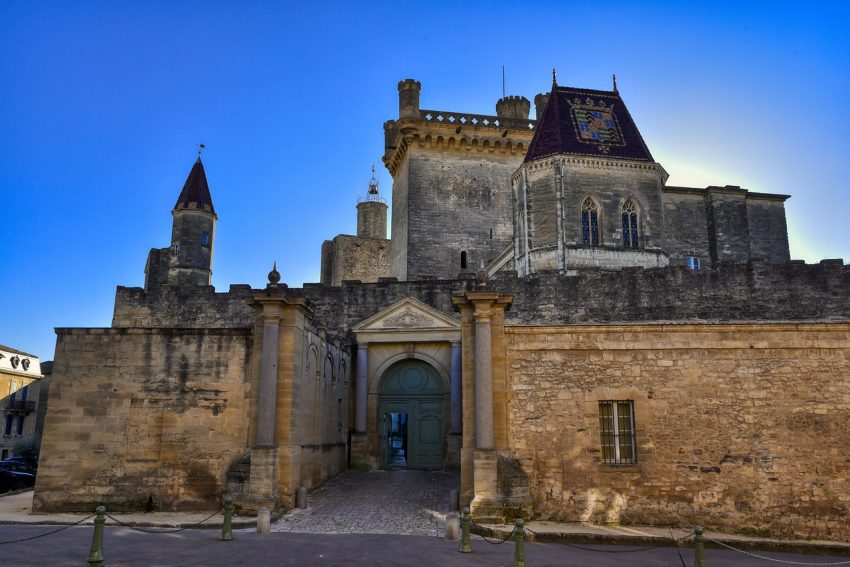
Uzès is a charming town in the Occitanie region, known for its beautiful medieval architecture, lively markets, and tranquil atmosphere. Visitors can explore the picturesque streets, lined with boutiques, cafés, and art galleries, all while soaking in the town’s relaxed, small-town feel. The town's central square, Place aux Herbes, hosts a popular market where you can sample local produce and…
Visiting Uzes
Powered by GetYourGuide

4. Arles

the amphitheatre of arles
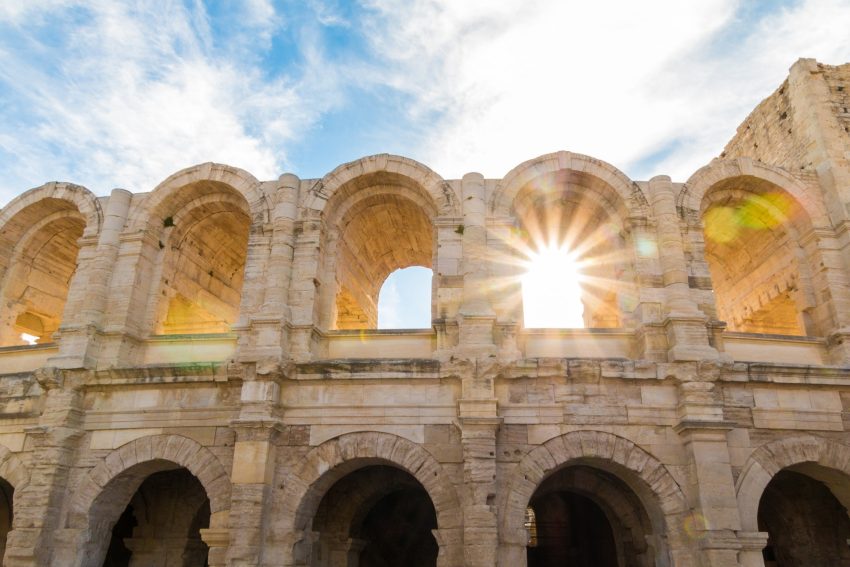
Positioned along the River Rhône in the heart of Provence, Southern France, Arles captivates with its blend of elegant 18th and 19th-century mansions and ancient Roman architecture. Arles is one of the most underrated cities in France. Its fame was significantly heightened by Vincent van Gogh, whose time in Arles left behind an array of scenes that continue to draw…
Visiting Arles
Powered by GetYourGuide

5. Nimes

Nimes France
Nimes France
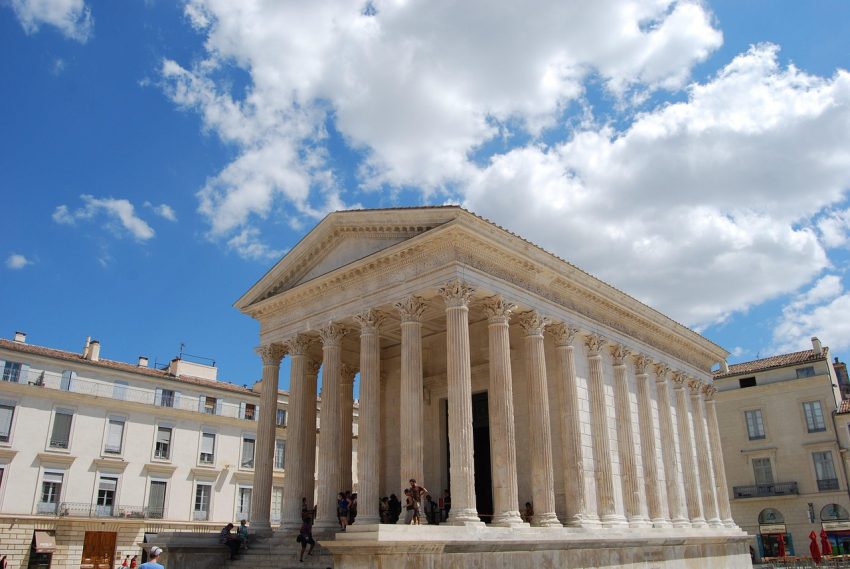
Nîmes, in the Occitanie region, is a city where Roman grandeur meets southern French charm. Its sun-drenched streets, leafy boulevards, and relaxed pace make it a pleasant place to explore on foot. The architecture is striking, blending ancient stone with classical French facades, and there's a strong local culture centered around food, markets, and outdoor living. The city is also…
Visiting Nimes
Powered by GetYourGuide

6. Aix en Provence

Aix en Provence
Aix en Provence
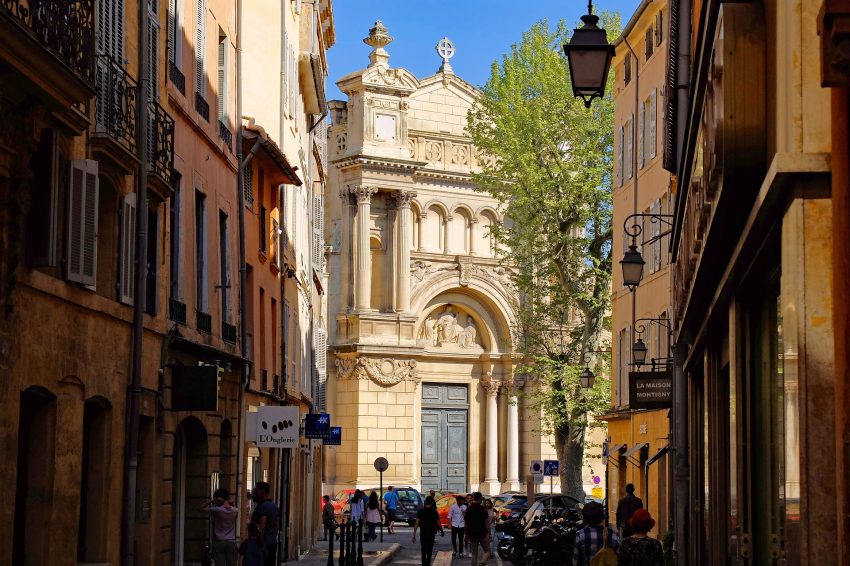
Aix-en-Provence, commonly pronounced as "X," is a stunning town in the far south of France, easily accessible by TGV high-speed train. It takes about three hours from downtown Paris and three and a half hours from Charles de Gaulle Airport. Located just 30km north of Marseille, Aix could well have been the central hub of Provence if not overshadowed by…
Visiting Aix en Provence
Powered by GetYourGuide

7. Montpellier

Montpellier France
Montpellier France
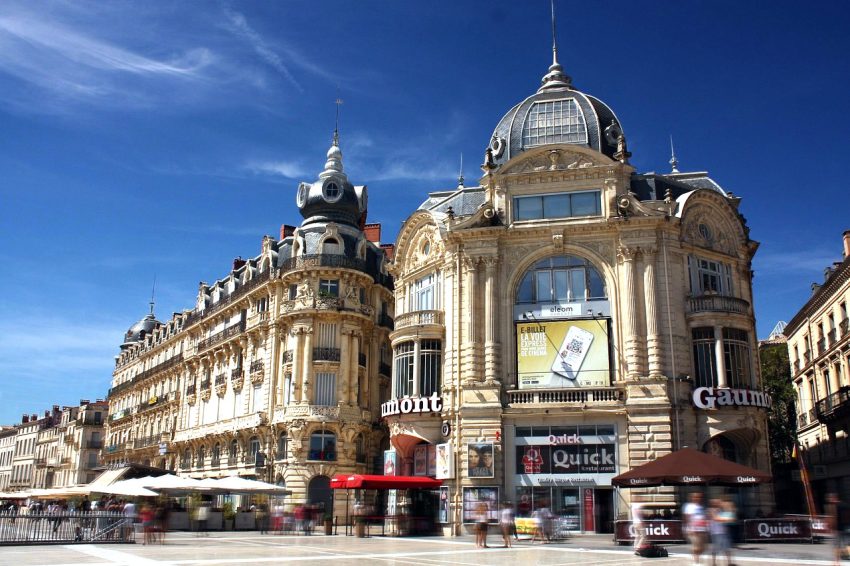
Montpellier, located in the Occitanie region of southern France, is a vibrant and youthful city with a unique blend of old-world charm and modern energy. Its sunny Mediterranean climate, bustling town squares, and lively street culture make it a perfect destination for both relaxation and exploration. The city feels alive with students, art, and music, giving it an effortlessly cool…
Visiting Montpellier
Powered by GetYourGuide

8. Marseille

visit marseille
visit marseille
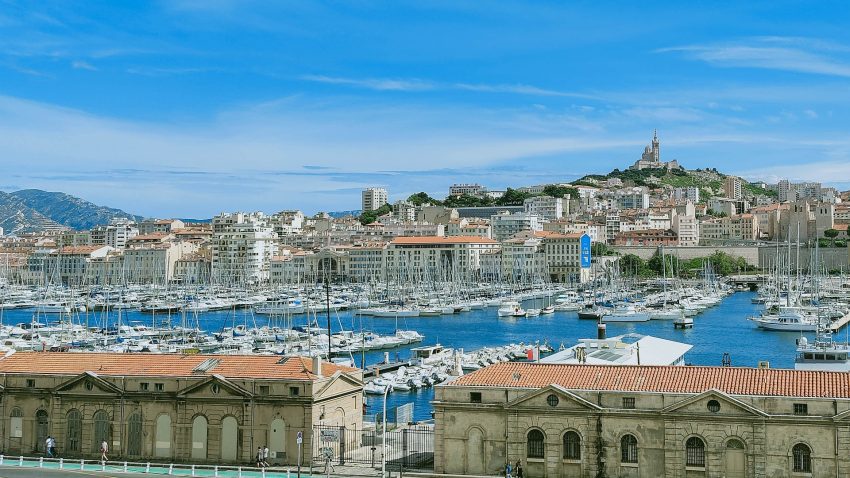
Marseille, located in the Provence-Alpes-Côte d’Azur region of southern France—not in Germany—is a dynamic port city known for its mix of cultures, sea views, and Mediterranean energy. It offers a completely different vibe from inland Provençal towns, with its bustling harbor, urban sprawl, and access to the sea. The Vieux-Port (Old Port) is the heart of the city, lined with…
Visiting Marseille
Powered by GetYourGuide

9. Sete

Sete France
Sete France
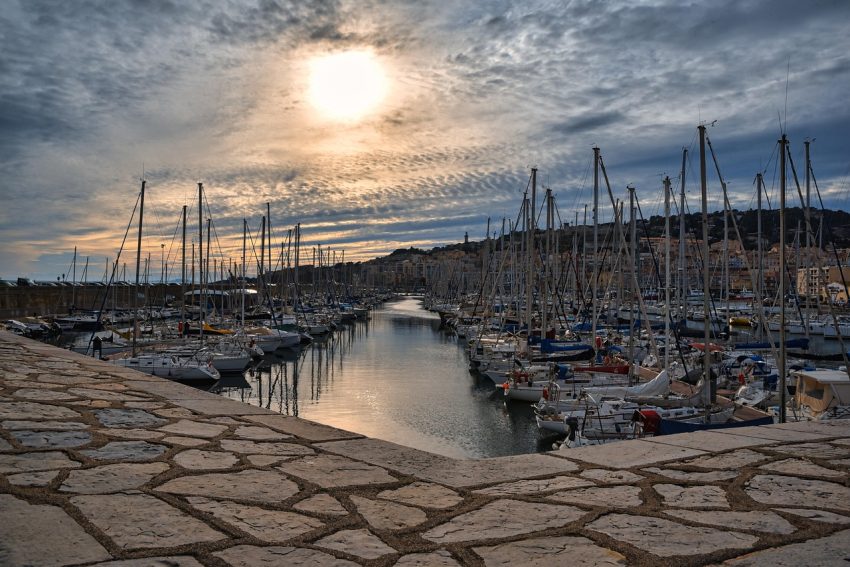
Sète is a charming coastal town in southern France, known for its picturesque canals, bustling fishing port, and vibrant markets. Visitors often enjoy wandering through its lively streets, sampling fresh seafood at waterfront restaurants, and exploring the local art scene in small galleries and boutiques. The town offers a laid-back atmosphere, perfect for leisurely strolls along the marina or relaxing…
Visiting Sete
Powered by GetYourGuide

10. Toulon

Toulon France
Toulon France
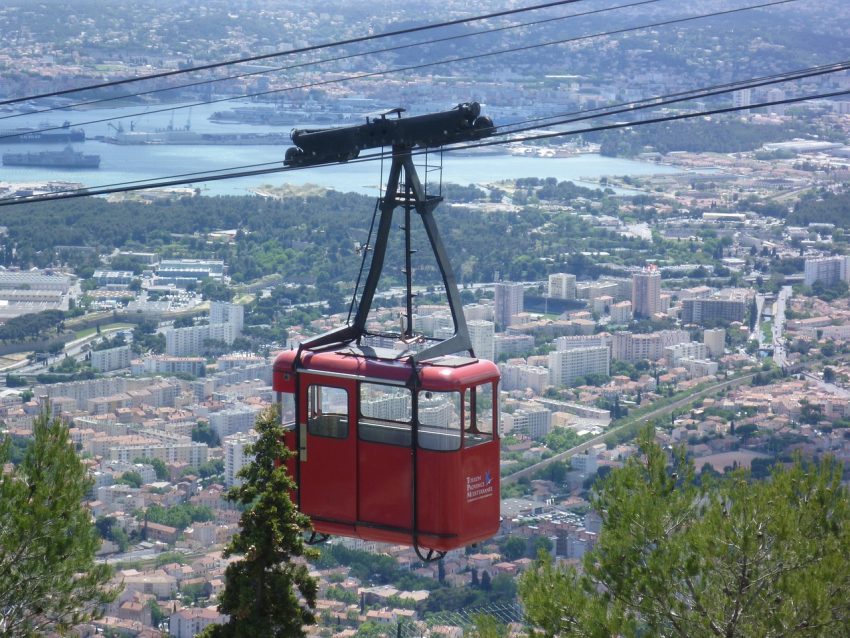
Toulon is a lively port city known for its mix of maritime heritage, sunny Mediterranean ambiance, and relaxed coastal vibe. Visitors can enjoy the bustling harbor, stroll along the waterfront promenade, and explore local markets filled with Provençal flavors. The city also offers a great balance of culture and leisure, with museums, theaters, and charming old town streets waiting to…
Visiting Toulon
Powered by GetYourGuide

Where to Stay in Avignon

For a luxurious stay, Hôtel La Mirande stands out. This exquisite 5-star hotel, located adjacent to the Palais des Papes, boasts individually decorated rooms with period furnishings and a Michelin-starred restaurant. Another top-tier option is Hôtel d'Europe, a historic establishment dating back to 1799, offering elegant rooms and fine dining in the heart of the city.

Travelers seeking boutique accommodations might consider La Divine Comédie, a charming guesthouse featuring spacious suites and a lush private garden. Alternatively, Hotel De Cambis offers contemporary design and a cozy atmosphere, conveniently located near the city’s main attractions.

For those on a budget, Hôtel de l'Horloge provides comfortable accommodations with a prime location on the city’s main square. Another affordable option is Ibis Avignon Centre Gare, offering modern rooms and easy access to public transportation.

Using the our Hotel and Accomodation map, you can compare hotels and short-term rental accommodations in Avignon. Simply insert your travel dates and group size, and you’ll see the best deals for your stay.

Avignon Accommodation Map

Best Time to Visit Avignon

Visiting Avignon in Spring (March to May)

Spring is one of the best times to visit Avignon. The weather is pleasantly mild, the gardens start to bloom, and the city feels alive without the summer crowds. Outdoor cafes open up, making it a perfect time to explore on foot.

Visiting Avignon in Summer (June to August)

Summer in Avignon is hot and vibrant, with temperatures often soaring but balanced by exciting events like the famous Festival d’Avignon. The city buzzes with performances, street artists, and open-air shows. Just be prepared for larger crowds and higher accommodation prices.

Visiting Avignon in Autumn (September to November)

Autumn offers a cooler, quieter experience of Avignon. The vineyards around the region begin their harvest, and the city takes on a golden hue. It’s a lovely time for scenic walks and cultural visits without the peak season rush.

Visiting Avignon in Winter (December to February)

Winter in Avignon is calm, crisp, and atmospheric, with fewer tourists and a more local pace. While some attractions reduce hours, cozy restaurants and festive markets keep the charm alive. It’s a good time for those who prefer a slower, more reflective travel experience.

Annual Weather Overview

  • January 11°C
  • February 13°C
  • March 16°C
  • April 20°C
  • May 26°C
  • June 29°C
  • July 32°C
  • August 30°C
  • September 28°C
  • October 23°C
  • November 14°C
  • December 12°C

How to get to Avignon

How to Visit Avignon

Getting to Avignon is straightforward, whether you’re traveling from within France or arriving from abroad. Its location makes it an ideal stop on a broader Provence itinerary, and the city is well-connected by train, road, and air.

Getting to Avignon by Train

Avignon is served by the high-speed TGV network, with the Avignon TGV station located just a few kilometers outside the city center. Direct trains from Paris take around 2.5 hours, and there are also connections from Lyon, Marseille, and Nice. A shuttle or local TER train links the TGV station to the central Avignon Centre station. You can use SNCF Connect to check schedules, compare routes, and purchase tickets for National (SNCF ) and regional trains (TER). For a more streamlined experience, we recommend using Omio, which allows you to easily compare prices, schedules, and book tickets for both National and Regional travel across all of Europe, all in one place.

Getting to Avignon by Car

Driving to Avignon gives you flexibility, especially if you’re planning to explore the surrounding Provençal countryside. The city is easily accessible via the A7 autoroute (Autoroute du Soleil), with clear signs directing you to the historic center and parking facilities. Renting a car is particularly useful if you’re combining Avignon with smaller towns and villages nearby. If you are looking to rent a car in France I recommend having a look at Discover Cars, first, as they compare prices and review multiple car rental agencies for you.

Getting to Avignon by Air

The nearest major airport is Marseille Provence Airport, about an hour away by car or train. This airport offers both domestic and international flights. Smaller regional airports like Nîmes or Avignon-Caumont Airport handle limited traffic, mostly seasonal or domestic routes.

Getting Around Avignon

Once you’re in Avignon, the historic center is compact and walkable, with most major sites close together. There’s also a local bus system, and bike rentals are available for getting around more freely. If you’re planning day trips, regional trains and buses make it easy to reach neighboring towns.
More from this area