Montpellier, France: The Ultimate Travel Guide 2026
Montpellier France
Montpellier France

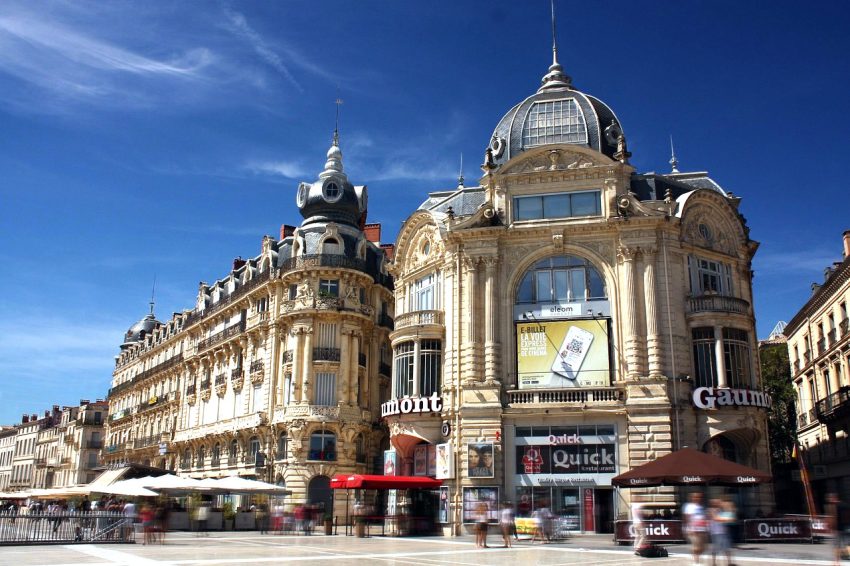
Montpellier, located in the Occitanie region of southern France, is a vibrant and youthful city with a unique blend of old-world charm and modern energy. Its sunny Mediterranean climate, bustling town squares, and lively street culture make it a perfect destination for both relaxation and exploration. The city feels alive with students, art, and music, giving it an effortlessly cool vibe that's hard to resist.

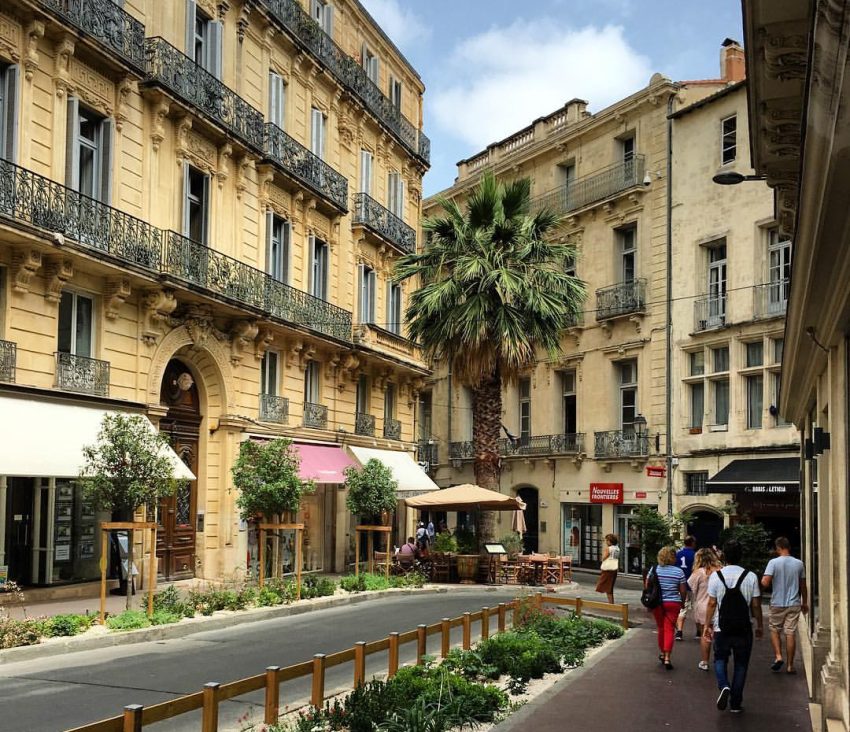
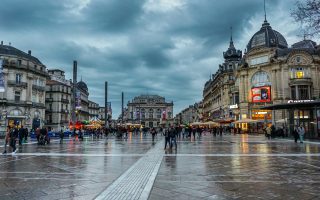
Walking through Montpellier, you're met with elegant architecture, cozy cafés, and dynamic markets tucked into winding streets. Whether you're enjoying the atmosphere at Place de la Comédie or wandering through the leafy promenades, the city invites you to take your time. With beaches nearby and a laid-back lifestyle, it's easy to see why Montpellier leaves such a lasting impression.

History of Montpellier

Montpellier in the Early Middle Ages (10th–12th Century)

Montpellier first appeared in historical records in the 10th century, when it was founded by the Guilhem family. The city quickly became a modest but significant trading post due to its proximity to Mediterranean trade routes. During this period, Montpellier began establishing itself as a center for commerce, attracting merchants and artisans from across the region.

Montpellier in the High Middle Ages (13th–15th Century)

By the 13th century, Montpellier had risen to prominence as a center of learning and medicine. The University of Montpellier was founded in 1289 and quickly gained a reputation for excellence, especially in the fields of law and medicine. The city thrived economically, hosting fairs and markets that attracted people from across Europe and the Mediterranean.

Montpellier in the Renaissance and Religious Wars (16th–17th Century)

During the 16th century, Montpellier became a stronghold of Protestantism, which brought it into direct conflict during the French Wars of Religion. The city endured sieges and periods of unrest, especially in the early 17th century when royal troops suppressed the Huguenot population. Despite the turmoil, Montpellier’s academic institutions remained active, and its medical school continued to flourish.

Montpellier in the Age of Enlightenment and Revolution (18th Century)

In the 18th century, Montpellier experienced relative peace and continued urban development. The city saw improvements in infrastructure and architecture, with elegant mansions and public buildings being constructed. Enlightenment ideals found a receptive audience in its university circles, setting the stage for the social and political changes that would come with the French Revolution.

Montpellier in the 19th and Early 20th Century

The 19th century brought modernization to Montpellier, including the development of railways and urban planning. The city expanded beyond its medieval walls, with new neighborhoods and public spaces emerging. It also became a hub for the wine trade, benefiting economically from the surrounding vineyards. The early 20th century saw further growth, though it was interrupted by the effects of the World Wars.

Montpellier in the Late 20th Century to Today

From the 1960s onward, Montpellier underwent significant transformation. It became one of France’s fastest-growing cities, fueled by its expanding student population, innovative architecture, and cultural initiatives. Modern Montpellier continues to balance its historical heritage with a dynamic, forward-thinking spirit, making it a standout city in the French urban landscape.

Moira & Andy
Moira & Andy

Hey! We're Moira & Andy. From hiking the Camino to trips around Europe in Bert our campervan — we've been traveling together since retirement in 2020!

Read our full story here

Visiting Montpellier for the first time and wondering what are the top places to see in the city? In this complete guide, I share the best things to do in Montpellier on the first visit. To help you plan your trip, I have also included an interactive map and practical tips for visiting!

This website uses affiliate links which earn a small commission at no additional cost to you.
Powered by GetYourGuide

26 Best places to See in Montpellier

This complete guide to Montpellier not only tells you about the very best sights and tourist attractions for first-time visitors to the city but also provide insights into a few of our personal favorite things to do.

This is a practical guide to visiting the best places to see in Montpellier and is filled with tips and info that should answer all your questions!

1. Rue Foch
Rue Foch
Rue Foch
CC BY-SA 3.0 / Jonaslange
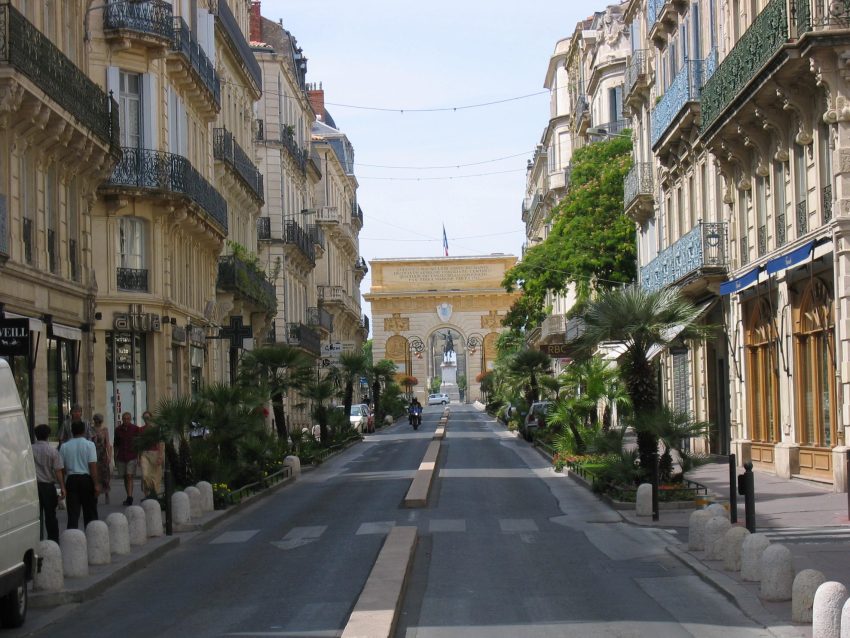
Rue Foch is a broad central artery in Montpellier that functions as a formal approach from the Promenade du Peyrou into the Écusson. Laid out as a commune road in 1205 alongside the city’s second fortifications, it originally led to the rampart’s Gate of Peyrou, and its names later shifted with politics—Imperial Street in 1864, then National Street, before being renamed in 1929 for Marshal Ferdinand Foch. Walking it today, you pass under the Arc de Triomphe, cross the Vialleton Bridge, and thread through Place des Martyrs de la Résistance. The street’s Haussmann-style widening gives it an open, ceremonial feel compared with the tighter old-town lanes nearby.
Location: Rue Foch, 34000 Montpellier, France | Hours: 24 Hours. | Price: Free. | Distance: 0km

We recommend to rent a car in France through Discover Cars, they compare prices and review multiple car rental agencies. Book your rental car here.

2. Prefecture of Hérault

Prefecture of Hérault
CC BY-SA 2.5 / Christophe.Finot
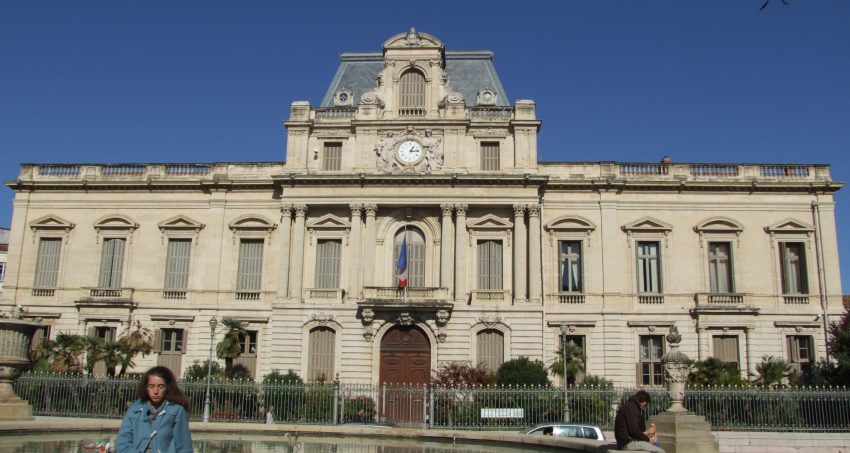
The Prefecture of Hérault in central Montpellier is the department’s main state-administration headquarters, facing Place des Martyrs de la Résistance and anchoring the Écusson with a formal civic presence. The current building dates to 1867–1870 and reads as confident 19th-century classicism, with Corinthian columns and dense stone ornament. Look above the entrance for a large clock flanked by sculpted female figures, and for the statue representing Montpellier, holding the city’s emblems while pouring water from a vase. The site’s layers run deep: it was once the Court of the Bayle, later a Protestant temple (1583–1682), then an aristocratic mansion commissioned by Cardinal de Bonzi. A rebuilt north wing (1992) quietly signals its continuing working life.
Location: 34 Pl. Martyrs de la Résistance, 34000 Montpellier, France | Hours: Monday – Friday: 08:30–16:30. Closed on Saturday, Sunday. | Price: Free. | Website | Distance: 0km

Here is a complete selection of hotel options in Montpellier. Feel free to review each one and choose the stay that best suits your needs.

3. Rue de l'Aiguillerie

Rue de l’Aiguillerie
CC BY-SA 2.0 / grego1402
Rue de l’Aiguillerie is a pedestrian shopping street in central Montpellier’s Écusson, running down to Place Jean-Jaurès and linking into Rue de la Loge. Its name recalls the fabric and needlework crafts once practiced here by home-based tradespeople—now gone, leaving the street name as a small trace of that working past. Today it’s a busy, easy-to-walk lane where you’ll notice bars, student hang-outs, fast-food counters, and independent “alternative” boutiques alongside ecological and foreign cultural venues. The mix of storefronts and constant local foot traffic gives it an everyday, lived-in feel rather than a monument-focused stop.
Location: Rue de l'Aiguillerie, 34000 Montpellier, France | Hours: 24 Hours. | Price: Free. | Distance: 0.2km

Traveling to a country with a different currency? Avoid ATM transaction fees and pay in local currency with a Wise Card. Having used it for over 5 years, we've saved loads on fees!

4. Place Jean Jaures

Place Jean Jaures
Place Jean Jaures
CC BY-SA 3.0 / Demeester
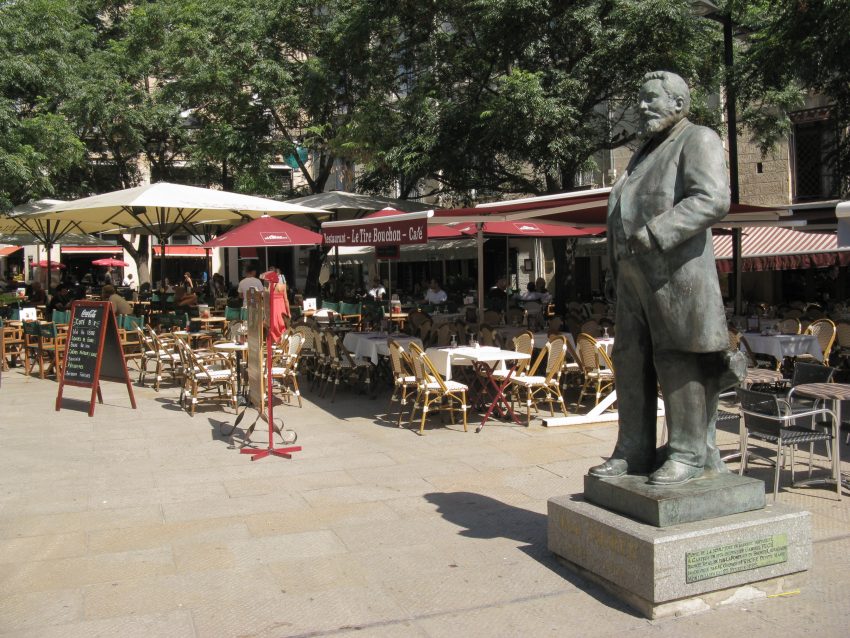
Place Jean Jaurès is a small pedestrian square in Montpellier’s medieval Écusson, where narrow lanes spill into a terrace-lined open space shaded by plane trees. Roughly 50 meters across, it’s anchored by a statue of Jean Jaurès, the socialist leader later interred in Paris’s Panthéon, and it draws a youthful crowd to its bars and restaurant tables. The square exists because the Church of Notre-Dame-des-Tables—an 11th-century church linked to money changers—was demolished in 1794, clearing the site into public space. Beneath your feet, a staircase leads down to the former church crypt, now part of the Museum of the History of Montpellier. By day it’s a calm pause; after dark it turns lively.
Location: Pl. Jean Jaurès, 34000 Montpellier, France | Hours: 24 Hours. | Price: Free. | Distance: 0.2km

Explore Montpellier at your own pace with our self-guided walking tour! Follow our curated route to discover must-see sights and local secrets that makes Montpellier one of the best places to visit in France.

5. Place de la Canourgue

Place de la Canourgue
CC BY-SA 2.0 / Jean-Pierre Dalbéra
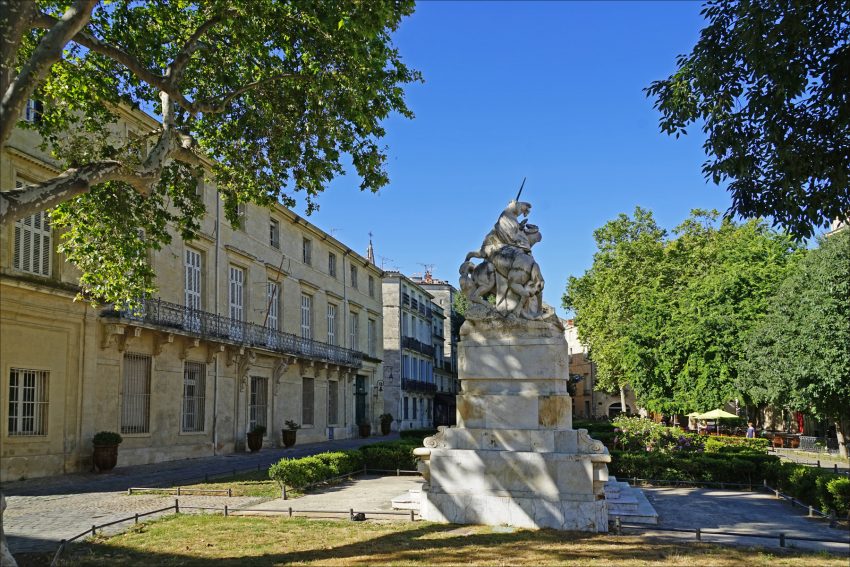
Place de la Canourgue is Montpellier’s oldest square, a quiet pocket in the Écusson where honey-colored stone and shade trees soften the city’s hilltop lanes. Built over the remains of a church, the site traces back to 1129, when Guilhem VI established a palace and oratory here and displayed a relic of the True Cross—later destroyed amid religious wars and again during the Revolution. Today you’ll notice the 17th-century townhouses that frame the space and the Fontaine des Licornes, a 1776 fountain moved here in 1863, carved with rearing unicorns and battling sea horses. A later replacement for the lost True Cross column still stands in the square.
Location: Pl. de la Canourgue, 34000 Montpellier, France | Hours: 24 Hours. | Price: Free. | Distance: 0.2km

6. Church of Saint Anne & Carre Saint Anne Gallery
Church of Saint Anne & Carre Saint Anne Gallery
CC BY-SA 4.0 / John Samuel
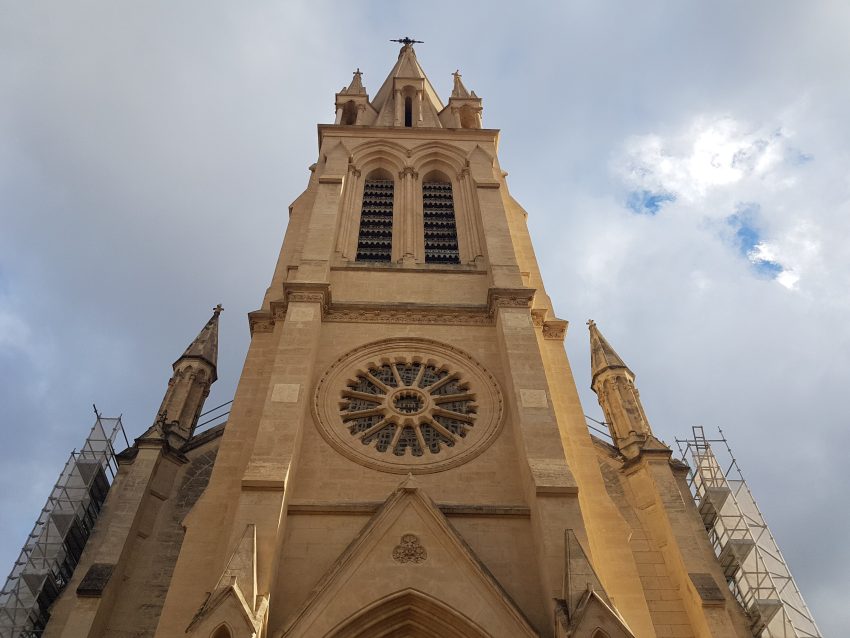
In Montpellier, the Church of Saint Anne & Carré Sainte-Anne Gallery is a 19th-century neo-Gothic church reborn as a contemporary art space. Built in 1866–1869 by architect Jules Cassan on the site of an older medieval church, it still reads like a sanctuary, with pointed arches, stained glass, and a vast nave that makes installations feel outsized. Its 68-meter steeple remains a strong marker on the skyline, while inside the open central floor is continually reimagined for rotating shows by local and international artists. The setting on Place Sainte-Anne adds to the atmosphere, with café terraces outside and, in summer, the “Nuits de Sainte Anne” music festival.
Location: 2 Rue Philippy, 34000 Montpellier, France | Hours: Tuesday – Sunday: 10:00–13:00 & 14:00–18:00. Closed on Monday. | Price: Free. | Website | Distance: 0.2km

7. Museum of Old Montpellier
Museum of Old Montpellier
CC BY-SA 4.0 / Frédéric Neupont
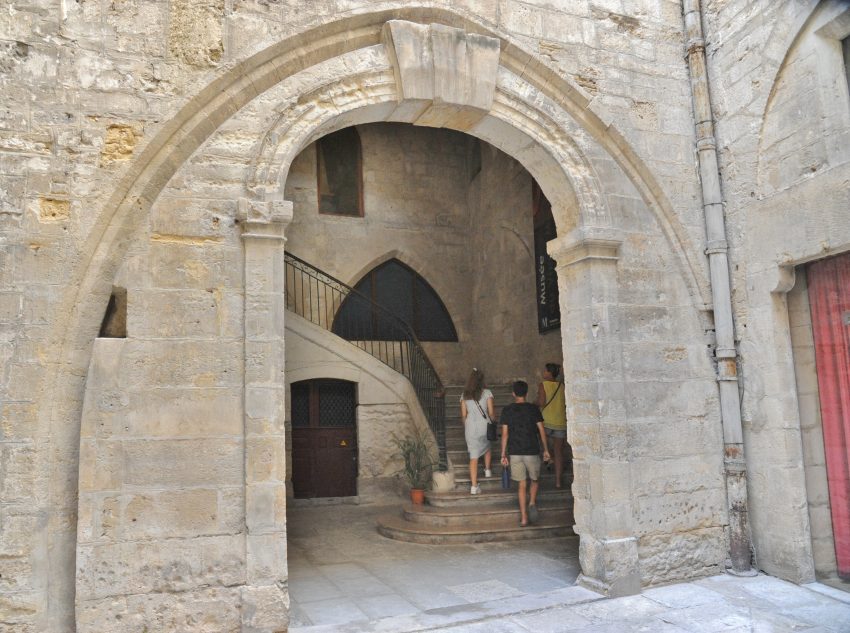
In Montpellier’s Écusson, the Museum of Old Montpellier sits on the first floor of the Hôtel de Varennes, an 18th-century private mansion with ornate ceilings, plasterwork, and a grand fireplace that’s part of the experience. The small, room-by-room museum traces the city’s evolution through engravings, watercolors, furniture, and portraits of local figures. Distinctive objects include a 15th-century tabernacle holding a 13th-century Black Virgin, plus an ivory cabinet and a gilded table clock. One gallery unexpectedly turns to the French Revolution, displaying stones from the Bastille and a detailed early model of the fortress. Visitors often describe it as quiet, compact, and easy to absorb in under an hour.
Location: 2 Pl. Pétrarque, 34000 Montpellier, France | Hours: Closed (as of January 2025). | Price: Free. | Website | Distance: 0.2km

8. Promenade du Peyrou
Promenade du Peyrou
Promenade du Peyrou
CC BY-SA 3.0 / PierreSelim
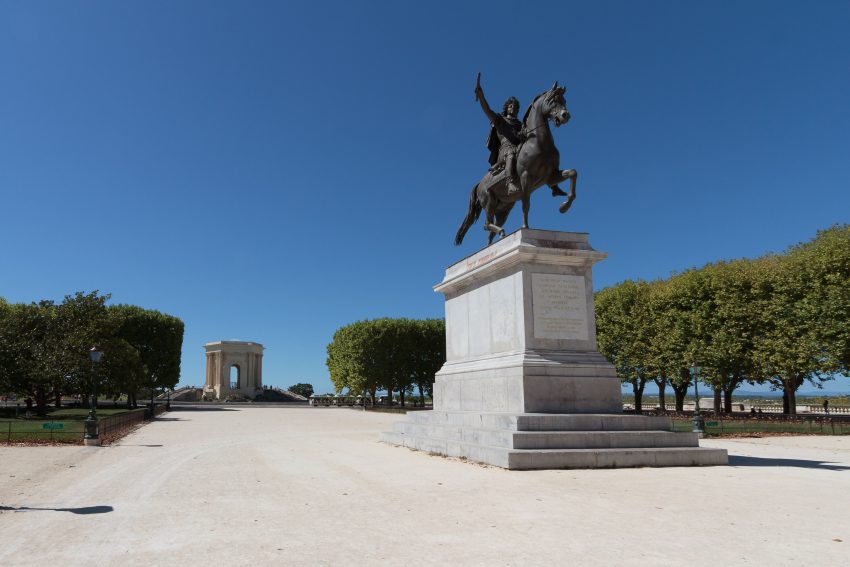
Promenade du Peyrou is a formal terrace-park on the western edge of Montpellier’s old town, laid out in 1774 by architect Jean Giral as a ceremonial promenade with long, symmetrical sightlines. Enter near the Arc de Triomphe honoring Louis XIV, then follow the broad alleys toward the equestrian statue of the king (1718) and the neoclassical “Water Castle” cistern added in 1766. The nearby Saint-Clément aqueduct, begun in 1753, once carried water about 14 km to the city, and its arches still frame the space. From the balustrade, visitors linger for a wide panorama over rooftops and surrounding landscape, often pausing in the shade of big trees for a quiet breather.
Location: Promenade du Peyrou, Rue la Blottière, 34000 Montpellier, France | Hours: 24 Hours. | Price: Free. | Distance: 0.3km

9. Porte du Peyrou
Porte du Peyrou
Porte du Peyrou
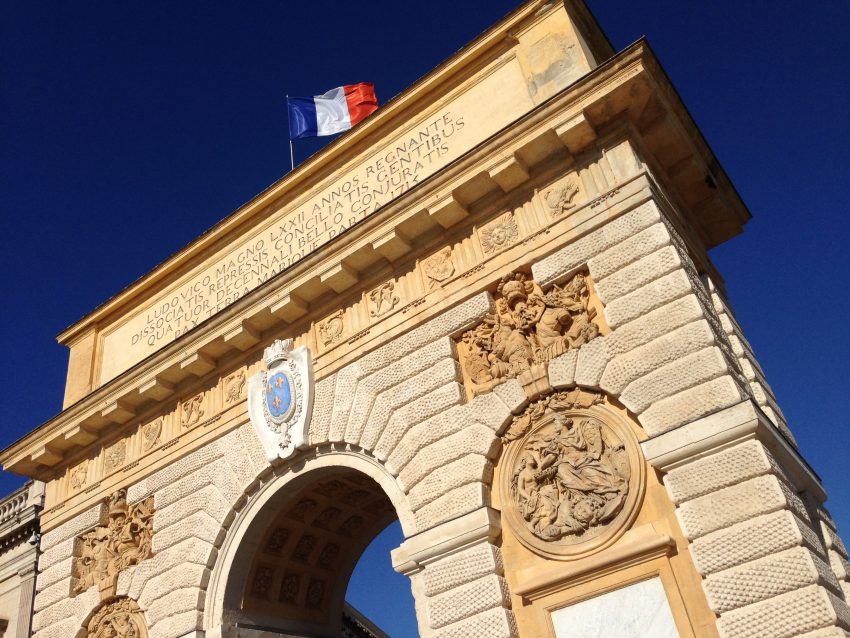
Porte du Peyrou is Montpellier’s 1693 triumphal arch, a monumental stone gateway dedicated to Louis XIV at the edge of the old center, marking the entrance to the Promenade du Peyrou. Nearly 50 feet high and about 59 feet wide, it’s packed with carved symbols: scenes marking stages of the king’s reign, plus Montpellier’s shield and badge set at the top. Up close, visitors notice the classical proportions and sculpted reliefs that frame the street approach like a ceremonial threshold. For a different perspective, you can climb 88 steps to the terrace for rooftop views, a detail many travelers mention as the payoff.
Location: Rue Foch, 34000 Montpellier, France | Hours: 24 Hours. | Price: Free (street-level). Terrace visits: from €6 (guided tour; dates/times vary). | Website | Distance: 0.3km

10. Palace of Justice
Palace of Justice
Palace of Justice
CC BY-SA 2.0 / Jorge Franganillo
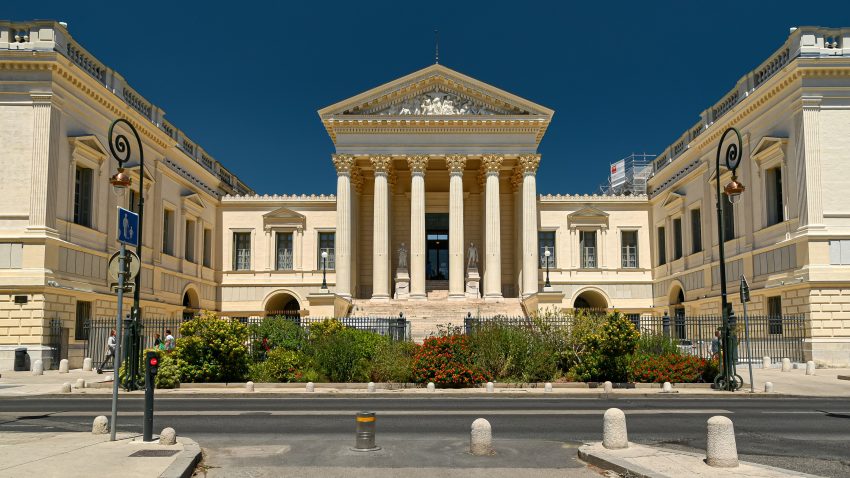
Montpellier’s Palace of Justice (Palais de Justice) is a commanding neoclassical courthouse on Rue Foch, marking the city’s long role as a regional seat of law and administration. Built between 1846 and 1853 to designs by Charles Abric, its formal façade is defined by a strict rhythm of Corinthian columns and heavy stonework that projects authority. The site’s story runs deeper: it began as a 12th-century palace of Guilhem VI, later a medieval fortress where a bailiff oversaw civil and criminal cases, before being destroyed in 1577 during the Wars of Religion. Classified as a Historic Monument in 1994, it still hosts major courts, so most visitors remember it from the outside.
Location: Nouveau Palais de Justice, Pl. Pierre Flote où Flotte, 34040 Montpellier, France | Hours: Monday – Friday: 08:30–12:00 & 13:30–17:00. Saturday: Closed. Sunday: Closed. | Price: Free. | Website | Distance: 0.3km

11. Chapel of the White Penitents
Chapel of the White Penitents
CC BY-SA 3.0 / Penitentsblancs
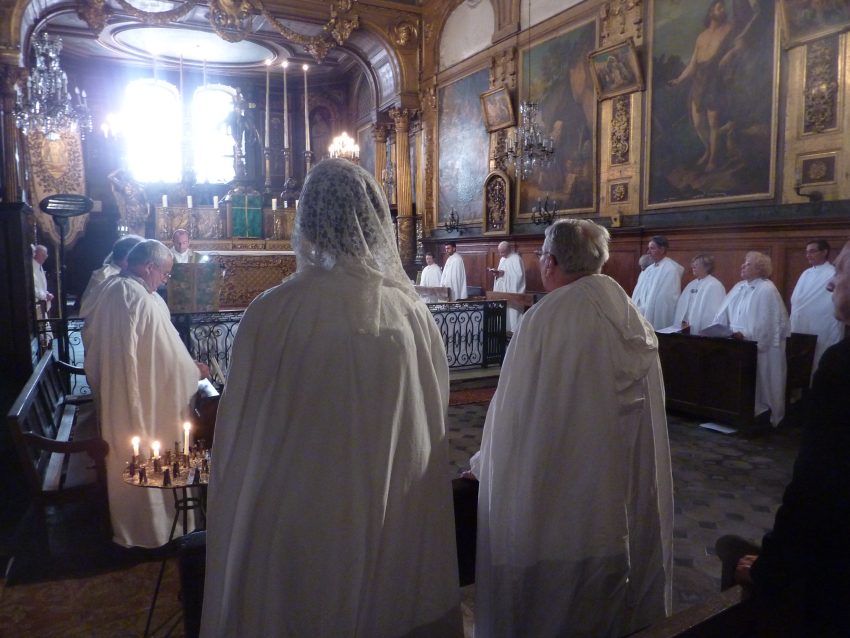
The Chapel of the White Penitents (Sainte-Foy Chapel) is a small confraternity chapel in Montpellier whose plain exterior conceals a theatrical Baroque interior. Its roots reach back to a 12th-century chapel on the Camin Roumieu, a pilgrim route linked to the road to Santiago, before the site was destroyed in 1568 during the Wars of Religion and even used as an open-air cemetery. Rebuilt from 1624 after the Brotherhood of White Penitents acquired it, the space is remembered for its soaring painted ceiling and gold-toned carved woodwork—earning it the nickname “Sistine of Languedoc.” When it opens, visitors also notice the stained glass and unusually resonant acoustics, with restoration work underscoring its fragile survival.
Location: 14 Rue Jacques Cœur, 34000 Montpellier, France | Hours: Saturday: 15:00–19:00. (May – September) Monday – Friday: 16:30–19:00. (November – February) Monday – Friday: 16:30–19:00. | Price: Free. | Website | Distance: 0.3km

12. Basilica of Notre-Dame des Tables
Notre Dame des Tables Basilica
CC BY-SA 3.0 / Albertvillanovadelmoral
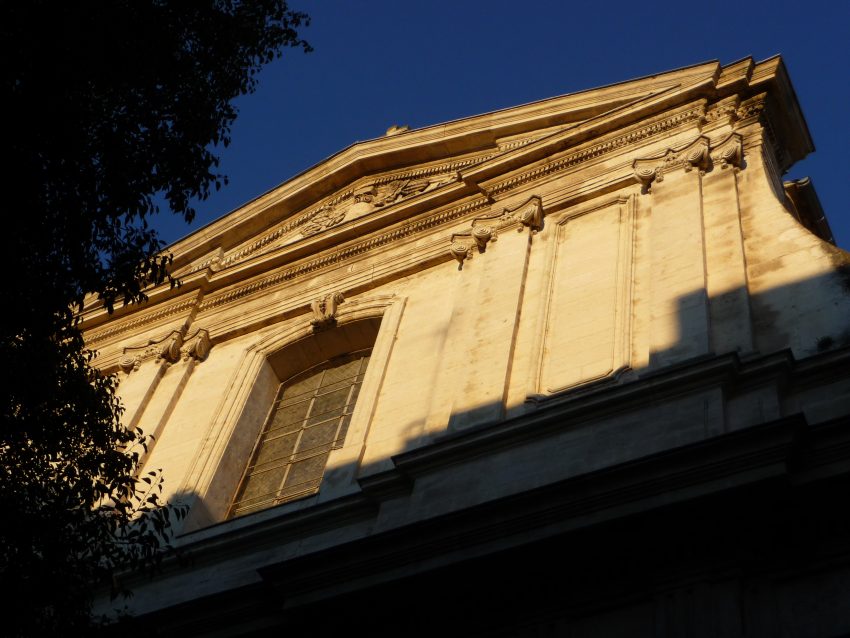
Notre Dame des Tables Basilica is a Baroque church in Montpellier’s Écusson, whose plain street-facing exterior gives way to a tall, bright interior with careful symmetry and abundant artwork in side chapels. The present building was completed in 1748 as the Jesuit college chapel, designed by Jean Giral, and later became the parish church that inherited the city’s older Marian sanctuary’s name and prestige. “Tables” refers to the medieval money-changers and merchants who set up their counters around the original church, a stop for pilgrims heading to Santiago de Compostela. It was listed as a historic monument in 1938 and made a minor basilica in 1939. Some visitors note it may open later in the afternoon.
Location: 43 Rue de l'Aiguillerie, 34000 Montpellier, France | Hours: Daily: 09:00–20:00. | Price: Free; donations appreciated. | Distance: 0.3km

13. Montpellier Cathedral
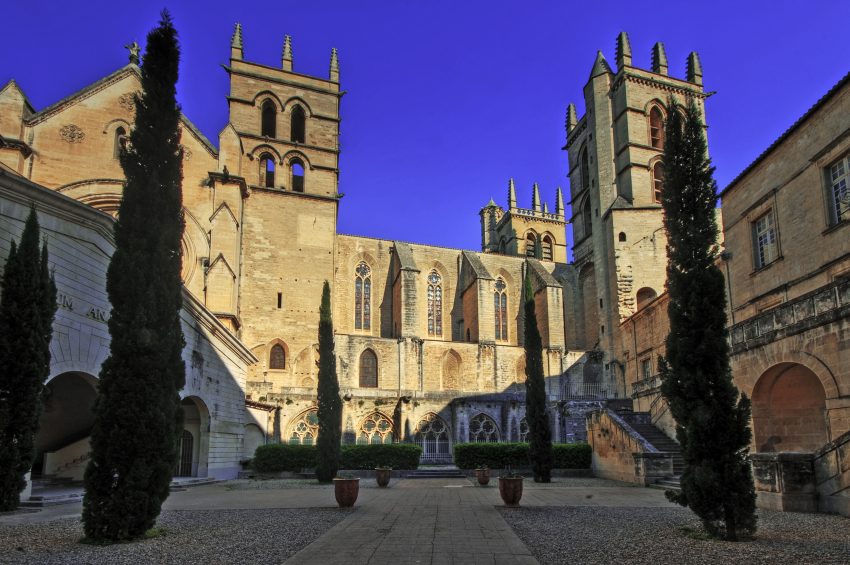
Montpellier Cathedral
CC BY-SA 2.0 / Wolfgang Staudt
Montpellier Cathedral (Cathédrale Saint-Pierre) is the city’s main Gothic cathedral, created by enlarging a Benedictine convent chapel founded in 1364 and elevated to cathedral status in 1536. Its fortress-like exterior is what most visitors remember first: a vast porch carried by two huge cylindrical pillars, capped with inverted cone spires, and heavy corner towers that make it feel more like a stronghold than a church. Inside, the building is a single broad nave with five bays and a ring of side chapels, plus a high altar screened by a vermeil altarpiece. Many travelers linger for the hush, stained-glass light, and the impressive organ.
Location: Rue Saint-Pierre, 34000 Montpellier, France | Hours: Monday – Friday: 10:30–12:00 & 14:30–18:30. Saturday: 14:30–18:30. Sunday: Closed. | Price: Free; donations appreciated. | Website | Distance: 0.3km

14. Atger Museum
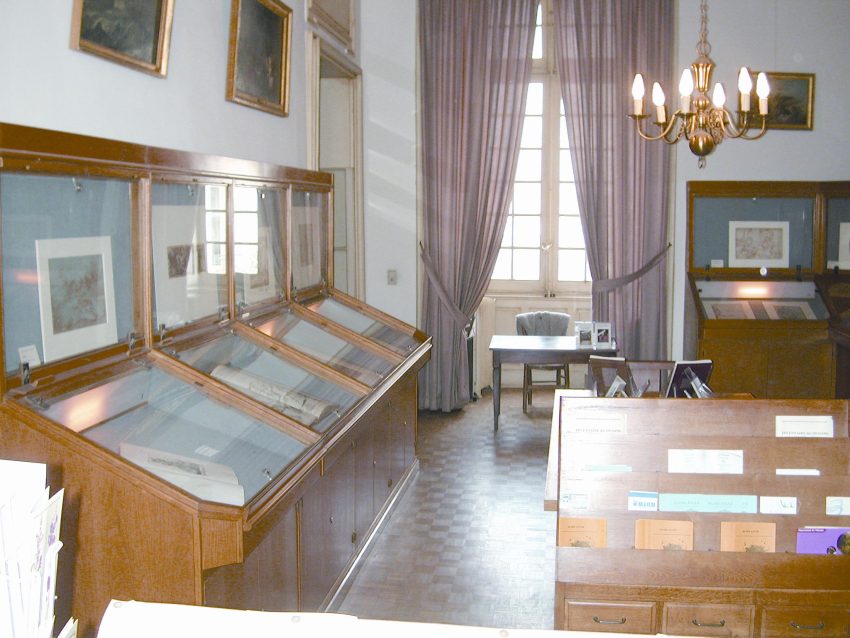
Atger Museum
Atger Museum
CC BY-SA 2.5 / Vpe
The Atger Museum is a compact graphic-arts collection tucked inside Montpellier’s historic Faculty of Medicine, where it began in the early 1800s from Xavier Atger’s donation to sharpen medical students’ powers of observation. It holds about 1,000 drawings and roughly 5,000 prints, with the French school strongest—look for sheets by Fragonard, Philippe de Champaigne, and Sébastien Bourdon. The Italian selection includes works by the Carracci and Guercino, plus an unusually deep group of 26 drawings by Giambattista Tiepolo. You may also spot Michel Serre’s painting of the 1720 Marseille plague. Visitors remember the quiet, “cabinet” feel and rotating works on paper.
Location: 2 Rue de l'École de Médecine, 34000 Montpellier, France | Hours: Closed for renovation (indefinite). Normally: Monday: 13:30–17:30. Wednesday: 13:30–17:30. Friday: 13:30–17:30. | Price: Free. | Website | Distance: 0.3km

15. Place de la Comédie
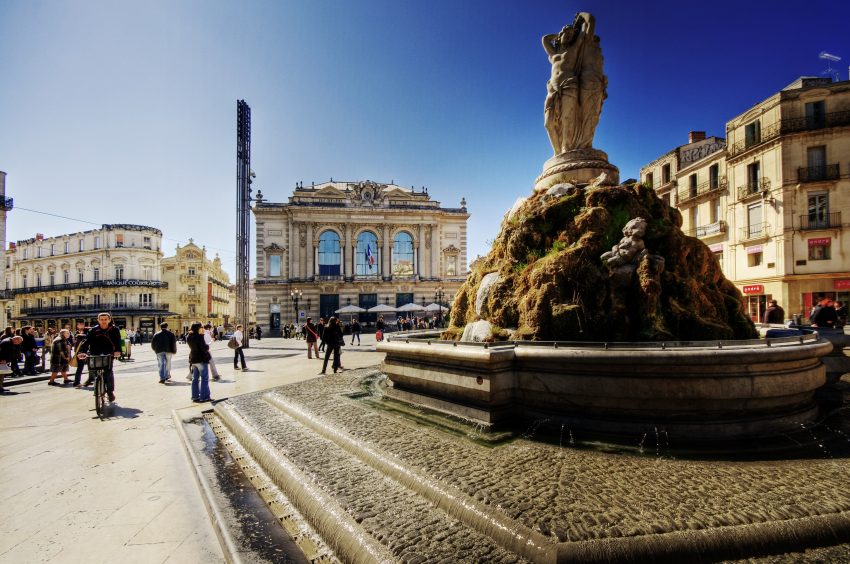
Place de la Comédie
Place de la Comédie
CC BY-SA 2.0 / Wolfgang Staudt
Place de la Comédie is Montpellier’s central gathering space—an oval “square” locals nickname the Egg—set on the line of the city’s former fortifications at the edge of the medieval core. Its broad sweep (about 230 m long and 50 m wide) is easy to recognize in person, especially with trams gliding through and café terraces ringing the perimeter. The Opéra Comédie gives the space its name and a theatrical backdrop, rebuilt after fires in 1785 and 1881. Near the center, the Three Graces fountain (installed in 1790) draws people in for photos and meet-ups, its figures symbolizing youth, humor, and elegance.
Location: Pl. de la Comédie, 34000 Montpellier, France | Hours: 24 Hours. | Price: Free. | Website | Distance: 0.4km

16. Plant Garden
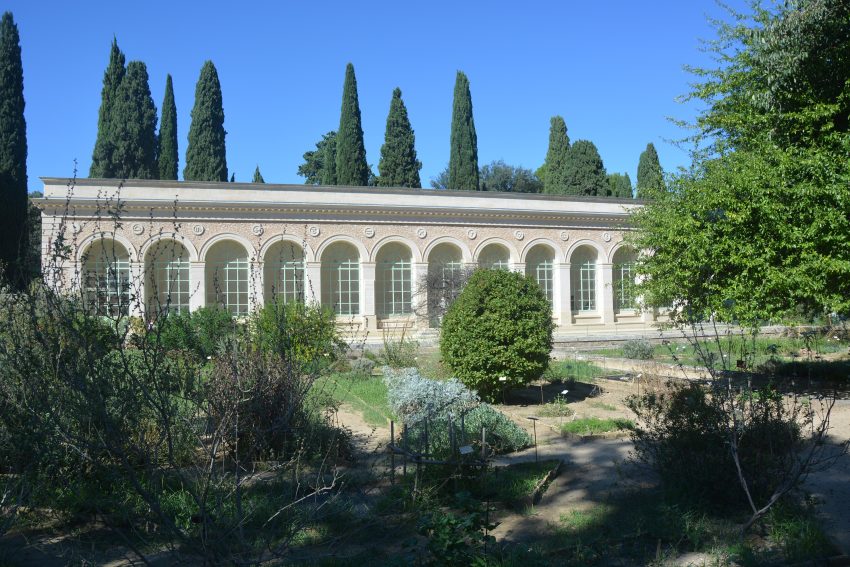
Plant Garden
Plant Garden
CC BY-SA 4.0 / G.Mannaerts
Montpellier’s Plant Garden (Jardin des Plantes) is a 4.5-hectare university botanical garden on Boulevard Henri IV, founded in 1593 by royal decree under botanist Pierre Richer de Belleval. Created to teach botany and medicinal plant study, it still feels like a living classroom, with about 2,680 species and a strong Mediterranean emphasis. Visitors tend to remember the orangery completed in 1804, the monumental Martins Greenhouse (1860), and the pond added with the English Garden in 1859. Look for labeled “beautiful trees,” including a ginkgo planted in 1795 and a remarkably old Phillyrea latifolia. Paths are shady and calm, though some areas can feel under-maintained or under renovation.
Location: Bd Henri IV, 34000 Montpellier, France | Hours: (Summer) June 1 – September 30: Tuesday – Sunday: 12:00–20:00. Closed on Monday. (Winter) October 1 – May 31: Tuesday – Sunday: 12:00–18:00. Closed on Monday. | Price: Free. | Website | Distance: 0.4km

17. Opéra Comédie

National Opera
National Opera
CC BY-SA 3.0 / Björn S.
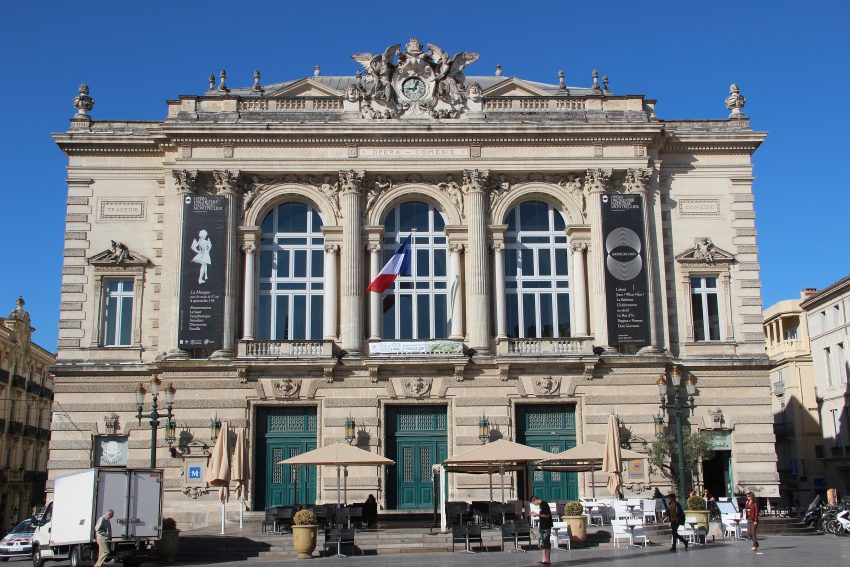
Opéra Comédie is Montpellier’s historic opera house on Place de la Comédie, the city’s central square, and the main stage of the National Opera of Montpellier (granted “National Opera” status in 2002). Opened in 1888 to a design by Joseph Marie Cassien Bernard, it’s built in the Italian theatre tradition, with a 1,200-seat auditorium and the smaller Salle Molière (about 350 seats). Visitors remember the Second Empire interior—gilded ornament, sculpture, and painted ceilings—reached by a grand double marble staircase up to the Grand Foyer. Look for the original Three Graces statue by Étienne Dantoine (1777), and note the building’s historic-monument listing in 2020. Reviews often describe it as museum-like even before the performance begins.
Location: 11 Bd Victor Hugo, 34000 Montpellier, France | Hours: Tuesday – Saturday: 10:00–13:00 & 14:00–18:00. | Price: Prices vary by show. | Website | Distance: 0.4km

18. Charles-de-Gaulle Esplanade

Charles-de-Gaulle Esplanade
CC BY-SA 4.0 / Antimuonium
Charles-de-Gaulle Esplanade, an extension of Place de la Comédie in central Montpellier, is a wide promenade that grew out of former military ground beside the Citadel. After Louis XIII ordered ramparts dismantled following the 1622 siege, the area shifted from fortifications to a drill field, then was sold to the town and redesigned as an esplanade in 1900. Today visitors notice plane-tree shade, fountains, lawns, and kiosks, with statues and memorials punctuating the walk. Look for the monument dedicated to the city’s war dead, the Jean Jaurès statue, and a bust of General de Gaulle—small markers that turn a casual stroll into a thread of civic memory.
Location: 8 Av. du Pont Juvénal, 34000 Montpellier, France | Hours: 24 Hours. | Price: Free. | Website | Distance: 0.4km

19. Les Ursulines

Les Ursulines
Les Ursulines
CC BY-SA 2.0 / Jorge Franganillo
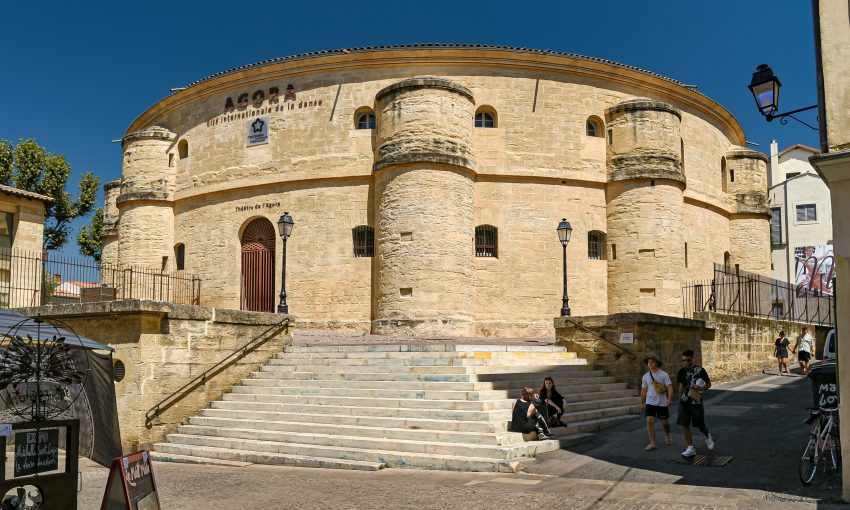
Les Ursulines is a former 17th-century convent in Montpellier, built in 1641 (attributed to architect Jean Bonnassier) and now repurposed as a contemporary dance and creation hub. Founded by Ursuline nuns who educated girls—often from poorer families—the site later took darker turns, becoming a women’s prison after the French Revolution and intermittently serving as barracks, including use as a Gestapo detention and interrogation center during World War II. Saved from demolition, its facades and roofs were registered as historic monuments in 1991. Today it houses the National Choreographic Center of Montpellier, where you’ll notice the contrast between austere stone architecture and working studios; visitors mention strong programming, occasional free events, and sometimes uncomfortable bleacher seating.
Location: couvent des ursulines, Bd Louis Blanc, 34000 Montpellier, France | Hours: Monday: 14:00–19:30. Tuesday – Friday: 13:00–17:00. Closed on Saturday, Sunday. | Price: Prices vary by show. | Website | Distance: 0.4km

20. Chapel of the Blue Penitents
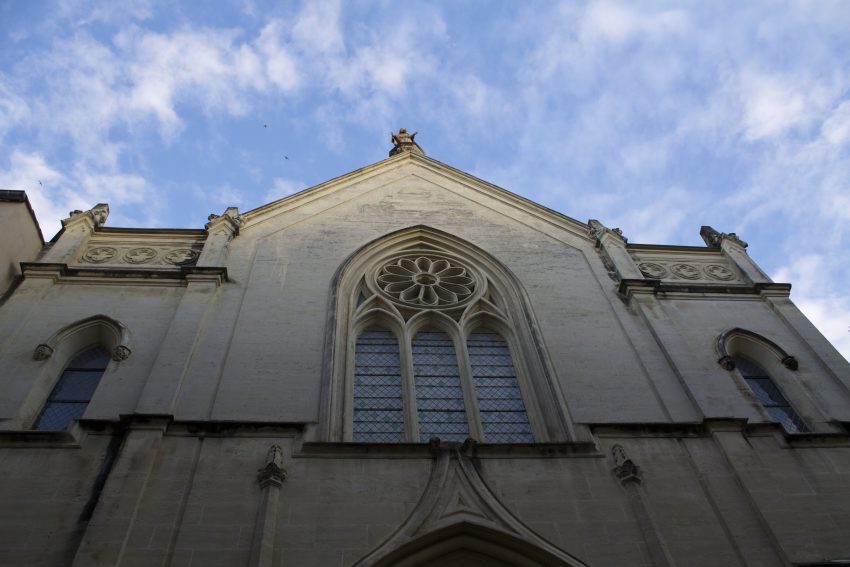
Chapel of the Blue Penitents
CC BY-SA 3.0 / Patrick Nouhailler's…
The Chapel of the Blue Penitents (Chapelle des Pénitents Bleus) is a small neo-Gothic chapel tucked into Montpellier’s old-town streets, long associated with a lay brotherhood devoted to prayer and charity. Rebuilt in 1846–1848, it’s easy to miss outside, but the interior feels carefully kept and unexpectedly ornate, with statues and dense devotional detail. Look for the flamboyant Gothic doorway and the 15th-century porch that once linked to the city ramparts, now opening onto Rue des Étuves. Inside, 19th-century paintings—one showing the death of Saint Jerome and another depicting the arrival of the Sainte-Maries-de-la-Mer—anchor the space, while Saint Rita’s corner is often covered in thank-you plaques. Visitors mention the quiet, clean calm and seasonal nativity displays.
Location: 11 Rue des Étuves, 34000 Montpellier, France | Hours: Tuesday – Friday: 08:30–12:00 & 14:00–17:30. Saturday: 08:30–12:00. Closed on Monday, Sunday. | Price: Free; donations appreciated. | Distance: 0.4km

21. Fabre Museum
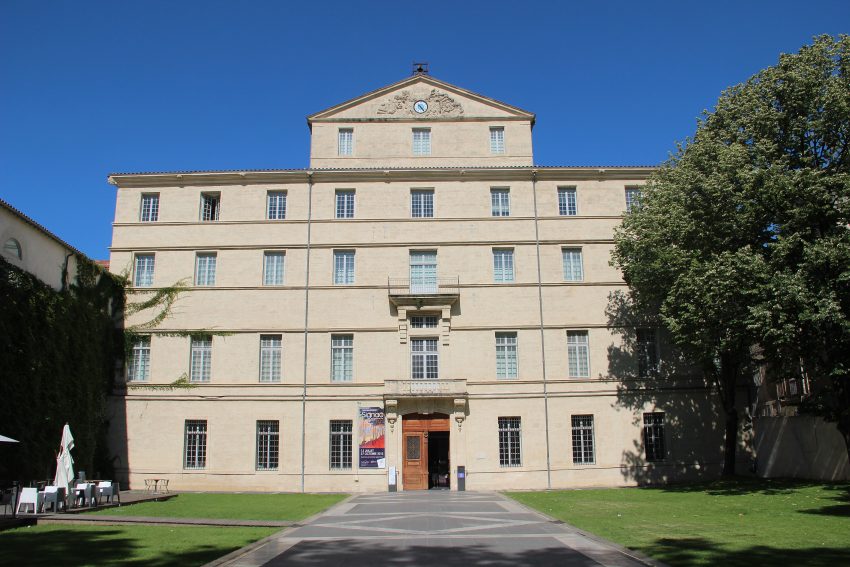
Fabre Museum
Fabre Museum
CC BY-SA 3.0 / Björn S.
The Fabre Museum is Montpellier’s main fine-arts museum, housed in a large four-story building near Comedy Square, where a small city collection grew into a “Museum of France” recognized by the Ministry of Culture. It began with a 1802 gift of 30 paintings and was shaped by Montpellier painter François‑Xavier Fabre—student of Jacques‑Louis David and 1787 Rome Prize winner—who later left 100 works to the institution. Inside, visitors move through European art from the 15th to the 20th centuries, with strong representation from France, Italy, Spain, Britain, and the Low Countries, plus ancient ceramics. The scale surprises people: galleries seem to keep unfolding, with paintings and sculpture grouped in ways that can feel slightly maze-like.
Location: 39 Bd Bonne Nouvelle, 34000 Montpellier, France | Hours: Daily: 11:00–18:00. | Price: Adults: €8; Reduced: €6. | Website | Distance: 0.4km

22. Tower of Babotte
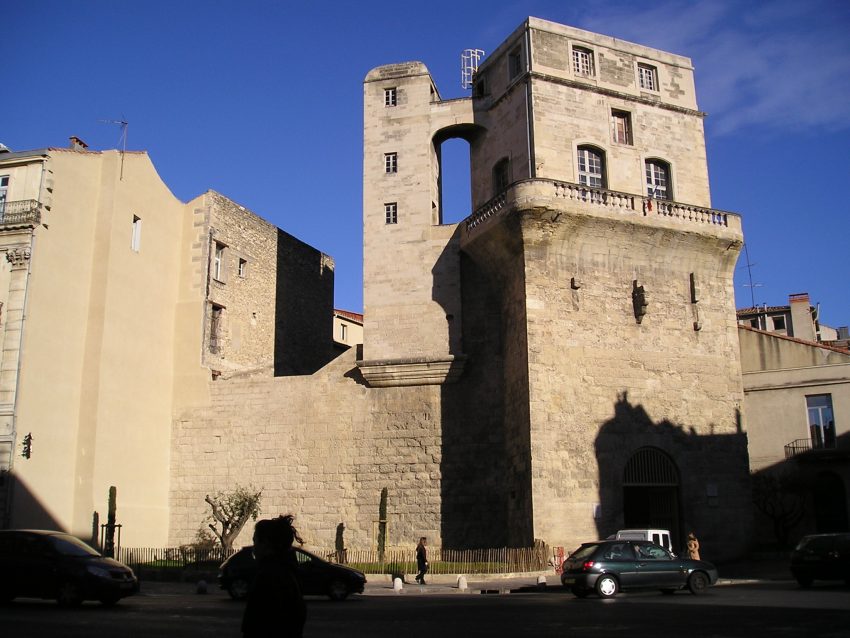
Tower of Babotte
Tower of Babotte
CC BY-SA 3.0 / Sebjarod
The Tower of Babotte (Tour de la Babote) is a 26‑meter medieval tower on the edge of Montpellier’s Écusson, one of the last survivors of the old city walls. Built for defense in the 12th century, it later took an unexpected turn in 1745 when an observatory was installed, tying the structure to the city’s scientific life. Local lore says Sébastien Lenormand tested an early parachute here in 1783 by jumping from the top. Today, even when the interior isn’t open, visitors remember the contrast between its bold street-facing facade and the small square behind it, where café terraces create a lively pause.
Location: 17 Bd de l'Observatoire, 34000 Montpellier, France | Hours: Check official website. | Price: Check official website. | Website | Distance: 0.5km

23. Montpellier Aqueduct
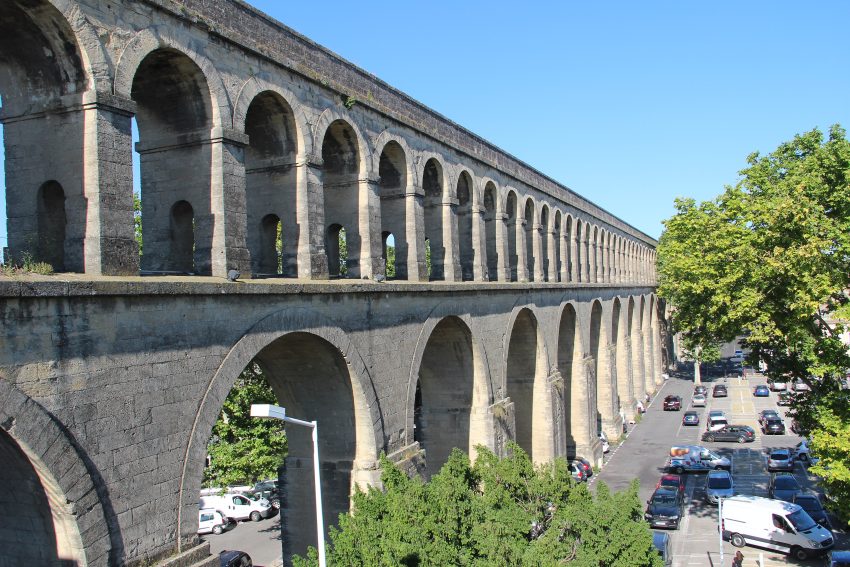
Montpellier Aqueduct
CC BY-SA 3.0 / Björn S.
The Montpellier Aqueduct (Aqueduc Saint-Clément), locally called Les Arceaux, is an 18th-century stone waterway built from 1753 to 1765 to carry spring water about 14 km into the city, ending near the Peyrou water tower. Its most memorable sight is the central run of 53 arches over roughly 800 meters, including a dramatic double tier modeled on Roman precedents. Look closely and you’ll notice the warm local Castries stone and the engineering logic in the repeating piers and shadows as you walk beneath it. Although it no longer supplies water, the structure still shapes the neighborhood’s daily rhythm, especially when markets gather under the arches, and it’s particularly photogenic as evening light deepens the stone.
Location: Aqueduc des Arceaux, 155 Rue Hilaire Ricard 85, 34000 Montpellier, France | Hours: 24 Hours. | Price: Free. | Website | Distance: 0.7km

24. Esplanade of Europe
Esplanade of Europe
Esplanade of Europe
CC BY-SA 2.0 / Wolfgang Staudt
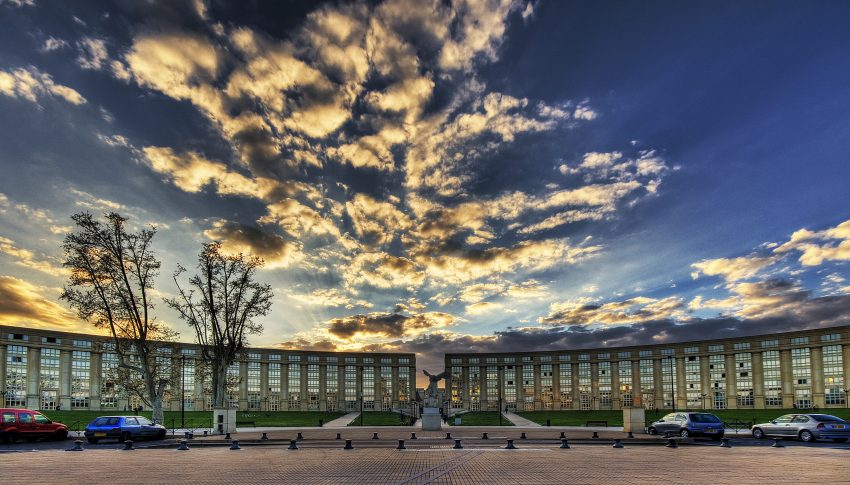
Montpellier’s Esplanade of Europe is a broad riverside plaza in the modern Antigone district, designed in the late 1970s as part of the city’s eastward expansion and shaped by architect Ricardo Bofill’s neoclassical vision. The space reads like an open-air amphitheater, framed by a sweeping semicircular building, symmetrical facades, and oversized columns that feel borrowed from Roman and Greek models. At the center stands a replica of the Winged Victory of Samothrace, set to face the River Lez. Visitors tend to remember the wide lawns for sitting with a book, the long sightlines, and the steady sound of water at the nearby weirs, especially in spring or on calm evenings.
Location: 131 All. de Délos, 34000 Montpellier, France | Hours: 24 Hours. | Price: Free. | Distance: 1.6km

25. Montpellier Zoological Park
Montpellier Zoological Park
CC BY-SA 4.0 / Sapin88
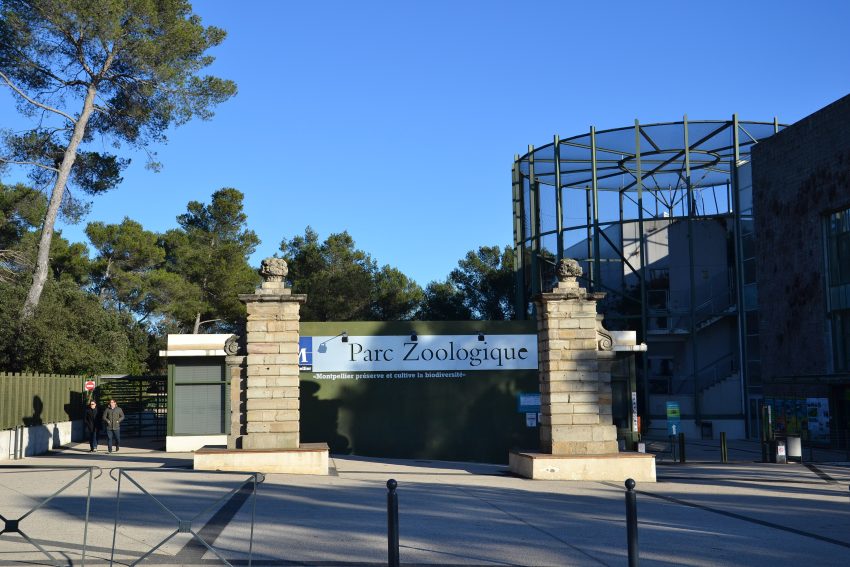
Montpellier Zoological Park (Parc Zoologique de Lunaret) is a vast, park-like zoo just north of Montpellier, where the experience feels closer to a long nature walk than a quick circuit of cages. Spread across roughly 80 hectares, it uses open, spacious enclosures—some among Europe’s largest—so you may need patience to spot animals, but the setting is calm and leafy, with lakes and long shaded paths. The collection spans about 141 species and around 1,350 animals, from lions and zebras to reptiles and exotic birds. A memorable stop is the 2,600 m² greenhouse, built in 2007, which recreates seven climate zones and even triggers an artificial rainforest shower every two hours.
Location: 50 Av. Agropolis, 34090 Montpellier, France | Hours: (September 1 – October 31) Tuesday – Sunday: 10:00–18:00; Monday: Closed (open on public-holiday Mondays and during Zone C school holidays). (Last entry 30 minutes before closing). (February 1 – May 31) Tuesday – Sunday: 10:00–18:00; Monday: Closed (open on public-holiday Mondays and during Zone C school holidays). (Last entry 30 minutes before closing). (June 1 – August 31) Tuesday – Sunday: 09:30–18:30; Monday: Closed (open on public-holiday Mondays and during Zone C school holidays). (Last entry 30 minutes before closing). (November 1 – January 31) Tuesday – Sunday: 10:00–17:00; Monday: Closed (open on public-holiday Mondays and during Zone C school holidays). (Last entry 30 minutes before closing). | Price: Free. | Website | Distance: 3.2km

26. Chateau de Flaugergues
Chateau de Flaugergues
CC BY-SA 2.0 / Peter
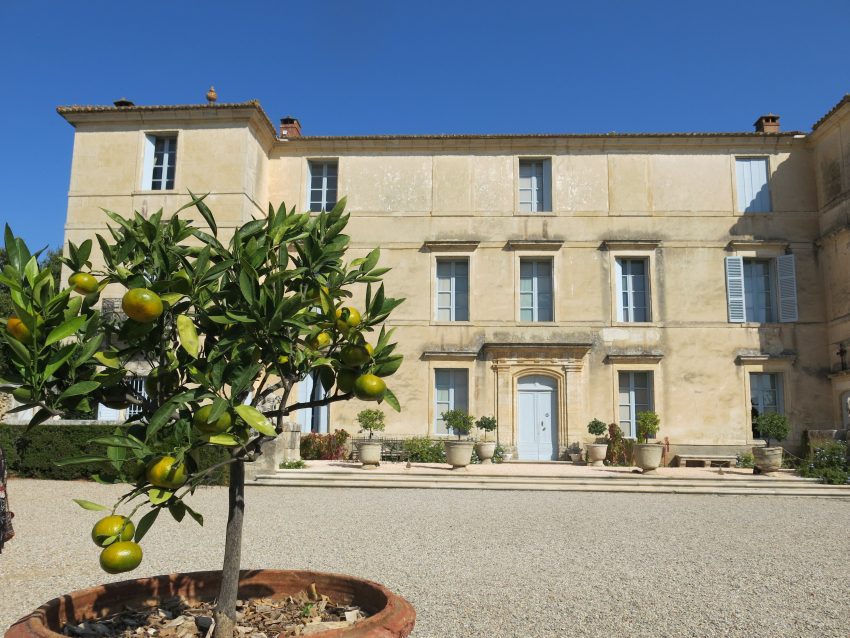
Château de Flaugergues is a 17th-century “folie” on Montpellier’s eastern edge, still run as a living family estate and vineyard rather than a sealed-off museum. Its cut-stone main block and side wings face a garden while the outward wall stays almost blank, using false windows to keep symmetry. Visitors remember the formal French parterre replanted with thousands of boxwood shrubs, the 18th-century statues La Paix and L’Abondance, and the long olive-lined walk to a belvedere with glimpses toward ponds and the sea. Inside, a pillarless hanging-key staircase rises through three floors beneath 1670 Flemish tapestries, alongside period salons, porcelain, and old scientific instruments. Many people pair the calm grounds with a small tasting of estate wines.
Location: 1744 Av. Albert Einstein, 34000 Montpellier, France | Hours: (High season) June – September; Monday – Friday: 09:30–19:00; Saturday – Sunday: 13:30–19:00. (Low season) October – May; Monday – Friday: 09:30–18:00; Saturday: 14:00–18:00; Sunday: Closed. | Price: Guided château tour (1 hour): Adults: €11.50; Reduced: €8; Under 12: free. | Website | Distance: 3.5km

Best Day Trips from Montpellier

A day trip from Montpellier offers the perfect opportunity to escape the urban rhythm and discover the surrounding region's charm. Whether you're drawn to scenic countryside, historic villages, or cultural landmarks, the area around Montpellier provides a variety of easy-to-reach destinations ideal for a one-day itinerary. If you are looking to rent a car in France I recommend having a look at Discover Cars, first, as they compare prices and review multiple car rental agencies for you.

1. Sete
Sete France
Sete France
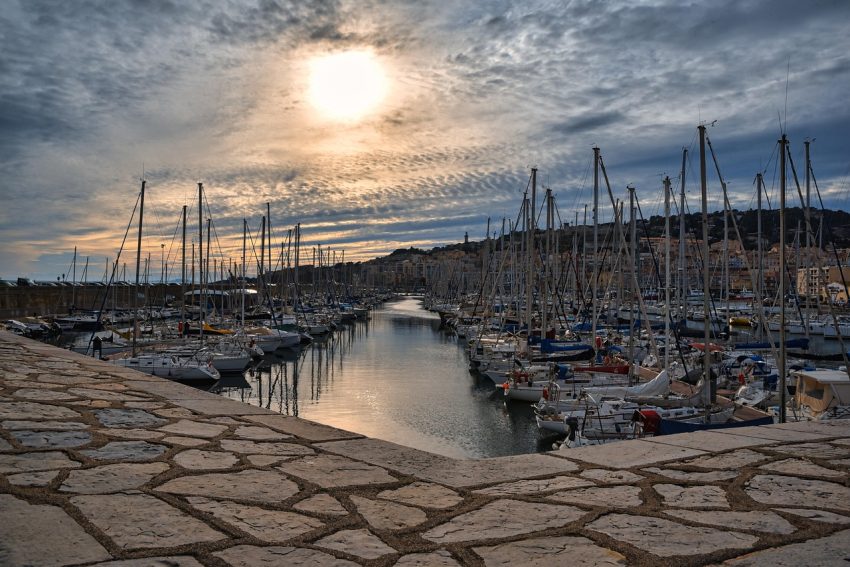
Sète is a charming coastal town in southern France, known for its picturesque canals, bustling fishing port, and vibrant markets. Visitors often enjoy wandering through its lively streets, sampling fresh seafood at waterfront restaurants, and exploring the local art scene in small galleries and boutiques. The town offers a laid-back atmosphere, perfect for leisurely strolls along the marina or relaxing…
Visiting Sete
Powered by GetYourGuide

2. Nimes

Nimes France
Nimes France
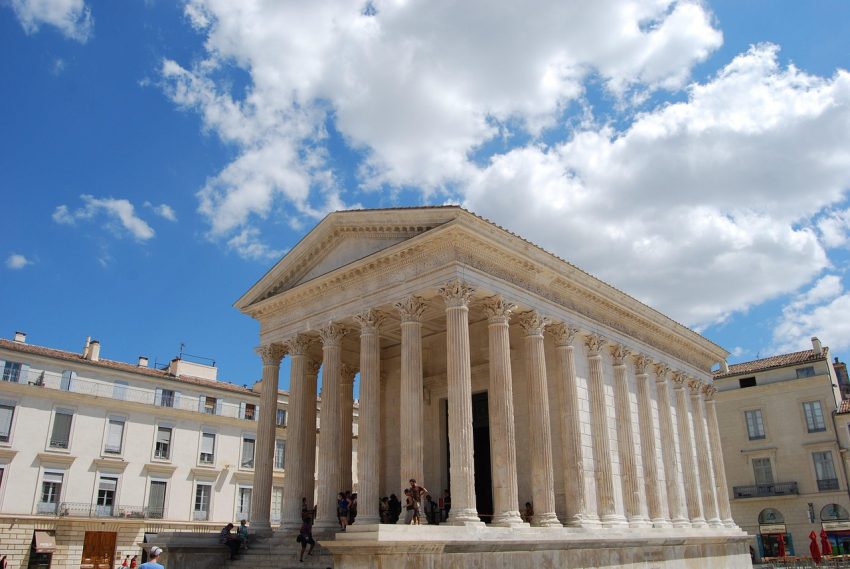
Nîmes, in the Occitanie region, is a city where Roman grandeur meets southern French charm. Its sun-drenched streets, leafy boulevards, and relaxed pace make it a pleasant place to explore on foot. The architecture is striking, blending ancient stone with classical French facades, and there's a strong local culture centered around food, markets, and outdoor living. The city is also…
Visiting Nimes
Powered by GetYourGuide

3. Arles

the amphitheatre of arles
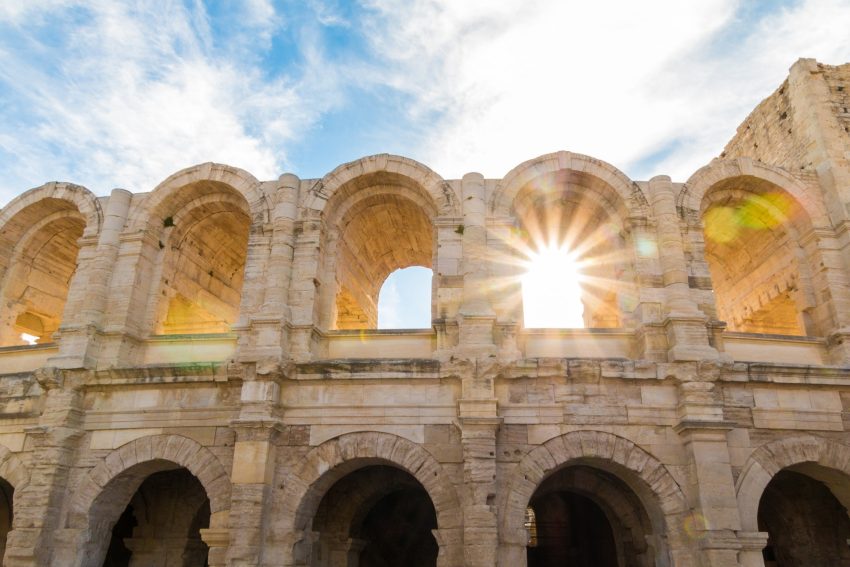
Positioned along the River Rhône in the heart of Provence, Southern France, Arles captivates with its blend of elegant 18th and 19th-century mansions and ancient Roman architecture. Arles is one of the most underrated cities in France. Its fame was significantly heightened by Vincent van Gogh, whose time in Arles left behind an array of scenes that continue to draw…
Visiting Arles
Powered by GetYourGuide

4. Béziers

beziers france
beziers france
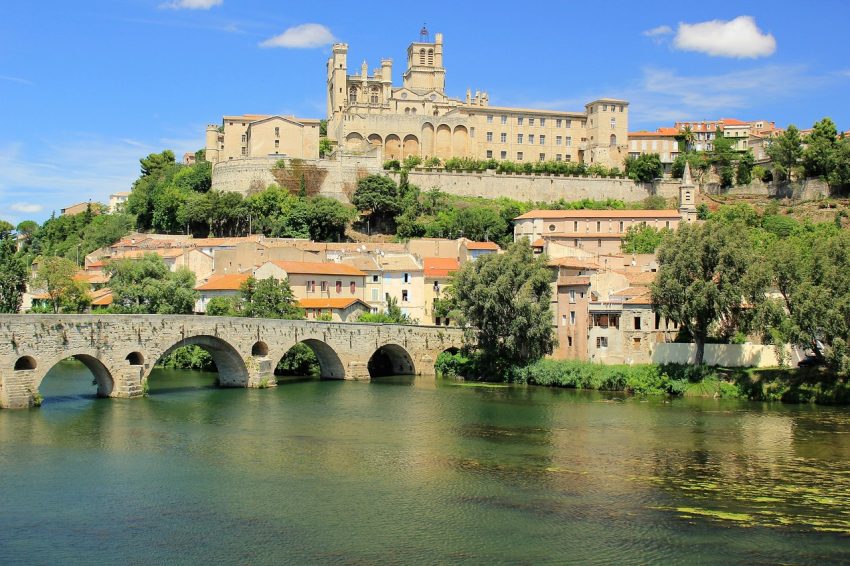
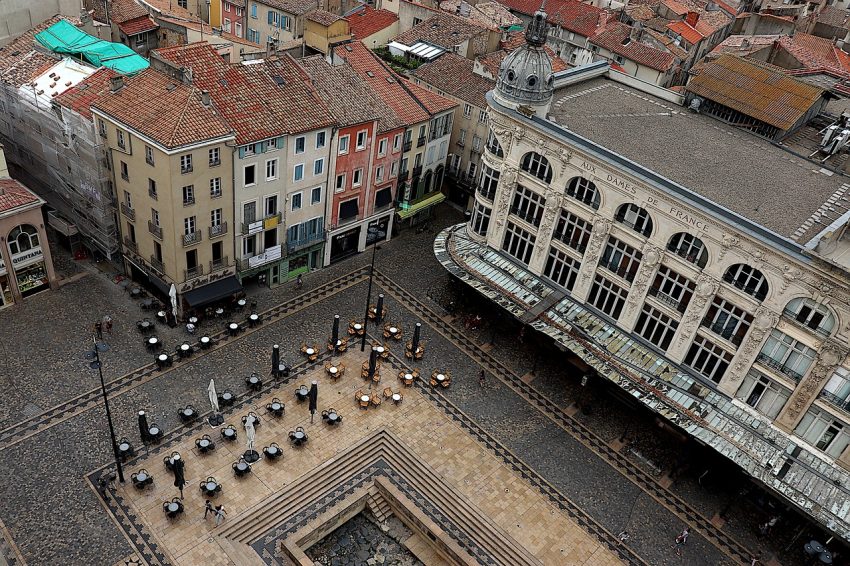
Béziers is a charming and authentic city located in the Occitanie region of southern France, offering travelers a delightful blend of cultural heritage, bustling markets, and Mediterranean warmth. Visiting Béziers provides the perfect opportunity to stroll leisurely through its picturesque old town, exploring narrow streets filled with local boutiques, cafés, and restaurants serving traditional Languedoc cuisine. The vibrant atmosphere around…
Visiting Béziers
Powered by GetYourGuide

5. Uzes

Uzes France
Uzes France
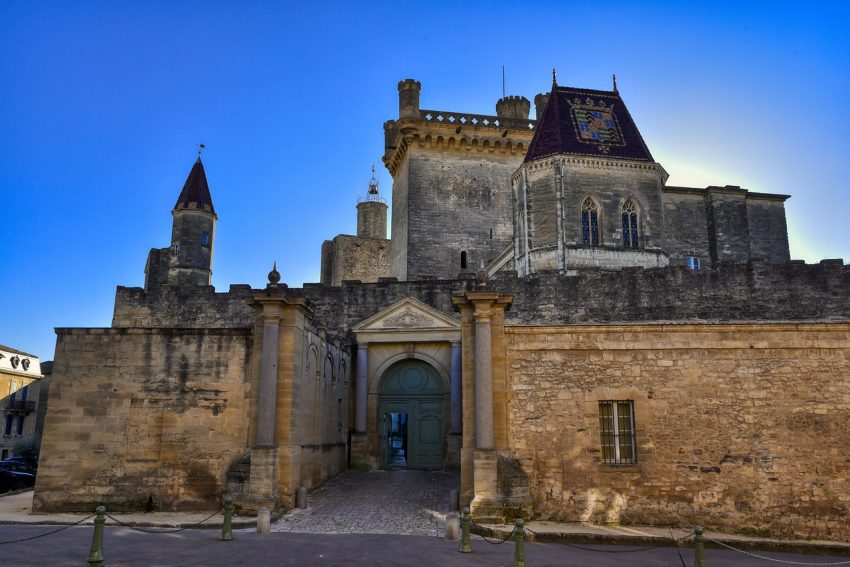
Uzès is a charming town in the Occitanie region, known for its beautiful medieval architecture, lively markets, and tranquil atmosphere. Visitors can explore the picturesque streets, lined with boutiques, cafés, and art galleries, all while soaking in the town’s relaxed, small-town feel. The town's central square, Place aux Herbes, hosts a popular market where you can sample local produce and…
Visiting Uzes
Powered by GetYourGuide

6. Saint-Rémy-de-Provence

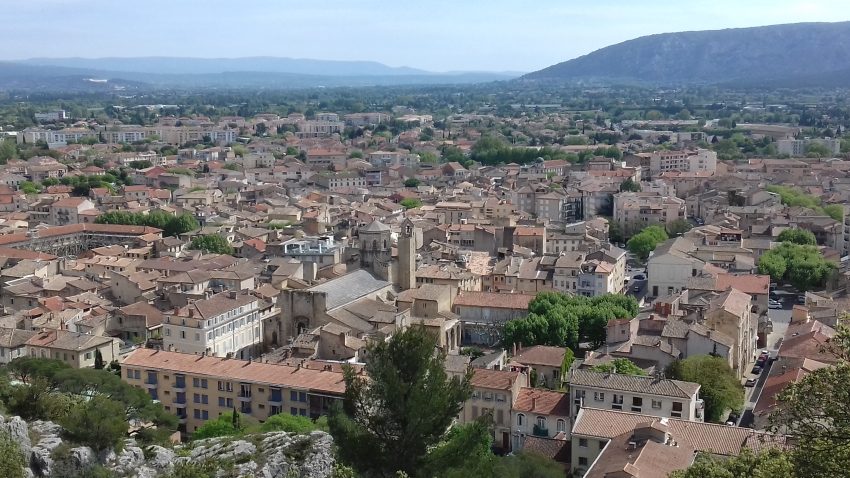
france St Remy de Provence
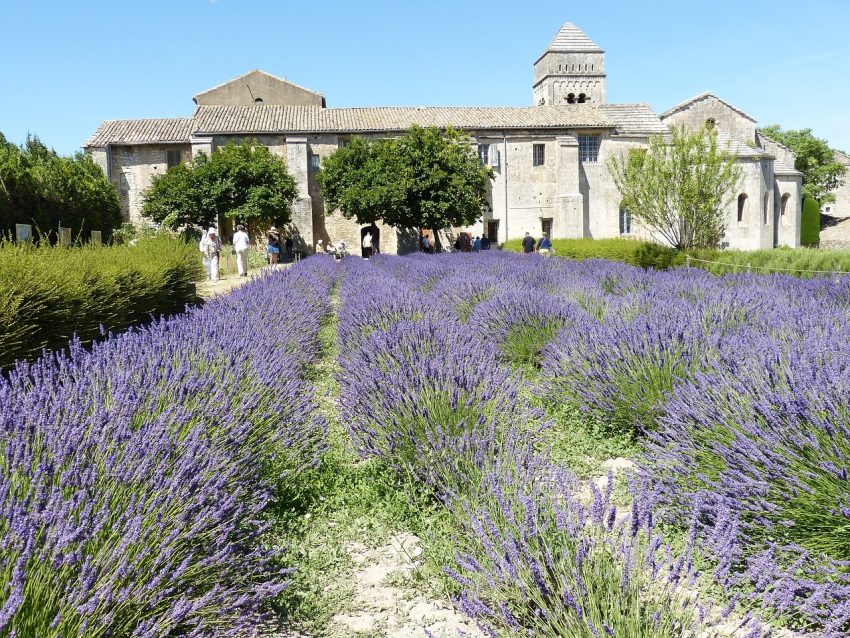
Saint-Rémy-de-Provence is a picturesque town in the Provence-Alpes-Côte d’Azur region of southern France, beloved for its sun-drenched charm, winding stone streets, and atmospheric markets. Surrounded by olive groves and vineyards at the foot of the Alpilles mountains, it's an ideal destination for those looking to experience the slower rhythms and sensory pleasures of Provençal life. Weekly markets fill the town…
Visiting Saint-Rémy-de-Provence
Powered by GetYourGuide

7. Avignon

avignon
avignon
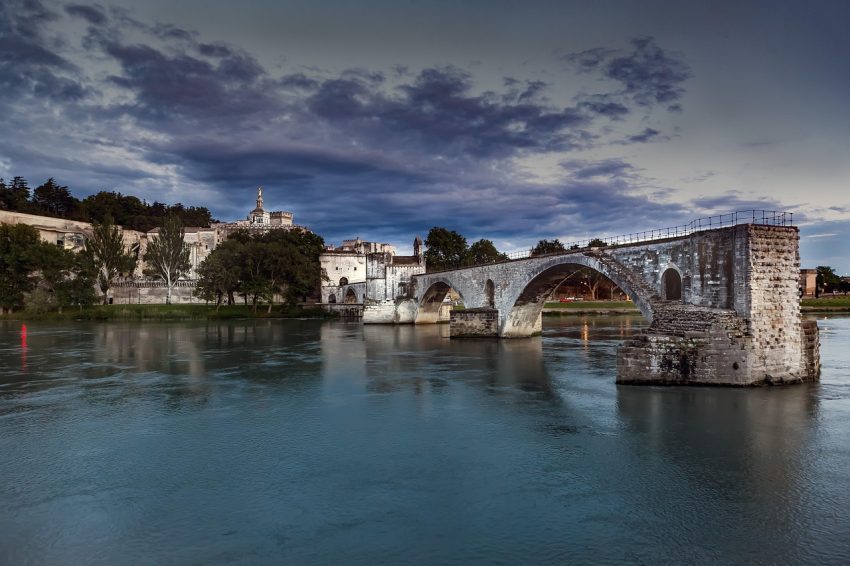
Avignon is one of those places that instantly makes you slow down and look around. The stone streets, shaded squares, and dramatic medieval architecture feel like something out of a film set. Walking through the old town is a joy in itself—cafés spill into plazas, musicians play under centuries-old archways, and the golden light bouncing off the Rhône makes everything…
Visiting Avignon
Powered by GetYourGuide

8. Narbonne

Nancy France
Nancy France
Narbonne, located in the Occitanie region of southern France, is a laid-back city with a sunny Mediterranean feel and a strong connection to the nearby coast. It blends a relaxed pace with cultural richness, making it a great stop for travelers interested in architecture, food, and local charm. The city’s canal, lively markets, and palm-lined squares give it an inviting…
Visiting Narbonne
Powered by GetYourGuide

9. Cavaillon

Cavaillon
Cavaillon
CC BY-SA 4.0 / Julien Pelissier
Visiting Cavaillon offers a delightful mix of small-town charm and access to the beautiful landscapes of the Provence-Alpes-Côte d'Azur region. The town is known for its stunning surroundings, including the nearby Luberon mountains and vast fields of fruit orchards, particularly its famous melons. With its warm Mediterranean climate, Cavaillon is an excellent spot for those who enjoy outdoor activities like…
Visiting Cavaillon
Powered by GetYourGuide

10. Marseille

visit marseille
visit marseille
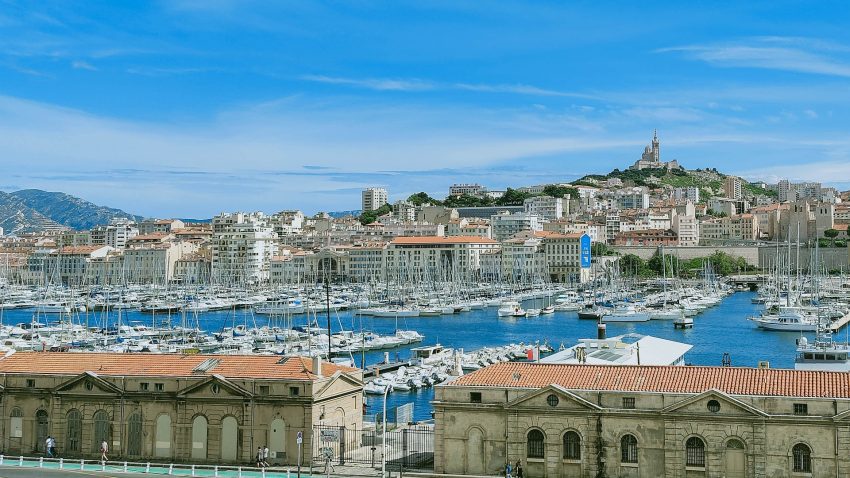
Marseille, located in the Provence-Alpes-Côte d’Azur region of southern France—not in Germany—is a dynamic port city known for its mix of cultures, sea views, and Mediterranean energy. It offers a completely different vibe from inland Provençal towns, with its bustling harbor, urban sprawl, and access to the sea. The Vieux-Port (Old Port) is the heart of the city, lined with…
Visiting Marseille
Powered by GetYourGuide

Where to Stay in Montpellier

In the heart of Montpellier’s medieval Écusson district, cobblestone lanes and hidden courtyards set the scene for intimate city-centre stays. Hôtel des Arts occupies a 17th-century townhouse steps from Place de la Comédie, with exposed beams, minimalist décor and a rooftop terrace overlooking the Opera. Around the corner, Hôtel Richer de Belleval blends contemporary elegance with period charm, its suites opening onto a quiet courtyard and its bar serving locally sourced wines. For a boutique vibe, Le Jardin des Sens offers refined rooms in a townhouse once owned by the Pourcel chef brothers, complete with a Michelin-starred restaurant just downstairs.

East of the centre, the Antigone and Port Marianne neighbourhoods showcase Montpellier’s modern side, with grand boulevards and waterside promenades. Pullman Montpellier Centre perches on the Esplanade Charles-de-Gaulle, offering sleek rooms and a rooftop pool surrounded by palm trees. A short tram-ride away, Pentahôtel Montpellier combines industrial-chic interiors with a lively lounge area, games room and gym, while Novotel Suites Montpellier provides spacious studios and easy access to the Lez riverbank cafés.

For a seaside escape within easy reach of the city, the beaches of Carnon and Palavas-les-Flots beckon with sun, sand and fresh seafood. Hôtel du Parc sits beside the canal in Palavas, offering breezy sea-view rooms and a laid-back bar terrace. Just a few kilometres east, Hôtel Les Rives d’Arcins overlooks the lagoon with contemporary décor and a restaurant specializing in local fish. For an adults-only retreat, Le Mas Bleu hides among the sand dunes, its whitewashed villas and private pool creating a tranquil haven by the sea.

Using the our Hotel and Accomodation map, you can compare hotels and short-term rental accommodations in Montpellier. Simply insert your travel dates and group size, and you’ll see the best deals for your stay.

Montpellier Accommodation Map

Best Time to Visit Montpellier

Visiting Montpellier in Spring (March to May)

Spring is one of the best times to visit Montpellier. The weather is mild and pleasant, with blooming gardens and sunny days perfect for exploring the city on foot. Outdoor terraces begin to fill up, and the atmosphere is lively without the heavy crowds of summer. It’s a great season for enjoying Montpellier’s parks, markets, and nearby vineyards.

Visiting Montpellier in Summer (June to August)

Summer in Montpellier is hot and vibrant, with long sunny days and a calendar full of festivals, concerts, and beach outings. While it’s a peak tourist season, the city’s energy is infectious, and the nearby Mediterranean coast becomes a major draw. Just be prepared for high temperatures and book accommodations in advance.

Visiting Montpellier in Autumn (September to November)

Autumn offers a quieter, more relaxed experience in Montpellier. The weather remains warm in early fall, and the city is less crowded after the summer rush. It’s an ideal time for wine tasting and taking in the golden colors of the countryside. Cultural events continue, and the pace is perfect for enjoying the city at leisure.

Visiting Montpellier in Winter (December to February)

Winter in Montpellier is mild compared to other parts of France. While it’s the low season for tourism, the city still has charm with its festive decorations and cozy cafés. It’s a good time to enjoy museums, local cuisine, and indoor attractions without the crowds. Occasional sunny days make winter visits surprisingly pleasant.

Annual Weather Overview

  • January 11°C
  • February 12°C
  • March 15°C
  • April 18°C
  • May 22°C
  • June 27°C
  • July 31°C
  • August 30°C
  • September 24°C
  • October 20°C
  • November 15°C
  • December 12°C

How to get to Montpellier

How to Visit Montpellier by Air

Montpellier is served by Montpellier-Méditerranée Airport, which offers direct flights from several European cities. The airport is just a short drive from the city center, and travelers can reach downtown easily via taxi, shuttle bus, or rental car. For international visitors, connecting flights through Paris, Lyon, or other major hubs are common.

How to Visit Montpellier by Train

Montpellier is well-connected to France's high-speed rail network. The Montpellier Saint-Roch station is located in the heart of the city and offers direct TGV services from Paris, Lyon, Marseille, and other major cities. The newer Montpellier Sud de France station also serves high-speed trains and is accessible by shuttle. You can use SNCF Connect to check schedules, compare routes, and purchase tickets for National (SNCF ) and regional trains (TER). For a more streamlined experience, we recommend using Omio, which allows you to easily compare prices, schedules, and book tickets for both National and Regional travel across all of Europe, all in one place.

How to Visit Montpellier by Car

Driving to Montpellier is convenient for those exploring southern France. The city is accessible via major highways like the A9 and A75. Parking is available in and around the city, though some central areas are pedestrian-only. Renting a car is also a good option for day trips to the nearby coast or countryside. If you are looking to rent a car in France I recommend having a look at Discover Cars, first, as they compare prices and review multiple car rental agencies for you.

How to Visit Montpellier by Bus

Long-distance bus services, such as FlixBus and BlaBlaCar Bus, connect Montpellier to other French and European cities. The main bus terminals are located near the train stations, making transfers simple. Buses are often a budget-friendly option for travelers looking for flexible schedules.

Getting Around Montpellier

Montpellier has an excellent public transport system, including modern trams, buses, and rental bikes. The tram network is especially useful, with lines connecting the city center to outlying neighborhoods and attractions. Walking is also a pleasant way to explore, especially in the historic Écusson district.
More from this area