Self-Guided Walking Tour of Cádiz (2026)
This website uses affiliate links which earn a small commission at no additional cost to you.
Cádiz is one of Spain's most rewarding cities to explore on foot: compact, atmospheric, and wrapped on nearly all sides by the Atlantic. In a single stroll you can move from grand landmark squares to narrow lanes lined with pastel facades, then emerge onto breezy seafront walks with wide-open views. A self-guided route lets you set your own pace-lingering for a coffee in the shade, ducking into a church or market as you pass, and timing your coastal stretches for the best light.
This walking tour is designed to feel effortless, even if it's your first time in Cádiz. You'll weave through the Old Town's layers of history-Phoenician origins, medieval fortifications, and the golden age of Atlantic trade-without needing to constantly check your phone or rush between “must-dos.” Along the way, you'll naturally hit some of the best things to see in Cádiz, from cathedral panoramas and lively plazas to waterfront bastions and local food stops.
Expect a route that balances headline sights with the small moments that make Cádiz memorable: the sound of street life carrying through tight alleys, the salt air on the promenades, and the easy rhythm of tapas breaks. If you start in the morning, you'll catch the city as it wakes up; if you begin later, you can build toward golden hour on the seafront. Either way, this walk gives you a clear, satisfying snapshot of Cádiz-without feeling like you're ticking boxes.
How to Get to Cádiz
By Air: Cádiz does not have its own commercial airport, so most travelers fly into Jerez Airport (XRY) for the quickest transfer, or Seville Airport (SVQ) for a wider choice of routes; Málaga (AGP) can also work if you are combining Cádiz with a longer Andalusia itinerary. From Jerez, you can typically reach Cádiz by train or road in around 30-45 minutes depending on connections; from Seville, allow roughly 1.5-2 hours by train or car. For international arrivals, it is often simplest to book a flight into Seville and continue by rail, but if timing matters, Jerez is usually the most direct gateway. For the best deals and a seamless booking experience, check out these flights to Cádiz on Booking.com.
By Train: Trains are one of the most practical ways to arrive because Cádiz station is central and walkable for most Old Town and waterfront hotels. You will commonly connect via Sevilla-Santa Justa (including faster services on the Seville-Cádiz corridor), with additional long-distance routes at certain times from Madrid that either run through or connect in Seville. Booking ahead is recommended in peak periods, and if you are staying outside the core, consider choosing accommodation near the station or along a short taxi/bus ride to avoid dragging luggage through the narrowest streets. Train schedules and bookings can be found on Omio.
By Car: Driving to Cádiz is straightforward on the approach, but less convenient once you reach the historic center, where streets can be tight and parking limited or expensive. Most routes funnel in via the CA-33/AP-4 corridor (often via Jerez or Seville), and it is usually best to aim for a hotel with parking or to use a main public car park on the edge of the Old Town and walk in. If you are building Cádiz into a road trip, the car is useful for day trips along the Costa de la Luz, but for the walking-tour day itself you will likely want to leave it parked and explore on foot. If you are looking to rent a car in Spain I recommend having a look at Discover Cars, first, as they compare prices and review multiple car rental agencies for you.
By Bus: Long-distance buses also serve Cádiz, typically arriving at or near the main bus station area close to the rail station, which keeps onward travel simple. Services frequently link Cádiz with Seville, Jerez, and other Andalusian towns, and can be cost-effective when trains are limited or sold out. If you are traveling with light luggage, arriving by bus can be almost as convenient as arriving by train, since you can often walk straight into the center or take a short taxi hop to your accommodation. [bus]
Where to Stay in Cádiz
To make the most of visiting Cádiz and this walking tour, you should consider staying overnight in the centre, where you can start early, take breaks easily, and return on foot after sunset. For the most seamless experience, base yourself in the Old Town (Centro Histórico), especially around El Pópulo, the Cathedral area, and the Plaza de San Juan de Dios, where the key sights, tapas streets, and waterfront viewpoints are all close together. Good options here include Hotel Argantonio and Hotel Las Cortes de Cádiz, both well-placed for walking with plenty of atmosphere right outside the door.
If you want Old Town character with a more local, beach-adjacent feel, look at the La Viña quarter, which sits between the historic lanes and the Atlantic edge, making it ideal for combining monuments and sea views in the same day. This area is also excellent for an easy finish to the route, because you can drift toward the promenade and find relaxed places for dinner without needing transport. Consider Parador de Cádiz for its prime seafront position and quick access to both the core streets and the coastal walk, or Plaza de la Luz Cádiz if you prefer an apartment-style base that keeps you flexible on timing and meal stops.
If you prefer slightly more space, easier parking, and straightforward arrivals while still being close enough to walk into the Old Town, Puertatierra (the “newer” strip between the centre and Playa Victoria) is the practical choice. It works especially well if you are arriving by car or you want a modern hotel setup, then plan to do the tour as a full-day walk into and around the historic core. Two reliable picks here are Hotel Monte Puertatierra and Senator Cádiz Spa Hotel, both well-suited for a walking-tour day with simple logistics and good onward links.
Your Self-Guided Walking Tour of Cádiz
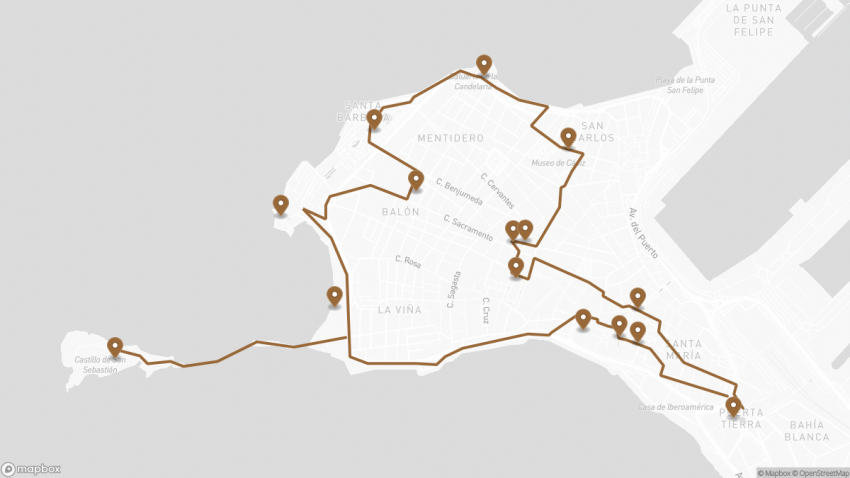
Discover Cádiz on foot with our walking tour map guiding you between each stop as you explore its Atlantic seafront, historic fortifications, elegant plazas, and lively local markets. This walking tour follows the city's layered story, shaped by seafaring trade, centuries of defensive architecture, and a distinctive Old Town atmosphere, taking you from cathedral viewpoints and landmark squares to coastal promenades and bastions, all within a compact peninsula city defined by the sea.
1. Puerta de Tierra
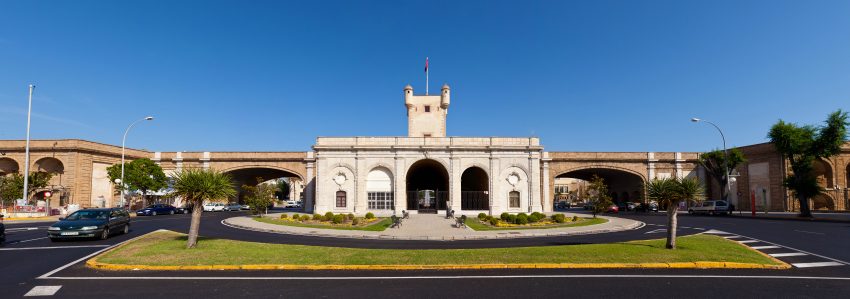
Puerta de Tierra is Cádiz’s historic landward gateway, built as part of the city’s defensive system when Cádiz was one of Spain’s most strategically important Atlantic ports. The current monumental gate largely reflects the early modern era, when fortification upgrades were essential to protect the city’s wealth, shipping, and naval infrastructure from attack.
The structure is both practical and symbolic: it marked the controlled point of entry into the old city, separating the fortified historic core from the mainland approaches. Its heavy masonry, layered defensive logic, and formal façade tell you Cádiz expected threats and designed the city to absorb them.
What to see is the gateway’s scale and its relationship to the city’s shape. Stand back to understand how it once functioned as a choke point, then move closer to appreciate the sculptural detailing and the way the architecture blends military purpose with civic pride.
Location: Plaza de la Constitución, s/n, 11004, Cádiz | Hours: (Summer) 01 June–30 September; 23 December–04 January. Tuesday – Saturday: 11:00–15:00 & 17:00–21:00. Sunday: 11:00–15:00. (Winter) 05 January–31 May; 01 October–22 December. Tuesday – Saturday: 11:00–14:00 & 16:00–20:00. Sunday: 11:00–14:00. Closed on Monday. | Price: Free | Website
2. Ayuntamiento de Cadiz
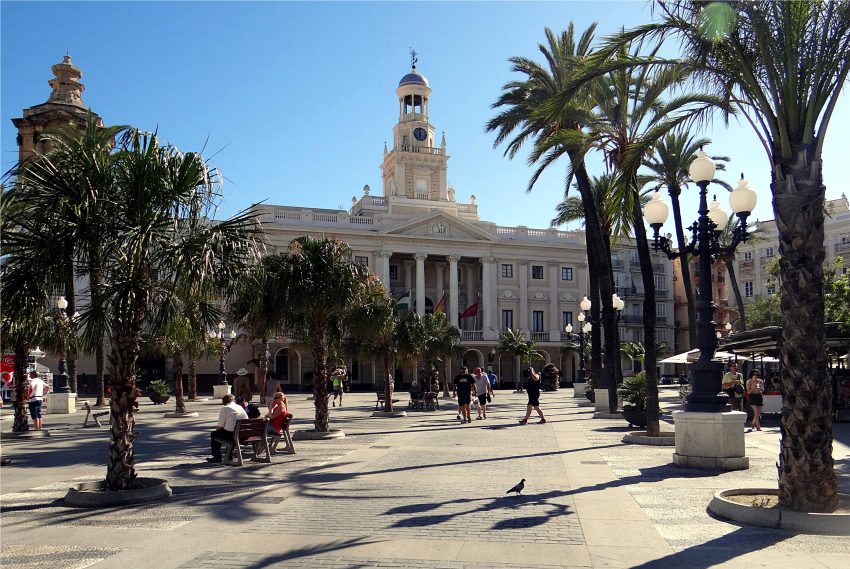
Cádiz’s Ayuntamiento is the civic face of the city, representing municipal authority in a place where governance has always been shaped by trade, defense, and public order in a constrained peninsula setting. Its presence underscores that Cádiz is not only historic and picturesque, but administratively serious: a city that had to manage people, port activity, and infrastructure with limited space and high strategic value.
The building’s significance is closely tied to its setting, where public space and government architecture reinforce one another. This is where Cádiz’s ceremonies, announcements, and civic rhythm become visible, and where the relationship between the old town’s street network and its institutional core feels most direct.
What to see is the façade, the way the building addresses the square, and the overall civic composition in its immediate surroundings. If the interior is accessible during your visit, it can add depth, but even from outside the Ayuntamiento works as a clear marker of Cádiz’s public identity and civic continuity.
Location: Casa Consistorial, pl. de San Juan de Dios, s/n, 11005 Cádiz, Spain | Hours: Tuesday – Friday: 09:00–18:00. Saturday: 09:00–14:00. Sunday: 09:00–14:00. Closed on Monday. | Price: Free. | Website

3. Mercado Central

Mercado Central is one of the best places to experience Cádiz as a living, local city rather than a sequence of monuments. Markets in port cities are historically tied to supply chains, fishing, trade, and daily routine, and Cádiz’s market continues that tradition in a modern, practical form.
The market’s real history is its function: a place where the sea turns into food culture, where regional produce meets the Atlantic catch, and where everyday buying and selling sustains the rhythms of the old town. Even short visits add texture that churches and fortifications cannot provide.
What to see is the seafood counters, the energy of the central hall, and the small details of local preference. Go slowly, watch what locals buy, and treat it as a sensory stop that helps you understand what Cádiz eats, sells, and values in daily life.
Location: Plaza de la Libertad, S/N 11005 Cádiz Spain | Hours: Central Market Hours: Monday to Saturday from 9:00 am to 3:00 pm Gastronomic Corner Hours: Monday: 9:00 am to 4:00 pm Tuesday to Friday: from 9:00 a.m. at 3.30 pm and from 19.00. at 00.00 Saturday: From 09.00. at 4:00 pm and from 8:00 pm at 01.00 | Price: Free
4. Torre Tavira

Torre Tavira is Cádiz’s best-known watchtower, part of a skyline once crowded with lookout towers used by merchants to spot incoming ships and monitor port activity. Cádiz’s prosperity as a trading hub made visibility valuable, and these towers became a practical tool for commerce as well as a marker of status.
The tower is closely associated with the period when Cádiz was deeply connected to Atlantic trade routes and maritime exchange. From above, you can see why the city developed the way it did: a compact historic core ringed by sea, with sightlines that once mattered for security, navigation, and business.
What to see is the view and the tower’s interpretive features. The rooftop panorama is the headline, and the interior experience typically adds context about how Cádiz was watched, worked, and defended from above.
Location: Torre Tavira, Calle Marqués del Real Tesoro, 10 11001 Cádiz Spain | Hours: October – april: 10.00 – 18.00 hrs. May – september: 10.00 – 20.00 hrs. | Price: 7 Euro | Website
5. Gadir Archaeological Site

Yacimiento Arqueológico Gadir is Cádiz’s key window into the city’s ancient roots, closely associated with the Phoenician and early settlement history that predates Rome. It is one of the most important stops for understanding Cádiz as a place that has been strategically inhabited for millennia, not simply a beautiful coastal city shaped by later centuries.
The site’s significance lies in continuity and density. Cádiz’s limited space encouraged rebuilding on top of earlier layers, and archaeology here often feels like looking straight down through time: foundations, structures, and traces of daily life preserved beneath the modern streets.
What to see is the way the site is presented and the clarity it brings to Cádiz’s origin story. Focus on how the remains fit into the broader narrative of Cádiz as an early trading hub, and use the visit to recalibrate your sense of the city’s timeline before moving back to later monuments.
Location: Calle San Miguel, 15, 11001 Cádiz, Spain | Hours: Tuesday to Sunday from 10.00 am to 5.00 pm. Visit every hour. Closed on Mondays. | Price: Free entrance | Website
6. Museum of Cádiz

The Museum of Cádiz brings together the city’s three deepest identity layers under one roof: ancient settlement, Atlantic-era wealth, and local popular culture. The institution in its current form dates to 1970, when the provincial Fine Arts and Archaeology museums were merged, but its roots go back to the 19th century, beginning with an early Fine Arts collection that formed after ecclesiastical confiscations in the 1830s.
The archaeological section is the essential starting point because it explains Cádiz as a place of long continuity rather than a purely early modern port city. The museum is especially known for major Phoenician-era finds, including anthropoid sarcophagi, and for Roman material that situates Cádiz within wider Mediterranean networks of trade and culture.
In the fine arts galleries, the emphasis shifts to the visual language of Cádiz’s prosperity and religious patronage, with works spanning the early modern period through later centuries and notable holdings that include Zurbarán, Murillo, and Rubens. The museum also includes an ethnography dimension associated with Cádiz’s popular traditions, most famously the Tía Norica puppets, which add a distinctly local counterweight to the grandeur of archaeology and painting.
Location: Plaza de Mina, s/n, 11004, Cádiz. | Hours: Tuesdays to Saturdays from 9:00 AM to 9:00 PM; Sundays and public holidays from 9:00 AM to 3:00 PM. Closed on Mondays. | Price: Free | Website
7. Baluarte de la Candelaria
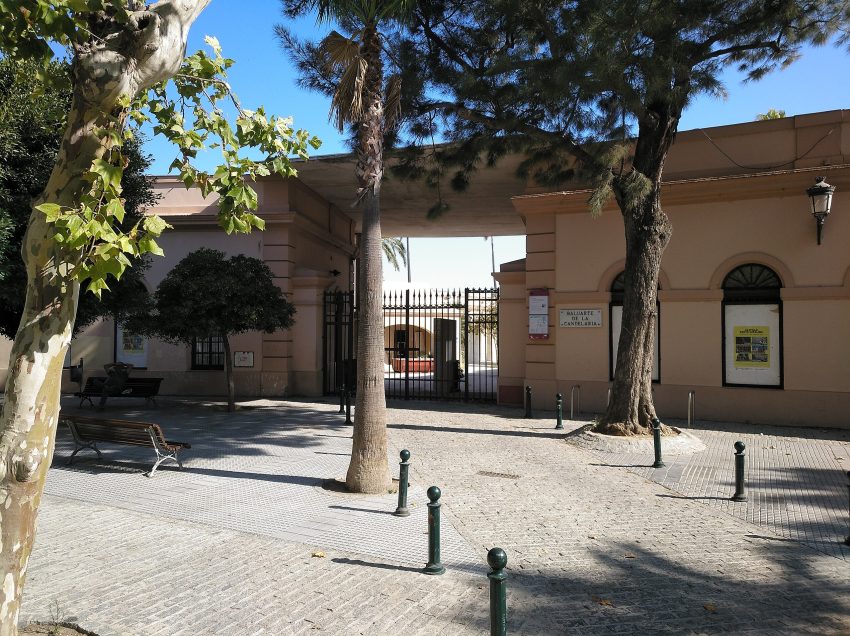
Baluarte de la Candelaria is a sea-facing bastion built to protect Cádiz from naval attack, positioned to command the approaches along the coast. Its location reflects the city’s long history of living with both opportunity and threat: a port exposed to the Atlantic, wealthy enough to attract attention, and vulnerable enough to require serious defenses.
The bastion belongs to Cádiz’s broader system of walls, batteries, and strongpoints that were expanded and adapted across centuries. Even when you do not know the technical details of artillery range and angles, the geometry makes sense on site: thick walls, outward-facing platforms, and clear lines across the water.
What to see is the combination of military architecture and open sea views. Walk the perimeter to understand how the bastion “reads” the coastline, then take time to appreciate how these defensive spaces have become civic promenades, used today for exhibitions, events, and sunset walks.
Location: Alameda Hermanas Carvia Bernal, 6, 11003 Cádiz, Spain | Hours: Daily: Consult schedule (open during exhibitions and events). | Price: Check official website. | Website
8. Parque Genovés
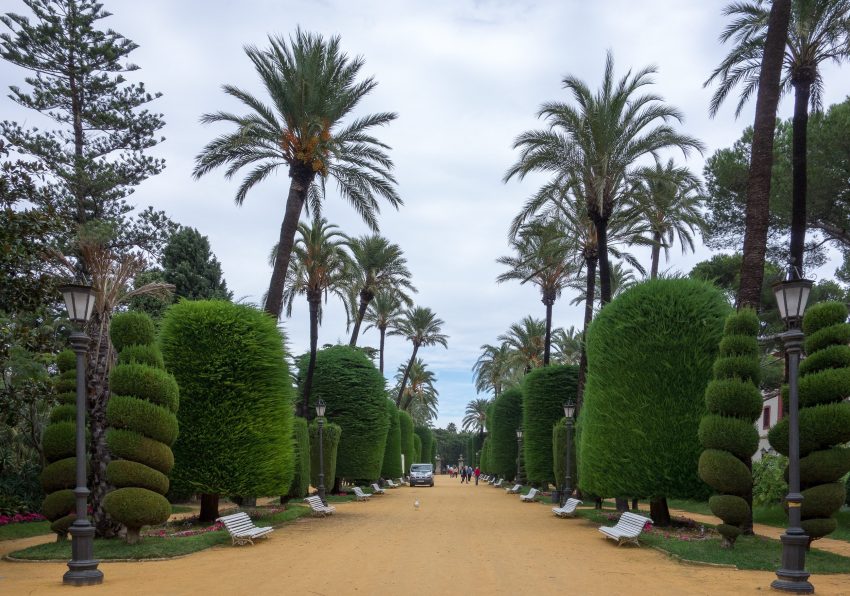
Parque Genovés is Cádiz’s most beloved historic garden, offering a softer counterpoint to the city’s stone fortifications and dense streets. Urban parks in constrained coastal cities matter because they provide relief from heat, crowding, and hard surfaces, and this one has become a long-running civic refuge.
The park’s identity is shaped by landscaped design, shade, and a careful sense of enclosure that makes it feel calmer than the streets just outside. It is also a useful place to notice how Cádiz balances openness and protection: even leisure spaces feel curated and slightly sheltered, consistent with a city historically built for defense.
What to see is the garden composition, plantings, and the way paths frame small vistas. Walk slowly, sit for a few minutes to absorb the atmosphere, and use the stop as a reset before returning to the brighter, windier edges of the coastline.
Location: Parque Genovés Av. Dr. Gómez Ulla, s/n 11003 Cádiz Spain | Hours: Every day from 8:00a.m. to sunset. Summer from 8:00 a.m. to 10:30 p.m. | Price: Free | Website
9. Gran Teatro Falla

Gran Teatro Falla is Cádiz’s signature performance venue, strongly associated with the city’s cultural life and especially with the traditions of music and theatre that shape Cádiz’s identity beyond tourism. Its architecture and presence signal that Cádiz has long invested in public culture as a civic asset, not an afterthought.
The theatre is also connected to Cádiz’s famous carnival culture, which gives performances here an additional layer of local meaning. Even when you do not attend a show, the building’s role as a focal point for major cultural moments makes it worth treating as more than a quick exterior photo.
What to see is the façade and the surrounding setting, which often feels lively and locally oriented. If you can go inside, the interior typically provides the deeper sense of scale and atmosphere, but even outside you can read the building as a statement about Cádiz’s pride in its performing arts.
Location: Plaza de Falla, s/n, 11003, Cádiz | Website
10. Castillo de Santa Catalina
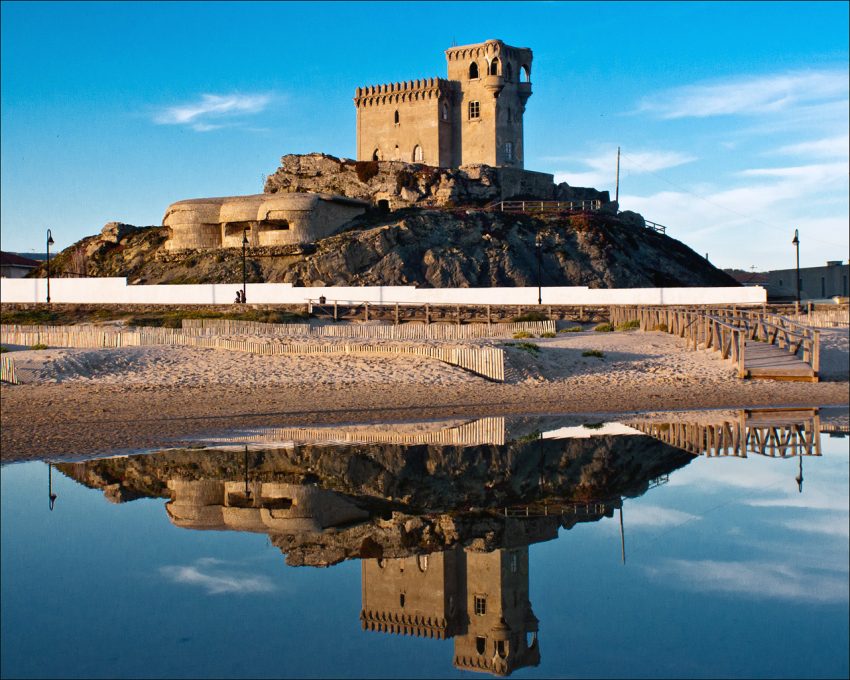
Castillo de Santa Catalina is a star-shaped coastal fortress built to strengthen Cádiz’s defenses after attacks highlighted the city’s vulnerability from the sea. Its design reflects early modern military thinking: low, angular walls intended to resist and return artillery fire, with bastioned corners that cover multiple angles of approach.
The castle’s story is closely tied to Cádiz’s role as a major maritime city, where fortification was not an abstract policy but a daily reality. Over time, the castle shifted from active defense to heritage site, and that change is part of what makes it interesting: you can read both the original purpose and the later civic reuse in how spaces are maintained and opened to the public.
What to see is the fort’s structure and coastal setting. Walk the ramparts to appreciate the star plan from within, explore the courtyards and galleries, and use the sea views to understand why this exact point mattered for controlling approaches and protecting the shoreline.
Location: Avenida Duque de Nájera, 11002, Cádiz | Hours: Every day from 11 am. to 7 pm. | Price: Free
11. Playa de La Caleta
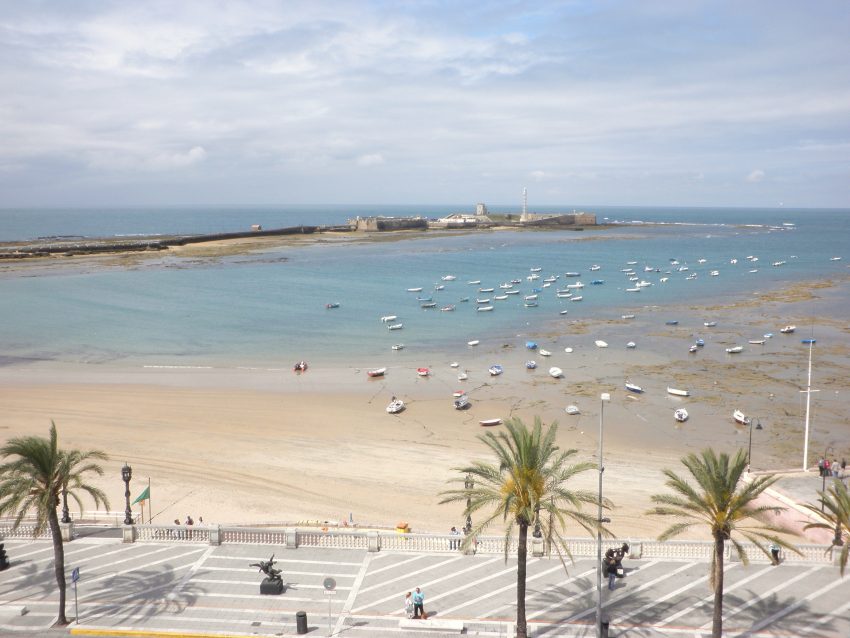
Playa de La Caleta is Cádiz’s most iconic city beach, tucked between historic fortifications and closely tied to the city’s maritime character. It is not simply a place to swim; it is a shoreline framed by history, where castles and seawalls make the setting feel uniquely Cádiz rather than generically Mediterranean.
The beach’s appeal comes from its sense of enclosure and its cinematic relationship with the old town. The surrounding structures remind you that Cádiz always treated the sea as both livelihood and exposure, and La Caleta sits right at that intersection: leisure today, strategic coastline yesterday.
What to see is the full curve of the bay and the changing light across the water and stone. Visit at different times if you can, because La Caleta shifts mood dramatically between bright daytime energy and the quieter, reflective atmosphere around sunset.
| Hours: 24 Hour
12. Castillo de San Sebastián
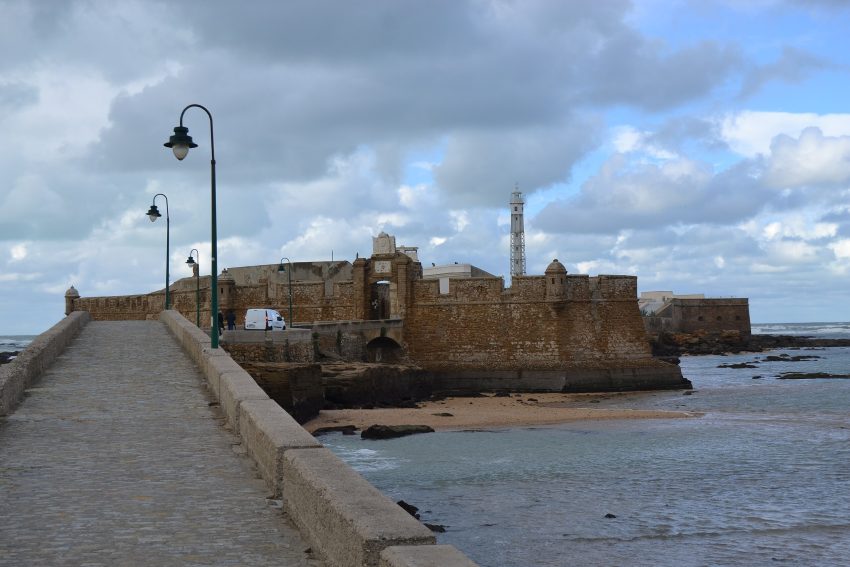
Castillo de San Sebastián sits dramatically on a small islet off La Caleta, connected to the city by a long causeway that turns the approach into part of the experience. The site has a long defensive and maritime history, with the fortress reflecting Cádiz’s need to guard key coastal points and manage threats arriving by sea.
The castle’s identity is shaped as much by its setting as by its walls. Its offshore position made it a natural lookout and defensive outpost, and it remains one of the best places to grasp Cádiz’s relationship with the water: the city is not merely near the sea, it is defined by it.
What to see is the causeway walk, the fortress exterior, and the views back toward the old town. Go when the light is strong and the tide and weather make the coastline vivid; the castle becomes a visual anchor for understanding how Cádiz’s defenses were layered across land and water.
Location: Castillo de San Sebastian, Fernando Quiñones, s/n 11002 Cádiz Spain | Hours: Monday to Sunday from 09:00 till 13:00 | Price: 2 € | Website
13. Cádiz Cathedral

Cádiz Cathedral is the city’s dominant religious landmark, built over a long period that left it with a layered character and a prominent presence on the skyline. Its position near the sea and the historic core makes it feel like both a sacred building and a civic symbol, visible from multiple approaches as you move through the old town.
The cathedral reflects Cádiz’s wealth and ambition during eras when the city was deeply connected to Atlantic routes and imperial commerce. Its architecture and scale communicate confidence, while its extended construction timeline helps explain why the building can feel like a blend of intentions rather than a single unified moment.
What to see is the exterior massing, the relationship to the surrounding streets, and the atmosphere of the square. Step inside to experience the shift in light and volume, then return to the plaza to appreciate how the cathedral “holds” the public space around it as a focal point.
Location: Plaza de la Catedral, s/n 11005 Cádiz Spain | Hours: Tue-Sat 10am-4:30pm
14. Teatro Romano

The Teatro Romano is one of the most significant archaeological sites in Cádiz, revealing the city’s deep Roman-era past beneath the later urban layers. Its survival is a reminder that Cádiz’s history is not only early modern and maritime; it stretches back into the classical world, when the city occupied a different role within the Mediterranean sphere.
Roman theatres were civic infrastructure as much as entertainment venues, expressing status, public culture, and urban organization. Seeing a theatre here helps you understand Cádiz as a long-lived city that repeatedly rebuilt itself on the same precious footprint, layering new streets and buildings over older foundations.
What to see is the exposed seating structure and the interpretive layout that helps you imagine scale. Take time to trace the curve of the cavea, look for how the site fits into the surrounding city fabric, and use the viewpoint to picture how performance space once sat within a dense ancient settlement.
Location: Calle Mesón, 11-13, 11005 Cádiz, Spain | Price: Free
15. Arco de los Blancos
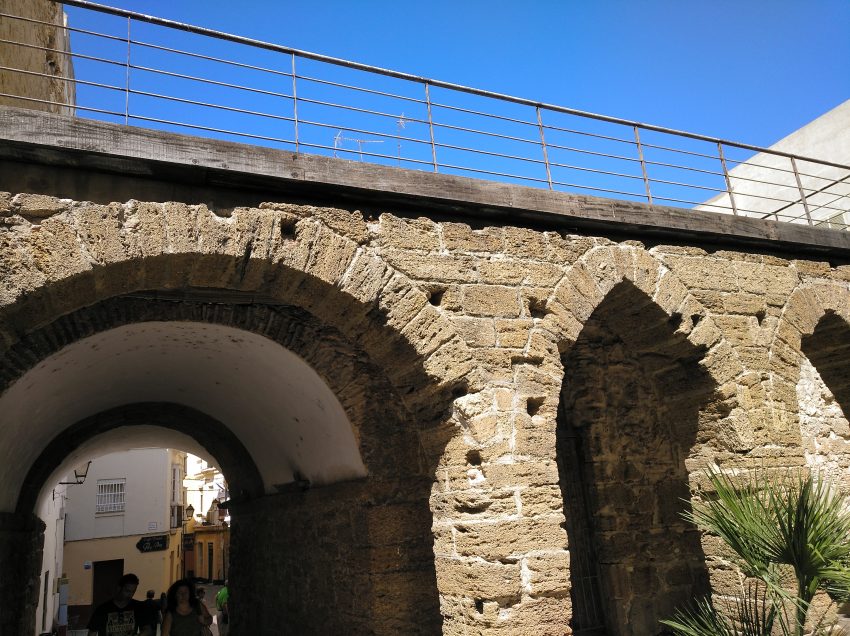
Arco de los Blancos is one of the surviving medieval-style gateways tied to Cádiz’s old defensive perimeter and internal street network. It sits in the older quarter where the city’s Islamic-period and later Christian-era urban history is felt in tight lanes, small transitions, and sudden openings into plazas.
Historically, this kind of arch was not simply decorative: it marked movement, controlled access, and helped define neighbourhood boundaries in a dense port city that evolved within fortifications. Cádiz’s layered past is easiest to sense in places like this, where the street plan retains an older logic even as buildings have been renewed over centuries.
What to see is the arch as an urban threshold. Walk toward it from both directions to feel how it frames the approach, then look for the contrast between the gateway’s historic character and the everyday street life around it.
Location: Calle Mesón, 22, 11005 Cádiz, Spain | Hours: 24 Hours | Price: Free

Moira & Andy
Hey! We're Moira & Andy. From hiking the Camino to trips around Europe in Bert our campervan — we've been traveling together since retirement in 2020!
This website uses affiliate links which earn a small commission at no additional cost to you.
Walking Tour Summary
Distance: 6.5 km
Sites: 15
Walking Tour Map