Commercial Agora, Ephesus
Ancient City, Historic Site and Square in Ephesus
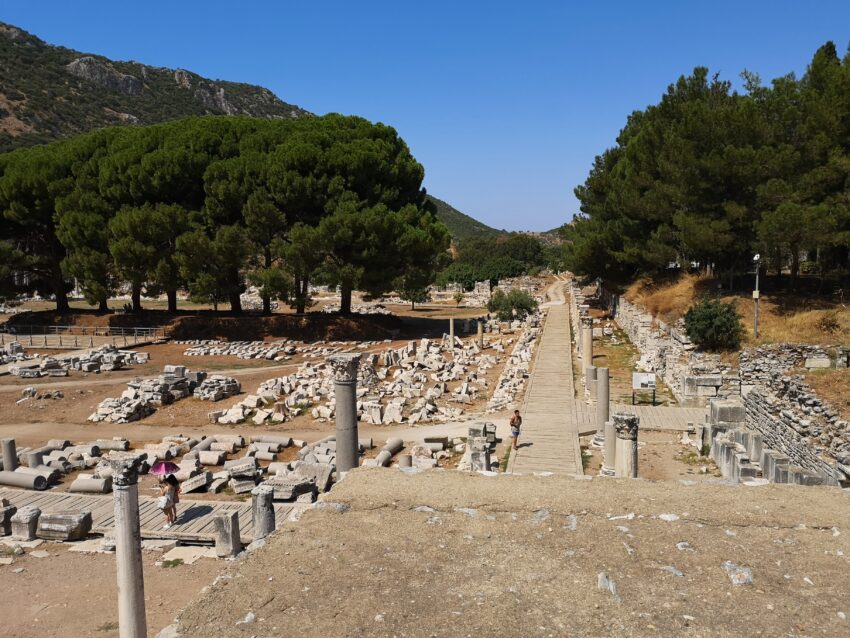
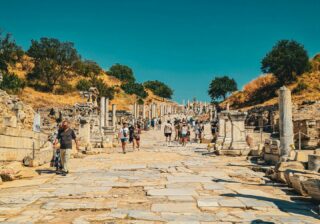
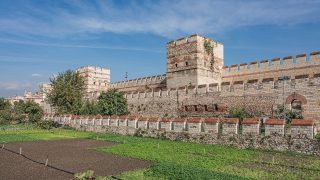
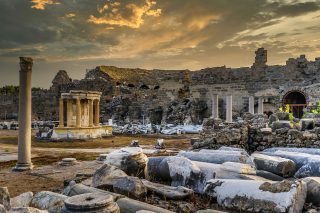
The Commercial Agora is one of the open public squares inside the ancient city of Ephesus, Türkiye, and it's best understood as the city's everyday “business end” where trade, movement, and public life overlapped. Today, it reads as a broad, stone-strewn space framed by scattered architectural remains rather than a single showpiece monument.
Most visitors encounter the Commercial Agora as part of a walking tour through Ephesus, linking highlights like the Library of Celsus, the Marble Road, and the Great Theatre. If you're exploring independently, it's a worthwhile pause for perspective: step back, look at the footprint of the square, and imagine the bustle that once filled the space.
Table of Contents
- History and Significance of the Commercial Agora
- Things to See and Do in the Commercial Agora
- How to Get to the Commercial Agora
- Practical Tips on Visiting the Commercial Agora
- Where to Stay Close to the Commercial Agora
- Is the Commercial Agora Worth Visiting?
- For Different Travelers
- FAQs for Visiting Commercial Agora
History and Significance of the Commercial Agora
In Roman-era cities, an agora was more than “a market.” It was a civic stage where commerce, administration, and daily social life blended together. In Ephesus, the Commercial Agora functioned as a practical hub: a place for merchants, goods, and the routines that kept a major port city running.
While the most famous structures in Ephesus tend to be monumental and photogenic, the Commercial Agora helps you understand the city as a living organism. It's the kind of space that makes the ruins feel less like isolated landmarks and more like a connected urban plan.
Over centuries, earthquakes, rebuilding, and stone reuse reduced many areas of Ephesus to foundations and fragments. That's why the Commercial Agora today is more about reading the layout and scale than admiring intact architecture.
Things to See and Do in the Commercial Agora
Start by orienting yourself to the square’s shape and edges. Even with limited standing structures, you can trace how the space was organized and how it would have funneled people between major streets and public buildings.
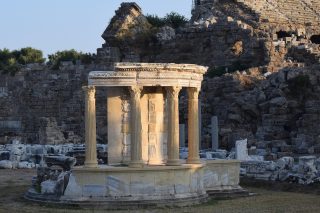
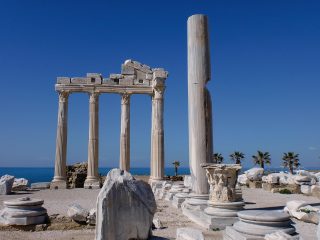
Look closely at the column drums, capitals, and carved blocks scattered around the area. These fragments are easy to overlook on a fast-paced route, but they’re a great “slow travel” moment: compare stone types, carving styles, and how pieces might have fit into colonnades.
If you're on a guided walking tour, this is a good place to ask for context: what was sold here, how trade worked in a port-connected city, and how the Commercial Agora differed from other public squares in Ephesus. It's also a calmer spot to take a breather before moving on to the more crowded headline sights.
How to Get to the Commercial Agora
The nearest major airports are İzmir Adnan Menderes Airport (ADB) and, for some itineraries, Milas-Bodrum Airport (BJV); from either, you'll continue toward Selçuk for access to Ephesus. For the best deals and a seamless booking experience, check out these flights to Ephesus on Booking.com.
You can reach Selçuk by train from İzmir (and other regional connections), then take a short taxi ride or local transport onward to the Ephesus entrances. You can use the official TCDD Taşımacılık website to check schedules, compare routes, and purchase tickets for Türkiye’s national and regional trains operated by TCDD. For a more streamlined experience (especially if you prefer an English interface or want to compare across countries), we recommend using Omio, which allows you to easily compare prices, schedules, and book train tickets across Türkiye and the rest of Europe — all in one place.
If you're driving, Selçuk is straightforward to reach via regional highways, and you can park near the Ephesus entrance gates before walking into the site. If you are looking to rent a car in Türkiye I recommend having a look at Discover Cars, first, as they compare prices and review multiple car rental agencies for you.
Practical Tips on Visiting the Commercial Agora
- Official website: https://muze.gov.tr/urun-ekle?catalogNo=WEB-EFS01-87-009
- Entrance fee: Included with Ephesus with Ephesus Experience Museum (40 Euro per person); Ephesus with Ephesus Experience Museum + Terrace Houses: 52 Euro p.p.
- Opening hours: Check official website.
- Best time to visit: Go early in the morning for cooler temperatures and fewer tour groups, or later in the day when the light is warmer for photos.
- How long to spend: Plan 10-20 minutes if you’re doing a highlights walk; spend longer if you enjoy interpreting ruins and layouts.
- Accessibility: Expect uneven stone surfaces and occasional steps; sturdy shoes help, and mobility access can be challenging in parts of Ephesus.
- Facilities: Facilities are concentrated near the main entrances (toilets, ticketing, and small kiosks), not in the middle of the ruins.
Where to Stay Close to the Commercial Agora
Base yourself in Selçuk town center for the easiest logistics to Ephesus, the museum, restaurants, and quick morning starts.
Ayasoluk Hotel Choose this for a boutique feel and a location that's convenient for both Ephesus and Selçuk's evening dining.
Cella Boutique Hotel & Spa A good pick if you want a more polished stay with spa-style downtime after walking the ruins.
Ephesus Centrum Ideal for travelers who want a simple, central base close to transport and everyday amenities.
Kalehan Hotel A classic Selçuk option with a relaxed garden atmosphere that suits slower-paced itineraries.
Akanthus Hotel Ephesus Great for a comfortable, modern stay with an easy hop to Ephesus early in the day.
Is the Commercial Agora Worth Visiting?
Yes, if you're already inside Ephesus: the Commercial Agora is a low-effort, high-context stop that helps you picture the city's daily rhythm beyond the headline monuments. It won't be the most visually dramatic area, but it adds “urban realism” to your route and gives you breathing room between busier sights.
Honest Pivot: If you're short on time, not into interpreting fragmentary ruins, or you're prioritizing only the most intact landmarks, you can skim past it and focus on the Library of Celsus, the Terrace Houses, and the Great Theatre instead.
What Other Travellers Say...
Reviews are overwhelmingly positive, with visitors describing the Commercial Agora as a meaningful part of the wider Ephesus experience and appreciating the ongoing excavations and the sense of history. Many like that it helps round out an understanding of the ancient city beyond the headline monuments and works well as a stop on a guided tour. The main drawback mentioned is that relatively little remains standing, so it can feel underwhelming if you expect intact structures rather than scattered columns and stone fragments.





For Different Travelers
The Commercial Agora tends to reward travelers who like imagining how places worked, not just photographing what remains. It's also flexible: you can treat it as a quick pass-through or a deliberate pause for context.
Families with Kids
Kids often respond better when you turn the square into a simple “then vs now” game: where would stalls be, where would crowds move, and what might people buy. Because there isn’t one single centerpiece, it helps to set a mini-mission before you arrive.
Keep the stop short and pair it with more visually striking nearby highlights in Ephesus. A quick snack and water break plan matters more here than deep historical detail.
Couples & Romantic Getaways
For couples, the Commercial Agora can be a quieter moment to slow down and take in the scale of Ephesus away from the densest crowds. It's a good place to linger briefly and enjoy the atmosphere rather than rushing from monument to monument.
Aim for softer light early or late in the day, when the stone textures photograph well and the space feels calmer. It’s less about “the shot” and more about the feeling of walking through an ancient city.
Budget Travelers
Budget travelers will like that the Commercial Agora is part of the broader Ephesus visit, so it doesn't require a separate ticket or add-on fee by itself. It's also a good self-guided stop: you can get value simply by reading the space and comparing it to other public areas.
Bring your own water and sun protection and plan your route to minimize backtracking. If you’re skipping paid extras, this is one of the spots where imagination does a lot of the work.
History Buffs
History buffs should treat the Commercial Agora as a “city systems” stop: trade, movement, and public life. It's a useful counterbalance to the elite, monumental architecture elsewhere in Ephesus.
If you enjoy urban archaeology, spend time mapping how the square connects to surrounding streets and civic buildings. A guide (or a good site map) can help you translate fragments into a coherent mental reconstruction.
FAQs for Visiting Commercial Agora
Getting There
Tickets & Entry
Visiting Experience
Tours, Context & Itineraries
Photography
Accessibility & Facilities
Food & Breaks Nearby
Safety & Timing
The Commercial Agora appears in our Complete Guide to Visiting Ephesus!

Moira & Andy
Hey! We're Moira & Andy. From hiking the Camino to trips around Europe in Bert our campervan — we've been traveling together since retirement in 2020!
This website uses affiliate links which may earn a commission at no additional cost to you!
Planning Your Visit
Check official website.
Included with Ephesus with Ephesus Experience Museum (40 Euro per person); Ephesus with Ephesus Experience Museum + Terrace Houses: 52 Euro p.p.
Nearby Attractions
- Ephesus Experience Museum (0.1) km
Attraction and Museum - Gate of Mazaeus and Mithridates (0.1) km
City Gate, Historic Site and Ruins - Library of Celsus (0.1) km
Library, Roman Site and Ruins - Ancient Greek Theater (0.1) km
Attraction, Historic Site and Theatre - House of Pleasure (0.1) km
Ancient City, Historic Site and Ruins - Public Roman Latrines (0.2) km
Historic Site, Roman Site and Ruins - Terrace Houses of Ephesus (0.2) km
Historic Room, Historic Site and Roman Site - Harbor Street (0.2) km
Ancient City, Historic Site and Street - Temple of Hadrian (0.2) km
Historic Site, Roman Site and Ruins - Theater Gymnasium (0.2) km
Historic Site, Roman Site and Ruins