La Seu: the Cathedral of Palma, Palma de Mallorca
Cathedral in Palma de Mallorca
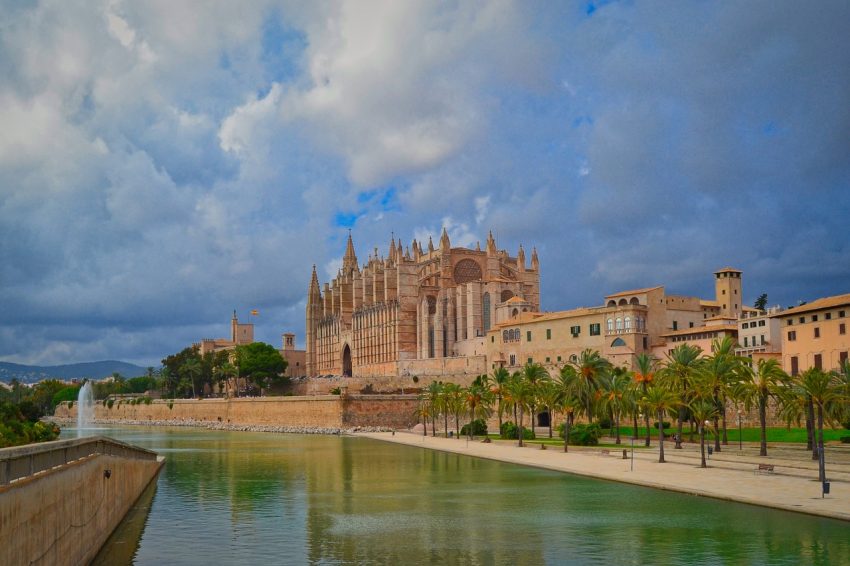
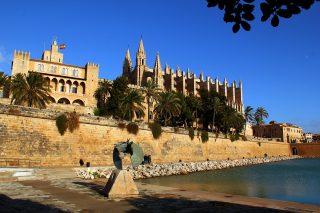
Dominating Palma's seafront with its golden stone and delicate flying buttresses, Palma Cathedral La Seu is one of the top attractions in Palma de Mallorca for anyone who loves architecture, history, or simply a spectacular view. Legend says that in December 1229, caught in a violent storm while sailing to conquer the Balearic Islands, James I of Aragon vowed to build a great cathedral on Mallorca if he survived and triumphed. Construction began in 1230 on the site of a former mosque, and over the next 350 years that promise slowly turned into the Gothic giant you see today.
Step inside and the scale hits you immediately: a nave 361 feet long, 108 feet wide, and soaring to about 145 feet in height, crowned by one of the largest Gothic naves in Europe and a huge rose window of around 41 feet in diameter. Every morning, coloured light spills across the stone from some 1,200 stained-glass pieces, and on just two special dates each year this light creates the famous “Light Game of the Eight,” making La Seu a highlight of any walking tour of Palma de Mallorca if you time your visit just right.
Table of Contents
- History and Significance of the Palma Cathedral La Seu
- Things to See and Do in the Palma Cathedral La Seu
- How to Get to the Palma Cathedral La Seu
- Practical Tips on Visiting the Palma Cathedral La Seu
- Where to Stay close to the Palma Cathedral La Seu
- Is the Palma Cathedral La Seu Worth Visiting?
- FAQs for Visiting Palma Cathedral La Seu
- Nearby Attractions to the Palma Cathedral La Seu
History and Significance of the Palma Cathedral La Seu
The story of La Seu begins at sea. In December 1229, James I of Aragon was nearly shipwrecked in a brutal storm as he sailed to retake Mallorca. In desperation he vowed that, should he survive and succeed, he would dedicate a grand cathedral to God on the island. The conquest went in his favour, and true to his word, construction of the cathedral began in 1230 on the foundations of the old Muslim mosque that had stood within the city walls. Over the following centuries, this project became a symbol of Christian rule and royal piety in Mallorca.
Santa Eulàlia of Barcelona, a young girl martyred under Roman persecution through torture and beheading, was chosen as the cathedral's patron saint, linking Palma spiritually to Barcelona and to a wider Mediterranean cult of saints. The church quickly took on political as well as religious importance: it witnessed the first meeting of the General Grand Council of Mallorca and the coronation of Jaume II (James the Just) as king of Majorca on 12 September 1276. La Seu was not just a place of worship; it was the stage on which the island's new Christian monarchy presented itself to the world.
The building evolved over a long period. The basic Gothic structure grew first, then later elements gradually enriched it. Saint Eulalia’s sculpture above the entrance, carved by Guillem Ferrer, and the great rose window on the eastern wall arrived as the style matured. In the 19th century, a 50-metre bell tower was added, further redefining the skyline. Joan Sureda i Veri’s 1893 restoration gave the main façade a more unified Neo-Gothic appearance, and after storm damage in 2011, another major restoration refreshed the stonework and details. Inside, you can see how Gothic structure, Baroque chapels, Renaissance touches and classical lines in the Baptistry overlap, making La Seu a living textbook of changing tastes.
Things to See and Do in the Palma Cathedral La Seu
Inside the cathedral, the first thing to do is simply stand in the nave and look up. The height and slender supporting columns give the impression that the roof is suspended on beams of light rather than stone. Walk slowly down the central aisle, taking in the shifting colours from the stained-glass windows, and seek out the eastern rose window, a 41-foot-wide Gothic jewel made of around 1200 individual pieces of glass. On ordinary mornings it floods the interior with colour; on 2 February and 11 November at around 8 a.m., its reflection aligns with the opposite rose window to create the famous “Light Game of the Eight,” where two circles of light overlap perfectly to form an eight-shaped pattern.
Beyond those two dates, there is another, subtler spectacle around the winter solstice, when for several weeks the sunrise lines up with both huge rose windows at once. Even if you are not there on the exact days, winter mornings still bring especially dramatic light effects as the low sun slices through the glass. As you move through the church, notice how the chapels change character: Baroque chapels rich in ornament, a classical-feeling Baptistry, and the Trinity Chapel, where kings James II and James III lie buried, underline the cathedral’s role as royal pantheon as well as parish church.
If you have a head for heights, do not miss the chance to climb to the belfry or rooftop areas when they are open. The ascent is rewarded with sweeping views over the old town, the bay and the surrounding hills, and a closer look at architectural details that are invisible from ground level. With a diagrammed guide at the top, you can pick out other landmarks in Palma and understand how the cathedral anchors the city's plan. Afterwards, take a lap around the outside walls, especially the seaward side, to appreciate the contrast between the 13th-century portal facing the sea and the later 16th-century portal on the landward side, where late Gothic flows gently into early Renaissance lines.
How to Get to the Palma Cathedral La Seu
Most visitors arrive in Palma via Palma de Mallorca Airport, the island's main international gateway with regular flights from across Spain and Europe. For the best deals and a seamless booking experience, check out these flights to Palma de Mallorca on Booking.com. From the airport, airport buses and taxis run frequently into the city centre, where you can either stop at the seafront and walk along Parc de la Mar or head directly into the old town towards the cathedral’s towering silhouette.
If you are staying elsewhere on Mallorca, regional trains link towns such as Inca, Sa Pobla and Manacor with Palma's Estació Intermodal near Plaça d'Espanya.Train schedules and bookings can be found on Omio. From the station, it is a straightforward walk through the old streets downhill towards the waterfront; simply follow signs for the cathedral or head towards the visible bulk of La Seu rising above the city walls. Numerous buses stop nearby if you prefer a shorter walk.
For those travelling by car, follow the main roads into Palma and look for car parks around the edge of the old town or near the seafront and Parc de la Mar.If you are looking to rent a car in Spain I recommend having a look at Discover Cars, first, as they compare prices and review multiple car rental agencies for you. Once parked, everything is easily explored on foot, and within a few minutes you will find yourself at the foot of the cathedral, with its great façade reflected in the waters of the park's lake.
Practical Tips on Visiting the Palma Cathedral La Seu
- Suggested tips: Try to visit both inside and outside; walk the seafront promenade to see the cathedral from below before going in, and time your visit for morning light if possible.
- Best time to visit: Early morning for quieter interiors and vivid stained-glass effects, or late afternoon when the façade glows in the low sun; winter months are best if you are hoping to catch the special light phenomena.
- Entrance fee: Adults €9.00; Guided Tours from €25
- Opening hours: Mondays to Fridays from 10.00 hrs (closing times depend on the time of year). Saturdays from 10.00h to 14.15 hrs.
- Official website: https://catedraldemallorca.org/en/visits/tours/
- How long to spend: Allow at least 60-90 minutes to explore the interior, chapels and museum; add extra time if you plan to climb the belfry and walk the seafront afterwards.
- Accessibility: The main entrance has steps and some areas feature uneven historic flooring; access to the tower and upper levels is via narrow stairs and is not suitable for visitors with mobility or vertigo issues.
- Facilities: Expect ticket offices, a small shop and basic facilities near the entrance; cafés and restaurants are plentiful in the nearby old town streets and along Parc de la Mar.
- Photography tip: Capture the rose window light from the nave just after opening time, and outside, step back across Parc de la Mar to photograph the whole cathedral reflected in the water.
- Guided tours: Consider booking a guided visit or audio guide to fully understand the mix of Gothic, Renaissance, Baroque and classical elements, as well as the stories of James I’s vow, the coronations and the royal burials.
- Nearby food options: After your visit, head into the surrounding lanes or down to the seafront for everything from simple cafés to tapas bars and restaurants with views of the bay.
Where to Stay close to the Palma Cathedral La Seu
Staying near La Seu means waking up with the cathedral almost on your doorstep and being able to see it at different times of day without rushing. A comfortable central choice is Hotel Almudaina, which offers easy access to both the historic centre and the waterfront. For a more intimate and historic atmosphere, Boutique Hotel Posada Terra Santa places you within the old town's maze of streets, an easy stroll from the cathedral and many other key sights. If you prefer staying closer to the sea while remaining near La Seu, Hotel Boutique Calatrava gives you bay views and a short walk up to the cathedral’s terraces and plazas.
Is the Palma Cathedral La Seu Worth Visiting?
Palma Cathedral La Seu is absolutely worth visiting, even if you think you have “seen enough cathedrals.” Its origins in James I's storm-borne vow, its location on a former mosque and its centuries-long building history make it a fascinating symbol of Mallorca's layered past. Inside, the immense nave, luminous rose window and changing architectural styles keep revealing new details the longer you look, while the bell tower and seafront views root the experience firmly in the city's present. Whether you spend an hour or half a day, La Seu is the kind of place that stays with you long after you leave.
What Other Travellers Say...

Catedral-Basílica de Santa María de Mallorca (La Seu), on Plaça de la Seu in Palma, is an ornate Gothic cathedral overlooking the sea, noted for its vast rose window, soaring nave, intricate stonework, colorful stained-glass and a wrought-iron canopy by Gaudí; visitors praise its monumental, well-preserved interior and serene atmosphere, recommend setting aside about an hour to take in the views over the marina and the light patterns from the rose window, and say the modest entry fee and helpful staff make it well worth a visit despite typical crowds.


FAQs for Visiting Palma Cathedral La Seu
Nearby Attractions to the Palma Cathedral La Seu
- Royal Palace of La Almudaina: A former royal residence right beside the cathedral, blending Moorish and Gothic influences and offering evocative interiors and courtyard views.
- Parc de la Mar: The seafront park directly below La Seu, with a large lake that reflects the cathedral and a broad promenade ideal for walks and bike rides.
- Església de Santa Eulàlia: Palma's oldest parish church, tied to early royal ceremonies and Jewish history, a short walk into the old town.
- Plaça Major: The city's main square, built over the former Inquisition convent, now a lively space of cafés, markets and street performers.
- Museu de Mallorca: The island's main museum housed in a historic mansion, where you can trace Mallorca's story from prehistory through the medieval period that produced La Seu.
The La Seu: the Cathedral of Palma appears in our Complete Guide to Visiting Palma de Mallorca!

Moira & Andy
Hey! We're Moira & Andy. From hiking the Camino to trips around Europe in Bert our campervan — we've been traveling together since retirement in 2020!
This website uses affiliate links which may earn a commission at no additional cost to you!
Planning Your Visit
Mondays to Fridays from 10.00 hrs (closing times depend on the time of year).
Saturdays from 10.00h to 14.15 hrs.
Adults €9.00; Guided Tours from €25
Nearby Attractions
- Museu Diocesa de Mallorca (0.1) km
Museum - Royal Palace of La Almudaina (0.1) km
Palace - Bishop's Garden (0.1) km
Gardens - Palau March Museum (0.1) km
Historic Building and Museum - Royal Gardens of La Almudaina (0.2) km
Gardens - Centre Maimó ben Faraig (0.2) km
Museum - Museo de Mallorca (0.2) km
Museum - Plaza de Cort (0.3) km
Square - Banys Arabs (Arab Baths) (0.3) km
Baths - Puerta de los Judios (0.3) km
City Gate