Palma de Mallorca, Spain: The Ultimate Travel Guide 2026
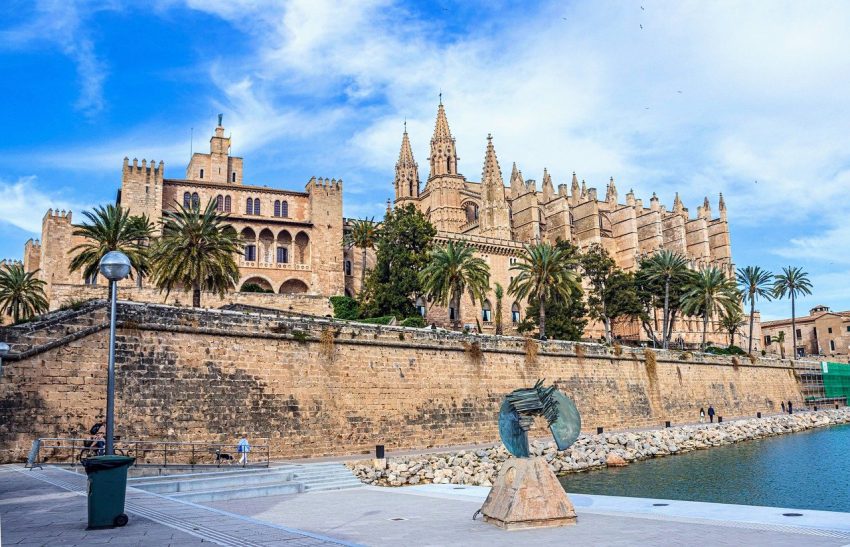
Palma Cathedral, Mallorca

Palma stands as the vibrant capital of Mallorca, exuding a blend of sophistication and intimacy while brimming with vitality. This city houses half of the island's residents and maintains a lively atmosphere throughout the year. It offers an array of upscale hotels, trendy dining establishments, charming cafes, boutiques, and a thriving art scene. Frequently likened to Barcelona, Palma's proximity to the airport, just a 15-minute taxi ride away, renders it an ideal destination for a quick urban getaway.

Positioned in the southern part of the island, Palma graces its residents and visitors with captivating vistas of the glistening Mediterranean sea, viewable in real time via our webcam. While the city boasts numerous enchanting neighbourhoods, the primary attractions and shopping hubs are clustered around the grand Gothic cathedral along the waterfront. This region, known as Palma’s historic old town, abounds in ancient alleyways, historical landmarks, and splendid architectural wonders. Here, you’ll discover an abundance of sightseeing opportunities and opportunities to savour refreshments at its numerous pedestrianized lanes, charming cafes, art galleries, and boutique stores. Thanks to the concentration of these attractions within a square kilometre, exploring the old town is a breeze.

Palma flaunts an expansive harbour that commences just in front of the cathedral and extends along its western border. A cyclist and pedestrian-friendly promenade stretches all the way to the ferry port and cruise terminal, situated approximately 3.5 kilometres from the old town, providing an idyllic setting for a leisurely stroll.

Moira & Andy
Moira & Andy

Hey! We're Moira & Andy. From hiking the Camino to trips around Europe in Bert our campervan — we've been traveling together since retirement in 2020!

Read our full story here

Visiting Palma de Mallorca for the first time and wondering what are the top places to see in the city? In this complete guide, I share the best things to do in Palma de Mallorca on the first visit. To help you plan your trip, I have also included an interactive map and practical tips for visiting!

This website uses affiliate links which earn a small commission at no additional cost to you.
Powered by GetYourGuide

30 Best places to See in Palma de Mallorca

This complete guide to Palma de Mallorca not only tells you about the very best sights and tourist attractions for first-time visitors to the city but also provide insights into a few of our personal favorite things to do.

This is a practical guide to visiting the best places to see in Palma de Mallorca and is filled with tips and info that should answer all your questions!

1. Mercat Olivar
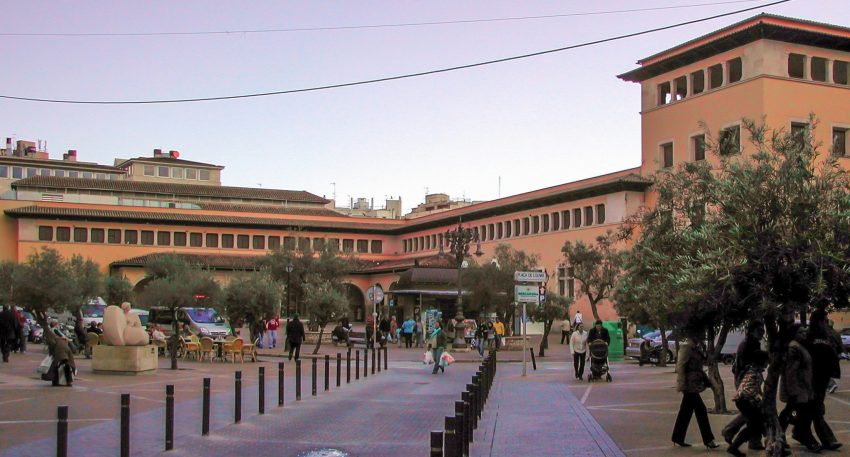
Mercat de lOlivar
Mercat de lOlivar
CC BY-SA 3.0 / Chixoy
Mercat de l’Olivar is Palma de Mallorca’s central covered market, opened in 1951, and it still functions as the city’s everyday pantry where locals shop, snack, and linger at the counter. On the ground floor, you move through bright aisles of fish laid on ice, pyramids of seasonal fruit and vegetables, and stalls of cured meats and cheeses, with tapas bars and sushi stands tucked between them. It’s the kind of place where conversations with stallholders feel as important as the shopping, and the mix of residents and visitors keeps the atmosphere lively. Upstairs, the market turns into a small mixed-use hub with a shopping arcade, cooking school, children’s area, and even a library.
Location: Mercado del Olivar, Plaça de l'Olivar, Palma, Spain | Hours: Monday - Thursday, 7am to 2:30pm. Friday, 2:30pm to 8pm. Saturday, 7am to 3pm. The market is closed on Sunday. | Price: Free | Website | Distance: 0.1km


We recommend to rent a car in Spain through Discover Cars, they compare prices and review multiple car rental agencies. Book your rental car here.

2. Plaza de España

Plaza de Espana Palma
CC BY-SA 4.0 / Z thomas
Plaza de España is a working city square where daily movement and a pointed historical symbol meet. At the center, an imposing bronze equestrian statue of King James I of Aragon (“The Conqueror”), cast by Enrique Claraso y Daudi, looks out over commuters and people lingering on benches. Traffic and scooters skim the edges, while the underground Estació Intermodal entrances make the plaza feel like the island’s nerve center for buses and trains. Step behind the terminal into Station Park for lawns, trees, and a playground—an unexpectedly calm pause from the swirl. Cafés and shopping streets converge nearby, so it’s also a natural place to pause and people-watch.
Location: Plaza de España, Plaça d'Espanya, Palma, Spain | Hours: 24 Hours | Price: Free | Distance: 0.1km

Here is a complete selection of hotel options in Palma de Mallorca. Feel free to review each one and choose the stay that best suits your needs.

3. Esglesia de Santa Catalina de Siena
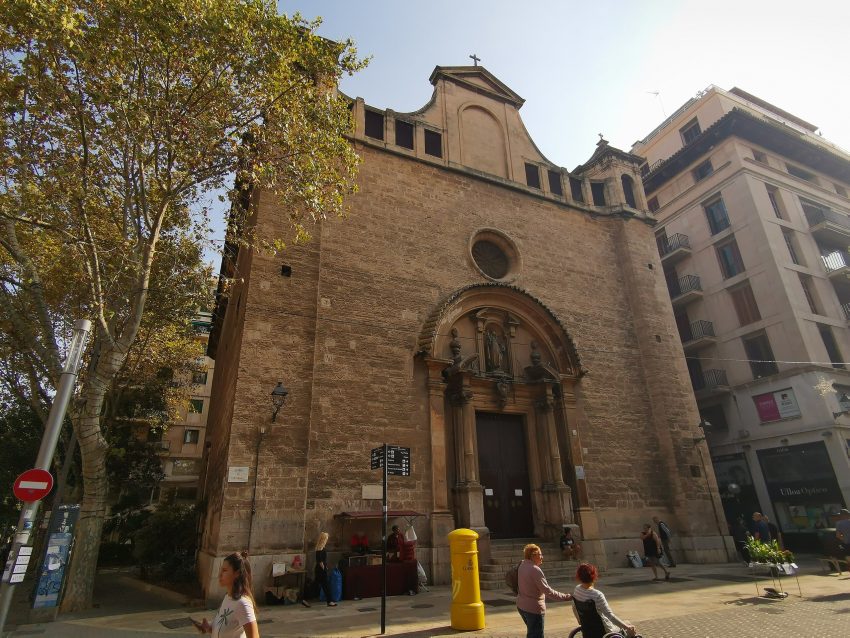
Esglesia de Santa Catalina de Siena, Palma
CC BY-SA 4.0 / Z thomas
Esglesia de Santa Catalina de Siena is a medieval church tucked into Palma de Mallorca’s busy Carrer de Sant Miquel, easy to miss until you step through its portal and the street noise drops away. Built on the site of an earlier mosque and later reshaped, it pairs Gothic bones—a single nave with side chapels, a half‑barrel roof, and a distinctive trapezoidal apse—with a 1680 Baroque makeover by architect Francisco Herrera. Near the altar lies its founder, Joan Baptista Despuig of the Order of Santiago, grounding the space in local patronage and power. Since 2002 it has served the Russian Orthodox parish of the Nativity of Christ, so Catholic altarpieces share the interior with Orthodox icons and candles in active use.
Location: Església de Santa Catalina de Siena, Carrer de Sant Miquel, Palma, Spain | Distance: 0.2km

Traveling to a country with a different currency? Avoid ATM transaction fees and pay in local currency with a Wise Card. Having used it for over 5 years, we've saved loads on fees!

4. Juan March Foundation Museum

Majorque Palma Vers Placa Major Museu Fundacion Juan March. Palma
CC BY-SA 3.0 / rene boulay
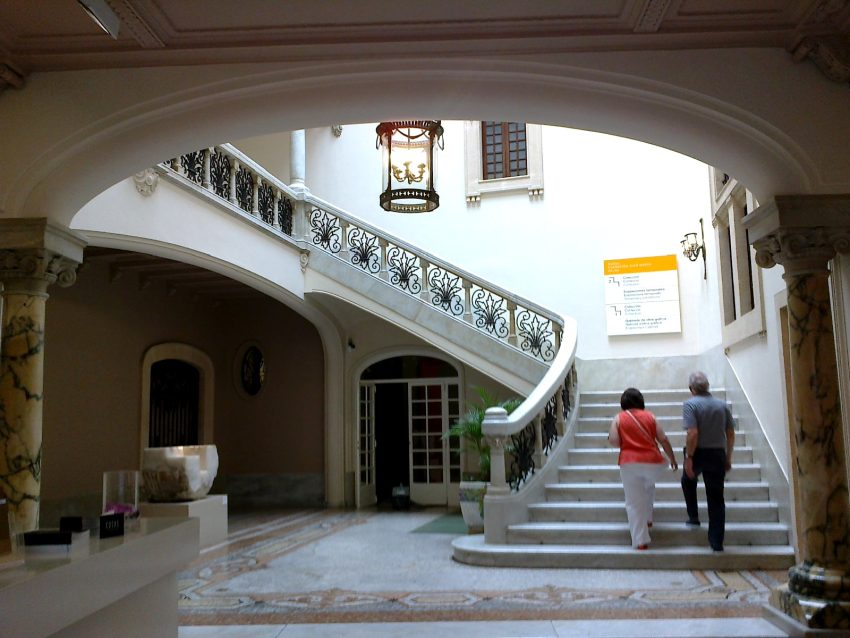
The Juan March Foundation Museum is a compact modern-art museum set inside Can Gallard del Canyar, a 17th-century mansion with carved stone details, intimate salons, and a grand staircase that quickly muffles the street noise outside. Its permanent collection zeroes in on 20th-century Spanish masters, letting you move from Cubist angles (Picasso, Juan Gris) to Surrealist imagination (Miró, Dalí) and later material-heavy experimentation by Antoni Tàpies and Miquel Barceló. The contrast between thick historic walls and sharply modern works is part of the pleasure. A rotating program of temporary exhibitions keeps repeat visits from feeling identical, and many visitors note it as a calm, free-admission retreat among the shopping streets.
Location: Museu Fundación Juan March, Palma, Carrer de Sant Miquel, Palma, Spain | Hours: Monday to Friday: 10 am to 6:30 pm. Saturday: 10:30 am to 2 pm. Sundays and holidays: closed. 24 December: 10 am to 2 pm. 31 December: 10 am to 2 pm. Maundy Thursday and Good Friday: closed. | Price: Free | Website | Distance: 0.3km

Explore Palma de Mallorca at your own pace with our self-guided walking tour! Follow our curated route to discover must-see sights and local secrets that makes Palma de Mallorca one of the best places to visit in Spain.

5. Plaza Mayor

Plaza Mayor, Palma
Plaza Mayor, Palma
CC BY-SA 3.0 / Martin Furtschegger
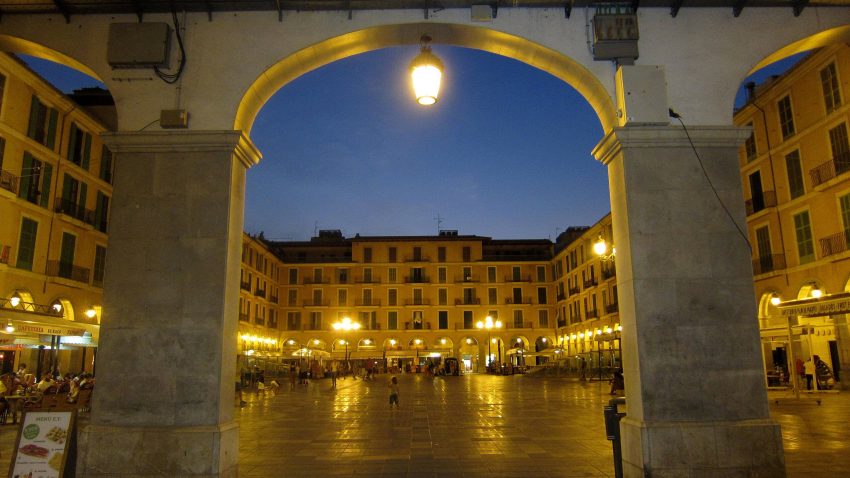
Plaza Mayor (Plaça Major) is Palma de Mallorca’s central, traffic-free square, a bright arcaded rectangle that replaced the former San Felipe Neri convent, once home to the Inquisition tribunal and its feared prison, the “Black House.” Laid out after the complex was demolished in 1823 and finished in stages into the 20th century, it’s ringed by three- and four-storey façades with repeating arches, balconies, cafés, and small galleries. Visitors remember the tiled paving underfoot, buskers and terrace chatter echoing beneath the porticoes, and the weekly artisan market selling handmade crafts and jewellery. Beneath the plaza sit underground parking and former commercial spaces, adding another layer to its civic reinvention.
Location: Plaza Mayor, Plaça Major, Palma, Spain | Hours: Open and accessible at all hours, though shops and cafés follow their own schedules. | Price: Free – Plaça Major is an open public square. | Distance: 0.4km

Explore Palma de Mallorca at your own pace with our self-guided walking tour! Follow our curated route to discover must-see sights and local secrets that makes Palma de Mallorca one of the best places to visit in Spain.

6. Can Casasayas

Can Casasayas. Palma
CC BY-SA 2.0 / Adam Jones
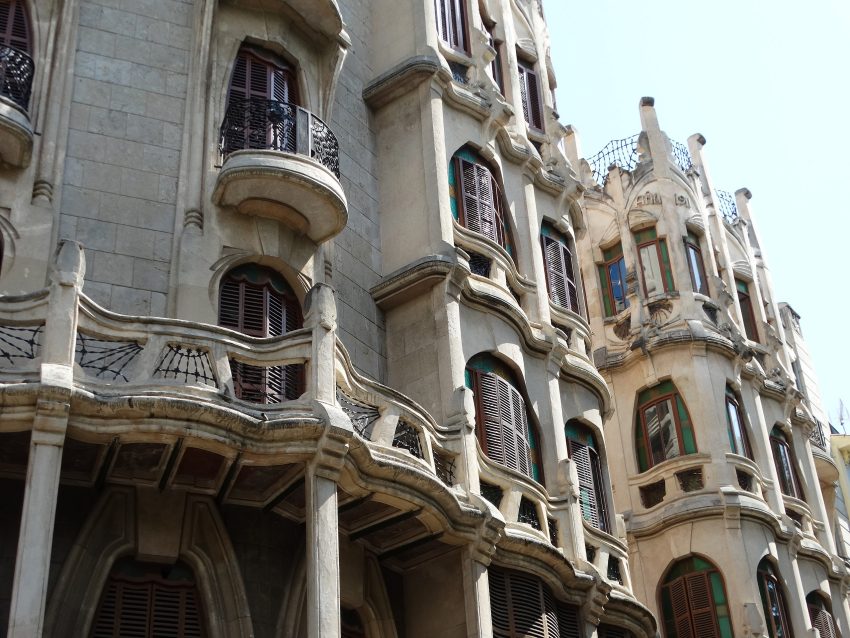
Can Casasayas is a pair of early-20th-century modernist façades in central Palma de Mallorca, facing its twin building, Pension Menorquina, across Carrer de Santacília. Commissioned by pastry-shop owner Josep Casasayas Casajuana and completed under architects Francesc Roca and Guillem Reynés, the mirrored fronts turn a simple street corner into an Art Nouveau composition. Visitors notice the sturdy, almost industrial ground floors with prominent metal columns, topped by upper storeys that ripple with curving lines and parabolic window openings. Look closer for warm wooden window frames and wrought-iron balconies worked with small natural motifs—ferns, acanthus leaves, even butterflies—repeated from one façade to the other.
Location: Edifici Casasayas Costa de Can Santacília, 8 07001 Palma Illes Balears Spain | Hours: Viewable at any time from the street; shop and café hours in the ground floors follow normal city trading schedules. | Price: Free – you are visiting the façades from the street, with no ticket required. | Distance: 0.5km

7. Church of Santa Magdalena
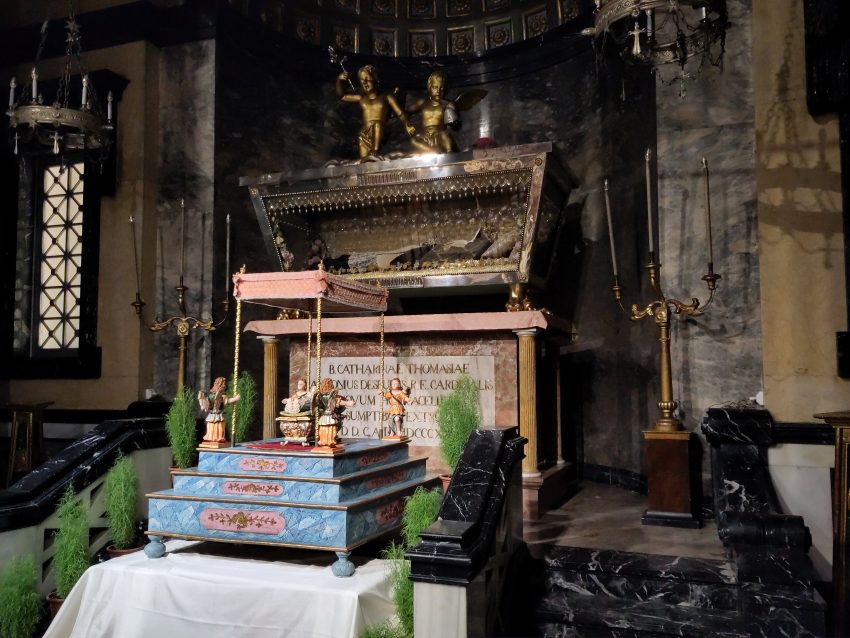
Church of Santa Magdalena, Palma
CC BY-SA 4.0 / Joan Gené
Tucked beside the Convent of Santa Magdalena off Plaça de Santa Magdalena, this Baroque church (rebuilt in 1740 over medieval foundations) feels quietly intimate compared with larger sanctuaries. Inside, soft light plays across curving Baroque lines, worked altarpieces, and small side chapels that invite you to slow down. Its importance is inseparable from Santa Catalina Tomàs: visitors seek out her resting place and the preserved stone where she is said to have sat in protest until the nuns accepted her vocation. The atmosphere is calm and contemplative—many people come simply to sit in silence, pray, or absorb the sense of local devotion that still clings to the walls.
Location: Convent de Santa Magdalena de Palma, Plaça de Santa Magdalena, Palma, Spain | Hours: Hours vary with services and seasons; churches in Palma typically open in the morning and late afternoon, with closures around lunchtime. | Price: Generally free to enter, though small donations for the upkeep of the church are appreciated. | Distance: 0.5km

8. Església de Santa Eulàlia
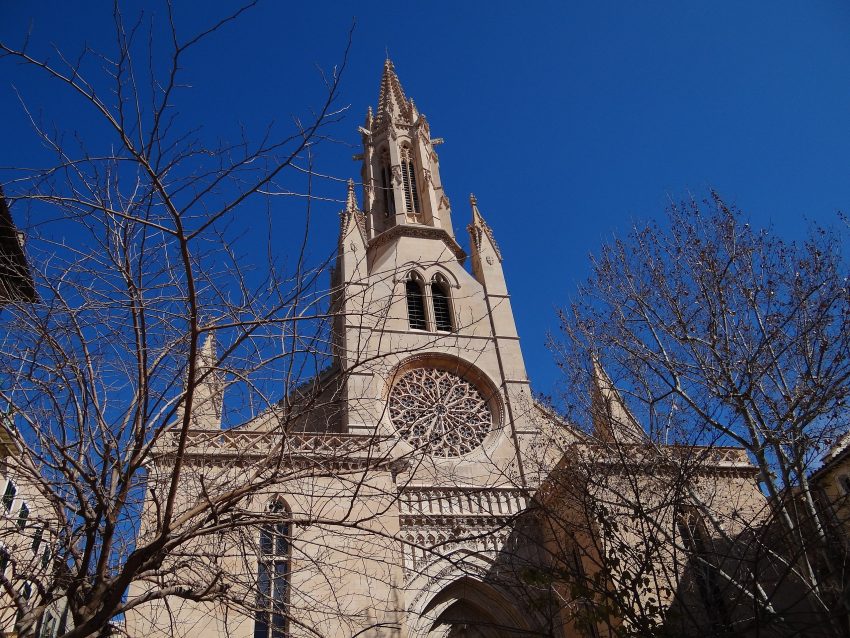
Esglesia de Santa Eulalia, Palma
CC BY-SA 3.0 / Foto Fitti
Església de Santa Eulàlia is a Gothic parish church rising from Palma de Mallorca’s old-town lanes, built soon after the 1229 Catalan conquest on the site of a former mosque and recorded as a parish by 1236. It has been a civic stage as well as a sanctuary: the first General Grand Council of Mallorca met here, and Jaume II was crowned king of Majorca in 1276. Look for the Neo-Gothic façade restored in 1893, the rose window, and the carved figure of Saint Eulalia above the portal. Inside, the Baroque main altar contrasts with an ambulatory ringed by seven chapels. Many visitors remember the quiet interior and the option to climb the roughly 50-metre bell tower for rooftop views.
Location: Santa Eulàlia de Ciutat de Mallorca, Plaça de Santa Eulàlia, Palma, Spain | Hours: Typically open daily for worship and visits, with specific times for tower access; consult the posted schedule at the church. | Price: Church entry is free; access to the bell tower carries a small charge (around a few euros), so check current prices at the door. | Distance: 0.6km

9. Convent of San Francisco

Convent of San Francisco, Palma
CC BY-SA 4.0 / Z thomas
Tucked behind busy streets, the Convent of San Francisco is a Franciscan complex founded in 1232 and reshaped in 1281, where medieval stonework meets later embellishment. The church is built around a single Gothic nave that opens into eight side chapels and a polygonal apse, creating a quiet, enclosed grandeur. Look for the 15th-century Gothic retable and the tomb of Ramon Llull beside the presbytery, a rare link between local spirituality and a major medieval thinker. Outside, the 17th–18th-century cloister—square, arcaded, and buttressed—feels like a pocket of silence, a detail many visitors describe as unexpectedly serene.
Location: Basílica de Sant Francesc, Plaça de Sant Francesc, Palma, Spain | Distance: 0.6km

10. Plaza de Cort
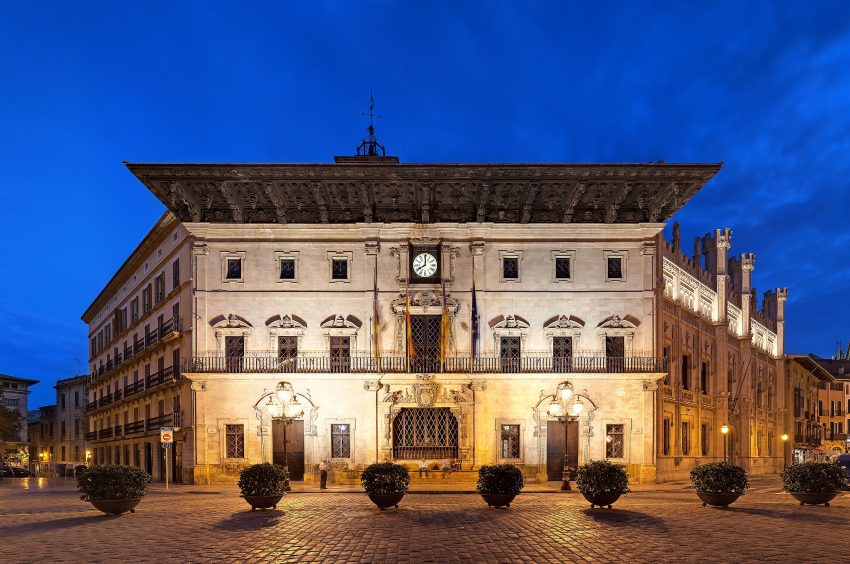
Plaza Cort Ayuntamiento Town Hall, Palma de Mallorca
CC BY-SA 3.0 / Thomas Wolf
Plaza de Cort is a compact civic square where the old town’s public life plays out between two contrasting façades: the Baroque Town Hall and the neo-Gothic Palace of the Council of Mallorca, with its towers and crenellated roofline. The Town Hall, completed in 1649 and embellished later, is hard to forget for its dramatic wooden eaves projecting more than nine feet over a long balcony of six windows and a central glass door. Look for the story of its clock, moved after an 1848 tornado, replaced in 1863, and electrified in 1964 after decades of marking curfew and alarms. At ground level, cafés and the gnarled, centuries-old olive tree (“S’Olivera de Cort”) draw people to pause in the shade.
Location: Plaza de Corte, Palma, Spain | Hours: 24 Hours | Price: Free | Distance: 0.6km

11. Statue of Jehuda Cresques
Jafuda Cresques
Jafuda Cresques
CC BY-SA 3.0 / Lliura
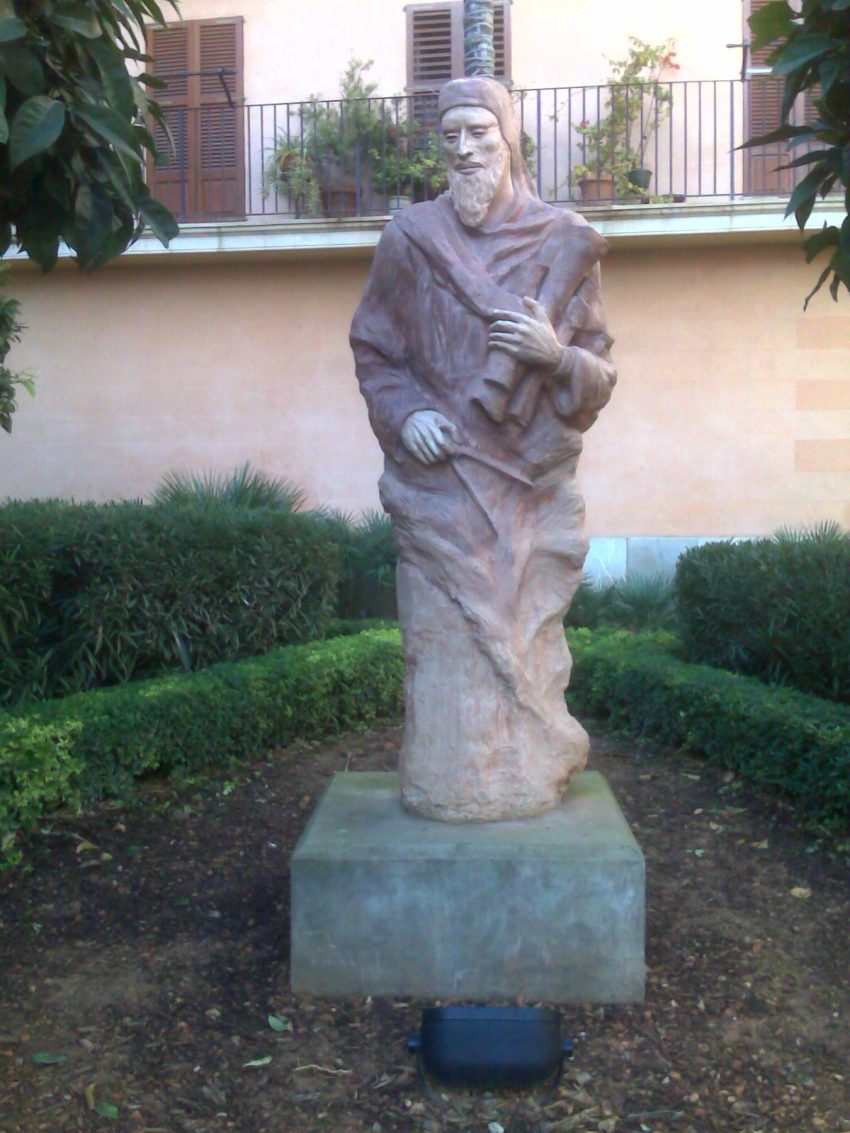
The Statue of Jehuda Cresques in Palma de Mallorca commemorates a 14th-century Mallorcan Jewish cartographer whose work helped redraw Europe’s mental map of the world. Cresques grew up in a workshop culture where parchment charts were built from sailors’ reports, trade routes, and Mediterranean port knowledge circulating through the city. He is widely credited, alongside his father Abraham Cresques, with shaping the 1375 Catalan Atlas—part precise coastline chart, part illustrated panorama of rulers, caravans, and far-off cities. Later tradition links him to Portugal under the name Jaume Riba (“Mestre Jacome of Majorca”), tying this quiet memorial to the early currents of Atlantic exploration.
Location: Carrer de la Pelleteria, 1, 07001 Palma, Illes Balears, Spain | Hours: 24 hours | Price: Free | Distance: 0.7km

12. Puerta de los Judios

Puerta de los Judios, Palma
© Andrew Ashton
Puerta de los Judios in Palma de Mallorca, Spain marks the former main entrance to the Call Major, the medieval Jewish quarter, at the junction of Carrer de Monti-Sion and Carrer del Sol. There’s no surviving gate or monument; what you notice is the ordinary old-town fabric and, if you look down, a SEFARAD emblem set into the pavement. The symbol—part of a network used in Spanish cities to commemorate Sephardic heritage—quietly anchors the memory of a community once connected to the city through this threshold. The approach along Carrer del Call is a narrow, largely car-free lane where travelers linger over stone façades, patios, and warm sunset views, even as some remark on the lack of obvious signage.
Location: Carrer de Santa Clara, 1, 07001 Palma, Illes Balears, Spain | Hours: Accessible at all times as part of the public street network in Palma’s old town. | Price: There is no entrance fee; this is a public street location you can visit freely. | Distance: 0.7km

13. Centre Maimó ben Faraig
Centre Maimo ben Faraig, Palma
© Visit Palma
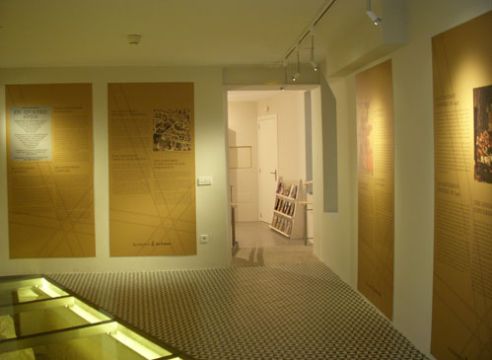
Centre Maimó ben Faraig is a small cultural centre in Palma de Mallorca’s old quarter that keeps the island’s Jewish past visible within the modern city. Inside, the mood is closer to a quiet study room than a formal museum, with exposed stretches of ancient Roman wall that make the deep layers of the site feel immediate. A compact permanent display uses photographs and clear maps to trace where the medieval Jewish quarters sat within today’s street plan and how daily life once fit into these lanes. Named for Maimó ben Faraig, the centre foregrounds a community often left out of Palma’s usual story, linking urban memory to specific stones, routes, and names.
Location: Centre Maimó Ben Faraig, Carrer de l'Almudaina, Palma, Spain | Hours: From Monday to Saturday: from 10 am to 3 pm | Price: Entry is typically free; check locally for any special exhibitions or changes. | Distance: 0.7km

14. Passeig del Born
Passeig del Born
Passeig del Born
CC BY-SA 3.0 / Nikolai Bakhmarov
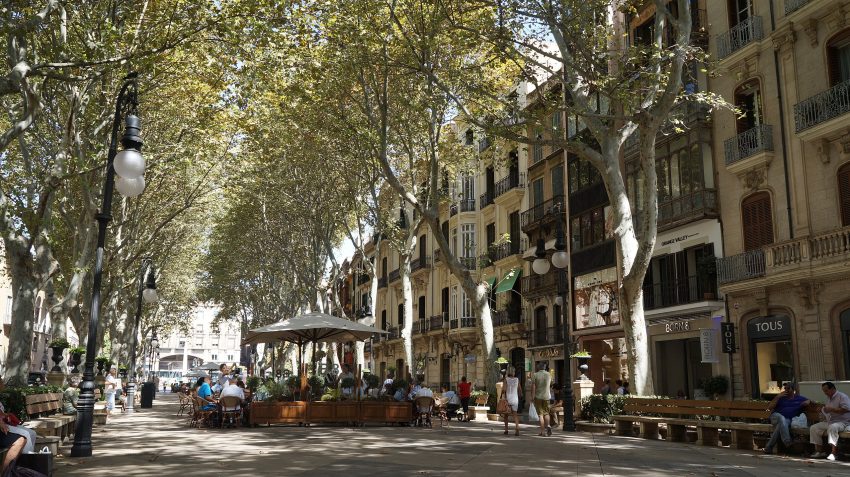
Passeig del Born is Palma de Mallorca’s central promenade, a short, elegant avenue where city life plays out at walking pace. About 200 metres long, it has a pedestrianised middle strip shaded by tall trees, with benches that invite you to pause and watch the steady flow of shoppers and locals. The sides are lined with cafés and restaurant terraces tucked under the canopy, plus a dense run of retail—from global names like H&M, Zara and MaxMara to smaller boutiques. More “urban living room” than monument, it’s remembered for its cool shade in summer, its evening buzz as lights come on, and the polished, lively feel noted in traveler reviews.
Location: Passeig del Born, Palma, Spain | Hours: Accessible at all times, though shops and restaurants follow their own daily and seasonal schedules. | Price: Free – it is a public street open to everyone. | Distance: 0.8km

15. Palau March Museum
Palau Marche, Palma
Palau Marche, Palma
CC BY-SA 4.0 / Z thomas
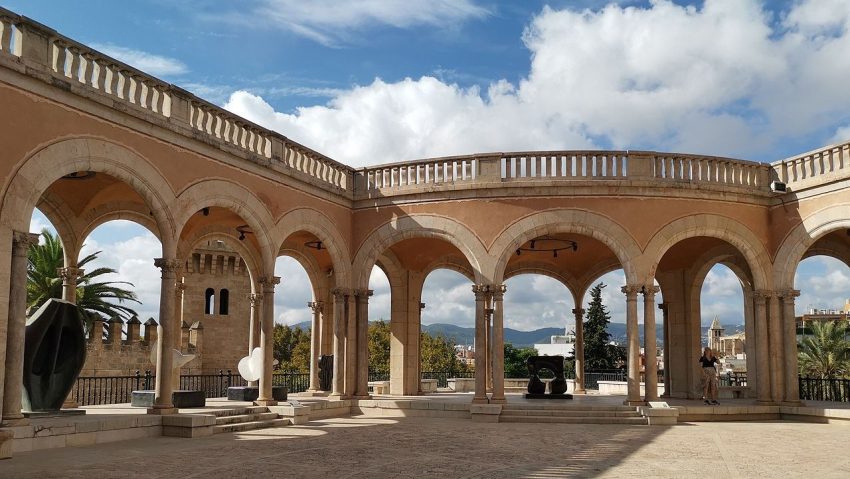
Set inside the Palau March Palace near the cathedral and royal palace, the Palau March Museum pairs a grand private residence with the Bartolomé March Foundation’s wide-ranging art collection. The experience is as much about moving through cool stone rooms and terraces as it is about the works—Old Masters such as Murillo, Goya and Velázquez sit a few steps from Monet, Van Gogh, Picasso, Miró, Rothko and Dalí. Sculpture adds a strong second voice, with pieces by Chillida, Henry Moore and Rodin catching the light as you circle them. Many visitors linger over the intricate Neapolitan nativity scene, then pause at the ground-floor café or head up for rooftop harbour views.
Location: Carrer del Palau Reial, 18, 07001 Palma, Balearic Islands, Spain | Hours: Daily 10:00 - 16:00 | Price: Adults: €10.00 | Website | Distance: 0.8km

16. Bishop's Garden

Jardi del Bisbe Bishops Garden, Palma
Public Domain / Mutari
Bishop’s Garden (Jardí del Bisbe) is a small, enclosed courtyard tucked behind the cathedral, giving a rare, close-up angle on its buttresses and rooflines alongside the rear façade of the Episcopal Palace. You enter through an elegant mannerist gate and step into a quiet, inward-looking space that feels more like a private townhouse garden than a public park. Geometrically clipped hedges divide the paths into green “rooms,” with fruit trees and an orchard-like corner adding shade. At the center, a traditional safareig pond becomes the focus in warmer months when water lilies bloom and reflections ripple across the surface. It’s free to enter and best for a brief, peaceful pause—though some visitors note it can feel a little unevenly used at times.
Location: Jardí del Bisbe, Carrer de Sant Pere Nolasc, Palma, Spain | Hours: Hours can vary by season and may follow cathedral or diocesan schedules; confirm current times on-site or via local information. | Price: Entry is typically free. | Distance: 0.8km

17. Palma's Secret Synagogue
Palma’s Secret Synagogue
© Andrew Ashton
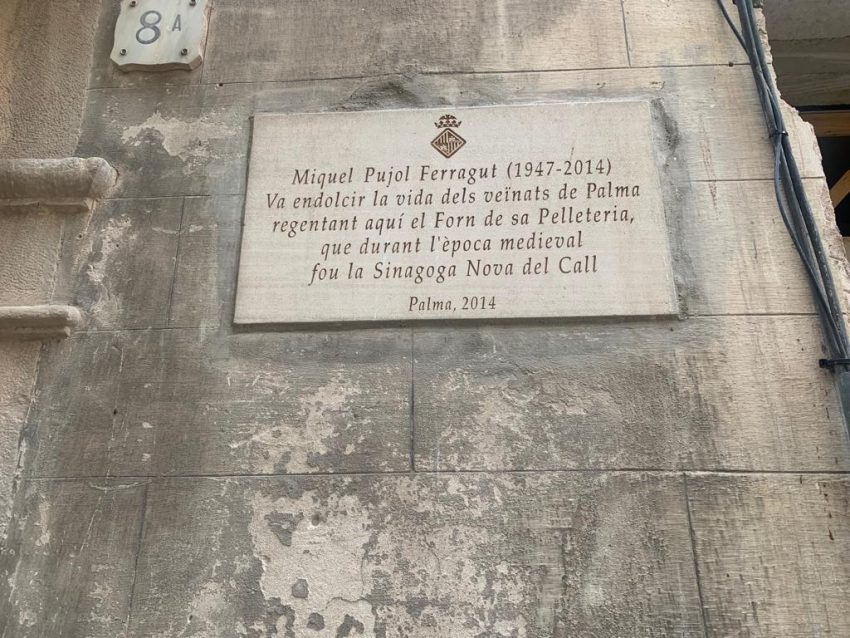
Palma’s Secret Synagogue marks the former site of a 1370 synagogue built by Aaron Mani on Carrer de la Pelleteria, once the leather-makers’ street in the old Jewish quarter. There’s no building to enter now; instead, you find it by spotting a golden SEFARAD emblem set into the pavement, part of a Spain-wide network that remembers Sephardic sites and spells “Sefarad” and “to remember” in Hebrew. The place carries the scars of the 1391 assault that shattered the community, followed by a later rebuilding by Portuguese Jews invited to resettle. Nearby details—like the wall plaque for local baker Miquel Pujol Ferragut of Can Miquel and a small cross carved into stone opposite—make the layers of memory feel immediate.
Location: Carrer de la Pelleteria, 11B, 07001 Palma, Illes Balears, Spain | Hours: Accessible at all times, as it is located in an open street rather than inside a building. | Price: There is no entrance fee; the site is part of the public street and can be visited freely. | Distance: 0.8km

18. Iglesia de Montesión
Esglesia de Monti sion de Palma
CC BY-SA 2.0 / Drozi Yarka
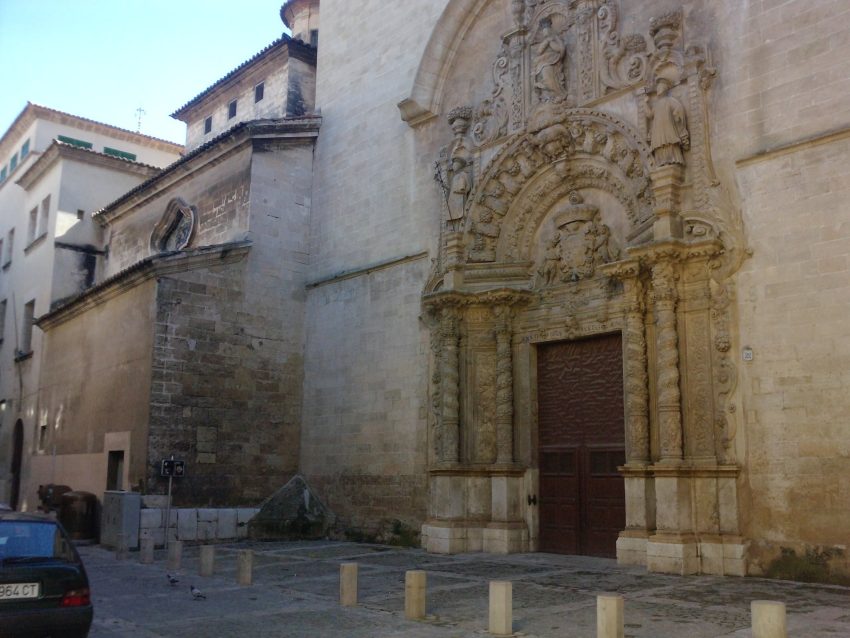
Iglesia de Montesión is a Jesuit church tucked into Palma de Mallorca’s old-town lanes, built from 1571 on the site of the former main synagogue of the Jewish quarter—an address that makes its stones feel charged with layered faiths and power shifts. Pause outside to take in the emphatic Baroque façade: Ramon de Verí’s coat of arms framed by angels, with statues of St Ignatius of Loyola and Francis Xavier standing guard. Over the doorway, the Immaculate Conception rises above a half-moon and a carved devil-beast, turning theology into street-level drama. Inside, a single nave stretches under a barrel vault, lined with twelve side chapels that create a steady rhythm of altars, paintings, and devotional figures.
Location: Monti-Sion, Palma, Spain | Hours: Opening times can vary and often follow parish or Jesuit-related activities; check the noticeboard at the church or local information before visiting. | Price: Entry is generally free; small donations of a few euros are appreciated to support maintenance. | Distance: 0.8km

19. Museo de Mallorca
Museo de Mallorca
Museo de Mallorca
CC BY-SA 3.0 / artdirector
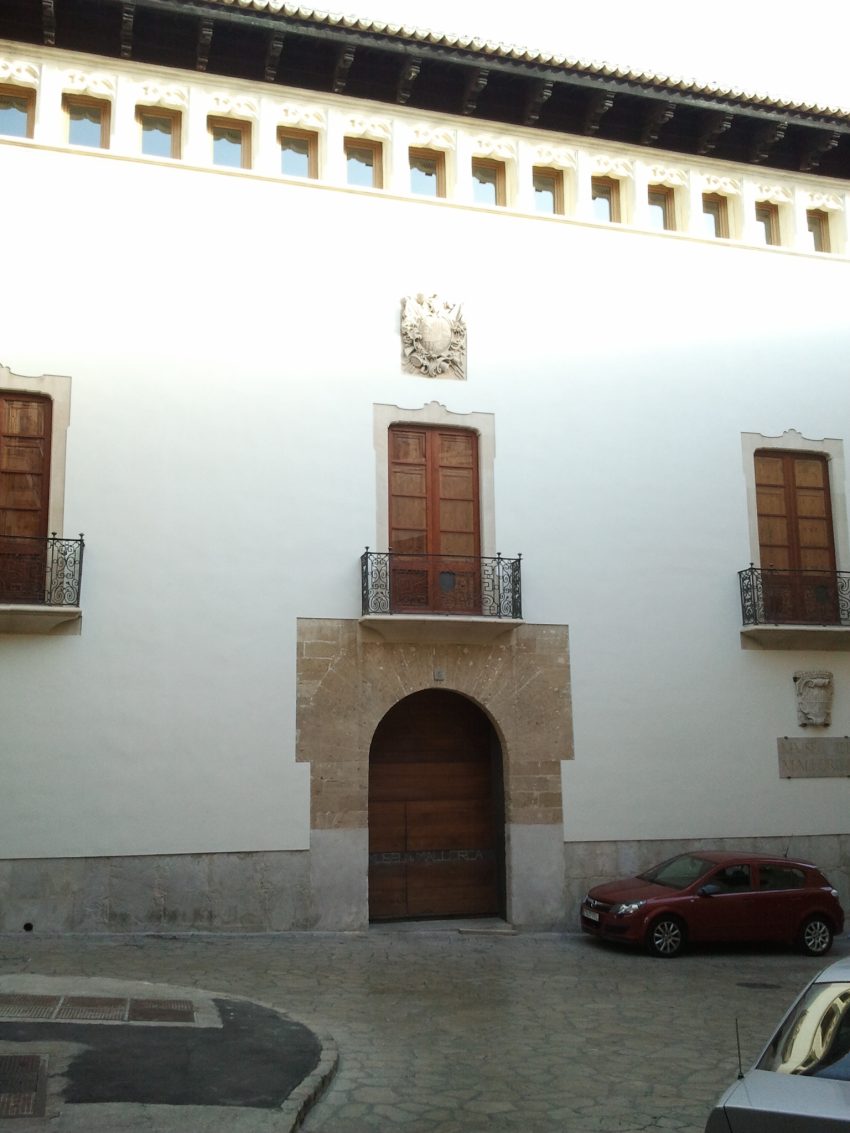
Housed in the 16th-century Casa de la Gran Cristiana, the Museo de Mallorca pairs a noble mansion’s courtyards and staircases with collections that trace the island from prehistoric settlements and Roman life to medieval and later art. The archaeology rooms mix ceramics, tools, inscriptions, and sculpture, while upper galleries shift into painting and religious works tied to local churches and patronage. A later expansion added fine and decorative arts in the Casal d’Aiamans, where tiles, furniture, and domestic objects make everyday craftsmanship feel tangible. Visitors often note it’s compact, calm even in the old-town bustle, and easy to absorb in about an hour, with striking color in several paintings.
Location: Museum of Mallorca C/ de la Portella, 5 07001 Palma Illes Balears Spain | Hours: Opening times vary by season and location; the Palma building typically keeps daytime hours with possible closures on certain days. | Price: Tickets are usually modestly priced, with possible combined options for different sections – check current details before visiting. | Distance: 0.8km

20. Royal Palace of La Almudaina

Royal Palace of La Almudaina, Palma
CC BY-SA 3.0 / Martin Furtschegger
Set beside the cathedral and facing the bay, the Royal Palace of La Almudaina is a fortified royal residence rebuilt in 1309 for King James II of Majorca, keeping its 14th-century alcázar layout. Visitors move through a medieval-feeling ground floor of stone halls with 15th-century furniture, tapestries, and art, then up to more ceremonial rooms dressed with pieces from the 17th, 18th, and 20th centuries. The Chapel of Saint Anne adds an intimate pause amid the grandeur, and the complex even preserves historic bathing facilities. Terraces and ramparts deliver wide harbour views, reinforcing its original role as both palace and stronghold.
Location: Royal Palace of La Almudaina, Carrer del Palau Reial, Palma, Spain | Hours: Winter hours (October to March). From Tuesday to Sunday: 10:00 - 18:00 Summer hours (April to September). From Tuesday to Sunday: 10:00 - 19:00 | Price: €7.00 | Website | Distance: 0.9km
Powered by GetYourGuide

21. La Seu: the Cathedral of Palma

Palma Cathedral
Palma Cathedral
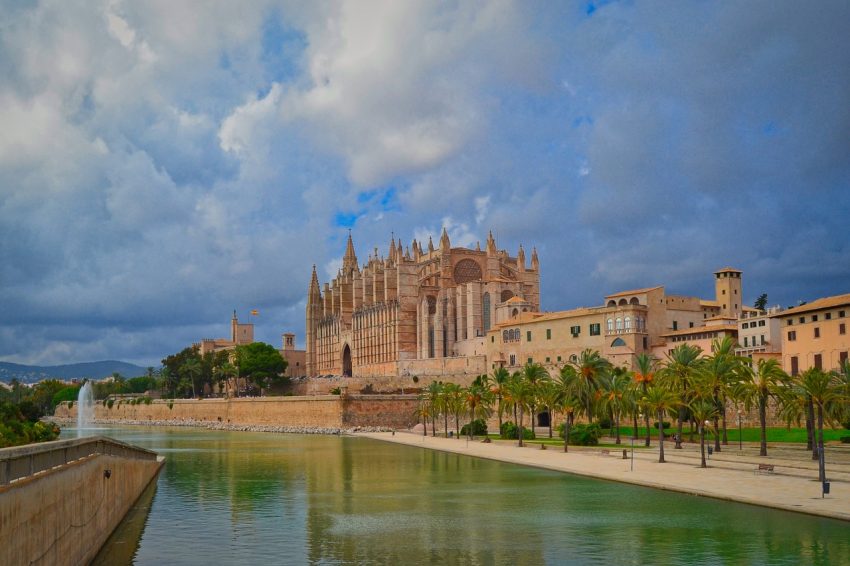
La Seu, the Cathedral of Santa Maria, rises above the seafront in warm golden stone, its Gothic mass held by delicate flying buttresses. Begun in 1230 on the site of a former mosque after James I of Aragon’s storm-time vow, it took centuries to become the vast interior visitors feel immediately: a nave about 361 feet long and soaring to roughly 145 feet. Morning light is the real spectacle, pouring through around 1,200 stained-glass pieces and a rose window about 41 feet across. On 2 February and 11 November, the “Light Game of the Eight” briefly aligns two rose windows into a figure-eight glow. Chapels shift in style, and the Trinity Chapel holds the tombs of Kings James II and James III.
Location: Catedral-Basílica de Santa María de Mallorca, Plaça de la Seu, Palma, Spain | Hours: Mondays to Fridays from 10.00 hrs (closing times depend on the time of year). Saturdays from 10.00h to 14.15 hrs. | Price: Adults €9.00; Guided Tours from €25 | Website | Distance: 0.9km
Powered by GetYourGuide

22. Teatre Municipal Xesc Forteza

Teatre Municipal Xesc Forteza
Public Domain / Chixoy
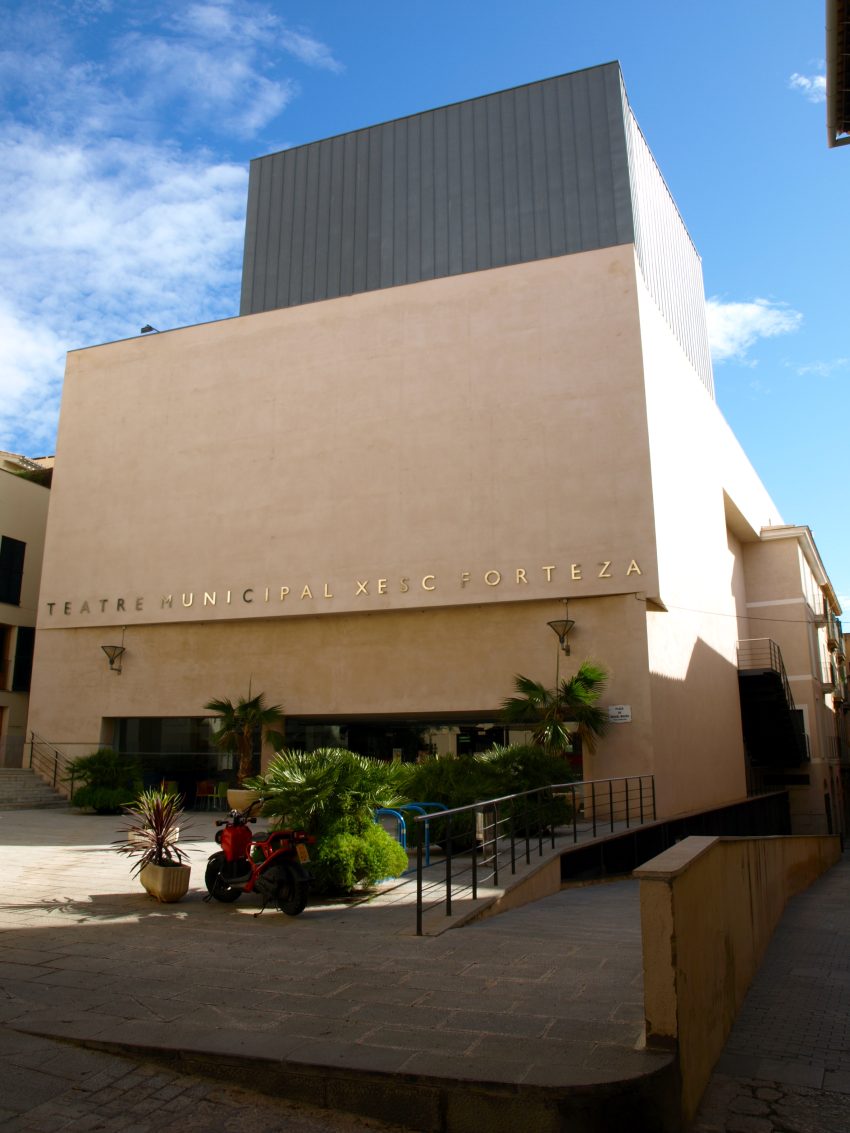
Teatre Municipal Xesc Forteza is a cube-shaped municipal performing-arts venue in Palma de Mallorca’s Sa Calatrava quarter, bringing contemporary theatre, music, and dance into one of the old town’s narrow-street settings. Opened in 2006, it seats roughly 460 people, creating an intimate auditorium where you feel close to the stage; visitors often note comfortable seating and clear acoustics. The building also houses the Municipal Elemental Conservatory of Music, so the place has a lived-in hum of rehearsals as well as evening shows. It’s named for Majorcan actor and humourist Xesc Forteza Forteza (1926–1999), a nod to local identity and the Chueta heritage woven into Palma’s past.
Location: Teatre Xesc Forteza, Carrer de la Calatrava, Palma, Spain | Hours: The theatre opens in line with its performance and rehearsal schedule; box office and foyer hours depend on the day’s programme. | Price: Ticket prices vary by performance but are generally affordable; check current rates when booking. | Website | Distance: 0.9km

23. Museu Diocesa de Mallorca
Museu Diocesa de Mallorca
CC BY-SA 4.0 / JosepBC
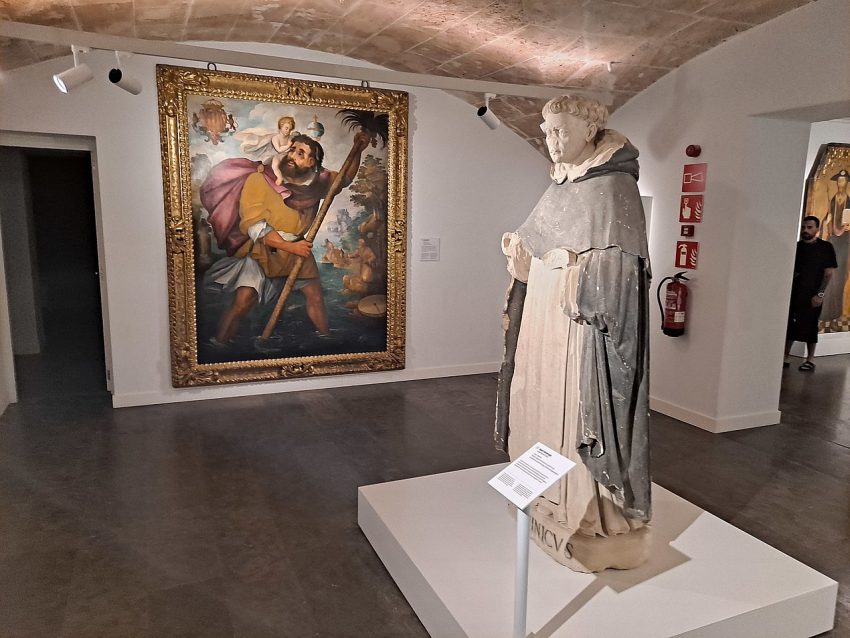
Set in a wing of the former episcopal palace behind the cathedral, the Museu Diocesa de Mallorca is a small, hushed museum that reveals the island’s religious life through objects gathered from local parishes. The 13th-century Gothic setting—stone corridors and quiet rooms—makes the visit feel contemplative rather than grand. Inside, you’ll find paintings, carved pulpits, prayer books, and devotional pieces, including a striking 17th-century image of the infant Jesus carrying a cross. Look for the portrait of Sant Jordi with medieval Palma in the background, plus Arab-patterned tapestries and ceramics spanning five centuries. Many visitors appreciate pairing it with the cathedral via a combo ticket and lingering over the rooftop harbor view.
Location: Museo de Arte Sacro de Mallorca, Carrer del Mirador, Palma, Spain | Hours: April, May and October 10am to 5.15pm June to September 10am to 6.15pm November to March 10 am to 3.15pm | Price: Adults: €4.00 | Website | Distance: 0.9km

24. Banys Arabs (Arab Baths)
Arab Baths palma de mallorca
CC BY-SA 3.0 / Ralf Roletschek - Fahrradtechnik und Fotografie
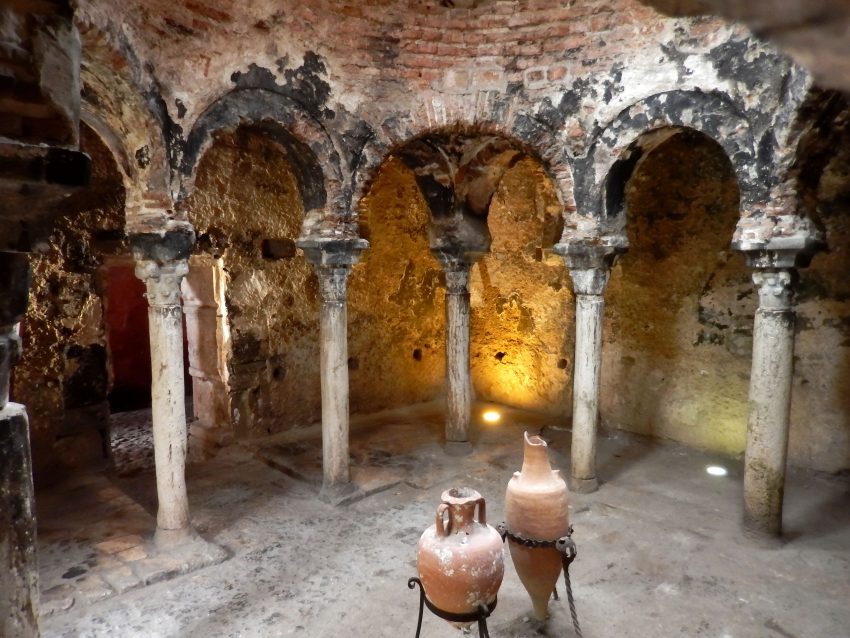
Banys Arabs (Arab Baths) is a compact 10th-century hammam complex, one of the few surviving traces of Medina Mayurqa and a rare window onto Mallorca’s Islamic-era city. Inside, the hot room is the main draw: twelve slender, mismatched Roman and Byzantine columns support brick arches and a dome punctured with small circular and star-shaped openings that scatter soft light. The adjoining warm room adds to the sense of a once-functional sequence, even though the cold room has disappeared. Afterward, step into the sheltered garden—jasmine, palms, and dense greenery with the sound of trickling water—an unexpectedly calm pause from the surrounding streets.
Location: Ancient Arab Bath house, Carrer de Can Serra, Palma, Spain | Hours: From April to November, opening hours are from 9:30 a.m. to 8:00 p.m. From December to March, opening hours are from 9:30 a.m. to 7:00 p.m. | Price: €2.50 | Distance: 0.9km

25. Royal Gardens of La Almudaina

SHort del Rei Royal Garden, Palma
CC BY-SA 3.0 / Sigismund von Dobschütz
The Royal Gardens of La Almudaina are a shaded, Andalusian-style garden terrace spread below the palace, between the old walls and the seafront. First laid out in the 14th century as a productive court garden—fruit trees, vegetables, and medicinal herbs as well as ornament—they were later squeezed by 19th-century buildings before being reimagined in the 1960s by architect Gabriel Alomar i Esteve. Today you walk past cypresses, orange trees, and murmuring fountains to a large pond where black swans drift under an Islamic arch. Modern sculptures punctuate the greenery, including the bronze “Stone Slinger,” creating a striking contrast with the palace rising above.
Location: S'Hort del Rei, Avinguda d'Antoni Maura, Palma, Spain | Hours: 24 Hours | Price: The gardens are generally free to enter | Distance: 1km

26. La Llotja
Lonja, Palma de Mallorca
CC BY-SA 4.0 / Diego Delso, delso.photo
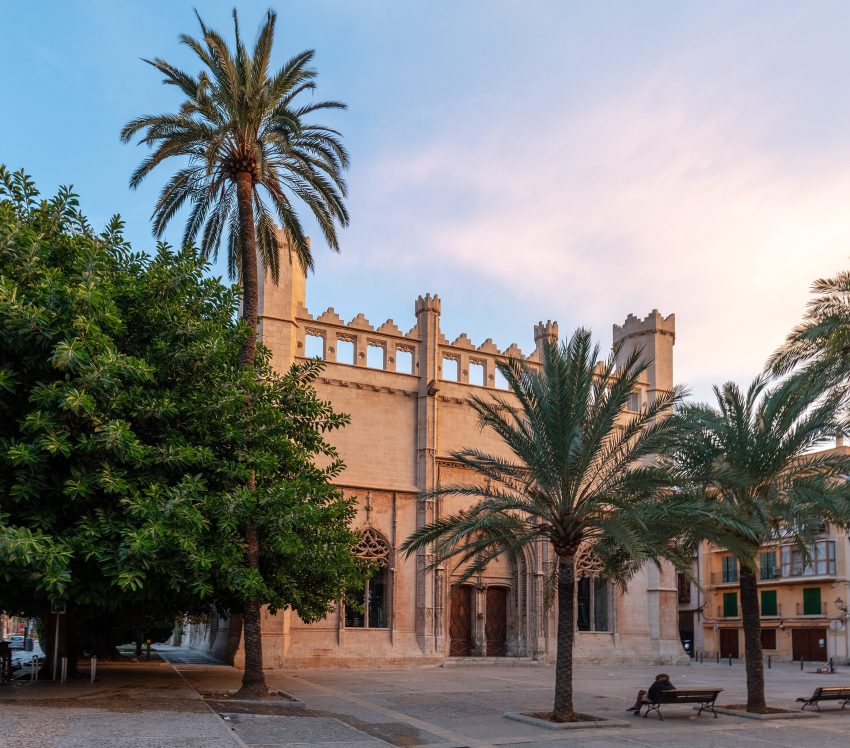
La Llotja is a 15th-century merchants’ exchange built for maritime trade, and its architecture still reads like a stone record of the city’s seafaring power. From outside, the compact, cube-like mass is strengthened by four corner towers and crisp Gothic windows, with the Angel of Merchants carved above the main portal. Inside, everything happens in one soaring hall: two rows of twisted columns spiral upward like palm trunks to carry a ribbed vault, and the light moves softly across the stone. Today it often hosts temporary exhibitions—sometimes modern sculpture—so the medieval shell feels quietly alive rather than museum-still.
Location: Llotja de Palma, Plaça de la Llotja, Palma, Spain | Hours: Typically open daily except Mondays, with hours that may vary by season and current exhibitions. | Price: Entry is often free or low cost; check current details locally before your visit. | Distance: 1.1km

27. Es Baluard Centre
Es Baluard, Palma
Es Baluard, Palma
CC BY-SA 3.0 / Olaf Tausch
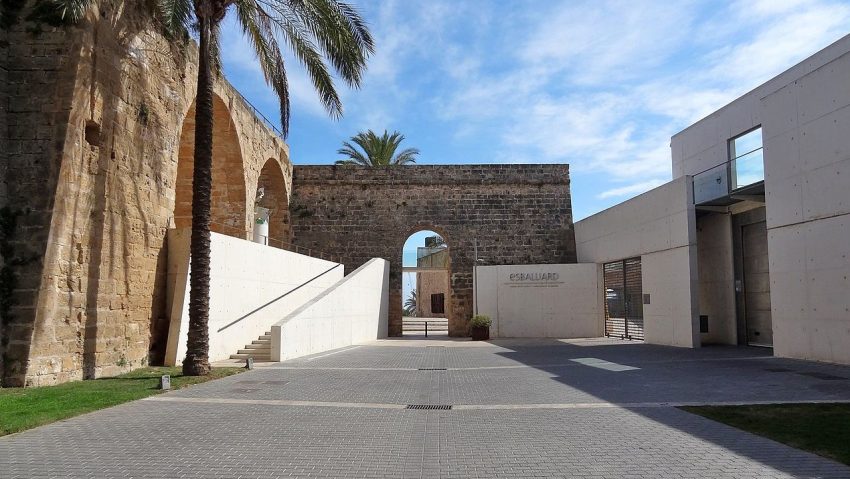
Es Baluard Centre is a modern and contemporary art museum set within a former defensive bastion built into the old city walls above the harbour. The contrast is the point: you move through clean-lined galleries of international work—names like Cézanne, Gauguin, Picasso, Miró and Magritte—then step onto terraces where the stone ramparts frame wide sea views. Inside, the collection also leans into Mediterranean light and Balearic-linked artists such as Santiago Rusiñol, Anglada-Camarasa and Gelabert, grounding big art movements in a local palette. Temporary exhibitions keep the rooms changing, while the architecture—part fortress, part cultural space—stays the most memorable constant.
Location: Es Baluard Museo de Arte Moderno y Contemporáneo, Plaça de la Porta de Santa Catalina, Palma, Spain | Hours: Winter-time (until 31 May): Tuesday - Sunday 10:00 - 20:00. Summer-time (1 June - 30 September): every day 10:00 - 24:00. Closed on the 26 of December & 1st of January. | Price: Adults: €6.00 | Website | Distance: 1.2km

28. Pueblo Español

Pueblo Espanol, Palma de Mallorca
CC BY-SA 3.0 / Martin Furtschegger
Pueblo Español (Poble Espanyol) is an open-air “Spanish Village” built as a planned collage of architecture from across the country, letting you wander a condensed map of styles in a single, quiet complex. Streets and plazas are lined with scaled-down echoes of landmarks from places like Córdoba, Toledo, and Madrid, alongside simpler regional houses that show how grand motifs filter into everyday buildings. The most memorable corner is the Alhambra-inspired set—salon, baths, and a patio where arches, tiles, and water details suggest Nasrid elegance. Pause in the Plaza Mayor for a café terrace, then browse pearl and souvenir shops or peek into artisan workshops. Many visitors mention how photogenic and unexpectedly uncrowded it can feel.
Location: Pueblo Espanol, Carrer del Poble Espanyol, Palma, Spain | Hours: Opening hours (summer): From Monday to Sunday from 10:00 to 18:00. Opening hours (winter): From Monday to Sunday from 09:00 to 17:00 | Price: €10 Adults | Website | Distance: 2.2km

29. Castell de Bellver (Bellver Castle)

Castell de Bellver, Palma de Mallorca
Copyleft / Taxiarchos228
Castell de Bellver is a 14th-century royal fortress on a pine-covered hill, built for King James II and famed for its perfectly circular plan. The two-level courtyard is wrapped in Gothic arcades, with a central well hinting at the cistern that once kept the castle supplied. Climb to the battlements and you’ll remember the wide sweep over the harbour, the bay, and the coastline, with the castle’s round towers and moat close at hand. Inside, Palma’s History Museum traces the city’s story from Roman roots through the island kingdom era, while lower rooms still feel like the prison it later became. The name’s old Catalan sense—“beautiful view”—makes immediate sense.
Location: Castell de Bellver, Carrer Camilo José Cela, Palma, Spain | Hours: From October to March: Monday: CLOSED - From Tuesday to Saturday: from 10 a.m. to 6 p.m. - Sundays and public holidays: from 10 a.m. to 3 p.m. From April to September: Monday: CLOSED - From Tuesday to Saturday: from 10 a.m. to 7 p.m. - Sundays and public holidays: from 10 a.m. to 3 p.m. | Price: Adults: €4.00 | Website | Distance: 3.2km

30. Joan Miró Museum

Joan Miro museum
Joan Miro museum
CC BY-SA 1.0 / Pensierarte
Set on the hillside above Cala Major, the Fundació Pilar i Joan Miró lets you step into the working world Miró built late in life, rather than a conventional gallery. The complex links light-filled galleries in a contemporary building (opened in 1992, with architecture by Rafael Moneo) to two preserved studios: Son Boter, where paint marks and wall drawings still feel freshly made, and the purpose-built Taller Sert with its calm, controlled light. Outside, sculpture-dotted gardens blur art and landscape, with Mediterranean air and sea views shaping the mood. The collection spans paintings, drawings, sculpture and graphic work, with occasional contemporary pieces that echo his language.
Location: Fundació Miró Mallorca, Carrer de Saridakis, Palma, Spain | Hours: Winter ( 16-09 / 15-05 ): Tuesday, Wednesday, Thursday, Friday and Saturday from 10:00 to 18:00; Sunday and holidays from 10 to 15h; Monday closed Summer ( 16-05 / 15-09 ): Tuesday, Wednesday, Thursday, Friday and Saturday from 10:00 to 19:00; Sunday and holidays from 10 to 15h; Monday closed | Price: Adults: €18.00 | Website | Distance: 4.4km
Powered by GetYourGuide

Best Day Trips from Palma de Mallorca

A day trip from Palma de Mallorca offers the perfect opportunity to escape the urban rhythm and discover the surrounding region's charm. Whether you're drawn to scenic countryside, historic villages, or cultural landmarks, the area around Palma de Mallorca provides a variety of easy-to-reach destinations ideal for a one-day itinerary. If you are looking to rent a car in Spain I recommend having a look at Discover Cars, first, as they compare prices and review multiple car rental agencies for you.

1. Palma Aquarium
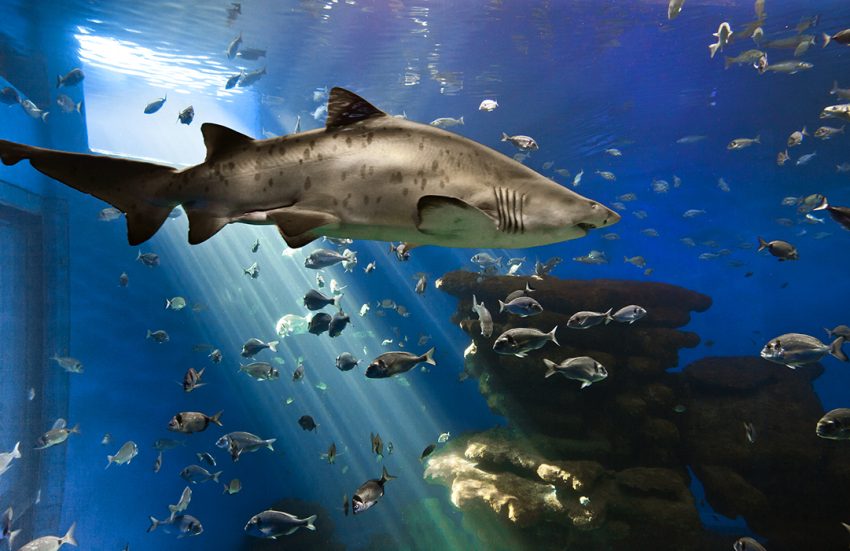
Palma Aquarium
Palma Aquarium
CC BY-SA 2.0 / palma aquarium
Just 500 metres from Playa de Palma, Palma Aquarium brings the Mediterranean and three oceans together in one immersive marine park. Opened in 2007 and run by Coral World International, it houses 55 tanks and more than 700 species from the Mediterranean, Indian, Atlantic and Pacific, making it one of the top attractions in Palma de Mallorca for families, ocean…
Location: Palma Aquarium, Carrer de Manuela de los Herreros, Palma, Spain | Hours: Mon-Friday: 10:00 to 15:50; Weekends: 10:00 to 17:50; | Price: From €30.50 | Website | Distance: 8km
Visiting Palma Aquarium
Powered by GetYourGuide

2. Royal Carthusian Monastery, Valldemossa
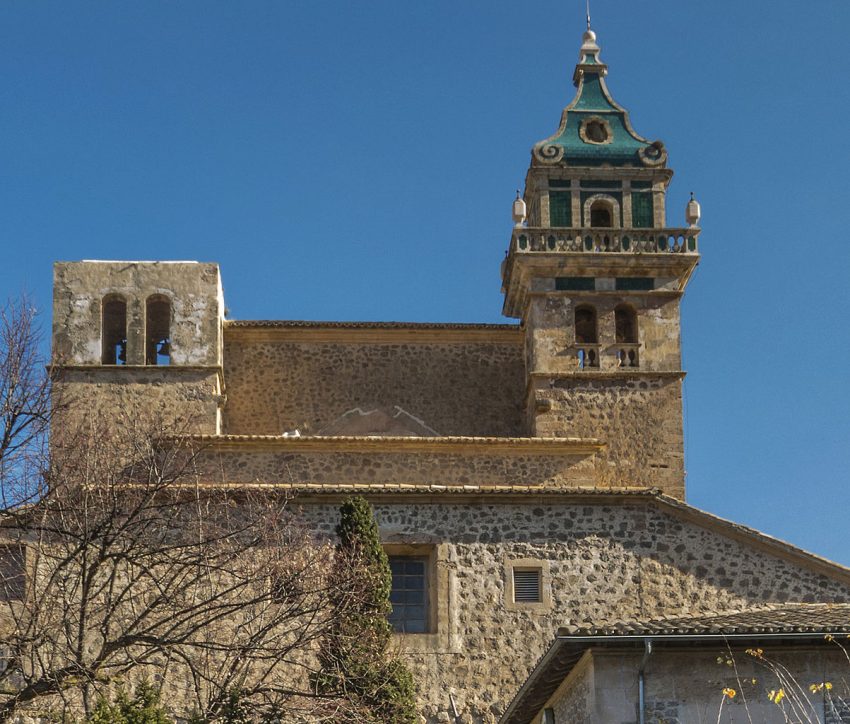
Cartoixa Valldemossa
CC BY-SA 3.0 / Vicenç Salvador Torres Guerola
Tucked into the stone-built village of Valldemossa in the Tramuntana mountains, the Valldemossa Monastery (Real Cartuja) feels like a self-contained world of cloisters, gardens and echoing corridors, a place where time slows and stories linger in the air. Once a royal residence chosen by King Jaume II for his son Sancho, the complex became a Carthusian monastery in 1399 and…
Location: Carthusian Monastery Valldemossa, Plaça Cartoixa, Valldemossa, Spain | Hours: Hours: I 10:00 a.m. to 5:00 p.m. Monday to Friday. 10:00 a.m. to 4:00 p.m. Saturdays | Price: €12.00 | Website | Distance: 15.3km
Visiting Royal Carthusian Monastery, Valldemossa

3. Pollenca
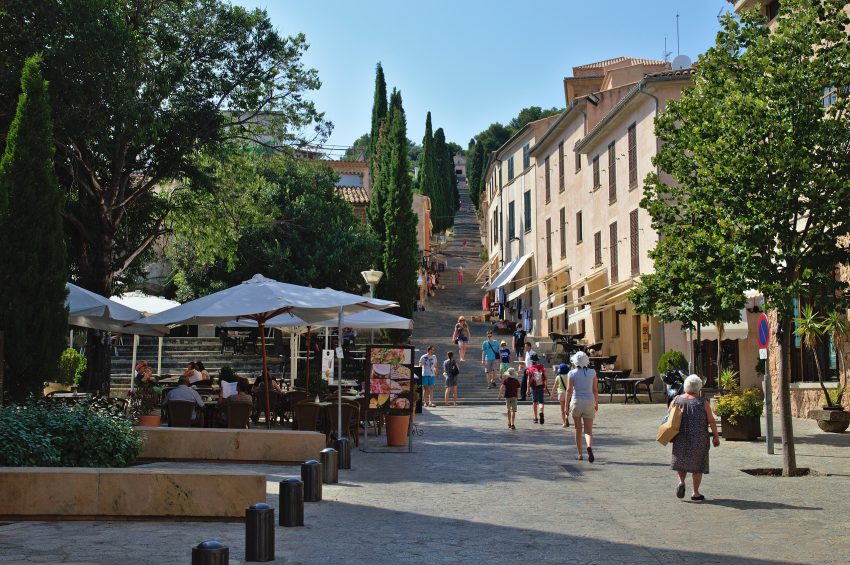
Pollenca
Pollenca
CC BY-SA 4.0 / Denis P.
Nestled at the eastern edge of the Serra de Tramuntana, Pollença, also spelled as Pollenca or Pollensa, is a captivating rural town steeped in history. This charming Mallorcan town boasts a wealth of ancient architecture crafted from blonde stone, setting it apart from many other tourist-driven destinations. While tourism has long been a draw here, Pollensa has managed to embrace…
Visiting Pollenca
Powered by GetYourGuide

4. Es Pontàs

Es Pontas, Cala Santanyi
CC BY-SA 4.0 / Tnv Fotografie (Vinh Tran)
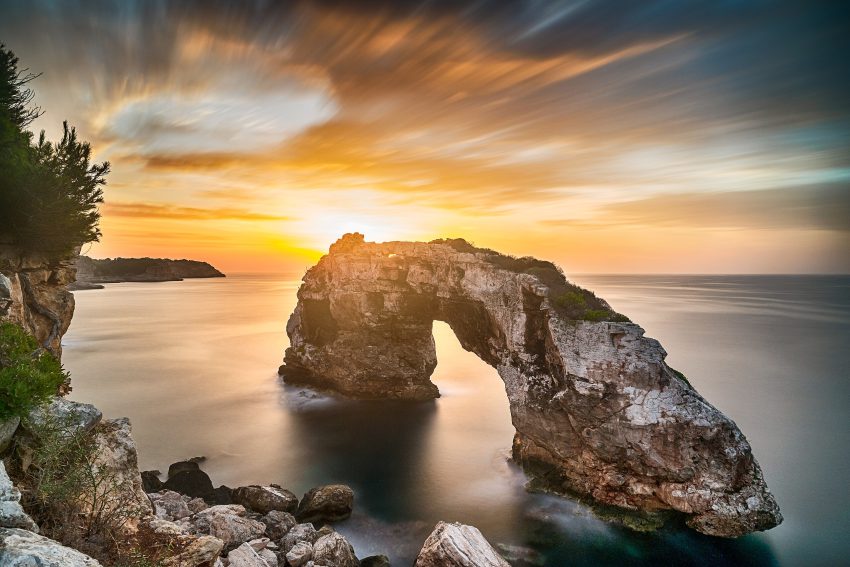
On Mallorca’s south-eastern coast, Es Pontàs rises from the sea like a giant stone doorway, a natural limestone arch that has become one of the must-see places in Mallorca for photographers, hikers and anyone who loves rugged coastal scenery. The grand bridge, as its Catalan name suggests, stands around 20 metres high between Cala Santanyí and Cala Llombards, its base…
| Hours: Open at all times as a natural site, though it is safest and most enjoyable to visit in daylight and in good weather. | Price: Free – Es Pontàs is a natural coastal viewpoint with no entrance fee. | Distance: 50.3km
Visiting Es Pontàs

5. Cuevas del Hams

Coves dels Hams
Coves dels Hams
Free Art License. / A.Savin
Cuevas dels Hams is one of Mallorca’s most visitor-friendly cave experiences, set just inland from the fishing-port feel of Porto Cristo on the island’s east coast. The visit is designed as an easy, guided route through a series of chambers where stalactites and stalagmites curve into the “hams” shapes that give the caves their name—an otherworldly, almost sculpted look you…
Location: Cuevas Dels Hams, Ctra. Ma-4020 Manacor–Porto Cristo, Porto Cristo, Spain | Hours: Daily: 10:00–17:00. | Price: Adults: €17; Children (3–12): €11; Under 3: free. | Website | Distance: 57.2km
Visiting Cuevas del Hams

6. Cuevas del Drach
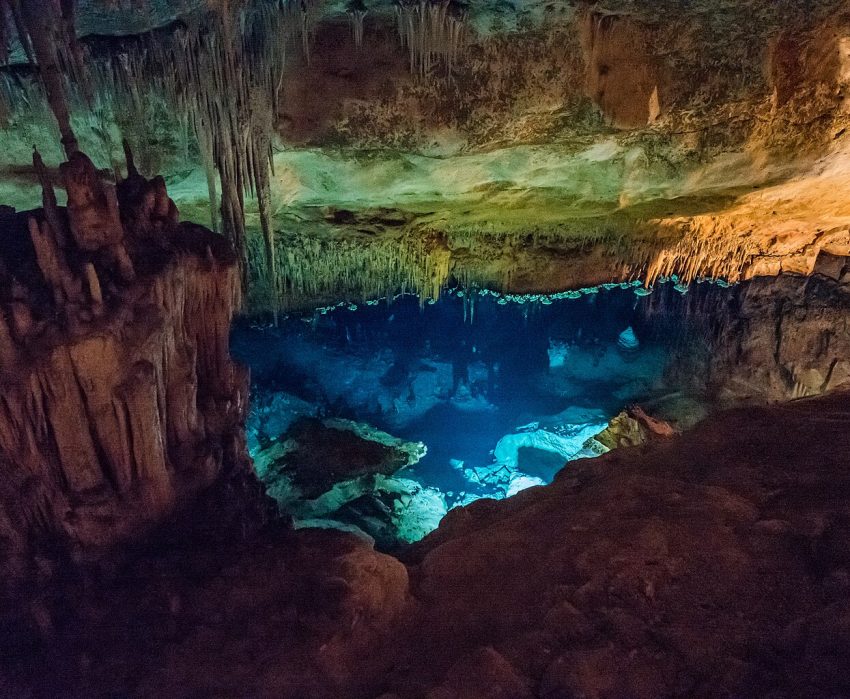
Cuevas del Drach
Cuevas del Drach
CC BY-SA 2.0 / Sergiy Galyonkin
On Mallorca’s eastern coast, just a short walk from Porto Cristo, the Cuevas del Drach open up into an entirely different world beneath the surface. Known since the Middle Ages but only fully mapped in 1896 by French geologist E.A. Martel, these caves extend for more than 1,200 metres and reach depths of around 25 metres, maintaining a constant temperature…
Location: Cuevas del Drach, Carretera de les Coves, Porto Cristo, Spain | Hours: 01 November to 12 March: 10:30 a.m., 12 p.m., 2 p.m. and 3:30 p.m. 13 March to 31 October: 10 a.m., 11 a.m., 12 p.m., 2 p.m., 3 p.m., 4 p.m. and 5 p.m. | Price: €16,50 | Website | Entrance, Music Concert and Boat Trip Tickets | Distance: 58.1km
Visiting Cuevas del Drach
Powered by GetYourGuide

7. Capdepera Lighthouse

Far de Capdepera
Far de Capdepera
CC BY-SA 3.0 / Frank Vincentz
Perched high on the Punta de Capdepera coastline, Capdepera Lighthouse marks the easternmost point of Mallorca and feels every bit like the end of the island. Commissioned by Queen Isabel II and completed in 1861, this white tower with its lantern sits around 55 metres above sea level, guiding ships that cross the tricky waters between France and Menorca and…
Location: Capdepera Lighthouse, Carrer de sa Comassa, Spain | Hours: The exterior viewpoints are generally accessible at all times, but daylight hours are safest and most rewarding for views and photography. | Price: Free – there is no admission charge to enjoy the lighthouse surroundings and viewpoints. | Distance: 72.2km
Visiting Capdepera Lighthouse

8. Ciutadella de Menorca

Aerial view of Ciutadella de Menorca
Ciutadella de Menorca
Ciutadella de Menorca is the kind of place that makes you slow down without trying. It sits on the far western side of Menorca in Spain’s Balearic Islands, and it’s compact enough to explore on foot while still feeling properly “town-like” with its grand stone façades, little squares, and a harbour that pulls you down to the water again and…
Visiting Ciutadella de Menorca
Powered by GetYourGuide

9. Ibiza Town

ibiza town
ibiza town
Ibiza Town, the capital and largest city on the island, overlooks the Mediterranean and truly offers something for everyone. The nightlife is legendary, featuring world-class restaurants and a diverse selection of bars in the charming Old Town and the trendy Marina Botafoch. Known as Eivissa in Catalan, it is also home to the iconic Pacha nightclub, where the world's top…
Visiting Ibiza Town
Powered by GetYourGuide

10. Mahon

Mahon, Menorca
Mahon, Menorca
Mahón (Maó) sits on the eastern side of Menorca in Spain’s Balearic Islands, and it works well as a base if you want a harbour city with easy access to beaches, villages, and coastal walks. The first impression is the port: long, sheltered, and busy enough to feel alive without turning into a resort strip. Plan to spend time simply…
Visiting Mahon

Where to Stay in Palma de Mallorca

The best area to stay is in the Old Town, where luxury hotels and boutique stays offer proximity to the cathedral, historic streets, and lively tapas bars. For a more seaside experience, accommodations near the Paseo Marítimo or Portixol provide beautiful harbor views and easy access to beaches.

A 3 to 4-day stay is perfect for exploring Palma’s cultural sites, shopping, and enjoying its food scene. A 5-day stay allows for day trips to the Tramuntana mountains, Sóller, or the stunning beaches of Mallorca.

Using the our Hotel and Accomodation map, you can compare hotels and short-term rental accommodations in Palma de Mallorca. Simply insert your travel dates and group size, and you’ll see the best deals for your stay.

Palma de Mallorca Accommodation Map

Best Time to Visit Palma de Mallorca

The most favourable time to visit Mallorca is during the shoulder seasons, particularly in May, early June, late September, and October. These months offer a perfect harmony of pleasant weather and fewer crowds, with the advantage of either avoiding or post-summer crowds while still enjoying warm and sunny conditions.

Palma in the Spring

During spring, which includes the end of April, May, and the beginning of June, Mallorca experiences warm temperatures ranging from 20 to 27 degrees Celsius. This season is conducive to outdoor activities, making it an excellent time for activities like hiking. It’s worth noting that if you plan to visit the beaches, timing your trip for June or September may be more suitable, as May can vary in terms of warmth.

Palma in the Autumn or Fall

Autumn, spanning the end of September, October, and the beginning of November, is another appealing time to explore Mallorca. With reduced crowds, warm temperatures persist, and the water remains inviting enough for a swim. Additionally, fall brings lower prices, offering better deals on flights and accommodations. The grape harvest season from August to October adds to the attractions, providing an opportunity to explore vineyards and indulge in the local wines.

Palma in the Summer

Conversely, July and August mark the peak of the summer season, attracting a significant influx of tourists. While the atmosphere is lively, these months come with downsides such as long lines, crowded streets, and elevated prices. Visitors who prefer a more relaxed experience may find it beneficial to avoid Mallorca during this period.

Palma in the Winter

Finally, winter, from December to February, is the quietest time on the island. However, this tranquillity is accompanied by potential closures of tourist attractions and restaurants, particularly in beach towns. While winter offers a peaceful and budget-friendly visit, it may not be suitable for those seeking vibrant nightlife or cultural events due to possible closures.

Annual Weather Overview

  • January 15°C
  • February 15°C
  • March 17°C
  • April 19°C
  • May 24°C
  • June 30°C
  • July 30°C
  • August 29°C
  • September 28°C
  • October 25°C
  • November 19°C
  • December 16°C

How to get to Palma de Mallorca

Travelling to Palma by Plane

Palma Airport, also known as Son Sant Joan Airport, is located 8 kilometres east of Palma. As a major international airport, it stands as the third largest in Spain, following Madrid and Barcelona. Particularly during the summer, it ranks among the busiest airports in Europe, well-equipped to handle the millions of tourists passing through annually. The airport is efficiently connected with excellent bus services linking Palma and various destinations across the island.

While certain international flights are seasonal, operating between May and October, there is a growing trend of airlines extending their services throughout the year. Mallorca is evolving into a year-round destination, with increasing international routes available even during the winter months. Notably, major airports in the UK, Germany, and Scandinavia are seeing more frequent connections. Additionally, domestic travel to mainland Spain remains accessible year-round, with destinations including Barcelona, Madrid, Valencia, Ibiza, Menorca, and Seville.

Upon arriving at the airport, various transportation options are available to reach your accommodation:

  • Bus: Exit the airport from the “Arrivals” area, where you’ll find the bus stop (blue buses). Line A1 of the EMT connects to the city for 5€, and line A2 connects to the El Arenal area. In the summer, Aerotib (yellow buses) provides connections to other parts of the island (lines A11, A32, A42, and A51). Additional information can be found [here](link to information).
  • Taxi: The taxi rank is also located in the “Arrivals” area. The approximate cost of a ride from the airport to Palma is €20. If you’re heading to another part of the island, be sure to confirm the price with the taxi driver before departing.
  • Private Transfer: For a comfortable and fast option, you can book a shuttle from Mallorca Airport to your accommodation. This service eliminates concerns, picking you up at the airport and transporting you directly to your hotel. It’s a recommended alternative, especially if you don’t plan to travel around the island extensively or if you intend to use alternative means of transportation, such as a bicycle, later on.
  • Car Rental: Renting a car is the optimal choice to ensure you don’t miss anything in Mallorca. Public transport on the island is limited, making a car essential for discovering all the island’s secrets and beautiful corners, away from purely touristy areas.

Travelling to Palma by Ferry

For those considering travel to Mallorca by car, coach, or train, ferry transportation to the island is often a part of the journey. The primary ferry companies serving Mallorca include Baleària, Trasmediterranea, and Corsica Ferries. The main departure points in Spain are Barcelona (with a sailing time of 7.5 hours), Valencia (8 hours sailing time), Dénia (near Alicante, with an 8-hour sailing time), as well as the nearby Balearic islands of Ibiza (4 hours sailing time) and Menorca (1.5 hours sailing time). Express services are available to reduce travel time.

Additionally, Corsica Ferries offers a route from Toulon, located in southern France near Marseille, to Port d’Alcudia in approximately 10 hours. These ferry options provide alternative and scenic travel choices to reach the picturesque island of Mallorca.
 

More from this area