Arco de Felipe V, Ronda
City Gate in Ronda
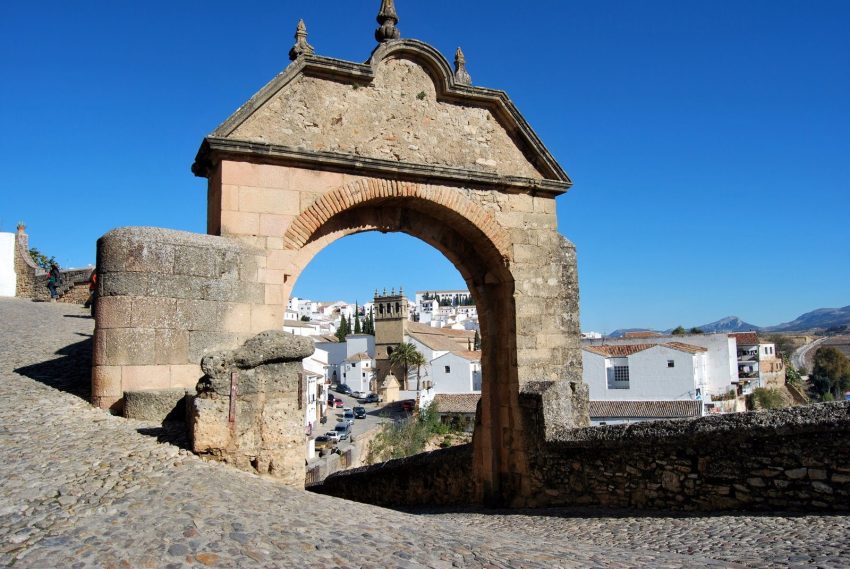
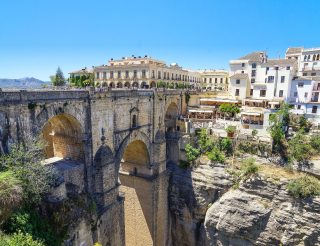
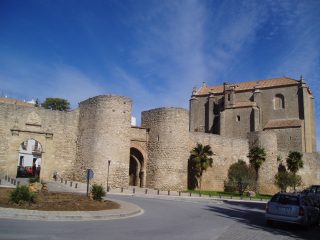
Arco de Felipe V is one of Ronda's most characterful “threshold” monuments: a stone gateway built into the city's defensive belt, marking where routes once funneled people and goods into the old medina. You'll find it just south of Puente Viejo, in the eastern stretch of the walled area-an ideal spot to pause, look back toward the gorge, and imagine the town when gates and walls defined everyday movement.
What makes this gate especially satisfying is how quickly it adds context to your day. It's one of the things to see in Ronda when you're already exploring the older quarter, and it fits naturally into a walking tour of Ronda because it links the bridges, the lower approaches, and the eastern wall line into one coherent story.
Table of Contents
- History and Significance of the Arco de Felipe V
- Things to See and Do in the Arco de Felipe V
- How to Get to the Arco de Felipe V
- Practical Tips on Visiting the Arco de Felipe V
- Where to Stay Close to the Arco de Felipe V
- Add a Is the Arco de Felipe V Worth Visiting?
- For Different Travelers
- FAQs for Visiting the Arco de Felipe V
- Nearby Attractions to the Arco de Felipe V
History and Significance of the Arco de Felipe V
Ronda's geography made it a strategic enclave for centuries, and under Arab rule the city reached its widest walled configuration, with the Guadalevín gorge guarding the north and fortified lines reinforcing the south, east, and west. The Arco de Felipe V sits within this historic defensive logic, close to an area that would have been critical to protect given its role as a workable approach route rather than an impassable cliff edge.
The gate you see today replaced an earlier entrance traditionally associated with the “Gate of the Bridge,” a key access point into the Arab medina. Its location is no accident: it’s close to the lower approaches and the area historically connected to everyday necessities, including bathing and water-related infrastructure, which meant this corridor needed both control and protection.
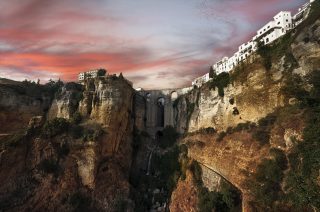
The current structure was rebuilt in the mid-18th century, in a period when the city needed to improve circulation following the collapse of the first Puente Nuevo in 1741. With flows of people and goods redirected, the entrance became more important, and the older gate was deteriorating in an exposed, windy position. The replacement marked a practical upgrade, but it also became a symbolic one-an emblematic monument that still reads as a statement of authority set into the walls.
Things to See and Do in the Arco de Felipe V
Start by taking in the form: a double stonework arch built in ashlar masonry, topped by three pinnacles that give it a ceremonial silhouette. On the outer face, look for the Bourbon royal shield and the Anjou shell motif-details that shift the experience from “old stone gate” to something explicitly political and commemorative.
Then step back and notice the setting. Because it sits just south of Puente Viejo, you can use it as a transition point between bridge viewpoints and the quieter lanes that lead deeper into the historic quarter. It's also a good place to slow down and think about city defenses as a system-how walls, gates, and bridges worked together to control access rather than simply block it.
Photographically, the gate works best when you capture it as part of the walled belt rather than isolating it. Try framing the arch with the slope of the street, or shooting from an angle that hints at the nearby bridge route-images that tell a “route into the city” story tend to feel more Ronda than a straight-on snapshot.
How to Get to the Arco de Felipe V
Most visitors reach Ronda via Málaga Airport, then continue inland to the city by train, bus, or car. For the best deals and a seamless booking experience, check out these flights to Ronda on Booking.com. Seville Airport is another common option if you're building a wider Andalusia itinerary that includes Ronda. For the best deals and a seamless booking experience, check out these flights to Ronda on Booking.com.
Ronda is accessible by train, and arriving this way makes it easy to explore the old town without needing a vehicle once you're in the centre. Train schedules and bookings can be found on Omio. From the station, you can walk into town or take a short taxi ride toward the historic quarter, then follow signs and pedestrian routes toward Puente Viejo.
Local buses and taxis are practical if you want to save time or energy, especially if you’re planning a long day on foot. If you’re driving, park in a central car park and walk from there, since the old-town streets around the walls are easier to enjoy without navigating narrow lanes. If you are looking to rent a car in Spain I recommend having a look at Discover Cars, first, as they compare prices and review multiple car rental agencies for you.
Practical Tips on Visiting the Arco de Felipe V
- Entrance fee: Free
- Opening hours: 24 Hours
- Best time to visit: Early morning is ideal for a calmer look and cleaner photos without crowds funneling between bridges and viewpoints. Late afternoon is also rewarding if you want warmer light on the stonework and a livelier atmosphere in the lanes.
- How long to spend: 10-20 minutes is enough for a good stop, photos, and a quick context pause, but it’s best enjoyed as part of a longer walls-and-bridges walk. If you like slow-looking and details, budget 30 minutes to linger and connect it to nearby viewpoints.
- Accessibility: The gate is reached via historic streets that can be sloped and uneven, with paving that may feel slippery when wet. If mobility is limited, approach it as a short, targeted stop and avoid rushing on steeper sections.
- Facilities: There are no dedicated facilities at the monument itself, so plan restrooms and breaks around cafés and plazas in the historic centre. Carry water if you’re doing a longer route linking bridges, walls, and lower-town sights.
Where to Stay Close to the Arco de Felipe V
For a culture-heavy itinerary, the best area to base yourself is central Ronda near the old town and main sights so you can walk everywhere and visit key monuments at quieter times; if your priority is transport convenience for day trips or onward travel, staying nearer the train station can simplify logistics while still keeping the historic quarter reachable.
For an iconic location close to the gorge and the main promenade routes, Parador de Ronda is a strong base. For a classic, comfortable stay with easy access to both viewpoints and old-town streets, Catalonia Reina Victoria works well. For a smaller, characterful option that suits historic-lane wandering, Soho Boutique Palacio San Gabriel is a great fit.
Add a Is the Arco de Felipe V Worth Visiting?
Yes, especially if you enjoy the “connective tissue” of a historic city-the places that explain how people entered, moved through, and experienced Ronda long before modern tourism. The gate is quick to see, visually distinctive, and unusually well placed for understanding the relationship between bridges, walls, and the eastern approach.
It's also worth it because it doesn't require a special detour. If you're anywhere near Puente Viejo or exploring the lower approaches, stopping here adds context with minimal effort and makes your route feel more intentional.
What Other Travellers Say...

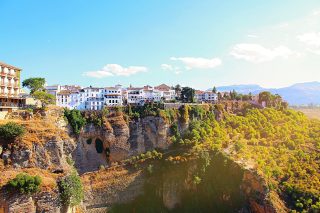
Arco de Felipe V on C. Real in Ronda is a historic city gate set into the old walls near the Puente Viejo; visitors praise its commanding viewpoints and photo opportunities, note the lovely white village visible down the path, and describe it as a must-see spot that invites a moment of contemplation about the many people who have passed beneath the arch.


For Different Travelers
Families with Kids
This is a good family stop because it’s short, visual, and easy to frame as a “city gate” story-who got in, who guarded it, and why gates mattered. It works best as a quick checkpoint on a longer walk, rather than a destination you build the day around.
Keep an eye on footing, especially if kids are excited and moving fast on sloped streets. Pair it with a nearby viewpoint or plaza break so the walk stays comfortable and varied.
Couples & Romantic Getaways
For couples, Arco de Felipe V is a lovely in-between moment-a quiet, historic landmark that feels more local than the headline viewpoints. It's especially enjoyable when you're wandering without rushing, letting the old town unfold in small discoveries.
It pairs well with a relaxed route: bridge views first, then the gate, then a slow café stop. That rhythm makes the city feel layered rather than like a checklist.
Budget Travelers
This is an excellent budget-friendly stop because it’s part of the public streetscape and adds genuine historical depth without costing anything. If you’re building a day around free viewpoints and walks, the gate gives you a strong “heritage anchor” in the middle of the route.
To get more value, link it with the nearby walls and lower-town approach paths so it becomes part of a coherent defensive-history loop.
History Buffs
History lovers will appreciate the gate as a practical response to changing infrastructure and flows, particularly after the collapse of the first Puente Nuevo in 1741. It's a reminder that cities evolve defensively and economically, not just aesthetically, and that a “rebuild” can be both functional and symbolic.
The heraldic details are also part of the appeal, turning a defensive entrance into a statement of power. Spend a moment reading the stone as propaganda as well as architecture.
FAQs for Visiting the Arco de Felipe V
Getting There
Tickets & Entry
Visiting Experience
Tours, Context & Itineraries
Photography
Accessibility & Facilities
Food & Breaks Nearby
Safety & Timing
Nearby Attractions to the Arco de Felipe V
- Puente Viejo: Ronda's oldest bridge, a compact crossing with a strong sense of historic route-making between quarters.
- Baños Árabes de Ronda: Exceptionally preserved medieval baths that add context to the lower approaches near the old medina.
- Muralla de Levante: A key eastern wall stretch showing how Ronda defended the side without sheer gorge cliffs.
- Puente Nuevo: The iconic bridge and the essential panorama over El Tajo that defines the city's identity.
- Jardines de Cuenca: Gorge-edge terraced gardens with changing perspectives of the cliffs, bridges, and old town.
The Arco de Felipe V appears in our Complete Guide to Visiting Ronda!

Moira & Andy
Hey! We're Moira & Andy. From hiking the Camino to trips around Europe in Bert our campervan — we've been traveling together since retirement in 2020!
This website uses affiliate links which may earn a commission at no additional cost to you!
Planning Your Visit
24 Hours
Free
Nearby Attractions
- Palacio del Marqués de Salvatierra (0.0) km
Palace - Puente Árabe (0.0) km
Bridge - Puente Viejo (0.0) km
Bridge - Baños Árabes (0.1) km
Baths and Convent - Casa del Rey Moro (0.1) km
Gardens and Historic Building - Puerte de la Cijara (0.1) km
City Gate - Jardines de Cuenca (0.1) km
Gardens - Museo Lara (0.2) km
Museum - San Sebastian Minaret (0.2) km
Minaret - Mirador de Aldehuela (0.2) km
Viewing Point