Torre del Oro, Seville
Museum and Tower in Seville
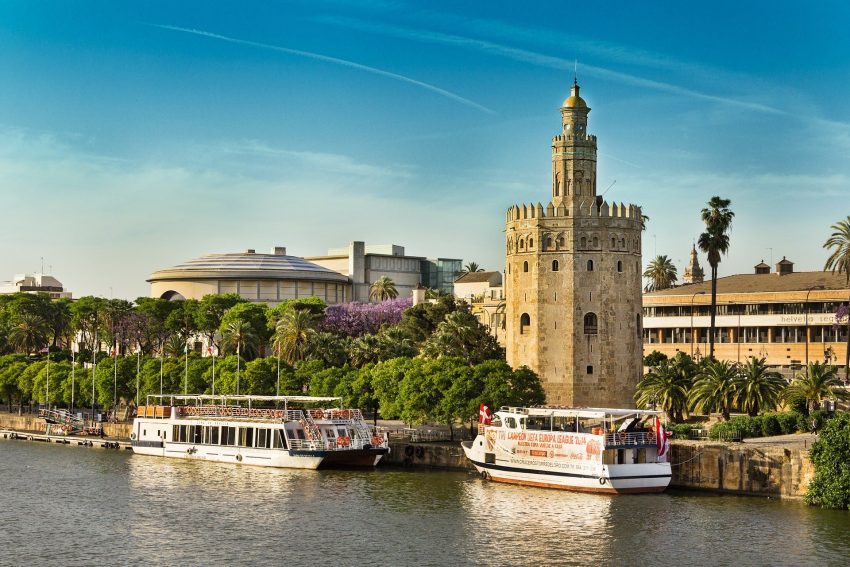
The Torre del Oro is Seville's unmistakable river tower: a compact, watchful landmark planted right on the Guadalquivir's bank, with the old city unfolding behind it and Triana facing you across the water. Its name translates as the “Tower of Gold,” a nod to the golden sheen it once gave off in the sun, and today it remains one of the top attractions in Seville for travelers who like their history paired with a view.
Even if you only have an hour, it's a satisfying stop on a walking tour of Seville: climb through the small naval museum, pause at the windows on each level, then finish on the rooftop terrace where the river bends past the Arenal and towards Triana. It's also one of those sights that constantly pulls your camera out of your pocket-especially around golden hour, when the water and stone start to match the tower's name.
Table of Contents
- History and Significance of the Torre del Oro
- Things to See and Do in the Torre del Oro
- How to Get to the Torre del Oro
- Practical Tips on Visiting the Torre del Oro
- Where to Stay Close to the Torre del Oro
- Is the Torre del Oro Worth Visiting?
- For Different Travelers
- FAQs for Visiting Torre del Oro
- Nearby Attractions to the Torre del Oro
History and Significance of the Torre del Oro
The Torre del Oro was built in the early 13th century as part of Seville's Moorish defensive system, positioned to control river traffic and protect the city's waterfront. In practical terms, it wasn't just a symbolic tower: it worked with other fortifications along the river, and legend holds that a heavy chain could be stretched across the Guadalquivir from here to block hostile ships.
Architecturally, it's a layered monument. The base has a distinctive multi-sided footprint, later additions changed the upper levels, and the top section you see today reflects later modifications that helped define its iconic silhouette. It's one of those Seville landmarks where the shape tells the story: a military structure adapted over centuries into a viewpoint and museum.
The tower's setting also helps explain its significance. This stretch of river is tied to Seville's maritime identity-trade, shipbuilding, and the bustle of the port area in the Arenal. Nearby, the Torre de la Plata (Tower of Silver) hints at the wider defensive network that once stitched the riverfront to the Alcázar area through walls and connecting structures.
Things to See and Do in the Torre del Oro
Start inside with the naval museum. It’s small enough to feel approachable, but rich in atmosphere: maps, ship models, maritime instruments, and documents that sketch Seville’s relationship with the river and overseas routes, especially during the centuries when the city was a gateway to the Atlantic world.
As you climb, take your time at the landings and windows. The perspective shifts quickly-one moment you’re looking down at the river traffic and cruise boats, the next you’re eye-level with rooftops and bridges. The museum spaces are compact, so it’s easy to keep moving without feeling like you’re committing to a long visit.
The rooftop terrace is the payoff. From up there, you get a clear read of Seville's geography: the Arenal behind you, Triana across the Guadalquivir, and the riverside promenades that make this such a pleasant walking corridor. Afterward, linger outside-boats often depart from the frontage, and the cobbled riverfront is made for an unhurried stroll with café stops nearby.
How to Get to the Torre del Oro
The Torre del Oro sits on the Guadalquivir riverfront in central Seville, an easy walk from the Cathedral area and the Arenal district, so most visitors simply arrive on foot as part of a riverside loop.
If you're flying in, Seville Airport (SVQ) is the closest option, with straightforward bus and taxi connections into the historic centre. For the best deals and a seamless booking experience, check out these flights to Seville on Booking.com. From Málaga Airport (AGP), it's also feasible to continue to Seville by rail or coach if you're combining Andalusian cities.
By train, you’ll arrive at Sevilla-Santa Justa station; from there, a taxi is quick, or you can use local buses/trams to reach the historic core and walk the final stretch along the river. Train schedules and bookings can be found on Omio. City buses also stop around Puerta de Jerez and the Arenal area, which puts you within a short riverside walk of the tower.
If you're driving, aim for paid parking on the edge of the historic centre (or across the river in Triana) and finish on foot, since street access and casual parking near the waterfront can be frustrating. If you are looking to rent a car in Spain I recommend having a look at Discover Cars, first, as they compare prices and review multiple car rental agencies for you.
Practical Tips on Visiting the Torre del Oro
- Entrance fee: Free entry (voluntary contribution requested).
- Opening hours: Monday – Friday: 09:30–19:00. Saturday – Sunday & public holidays: 10:30–19:00. Closed on 1 January, 6 January, Good Friday, 1 May, 25 December.
- Official website: https://www.fundacionmuseonaval.com/museonavalsevilla.html
- Best time to visit: Late afternoon is ideal for softer light on the river and better terrace views, but early morning is calmer if you want photos with fewer people around.
- How long to spend: Plan 45-75 minutes for the museum and terrace at a relaxed pace, longer if you like reading exhibits and lingering over viewpoints.
- Accessibility: Expect stairs and tight interior spaces; it’s manageable for many visitors, but it’s not an easy site for wheelchairs or anyone who struggles with steps.
- Facilities: It’s a small museum experience rather than a full visitor complex, so treat nearby cafés and riverfront bars as your best bet for breaks and restrooms.
Where to Stay Close to the Torre del Oro
For a culture-heavy itinerary, base yourself in the historic centre around the Arenal or Santa Cruz so you can walk to major sights early and late without relying on transport.
Staying near the riverfront keeps you close to the Torre del Oro and gives you an easy route into both the old town and Triana. A strong, convenient option is Hotel Kivir, which is right by the Guadalquivir and well placed for evening strolls along the water. For a classic central base in the Arenal, Hotel Boutique Las Casas de El Arenal puts you within easy walking distance of the Cathedral area, tapas spots, and the river.
If you prefer the postcard-pretty lanes and a quieter historic feel, Santa Cruz is ideal while still being walkable to the tower. Hotel Fernando III is a dependable choice in that neighbourhood, with a location that makes early starts and late returns simple.
Is the Torre del Oro Worth Visiting?
Yes-especially if you like places that deliver a clear sense of location. The museum is compact, but the combination of maritime context and rooftop views makes it feel like a well-rounded stop rather than a quick photo opportunity.
It's also one of the easiest Seville landmarks to weave into a wider day: pair it with the Arenal, a riverside walk towards Triana, or a loop back into the Cathedral area. Even travelers who are museum-light usually enjoy it because the terrace experience is immediate and memorable.
What Other Travellers Say...

Torre del Oro, on the riverside in Seville's Casco Antiguo, is a compact 12-sided medieval watchtower turned maritime museum that offers a quick but rewarding visit: climb narrow, winding staircases through three levels to see ship models, old navigational instruments and informative plaques, enjoy views over the Guadalquivir River and city from the top, and learn about its role controlling river traffic with a heavy chain and connections to Spain's seafaring past.


For Different Travelers
Families with Kids
Kids tend to do well here because the visit is naturally paced: climb a little, spot boats, look at ship models, then climb a little more. If you frame it as a “tower mission” with a viewpoint reward at the top, it stays engaging.
Bring water in warmer months and keep expectations flexible-some children will love the museum details, others will mainly care about the terrace. Pair it with a short river walk and an ice-cream stop nearby to round it out.
Couples & Romantic Getaways
This is an easy romantic pause in a day of big-ticket sights, especially later in the afternoon when the riverfront feels calmer and the light is more flattering. The terrace is a good place to slow down and take in Seville’s atmosphere without feeling rushed.
Afterward, walk across towards Triana or linger in the Arenal for a relaxed tapas crawl. It's a simple plan that feels distinctly “Seville” without over-scheduling.
Budget Travelers
Because it's a short visit with a strong payoff, the Torre del Oro works well when you're balancing costs across a trip. Even if you keep the visit brief, you still get a museum, a climb, and a viewpoint in one stop.
To stretch the experience, combine it with free riverfront wandering and a self-guided loop through the Arenal and Triana. It's a satisfying half-day structure that doesn't require paid tours.
History Buffs
If you’re interested in Seville’s defensive past and its river-based identity, this tower is a tangible anchor point. It’s easy to connect what you see here with the broader story of walls, gates, and the working waterfront that once defined the city.
Inside, focus on the maritime material and historic city views that help you imagine the Arenal as a port zone rather than today’s promenade. Pair it with nearby sites tied to Seville’s imperial-era administration for a fuller narrative arc.
FAQs for Visiting Torre del Oro
Getting There
Tickets & Entry
Visiting Experience
Tours, Context & Itineraries
Photography
Accessibility & Facilities
Nearby Attractions to the Torre del Oro
- Seville Cathedral and the Giralda: The city's defining Gothic-and-Moorish skyline combo, an easy walk inland from the riverfront.
- Real Alcázar of Seville: A layered royal palace complex with exquisite Mudéjar rooms and gardens that can fill a full morning.
- Plaza de Toros de la Real Maestranza: One of Spain's most famous bullrings, with a museum that adds cultural context.
- Triana: Cross the nearby bridge to explore ceramics shops, tapas bars, and a neighbourhood with a distinct local identity.
- Archivo General de Indias: A UNESCO-listed archive building tied to Spain's overseas history, close to the Cathedral area for a neat historic cluster.
The Torre del Oro appears in our Complete Guide to Visiting Seville!

Moira & Andy
Hey! We're Moira & Andy. From hiking the Camino to trips around Europe in Bert our campervan — we've been traveling together since retirement in 2020!
This website uses affiliate links which may earn a commission at no additional cost to you!
Planning Your Visit
Monday - Friday: 09:30-19:00.
Saturday - Sunday & public holidays: 10:30-19:00.
Closed on 1 January, 6 January, Good Friday, 1 May, 25 December.
Free entry (voluntary contribution requested).
Nearby Attractions
- Plaza de Toros de Sevilla (0.1) km
Historic Building and Museum - Royal Shipyards of Seville (0.3) km
Historic Building and Shipyard - Torre de la Plata (0.3) km
Tower - Castillo de San Jorge (0.4) km
Castle and Museum - Archivo General de Indias (0.4) km
Historic Building and Museum - Triana (0.5) km
Area - Triana Market (0.5) km
Market - Seville Cathedral (0.5) km
Cathedral, Historic Building and Mosque - Tomb of Christopher Columbus (0.5) km
Cathedral and Tomb - La Giralda (0.5) km
Tower