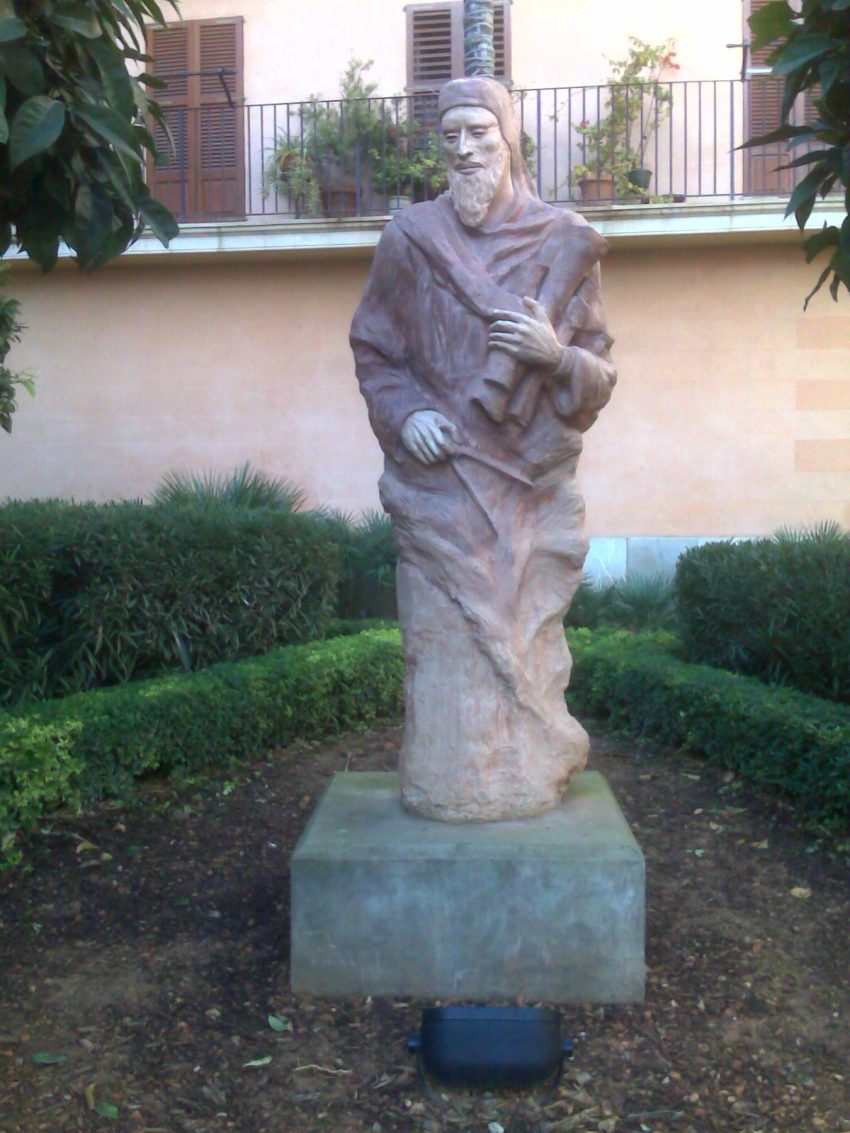
Statue of Jehuda Cresques, Palma de Mallorca
Statue in Palma de Mallorca
Jehuda Cresques, also known as Jafudà Cresques, Jaume Riba or Cresques the Jew, was a 14th century Catalan cartographer born on Mallorca, whose work helped shape Europe's understanding of the world. Son of the renowned Jewish mapmaker Abraham Cresques, he grew up in the cosmopolitan atmosphere of medieval Palma, where merchants, sailors and scholars circulated knowledge from across the Mediterranean, making his story one of the things to do in Palma de Mallorca if you are curious about the roots of maritime exploration.
Together with his father, Jehuda is widely considered to be one of the main authors of the famous Catalan Atlas of 1375, an astonishing medieval map that blended geography, travel lore and political power into a single, richly illustrated work. Later traditions suggest he may have been the “Mestre Jacome of Majorca” invited to Portugal, probably coordinating the charts and discoveries associated with the early 15th century naval school at Sagres. Even if some details remain debated, his life sits at the crossroads of Jewish heritage, Mediterranean trade and the dawning of the Age of Discovery, often visited on walking tours of Palma de Mallorca that focus on Jewish and maritime history.
Table of Contents
- History and Significance of the Jehuda Cresques
- Things to See and Do in the Jehuda Cresques
- How to Get to the Jehuda Cresques
- Practical Tips on Visiting the Jehuda Cresques
- Where to Stay close to the Jehuda Cresques
- Is the Jehuda Cresques Worth Visiting?
- FAQs for Visiting Jehuda Cresques
- Nearby Attractions to the Jehuda Cresques
History and Significance of the Jehuda Cresques
Born around 1360 into a Jewish family of craftsmen and scholars, Jehuda Cresques inherited both skill and reputation from his father, Abraham Cresques, a celebrated cartographer serving the Crown of Aragon. Growing up on Mallorca, he would have been immersed in a workshop environment where charts were painstakingly drawn on parchment, coastlines inked from sailors' reports and trade routes annotated with legends and practical notes for navigation. This made the Cresques household one of the intellectual hubs of the medieval island.
The Catalan Atlas of 1375 is central to Jehuda’s legacy. Attributed jointly to Abraham and Jehuda, this extraordinary work is far more than a simple chart: it combines detailed portolan-style coastlines with depictions of rulers, cities, caravans and mythical creatures stretching across Europe, Africa and Asia. It reflects not only geographical knowledge, but also the narrative world of medieval travellers, from Marco Polo to merchants moving along the trans-Saharan routes. Through this atlas, the Cresques workshop helped fix a particular vision of the known world that would influence navigators and princes alike.
In the early 15th century, sources suggest that Jehuda, likely under the Christianised name Jaume Riba or “Mestre Jacome de Malhorca”, was called to Portugal, where he may have guided the development of nautical charts at Sagres under Prince Henry the Navigator. Whether or not he was the principal organiser of the so-called school at Sagres, he stands as a bridge figure between the Jewish intellectual traditions of the western Mediterranean and the emerging Atlantic voyages that would reshape global history. His life also mirrors the pressures faced by Iberian Jews, who often had to convert, change names or relocate to continue their work.
Things to See and Do in the Jehuda Cresques
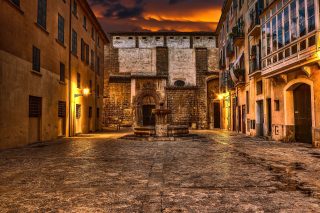
Although Jehuda Cresques himself is long gone, you can still engage with his world through places and themes in Palma, Catalonia and Portugal. In Palma's old town, walking through the former Jewish quarter and the streets around the cathedral and harbour gives you a sense of the environment in which he and his father collected stories from sailors and merchants. Visiting local museums and heritage centres that talk about Jewish life and maritime trade helps you picture the social fabric that made their workshop possible, and this spot is one of the best places to see in Jehuda Cresques if you are trying to connect biography with cityscape.
Seek out reproductions or references to the Catalan Atlas wherever you can. While the original is preserved far from Mallorca, good facsimiles and panels in museums or libraries often highlight key sections, like the vivid depictions of West African rulers, Asian cities and the routes across the Mediterranean. Taking time to study these panels turns what might seem like a beautiful old map into a kind of medieval infographic, capturing how Cresques and his contemporaries organised the world in their minds.
If your travels extend beyond Palma, you can deepen the story in places such as Barcelona, where royal archives and maritime institutions carry the legacy of Aragonese sea power, or in Portugal, especially along the Algarve coast around Sagres and Lagos, where Prince Henry's naval experiments took shape. Standing on those cliffs and thinking of a Mallorcan Jewish cartographer quietly shaping charts for Atlantic voyages adds an unexpected human thread to the grand narrative of exploration.
How to Get to the Jehuda Cresques
To explore Jehuda Cresques' legacy on Mallorca, most travellers will first fly into Palma de Mallorca Airport, the island's main international hub with regular connections from Spain and across Europe. For the best deals and a seamless booking experience, check out these flights to Palma de Mallorca on Booking.com. From the airport you can take an airport bus or taxi into the city centre and use Palma as your base for walking routes that trace Jewish and maritime history in the old town.
If you are already on the island, regional trains from towns such as Inca, Sa Pobla and Manacor bring you into Palma's Estació Intermodal near Plaça d'Espanya, from where you can walk into the historic centre to visit Jewish heritage sites, museums and churches connected to the period when Cresques lived.Train schedules and bookings can be found on Omio. Buses also link coastal resorts and inland villages with Palma, making it easy to visit for a day focused on history rather than beaches.
Travelling by car, you can drive into Palma along the main island roads and leave your vehicle in one of the car parks around the edge of the old town before exploring on foot.If you are looking to rent a car in Spain I recommend having a look at Discover Cars, first, as they compare prices and review multiple car rental agencies for you. From there, it is a short stroll to the narrow streets where the medieval Jewish quarter once stood and to the harbourfront, where merchants and sailors once carried the information that fed Cresques’ maps.
Practical Tips on Visiting the Jehuda Cresques
- Suggested tips: Build a thematic day around Jehuda Cresques by combining Jewish heritage stops, maritime history museums and time spent looking at reproductions of the Catalan Atlas in local institutions.
- Best time to visit: Spring and autumn are ideal for city walks linked to Cresques’ story, with comfortable temperatures and fewer crowds than high summer.
- Entrance fee: Free
- Opening hours: 24 hours
- How long to spend: A half day in Palma is enough for a basic Cresques-themed walk, while a full day or more lets you combine several museums and Jewish heritage locations at a relaxed pace.
- Accessibility: Many old-town streets are narrow and paved, with some uneven surfaces; check individual museums and churches for accessibility details if you have mobility needs.
- Facilities: Use the facilities of the museums, cafés and information centres along your route; there is no single dedicated Cresques site, but plenty of well-served stops on the way.
- Photography tip: Capture street scenes in the former Jewish quarter, harbour views and any Catalan Atlas reproductions you encounter to create a visual narrative of Cresques’ life and influence.
- Guided tours: Look for Jewish heritage or maritime history walking tours in Palma and coastal cities; guides often weave Cresques and the Catalan Atlas into broader stories of medieval navigation.
- Nearby food options: Palma’s old town is full of cafés, bakeries and tapas bars, so it is easy to punctuate your history-focused wanderings with relaxed, local meals.
Where to Stay close to the Jehuda Cresques
Because Jehuda Cresques is tied to Palma rather than a single monument, your best option is to stay in or near the historic centre so you can explore his world on foot. A practical central choice is Hotel Almudaina, which gives you easy access to both the old quarter and the waterfront. For more atmosphere in a historic setting that echoes the period of the Cresques family, Boutique Hotel Posada Terra Santa puts you in a restored mansion surrounded by medieval streets. If you prefer a stylish base close to the old town and the marina, Hotel Basilica works well for combining city walks, museum visits and harbour views.
Is the Jehuda Cresques Worth Visiting?
While you cannot visit Jehuda Cresques as a monument, following his trail through Palma and related sites is absolutely worth doing if you are interested in maps, exploration and Jewish history. His life ties together Mallorca’s medieval Jewish community, the artistic and technical brilliance of the Catalan Atlas and the early stirrings of Europe’s oceanic expansion. Thinking of him as you walk through the old town and along the harbour adds a human dimension to the stones and sea, turning a regular city break into something deeper and more connected to the wider Mediterranean story.
What Other Travellers Say...
Reviews Summary
The Estatua de Jafuda Cresques o Jaume Ribes stands in Plaça del Temple on C/ de Ramon Llull in Palma’s old Jewish quarter and is open 24 hours; visitors note the figure holds scrolls and a compass and commemorate Jafuda (son of cartographer Cresques Abraham), a renowned 14th-century Mallorcan cartographer who later took the name Jaume Ribes after converting to Christianity; the sculpture, made of quartz and stone paste by María Isabel Ballester, stands on a pedestal with a plaque acknowledging the cartographic work of Cresques and his workshop.
FAQs for Visiting Jehuda Cresques
Nearby Attractions to the Jehuda Cresques
- Maimó ben Faraig Centre: A cultural and information centre in Palma's historic quarter focused on Jewish heritage, offering context for the world in which Cresques was born.
- Puerta de los Judios site: The former gate to the Jewish quarter, marked by the SEFARAD symbol, which helps you imagine medieval Jewish life in the city.
- Museu de Mallorca: The island's main museum, where archaeology, art and historical displays deepen your understanding of Mallorca in Cresques' time.
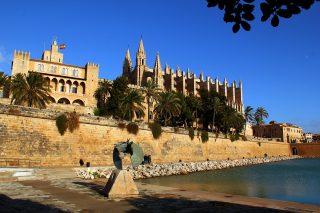
- Palma Cathedral La Seu: The grand Gothic cathedral that dominates the skyline, illustrating the Christian power structures surrounding Jewish communities in medieval Palma.
- Royal Palace of La Almudaina: A former royal residence beside the cathedral, evoking the courtly and political environment within which royal cartographers such as the Cresques family operated.
The Statue of Jehuda Cresques appears in our Complete Guide to Visiting Palma de Mallorca!

Moira & Andy
Hey! We're Moira & Andy. From hiking the Camino to trips around Europe in Bert our campervan — we've been traveling together since retirement in 2020!
This website uses affiliate links which may earn a commission at no additional cost to you!
Planning Your Visit
24 hours
Free
Nearby Attractions
- Palma's Secret Synagogue (0.1) km
Historic Site - Iglesia de Montesión (0.1) km
Church - Convent of San Francisco (0.2) km
Convent - Teatre Municipal Xesc Forteza (0.2) km
Theatre - Puerta de los Judios (0.2) km
City Gate - Banys Arabs (Arab Baths) (0.3) km
Baths - Museo de Mallorca (0.3) km
Museum - Església de Santa Eulàlia (0.3) km
Church - Centre Maimó ben Faraig (0.3) km
Museum - Bishop's Garden (0.4) km
Gardens