Royal Shipyards of Seville
Historic Building and Shipyard in Seville
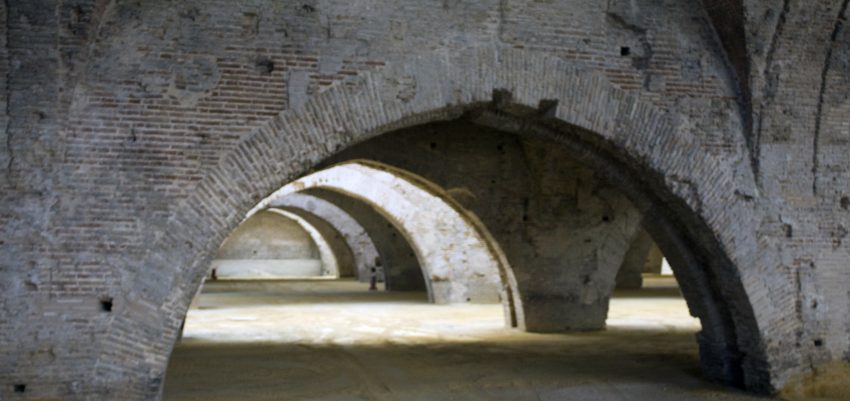
The Reales Atarazanas de Sevilla, often called the Royal Shipyards of Seville in English, are one of the city's most dramatic “hidden in plain sight” monuments. Behind a relatively modest street presence sits a colossal medieval structure once made up of 17 vaulted naves, built to construct galleys for the Castilian crown on the edge of the Guadalquivir's sandy riverbank.
What makes the shipyards so compelling is the atmosphere: brick arches like a cathedral turned industrial, a sense of scale that feels almost impossible for the 13th century, and a location that places you right in the old port district of El Arenal. For travellers who like places with deep layers and a bit of mystery, this is one of the things to see in Seville, and it's an easy addition to a walking tour of Seville that already includes the riverfront and the historic core.
Table of Contents
- History and Significance of the Reales Atarazanas de Sevilla
- Things to See and Do in the Reales Atarazanas de Sevilla
- How to Get to the Reales Atarazanas de Sevilla
- Practical Tips on Visiting the Reales Atarazanas de Sevilla
- Where to Stay Close to the Reales Atarazanas de Sevilla
- Is the Reales Atarazanas de Sevilla Worth Visiting?
- For Different Travelers
- FAQs for Visiting Reales Atarazanas de Sevilla
- Nearby Attractions to the Reales Atarazanas de Sevilla
History and Significance of the Reales Atarazanas de Sevilla
After Ferdinand III took Seville in 1248, Castile's ambitions shifted toward controlling the Strait of Gibraltar and projecting naval power into the western Mediterranean. A campaign needs ships, and ships need infrastructure, so Alfonso X “the Wise” pushed ahead with creating a purpose-built shipyard complex close to the river and just outside the old walls, positioned between key defensive landmarks such as the Torre del Oro and Torre de la Plata.
Construction in the 13th century produced a vast, brick-built complex of long vaulted naves, each sized to accommodate the construction of a galley on land. The architectural language is often described as Mudéjar-Gothic: structural forms that feel Gothic in their scale and rhythm, executed in brick with a distinctly Andalusian, post-Almohad sensibility. The result is an industrial building that reads like sacred architecture, which is exactly why it leaves such a strong impression even in fragments.
The shipyards were productive quickly, supplying fleets that mattered not only to the later Reconquista but also to Castile’s wider military commitments, including involvement linked to the Hundred Years’ War. Ironically, they declined soon after 1492, as ship design moved toward larger vessels that no longer fit the constraints of the naves, and as a newly unified Spain had other shipbuilding options elsewhere. From the 16th century onward, the complex became a masterclass in adaptive reuse: fish market, warehouses for oil and wool, customs storage, and later major institutional occupations.
In the 17th and 18th centuries, parts of the complex were absorbed into new functions, including the Hospital de la Caridad and the Maestranza de Artillería, and in the 20th century several naves were lost to redevelopment before the site gained protective status. In recent years, the long restoration and the promise of a new cultural centre have kept the shipyards in Seville’s civic conversation, with limited public open days offering a glimpse of the renewed interior ahead of a fuller reopening.
Things to See and Do in the Reales Atarazanas de Sevilla
The main experience here is architectural: huge brick arches, long sightlines, and the feeling of standing inside a working machine built at an almost unbelievable scale for its era. When the site is accessible, walk slowly and look for the way the naves connect via wide arches, creating a repeating rhythm that feels more like a monumental hall than a shipbuilding shed.
Pay attention to the floor level and the relationship to the river district. Historically, this was built near the Guadalquivir’s working edge, with sand and water access central to how the shipyards functioned; later infill and urban changes altered that relationship, but you can still sense that this was once a threshold space between city and river.
If you are a screen-location traveller, the shipyards have a modern pop-culture afterlife as well: parts were used as a filming location for Game of Thrones, standing in for subterranean spaces beneath the Red Keep. Even if that is not your main reason for visiting, it gives you a useful visual reference for how cinematic the naves can feel when lit and framed.
Because public access has been limited and sometimes event-based, treat this as a “check status, then pounce” sight. If you find they are closed, the consolation is that the exterior area still sits in a high-density sightseeing zone, so you can pivot easily to the riverfront, Torre del Oro, and El Arenal's streets without losing momentum.
How to Get to the Reales Atarazanas de Sevilla
The nearest airport is Seville Airport (SVQ). For the best deals and a seamless booking experience, check out these flights to Seville on Booking.com. If you are arriving via a broader Andalusia route, Málaga Airport (AGP) can also work well, followed by onward travel to Seville. For the best deals and a seamless booking experience, check out these flights to Seville on Booking.com.
If you arrive by train, Sevilla-Santa Justa is the main station, and from there it’s easiest to take a taxi or a local bus/tram connection toward the historic centre and the riverfront. Train schedules and bookings can be found on Omio. Once you are in El Arenal, the shipyards area is walkable and pairs naturally with Torre del Oro and the Cathedral-side streets.
Local buses serve Paseo de Cristóbal Colón and the Teatro de la Maestranza area, both a short walk away, making this a simple stop even if you are not staying in the historic core.
If you are driving, aim to park in a public garage outside the tightest central streets and finish on foot, as access and parking in El Arenal can be more hassle than it is worth. If you are looking to rent a car in Spain I recommend having a look at Discover Cars, first, as they compare prices and review multiple car rental agencies for you.
Practical Tips on Visiting the Reales Atarazanas de Sevilla
- Entrance fee: Free (during special open days; regular ticketing to be confirmed).
- Opening hours: The Reales Atarazanas de Sevilla are Seville’s vast medieval shipyards, built for royal galleys and later reused as warehouses and military workshops. This %%currentyear%% guide explains what you can still see today, how to find them, and how to plan around their limited public access.
- Official website: https://www.juntadeandalucia.es/cultura/agendaculturaldeandalucia/espacios/atarazanas-de-sevilla
- Best time to visit: If it is open, go early in the day for the calmest interior and the best chance to appreciate the scale without crowd pressure.
- How long to spend: Plan 30-60 minutes for a focused visit; add time if there is an exhibition or guided interpretation during special openings.
- Accessibility: Expect historic surfaces and potential unevenness; accessibility provisions may vary depending on whether the visit is an event-based opening or a full public day.
- Facilities: Treat nearby El Arenal cafés and the riverfront as your backup for restrooms and breaks, especially if on-site visitor services are limited.
Where to Stay Close to the Reales Atarazanas de Sevilla
For a culture-heavy itinerary, base yourself in El Arenal or Santa Cruz so you can walk to the Cathedral, the Alcázar, and the riverfront sights; if your trip prioritises nightlife and a more local evening scene, Triana is often the better base with an easy crossing back into the centre.
For a central stay that puts you close to the river and the historic core, Las Casas de El Arenal is a strong match for atmosphere and walkability. If you want a classic, ultra-convenient base for monument days, Hotel Inglaterra keeps you close to major routes while still feeling properly Sevillian. For a comfortable old-town option tucked into the lanes of Santa Cruz, Hotel Fernando III works well for early starts and late strolls.
Is the Reales Atarazanas de Sevilla Worth Visiting?
Yes, particularly if you enjoy places where a city's working history is visible at full scale rather than reduced to a small museum room. Few buildings in Seville communicate medieval power and logistics as directly as these naves, which were designed for serious naval output and later repurposed again and again as the city changed.
The only caveat is access. If you can get inside during public open days or a formal reopening phase, it becomes a standout experience; if you cannot, it is still worth knowing the story so the riverfront district makes more sense as you walk through it.
What Other Travellers Say...

Royal Alcázar of Seville is a landmark Moorish palace in Casco Antiguo featuring ornate arches, intricate tilework and carved wooden ceilings, tranquil courtyards like the Patio de las Doncellas, and expansive, fountain-filled gardens with winding paths, orange trees and free-roaming peacocks; visitors say the architecture and craftsmanship are breathtaking, recommend allowing at least a couple of hours to explore, and advise booking timed tickets in advance and using guides or audio tours for a deeper visit—on-site facilities include a café, gift shop and restrooms.


For Different Travelers
Families with Kids
This works best as a “big space” experience if the site is open: wide arches, echoing halls, and an easy sense of discovery. Keep the visit short and visual, then reward everyone with a riverfront walk and a stop near Torre del Oro where there is more room to move.
If access is restricted, you can still use the shipyards story as a fun narrative hook while exploring El Arenal: ships, galleys, river trade, and how Seville once functioned as a port city.
Couples & Romantic Getaways
For couples, the appeal is the mood: monumental architecture that feels quiet and cinematic, especially if you catch it at a calm time. Pair it with a slow riverside stroll and a drink in El Arenal afterwards for a relaxed, atmospheric afternoon that feels distinctly Seville.
If the interior is not accessible, treat it as a story-driven waypoint on a riverfront route rather than a standalone “must-enter” stop, and build your moment around nearby viewpoints and the evening light on the Guadalquivir.
Budget Travelers
If open days remain free, this is a high-value stop: a major monument experience without a ticket cost. Even when it is closed, the surrounding area is packed with worthwhile walks that cost nothing, so you can keep your day budget-friendly while still staying in Seville’s most scenic district.
A good budget strategy is to plan a flexible route that works whether or not you get inside, so you never feel like you wasted time chasing a closed door.
History Buffs
This is one of Seville’s most important medieval infrastructure sites, and it rewards anyone who thinks in systems: logistics, naval strategy, and the built environment that made imperial ambitions possible. Focus on how the naves were sized for galleys, why the location mattered for river access, and how later centuries kept reusing the structure rather than discarding it.
If you are building a deeper history day, connect the shipyards' story to the Torre del Oro, the old river port, and the broader narrative of Seville as a gateway between Iberia, the Mediterranean, and the Atlantic world.
FAQs for Visiting Reales Atarazanas de Sevilla
Getting There
Tickets & Entry
Visiting Experience
Tours, Context & Itineraries
Photography
Accessibility & Facilities
Safety & Timing
Nearby Attractions to the Reales Atarazanas de Sevilla
- Torre del Oro: A riverside defensive tower and one of Seville's most recognisable landmarks, ideal for a quick stop and views along the Guadalquivir.
- Teatro de la Maestranza: Seville’s main opera house, a sleek cultural counterpoint to the medieval riverfront history around it.
- Barrio de Santa Cruz: A dense maze of lanes and plazas that captures Seville's historic ambience and makes for an easy walk back into the old town.
- Seville Cathedral and Giralda Tower: The city's essential monument pairing, close enough to combine with the shipyards area in the same route.
- Triana Market: A lively food market across the river, perfect for tapas and local produce after a riverfront walk.
The Royal Shipyards of Seville appears in our Complete Guide to Visiting Seville!

Moira & Andy
Hey! We're Moira & Andy. From hiking the Camino to trips around Europe in Bert our campervan — we've been traveling together since retirement in 2020!
This website uses affiliate links which may earn a commission at no additional cost to you!
Planning Your Visit
The Reales Atarazanas de Sevilla are Seville’s vast medieval shipyards, built for royal galleys and later reused as warehouses and military workshops. This %%currentyear%% guide explains what you can still see today, how to find them, and how to plan around their limited public access.
Free (during special open days; regular ticketing to be confirmed).
Nearby Attractions
- Torre de la Plata (0.2) km
Tower - Archivo General de Indias (0.2) km
Historic Building and Museum - Tomb of Christopher Columbus (0.2) km
Cathedral and Tomb - Seville Cathedral (0.2) km
Cathedral, Historic Building and Mosque - Torre del Oro (0.3) km
Museum and Tower - La Giralda (0.3) km
Tower - Plaza de Toros de Sevilla (0.3) km
Historic Building and Museum - Barrio Santa Cruz (0.5) km
Area - Hospital de los Venerables Sacerdotes (0.5) km
Gallery, Historic Building and Museum - Casa de los Pinelo (0.5) km
Palace