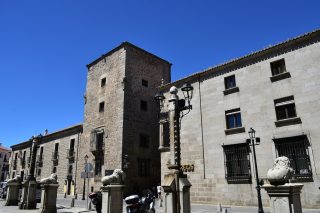
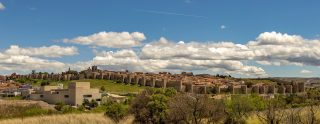
Puerta del Alcázar, Ávila
City Gate in Ávila

The Puerta del Alcázar is the gate that makes you stop mid-step in Ávila: two powerful towers, a bold semicircular arch overhead, and the unmistakable feeling that you're entering a city built to impress as much as to defend. It sits on the eastern side of the walled old town, and it's often the first “wow” moment when you approach the Walls of Ávila on foot, which is why many travelers rate it as one of the top attractions in Ávila.
What makes this gate special isn't just its scale, but the details that hint at how it once worked: stone corbels beneath the arch that likely supported a defensive walkway, and heavier supports that suggest drawbridge-era engineering, plus the memory of a moat and a barbican that once strengthened the approach. It also drops you straight into the historic streets, making it an ideal anchor point for a walking tour of Ávila.
Table of Contents
- History and Significance of the Puerta del Alcázar
- Things to See and Do in the Puerta del Alcázar
- How to Get to the Puerta del Alcázar
- Practical Tips on Visiting the Puerta del Alcázar
- Where to Stay Close to the Puerta del Alcázar
- Is the Puerta del Alcázar Worth Visiting?
- For Different Travelers
- FAQs for Visiting the Puerta del Alcázar
- Nearby Attractions to the Puerta del Alcázar
History and Significance of the Puerta del Alcázar
The Puerta del Alcázar is one of the fortified entrances that punctuate Ávila's famously intact medieval walls, and it's traditionally counted among the nine gates that pierce the walled circuit. Its twin-tower silhouette feels almost ceremonial, but it was designed for serious defense: controlling access, creating choke points, and giving guards height, visibility, and protected positions above the arch.
Ávila’s wall-building story is long and layered. Construction is often linked to the late-11th-century push to strengthen the city, with major rebuilding and consolidation during the 12th century, producing the monumental enclosure visitors see today. The walls wrap an area of roughly 31 hectares with a perimeter of around 2.5 km, rising to imposing heights with closely spaced towers that turn the whole skyline into a fortification.
What's especially memorable about the Puerta del Alcázar is how “engineered” it feels compared with smaller gates: the arch is a rare element in European wall systems, and the stonework around it reads like a working machine-built for movement, control, and defense-rather than a simple opening in a barrier.
Things to See and Do in the Puerta del Alcázar
Start by stepping back far enough to take in the full composition: the twin towers, the arch, and the way the wall line flows away on both sides. Then move closer and look underneath the arch for the corbels and projecting stonework-these are the little details that make the gate feel like a living piece of medieval infrastructure rather than a static monument.
Walk through the gate slowly and turn around for photos from the inside looking back out; it’s one of the most satisfying “arrival shots” in the city, especially when the light catches the stone. If you’re interested in the walls beyond the ground level, this is also a natural place to plan a ramparts walk, since the most rewarding wall experiences usually come from combining street-level gates with at least one stretch up on the adarve for views.
Finally, use the gate as a practical starting point for your old-town wander. From here you can thread into Ávila’s historic lanes, pick up the cathedral area, and build an easy loop that keeps the walls in sight as a constant reference line.
How to Get to the Puerta del Alcázar
Most visitors arrive via Madrid, with Madrid-Barajas Airport (MAD) as the main international gateway; Valladolid Airport (VLL) can also be useful for certain routes and seasonal schedules. For the best deals and a seamless booking experience, check out these flights to Ávila on Booking.com.
Ávila is well connected to Madrid by train, arriving at Ávila train station (Estación de Ávila), from where a taxi or a steady walk brings you to the walled centre. Train schedules and bookings can be found on Omio.
If you're coming by bus, services from Madrid's Estación Sur are a common, affordable option and usually drop you close enough to continue on foot. By car, the drive from Madrid is straightforward via the main motorways toward Ávila, but it's usually easiest to park outside the walls and walk in through one of the gates. If you are looking to rent a car in Spain I recommend having a look at Discover Cars, first, as they compare prices and review multiple car rental agencies for you.
Practical Tips on Visiting the Puerta del Alcázar
- Entrance fee: Free
- Opening hours: 24 Hours
- Official website:
- Best time to visit: Go early for quieter photos and a calmer feel, or come in the evening when the walls are lit and the gate feels especially theatrical.
- How long to spend: 10-20 minutes is enough for the gate itself, but allow longer if you’re pairing it with a ramparts walk and nearby monuments.
- Accessibility: The gate is at street level, but the surrounding lanes can be uneven and slightly sloped, so supportive footwear helps.
- Facilities: There are no facilities at the gate itself; plan café stops and restrooms around the main old-town streets and plazas.
Where to Stay Close to the Puerta del Alcázar
For a culture-heavy itinerary, base yourself inside the walls near the cathedral and the main old-town streets so you can walk everywhere; if your priority is easy parking and quick access, stay just outside the walls on the approaches and dip into the historic centre on foot.
If you want to be steps from the gate and wake up already inside the atmosphere of the old city, a stay right on Calle San Segundo is hard to beat, and Hostal Restaurante Puerta del Alcázar is as close and convenient as it gets for an early, crowd-free start. For a classic “sleep in the heart of history” feel, Hotel Palacio de los Velada puts you beside the cathedral and within an easy walk of the gate, ideal if you want to maximize monument time. If you prefer a more boutique-style experience with a refined, heritage setting near the walls, Sofraga Palacio is a strong pick for comfort without losing that inside-the-walls location.
Is the Puerta del Alcázar Worth Visiting?
Yes-because it’s the most visually striking of Ávila’s wall gates and an effortless stop that fits into almost any route. Even if you’re only in town for a few hours, it delivers immediate context for how the city was designed to protect itself, and it sets the tone for everything you’ll see inside the walls.
It’s also genuinely useful: it’s a natural “start here” point for exploring the old town, and it pairs perfectly with either a cathedral-focused route or a short ramparts section for panoramic views.
What Other Travellers Say...

Adaja Gate sits at C. Conde Don Ramón 55 in Ávila and serves as an entry point to the city's famed walled area with views toward the Río Adaja; visitors praise the beautiful vistas and recommend buying the Ávila pass for access to the wall sections, noting the ticket covers both parts though you can't walk the entire circuit. Weekends can be crowded during events, but many still find the site well worth a day trip and a highlight of Ávila.


For Different Travelers
Families with Kids
For families, the Puerta del Alcázar is a high-reward stop because it feels like a storybook entrance without requiring a long visit. Turn it into a quick “spot the defenses” game-towers, arch, and the stone supports-then keep moving so the momentum stays fun.
If you’re visiting with a stroller, plan your approach via smoother streets and be ready for uneven historic paving near the walls. A short stop here works best when it’s paired with a nearby plaza break for snacks and a reset.
Couples & Romantic Getaways
This gate is made for slow travel: arrive early, walk through quietly, and take your time with photos from both sides of the arch. It’s especially atmospheric in softer light, when the stone textures stand out and the old-town streets feel more intimate.
Make it part of a gentle loop rather than a checklist item. Start here, drift toward the cathedral area, and finish with an unhurried café stop-Ávila is at its best when you let the streets guide the pace.
Budget Travelers
The Puerta del Alcázar is a budget traveler's favorite kind of sight: free, central, and genuinely impressive. Use it as your anchor point for a self-guided route that strings together viewpoints, plazas, and exterior wall walks without spending anything.
If you want one paid “upgrade,” consider saving your ticketed visit for a ramparts section that gives you the biggest payoff in views. Everything else around the gate can be enjoyed for the price of comfortable shoes and a coffee.
FAQs for Visiting the Puerta del Alcázar
Getting There
Tickets & Entry
Visiting Experience
Tours, Context & Itineraries
Photography
Accessibility & Facilities
Food & Breaks Nearby
Safety & Timing
Nearby Attractions to the Puerta del Alcázar
- Catedral de Ávila: A cathedral-fortress whose massive apse integrates into the wall line, making it one of the city's most distinctive sights.
- Plaza del Mercado Chico: The old town's social heart, ideal for a coffee stop and people-watching between monuments.
- Muralla de Ávila (ramparts walk): The best way to understand the walls' scale, with elevated viewpoints over the old town and surrounding plains.
- Basílica de San Vicente: A standout Romanesque church with richly carved stonework and a powerful, timeworn atmosphere.
- Mirador de Los Cuatro Postes: The classic panoramic viewpoint outside the walls for the most iconic “whole city” photo.
The Puerta del Alcázar appears in our Complete Guide to Visiting Ávila!

Moira & Andy
Hey! We're Moira & Andy. From hiking the Camino to trips around Europe in Bert our campervan — we've been traveling together since retirement in 2020!
This website uses affiliate links which may earn a commission at no additional cost to you!
Planning Your Visit
24 Hours
Free
Nearby Attractions
- Palacio de Valderrábanos (0.2) km
Palace - Ávila Cathedral (0.2) km
Cathedral - Palacio de los Serranos (0.2) km
Museum and Palace - Walls of Ávila (0.2) km
City Walls - Casa Carnicerías (0.2) km
Historic Building and Tourist Office - Palacio del Rey Niño (0.2) km
Palace - Los Velada Palace (0.2) km
Hotel and Palace - Casa de la Misericordia (0.2) km
Historic Building - Museo de Ávila (0.3) km
Museum and Palace - Palacio de los Dávila (0.3) km
Palace