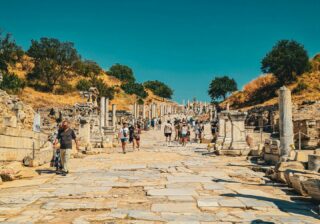
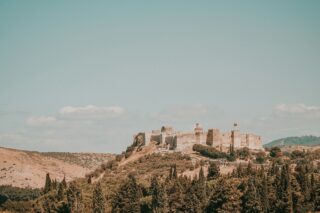
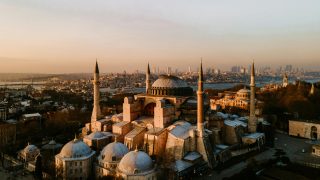
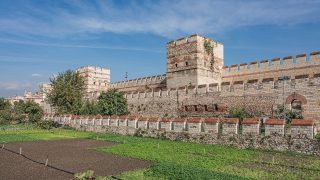
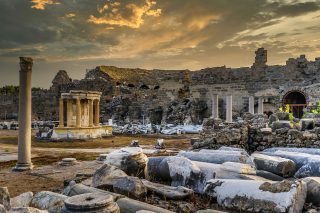
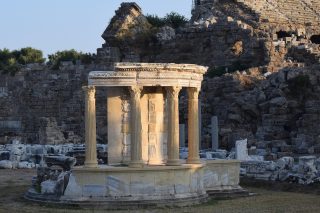
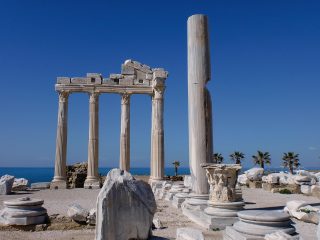
Grotto of the Seven Sleepers, Ephesus
Attraction, Cave and Historic Site in Ephesus
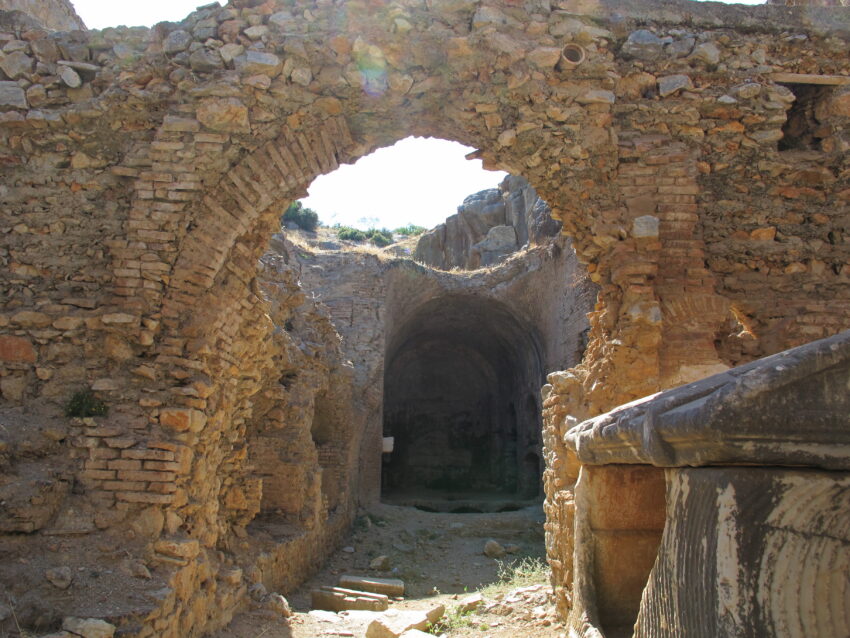
The Cave of the Seven Sleepers (also called the Grotto of the Seven Sleepers; Turkish: Yedi Uyuyanlar) is an ancient burial complex that developed into a necropolis, with arched stone-and-brick tomb niches set into a natural cleft at the foot of the northeast slope of Mount Pion (Panayır Dağı). It sits about 1.5 km east of the lower entrance to the Ephesus Archaeological Site and roughly 3 km southwest of Selçuk, making it an easy add-on if you're already exploring the Ephesus area.
If you're in the vicinity of Ephesus, it's worth making the short detour to see the ruins. The site is best understood as a Byzantine-era necropolis, where you can still pick out multiple rock-cut tombs and burial recesses carved into the stone. Beyond the archaeology, the grotto is closely tied to the long-lived “Seven Sleepers” legend-one of several locations that claim the story-about a group of youths who sheltered in a cave and later awoke to a transformed world. The tradition is told in both Christian and Islamic versions, which is part of what gives the site its broader cultural pull.
Table of Contents
- Legend of the Grotto of the Seven Sleepers
- Things to See and Do in the Grotto of the Seven Sleepers
- How to Get to the Grotto of the Seven Sleepers
- Practical Tips on Visiting the Grotto of the Seven Sleepers
- Where to Stay Close to the Grotto of the Seven Sleepers
- Is the Grotto of the Seven Sleepers Worth Visiting?
- For Different Travelers
- FAQs for Visiting Grotto of the Seven Sleepers
Legend of the Grotto of the Seven Sleepers
Christian version
In the Christian telling of the legend, seven young men are accused of being Christians during the persecutions under the Roman emperor Decius (reigned 249-251 AD). Given a chance to deny their faith, they refuse. Instead, they give away their possessions to the poor and take refuge in a mountain cave, where they pray. As they pray, an overwhelming sleep comes over them. When the emperor’s men discover them, the cave entrance is sealed on imperial orders; some versions say the young men were deliberately walled in as punishment.
Centuries later, after Christianity has moved from persecution to acceptance and state support, the story resumes during the reign of Theodosius II (408-450). A landowner decides to break open the blocked cave entrance, intending to reuse it (in some accounts, as a shelter for livestock). Inside, he is stunned to find the same seven men still asleep. They wake believing they have slept only a single day, and hunger quickly drives them to send one of their number into the city to buy food-warning him to be careful not to attract pagan attention.
When the young man reaches Ephesus, he is bewildered to see crosses displayed around the city. The shock deepens when he tries to pay with old coins from Decius' time, which immediately arouse suspicion. The townspeople summon the local bishop, and the young man explains what happened. Because the earliest versions of the legend are tied to the Ephesus area, the “Cave of the Seven Sleepers” became associated with a grotto on the slopes of Pion Mountain (Panayır Dağı). Over time it was treated as a sacred site, drawing pilgrims, burials close to the cave, and eventually a landscape of graves and catacombs nearby.
Islamic version
The Islamic tradition of the “Young Sleepers” is widely known because it appears in the Qur’an (Surah 18, verses 9-26). In this version, the precise number of sleepers is not fixed-knowledge of it belongs to God alone-and their sleep lasts 300 years (or 309, depending on the reckoning). A distinctive element in the Islamic telling is a faithful dog that accompanies the youths and lies at the cave entrance while they sleep, discouraging passersby from looking inside. In this tradition they are commonly referred to as “the people of the cave.”
The Qur'an does not name the cave's location, which is why multiple places have been proposed over the centuries. The cave near Ephesus is one candidate, but other suggested sites exist in Türkiye and beyond, including places in Jordan, Tunisia, and even as far as China.
Things to See and Do in the Grotto of the Seven Sleepers
The site hasn’t been restored and it’s fenced off, and in the wetter months it can be prone to standing water, especially from late autumn through spring. You can still make out what remains of some tomb niches and a few larger stone sarcophagi from outside the fence, but key details-like the traces of fresco decoration that once covered parts of the niches-aren’t really visible. The overall feel is a little eerie, and for many visitors it ends up slightly underwhelming, particularly if you’re short on time.
That said, the approach is arguably the best part. Walking here from the Ephesus Archaeological Site or from Selçuk takes you through quiet, attractive countryside. Near the entrance you'll usually find open tents serving tea and simple food in a laid-back setting, along with the usual souvenir stalls that cluster around popular stops.
How to Get to the Grotto of the Seven Sleepers
The nearest major airport is İzmir Adnan Menderes Airport (ADB), with additional flight options via Milas-Bodrum Airport (BJV) depending on your route along the Aegean coast. For the best deals and a seamless booking experience, check out these flights to Ephesus on Booking.com.
To reach the Ephesus/Selçuk area by rail, you can use regional train services to Selçuk from İzmir (often via the İzmir-Selçuk line), then continue onward by taxi or local transport to the Ephesus area.You can use the official TCDD Taşımacılık website to check schedules, compare routes, and purchase tickets for Türkiye’s national and regional trains operated by TCDD. For a more streamlined experience (especially if you prefer an English interface or want to compare across countries), we recommend using Omio, which allows you to easily compare prices, schedules, and book train tickets across Türkiye and the rest of Europe — all in one place.
If you're driving, Selçuk is straightforward to reach on Aegean-region highways, and having a car makes it easier to combine the grotto with other nearby stops like the Basilica of St. John and the House of the Virgin Mary.If you are looking to rent a car in Türkiye I recommend having a look at Discover Cars, first, as they compare prices and review multiple car rental agencies for you.
From Selçuk or the Ephesus entrances, the grotto is typically reached by a short taxi ride or as a planned stop on a guided route. If you're doing Ephesus as a point-to-point walk (upper gate to lower gate, or vice versa), ask your driver/guide about the most convenient drop-off so you don't backtrack.
Practical Tips on Visiting the Grotto of the Seven Sleepers
- Entrance fee:
- Opening hours:
- Best time to visit: Go in the morning for softer light and cooler temperatures, or late afternoon if you're pairing it with sunset views around Selçuk.
- How long to spend: Plan 15-30 minutes for a quick look, or up to 45 minutes if you want time to pause, take photos, and hear the full story.
- Accessibility: Expect uneven ground and a rustic setting; it’s not ideal for wheelchairs or anyone who needs flat, paved paths.
- Facilities: Facilities are limited on-site, so use restrooms and buy water/snacks in Selçuk or at the main Ephesus visitor areas before you come.
Where to Stay Close to the Grotto of the Seven Sleepers
Base yourself in central Selçuk for the easiest access to Ephesus, the grotto, restaurants, and evening strolls.
Ayasoluk Hotel Chosen for its boutique feel and strong location near Selçuk's key sights, making early starts to Ephesus simple.
Akanthus Hotel Ephesus Included for travelers who want a stylish, small-hotel experience with a calm atmosphere after a full day in the ruins.
Cella Boutique Hotel & Spa A good pick if you like having spa-style downtime built into your trip, especially in hotter months.
Ephesus Centrum Recommended for a practical, central base that keeps you close to transport, cafes, and quick taxi access to Ephesus-area sites.
Kalehan Hotel A classic Selçuk stay with a relaxed garden vibe, ideal if you want a more traditional, laid-back hotel setting.
Is the Grotto of the Seven Sleepers Worth Visiting?
Yes, if you enjoy small, story-rich places and you want a quieter counterpoint to the blockbuster ruins of Ephesus. It's a short stop that adds a different layer to the region: legend, pilgrimage, and local landscape rather than marble streets and monumental facades.
Honest Pivot: If your time is tight and you're already overwhelmed by the number of Ephesus-area stops, you can skip it without missing a “must-see” masterpiece. Travelers who prefer fully curated sites with extensive signage, staffed ticketing, and polished visitor infrastructure may find it underwhelming.
For Different Travelers
The grotto works best as a flexible add-on: quick for those on a schedule, longer for travelers who like to linger and reflect. Think of it as a texture stop that rounds out an Ephesus day rather than the main event.
Families with Kids
Kids often enjoy the “mystery story” aspect more than the physical site itself, so it helps to tell the legend in simple, dramatic beats before you arrive. Keep the visit short and pair it with a bigger, more visually impressive Ephesus highlight right after.
Because the setting can be uneven, families with strollers may find it fiddly. If you have very young children, consider a carrier and treat this as a quick photo-and-story stop.
Couples & Romantic Getaways
For couples, the appeal is the calm: it's a quieter place to step away from crowds and have a few minutes that feel more personal than the main Ephesus avenues. It also pairs nicely with a slow afternoon back in Selçuk for dinner and a relaxed evening.
If you like travel that mixes history with atmosphere, this is a good “in-between” stop. It won’t replace a sunset viewpoint or a special meal, but it adds a reflective moment to the day.
Budget Travelers
Budget travelers will appreciate that it's typically a low-cost, low-commitment detour that can fit into a DIY Ephesus day. If you're watching spending, combine it with walking and local transport rather than private transfers.
Bring your own water and snacks from Selçuk to avoid convenience-price markups near major tourist areas. Treat the grotto as a short stop so you can focus your paid entries on the big-ticket sites you care about most.
History Buffs
History buffs will enjoy comparing the legend with what the site feels like on the ground: a real place that later communities attached meaning to. It’s a useful prompt to think about how stories, pilgrimage, and landscape shape “historic” sites over centuries.
Pair it with Selçuk's other layered-history stops (like the Basilica of St. John area and the Ephesus Museum) to get a fuller timeline beyond the Roman period. The grotto makes more sense as part of that wider narrative.
FAQs for Visiting Grotto of the Seven Sleepers
Getting There
Tickets & Entry
Visiting Experience
Tours, Context & Itineraries
Photography
Accessibility & Facilities
Food & Breaks Nearby
Safety & Timing
The Grotto of the Seven Sleepers appears in our Complete Guide to Visiting Ephesus!

Moira & Andy
Hey! We're Moira & Andy. From hiking the Camino to trips around Europe in Bert our campervan — we've been traveling together since retirement in 2020!
This website uses affiliate links which may earn a commission at no additional cost to you!
Planning Your Visit
Nearby Attractions
- Baths of Varius (1.1) km
Baths, Roman Site and Ruins - Temple of Artemis (1.1) km
Attraction, Historic Site and Ruins - Ancient Greek Theater (1.1) km
Attraction, Historic Site and Theatre - Odeon (1.1) km
Roman Site, Ruins and Theatre - Theater Gymnasium (1.1) km
Historic Site, Roman Site and Ruins - Prytaneion (1.1) km
Ancient City, Historic Site and Ruins - State Agora (1.1) km
Ancient City, Ruins and Square - Memmius Monument (1.2) km
Monument, Roman Site and Ruins - Harbor Street (1.2) km
Ancient City, Historic Site and Street - Heracles Gate (1.2) km
City Gate, Historic Site and Ruins