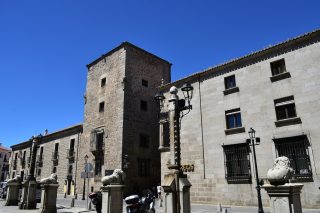
Casa de la Misericordia, Ávila
Historic Building in Ávila

Casa de la Misericordia is an easy-to-miss gem on Calle de San Segundo, literally stitched into the outer face of Ávila's medieval wall. From the street it looks like a handsome old building, but the real draw is above the doorway: a stone scene of Saint Martin dividing his cloak to help a poor man, a small act of compassion carved into the city's fortifications.
It's a perfect “pause and look up” moment on a walking tour of Ávila, and one of the things to see in Ávila if you like details that reveal how the city worked day to day. You can't beat it for atmosphere: walls to one side, old-town lanes to the other, and a reminder that medieval Ávila wasn't only about defense, but also about charity and civic care.
Table of Contents
- History and Significance of the Casa de la Misericordia
- Things to See and Do in the Casa de la Misericordia
- How to Get to the Casa de la Misericordia
- Practical Tips on Visiting the Casa de la Misericordia
- Where to Stay Close to the Casa de la Misericordia
- Is the Casa de la Misericordia Worth Visiting?
- For Different Travelers
- FAQs for Visiting Casa de la Misericordia
- Nearby Attractions to the Casa de la Misericordia
History and Significance of the Casa de la Misericordia
The name translates as House of Mercy, and that’s the key to understanding why it matters. This building was associated with charitable support in the city, connected to the practical reality of feeding and helping those in need-an everyday function that often sits quietly beneath the “big monument” story of Ávila’s walls and churches.
The sculpted scene above the entrance is more than decoration: Saint Martin sharing his cloak is a visual shorthand for generosity and duty, the kind of moral message that would have been instantly legible to residents and travelers alike. In a city shaped by pilgrimage routes, religious foundations, and civic institutions, a relief like this worked as both storytelling and a public statement of purpose.
It's also significant for its setting. Very few buildings press right up against the exterior of the wall, so Casa de la Misericordia stands out as part of the city's edge architecture-where the fortified boundary and daily urban life met in a narrow strip of stone and street.
Things to See and Do in the Casa de la Misericordia
Begin with the relief itself. Step back far enough to see the whole scene, then move closer to catch the carving depth and the way the figures are arranged to read clearly from street level. It’s one of those details that’s best appreciated slowly: you’ll notice expression, movement, and the deliberate placement above the door.
Next, take in the “wall-meets-city” setting. Look along the adjoining stretch of fortification and you’ll understand why this spot works so well as a micro-stop: you’re getting architectural storytelling, urban texture, and the wall’s sheer presence all in one glance.
Finally, use it as a route connector. This is a great point to link together nearby wall-related sights-especially if you’re walking the old town in a loop-because Calle de San Segundo naturally pulls you between major plazas, gates, and viewpoints.
How to Get to the Casa de la Misericordia
Most visitors reach Ávila via Madrid, with Madrid-Barajas (MAD) the most common international gateway before continuing onward to the city. For the best deals and a seamless booking experience, check out these flights to Ávila on Booking.com.
Ávila is well connected by rail from Madrid, and from the station you can continue by taxi or on foot into the walled old town, then follow Calle de San Segundo to the wall-side stretch where the building sits. Train schedules and bookings can be found on Omio.
Regional buses also run into Ávila, and from the bus area it's a short onward hop by taxi or a straightforward walk to the historic centre depending on luggage and timing.
If you’re driving, aim to park on the edge of the old town and finish on foot, as the historic streets are tighter and slower once you approach the walls and central lanes. If you are looking to rent a car in Spain I recommend having a look at Discover Cars, first, as they compare prices and review multiple car rental agencies for you.
Practical Tips on Visiting the Casa de la Misericordia
- Entrance fee: Free to view the outside.
- Opening hours: 24 Hours
- Official website:
- Best time to visit: Go early or late for quieter streets and easier photos, especially if you want a clean shot of the relief without crowds passing underneath.
- How long to spend: 10-20 minutes is plenty to appreciate the carving and context, unless you’re building it into a longer wall-and-lanes loop.
- Accessibility: It’s viewed from the street, but expect uneven paving in the old town and occasional curb changes along the wall-side lanes.
- Facilities: There are no on-site visitor facilities, so plan cafés and restrooms around the main squares a few minutes away.
Where to Stay Close to the Casa de la Misericordia
For a culture-heavy itinerary, base yourself inside the walls near the cathedral and main monuments so you can walk everywhere; if your focus is fast arrivals and transport convenience, staying nearer the station side of town can simplify logistics.
For an easy old-town base with maximum walkability to the walls and central sights, Hotel Palacio Valderrábanos places you right by the cathedral and a short stroll from Calle de San Segundo. If you prefer a classic historic-hotel feel with the same central advantages, Hotel Palacio de los Velada is another strong option for evenings on foot. For a memorable stay that feels closely tied to Ávila’s historic character, Parador de Ávila works well for atmosphere and easy access to the walled quarter.
Is the Casa de la Misericordia Worth Visiting?
Yes-because it delivers a very Ávila-style reward with almost no effort. You get the drama of the walls, plus a human story carved into stone, all in a quick stop that fits naturally between bigger monuments.
It’s especially worthwhile if you like cities for their details: not just what was built, but why, and how daily life once functioned around charity, faith, and civic identity.
What Other Travellers Say...

Residencia Casa de Misericordia at Pl. San Nicolás 18 in Ávila is a recently remodeled care home praised for its clean, welcoming facilities and gardens and for a well‑trained, attentive staff including nurses, physiotherapists and social workers; visitors highlight excellent rehabilitation support, compassionate long‑term care, and contrast it favorably with private homes, though some guests have criticized its charging practices.


For Different Travelers
Families with Kids
This is a great “short attention span” stop because the highlight is visual and immediate: a story carved above a doorway that you can explain in a sentence. Turn it into a mini game-spot the figures, guess what’s happening, then compare your version to the Saint Martin story.
If you’re walking the old town with kids, use it as a breather between larger interiors. It’s outdoors, flexible, and close to routes that lead back toward cafés and open plazas.
Couples & Romantic Getaways
Casa de la Misericordia is a lovely small moment on a slower, more intimate wander-especially in the evening when the streets feel calmer and the wall-side lanes glow under warm lighting. It's the kind of stop that encourages you to linger, talk, and notice details together.
Pair it with a gentle loop: relief first, then a short stroll toward a viewpoint or a main square for a glass of wine. The contrast between fortress walls and a carved act of kindness feels quietly romantic.
Budget Travelers
It’s a perfect free add-on that still feels meaningful, especially if you’re prioritizing the walls and exterior architecture over paid interiors. You can build a satisfying route of street-level details like this, then choose one paid “big ticket” sight if you want to balance the day.
Because it’s quick, it’s also a smart stop when you’re managing time tightly-easy to fold into a longer walking loop without spending money or committing to a schedule.
FAQs for Visiting Casa de la Misericordia
Getting There
Tickets & Entry
Visiting Experience
Tours, Context & Itineraries
Photography
Accessibility & Facilities
Nearby Attractions to the Casa de la Misericordia
- Ávila City Walls: Follow the nearby stretches to see how the fortifications shape the city's streets and viewpoints.
- Ávila Cathedral: A fortress-like Gothic landmark that anchors most historic routes through the old town.
- Plaza del Mercado Chico: The intimate main square inside the walls, ideal for a café pause and people-watching.
- Basilica of San Vicente: A standout Romanesque church with rich sculpture and a strong medieval atmosphere.
- Mirador de los Cuatro Postes: The classic panoramic viewpoint for photographing the entire walled skyline from across the river.
The Casa de la Misericordia appears in our Complete Guide to Visiting Ávila!

Moira & Andy
Hey! We're Moira & Andy. From hiking the Camino to trips around Europe in Bert our campervan — we've been traveling together since retirement in 2020!
This website uses affiliate links which may earn a commission at no additional cost to you!
Planning Your Visit
24 Hours
Free to view the outside.
Nearby Attractions
- Casa Carnicerías (0.0) km
Historic Building and Tourist Office - Walls of Ávila (0.0) km
City Walls - Palacio del Rey Niño (0.1) km
Palace - Museo de Ávila (0.1) km
Museum and Palace - Palacio de los Serranos (0.1) km
Museum and Palace - San Vicente Garden (0.1) km
City Walls, Gardens and Park - Ávila Cathedral (0.1) km
Cathedral - Puerta de San Vicente (0.1) km
City Gate - Palacio de Valderrábanos (0.1) km
Palace - Los Velada Palace (0.1) km
Hotel and Palace