Byzantine Aqueducts, Selçuk
Aqueduct, Attraction and Historic Site in Selçuk
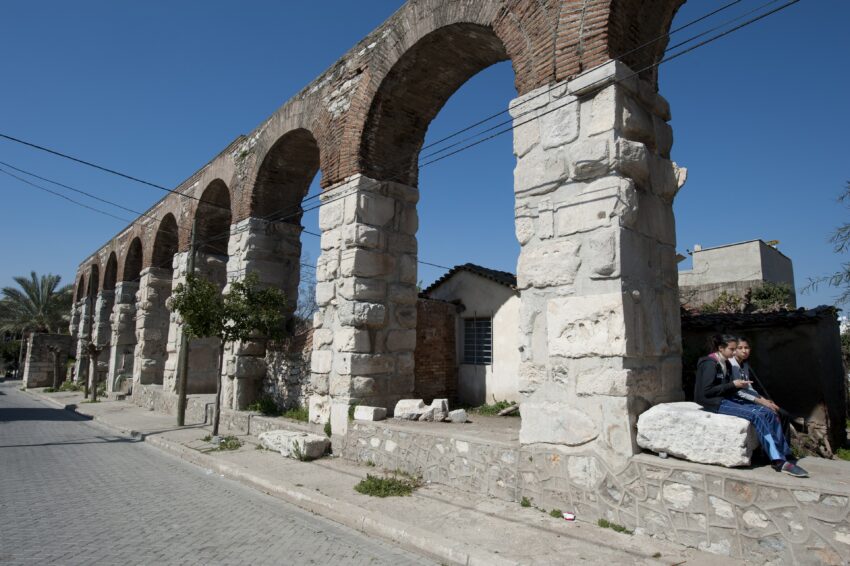
The Byzantine Aqueducts are one of those rare sights you don't have to “go to” in order to see: they rise right in the middle of modern Selçuk, the gateway town for Ephesus. With arches and reused stone elements stretching across a busy square near the train station area, it's a striking reminder that this region's history didn't end with the Romans.
Most travelers experience the aqueduct as part of a walking tour of Selçuk, linking the station, cafés, and the short-hop sights around town. The best views are from the surrounding sidewalks and café terraces, where you can frame the arches against the everyday movement of the square.
Table of Contents
- History and Significance of the Byzantine Aqueducts
- Things to See and Do in the Byzantine Aqueducts
- How to Get to the Byzantine Aqueducts
- Practical Tips on Visiting the Byzantine Aqueducts
- Where to Stay Close to the Byzantine Aqueducts
- Is the Byzantine Aqueducts Worth Visiting?
- For Different Travelers
- FAQs for Visiting Byzantine Aqueducts
History and Significance of the Byzantine Aqueducts
The aqueduct you see in Selçuk today is generally associated with the Byzantine era, when the settlement around Ayasuluk Hill remained important long after classical Ephesus began to silt up and decline as a port. Water infrastructure was essential for sustaining communities, pilgrims, and trade routes across centuries of changing rule.
Part of what makes this aqueduct especially interesting is how it reads like a “patchwork” of history. You can spot differences in column styles and stone blocks, a clue that repairs and restorations likely reused available materials from older structures in the area.
Today, its significance is as much about place as engineering: it’s a landmark that anchors Selçuk’s center and helps you visualize how water, roads, and daily life connected the ancient landscape to the living town you’re walking through.
Things to See and Do in the Byzantine Aqueducts
Start by doing a slow loop around the square to appreciate the aqueduct from multiple angles. The most satisfying photos usually come from slightly off-center viewpoints where you can capture the rhythm of the arches and the contrast between ancient stone and modern street life.
Next, turn it into a relaxed break rather than a “stop.” Pick a nearby café, order tea or coffee, and enjoy the view-this is one of the easiest historic backdrops in the region to experience without queues, gates, or ticket counters.
If you're building a mini-itinerary, use the aqueduct as your orientation point in Selçuk: it's a convenient meeting spot for walking tours and a natural “between sights” pause before heading to bigger-ticket places like Ephesus, the museum, or Ayasuluk Hill.
How to Get to the Byzantine Aqueducts
The nearest major airport is İzmir Adnan Menderes Airport (ADB), which is the most practical gateway for Selçuk and the Ephesus area. For the best deals and a seamless booking experience, check out these flights to Selçuk on Booking.com.
You can reach Selçuk by train from İzmir, and from the station it's an easy walk into the center where the aqueduct stands near the main town flow. You can use the official TCDD Taşımacılık website to check schedules, compare routes, and purchase tickets for Türkiye’s national and regional trains operated by TCDD. For a more streamlined experience (especially if you prefer an English interface or want to compare across countries), we recommend using Omio, which allows you to easily compare prices, schedules, and book train tickets across Türkiye and the rest of Europe — all in one place.
If you're driving, Selçuk is straightforward to reach via the regional highways from İzmir and Kuşadası, and you can usually find short-stay parking on nearby streets or lots depending on the season. If you are looking to rent a car in Türkiye I recommend having a look at Discover Cars, first, as they compare prices and review multiple car rental agencies for you.
Practical Tips on Visiting the Byzantine Aqueducts
- Entrance fee: Free.
- Opening hours: 24 Hours.
- Best time to visit: Go early morning for cleaner photos and a calmer square, or around sunset when the stone warms up and cafés are lively.
- How long to spend: 10-20 minutes is enough for a look and photos; 45-60 minutes if you add a café stop.
- Accessibility: Viewing is mostly flat and street-level, but expect uneven paving, curb edges, and occasional traffic around the square.
- Facilities: No dedicated visitor center on-site, but you’ll have plenty of nearby cafés, restrooms (in venues), and small shops within a couple of minutes’ walk.
Where to Stay Close to the Byzantine Aqueducts
Base yourself in central Selçuk if you want to walk everywhere and keep Ephesus day trips simple.
Staying near the aqueduct puts you close to transport, casual dining, and the easy “in-between” sights that make Selçuk more than just a place to sleep. These options are chosen for location, comfort, and traveler-friendly value.
Ayasoluk Hotel A boutique-feel stay with a strong sense of place; great if you want a memorable base that still keeps you close to town.
Cella Boutique Hotel & Spa A comfortable, modern option with a spa angle-ideal after long days walking Ephesus and the surrounding hills.
Ephesus Centrum A practical pick for travelers who prioritize being central and walkable to cafés, the aqueduct area, and transport.
Saint John Hotel Good-value comfort in an easy location; a solid choice if you want straightforward amenities without fuss.
Akanthus Hotel Ephesus A smaller, friendly-feeling stay that works well for couples and independent travelers who like a quieter night.
Is the Byzantine Aqueducts Worth Visiting?
Yes-especially because it's essentially “free history” in the middle of town. It won't replace the wow-factor of Ephesus itself, but it adds texture to your day: a quick, photogenic landmark that makes Selçuk feel layered and lived-in.
Honest Pivot: if you’re tight on time and only care about major archaeological sites, you can skip a dedicated stop and simply notice it as you pass through town. It’s best enjoyed as a short pause (or café view) rather than a standalone destination.
What Other Travellers Say...
Reviews are very positive overall, with travelers loving how the aqueduct sits right in the town center and pairs easily with nearby cafés and restaurants for a relaxed stop. Many highlight it as a photogenic piece of history you can enjoy while simply walking around Selçuk, and several appreciate the atmosphere of the lively square. The main critique is that restoration work can look mismatched or less “original,” and a few visitors find it more of a quick look than a major standalone attraction.





For Different Travelers
The Byzantine Aqueducts work best as a flexible stop you can scale up or down depending on your pace. Because it's in the open and surrounded by everyday Selçuk life, it fits naturally into most itineraries.
Families with Kids
Kids often enjoy the “giant arches” factor and the simple game of counting spans or spotting details in the stone. It’s also a low-stress stop because there’s no museum fatigue-just a quick look and then snacks nearby.
To keep it fun, pair it with a short walk to another nearby sight and plan a treat break in a café. The open setting makes it easier to reset between bigger, more structured visits.
Couples & Romantic Getaways
For couples, the aqueduct is a great backdrop for relaxed travel moments rather than a checklist attraction. The best experience is lingering with tea or coffee while the square shifts from quiet to lively.
If you like photography, you'll find plenty of angles that feel cinematic-ancient stone framed by modern street scenes. It's an easy way to add atmosphere to your Ephesus trip without adding logistics.
Budget Travelers
This is a strong budget-friendly stop because you can enjoy it without paying for entry. It also sits near plenty of affordable food options, making it a convenient “break point” during a day of walking.
Use it as an anchor for a self-guided Selçuk loop: station area, aqueduct, lunch, then onward to bigger-ticket sites only if they fit your budget.
History Buffs
History lovers will appreciate the aqueduct as evidence of continuity-how the region adapted after the Roman peak and how infrastructure remained central to settlement life. The visible mix of materials also prompts good questions about restoration and reuse.
To deepen the context, treat it as a prelude: see it first, then visit Ephesus and the museum to connect the dots between engineering, urban life, and shifting eras.
FAQs for Visiting Byzantine Aqueducts
Getting There
Tickets & Entry
Visiting Experience
Tours, Context & Itineraries
Photography
Accessibility & Facilities
Food & Breaks Nearby
Safety & Timing
The Byzantine Aqueducts appears in our Complete Guide to Visiting Selçuk!

Moira & Andy
Hey! We're Moira & Andy. From hiking the Camino to trips around Europe in Bert our campervan — we've been traveling together since retirement in 2020!
This website uses affiliate links which may earn a commission at no additional cost to you!
Planning Your Visit
24 Hours.
Free.
Nearby Attractions
- Urban Memory Museum (0.1) km
Attraction and Museum - Ephesus Archaeological Museum (0.4) km
Attraction, Historic Site and Museum - Basilica of Saint John (0.5) km
Basilica, Historic Site and Ruins - Ayasuluk Castle (0.5) km
Castle, Historic Site and Viewing Point - Isa Bey Hamam (0.6) km
Baths, Historic Site and Ruins - İsa Bey Mosque (0.6) km
Historic Building, Mosque and Religious Building - Temple of Artemis (0.7) km
Attraction, Historic Site and Ruins - Grotto of the Seven Sleepers (1.8) km
Attraction, Cave and Historic Site - Baths of Varius (2.8) km
Baths, Roman Site and Ruins - Odeon (2.8) km
Roman Site, Ruins and Theatre