Basilica di Santa Margherita d’Antiochia, Santa Margherita Ligure
Church in Santa Margherita Ligure
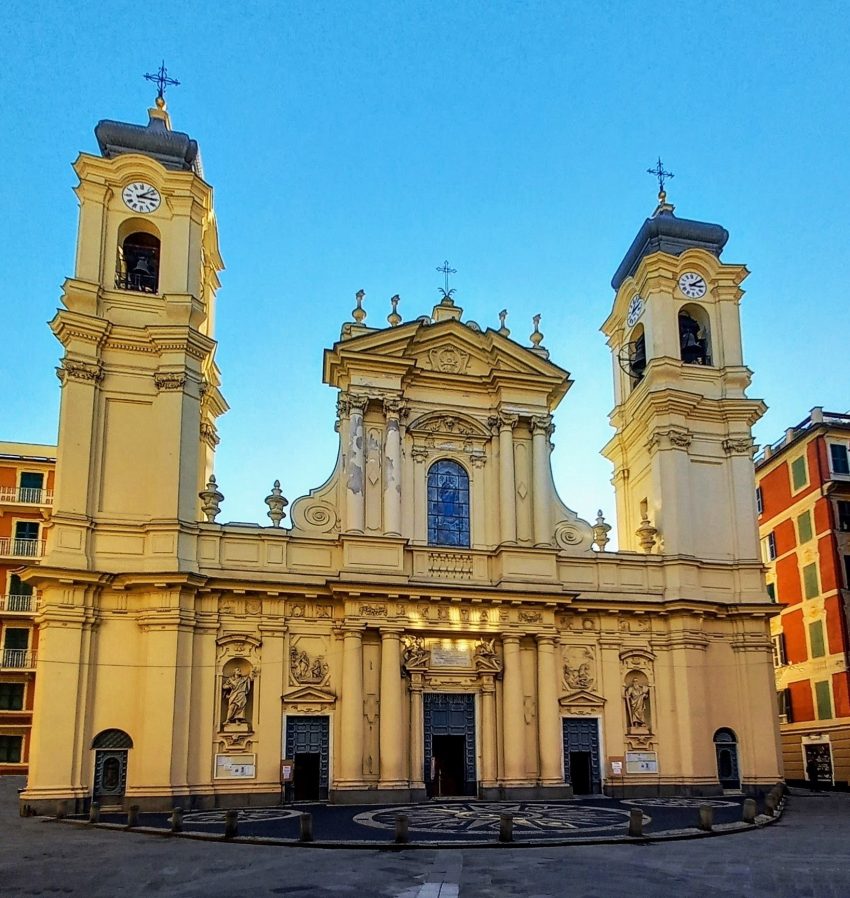
In the heart of Santa Margherita Ligure, just a short stroll inland from the seafront, the Basilica di Santa Margherita d'Antiochia is the town's spiritual and artistic centerpiece. From the outside it feels quietly monumental, but once you step in you immediately notice the classic Ligurian baroque sense of scale: a bright nave, gilded detail, and a dome that pulls your eye upward in the most satisfying way.
It's one of the top attractions in Santa Margherita Ligure because it delivers something you can't get from the promenade alone: a living place of worship that's also a time capsule of local identity, sailors' traditions, and civic celebrations. It also fits naturally into a walking tour of Santa Margherita Ligure, since you can pair it with the marina, the town's central streets, and the nearby villa gardens in a compact, rewarding loop.
Table of Contents
- History and Significance of the Basilica di Santa Margherita d’Antiochia
- Things to See and Do in the Basilica di Santa Margherita d’Antiochia
- How to Get to the Basilica di Santa Margherita d’Antiochia
- Practical Tips on Visiting the Basilica di Santa Margherita d’Antiochia
- Where to Stay Close to the Basilica di Santa Margherita d’Antiochia
- Is the Basilica di Santa Margherita d’Antiochia Worth Visiting?
- For Different Travelers
- FAQs for Visiting Basilica di Santa Margherita d’Antiochia
- Nearby Attractions to the Basilica di Santa Margherita d’Antiochia
History and Significance of the Basilica di Santa Margherita d’Antiochia
The present basilica traces its roots to the mid-17th century, with construction beginning in 1658 on a site long associated with worship in the town. Local tradition points to an earlier medieval church here, reflecting how this part of Santa Margherita has been anchored by parish life for centuries, even as the community expanded and reorganized across districts.
A major turning point came in the 1600s when the parish was reconstituted, and the church’s status rose within the ecclesiastical structure of the region. Over time it became not only the primary parish church but also the ceremonial heart of the town, marked by formal recognition and a solemn consecration in the 18th century that is still commemorated at the entrance.
Its modern prestige is underlined by the title of minor basilica, granted in the 20th century, but its deeper significance is devotional. The sanctuary is closely tied to Nostra Signora della Rosa, a beloved Marian image linked to maritime life and local memory, as well as to Saint Margaret of Antioch, the town’s patron saint. These devotions are not abstract history here; they still shape the calendar through annual feast days, processions, and a sense of shared tradition that’s very much alive.
Things to See and Do in the Basilica di Santa Margherita d’Antiochia
Begin by slowing down and letting your eyes adjust to the interior’s richness. The basilica rewards anyone who enjoys details: layered altars, sculptural elements, painted ceilings, and the interplay of daylight with gold and marble. Even if you’re not usually a “church person,” the space has that unmistakable Italian Riviera blend of elegance and devotion.
Seek out the Marian focus of the sanctuary, which draws many visitors in quietly, not with spectacle but with reverence. The Madonna della Rosa devotion is woven into the basilica’s identity, and noticing how locals interact with the space-pausing, lighting a candle, or simply sitting in silence-adds a human layer to the visit.
If you can time your stop well, step in when the basilica is calm between services so you can appreciate the architecture and atmosphere without feeling rushed. Alternatively, attending a short service can be a meaningful way to experience the building as it was intended: not just as an artwork, but as a living part of Santa Margherita’s daily rhythm.
How to Get to the Basilica di Santa Margherita d’Antiochia
The closest airport is Genoa Cristoforo Colombo (GOA), with Pisa (PSA) as a useful alternative if you want broader flight options for the Italian Riviera. For the best deals and a seamless booking experience, check out these flights to Santa Margherita Ligure on Booking.com.
By train, use Santa Margherita Ligure-Portofino station, then walk downhill toward the centre and continue to Piazza Caprera near the waterfront side of town.Use Omnio to easily compare schedules, book train tickets, and find the best prices all in one place for a hassle-free journey across Italy.
Local buses and taxis connect the station with the centre quickly, but walking is often the most pleasant option because the route is short and naturally scenic.
If you’re arriving by car, plan to park in one of the paid car parks around the centre and walk the final few minutes, since the streets near the core can be tight and traffic rules can change by season.If you are looking to rent a car in Italy I recommend having a look at Discover Cars, first, as they compare prices and review multiple car rental agencies for you.
Practical Tips on Visiting the Basilica di Santa Margherita d’Antiochia
- Entrance fee: Free.
- Opening hours: Daily: 09:00-19:00.
- Official website: https://parrocchiesantamargherita.it/basilica/
- Best time to visit: Aim for a quiet window between services when the interior feels unhurried, and you can linger without interrupting worship.
- How long to spend: 20-40 minutes is ideal for a thoughtful visit, longer if you enjoy photographing details or sitting for a few minutes in the nave.
- Accessibility: The approach is central and walkable, but interiors in historic churches can include steps and uneven thresholds, so allow extra time if mobility is limited.
- Facilities: Treat this as a focused cultural stop and plan cafés, restrooms, and longer breaks around the marina and central streets nearby.
Where to Stay Close to the Basilica di Santa Margherita d’Antiochia
For a culture-heavy itinerary, base yourself near the harbour and historic centre so you can walk everywhere easily; if your priority is a relaxed seaside stay with quick access to Portofino-side scenery, choose the seafront stretches that keep you close to the promenade.
For a classic, convenient base a short walk from the basilica, Hotel Laurin places you right by the waterfront while keeping the old-town streets and Piazza Caprera close. If you prefer a full-service option with a more resort-style feel, Hotel Metropole adds extra comfort and amenities without pushing you out of the centre. For a polished seaside stay that still feels walkable and practical, Hotel Continental is well-positioned for combining church visits, harbour strolls, and evening aperitivo.
Is the Basilica di Santa Margherita d’Antiochia Worth Visiting?
Yes, especially if you want a memorable “inside” experience to balance Santa Margherita’s outdoor beauty. The basilica is visually impressive, culturally central, and emotionally grounded in local devotion, which makes it feel more authentic than a purely touristic stop. Even a short visit adds real depth to a day that might otherwise stay on the surface of seaside scenery.
What Other Travellers Say...

Chiesa di Santa Margherita in Piazza Caprera, Santa Margherita Ligure, welcomes visitors daily with free entry to a compact yet richly decorated Baroque basilica; inside you'll find three naves beneath a central dome, abundant stucco, frescoes, chandeliers and stained glass, niches with sculptures of apostles, relic urns of Saint Margaret and a sense of peace and awe praised by visitors, while the façade features a three-part design with paired columns and an 18th-century bell tower.


For Different Travelers
Families with Kids
This basilica works best for families as a short, calm stop rather than a long, detail-heavy visit. Go in with a simple plan: spot the dome, choose one or two highlights to point out, then step back outside to reset.
If you’re traveling with very young kids, time it around naps or snack breaks so you’re not trying to “behave quietly” under pressure. Pair it with the marina afterward so the day still feels playful and open-air.
Couples & Romantic Getaways
For couples, the basilica is a surprisingly romantic pause: cool air, soft light, and a sense of calm that feels like a reset from busy travel days. It’s also a lovely contrast to the glamour of the waterfront, showing the town’s deeper roots.
Make it part of a slow loop: basilica first, then a gentle wander through central streets, finishing with a sunset promenade and a drink near the harbour. It’s a simple structure that turns an ordinary day into something more intentional.
Budget Travelers
This is an easy budget-friendly cultural win because it’s a substantial experience without needing a ticket. Treat it as your “museum moment” of the day, then spend your money where it matters most to you-food, a boat outing, or a scenic train hop.
To keep the day efficient, bundle it with nearby highlights so you’re not paying for extra transport. Santa Margherita is compact, and walking between stops is part of what makes it feel good value.
History Buffs
History lovers will appreciate how the basilica reflects Santa Margherita’s shift from maritime community to a town with layered civic and religious identity. The building’s 17th-century core sits on a site tied to older worship, giving you that satisfying sense of continuity through changing eras.
The Madonna della Rosa devotion is also a strong thread for context, linking sailors’ traditions, local documents, and the rhythms of feast days. If you enjoy “history as lived practice,” this is one of the most revealing places in town.
FAQs for Visiting Basilica di Santa Margherita d’Antiochia
Getting There
Tickets & Entry
Visiting Experience
Tours, Context & Itineraries
Photography
Accessibility & Facilities
Food & Breaks Nearby
Safety & Timing
Nearby Attractions to the Basilica di Santa Margherita d’Antiochia
- Castello di Santa Margherita Ligure: A compact seaside fortress that's perfect for a quick historic stop and harbour views.
- Villa Durazzo-Centurione: A grand villa with gardens and scenic terraces that adds elegance and greenery to your day.
- Marina di Santa Margherita Ligure: A classic Riviera harbour for strolling, boat-spotting, and lingering by the water.
- Paraggi Bay: A small, beautiful cove between Santa Margherita and Portofino that's ideal for a swim or scenic pause.
- Portofino: The famous nearby village that's easy to combine for an afternoon of views, boutiques, and coastal atmosphere.
The Basilica di Santa Margherita d’Antiochia appears in our Complete Guide to Visiting Santa Margherita Ligure!

Moira & Andy
Hey! We're Moira & Andy. From hiking the Camino to trips around Europe in Bert our campervan — we've been traveling together since retirement in 2020!
This website uses affiliate links which may earn a commission at no additional cost to you!
Planning Your Visit
Daily: 09:00-19:00.
Free.
Nearby Attractions
- Villa Durazzo (0.2) km
Historic Building and Museum - Santa Margherita Ligure Castle (0.3) km
Castle - Marina di Portofino (3.5) km
Harbour - San Fruttuoso (3.6) km
Abbey - Castello Brown (3.6) km
Castle - Portofino Lighthouse (4.0) km
Lighthouse - Civic Maritime Museum Gio Bono Ferrari (4.7) km
Museum - Castello della Dragonara (5.2) km
Castle - Christopher Columbus House (23.4) km
Historic Building - Porta Soprana (23.5) km
City Gate and City Walls