Christopher Columbus House, Genoa
Historic Building in Genoa
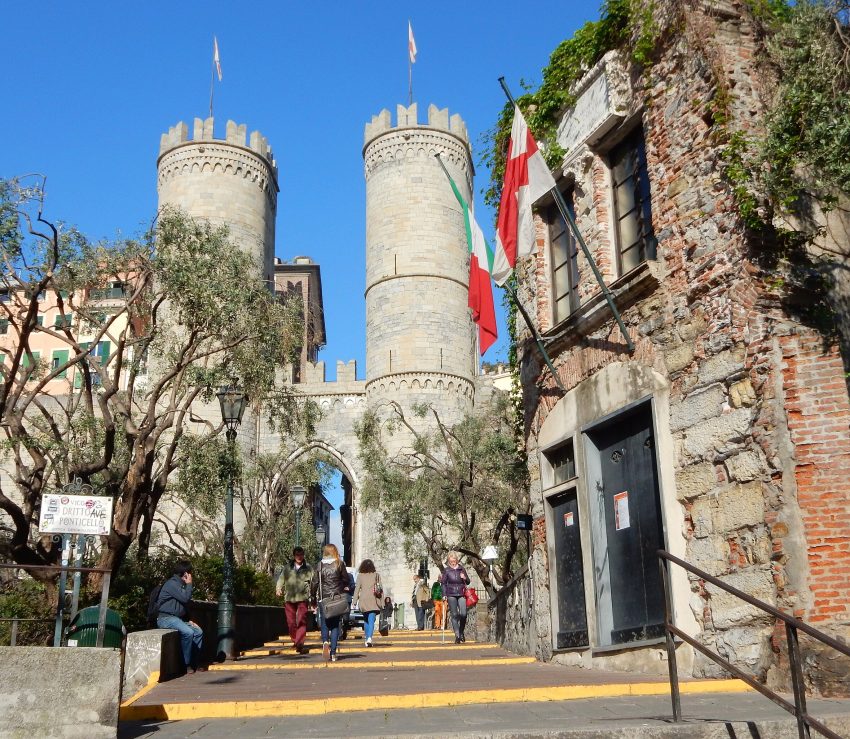
Columbus' House is one of the must-see places in Genoa for travellers intrigued by the origins of great historical figures. Located just outside the medieval walls beside Porta Soprana, this small structure represents the home where young Christopher Columbus is believed to have lived between 1455 and 1470. Though the current building is an 18th-century reconstruction, it stands on the site of the original house that once witnessed the explorer's formative years.
It is also often visited on walking tours of Genoa, as the house sits along a popular route linking major medieval landmarks, cloisters, and ancient gates. The combination of myth, memory, and documented history makes this site one of the top attractions in Genoa for visitors eager to connect with the city's past.
Table of Contents
- History and Significance of Columbus’ House, Genoa
- Things to See and Do in Columbus’ House, Genoa
- How to Get to Columbus’ House, Genoa
- Practical Tips on Visiting Columbus’ House, Genoa
- Where to Stay close to Columbus’ House, Genoa
- Is Columbus’ House, Genoa Worth Visiting?
- FAQs for Visiting Columbus’ House, Genoa
History and Significance of Columbus’ House, Genoa
The original medieval house was likely destroyed in 1684 during the intense French naval bombardment ordered by King Louis XIV. What stands today is believed to be an 18th-century reconstruction built atop the surviving remnants. Despite this, the building remains deeply symbolic, serving as a physical reminder of Genoa’s most famous son.
Historical research suggests that Christopher Columbus lived here from early childhood until his mid-teens. His father, Domenico Columbus, worked as a wool weaver and merchant, operating his workshop on the ground floor while the family lived above. Written documents and archival discoveries support the idea that the Columbuses moved to Vico Dritto Ponticello in 1455, when the future navigator was just four years old.
In 1887, the Municipality of Genoa purchased the house, recognising its cultural and historical value. It was incorporated into the restoration project for Porta Soprana, ensuring its preservation as the surrounding cityscape underwent dramatic redevelopment. A plaque on the façade now commemorates its significance with the inscription: “No home is more worthy of consideration than this one, where Christopher Columbus spent his early youth within the embrace of paternal walls.”
Things to See and Do in Columbus’ House, Genoa
Visitors can explore the two-level structure and gain insight into the modest domestic environment of a 15th-century artisan family. The ground floor illustrates where Domenico Columbus would have carried out his wool weaving and trading activities, highlighting the everyday life that shaped the young explorer’s world.
The upper floor, reconstructed according to historical descriptions, represents the family's living quarters. Although simply furnished, these rooms provide context for Columbus' early years in Genoa before his voyages changed the course of world history. The sense of intimacy contrasts sharply with the vastness of the journeys for which he later became famous.
Stepping outside, travellers can appreciate the site's position beside Porta Soprana and the remains of the St. Andrew Cloister. Combined with the medieval atmosphere of the area, Columbus' House offers a compact yet meaningful stop in the heart of old Genoa.
How to Get to Columbus’ House, Genoa
Genoa Cristoforo Colombo Airport offers the nearest international access, with direct buses and taxis taking visitors into the city centre and toward the historic district around Porta Soprana. For the best deals and a seamless booking experience, check out these flights to Genoa on Booking.com.
For those arriving by train, both Genova Brignole and Genova Piazza Principe stations provide convenient links to Columbus' House via bus or metro, followed by a short walk through the medieval streets. Use Omnio to easily compare schedules, book train tickets, and find the best prices all in one place for a hassle-free journey across Italy.
If travelling by car, visitors can park in garages near Piazza Dante or Piazza Corvetto before walking to the site, as the immediate area around Porta Soprana is pedestrian oriented. If you are looking to rent a car in Italy I recommend having a look at Discover Cars, first, as they compare prices and review multiple car rental agencies for you.
Practical Tips on Visiting Columbus’ House, Genoa
- Suggested tips: Pair your visit with nearby Porta Soprana and the St. Andrew Cloister for a fuller medieval experience.
- Best time to visit: Early morning or late afternoon for quieter surroundings.
- Entrance fee in Euros: Typically 2-4 EUR.
- Opening hours: Usually open daily, but hours may vary seasonally.
- Official website: Search “Casa di Colombo Genova” for the latest updates.
- How long to spend: About 20-30 minutes.
- Accessibility: The upper floor may be difficult to access for visitors with mobility limitations.
- Facilities: Minimal facilities on-site; restrooms are available in nearby public areas.
- Photography tip: Capture the house with Porta Soprana rising just behind it for a classic Genoa image.
- Guided tours: Available through some city walking tour companies.
- Nearby food options: Piazza Dante and the surrounding streets offer cafés, gelaterias, and trattorias.
Where to Stay close to Columbus’ House, Genoa
Staying near Columbus' House places you in a lively and historic part of the city, perfect for exploring medieval landmarks. For elegance and convenience, consider Hotel Bristol Palace. A stylish boutique alternative is Hotel Genova City Center. Travellers wanting to stay close to the heart of the old town may enjoy Hotel Le Nuvole with its charming historic setting.
Is Columbus’ House, Genoa Worth Visiting?
Yes, Columbus' House is worth visiting, particularly for those interested in medieval Genoa or the life of one of history's most influential explorers. While modest in scale, the house offers a compelling link to Columbus' early years and sits in one of the best-preserved historic areas of the city.
What Other Travellers Say...
Casa di Cristoforo Colombo on Vico Dritto di Ponticello in Genoa is an 18th-century reconstruction marking Christopher Columbus's childhood home; it's a small, modestly presented site with a couple of rooms displaying maps, documents and artifacts that offer a glimpse into his early life and sit near medieval features like the Porta Soprana. Visitors find it compact and not crowded, note the modest entrance fee (about €5) and suggest visiting in cooler afternoon hours; opinions vary on value—some praise the symbolic, informative displays while others feel the tiny rooms and sparse exhibits don't justify the cost.


FAQs for Visiting Columbus’ House, Genoa
The Christopher Columbus House appears in our Complete Guide to Visiting Genoa!

Moira & Andy
Hey! We're Moira & Andy. From hiking the Camino to trips around Europe in Bert our campervan — we've been traveling together since retirement in 2020!
This website uses affiliate links which may earn a commission at no additional cost to you!
Planning Your Visit
Nearby Attractions
- Porta Soprana (0) km
City Gate and City Walls - Piazza De Ferrari (0.2) km
Square - Church of Jesus and the Saints Ambrogio and Andrea (0.2) km
Church - Piazza Matteotti (0.3) km
Square - Doge’s Palace (0.3) km
Palace - Cathedral of San Lorenzo (0.4) km
Cathedral - Santa Maria di Castello (0.5) km
Church - Oriental Art Museum (0.6) km
Museum - Palazzo San Giorgio (0.7) km
Palace - Via Garibaldi Palaces (0.7) km
Palace