Albacara Walls, Ronda
City Walls in Ronda
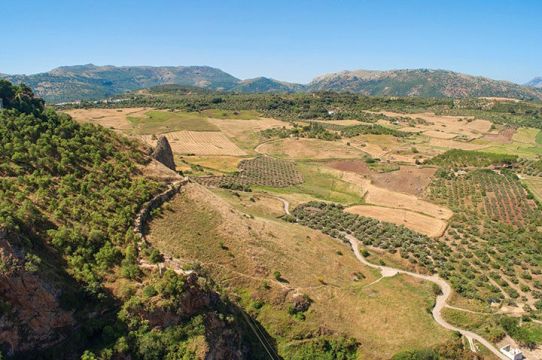
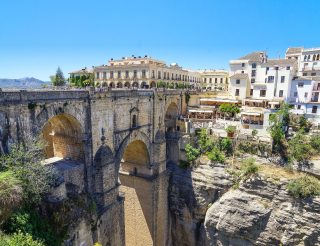
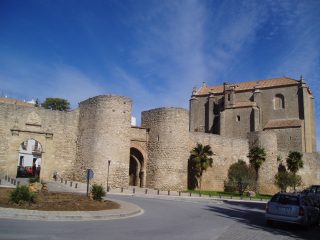
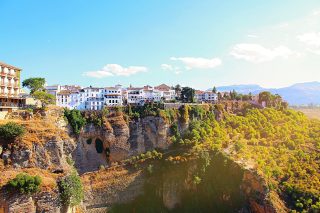
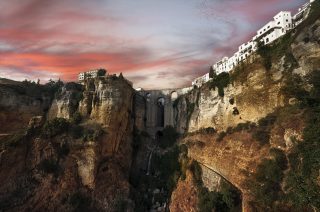
The Murallas de la Albacara are one of Ronda's most dramatic defensive remnants, perched at the mouth of the gorge roughly halfway up the cliff face. Unlike the city walls that feel purely “urban,” these have a rugged, strategic relationship with the terrain: they guard a slope that rises toward the lip of El Tajo, while the wall itself ends in a sheer drop to the river below. It's the kind of place where you can immediately understand how geography and architecture worked together to keep Ronda safe.
What makes the Albacara Walls especially interesting is their practical role in Moorish-era city life. They weren't only about soldiers and sieges-they also protected the gorge approach where mills and water resources mattered, and they created a controlled enclosure that could even be used to shelter livestock during threats. This spot is one of the top sights in Ronda if you enjoy fortifications that feel embedded in the landscape, and it fits naturally into a walking tour of Ronda when you're linking viewpoints with quieter, story-rich corners of the old town.
Table of Contents
- History and Significance of the Murallas de la Albacara
- Things to See and Do in the Murallas de la Albacara
- How to Get to the Murallas de la Albacara
- Practical Tips on Visiting the Murallas de la Albacara
- Where to Stay Close to the Murallas de la Albacara
- Is the Murallas de la Albacara Worth Visiting?
- For Different Travelers
- FAQs for Visiting the Murallas de la Albacara
- Nearby Attractions to the Murallas de la Albacara
History and Significance of the Murallas de la Albacara
The Albacara Walls formed part of Ronda's Moorish defensive system, designed to reinforce the west side of the town where the hillside was less steep and therefore more vulnerable. They spanned the space between Puerta del Viento and Puerta de los Molinos, closing off a line of access that would otherwise have allowed attackers an easier approach than the near-vertical gorge walls elsewhere.
Their significance goes beyond military logic. The word albacara comes from the Arabic bab al baqqara, meaning “cattle door,” and that hint is important: these walls helped create an area where cattle could be driven and protected if an attack was expected. In a fortified town, safeguarding food, animals, and basic supplies was as important as defending towers and gates.
The walls also relate directly to the economic life of Moorish Ronda. The valley below was a major wheat-growing area, and multiple mills were positioned along the river to grind grain and support the town's daily needs. By controlling entry into the gorge, the Albacara Walls helped protect essential infrastructure-particularly mills and access to water-turning this section of the landscape into a guarded service corridor as well as a defensive edge.
Things to See and Do in the Murallas de la Albacara
The first thing to do is simply to look at the placement. Stand where you can see how the wall meets the cliff, and you’ll get a clear sense of why this is such an intelligent fortification: it blocks the manageable slope while the gorge itself provides an unassailable barrier on the other side. It’s a strong example of “defend the weak point” design, using a relatively short wall to control a much larger natural boundary.
As you explore the area, keep in mind the relationship between gates, walls, and the gorge routes. The Albacara Walls are at their best when you treat them as part of a defensive network connecting Puerta del Viento and Puerta de los Molinos, rather than as an isolated fragment. You start to see how movement was channelled, watched, and restricted.
This is also a rewarding stop for slow, observant walking rather than checklist sightseeing. Pay attention to how the walls frame views into the gorge mouth and toward the river corridor where mills once operated. Even if you don’t reach every viewpoint, reading the geometry of the land-slope, lip, drop, and access paths-gives you the “why” behind the architecture.
How to Get to the Murallas de la Albacara
Most visitors reach Ronda via Málaga Airport, then continue inland to the city. For the best deals and a seamless booking experience, check out these flights to Ronda on Booking.com. Seville Airport is another common option if you're combining Ronda with a broader Andalusia itinerary. For the best deals and a seamless booking experience, check out these flights to Ronda on Booking.com.
Ronda is accessible by train, which is a practical choice if you prefer to avoid driving in the historic areas. Train schedules and bookings can be found on Omio. From the station, head into the old town on foot or by taxi, then continue toward the gorge-edge walks and the old-town streets leading to Plaza de María Auxiliadora.
Local buses and taxis are useful for getting you from the station to the historic centre quickly if you want to save your walking energy for the gorge area itself. If you’re driving, park once centrally and approach the walls on foot, since old-town streets and gorge access are far easier without a car. If you are looking to rent a car in Spain I recommend having a look at Discover Cars, first, as they compare prices and review multiple car rental agencies for you.
Practical Tips on Visiting the Murallas de la Albacara
- Entrance fee: Free
- Opening hours: 24 Hours
- Best time to visit: Go in the morning for clearer light into the gorge mouth and a quieter atmosphere on the paths. Late afternoon can be beautiful too, but the area may feel busier if you’re visiting in peak season.
- How long to spend: Allow 30-60 minutes depending on how much you want to walk and how long you linger at viewpoints. It’s an ideal “between stops” section that becomes more rewarding when you link it with nearby gates and gorge-edge promenades.
- Accessibility: Expect steep or uneven paths and sections where footing matters, especially if you're moving between street level and gorge-adjacent viewpoints. If mobility is limited, prioritise the easiest approach points near Plaza de María Auxiliadora and focus on viewing from stable overlooks.
- Facilities: There are no dedicated visitor facilities at the walls, so plan breaks around nearby plazas and cafés in the old town. Bring water if you’re doing this as part of a longer walk in warm weather.
Where to Stay Close to the Murallas de la Albacara
For a culture-heavy itinerary, the best area to base yourself is central Ronda near the old town and main sights so you can walk everywhere and enjoy the viewpoints early and late; if your priority is transport convenience for onward travel, staying nearer the station can simplify arrivals and departures while keeping the historic core walkable.
If you want a landmark location with instant access to gorge-edge walks, Parador de Ronda is an excellent base. For comfort with a classic Ronda feel and strong walkability, Catalonia Reina Victoria is a dependable choice. For a smaller, characterful stay suited to old-town exploring, Soho Boutique Palacio San Gabriel is a good fit.
Is the Murallas de la Albacara Worth Visiting?
Yes, particularly if you want to understand Ronda as a fortified city rather than only a scenic viewpoint destination. The Albacara Walls show how the town defended the “less steep” side of the gorge and protected the working infrastructure of mills and water access below-practical priorities that often get lost in postcard narratives.
If your time is limited, you can still appreciate them from classic promenade viewpoints. But if you enjoy defensive history and landscape strategy, walking closer to the walls gives you a far more vivid sense of why this location mattered.
What Other Travellers Say...

Walls of Ronda, C. Goleta 10, 29400 Ronda, Málaga, Spain — a set of historic city walls offering exceptional views over surrounding fields and whitewashed houses; visitors praise the brilliant vistas, recommend strolling the winding town streets, note parts are less crowded, but expect some walking and limited parking.


For Different Travelers
Families with Kids
This can be a fun stop for families if you frame it as a “castle walls and secret defenses” walk, especially for kids who like imagining gates, watch points, and protected routes. The gorge setting adds natural drama, which helps keep attention engaged.
Because paths can be steep and edges can feel exposed, it’s best suited to families who are comfortable with careful walking. Keep the visit shorter, focus on safer viewing points, and build in a snack stop back in the old town.
Couples & Romantic Getaways
For couples, the Albacara Walls are less about romance and more about shared discovery-walking quieter routes, finding angles other visitors skip, and watching the gorge landscape change with the light. It's a good antidote to the busiest viewpoints, especially if you time it for a calmer hour.
Pair it with a slow stroll along one of the gorge-edge paseos afterward so the experience moves naturally from fortification history into panoramic atmosphere.
Budget Travelers
This is a strong budget-friendly sight because it's largely experienced through walking routes and viewpoints rather than paid interiors. If you're building a day around free panoramic walks, the Albacara Walls add depth and story without adding cost.
To make it feel more substantial, link it with Puerta del Viento and Puerta de los Molinos, turning the walk into a coherent “west walls” route rather than a single stop.
History Buffs
History lovers tend to appreciate the Albacara Walls because they reveal the logic of Moorish urban defence: identify the vulnerable approach, close it with a wall line, and protect essential resources like mills and water access. The “cattle door” meaning adds a practical social layer that reinforces how fortifications served daily life.
The most satisfying way to visit is to think in systems-gates, walls, terrain, and supply lines-because this area makes those relationships unusually easy to read on the ground.
FAQs for Visiting the Murallas de la Albacara
Getting There
Tickets & Entry
Visiting Experience
Tours, Context & Itineraries
Photography
Accessibility & Facilities
Food & Breaks Nearby
Safety & Timing
Nearby Attractions to the Murallas de la Albacara
- Puerta del Viento: A dramatic gate set against a tall rock formation, accessed by steps from Plaza de María Auxiliadora.
- Puerta de los Molinos: A historic gate and path route linked to the old mills and gorge-side walking trails.
- Puente Nuevo: The iconic bridge and the classic vantage point for understanding the gorge's scale.
- Casa Don Bosco: A refined historic house with gardens perched over the Tajo ledge and excellent gorge views.
- Jardines de Cuenca: Gorge-edge hanging terraces that offer a changing perspective on Ronda's cliffs and bridges.
The Albacara Walls appears in our Complete Guide to Visiting Ronda!

Moira & Andy
Hey! We're Moira & Andy. From hiking the Camino to trips around Europe in Bert our campervan — we've been traveling together since retirement in 2020!
This website uses affiliate links which may earn a commission at no additional cost to you!
Nearby Attractions
- Puerta Del Viento (0.1) km
City Gate - Puerta de los Molinos (0.1) km
City Gate - Plaza de María Auxiliadora (0.1) km
Square - Palacio de Mondragon (0.2) km
Gardens, Museum and Palace - Casa de San Juan Bosco (0.2) km
Palace - Casa del Gigante (0.3) km
Museum and Palace - Paseo de Ernest Hemingway (0.3) km
Viewing Point - Museo Lara (0.3) km
Museum - Mirador de Ronda (0.3) km
Viewing Point - Church of Santa María la Mayor (0.3) km
Church and Historic Building