Must-Visit Museums In Seville, Spain 2026
This website uses affiliate links which earn a small commission at no additional cost to you.
Seville is the undisputed heart of Andalusian culture, but let's be honest: it's a lot more than just orange trees and photo-ops. For art and history lovers, this city is a goldmine where the past doesn't just sit on a shelf-it dances, sails, and occasionally stares back at you from a 500-year-old canvas.
Whether you're here to trace the footsteps of Roman emperors, get lost in Baroque masterpieces, or finally figure out why every wall in town is covered in spectacular tilework, Seville's museums are the key to the city's soul. In this guide, we've rounded up the must-visit museums in Seville for 2026, ranging from the world-famous galleries to the hidden gems where you can actually hear yourself think.
Table of Contents
- Which Museums Are Right for You?
- A Quick History of Seville
- Must-Visit Museums In Seville
- Flamenco Museum
- Fine Arts Museum
- Naval Museum of Seville
- Navigation Pavilion
- Casa de los Pinelo
- The Bullfight Museum
- General Archive of the Indies
- Archaeological Museum of Seville
- Andalucian Contemporary Art Centre
- Military Historical Museum
- Velázquez Center
- Spanish Inquisition Museum
- Museum of Arts and Traditions of Seville
- The Science House
- The Ceramics Museum
Which Museums Are Right for You?
Seville’s cultural scene is vast, and trying to see everything in one trip is a recipe for museum fatigue. To help you prioritize, I’ve grouped the highlights into categories so you can choose the experiences that best fit your travel style.
The Big Three (The “Essential” List)
If you only have time for a few stops, these are the heavy hitters. They represent the core pillars of Sevillian identity: world-class art, the soul of the dance, and the city’s relationship with the river.
- Fine Arts Museum: The “Prado of the South” and a must for masterpiece seekers.
- Flamenco Museum: An immersive look at the heartbeat of Andalusia.
- Naval Museum (Torre del Oro): The city’s most iconic landmark with a view to match.
Best for Families (Interactive & Engaging)
If you’re traveling with kids who might get bored of staring at silent oil paintings, these spots offer a more “hands-on” approach with interactive displays and room to breathe.
- Science House: Perfect for whale skeletons and planetarium shows.
- Navigation Pavilion: Great for “steering” ships and exploring life at sea.
- Military Historical Museum: Full of big cannons and dioramas that usually keep younger travelers curious.
Off the Beaten Path (Escape the Crowds)
Seville is a popular place, and the main tourist hubs can get loud. If you want to see incredible architecture and history in relative peace, head to these underrated gems.
- Casa de los Pinelo: Quiet Renaissance courtyards that most tourists walk right past.
- Carriages Museum: A niche, high-luxury look at how the elite used to get around.
- Andalucian Contemporary Art Centre (CAAC): A monastery-meets-factory vibe that feels like a hidden retreat.
Free & Budget-Friendly (Culture on a Dime)
You don’t need a huge budget to see world-class history here. These locations offer incredible insights into the Spanish Empire and local life for the price of… well, nothing.
- General Archive of the Indies: UNESCO-level history and stunning marble floors for €0.
- Spanish Inquisition Museum: An important, moving experience located right by the Triana market.
- Military Historical Museum: Zero entry fee and-importantly-excellent air conditioning.
A Quick History of Seville
Seville wasn't built in a day, and it certainly wasn't built by just one people. It began as Hispalis, a thriving Roman port, before becoming Isbiliya under five centuries of Muslim rule, which gave the city its winding Almohad streets and iconic architecture. After the Christian Reconquest in 1248, Seville transformed again, eventually becoming the “Gateway to the New World.” During the 16th century, it was the richest city in Europe, where every ounce of gold and silver from the Americas had to pass through its docks.
Today, Seville is a beautiful, chaotic mix of these eras-Roman ruins sit under Gothic cathedrals, and Renaissance palaces are decorated with Moorish tiles. To truly “see” the history, you have to know which door to walk through.
How to Experience the Eras
If you want to walk through Seville’s timeline rather than just reading about it, here is how to match the history to the museum:
- The Roman Roots: Head to the Archaeological Museum. Here, you can see the colossal statues and intricate mosaics salvaged from Italica (the birthplace of emperors). It’s the best way to visualize the city back when it was a marble-clad Roman powerhouse.
- The Islamic Influence & Mudéjar Style: While the Alcázar is the obvious choice, the Museum of Arts and Traditions and Centro Cerámica Triana explain the soul of this era. They showcase the craft of tile-making and geometry that the Moorish artisans left behind, which still defines the city’s “look” today.
- The Golden Age of Discovery: Visit the General Archive of the Indies and the Naval Museum (Torre del Oro). These spots put you in the room with the actual maps and journals of explorers like Columbus. You can feel the weight of the era when Seville was the center of the global economy.
- The Religious & Artistic Boom: The Fine Arts Museum is the place to see how the wealth of the New World funded a massive “Golden Age” of Spanish art. The giant canvases were designed to show off the city’s piety and power during the 17th-century Baroque explosion.
- The Darker Chapters: History isn’t all palaces and paintings. The Spanish Inquisition Museum (Castillo de San Jorge) offers a sobering look at the religious persecution that followed the Reconquest, built right into the ruins of the prison where it all happened.
Must-Visit Museums In Seville
1. Flamenco Museum
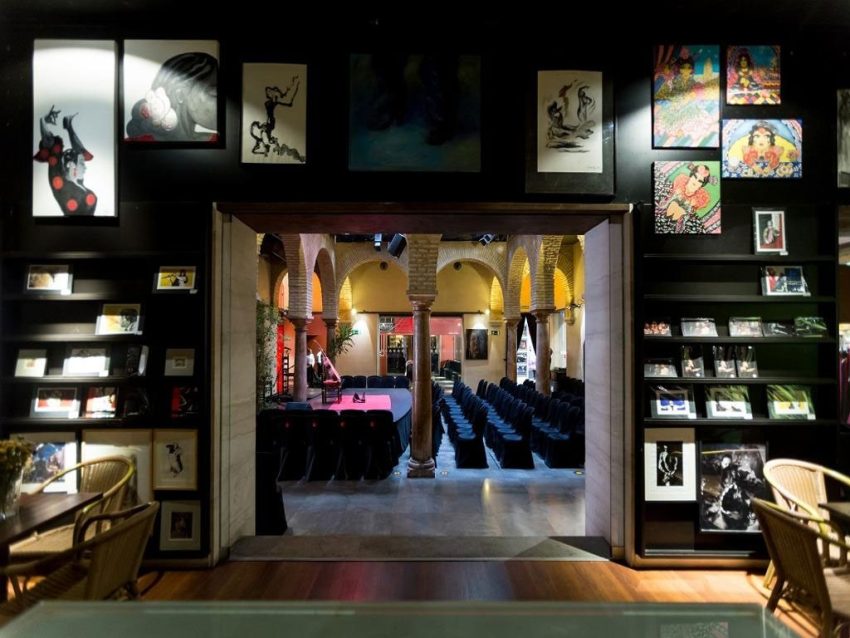
Founded by the legendary dancer Cristina Hoyos, this isn’t just a room full of old shoes; it’s a high-tech tribute to the soul of Andalusia. The museum is built over an 18th-century structure, which itself sits on the remains of a Roman temple, creating a literal layer cake of Seville’s history. The exhibits use dramatic lighting and large-scale projections to show the evolution of different palos (styles) of Flamenco, making the history of the dance feel like a living, breathing performance rather than a dusty archive.
The real magic happens in the central courtyard, where the acoustics are so sharp you’ll feel the vibration of the footwork in your chest. If you book the combo ticket, make sure to arrive at least an hour before the show starts; the museum actually closes its doors to visitors when the performances begin, so you can’t browse the exhibits afterward.
- Don’t Miss: The courtyard performance. The acoustics in this small space are world-class—you’ll feel the vibration of the footwork in your chest.
- Pro-Tip: If you book the “Combo Ticket,” get to the museum an hour before the show. The museum closes just as the shows begin, so you can’t browse afterward.
- Your Take: You’re in Andalusia—skipping this is like going to Paris and ignoring the bread. Just go.
Location: Museo del Baile Flamenco, Calle Manuel Rojas Marcos, 3 41004 Sevilla, Spain | Hours: Daily: 11:00–18:45. First Monday of the month: 14:30–18:45. | Price: Museum Only: €6 Museum + Show: €29 (Combo ticket) Show Only: €25 | Website

2. Fine Arts Museum

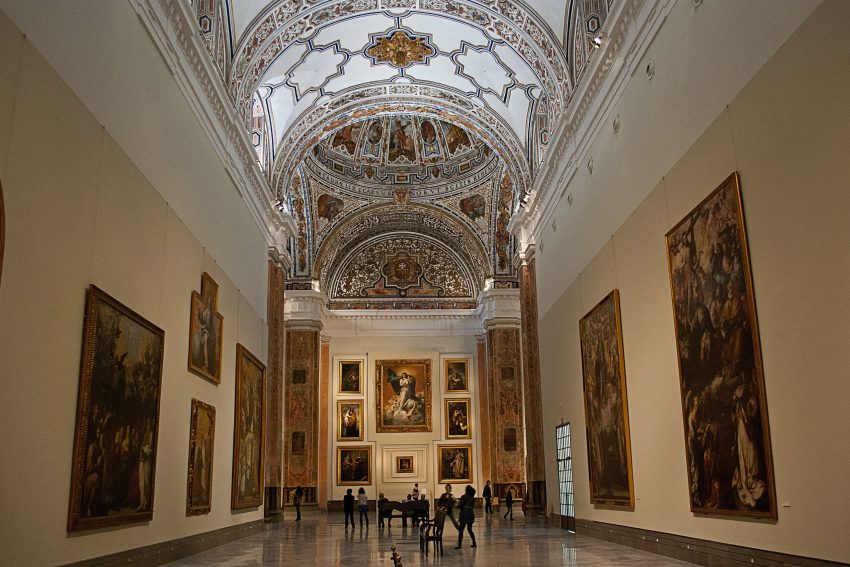
Often called the “Second Gallery of Spain” because it trails only the Prado in Madrid, this museum is a masterclass in the Seville School of painting. The building itself is a masterpiece of Mannerist architecture, and the soaring ceilings of the former church (now Room V) provide a heavenly backdrop for massive canvases by Murillo and Zurbarán. It’s the kind of place where the architecture is so grand you might find yourself staring at the ceilings as much as the artwork.
Keep an eye out for the sculptures by Martínez Montañés; his wood-carved figures are so lifelike that many are still used in Seville’s famous Holy Week processions today. Sunday mornings are lovely because the museum is free for many, but it gets crowded; if you want the “private palace” vibe, try a Tuesday afternoon. Even if you aren’t a hardcore art lover, the quiet, tile-heavy courtyards offer a peaceful escape from the city heat.
- Don’t Miss: The sculptures by Martínez Montañés. His wood-carved figures are so lifelike they’re still used in Seville’s famous Holy Week processions.
- Pro-Tip: Sunday mornings are lovely but crowded. If you want the “private palace” vibe, go around 2:00 PM on a Tuesday.
- Your Take: Even if you aren’t an ‘art person,’ the courtyard gardens offer a quiet escape from the city noise that is worth the €1.50 alone.
Location: Seville Museum of Fine Arts, Pl. del Museo, 9 41001 Sevilla Spain | Hours: (Summer) 1 August – 31 August: Tuesday – Sunday & public holidays: 09:00–15:00. (Winter) 1 September – 31 July: Tuesday – Saturday: 09:00–21:00; Sunday & public holidays: 09:00–15:00. Closed on Monday (except Mondays before a public holiday). Closed on 01 January, 06 January, 01 May, 24 December, 25 December & 31 December. | Price: €1.50; free for EU citizens with valid ID and ICOM members. | Website
3. Naval Museum of Seville
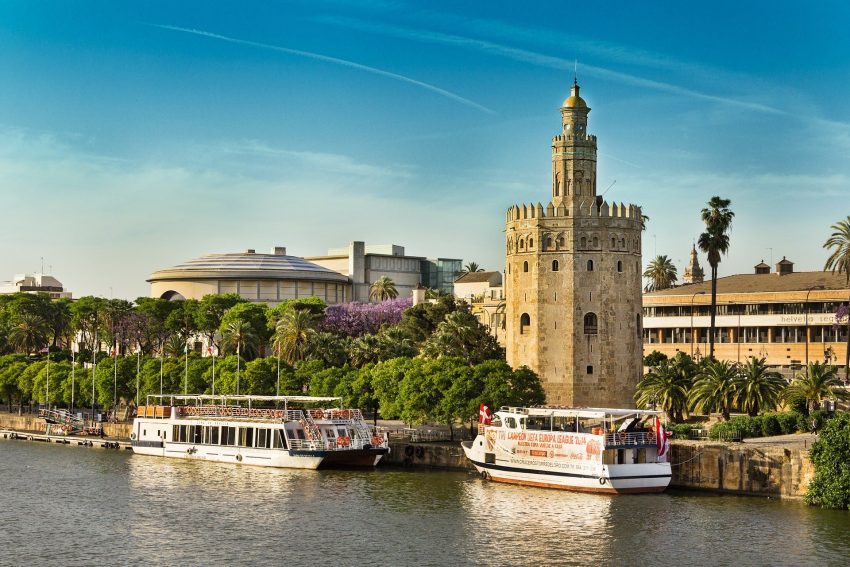
This iconic twelve-sided tower was once part of the city’s defensive walls and was allegedly once covered in golden tiles, which is how it earned its name. The museum inside is compact but effectively tells the story of how the Guadalquivir River was once the gateway to the New World. It’s a vertical experience, so be prepared for some narrow stairs as you move between navigational charts, models of famous ships, and historical documents that shaped global exploration.
The undisputed highlight is the panoramic terrace at the top. It offers one of the best angles in the city for photos of the Cathedral and the riverfront. The “voluntary contribution” requested at the door is usually around €3, which is a total bargain for the view alone. It’s small enough that you can’t get bored—if you spend more than 40 minutes here, you’re probably just waiting for the perfect lighting for your Instagram feed.
- Don’t Miss: The panoramic view from the top. It offers the best angle of the Cathedral and the river for your Instagram feed.
- Pro-Tip: The “voluntary contribution” is usually €3, which is a bargain for the view.
- Your Take: It’s small enough that you can’t get bored. If you spend more than 40 minutes here, you’re probably just hiding from the sun.
Location: Paseo Cristobal Colón, s/n 41001 Sevilla. | Hours: Monday – Friday: 09:30–19:00. Saturday – Sunday & public holidays: 10:30–19:00. Closed on 1 January, 6 January, Good Friday, 1 May, 25 December. | Price: Free entry (voluntary contribution requested). | Website
4. Navigation Pavilion

Originally built for the Expo ’92, this museum focuses on the grueling and often terrifying reality of life at sea during the age of discovery. It’s highly immersive, allowing you to try your hand at “steering” a ship and exploring the claustrophobic quarters where sailors ate and slept. Located on the Isla de la Cartuja, it offers a refreshing change of pace from the narrow streets of the old town and provides plenty of space for interactive learning.
Don’t miss the “Sea of Souls” installation, a hauntingly beautiful display of lights and sounds representing the thousands of people who crossed the Atlantic. If you have kids, the interactive touchscreens will keep them busy, but the real star for adults is the Schindler Tower. The elevator ride takes you up 50 meters for a 360-degree view of the modern side of Seville.
- Don’t Miss: The “Sea of Souls” installation, which uses lights and sounds to represent the thousands of people who crossed the Atlantic.
- Pro-Tip: The Schindler Tower elevator is the real star here. It’s one of the fastest ways to get a 360-degree view of the modern side of Seville.
- Your Take: Perfect if you have kids. If you don’t have kids, it’s still a great way to justify playing with touchscreens for an hour.
Location: Pabellón de la Navegación, Camino de los Descubrimientos, 2 41092 Sevilla Spain | Hours: (Winter 2 January – 29 June; 2 September – 30 December): Tuesday – Saturday: 10:00–19:30. Sunday: 10:00–15:00. (Summer 1 July – 15 August): Tuesday – Sunday: 10:00–15:00. Torre Schindler times (Winter): Tuesday – Saturday: 10:30–13:00 & 16:30–18:30. Sunday: 10:30–14:00. Torre Schindler times (Summer): Tuesday – Sunday: 11:00 & 13:00. Closed on Monday. Also closed on 1 January, 6 January, 1 May, 24 December, 25 December, 31 December, and Maundy Thursday – Easter Sunday; closed 16 August – 31 August. | Price: €6.00 general; €4.00 reduced; free for children under 5 (with an accompanying adult); €2.00 promotional on selected days. The standard ticket includes the permanent exhibition and the Torre Mirador (Torre Schindler). | Website
5. Casa de los Pinelo
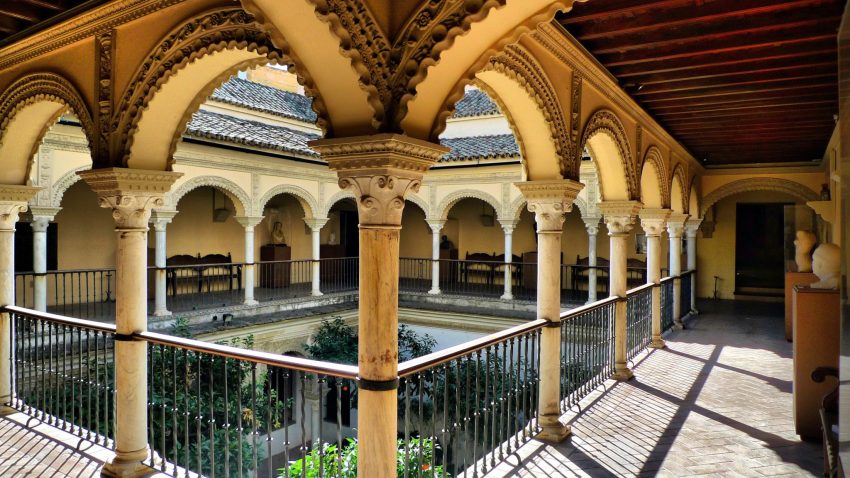
This is a hidden Renaissance gem that most tourists walk right past on their way to the Cathedral. While the crowds lose their minds in the lines at the Alcázar, you can walk through these plateresque courtyards in near-silence. It represents the transition from Medieval to Renaissance styles and serves as the seat of the Academy of Fine Arts, meaning you’ll often see researchers and academics going about their business amidst the stunning tilework and carved ceilings.
The “Golden Room” (Salón de los Azulejos) is the standout feature here, boasting incredible 16th-century tiles and an intricate wooden ceiling. Because it’s an active academy, the hours are famously finicky—usually only opening for a couple of hours in the morning—so you’ll need to plan your day around it. It is the ultimate location to impress your travel partners with your deep knowledge of Seville’s underrated palaces.
- Don’t Miss: The “Golden Room” (Salón de los Azulejos) with its incredible carved wooden ceiling and 16th-century tiles.
- Pro-Tip: Because it’s an active academy, hours are strictly limited. Check their website the morning you plan to go.
- Your Take: It’s the ultimate ‘I know a spot’ location to impress your travel partners.
Location: Casa de los Pinelo, Calle Abades, Seville, Spain | Hours: Tuesday & Thursday: 11:00–13:00. Closed on Saturday & Sunday. | Price: €7 (standard); €6 (seniors). | Website
6. The Bullfight Museum
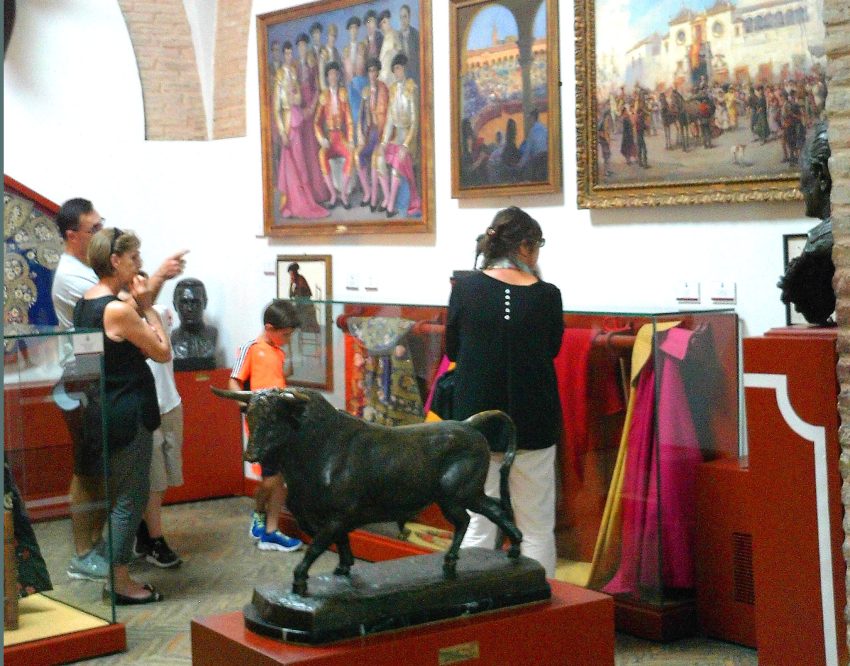
Even if bullfighting makes you squeamish, the Real Maestranza is an architectural titan that demands a visit. This is one of the oldest bullrings in Spain, and its Baroque facade is the most photographed wall in the city for a reason. The museum takes you through the “Traje de Luces” (Suits of Lights) gallery, showing the incredible, heavy embroidery of famous matadors, and even includes the small chapel where fighters prayed before facing the bull.
The highlight of the tour is walking through the tunnel and out into the arena itself. Standing in the center of that yellow albero sand gives you a sense of scale and history that you simply can’t get from the street. Audio guides are included in the price, and you should definitely use them, otherwise, you’re just looking at a lot of very expensive capes and taxidermy without any context.
- Don’t Miss: Walking out into the arena itself. Standing in the center of that yellow albero sand gives you a scale of the city’s history.
- Pro-Tip: Audio guides are included in the price. Use them, or you’re just looking at a lot of very expensive capes with no context.
- Your Take: It’s controversial, it’s bloody, and it’s undeniably Andalusian. At the very least, go for the architecture.
Location: Plaza de toros de la Real Maestranza de Caballería de Sevilla Paseo de Cristóbal Colón, 12 41001 Sevilla Spain | Hours: Daily: 09:30–19:30. Bullfighting days: 09:30–15:00. | Price: €10 (general); €6 (seniors 65+ and pensioners, students 17–25, youth 12–16); €3.50 (children 7–11); free (children 0–6 accompanied). | Website
7. General Archive of the Indies

This building was originally the “Lonja,” or the merchants’ exchange, designed to keep the traders from cluttering up the Cathedral steps. In 1785, King Charles III turned it into a centralized home for every document related to the Spanish Empire. Today, it holds roughly 15 million pages of history, including personal letters from Christopher Columbus and the maps that first outlined the Americas.
The interior is surprisingly serene, with wide stone hallways and massive mahogany shelving units that stretch on forever. While you can’t just pull a 500-year-old map off the shelf, the rotating temporary exhibitions usually showcase the “greatest hits” for the public. It’s free and located right next to the Cathedral, making it the perfect place to duck into for some air conditioning.
- Don’t Miss: The rotating temporary exhibitions. They often pull out the “greatest hits” (like Columbus’s maps) that aren’t usually on display.
- Pro-Tip: It’s free and right next to the Cathedral. If the line for the Cathedral is three hours long, pop in here for the AC.
- Your Take: It’s basically a massive filing cabinet made of beautiful stone. Go in, look solemn, appreciate the quiet, and then head back to the tapas.
Location: Edificio de la Lonja Avenida de la Constitución, 3 41071 Seville | Hours: Tuesday – Saturday: 09:30–17:00; Sunday & Public Holidays: 10:00–14:00. Closed on Monday. | Price: Free | Website
8. Archaeological Museum of Seville

Housed in a grand Neo-Renaissance palace built for the 1929 Exposition, this museum contains the “Tesoro del Carambolo,” a hoard of 24-carat gold jewelry so intricate it looks like it belongs in a movie. The collection covers everything from prehistoric tools to the height of the Roman Empire, with many of the best mosaics and statues being unearthed from the nearby ruins of Italica.
The Venus of Italica is the undisputed queen of the collection, a Roman masterpiece that remains incredibly well-preserved. However, because the museum has been undergoing a massive, multi-year renovation, you should always check the official status before you visit. Even if the doors are locked, the surrounding Plaza de América in María Luisa Park is worth the trip for the white pigeons and the stunning building facades.
- Don’t Miss: The Venus of Italica. She’s a Roman masterpiece that puts most modern statues to shame.
- Pro-Tip: Since the grand renovation has been a multi-year saga, always check their site before trekking out.
- Your Take: If it’s open, it’s a world-class collection. If it’s closed, the building is still the best backdrop for a selfie.
Location: Archeological Museum of Seville Plaza América, 51 41013 Sevilla Spain | Hours: Daily: Closed (temporarily closed for renovation). | Price: Free for EU visitors with valid ID; €1.50 for other visitors (when open). | Website
9. Andalucian Contemporary Art Centre
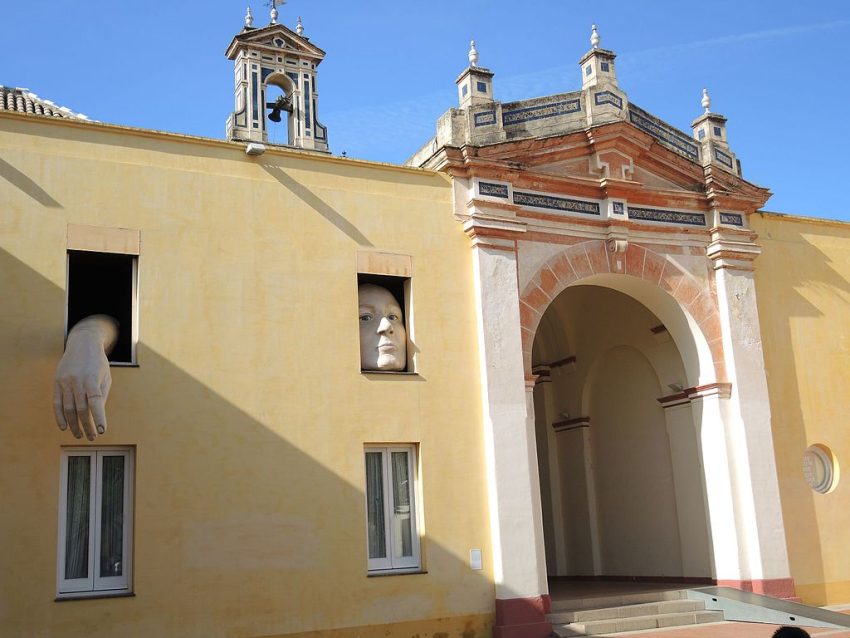
This museum offers the most striking contrast in Seville, as it’s housed in a 15th-century monastery that was later converted into a ceramics factory. You can still see the giant brick chimneys of the Pickman factory standing tall next to medieval monk cells. Today, it serves as the region’s premier spot for avant-garde art, hosting everything from radical video installations to abstract sculptures that look particularly strange against the backdrop of Gothic chapels.
Walking through the monk cells and seeing modern, sometimes jarring art is a surreal experience that gets you away from the typical tourist trail. The gardens are filled with orange and ombú trees, providing a lush, quiet vibe that feels miles away from the city center. Some of the art might leave you scratching your head, but the monastery-meets-factory setting is easily one of the coolest and most unique atmospheres in the entire city.
- Don’t Miss: The contrast. Seeing a 21st-century abstract sculpture inside a 15th-century Gothic chapel is a trip.
- Pro-Tip: The gardens are full of orange and ombú trees. It’s a great place to escape the “Disney-fied” parts of the city.
- Your Take: Some of the art is ‘I could have made that’ territory, but the monastery-meets-factory setting is genuinely cool.
Location: Monastery of Santa Maria de las Cuevas, Calle Américo Vespucio, 2 41092 Sevilla Spain | Hours: Tuesday – Saturday: 11:00–21:00. Sunday & public holidays: 10:00–15:30. Closed on Monday. | Price: €3.01 (complete visit); €1.80 (monument or temporary exhibitions). Free entry: Tuesday – Friday 19:00–21:00; Saturday 11:00–21:00. | Website
10. Military Historical Museum

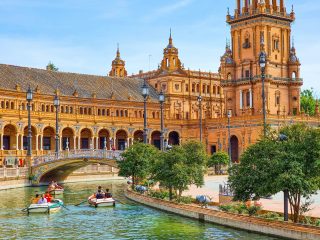
Tucked into the northern wing of the famous Plaza de España, this museum is often completely overlooked by tourists who are too busy taking photos of the tiled bridges outside. It covers Spanish military history from the Reconquista to the present day, featuring an impressive collection of old cannons, flags, and miniature dioramas of famous battles. It’s surprisingly large, with ten themed rooms spread across three floors of the historic building.
The industrial history section is a hidden gem, highlighting Seville’s past as a major hub for weapons manufacturing with displays of antique machinery that are strangely beautiful. Best of all, it is completely free and features excellent air conditioning. If you find yourself sweating at the Plaza de España and need a break from the sun, this is the perfect place to cool down.
- Don’t Miss: The industrial history section. Seville used to be a hub for weapons manufacturing—the old machinery is surprisingly beautiful.
- Pro-Tip: It’s one of the few places in the Plaza de España with a bathroom and air conditioning.
- Your Take: Look, it’s free, it’s cool (temperature-wise), and it has big cannons. What more do you want?
Location: Military Historical Museum of Seville Plaza España, s/n 41013 Sevilla Spain | Hours: Tuesday – Friday: 09:30–14:00. Saturday: 10:00–14:00. Closed on Monday, Sunday, public holidays & August. | Price: Free | Website
11. Velázquez Center
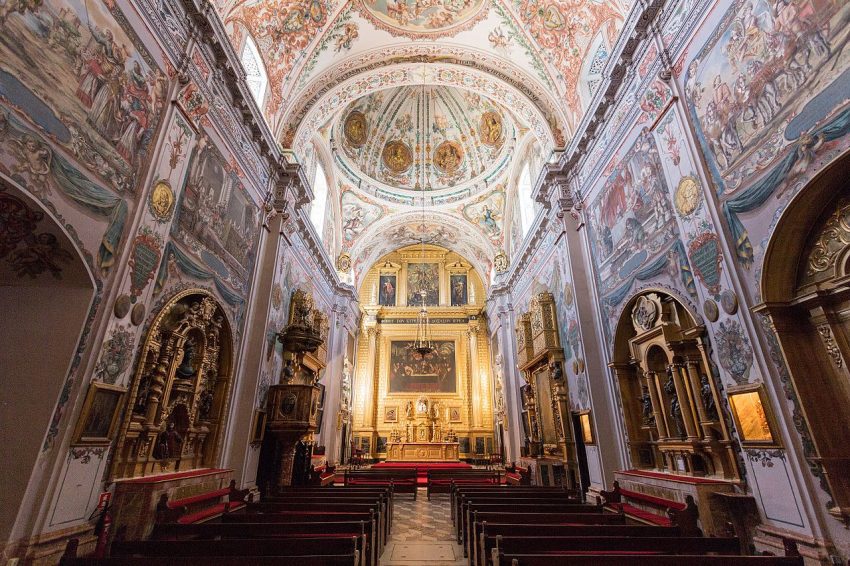
This building was originally a 17th-century home for retired and infirm priests, but today it houses a potent art collection centered on Seville’s most famous painter, Diego Velázquez. The center was established to bring some of his masterpieces back to his home city, including the famous “Santa Rufina.” While the art gallery is the draw, the building itself—with its classic Sevillian courtyard—is a stunning example of Baroque design.
The real showstopper is the Church of the Venerables, which is covered from floor to ceiling in breathtaking frescoes. The price of admission includes a very high-quality audio guide that explains the history of the “Venerables” and the specific artistic techniques used in the chapel. It’s a bit pricier than other museums, but the sheer beauty of the church makes it worth every cent for art enthusiasts.
- Don’t Miss: The sunken courtyard. It was designed to keep the priests cool in the summer and is one of the most peaceful spots in Santa Cruz.
- Pro-Tip: The price is steep, but it includes a very high-quality audio guide. Don’t rush through it.
- Your Take: It’s the ‘hidden boss’ of Seville’s art scene. The church alone will make your jaw drop.
Location: Hospital los Venerables, Plaza Venerables, 8 41004 Sevilla Spain | Hours: Monday – Saturday: 10:00–19:00. Sunday: 10:00–15:00. | Price: €12 general; €10 reduced; free for children under 12. | Website
12. Spanish Inquisition Museum

This isn’t a museum of “things” as much as it is a museum of “feelings.” You walk through the excavated ruins of the castle where the Inquisition’s prisoners were held. The displays focus on the psychology of the era—how “fear of the neighbor” was used to control the population. It’s a somber, dark, and deeply moving experience located right under the Triana Market, where life today is much louder and happier.
The sensory walk is particularly effective, using lighting and soundscapes to make you feel the claustrophobia of the old prison. Because it is free and located right next to the Puente de Triana, it is an easy and essential stop before grabbing lunch in the market above. It’s a sobering reminder that Seville’s history isn’t all sunshine, tapas, and flamenco.
- Don’t Miss: The sensory walk. The lighting and soundscapes are designed to make you feel the claustrophobia of the old prison ruins.
- Pro-Tip: Entrance is free. It’s located right next to the Puente de Triana, so hit it before grabbing lunch in the market above.
- Your Take: Nobody expects it, but everyone should visit it. A sobering reminder of the city’s darker side.
Location: Museo Del Castillo De San Jorge Plaza del Altozano, s/n 41001 Sevilla Spain | Hours: Tuesday – Sunday: 10:00–14:30. Closed on Monday. | Price: Free | Website
13. Museum of Arts and Traditions of Seville
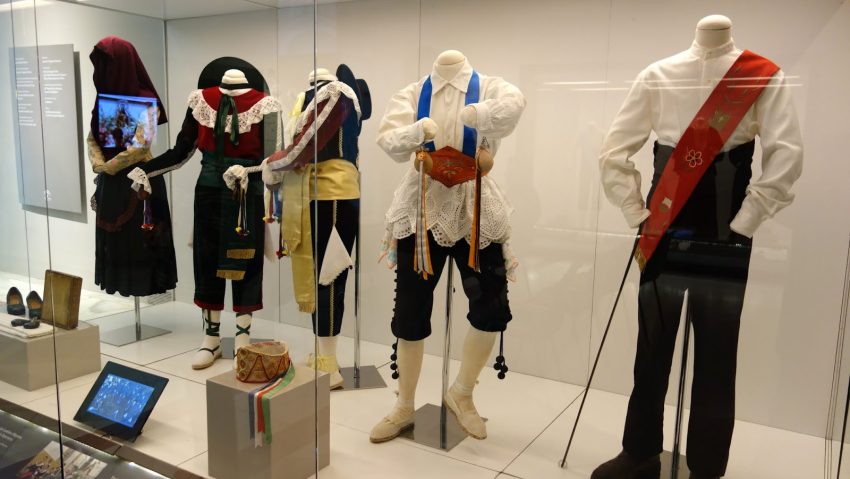
Located directly across from the Archaeological Museum, this is like a time capsule of Andalusian life. It focuses on “Ethnography”—basically, how people actually lived throughout the centuries. You’ll see 19th-century kitchens, traditional Feria dresses from across the decades, and the tools used to make olive oil and wine. It’s a fascinating look at the daily grind that built the culture we admire today.
The collection of “Ex-votos”—small paintings left in churches as thanks for miracles—is a standout, offering a window into the hopes and fears of historic Sevillanos. The building itself is a Mudéjar-style pavilion from the 1929 Expo, so even if the agricultural tools don’t interest you, the tilework and woodwork will. It’s a bit niche, but charming for those who love social history.
- Don’t Miss: The collection of “Ex-votos”—small paintings left in churches as thanks for miracles. A fascinating window into the past.
- Pro-Tip: The building is a Mudéjar-style pavilion from the 1929 Expo. Even if you don’t like the exhibits, the tilework is insane.
- Your Take: It’s a bit like your grandmother’s attic, if your grandmother was a 19th-century Spanish countess.
Location: Museum of Popular Arts and Traditions, Sevilla Plaza América, 3 41013 Sevilla Spain | Hours: (Summer) 16 June – 15 September: Tuesday – Sunday & public holidays: 09:00–15:00. (Winter) 16 September – 15 June: Tuesday – Saturday: 09:00–21:00. Sunday & public holidays: 09:00–15:00. Closed on Monday (except the day before a public holiday). | Price: €1.50 (free for EU citizens with valid ID; concessions may apply to eligible visitors). | Website
14. The Science House

Housed in the Peru Pavilion from 1929, this is a hub for the CSIC (Spain’s national research council). It’s very hands-on, focusing on the biodiversity of the Guadalquivir river and the geology of the region. They have a small but excellent planetarium that runs shows throughout the day, making it a great alternative to the history-heavy museums in the city center.
The massive whale skeletons hanging from the ceiling in the entrance hall are an immediate hit with visitors of all ages. While much of the signage is in Spanish, the interactive nature of the exhibits makes it easy enough for international travelers to enjoy. It’s one of the most recommended visits when traveling as a family, offering plenty of space for kids to run around and engage with science.
- Don’t Miss: The massive whale skeletons hanging from the ceiling in the entrance hall.
- Pro-Tip: Most of the signage is in Spanish, but the interactive exhibits are intuitive enough for kids of any language.
- Your Take: Best for families who need a break from ‘old buildings.’ Also a great place to hide from the rain.
Location: Casa de la Ciencia Av. de María Luisa, s/n, 41013 Sevilla | Hours: Tuesday – Sunday: 10:00–20:00. Closed on Monday (except public holidays). On 24 December, 31 December & 5 January: 10:00–15:00. Closed on 25 December, 01 January & 06 January. | Price: €3 (museum); €3 (planetarium); €5 (combined ticket). | Website
15. The Ceramics Museum

Triana is the heart of Seville’s pottery tradition, and this museum is built into the old Santa Ana factory to preserve that legacy. You can see the original kilns (which look like giant brick beehives) and learn about the “Cuerda Seca” technique that gives Spanish tiles their raised, colorful patterns. It’s a great place to understand the craft that you see on almost every wall in Seville.The upper floor displays the evolution of tile designs from the medieval era to the modern day, showing how Triana’s artisans interpreted international trends through their own local craft. Your ticket often includes entry to other municipal museums, so be sure to ask at the desk. It’s a must-see for anyone who has found themselves mesmerized by the tilework in the Plaza de España.
- Don’t Miss: The upper floor, which displays the evolution of tile designs from the medieval era to the modern day.
- Pro-Tip: Your ticket often includes entry to other municipal museums. Ask at the desk so you can get more bang for your buck.
- Your Take: More interesting than it looks—especially if you’ve been wondering why every wall in Seville is covered in tiles.
Location: Centro Cerámica Triana ,Calle Callao, 16, Sevilla | Hours: Tuesday – Sunday: 10:00–20:00. Reduced hours (24 & 31 December; 5 January; Holy Week & Feria): 10:00–15:00. Closed on Monday; 25 December; 1 & 6 January; Maundy Thursday & Good Friday. | Price: €2.10 general; €1.60 reduced; free for under 16 and Seville residents (with ID), plus a few other eligible categories. | Website

Moira & Andy
Hey! We're Moira & Andy. From hiking the Camino to trips around Europe in Bert our campervan — we've been traveling together since retirement in 2020!
This website uses affiliate links which earn a small commission at no additional cost to you.
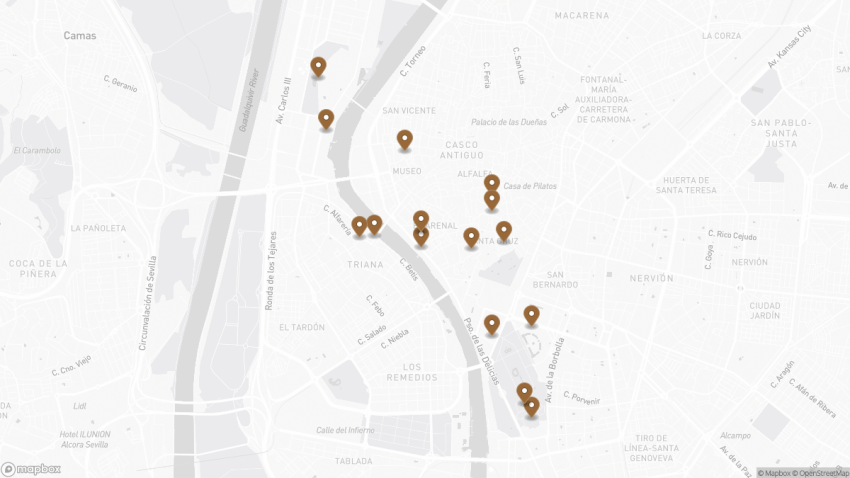
Walking Tour Map