Museo de Artes y Costumbres Populares, Seville
Historic Building and Museum in Seville
Museo de Artes y Costumbres Populares sits in the Pabellón Mudéjar in Parque de María Luisa, Seville, and it is an ethnographic museum focused on the city and wider Andalusian way of life. Inside, the emphasis is on everyday objects rather than royal collections: craft tools, workshop reconstructions, clothing, musical instruments, ceramics, and household pieces that show how people worked, dressed, and celebrated.
The museum helps explain the practical side of Seville’s traditions, including the crafts and customs behind flamenco, fairs, and local decorative arts. Visitors usually notice the detailed displays and the contrast between the pavilion’s ornate exterior and the grounded, workaday material inside. It suits travellers who like social history, design details, and smaller museums with a clear local focus, and it works well as a quieter stop in the park area.
Table of Contents
- History and Significance of the Museo de Artes y Costumbres Populares de Sevilla
- Things to See and Do in the Museo de Artes y Costumbres Populares de Sevilla
- How to Get to the Museo de Artes y Costumbres Populares de Sevilla
- Practical Tips on Visiting the Museo de Artes y Costumbres Populares de Sevilla
- Where to Stay Close to the Museo de Artes y Costumbres Populares de Sevilla
- Is the Museo de Artes y Costumbres Populares de Sevilla Worth Visiting?
- For Different Travelers
- FAQs for Visiting Museo de Artes y Costumbres Populares de Sevilla
History and Significance of the Museo de Artes y Costumbres Populares de Sevilla
The museum was created in 1972 to preserve and interpret Andalucía's ethnological heritage, both the “material” side (objects, tools, clothing) and the human side (customs, knowledge, and ways of life). That mission matters in Seville, where tradition often shows up as spectacle-Semana Santa processions, the April Fair, bullfighting iconography-and this museum helps you see the deeper layers that made those rituals possible.
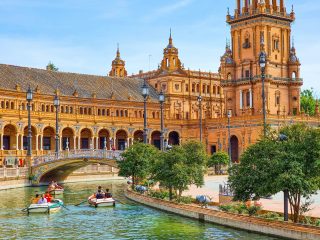
Just as memorable as the collections is the building itself. The museum occupies the Pabellón Mudéjar, designed by Aníbal González and built in 1914, later used during the Ibero-American Exposition era as an arts pavilion. The exterior is a celebration of brick and ceramics, and it’s an ideal setting for a museum that cares about crafts, techniques, and the artistry of everyday life.
Over time, the museum's role has evolved into something particularly useful for travelers: it's a place to connect the dots. When you see Seville's tilework on walls and benches across the city, or watch workshops in Triana, this museum provides the context for how those skills were taught, valued, and passed down.
Things to See and Do in the Museo de Artes y Costumbres Populares de Sevilla
Begin downstairs, where you’ll often find immersive displays and workshop-style scenes that recreate traditional crafts such as leatherwork, ceramics, and cooperage. This is the section that makes the museum feel alive, because it’s not just about finished objects-it’s about process, tools, and the quiet intelligence behind things that were made to last.
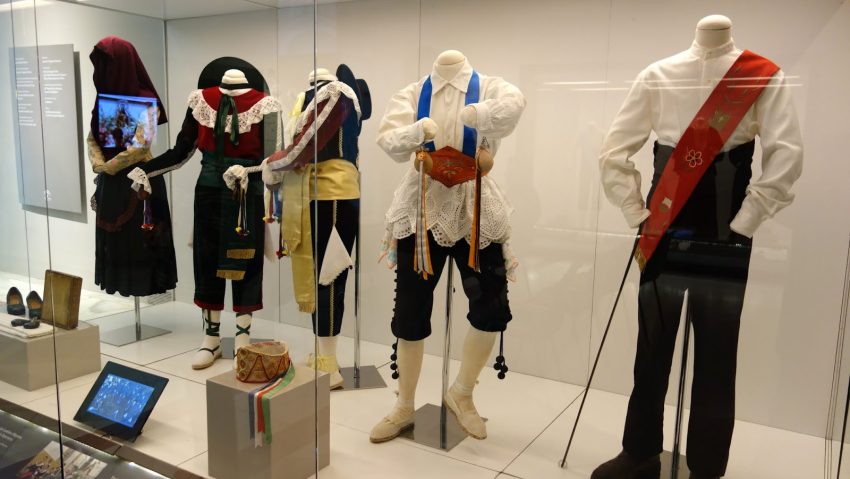
Upstairs, the mood shifts to social history: 19th-century costumes and accessories, furniture, musical instruments, and rural machinery that sketch out how people dressed, celebrated, worked, and moved through the seasons. The romantic imagery of flamenco, fairs, and religious festivities can be evocative, but the best moments are the ones that show how these traditions were stitched into daily routines.
If you like collecting “look closer” details, this museum is full of them. Watch for the Aguiar collection of costumbrist painting, ceramics and tile references that echo Seville’s streetscape, and smaller-scale collections that reveal what people treasured-lacework, embroidery, glassware, posters, postcards, toys, and the kind of domestic objects that rarely make it into grand historical narratives.
How to Get to the Museo de Artes y Costumbres Populares de Sevilla
The nearest airport is Seville Airport (SVQ), and the simplest route is to travel into the centre (bus or taxi) and then continue to Parque de María Luisa for the museum area. For the best deals and a seamless booking experience, check out these flights to Seville on Booking.com.
If you arrive by train at Sevilla-Santa Justa, you can take a taxi or city bus toward Prado de San Sebastián, then walk through the park to reach the museum. Train schedules and bookings can be found on Omio.
By city bus, several lines stop around Parque de María Luisa and the Prado de San Sebastián area, making this a straightforward museum to reach without complex connections.
If you're driving, aim for parking around the Prado de San Sebastián or nearby main avenues and walk the final stretch through the park, rather than trying to get door-to-door access at the pavilion. If you are looking to rent a car in Spain I recommend having a look at Discover Cars, first, as they compare prices and review multiple car rental agencies for you.
Practical Tips on Visiting the Museo de Artes y Costumbres Populares de Sevilla
- Entrance fee: €1.50 (free for EU citizens with valid ID; concessions may apply to eligible visitors).
- Opening hours: (Summer) 16 June – 15 September: Tuesday – Sunday & public holidays: 09:00–15:00. (Winter) 16 September – 15 June: Tuesday – Saturday: 09:00–21:00. Sunday & public holidays: 09:00–15:00. Closed on Monday (except the day before a public holiday).
- Official website: https://www.museosdeandalucia.es/web/museosdeandalucia
- Best time to visit: Late morning is ideal, then pair it with a slow park stroll and an easy lunch nearby to keep the day relaxed.
- How long to spend: 60-90 minutes works well for a first visit, or 2 hours if you enjoy reading labels and following craft themes from room to room.
- Accessibility: The pavilion layout is generally manageable, but allow extra time if you want to avoid stairs or take the visit at a slower pace.
- Facilities: Treat it as a museum-and-park combo; cafés and rest stops are easiest to find around the park edges and nearby plazas rather than inside the galleries.
Where to Stay Close to the Museo de Artes y Costumbres Populares de Sevilla
For a culture-heavy itinerary, base yourself in the historic centre (Santa Cruz or El Arenal) so you can walk to Seville's major monuments early and late; if your priority is a calmer pace with quick access to Parque de María Luisa and transport links, El Porvenir or the Prado de San Sebastián area is the most convenient fit.
For a polished stay that keeps you close to the park zone, Meliá Sevilla is a strong option with easy access to María Luisa sights. If you prefer a quieter, residential feel without feeling “far out,” Hotel Exe Sevilla Macarena can work well as a practical base with good connections. For a classic central choice that keeps the Cathedral and old streets walkable while still being an easy taxi ride to the park museums, Hotel Casa 1800 Sevilla is consistently convenient.
Is the Museo de Artes y Costumbres Populares de Sevilla Worth Visiting?
Yes, especially if you want to understand Seville beyond its headline architecture. This museum adds texture to the city: it explains why certain crafts became iconic, how celebrations were built from materials and skills, and how Andalusian identity has been expressed through clothing, objects, and domestic life.
It's also an excellent “pace changer” in a Seville itinerary. Because it's set in the park and feels less crowded than the blockbuster sites, it's a good choice on a hot day, a slower morning, or anytime you want something thoughtful without being overwhelmed.
What Other Travellers Say...
Museum of Popular Arts and Customs of Seville sits in an attractive neo-Mudéjar building and offers ethnographic displays on Andalusian folk art and traditions. Visitors praise the well-organized permanent collection of crafts, costumes and everyday objects—pottery, textiles, furniture and instruments—and highlight detailed workshop reconstructions; temporary shows have included maritime culture and music. The basement houses much of the permanent exhibition (some visitors find it dim), entry can be free for EU citizens and otherwise costs a small fee, and it's recommended as a peaceful, informative short visit away from the crowds.


For Different Travelers
Families with Kids
This museum works best for families when you treat it like a “spot the story” visit: tools, costumes, and workshop scenes give children concrete things to react to. Pick a few themes-tiles, musical instruments, festival clothing-and keep the route playful rather than exhaustive.
Pair it with Parque de María Luisa right outside. A short museum loop followed by open space in the park tends to land much better than pushing through every gallery.
Couples & Romantic Getaways
For couples, the setting is part of the charm: a beautiful pavilion, calm galleries, then a walk through the park that feels effortlessly Seville. It's a quietly atmospheric contrast to the city's grand religious interiors and crowded lanes.
If you enjoy culture with a personal angle, focus on the rooms that connect to Seville’s signature traditions-flamenco, fairs, and local crafts-then notice those same motifs later in the city with fresh eyes.
Budget Travelers
It's a budget-friendly museum that delivers a lot of context for very little cost, and it's easy to combine with other low-cost experiences in the park area. Build a half-day around it with Plaza de España, a long walk, and a picnic-style lunch to keep spending under control.
Because it's outside the tightest tourist core, it can also feel like a “real Seville” break. You get culture without the premium pricing that often comes with the most famous monument tickets.
History Buffs
History buffs will appreciate how the museum treats “small history” seriously: everyday objects, craft traditions, and social customs that underpin the bigger political and artistic narratives. It’s especially useful if you’re interested in how identity is maintained through material culture rather than written chronicles.
To get more out of it, track one theme as you move-ceramics, textiles, or festival culture-and follow it through multiple rooms. That approach turns the visit from a browse into a coherent story.
FAQs for Visiting Museo de Artes y Costumbres Populares de Sevilla
Getting There
Tickets & Entry
Visiting Experience
Tours, Context & Itineraries
Photography
The Museo de Artes y Costumbres Populares appears in our Complete Guide to Visiting Seville!

Moira & Andy
Hey! We're Moira & Andy. From hiking the Camino to trips around Europe in Bert our campervan — we've been traveling together since retirement in 2020!
This website uses affiliate links which may earn a commission at no additional cost to you!
Planning Your Visit
(Summer) 16 June - 15 September: Tuesday - Sunday & public holidays: 09:00-15:00.
(Winter) 16 September - 15 June: Tuesday - Saturday: 09:00-21:00. Sunday & public holidays: 09:00-15:00.
Closed on Monday (except the day before a public holiday).
€1.50 (free for EU citizens with valid ID; concessions may apply to eligible visitors).
Nearby Attractions
- Plaza de America (0.1) km
Historic Site and Park - Archeological Museum (0.1) km
Historic Building and Museum - Parque de María Luisa (0.3) km
National Park and Park - Plaza de España (0.6) km
Historic Site and Square - La Casa de la Ciencia (0.7) km
Historic Building and Museum - Museo Histórico Militar (0.7) km
Museum - Palacio de San Telmo (1) km
Historic Building and Palace - Real Fabrica de Tabacos (1.1) km
Historic Building - Royal Alcázars of Seville (1.3) km
Historic Building and Palace - Torre de la Plata (1.4) km
Tower