Vienna, Austria: The Ultimate Travel Guide 2026
The Complete Guide to Vienna

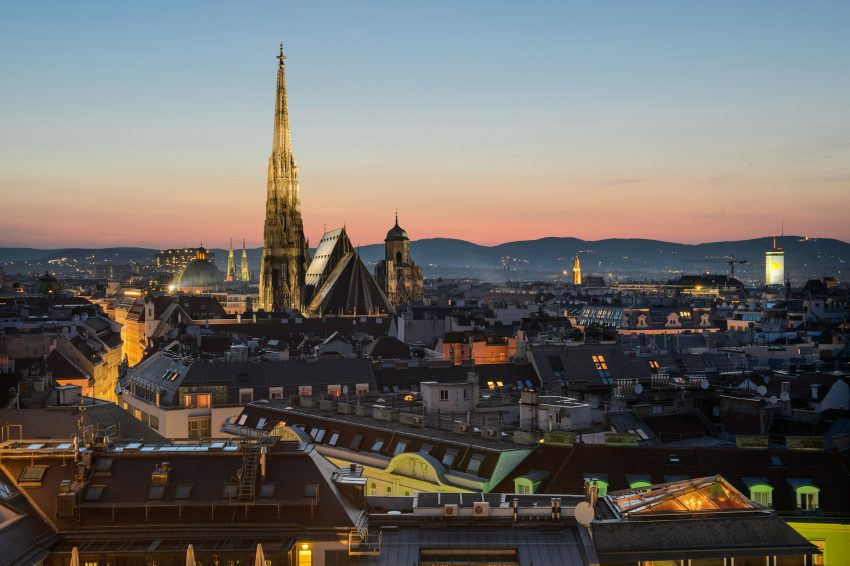
Vienna is a grand, walkable capital where imperial architecture, coffeehouse culture, and contemporary creativity sit side by side. Set in northeastern Austria along the Danube, the city is easy to navigate by tram and U-Bahn, with distinct neighborhoods that shift quickly from palace-lined boulevards to lively local markets and vineyard-dotted hills on the edge of town.

A visit to Vienna can be as classic or as modern as you want: spend a morning in world-class museums, linger over cake and espresso in a traditional café, then finish the day with a concert, a wine tavern evening, or a riverside stroll. The city's rhythm is relaxed but polished, and it rewards travelers who mix “must-sees” with unplanned time to wander courtyards, arcades, and side streets.

Vienna also works brilliantly for short breaks because many highlights cluster close to the center, while day-to-day logistics are simple. Tickets, timetables, and signage are generally straightforward, English is widely understood in visitor areas, and the public transport network makes it easy to base yourself in one district and explore widely without a car.

History of Vienna

Vienna in Roman and Early Medieval Times

Vienna’s story begins with the Roman frontier settlement of Vindobona, established to guard the Danube border. After Rome’s influence waned, the area passed through successive waves of migration and early medieval rule, gradually developing as a strategic trading and defensive point.

Vienna in the Babenberg Era (10th–13th Centuries)

In the Middle Ages, Vienna rose in importance under the Babenbergs, who helped shape it into a significant urban center. The city gained privileges, expanded its fortifications, and grew as a marketplace connected to regional and long-distance trade routes.

Vienna under the Habsburgs (1278–18th Century)

With the Habsburgs, Vienna became the political heart of a growing dynastic realm. The city faced major challenges, including repeated conflicts with the Ottoman Empire, most famously the sieges that tested its defenses and reshaped its military and civic planning. Over time, court culture, administration, and patronage of the arts turned Vienna into a leading European capital.

Vienna in the Baroque and Enlightenment (18th Century)

The 18th century brought sweeping architectural and cultural transformation. Grand palaces, churches, and formal urban projects flourished, while reforms in administration and education helped modernize civic life. Vienna’s musical reputation accelerated as composers, performers, and patrons converged in the city.

Vienna in the 19th Century: Empire, Ringstrasse, and Modernization

Vienna expanded dramatically in the 1800s, both in population and in urban form. The demolition of old fortifications enabled the creation of the Ringstrasse, lined with monumental institutions and residences that still define the city’s image. Industrialization and social change brought new infrastructure, public services, and political movements.

Vienna in the Early 20th Century: Cultural Peak and Upheaval

Around 1900, Vienna became a powerhouse of modern thought and design, with groundbreaking contributions in music, architecture, and the visual arts. The collapse of the empire after World War I transformed Vienna’s role and economy, while the interwar period saw ambitious social housing projects alongside political polarization.

Vienna during World War II and Occupation

World War II brought severe disruption, persecution, and destruction. After the war, Vienna was divided among Allied powers, and the city underwent reconstruction amid political tension and scarcity, gradually restoring institutions and daily life.

Vienna from 1955 to Today: Neutrality, Renewal, and Global City

Following the restoration of sovereignty in 1955, Vienna developed as a neutral meeting point between East and West and invested heavily in housing, transport, and cultural institutions. In recent decades it has strengthened its international profile, balancing heritage preservation with contemporary architecture, sustainability initiatives, and a vibrant festival and museum scene.

Moira & Andy
Moira & Andy

Hey! We're Moira & Andy. From hiking the Camino to trips around Europe in Bert our campervan — we've been traveling together since retirement in 2020!

Read our full story here

Visiting Vienna for the first time and wondering what are the top places to see in the city? In this complete guide, I share the best things to do in Vienna on the first visit. To help you plan your trip, I have also included an interactive map and practical tips for visiting!

This website uses affiliate links which earn a small commission at no additional cost to you.
Powered by GetYourGuide

29 Best places to See in Vienna

This complete guide to Vienna not only tells you about the very best sights and tourist attractions for first-time visitors to the city but also provide insights into a few of our personal favorite things to do.

This is a practical guide to visiting the best places to see in Vienna and is filled with tips and info that should answer all your questions!

1. Haas House
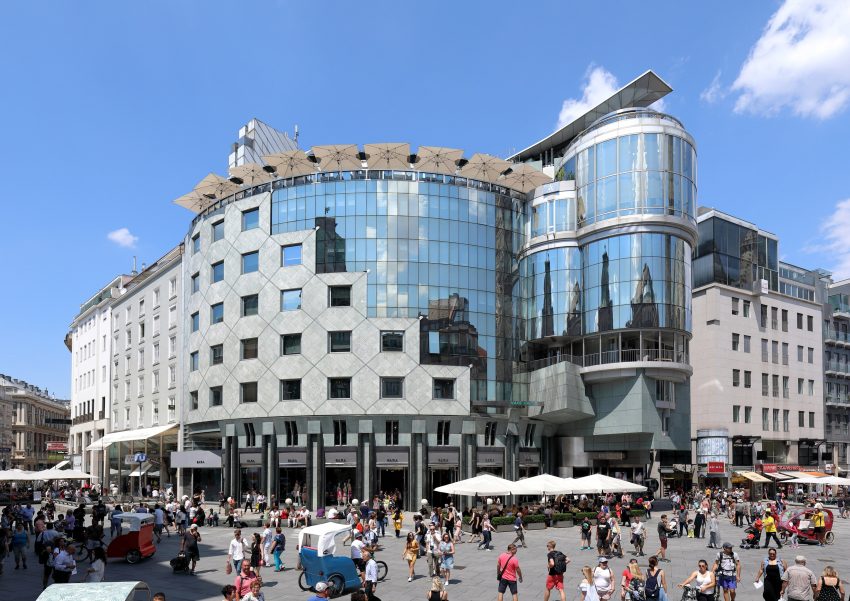
Haas House
Haas House
CC BY-SA 4.0 / C.Stadler/Bwag
Haas House is a postmodern glass-and-stone building by Austrian architect Hans Hollein, completed in 1990, that faces St. Stephen’s Cathedral at Stephansplatz and deliberately plays up the tension between medieval Gothic and late-20th-century design. Its curved, partly mirrored façade throws the cathedral’s spires back at you, so the view changes with every step and every shift of light. Look closely for the off-kilter blue‑green marble blocks set into the exterior and the odd, cantilevered platform that feels like an architectural dare. Inside are cafés, shops, and the DO & CO Hotel; riding up for a rooftop coffee turns the contrast outside into a panorama.
Location: Goldschmiedgasse 3, 1010 Wien, Austria | Hours: 24 Hours. | Price: Free. | Distance: 0km

We recommend to rent a car in Austria through Discover Cars, they compare prices and review multiple car rental agencies. Book your rental car here.

2. Stephansdom

Stephansdom
Stephansdom
CC BY-SA 2.0 / Deror_avi
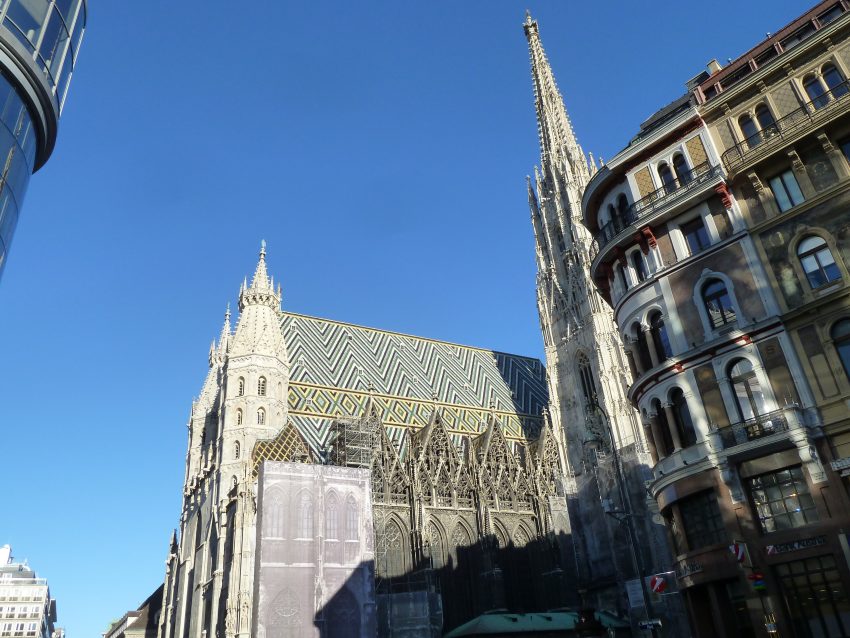
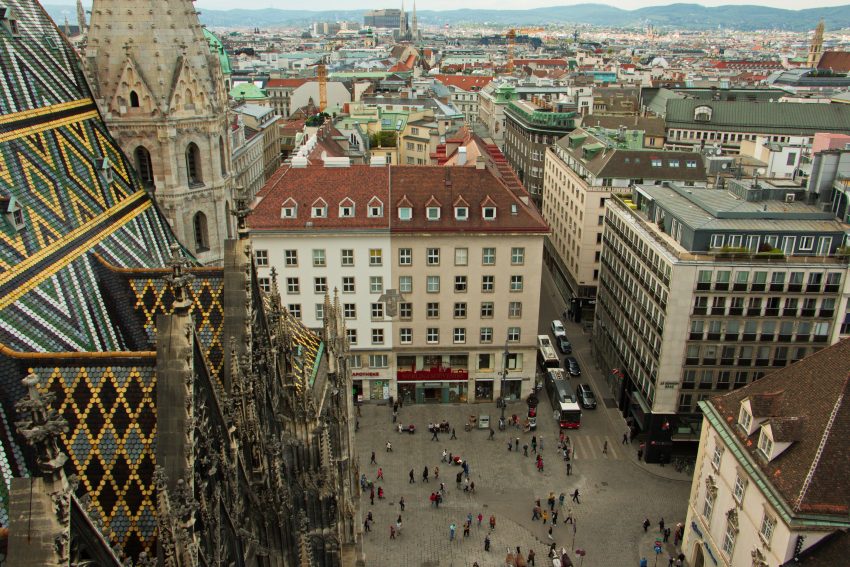
Stephansdom (St. Stephen’s Cathedral) rises from Stephansplatz as Vienna’s Gothic-Romanesque center of gravity, shaping the skyline and the city’s sense of itself since the 12th century. Visitors first notice the steep, patterned roof: about 230,000 glazed tiles set into imperial and civic emblems, rebuilt after WWII with a 600‑ton steel structure. The South Tower (“Steffl”) climbs to roughly 136 meters, while the unfinished North Tower stops short and carries a Renaissance cap—and houses the Pummerin bell, cast from captured cannons. Inside, cool stone, clustered chapels, and altars lead toward crypts holding thousands, and the space still feels like a working cathedral amid the crowds.
Location: Stephansplatz 3, 1010 Wien, Austria | Hours: Monday – Saturday: 09:00–11:30. Monday – Sunday: 13:00–16:30. | Price: Cathedral visit: Adults: €8; Children (up to 14): €3. All-Inclusive Ticket: Adults: €29; Children (6–14): €7. | Website | Distance: 0.1km

Here is a complete selection of hotel options in Vienna. Feel free to review each one and choose the stay that best suits your needs.

3. Karntner Straße

Karntner Straße
Karntner Straße
CC BY-SA 2.0 / Jorge Franganillo
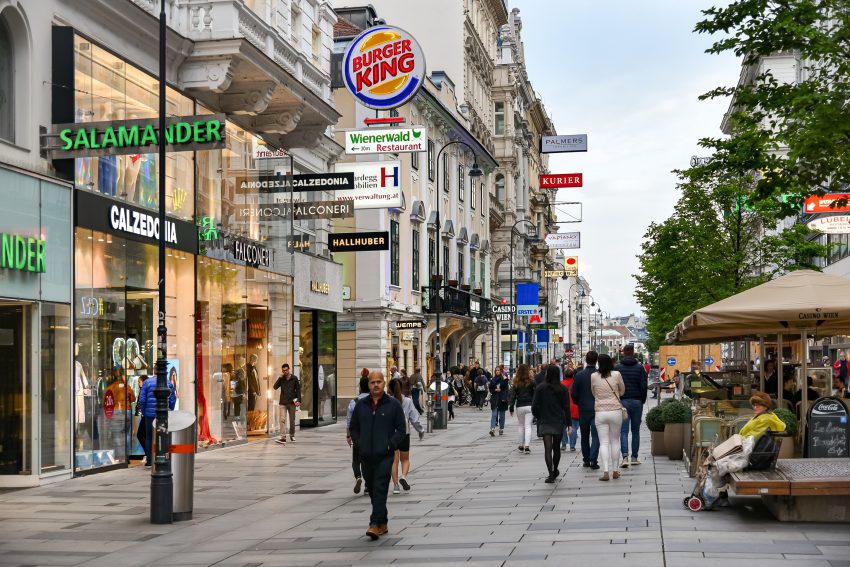
Kärntner Straße is Vienna’s central pedestrian shopping boulevard in the 1st District, running from Stephansplatz toward the Vienna State Opera, and it matters because it has long been one of the city’s main corridors for movement and display. First recorded in 1257 as Strata Carinthianorum, it led to the old Carinthian Gate and once formed part of a trade route reaching south toward ports like Venice and Trieste. What you notice today is the mix of grand 19th-century façades and postwar rebuilding, plus the street’s car-free promenade created in 1974 alongside the U-Bahn. Between flagship storefronts, cafés, and street musicians, details like the Maltese Church and palaces such as Todesco and Equitable reward a slower pace.
Location: Kärntner Str., 1010 Wien, Austria | Hours: 24 Hours. | Price: Free. | Distance: 0.1km

Traveling to a country with a different currency? Avoid ATM transaction fees and pay in local currency with a Wise Card. Having used it for over 5 years, we've saved loads on fees!

4. Graben Street

Graben Street
Graben Street
CC BY-SA 1.0 / Gugerell
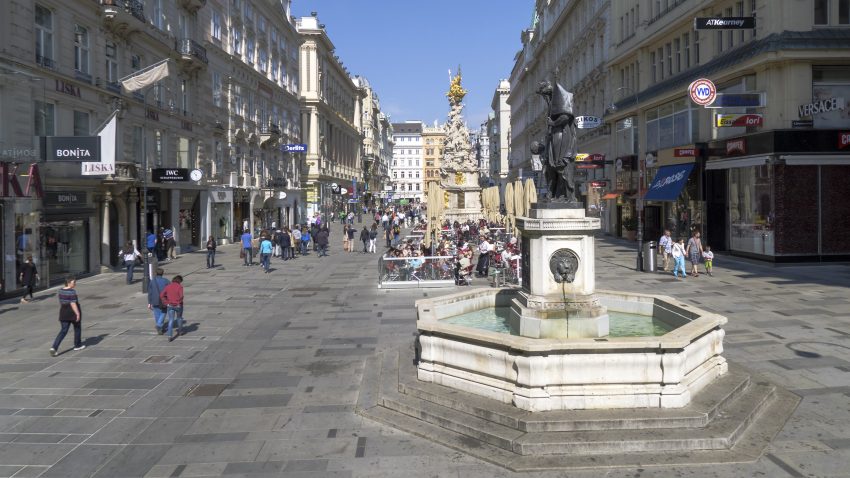
Graben Street is Vienna’s polished pedestrian boulevard in the 1st District, created when a medieval defensive trench (“Graben”) was filled in as the city expanded. Its layout still shows a quirky split: tangled lanes on the north side and more orderly side streets to the south, a trace of old planning. Today you notice the parade of grand façades and luxury storefronts, from Stock-im-Eisen-Platz toward Tuchlauben, with buildings tied to names like Otto Wagner and the late-19th-century Grabenhof. At the center stands the Baroque Plague Column, raised after the 1679 epidemic, a dramatic knot of angels and stone. In winter, visitors often remember the holiday lights and lively evening buzz.
Location: Graben, 1010 Wien, Austria | Hours: 24 Hours. | Price: Free. | Website | Distance: 0.1km

Explore Vienna at your own pace with our self-guided walking tour! Follow our curated route to discover must-see sights and local secrets that makes Vienna one of the best places to visit in Austria.

5. Stephansplatz

Stephansplatz
Stephansplatz
CC BY-SA 4.0 / Kstipek
Stephansplatz is Vienna’s central pedestrian square, anchored by the soaring Gothic mass of St. Stephen’s Cathedral, whose spire works like a built-in compass for the old city. The space you see today is the result of a 20th-century clearing that merged the square with the once-separate Stock-im-Eisen-Platz, creating a broad, open forecourt for crowds and street life. On one side, glossy Haas Haus—glass and steel by architect Hans Hollein—faces the medieval stonework in a striking, mirror-bright contrast. The square also funnels you straight into Vienna’s dressier shopping streets, Graben and Kärntner Straße, while cafés and buskers supply a constant soundtrack for people-watching.
Location: Stephansplatz, 1010 Wien, Austria | Hours: 24 Hours. | Price: Free. | Distance: 0.1km

6. Church of the Teutonic Order
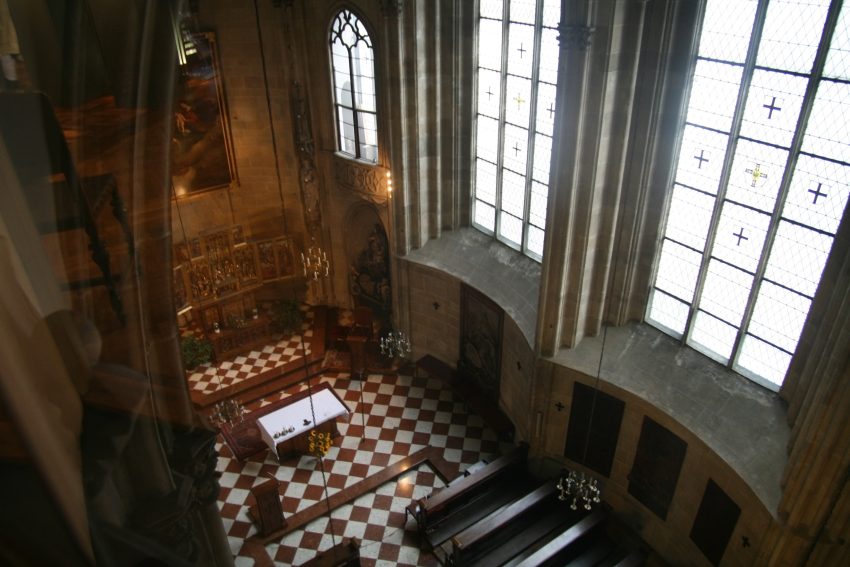
Church of the Teutonic Order
CC BY-SA 3.0 / Manfred Werner
The Church of the Teutonic Order (St. Elisabeth) is a small Gothic church in central Vienna belonging to the Teutonic Knights, and it stands out for feeling largely untouched by the city’s later Baroque makeover. You enter through an arched gateway into a cobbled courtyard softened with ivy and flower boxes, a calm pocket that once hosted brief stays by Mozart and Johannes Brahms. Inside, visitors tend to remember the dense display of heraldic coats of arms lining the walls and the striking altarpiece that anchors the compact interior. Don’t miss the ground-floor Sala Terrena, where playful trompe-l’oeil murals of flowers, animals, and gods surround the room once used for Mozart-era concerts. A small treasury/museum opens less often but rewards curiosity.
Location: Singerstraße 7, 1010 Wien, Austria | Hours: (Summer) July – September; Monday – Friday: 13:00–15:00 & Tuesday & Thursday: 13:00–17:00. Closed on Saturday, Sunday. (Winter) October – June; Monday – Saturday: 13:00–15:00 & Tuesday & Thursday: 13:00–17:00. Closed on Sunday. | Price: Adults: €7; Concessions: €5; Under 6: free. | Website | Distance: 0.2km

7. Peterskirche
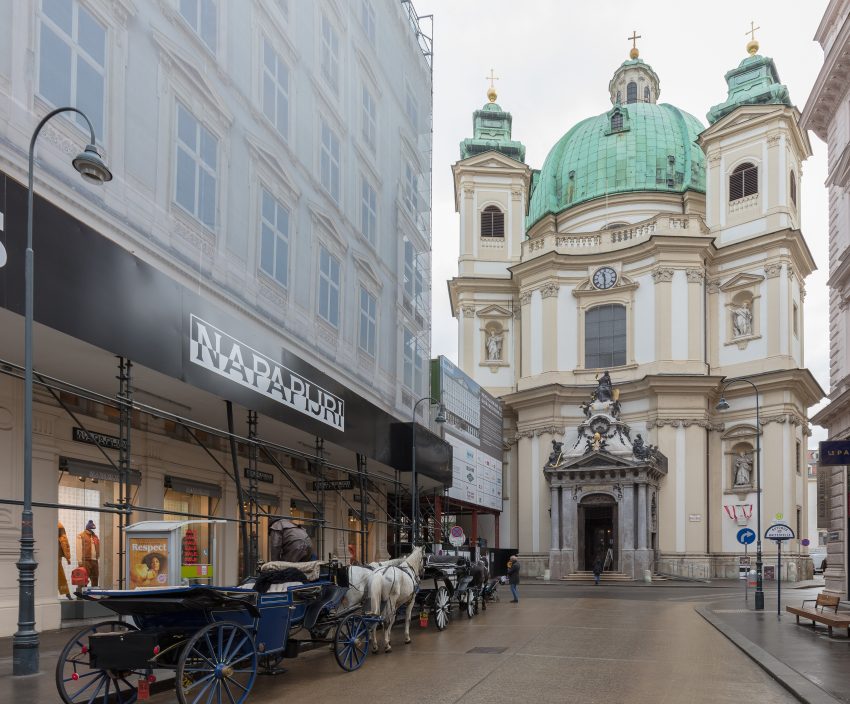
Peterskirche
Peterskirche
CC BY-SA 4.0 / Diego Delso
Peterskirche (St. Peter’s Church) is a compact Baroque church in Vienna’s Innere Stadt, built into a tight urban slot just off the Graben, so you often spot it only when you’re almost at the door. Rebuilt from 1701 and completed in 1733, it became Vienna’s first domed Baroque church, with an oval plan inspired by St. Peter’s Basilica in Rome. Inside, the space explodes into gold stucco and ceiling frescoes by Johann Michael Rottmayr, crowned by a bright dome that feels far larger than the footprint. Look for the high altar’s healing scene and the unusual crystal coffins displaying relics of Roman martyrs. Many visitors remember the intimate acoustics during organ recitals and evening concerts.
Location: Peterspl., 1010 Wien, Austria | Hours: Monday – Friday: 08:00–19:00. Saturday – Sunday: 09:00–19:00. | Price: Free; donations appreciated. | Website | Distance: 0.2km

8. Austrian National Library
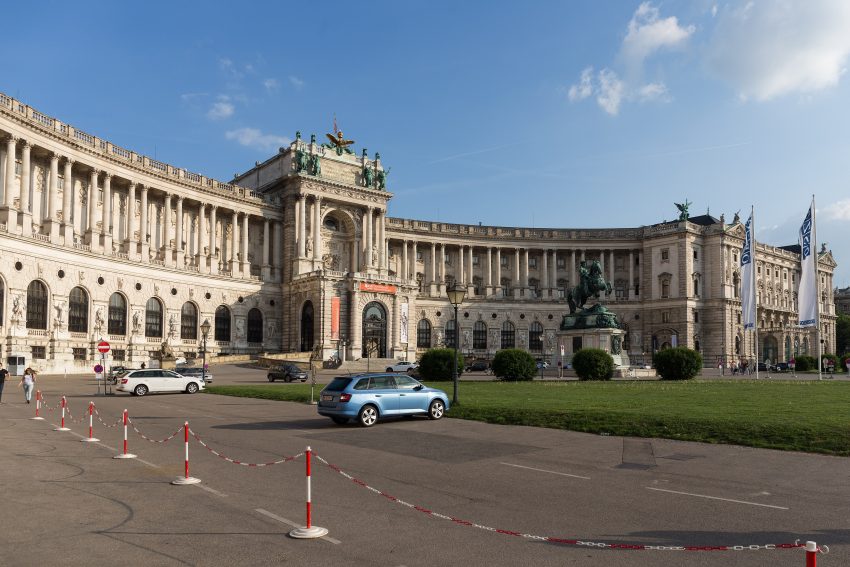
Austrian National Library
CC BY-SA 4.0 / Pymouss
The Austrian National Library in Vienna is Austria’s largest library, holding more than 12 million items and serving as the country’s legal-deposit archive for Austrian publications, including electronic formats. Set within the Hofburg complex, visitors most often remember the Baroque State Hall: a long, symmetrical room of warm wood galleries beneath soaring ceiling frescoes, staged with oversized globes. Its roots reach back to the medieval Habsburg court library associated with Duke Albert III, and the collection’s showpieces include the 1368 “golden” Holy Gospels with Burgundian-style illumination. Reviews often note how quiet the hall can feel on weekday mornings, making the scale and detail easier to take in.
Location: Josefsplatz 1, 1010 Wien, Austria | Hours: (October – May) Tuesday – Wednesday: 09:00–18:00; Thursday: 09:00–21:00; Friday – Sunday: 09:00–18:00; Closed on Monday. (June – September) Monday – Wednesday: 09:00–18:00; Thursday: 09:00–21:00; Friday – Sunday: 09:00–18:00. | Price: Adults: €12; Reductions: €10; Under 19: free. | Website | Distance: 0.3km

9. Imperial Crypt
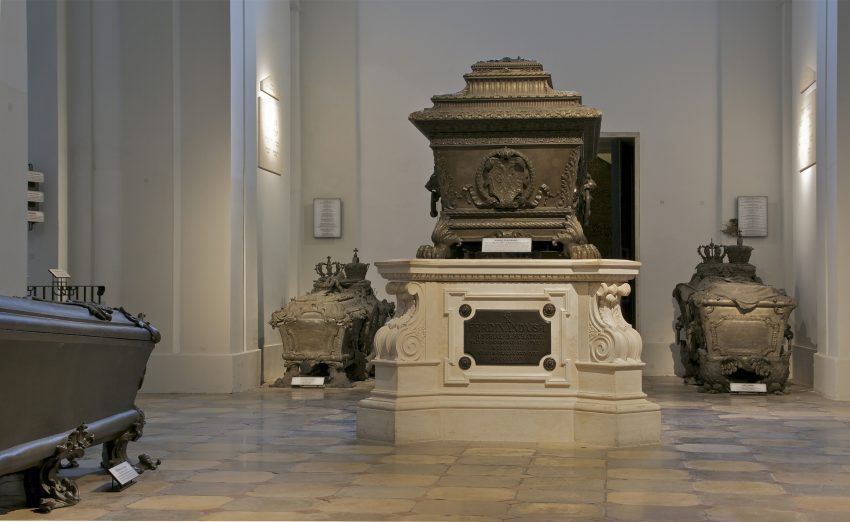
Imperial Crypt
Imperial Crypt
CC BY-SA 1.0 / Jebulon
Beneath Vienna’s Neuer Markt, the Imperial Crypt (Capuchin Crypt) is an underground burial vault where the Habsburg dynasty has been laid to rest since the 1630s. Conceived by Anna of Tyrol and consecrated in 1632, it holds the remains of about 145 Habsburgs, including 12 emperors and 18 empresses, along with curious “heart urns” that hint at courtly ritual. Visitors move through hushed chambers lined with 107 metal sarcophagi, from restrained designs to exuberant baroque and rococo pieces packed with crowns, symbols, and sculpted figures. The experience feels part sculpture gallery, part mausoleum—quiet, close-up, and unexpectedly intense.
Location: Tegetthoffstraße 2, 1010 Wien, Austria | Hours: Daily: 10:00–18:00. | Price: Adults: €15; Reduced: €13; Ages 7–18: €8. | Website | Distance: 0.3km

10. Mozarthaus
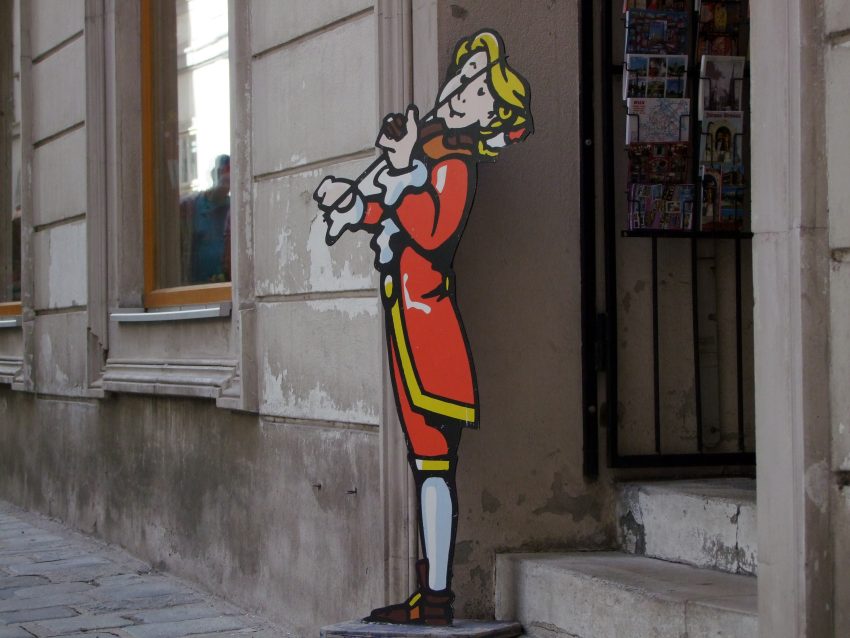
Mozarthaus
Mozarthaus
CC BY-SA 3.0 / Andrzej Harassek
Mozarthaus Vienna is a compact museum at Domgasse 5, set in the only surviving Vienna apartment where Wolfgang Amadeus Mozart lived, making it a rare, physical link to his everyday life in the city. Restored in 2006 for the 250th anniversary of his birth, it traces his story floor by floor—starting upstairs with his early years and moving down into the Vienna period. The rooms focus on context and sound rather than period furniture, with immersive opera sections and listening stations. This is the address associated with a burst of work, including the Haydn-dedicated string quartets and operas such as The Marriage of Figaro and Don Giovanni. Occasional concerts and kid-friendly activities add life to the space.
Location: Mozarthaus, Domgasse 5, 1010 Wien, Austria | Hours: Daily: 10:00–19:00. | Price: Adults: €16; Reduced: €12; Children and teenagers up to 19: €4.50; Family ticket (2 adults + up to 3 children): €35. | Website | Distance: 0.3km

11. Demel
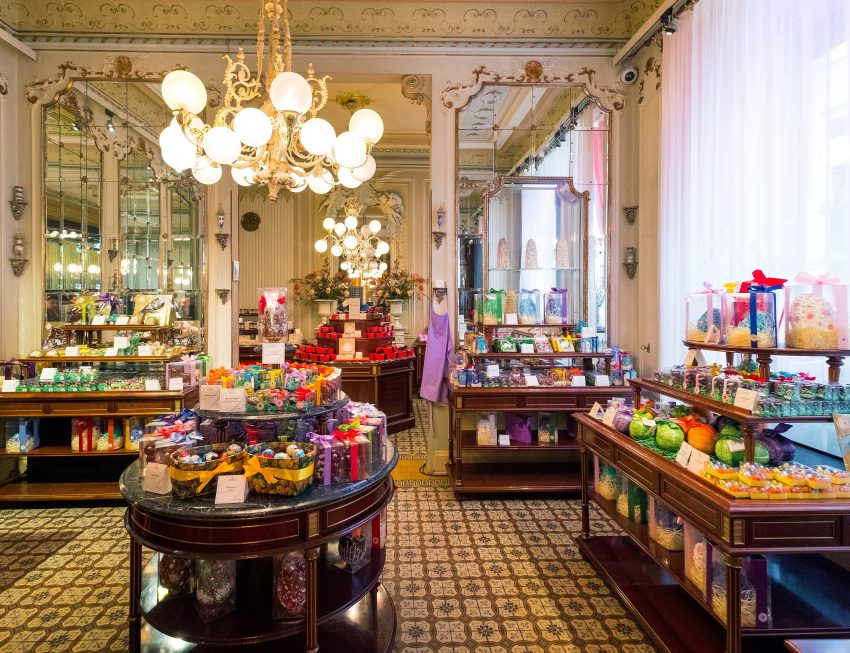
Demel
Demel
CC BY-SA 2.0 / a.canvas.of.light
Demel is a neo-baroque Viennese café and pastry shop on Kohlmarkt, trading in courtly ritual as much as sugar. Once a Purveyor to the Imperial and Royal Court, it still leans into that theater: the Demelinerinnen staff may address you in the third person as you choose from glass cases of immaculate tortes and strudels. Founded in 1786 and later moved here by the Demel family after the old Burgtheater came down, it became a salon for the Austro-Hungarian elite—Empress Elisabeth among them. A 20th-century courtroom feud with Hotel Sacher over the “Original Sacher Torte” ended in 1963, leaving Demel’s version stamped with a triangular seal. Regulars still rave about the Einspänner and Kaiserschmarrn.
Location: Kohlmarkt 14, 1010 Wien, Austria | Hours: Daily: 10:00–19:00. | Price: Free (pay for food and drinks). | Website | Distance: 0.3km

12. Hofburg Imperial Palace
Hofburg Imperial Palace
CC BY-SA 3.0 / Martin Furtschegger
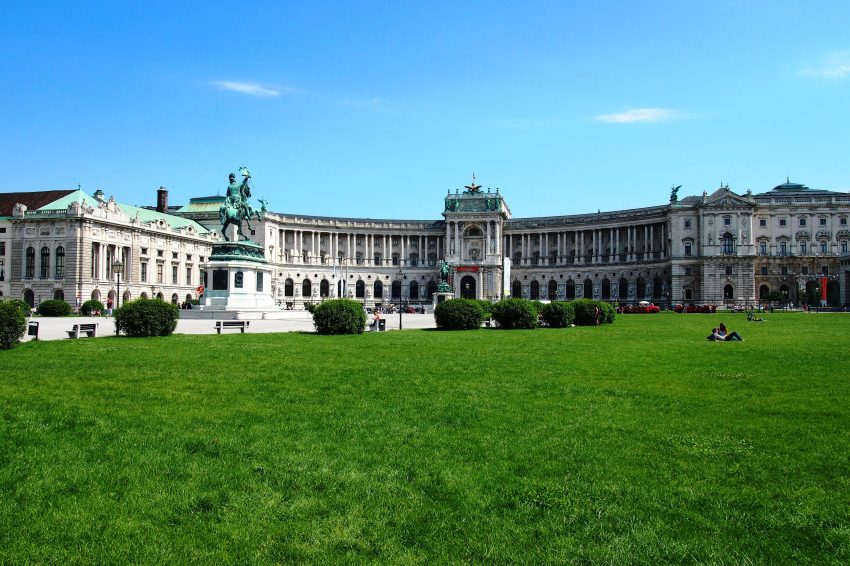
Hofburg Imperial Palace is Vienna’s former Habsburg power center, a vast complex that grew from a 13th-century residence into a city-like sprawl at the edge of the Inner City. Visitors feel its scale in the formal courtyards and grand entrances, then dip into specific interiors rather than “doing it all.” The numbers are part of the experience: around 18 wings, 19 courtyards, and some 2,600 rooms spread over roughly 240,000 square meters. Look for the medieval Swiss Wing and the 16th-century Swiss Gate bearing Emperor Ferdinand I’s insignia, then contrast it with the Baroque Court Library’s frescoed Prunksaal. Today it still functions as a seat of state, which adds a lived-in, working-palace atmosphere.
Location: 1010 Vienna, Austria | Hours: Daily: 09:00–17:30. | Price: Adults: €20; Children (6–18): €12; Students (19–25): €18; Under 6: free. | Website | Distance: 0.4km

13. Spanische Reitschule
Spanische Reitschule
CC BY-SA 3.0 / Hiroki Ogawa
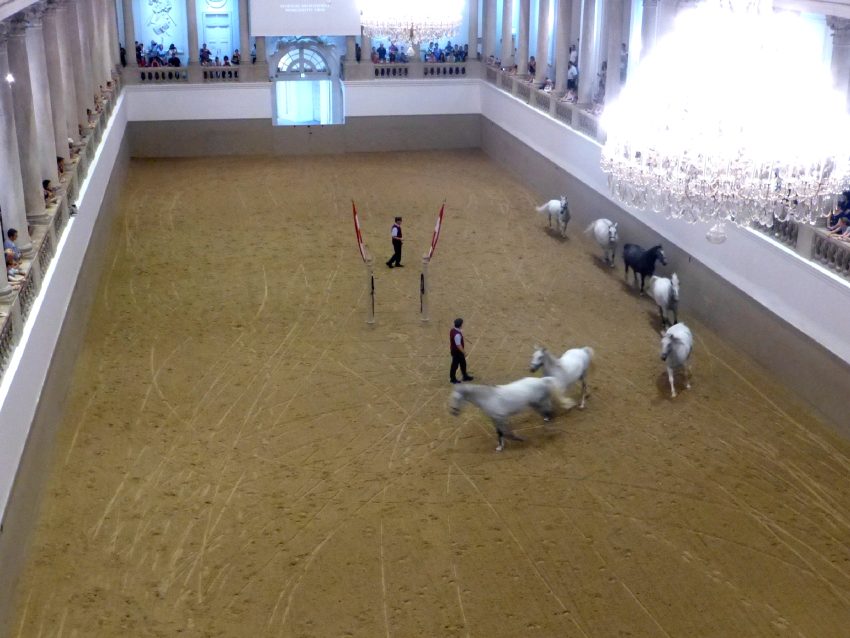
Vienna’s Spanische Reitschule is the world’s oldest school of classical dressage, founded in 1565, where Lipizzaner stallions perform precise “airs” in the Hofburg’s Winter Riding School. The arena itself is part of the spectacle: a bright baroque hall commissioned in 1729 by Emperor Karl VI, lined with 46 columns and a royal box, with his portrait presiding above the sand. The name points to Spanish bloodlines that helped shape the Lipizzaner breed, developed at the Lipizza stud near today’s Slovenia. Visitors can watch a polished 70–90 minute performance or a morning exercise that reveals the training behind the choreography; reviews often describe the experience as breathtaking.
Location: Michaelerplatz 1, 1010 Wien, Austria | Hours: Monday – Sunday: 09:00–16:00. | Price: Guided tours: Adults €24; Seniors/students €19; Children (6–18) €13. Morning Exercise: Adults €17–€29 (season/category); Seniors/students €12–€21; Children (6–18) €10–€18. Performances: from €26 (varies by category). | Website | Distance: 0.4km

14. Michaelerplatz
Michaelerplatz
Michaelerplatz
CC BY-SA 4.0 / Bahnfrend
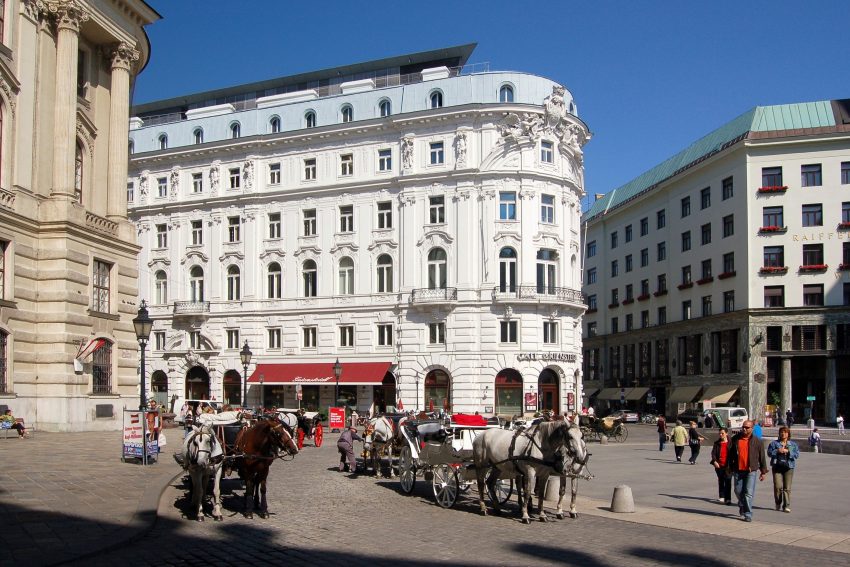
Michaelerplatz is a baroque, star-shaped square in Vienna that serves as the northeastern gateway into the Hofburg Palace through the theatrical Michael’s Gate. In the middle, glass-covered excavations reveal remnants of Vindobona, the Roman camp that once lay beneath the city. The gate’s neo-baroque sweep is paired with two 19th-century fountains by Rudolf Weyer, while the square’s mood shifts again at the Looshaus (1912), Adolf Loos’s stripped-down modernist provocation that reportedly offended Emperor Franz Joseph. Facing it all is St. Michael’s Church, whose roots reach back to 1221 and whose porch erupts with a Baroque “Fall of the Angels” sculpture. Visitors remember the cobblestones, the sudden scale of the surrounding facades, and the sense of stepping between eras.
Location: Michaelerplatz, 1010 Wien, Austria | Hours: 24 Hours. | Price: Free. | Distance: 0.4km

15. Albertina Museum
Albertina Museum
Albertina Museum
CC BY-SA 4.0 / Geolina
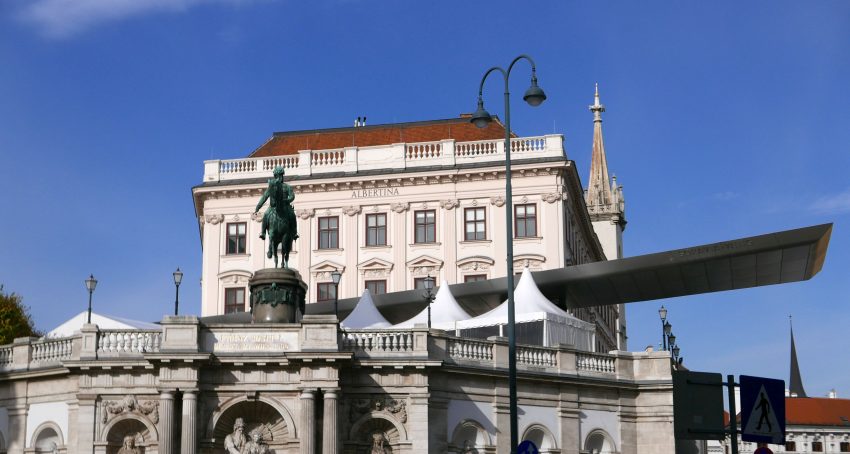
The Albertina Museum in central Vienna is a former Habsburg palace turned art museum, best known for one of Europe’s strongest graphic-art holdings and a tightly curated painting circuit. Visitors move from drawings, prints, and photographs—tens of thousands, including sheets associated with Leonardo, Michelangelo, and Rembrandt—into the Batliner Collection’s sweep from Impressionism to Modernism. Expect rooms where Monet and Degas sit near Cézanne and Picasso, with side trips into movements like Cubism and Surrealism, plus appearances by Klimt and Schiele. The building itself is part of the experience: renovated interiors, a grand courtyard, and a top-floor terrace that people linger on for city views. Reviews often mention the clear layout and the permanent collection’s depth.
Location: Albertinapl. 1, 1010 Wien, Austria | Hours: Monday: 10:00–18:00. Tuesday: 10:00–18:00. Wednesday: 10:00–21:00. Thursday: 10:00–18:00. Friday: 10:00–21:00. Saturday: 10:00–18:00. Sunday: 10:00–18:00. | Price: Adults: €19.90; Seniors (65+): €15.90; Under 26: €15.90; Children under 19: free. | Website | Distance: 0.4km

16. Haus der Musik
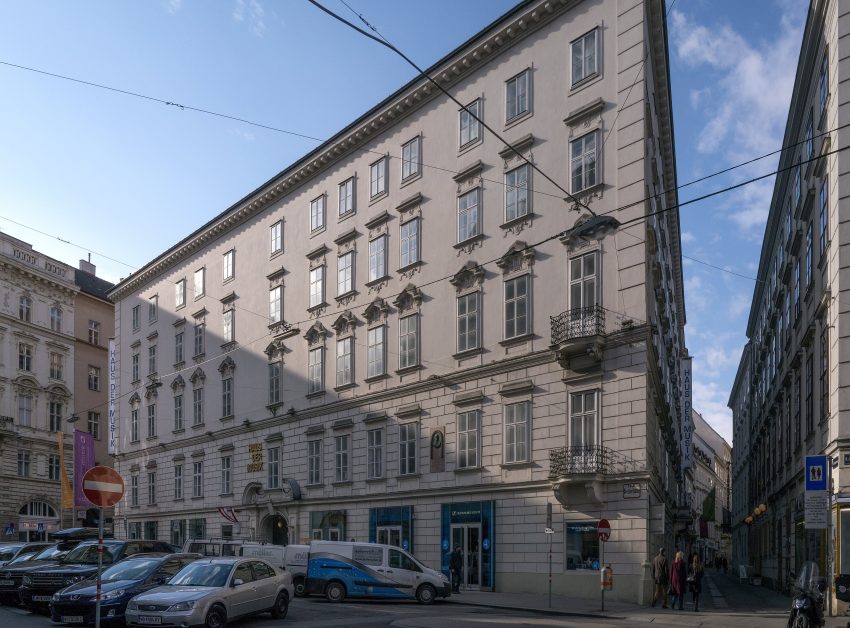
Haus der Musik
Haus der Musik
CC BY-SA 3.0 / Thomas Ledl
Haus der Musik is Vienna’s hands-on museum of sound and the city’s classical tradition, set in the former Archduke Karl Palace and opened in 2000 across about 5,000 square meters. Visitors enter through a formal courtyard where a grand piano greets you, then climb the “Stairplay” staircase that turns footsteps into notes. One floor traces the Vienna Philharmonic with memorabilia, playful posters, and a small cinema, while another dives into sound science with installations like the Wave Tube and “Origin” rooms. Composer spaces lean into Mozart, Haydn, and Beethoven through objects, holograms, and recreated interiors. The finale is the Virtual Conductor, letting you test your tempo in front of a digital orchestra—an interactive favorite in reviews.
Location: Seilerstätte 30, 1010 Wien, Austria | Hours: Daily: 10:00–22:00. | Price: Adults: €19; Reduced: €15; Children under 12: €8; Children under 3: free; Family ticket (2 adults + up to 3 children under 12): €39. | Website | Distance: 0.5km

17. State Opera House
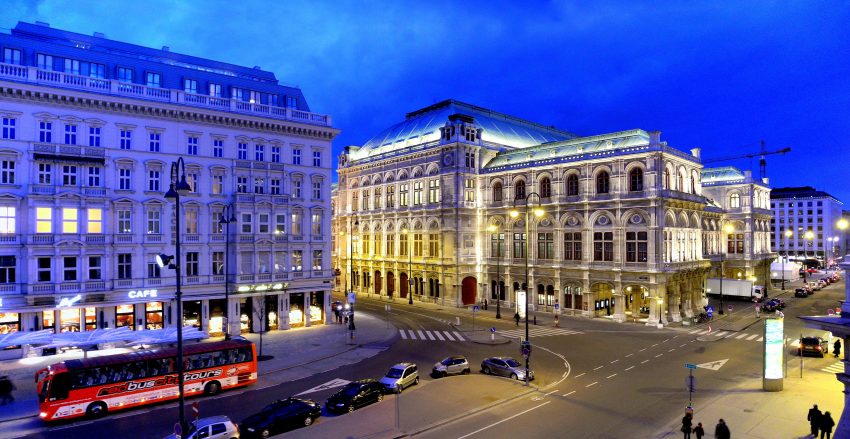
State Opera House
State Opera House
CC BY-SA 3.0 / Schölla Schwarz
Vienna’s State Opera House (Wiener Staatsoper) is a 19th-century performance venue on the Ringstrasse, opened in the 1860s as the Vienna Court Opera and renamed in 1920 as the new Austrian Republic took shape. Visitors remember the ceremonial feel of the building itself—grand staircases, formal rooms, and an auditorium built for spectacle and sound. On stage, the company draws from a deep repertoire (from La Traviata to Don Carlo), and its history includes influential music directors such as Gustav Mahler, Herbert von Karajan, and Claudio Abbado. Many performers also appear with the Vienna Philharmonic, reinforcing the house’s role in the city’s classical-music life.
Location: Opernring 2, 1010 Wien, Austria | Hours: Monday – Saturday: 10:00–18:00. Sunday: 10:00–13:00. | Price: Guided tour prices: Adults: €15; Seniors: €11; Students/apprentices under 27: €9; Children (6+): €9; Under 6: free. | Website | Distance: 0.6km

18. Ephesos Museum
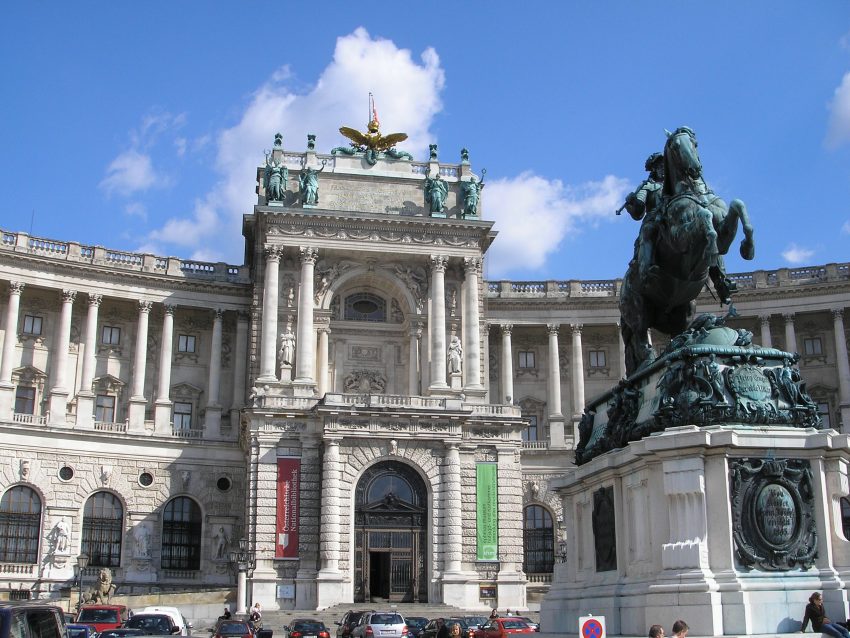
Ephesos Museum
Ephesos Museum
CC BY-SA 3.0 / Gryffindor
The Ephesos Museum in Vienna is a compact antiquities museum in the Neue Burg of the Hofburg complex, built around discoveries from ancient Ephesus in today’s Türkiye. It matters because Austrian excavations beginning in the 1890s brought major architectural and sculptural finds to Vienna, including pieces once donated by Sultan Abdul Hamid II to Emperor Franz Joseph I. Visitors move up from the entrance hall into a large room where the Parthian Monument frieze wraps the space with densely carved Roman-era scenes. A 1:500 scale model helps you picture the ancient city’s layout, and other memorable objects include an Amazon from the late-Classical Altar of Artemis and a bronze athlete.
Location: Heldenplatz, 1010 Wien, Austria | Hours: Tuesday – Sunday: 10:00–18:00. Thursday: 10:00–20:00. Closed on Monday. | Price: Adults: €10; Seniors: €8; Reduced: €7.50; Under 19: free; Family ticket: €16. | Website | Distance: 0.6km

19. Neue Burg
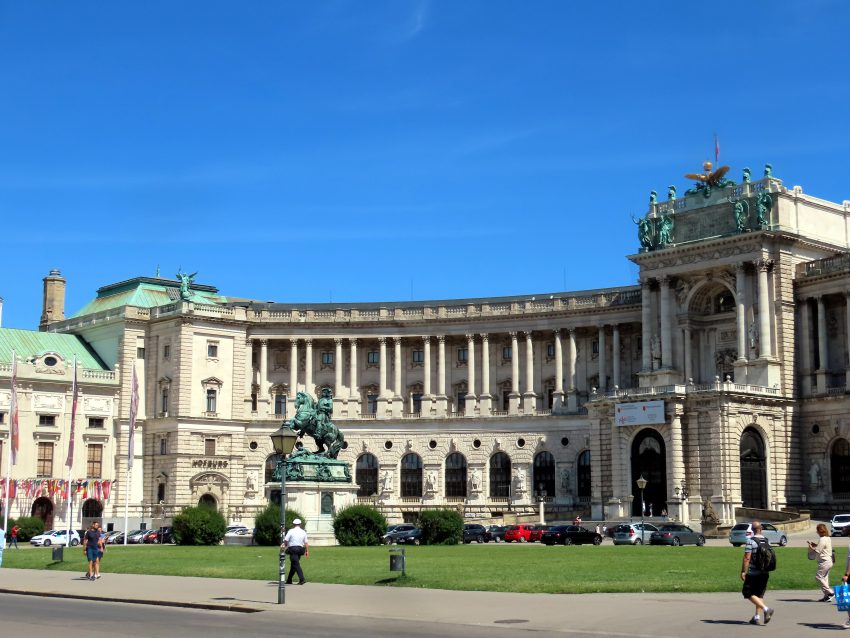
Neue Burg
Neue Burg
CC BY-SA 2.0 / Donald Judge
Neue Burg (the New Palace) is the last and most theatrical wing of Vienna’s Hofburg, a sweeping Neo‑Renaissance curve completed in 1913 after 32 years of construction, built to project late Habsburg power onto Heldenplatz. Its stone façade reads like a stage set, with 20 exterior statues of historical Austrian figures carved by different artists. The building also carries darker layers: Hitler addressed crowds from its terrace in 1938, and during the Nazi period parts of it were used to store looted artworks. Today the grandeur is matched by dense museum spaces, including the Austrian National Library’s vast holdings, a Globe Museum with nearly 700 globes, and the Ephesos Museum of antiquities. Even a quick exterior look—especially in evening light—tends to linger in memory.
Location: Heldenplatz, 1010 Wien, Austria | Hours: Tuesday: 10:00–21:00. Wednesday – Sunday: 10:00–18:00. Closed on Monday. | Price: Adults: €16; Reduced: €12; Children and adolescents: free. | Website | Distance: 0.6km

20. Burggarten
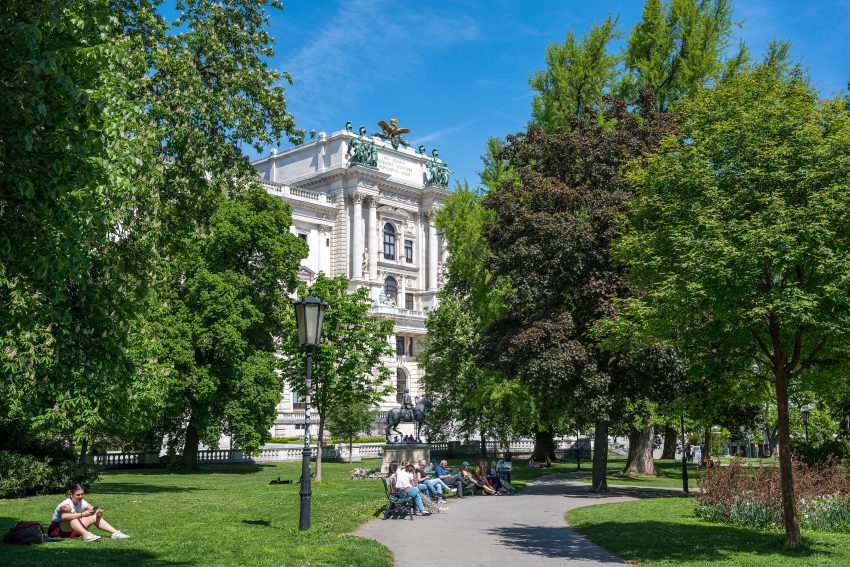
Burggarten
Burggarten
CC BY-SA 2.0 / Sandor Somkuti
Burggarten is a calm public park in Vienna’s 1st District, created from a former walled section of the Hofburg Palace grounds and later opened to the public after the Habsburg era. Its English-style layout—open lawns, winding paths, and shaded corners—still feels deliberately composed, like a palace garden repurposed for everyday pauses. Visitors gravitate to the Mozart Denkmal (moved here in the early 1950s) and the pond where a Hercules fountain statue was installed in the 1940s. Inside the Palmenhaus complex, the Schmetterlinghaus (introduced in 1901) adds a tropical note, with free-flying butterflies and displays of eggs and cocoons. It’s a favorite spot to slow down between city-center sights.
Location: Josefsplatz 1, 1010 Wien, Austria | Hours: 24 Hours. | Price: Free. | Website | Distance: 0.7km

21. Kunsthistorisches Museum
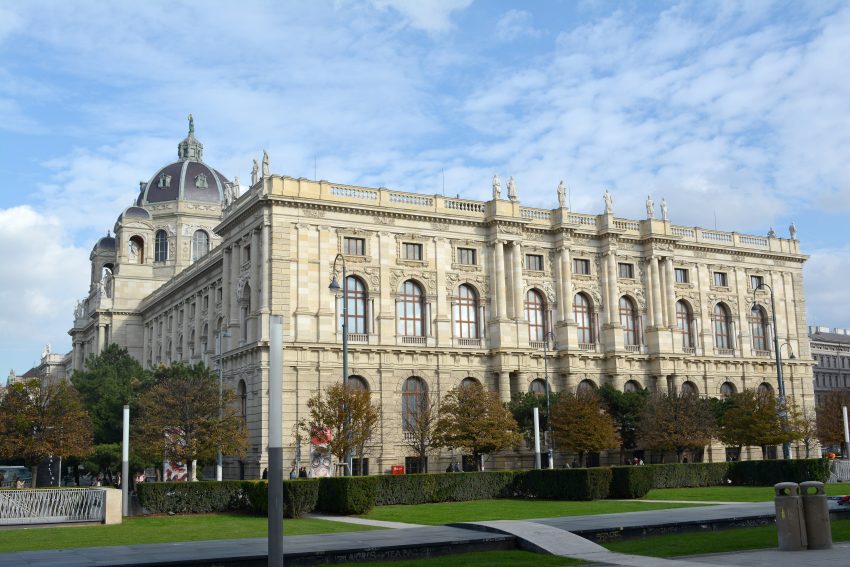
Kunsthistorisches Museum
CC BY-SA 4.0 / Arquus
Vienna’s Kunsthistorisches Museum is a grand Ringstrasse “palace museum” built to display the Habsburgs’ imperial collections, and the building’s marble stairways, ornate cupolas, and domed spaces feel like part of the collection. Inside, the galleries span from Egyptian pharaonic objects through Greece and Rome, alongside Renaissance and Baroque treasures made for the court. The Picture Gallery draws most visitors for dense rooms of Old Masters—think Bruegel, Rembrandt, Caravaggio, Titian, and more—while many linger on the central staircase murals, including gilded panels by the Klimt brothers tracing art history. Expect a vast, multi-floor visit that can easily fill half a day, with plenty of quiet corners and seating to slow down.
Location: Maria-Theresien-Platz, 1010 Wien, Austria | Hours: Tuesday – Sunday: 10:00–18:00. Thursday: 10:00–21:00. Closed on Monday. | Price: Adults: €22 online; €24 on site. Reduced: €19 online; €20 on site. Under 19: free. | Website | Distance: 0.8km

22. Naturhistorisches Museum
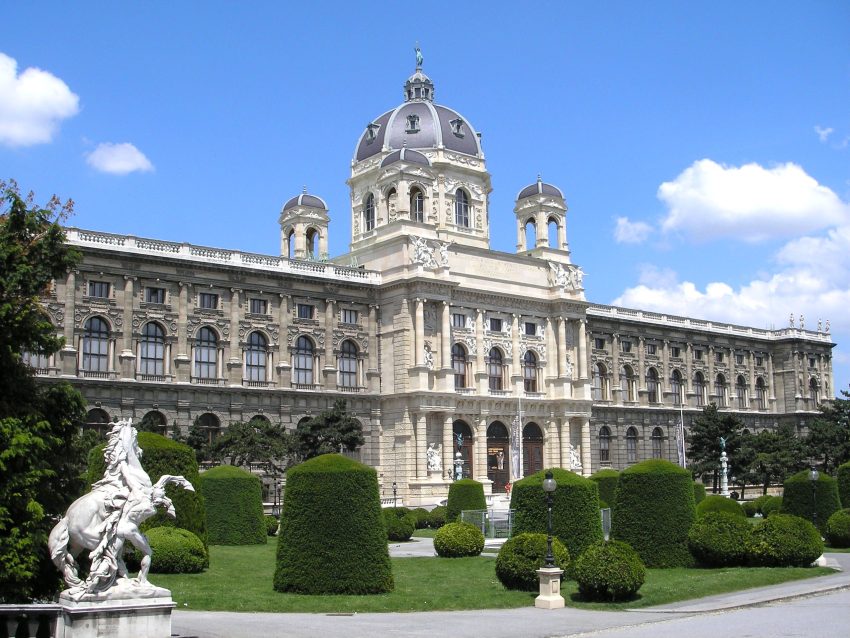
Naturhistorisches Museum
CC BY-SA 3.0 / Gryffindor
Vienna’s Naturhistorisches Museum is a grand, palace-like natural history museum on Maria-Theresien-Platz, created to house imperial scientific collections and still among the world’s major repositories, with more than 20 million specimens. Inside its 19th-century halls, you can move from the tiny Venus of Willendorf (over 25,000 years old) to prehistoric life displays featuring a dinosaur skeleton dated to around 250 million years. The museum is vast—about 90,000 square feet with roughly 39 sections—and it mixes original late-1800s display cases with newer, interactive galleries, including a standout meteorite room. Many labels are in both German and English, and visitors often remember the ornate interiors as much as the objects.
Location: Burgring 7, 1010 Wien, Austria | Hours: Monday: 09:00–18:00. Tuesday: Closed. Wednesday: 09:00–20:00. Thursday: 09:00–18:00. Friday: 09:00–18:00. Saturday: 09:00–18:00. Sunday: 09:00–18:00. | Price: Adults: €18; Reduced: €14; Under 19: free. | Website | Distance: 0.8km

23. Volksgarten
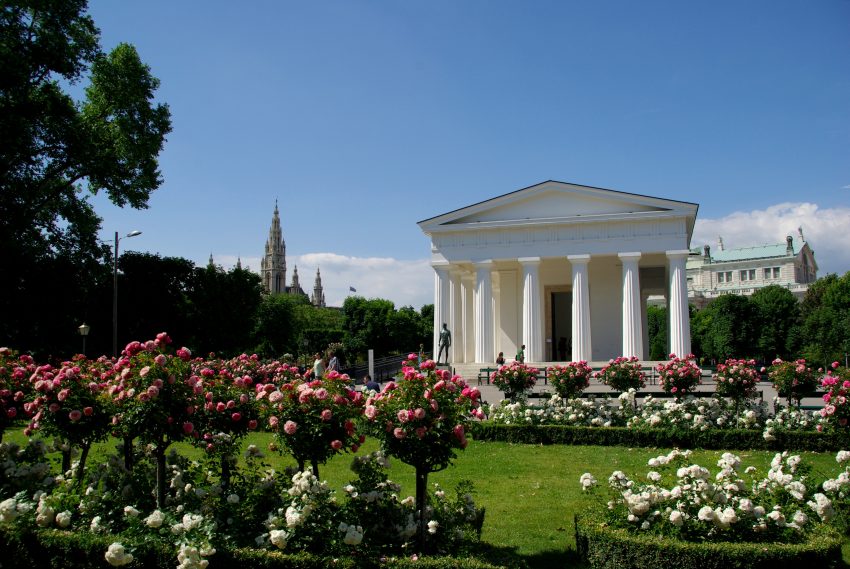
Volksgarten
Volksgarten
CC BY-SA 2.0 / karstensfotos
Volksgarten is Vienna’s “People’s Garden,” a formal public park in the 1st district beside the Hofburg, created in the early 1820s on ground cleared after the Napoleonic era and opened to everyone in 1823. Its calm, clipped paths lead to the Theseus Temple, a compact neoclassical pavilion once built to house a dramatic Theseus sculpture (now in the Kunsthistorisches Museum), leaving the building as a striking, slightly empty stage for photos and quiet pauses. The park’s personality comes from details: a marble Empress Elisabeth memorial carved from an eight‑ton block, a thoughtful Franz Grillparzer statue, and a rose parterre with thousands of bushes in hundreds of varieties. Even in winter, visitors remember the hush and bench-lined stillness.
Location: 1010 Vienna, Austria | Hours: (Summer) March 1 – March 31: 07:00–19:00; April 1 – October 31: 06:00–22:00. (Winter) November 1 – February 28: 07:00–17:30. | Price: Free. | Website | Distance: 0.8km

24. Rathausplatz
Rathausplatz
Rathausplatz
CC BY-SA 4.0 / Karl Gruber
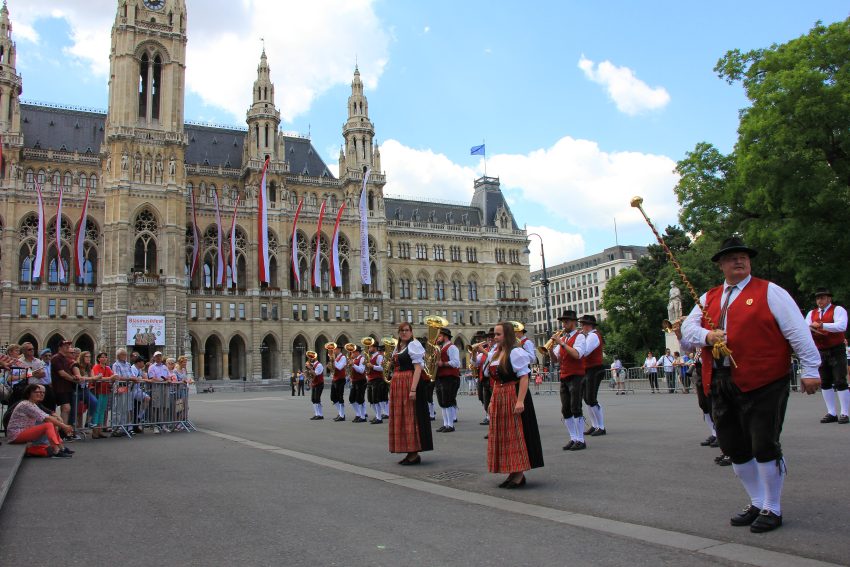
Rathausplatz is the broad civic square in front of Vienna’s neo-Gothic City Hall on the Ringstrasse, built in the late 19th century when the city expanded beyond its old walls. What visitors remember is how the open space flips personalities with the calendar: winter brings the Vienna Ice Dream skating routes and, in December, a Christmas market scented with mulled wine and gingerbread. Each year since 1959, a different Austrian federal state provides the towering Christmas tree that anchors the festivities. The square also carries a sharper historical footnote—renamed “Adolf Hitler Square” in 1938, it reverted to Rathausplatz in 1945—making today’s celebrations feel pointedly public and reclaimed.
Location: Rathauspl., 1010 Wien, Austria | Hours: 24 Hours. | Price: Free. | Distance: 0.9km

25. Rathaus
Rathaus
Rathaus
CC BY-SA 1.0 / Tokfo
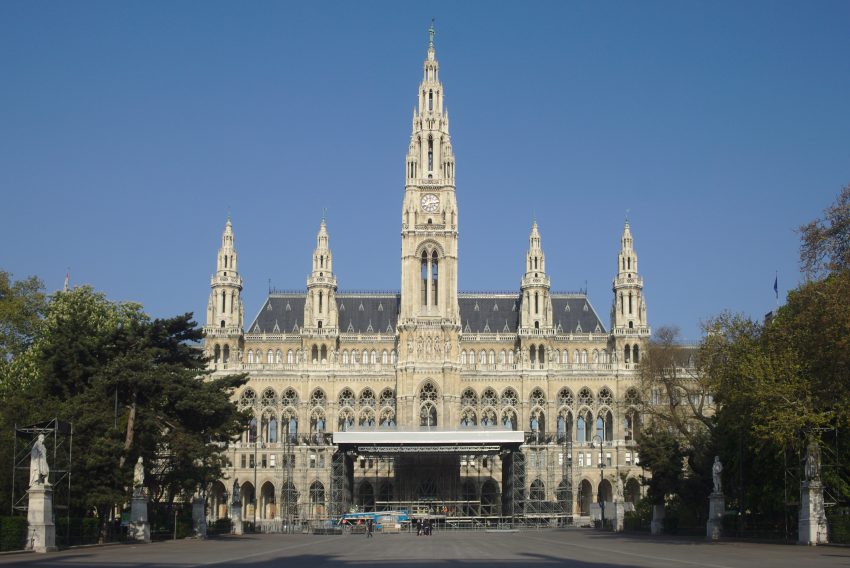
Vienna’s Rathaus is the city hall and legislative seat, dressed up as a neo-Gothic palace on the Ringstrasse. Built from 1872–1883 by Friedrich von Schmidt, it takes cues from medieval Flanders and Brabant and wears five tower “crown,” with the 98-meter central spire topped by the armored Rathausmann, a copper guardian inspired by Emperor Maximilian I. Up close, the façade reads like a stone pageant—emperors, allegories of Justice and Power, and even Vindobona, Vienna’s Roman ancestor—while side statues salute everyday trades. Inside, the Rathauskeller’s chandeliered hall is memorable for old-school Viennese dining, and the building’s fairytale scale is what visitors keep talking about.
Location: Friedrich-Schmidt-Platz 1, 1010 Wien, Austria | Hours: Monday: 13:00. Wednesday: 13:00. Friday: 13:00. | Price: Free. | Website | Distance: 1km

26. Leopold Museum
Leopold Museum
Leopold Museum
CC BY-SA 1.0 / Gugerell
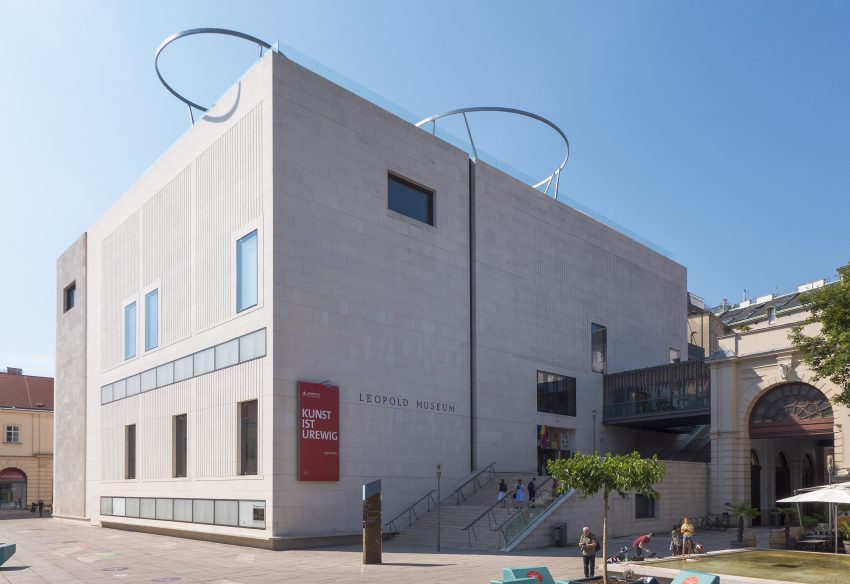
The Leopold Museum in Vienna’s MuseumsQuartier is a modern, light-filled home for Austrian art around 1900, anchored by the world’s largest holdings of Egon Schiele and Richard Gerstl. Visitors tend to linger over Gustav Klimt’s “Death and Life,” and the Klimt rooms add texture with a faithful reconstruction of his studio antechamber plus an exhibition on his companion and muse, Emilie Flöge. Beyond painting, the galleries weave in finely made Wiener Werkstätte furniture and decorative arts, so the era’s ideas feel lived-in rather than abstract. Between floors, the crisp architecture and calm spaces make it easy to slow down, and there’s even a playful diagram of Schiele’s last studio—skittle alley included.
Location: Museumsplatz 1, 1070 Wien, Austria | Hours: Monday: 10:00–18:00. Tuesday: Closed. Wednesday: 10:00–18:00. Thursday: 10:00–18:00. Friday: 10:00–18:00. Saturday: 10:00–18:00. Sunday: 10:00–18:00. | Price: Adults: €19; Reduced: €16; Youth (under 19): €2.50; Children (under 7): free. | Website | Distance: 1.1km

27. Karlskirche
Karlskirche
Karlskirche
CC BY-SA 2.0 /
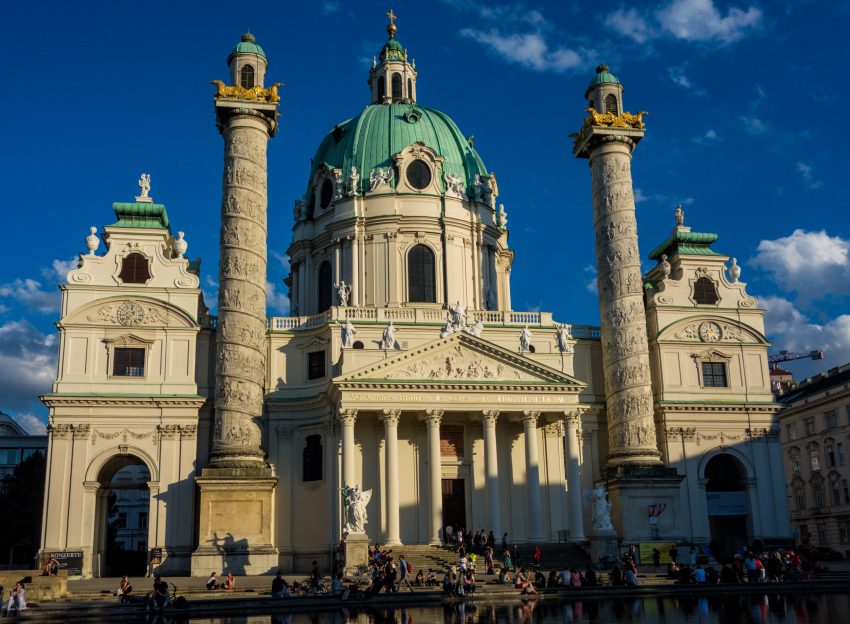
Karlskirche (St. Charles Church) is Vienna’s grand Baroque plague-vow church, commissioned by Emperor Karl VI in 1713 as thanks for surviving the epidemic and dedicated to St. Charles Borromeo. Its exterior plays like an imperial stage set: a long dome and a portico that reads like a Roman temple, flanked by two spiral columns modeled on Trajan’s Column and loaded with Habsburg symbolism. Inside, visitors remember the surge of marble and gilding and the ceiling fresco where the saint pleads for humanity, best appreciated up close via the elevator to the dome level. The space also doubles as a concert venue—Vivaldi programs are a frequent draw—adding music to the drama.
Location: Karlskirche, Karlsplatz 10, 1040 Wien, Austria | Hours: Monday – Saturday: 09:00–18:00. Sunday: 11:45–19:15. | Price: Adults: €9.50; Groups (6+): €8.50; Students: €6; Young people: €5; Children (10 and under): free. | Website | Distance: 1.1km

28. Belvedere Palace
Belvedere Palace
Belvedere Palace
CC BY-SA 4.0 / Thomas Ledl
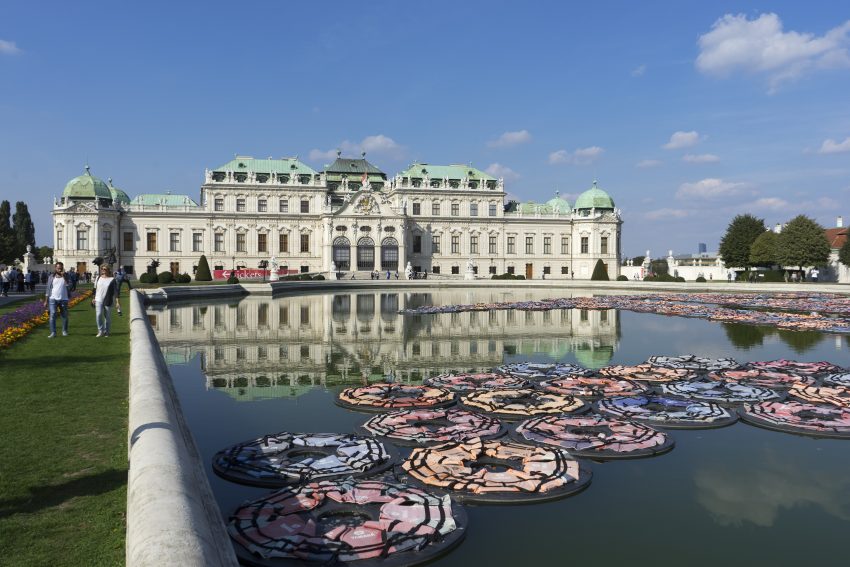
Belvedere Palace in Vienna is a high-Baroque complex built for Prince Eugene of Savoy, staged as two palaces—Lower (begun 1712) and the more theatrical Upper (added 1717)—set on a long axis of terraced gardens. Visitors remember the cascading fountains, clipped hedges, and statues that pull you downhill between the buildings, with postcard views back to the palace silhouette. Inside the Upper Belvedere, gilded rooms and frescoed ceilings frame a museum collection that ranges from medieval works to modernism, with Gustav Klimt’s “The Kiss” and “Judith” drawing steady crowds. The ensemble also includes an Orangery and former stables, reinforcing the sense of an 18th-century courtly stage set.
Location: 1030 Vienna, Austria | Hours: Daily: 10:00–18:00. | Price: Upper Belvedere: €19,50; Lower Belvedere: €16,50; 2 in 1 day ticket (Upper + Lower): €29,00; 3 in 1 day ticket (Upper + Lower + Belvedere 21): €32,00. | Website | Distance: 2km

29. Schönbrunn Palace
Castle Schönbrunn Vienna
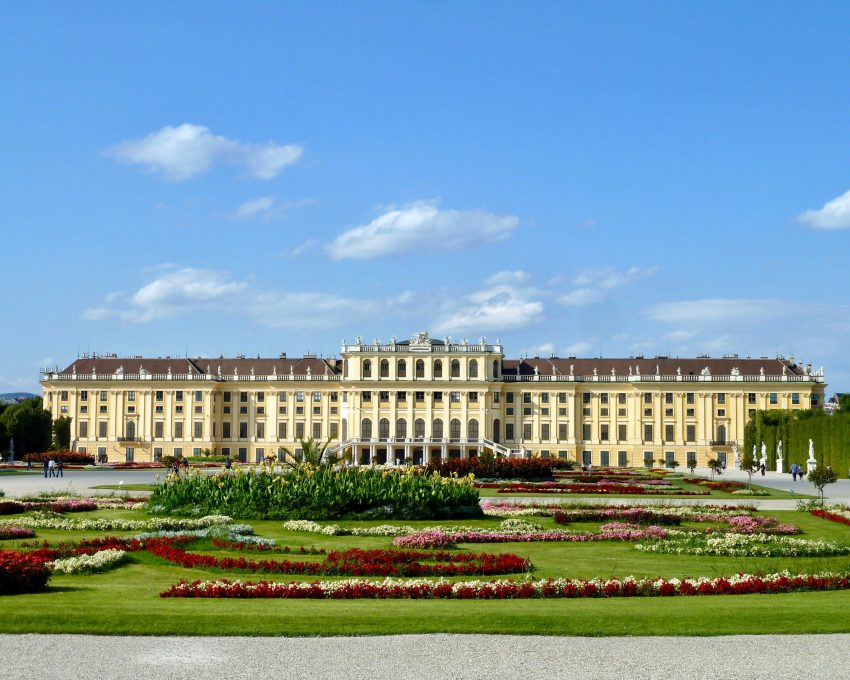
Schönbrunn Palace is Vienna’s vast Baroque former summer residence of the Habsburgs, a UNESCO-listed court complex where imperial ceremony and family life once played out. Inside, a long sequence of richly decorated state rooms and private apartments—especially those tied to Maria Theresa—makes the court feel lived-in rather than abstract. Outside, the experience spreads into formal gardens and broad parkland, where you can climb to the Gloriette for one of the site’s most memorable viewpoints. The grounds also include the Maze and Labyrinth, turning a quick interior visit into a longer wander. Many visitors linger with the well-structured audio tour, then slow down outdoors for the scale and atmosphere.
Location: Schönbrunn Palace, Schönbrunner Schloßstraße, Vienna, Austria | Distance: 5km
Powered by GetYourGuide

Best Day Trips from Vienna

A day trip from Vienna offers the perfect opportunity to escape the urban rhythm and discover the surrounding region's charm. Whether you're drawn to scenic countryside, historic villages, or cultural landmarks, the area around Vienna provides a variety of easy-to-reach destinations ideal for a one-day itinerary. If you are looking to rent a car in Austria I recommend having a look at Discover Cars, first, as they compare prices and review multiple car rental agencies for you.

1. Liechtenstein Castle
Liechtenstein Castle, Austria
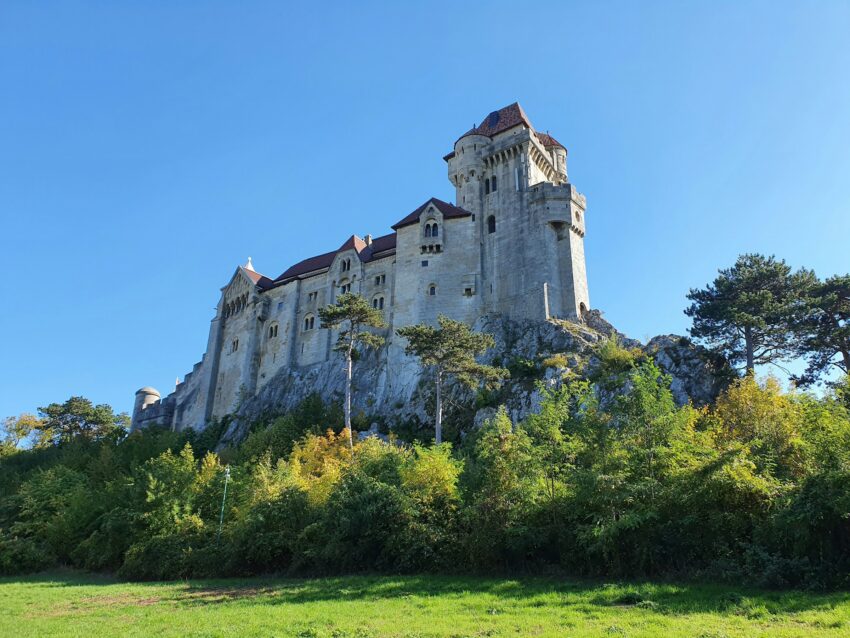
Liechtenstein Castle stands above Maria Enzersdorf on the edge of the Vienna Woods, just south of Vienna, and feels wonderfully removed from the city despite being an easy day trip. This is the ancestral seat of the House of Liechtenstein, and its hilltop setting, wooded surroundings, and rugged stone silhouette give it the kind of romantic medieval atmosphere many travelers…
Location: Castle Liechtenstein, Am Hausberg, Maria Enzersdorf, Austria | Hours: (Summer) 01 April 2026 – 30 September 2026; Monday – Tuesday: 10:00–16:00. Thursday – Sunday: 10:00–16:00. Closed on Wednesday. (Winter) 01 October 2026 – 31 March 2027; Friday – Sunday: 11:00–15:00. Closed on Monday – Thursday. Christmas: Closed from the 4th Sunday of Advent – 06 January. | Price: Adults: €18.00. Children from 6 years: €10.00. Reduced: €15.00. Family ticket 1 adult + 2 children: €25.00. Family ticket 2 adults + 3 children: €43.00. | Website | Distance: 14.9km
Visiting Liechtenstein Castle

2. Römerstadt Carnuntum
Porticus_Ostansicht_Carnuntum
CC BY-SA 4.0 / Barnos
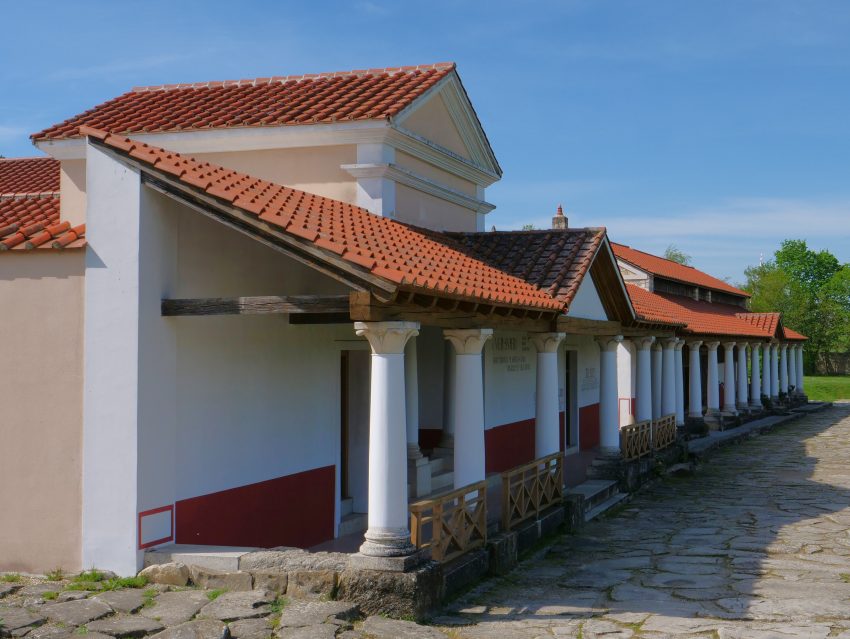
The Roman City of Carnuntum is one of those places that quietly exceeds expectations. Set in Petronell-Carnuntum, east of Vienna, it is not just a scatter of stones in a field but a serious archaeological park where reconstructed Roman buildings, original remains, and the wider landscape all work together to make the ancient city feel unusually real. What makes it…
Location: Römerstadt Carnuntum, Hauptstraße, Petronell-Carnuntum, Austria | Hours: Daily: 09:00–17:00. Seasonally open from March – November. | Price: Adults €15; concessions €14; children under 6 free; children and adolescents 6–18: €8. The day ticket covers the Roman Quarter and Museum Carnuntinum, while the amphitheatres and Heidentor are freely accessible. | Website | Distance: 37.7km
Visiting Römerstadt Carnuntum
Powered by GetYourGuide

3. Eisenstadt

The Complete Guide to Eisenstadt
CC BY-SA 2.0 / Leonhard Niederwimmer
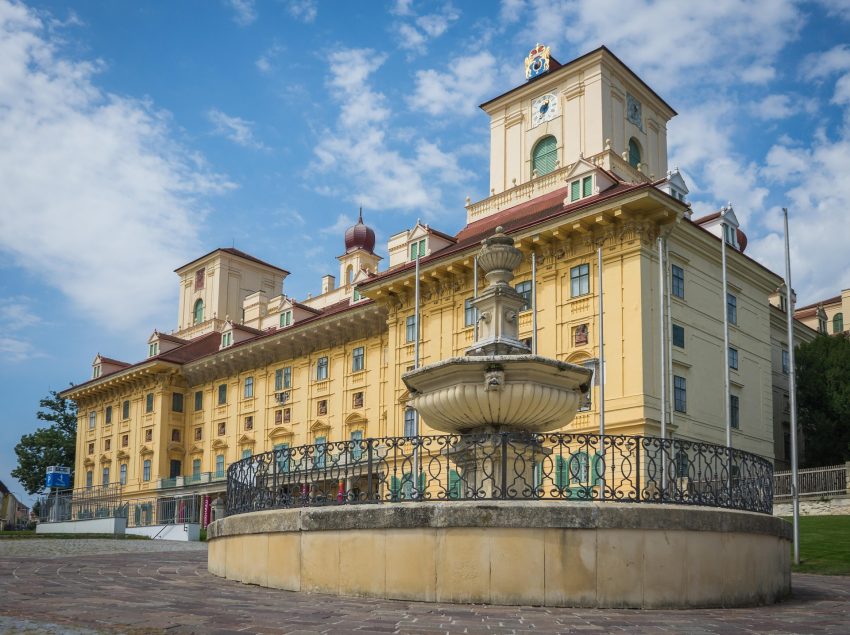
Eisenstadt makes an easy, rewarding base for a cultured short break in Austria’s Burgenland, surrounded by gentle vineyards, small wine villages, and wide-open plains that feel distinctly different from the Alpine west. The city is compact and walkable, so you can move from grand architecture to cafés and cellar doors in minutes, with plenty of chances to slow down and…
Visiting Eisenstadt
Powered by GetYourGuide

4. Bratislava

The Complete Guide to Bratislava
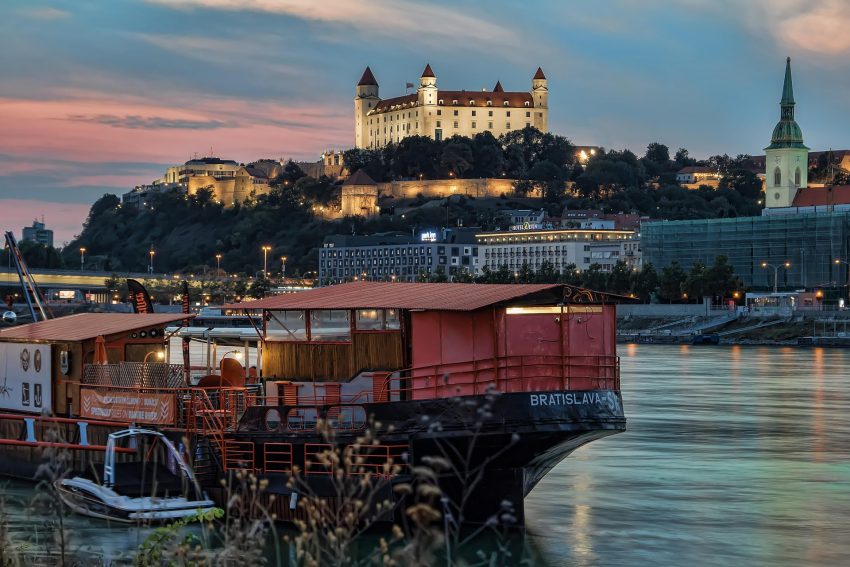
Bratislava is a compact, walkable capital that rewards slow wandering: one moment you’re in a cobbled Old Town lane lined with cafés and pastel façades, the next you’re on a riverside promenade watching boats glide along the Danube. Set in southwestern Slovakia at the meeting point of Central Europe, it’s an easy city to fit into a multi-country itinerary while…
Visiting Bratislava

5. Mikulov

mikulov
mikulov
Visiting Mikulov, located in the South Moravian Region of the Czech Republic, is a delight for those who enjoy picturesque towns with a vibrant cultural scene. The town is compact and walkable, allowing visitors to explore the main square, charming streets, and nearby vineyards with ease. Cafes, wine bars, and local restaurants make it easy to sample regional cuisine and…
Visiting Mikulov
Powered by GetYourGuide

6. Melk

The Complete Guide to Melk
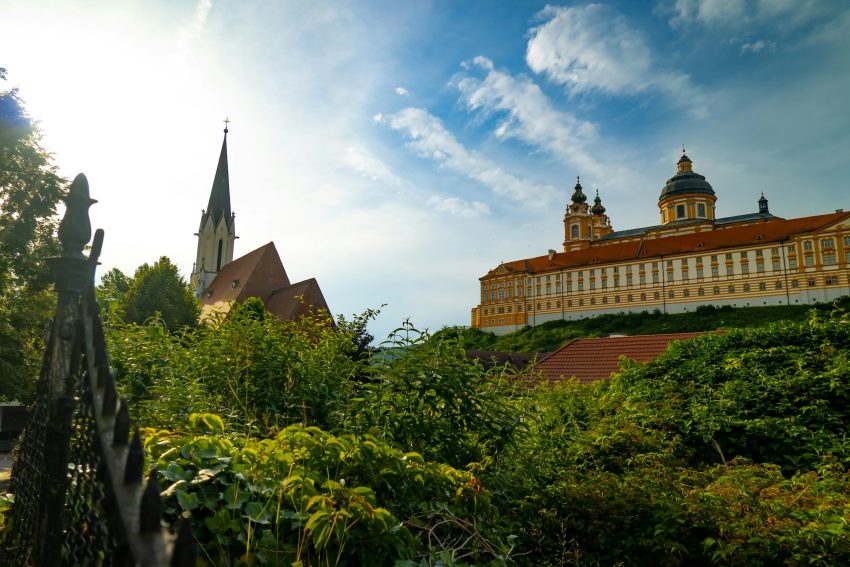
Melk is one of the most rewarding small-town stops on the Danube, set at the gateway to the Wachau Valley in Lower Austria. It’s compact and easy to explore on foot, yet it punches above its size with big views, riverside walks, and a lively café-and-restaurant scene that makes it feel like more than a quick photo stop. Most visitors…
Visiting Melk
Powered by GetYourGuide

7. Brno

cathedral Brno
cathedral Brno
Brno, the second-largest city in the Czech Republic, lies in the South Moravian Region, a part of the country known for its rolling vineyards, gentle hills, and a relaxed pace of life compared to Prague. Its location makes it a natural hub between Vienna, Bratislava, and Prague, so many visitors find it an easy and rewarding stop on a Central…
Visiting Brno
Powered by GetYourGuide

8. Graz

The Complete Guide to Graz
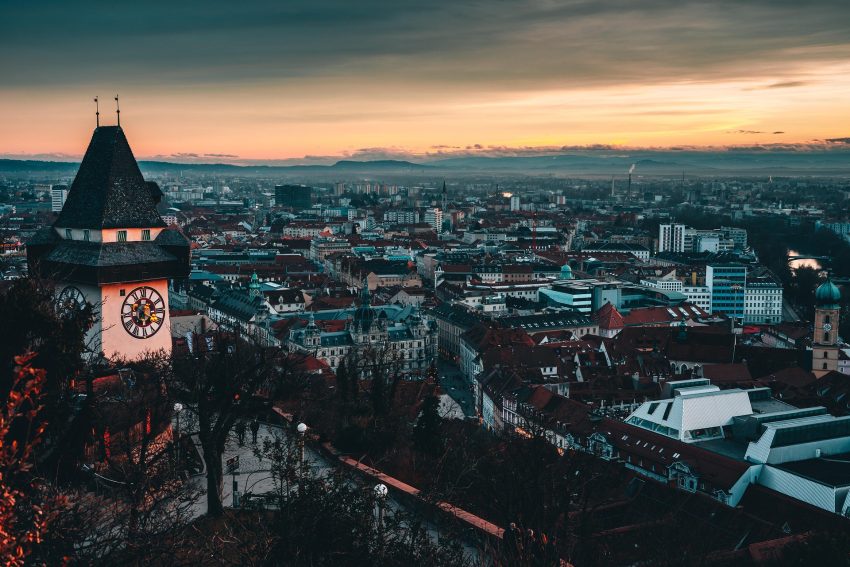
Graz is a lively, walkable city in southeastern Austria, set in the heart of Styria and surrounded by gentle hills, vineyards, and forested viewpoints. It’s a place where everyday local life—cafés, markets, student energy—mixes naturally with striking architecture and a strong food-and-wine culture. The city feels compact and easy to navigate, yet it offers enough variety to fill anything from…
Visiting Graz
Powered by GetYourGuide

9. Linz

The Complete Guide to Linz
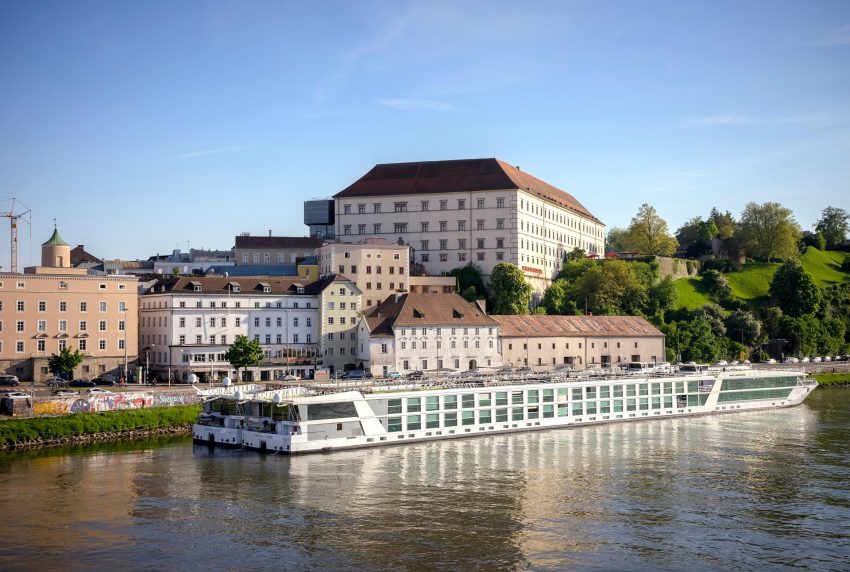
Linz is a lively Danube city that blends contemporary culture with an easy, walkable core, making it a great base for a short city break or a longer stay. You’ll find a strong mix of museums, riverfront promenades, modern architecture, and classic Austrian cafés, with plenty to do both day and night. The city feels creative and student-influenced, yet it’s…
Visiting Linz
Powered by GetYourGuide

Where to Stay in Vienna

For a first visit, staying in Vienna’s Innere Stadt (1st District) is the most convenient choice because you can walk to major sights like Stephansdom, the Hofburg area, and many museums, while also having excellent U-Bahn and tram connections for everything else. A strong luxury option here is Hotel Sacher Wien, which is ideal if you want classic Viennese style, an unbeatable central location by the Opera, and top-tier service. For a refined, design-forward stay with a quieter feel but still in the heart of things, The Guesthouse Vienna works well thanks to its boutique scale and walkability to the Albertina and Ringstrasse.

If you want a slightly more local, neighborhood feel while remaining central, Leopoldstadt (2nd District) is excellent: it’s close to the Prater and Danube Canal, often offers better value, and still puts you minutes from the center by U-Bahn. SO/ Vienna is a great pick here for travelers who like contemporary design, skyline views, and quick access to both the historic core and the canal’s nightlife. For a stylish, comfortable base with easy transport links and a calmer evening atmosphere, Hotel Topazz & Lamée sits right on the edge of the 1st District and is well suited to visitors who want to be central without feeling surrounded by crowds all day.

For longer stays or repeat visitors, Neubau (7th District) is one of Vienna’s best areas: it’s creative, packed with cafés and small shops, and close to the MuseumsQuartier, making it ideal if you want culture by day and a lively but not overly touristy vibe at night. 25hours Hotel Vienna at MuseumsQuartier is a fun, well-located option here, especially if you value an on-site bar scene and an easy walk to major museums, while still being well connected by tram and U-Bahn for the rest of the city.

Using the our Hotel and Accomodation map, you can compare hotels and short-term rental accommodations in Vienna. Simply insert your travel dates and group size, and you’ll see the best deals for your stay.

Vienna Accommodation Map

Best Time to Visit Vienna

Vienna in Spring (March–May)

Spring is a rewarding time to visit as parks and palace gardens come back to life and café terraces begin to fill. Expect changeable days—cool mornings and milder afternoons—ideal for museum-hopping mixed with long walks around the Innere Stadt and along the Danube Canal.

Vienna in Summer (June–August)

Summer brings long daylight hours and an outdoor-focused city: open-air cinemas, riverside hangouts, and evening concerts. It can get hot, so plan sightseeing early and use afternoons for shaded gardens, museums, or a swim at the Danube Island. Festival highlights often include the Film Festival at Rathausplatz (summer open-air screenings and food stands) and frequent classical performances.

Vienna in Autumn (September–November) (Best)

Autumn is often the sweet spot: comfortable temperatures, golden light on the Ringstrasse, and a lively cultural calendar as concert seasons ramp up. It’s also a great period for wine tavern outings tied to the year’s harvest, with many locals heading to Heuriger evenings and vineyard walks.

Vienna in Winter (December–February)

Winter is cold and atmospheric, especially in December when Vienna’s Christmas markets transform major squares with lights, crafts, and seasonal treats. January and February are quieter and can be excellent for travelers focused on museums, opera, and cozy coffeehouses, with fewer crowds and a more local pace.

Annual Weather Overview

  • January 4°C
  • February 9°C
  • March 12°C
  • April 18°C
  • May 21°C
  • June 25°C
  • July 28°C
  • August 29°C
  • September 24°C
  • October 18°C
  • November 10°C
  • December 5°C

How to get to Vienna

Getting to Vienna by air

Nearest airports: Vienna International Airport (VIE) is the main gateway.
Airport to city: Use the City Airport Train (CAT) or ÖBB Railjet/S-Bahn services into the city. ÖBB info and tickets: https://www.oebb.at/en/

Getting to Vienna by train

Main stations: Wien Hauptbahnhof (central long-distance hub) and Wien Westbahnhof (some services).
Key operators and booking links: ÖBB (Austria) https://www.oebb.at/en/ ; Deutsche Bahn (Germany) https://www.bahn.com/en ; RegioJet (Central Europe) https://regiojet.com/ ; České dráhy (Czech Railways) https://www.cd.cz/en/

Getting to Vienna by Car

Driving notes: Vienna is well connected by motorways, but city driving can be slow due to traffic, one-way systems, and limited parking. If you plan to use motorways in Austria, you typically need a vignette (toll sticker/digital pass). In the inner districts, rely on garages or hotel parking and consider leaving the car parked while using public transport. If you are looking to rent a car in Austria I recommend having a look at Discover Cars, first, as they compare prices and review multiple car rental agencies for you.

Travelling around Vienna

Public transport: The U-Bahn, trams, and buses are frequent and cover nearly all visitor areas; day and multi-day passes are convenient.
Walking and cycling: Central Vienna is highly walkable, and cycling works well along the Danube Canal and Danube Island.
Regional trains: For quick trips to nearby sights, use ÖBB and S-Bahn services: https://www.oebb.at/en/
More from this area