Bratislava, Slovakia: The Ultimate Travel Guide 2026
The Complete Guide to Bratislava

Bratislava is a compact, walkable capital that rewards slow wandering: one moment you're in a cobbled Old Town lane lined with cafés and pastel façades, the next you're on a riverside promenade watching boats glide along the Danube. Set in southwestern Slovakia at the meeting point of Central Europe, it's an easy city to fit into a multi-country itinerary while still feeling distinct-relaxed, creative, and pleasantly uncrowded compared with many nearby capitals.

The city's best experiences come from mixing viewpoints and neighborhoods. Start with the Old Town for its lively squares and people-watching, then climb to panoramic spots for sweeping views over the river and rooftops. Bratislava also has a strong food-and-drink scene: traditional Slovak comfort dishes, modern bistros, and excellent local wine culture from the nearby Little Carpathians, all within a short ride from the center.

Bratislava is also great for day trips and nature breaks without sacrificing urban convenience. Within minutes you can be on forest trails, cycling along the Danube, or tasting wines in small villages. Whether you're visiting for a weekend city break, a festival, or as a stop between Vienna and Budapest, it's a city that feels easy to navigate and quick to love.

History of Bratislava

Bratislava in Early Settlement and Medieval Growth (to the 15th century)

Bratislava’s story begins with early settlement around a strategic river crossing and fortified hill, where communities took advantage of trade routes and defensible terrain. Over time, the town developed as a regional market center, with crafts, commerce, and religious institutions shaping its medieval character.

By the High Middle Ages, Bratislava had grown into a walled town with guild life, churches, and a castle complex above it. Its position on major trade corridors helped it prosper, while periodic conflicts and shifting rulers influenced fortifications and civic privileges.

Bratislava as a Royal and Administrative Center (16th–18th centuries)

From the 1500s, Bratislava rose in political importance as regional power dynamics changed across Central Europe. It became closely associated with royal administration and elite society, drawing nobles, clergy, and officials, which boosted construction, culture, and education.

This era left a lasting architectural imprint: palaces, civic buildings, and baroque transformations reshaped streets and squares. The city’s social life expanded with courtly ceremonies, religious institutions, and a growing urban identity tied to governance and prestige.

Bratislava in the Age of Reform and Industrial Change (19th century)

The 1800s brought modernization, new ideas, and economic shifts. Urban infrastructure improved, transport links expanded, and industry began to influence the city’s outskirts. Cultural life also diversified, with theaters, associations, and a more visible public sphere.

National movements and political reforms across the region affected Bratislava’s civic landscape, encouraging new institutions and debates about identity, language, and representation. The city’s built environment continued to evolve with new neighborhoods and public works.

Bratislava Through the World Wars and State Transformations (20th century)

The 20th century was marked by dramatic political change, including the collapse of empires, new state formations, wartime upheaval, and postwar restructuring. Bratislava experienced population shifts, economic reorientation, and significant changes to governance and daily life.

In the later decades, socialist-era planning introduced large housing estates and industrial zones, while historic areas faced varying levels of preservation and alteration. The end of the century brought another major transition as political systems changed and the city entered a new phase of openness and redevelopment.

Bratislava in the Contemporary Era (21st century)

In recent decades, Bratislava has focused on revitalizing public spaces, restoring heritage sites, and expanding modern districts along the river. Tourism, services, and creative industries have grown, while new architecture and infrastructure projects have reshaped parts of the skyline.

Today, the city balances conservation and development, with ongoing efforts to improve mobility, waterfront access, and cultural programming. Its identity continues to evolve as it strengthens its role as a dynamic Central European capital.

Moira & Andy
Moira & Andy

Hey! We're Moira & Andy. From hiking the Camino to trips around Europe in Bert our campervan — we've been traveling together since retirement in 2020!

Read our full story here

Visiting Bratislava for the first time and wondering what are the top places to see in the city? In this complete guide, I share the best things to do in Bratislava on the first visit. To help you plan your trip, I have also included an interactive map and practical tips for visiting!

This website uses affiliate links which earn a small commission at no additional cost to you.

28 Best places to See in Bratislava

This complete guide to Bratislava not only tells you about the very best sights and tourist attractions for first-time visitors to the city but also provide insights into a few of our personal favorite things to do.

This is a practical guide to visiting the best places to see in Bratislava and is filled with tips and info that should answer all your questions!

1. Grassalkovich Palace
Grassalkovich Palace
CC BY-SA 4.0 / Uoaei1
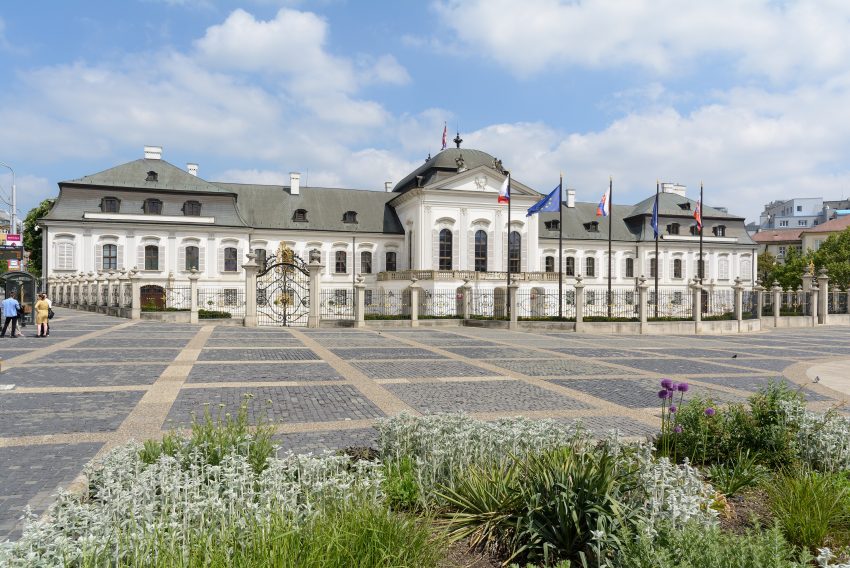
Grassalkovich Palace in Bratislava is a Rococo–late Baroque summer palace (completed in 1760 by András Mayerhoffer) that now serves as the official residence of Slovakia’s president, giving it a working-state, ceremonial feel. Built for Hungarian aristocrat Antal Grassalkovich, it once hosted Baroque-era society and even premieres of Joseph Haydn’s music. Visitors mostly experience it from outside: the formal gates and symmetrical façade on Hodžovo námestie, sometimes with guards adding quiet pageantry. The restored French-style garden behind the palace is open as a public park, a calm place for paths, fountains, and a statue of composer Jan Nepomuk Hummel. Reviews often mention how “presidential” it looks, especially in evening light.
Location: Hodžovo námestie 2978/1, 811 06 Bratislava-Staré Mesto, Slovakia | Hours: (Seasonal) March: 10:00–19:00; April – May: 08:00–20:00; June – September: 08:00–21:00. | Price: Free. | Website | Distance: 0.1km


Here is a complete selection of hotel options in Bratislava. Feel free to review each one and choose the stay that best suits your needs.

2. Obchodna Street

Obchodna Street
Obchodna Street
CC BY-SA 1.0 / David Castor
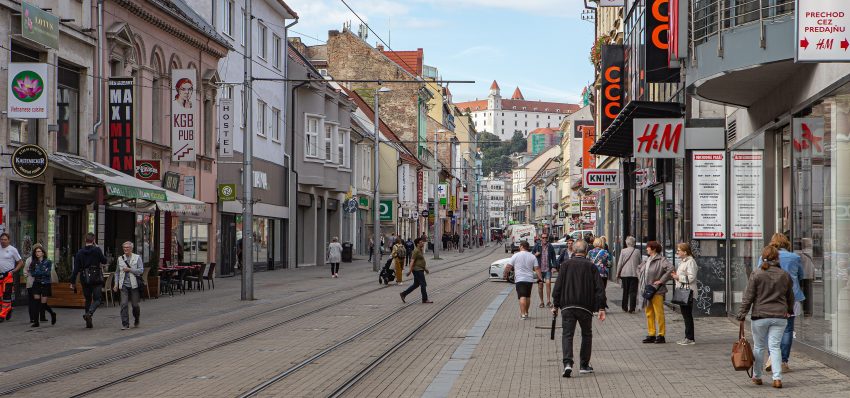
Obchodná Street is Bratislava’s main shopping thoroughfare, a busy 1-kilometer strip running from St. Michael’s Tower down to Kollárovo Square, just a short walk from the Old Town. It matters less for a single monument than for the city’s everyday pulse: commuters, students, and shoppers moving between storefronts, passages, and side streets like Vysoká, known for its cluster of restaurants. Many older buildings trace back to the 18th century, and the street’s role as a commercial hub intensified after World War I and again in the Communist era. By day it can feel gritty and practical, with ethnic shops and budget retail; by evening, pubs and bars bring a loud, youthful nightlife.
Location: Obchodná, 811 06 Bratislava-Staré Mesto, Slovakia | Hours: 24 Hours. | Price: Free. | Distance: 0.2km

Traveling to a country with a different currency? Avoid ATM transaction fees and pay in local currency with a Wise Card. Having used it for over 5 years, we've saved loads on fees!

3. Michael's Tower and Street

Michael’s Tower and Street
CC BY-SA 3.0 / Hiroki Ogawa
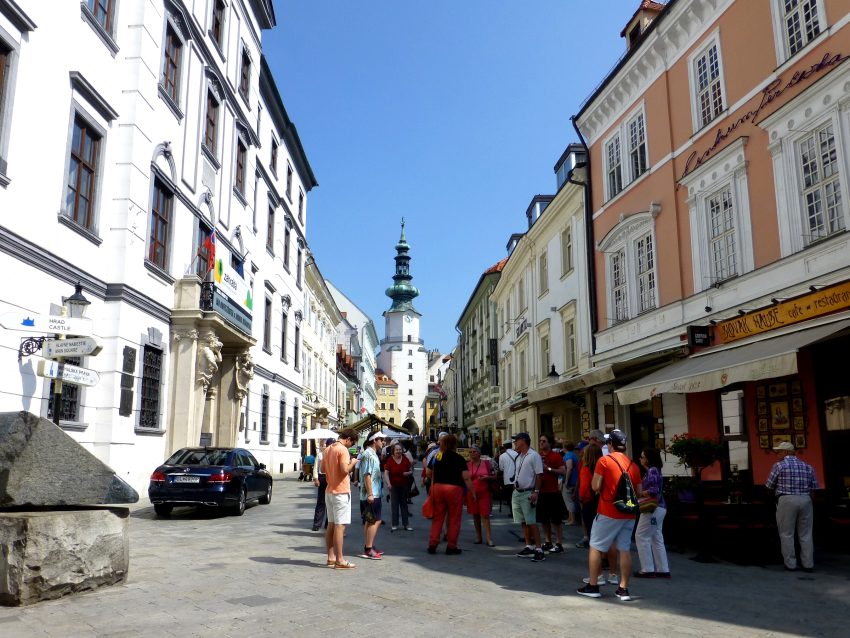
Michael’s Tower and Street in Bratislava, Slovakia, is the narrow cobbled approach to Michael’s Gate, the only surviving entrance from the city’s medieval walls. Built around 1300 and later reshaped in the 1750s, the 51‑meter, seven-floor tower wears a Baroque exterior topped by a statue of Saint Michael slaying the dragon. Passing under the gate hints at the former defenses—two rings of walls, bastions, a barbican now absorbed into nearby houses, and a moat once crossed by a bridge rebuilt in stone in 1727. Inside, the Museum of Arms leads you upward to a rooftop viewpoint with sweeping Old Town panoramas that visitors consistently single out as the best in town.
Location: Michalská 22, 811 01 Bratislava, Slovakia | Hours: Monday: 10:00–18:00. Tuesday: Closed. Wednesday: 10:00–18:00. Thursday: 10:00–18:00. Friday: 10:00–18:00. Saturday: 10:00–18:00. Sunday: 10:00–18:00. | Price: General admission: €6; Reduced (children 6–15, students, seniors): €4; Family ticket: €14 (2+3/2+2/2+1) or €8 (1+2/1+1); Children under 6: free. | Website | Distance: 0.3km

Explore Bratislava at your own pace with our self-guided walking tour! Follow our curated route to discover must-see sights and local secrets that makes Bratislava one of the best places to visit in Slovakia.

4. Primate's Palace

Primate’s Palace
Primate’s Palace
CC BY-SA 3.0 / LMih
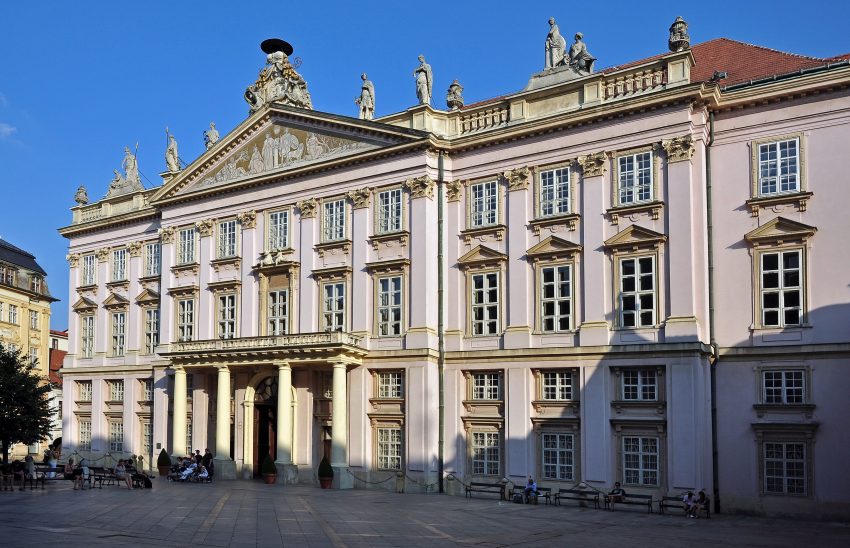
Primate’s Palace in Bratislava’s Old Town is an 18th-century baroque residence (built 1777–1781 to designs by Melchior Hefele) that now serves as the Mayor’s seat. Its importance is tied to European diplomacy: the 1805 Peace of Pressburg was signed here in the Hall of Mirrors, an event linked to the end of the Holy Roman Empire. Visitors who go inside remember that bright ceremonial hall, still used for city council meetings, and the nearby bust of Emperor Francis II marking the moment. During a major reconstruction after the city bought the palace in 1903, 17th-century tapestries were discovered hidden behind walls and are now displayed in gallery spaces.
Location: Primaciálne námestie 2, 811 01 Bratislava, Slovakia | Hours: Wednesday: 10:00–17:00. Thursday: 12:00–17:00. Saturday: 10:00–17:00. Sunday: 10:00–17:00. Closed on Monday, Tuesday, Friday. | Price: €3. | Website | Distance: 0.4km

5. Schone Naci Statue
Schone Naci Statue
Schone Naci Statue
CC BY-SA 3.0 / krysi@
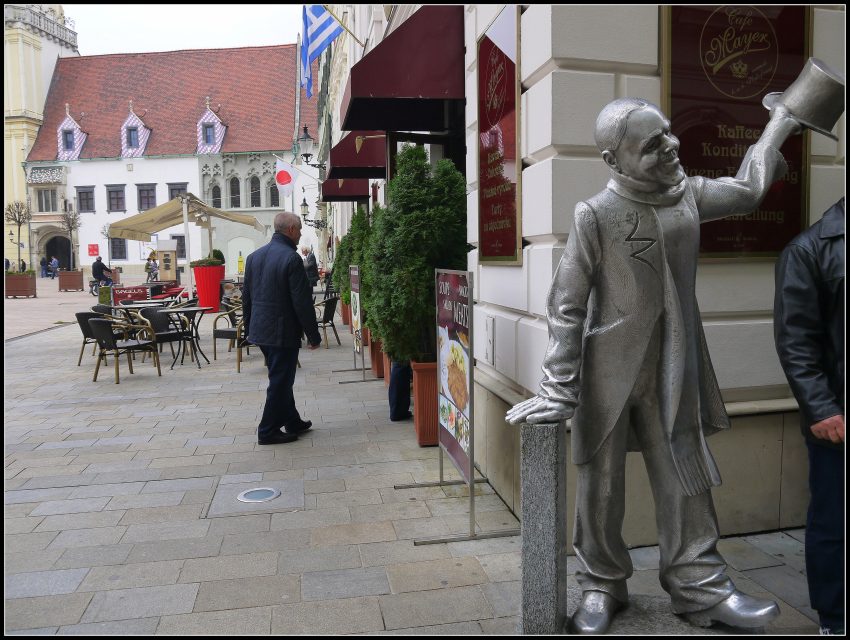
The Schone Naci Statue is a life-size bronze figure in Bratislava’s Old Town, capturing the city’s affection for its street characters. It depicts Ignác Lamár (born 1897), remembered for wandering the pedestrian lanes in top hat and tails despite having little money, greeting passersby with old-world courtesy. The sculpture shows him tipping his hat at street level, so visitors naturally step in close for photos and notice how it blends into everyday café-and-cobblestone scenery. Part of Bratislava’s cluster of playful bronze artworks, it turns a simple corner into a small, human moment—half greeting, half local legend.
Location: Rybárska brána 217/1, 811 01 Bratislava-Staré Mesto, Slovakia | Hours: 24 Hours. | Price: Free. | Distance: 0.5km

6. Napoleon's Army Soldier Statue
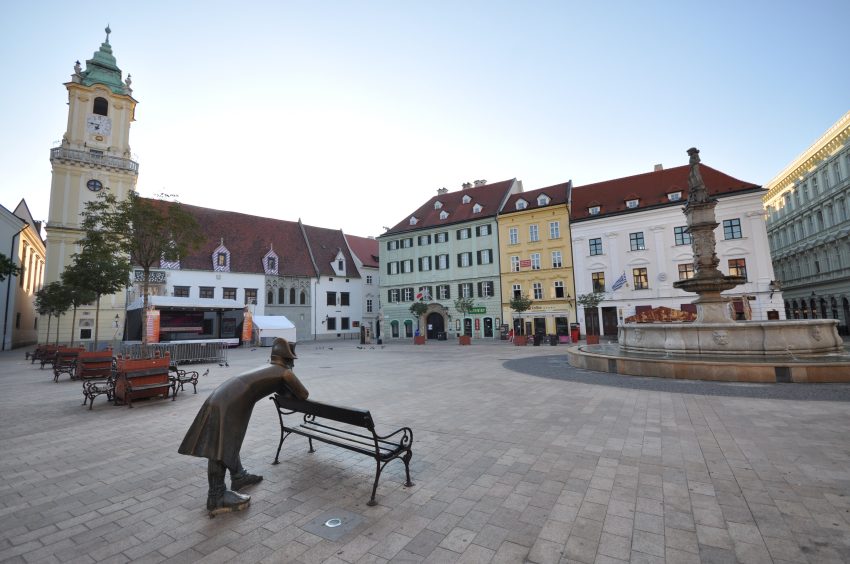
Napoleon’s Army Soldier Statue
CC BY-SA 2.0 / Jorge Láscar
Napoleon’s Army Soldier Statue is a playful bronze street sculpture in Bratislava’s Old Town, showing a Napoleonic-era soldier leaning with crossed arms against a park bench, ready to “share” a seat for photos. Created by sculptor Juraj Meliš, it commemorates two occasions when Napoleon’s troops entered the city in the 1800s, translating a big historical moment into something you can meet at street level. Visitors notice the French-style hat and the casual, slightly cheeky pose, which has spawned local stories—some romantic, some tongue-in-cheek—about a soldier who stayed behind. It’s part of a wider set of whimsical bronzes introduced to soften the city’s post-communist streetscape.
Location: Hlavné námestie 358/7, 811 01 Bratislava-Staré Mesto, Slovakia | Hours: 24 Hours. | Price: Free. | Distance: 0.5km

7. Old Town Hall
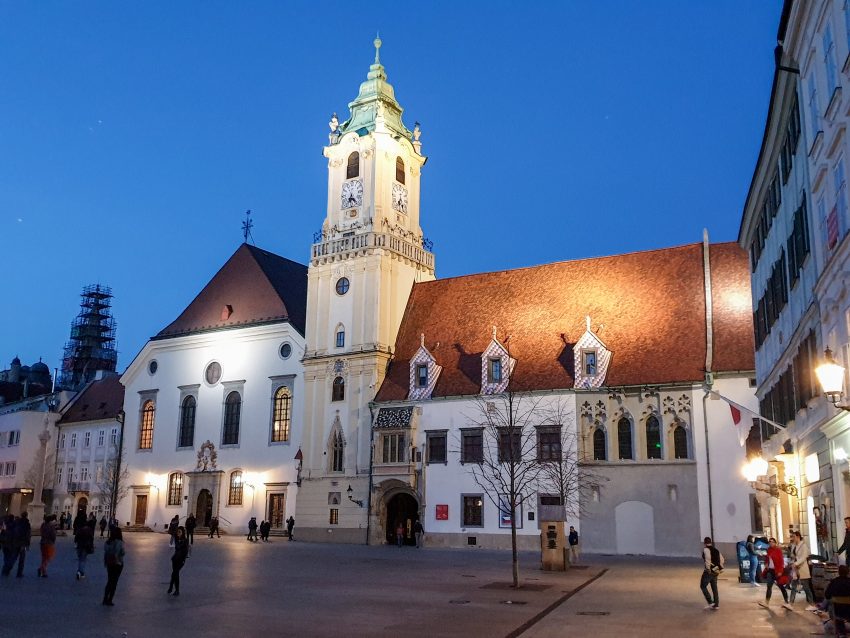
Old Town Hall
Old Town Hall
CC BY-SA 4.0 / Szilas
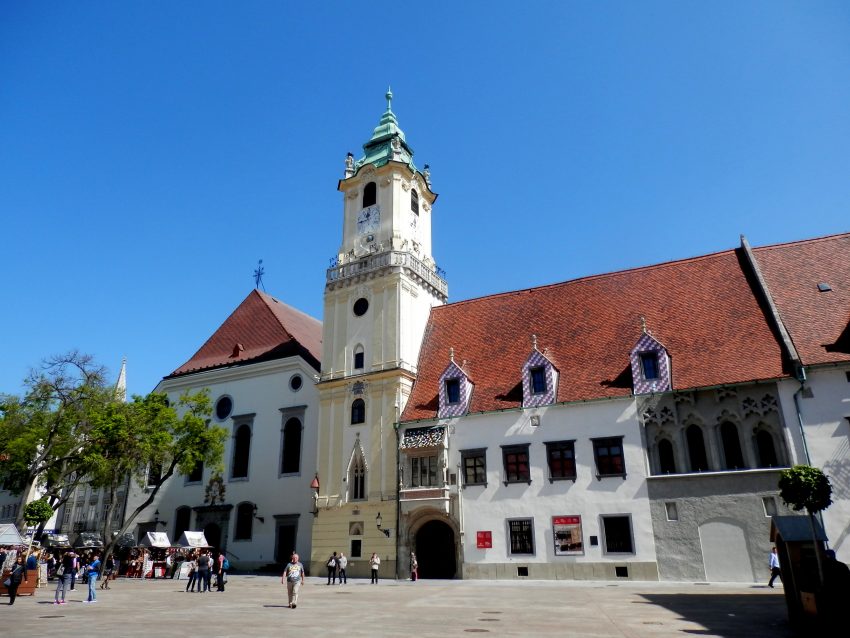
Bratislava’s Old Town Hall (Stará radnica) is a medieval complex of merged townhouses on the edge of the Main Square, long used as the city’s civic center. Built from the 14th century, its tower (c. 1370) is among the oldest stone structures in the capital, and the climb ends at a balcony with a full sweep of Old Town rooftops. Inside, the Bratislava City Museum leads you through former working spaces, including dungeons displaying torture devices alongside weapons, paintings, and miniatures. Look for the cannonball still lodged in the tower wall, left from Napoleon’s 1809 bombardment, and notice the patterned tiled roof that many visitors remember most.
Location: Hlavné námestie 501/1, 811 01 Bratislava-Staré Mesto, Slovakia | Hours: Tuesday – Sunday: 10:00–18:00. Closed on Monday. | Price: Adults: from €5; Reduced: from €1.30. | Website | Distance: 0.5km

8. Palace of Zichy
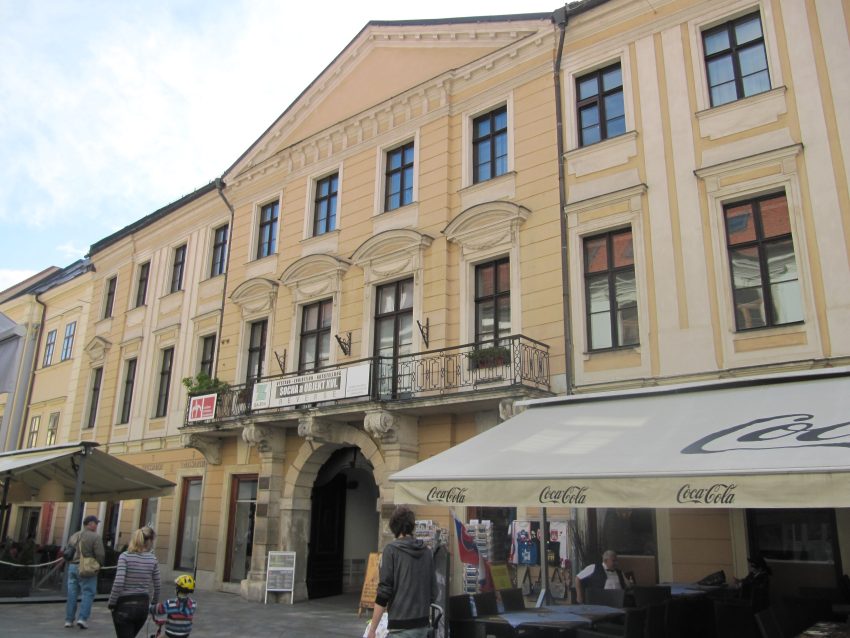
Palace of Zichy
Palace of Zichy
CC BY-SA 4.0 / Palickap
Palace of Zichy (Zičiho palác) is a late-18th-century aristocratic palace in Bratislava’s Old Town, now used as a cultural and civic venue rather than a sealed-off monument. Built around 1770–1780 for Count František Ziči after three medieval houses were cleared, it presents a restrained classicist façade while hiding more ornate interior touches shaped by later changes. Most visitors remember the large courtyard: a calm, slightly rustic space centered on a fountain topped by a lion sculpture with an open mouth. The building has been repeatedly remodeled, including a major 1980s reconstruction that adapted it for exhibitions, concerts, and wedding ceremonies in bright, modern rooms.
Location: 9, Ventúrska 265, 811 01 Bratislava-Staré Mesto, Slovakia | Hours: Tuesday – Sunday: 15:00–19:00. Closed on Monday. | Price: Free. | Website | Distance: 0.5km

9. Leopold de Pauli’s Palace
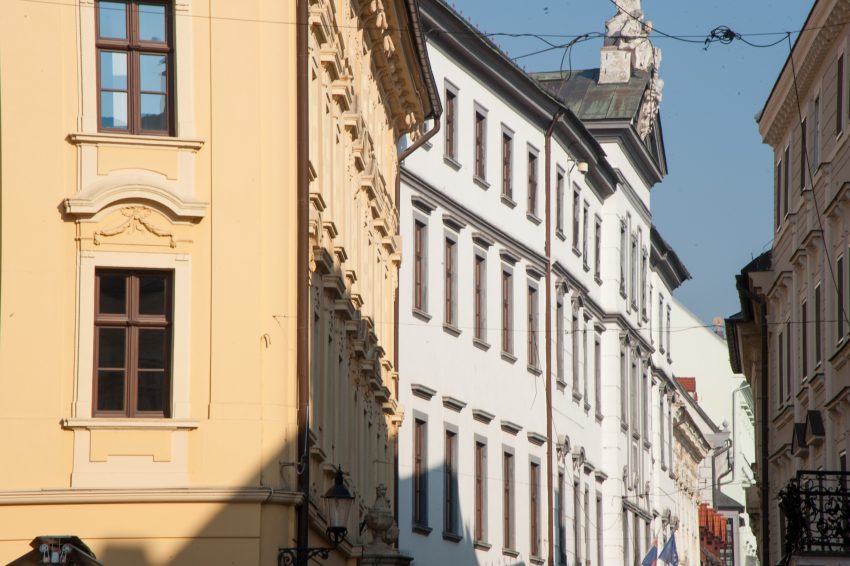
Leopold de Pauli’s Palace
CC BY-SA 4.0 / Mstyslav Chernov
Leopold de Pauli’s (Pállfy) Palace is a Baroque Old Town residence at 10 Ventúrska Street, now part of the Bratislava University Library. Built in 1747 for Count Leopold Pálffy, it still shows off a grand Kaiserstein limestone staircase and a portal carved with martial reliefs and trophy motifs. Inside the complex, visitors can spot inner loggias and, in the garden, a delicate Rococo music pavilion. Music lovers remember the site for performances here by the six-year-old Mozart in 1762 and by Franz Liszt in 1820, marked by a plaque. Even from outside, the façade and courtyard feel like a working cultural institution rather than a sealed museum piece.
Location: Ventúrska 263/11, 811 01 Bratislava-Staré Mesto, Slovakia | Hours: Monday: 12:00–21:00. Tuesday – Friday: 09:00–21:00. Saturday: 10:00–18:00. Closed on Sunday. | Price: Free. | Website | Distance: 0.5km

10. Hlavne Namestie
Hlavne Namestie
Hlavne Namestie
CC BY-SA 4.0 / Smiley.toerist
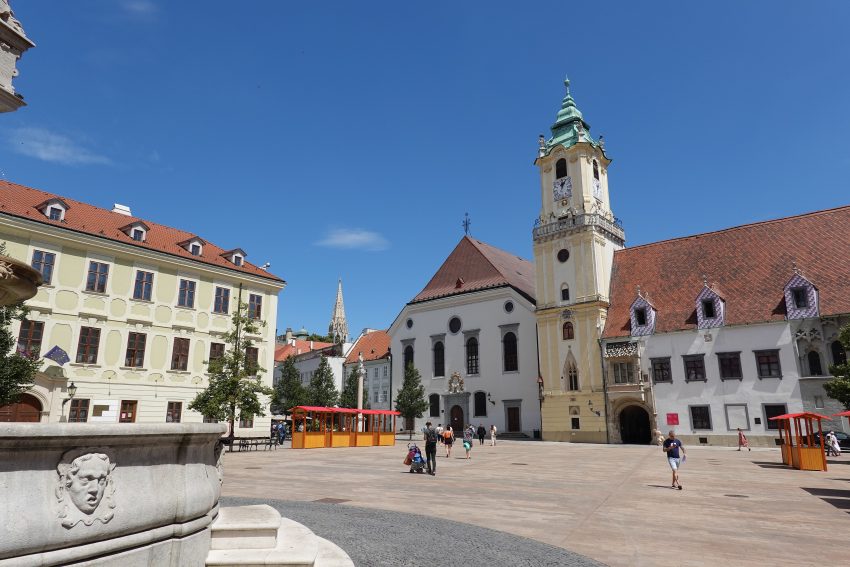
Hlavne Namestie (Main Square) is the compact, pedestrian center of Bratislava’s Old Town, a longtime civic gathering place where daily café life and city ceremonies have played out for centuries. Pastel façades ring the plaza, with terrace seating and a steady hum from restaurants, bars, and street activity. At its center stands the Maximilian Fountain, a natural meeting point and photo stop, while landmark buildings like the Old Town Hall (built in 1599 and now a city-history museum) anchor the square. Look for grand townhouses such as Kutscherfeldov Palace, Pawera House, and Ungerov Dom along the edges. In winter, the square fills with the Christmas fair—decorations, stalls, mulled wine, and Slovak snacks.
Location: Hlavné námestie, 811 01 Bratislava-Staré Mesto, Slovakia | Hours: 24 Hours. | Price: Free. | Distance: 0.5km

11. Bratislava City Museum
Bratislava City Museum
CC BY-SA 3.0 / Jozef Kotulič
Bratislava City Museum in Bratislava, Slovakia, is the country’s oldest continuously operating museum, founded in 1868 by the Pressburg Beautification Society and later brought under City Hall administration in 1923. Set within the Old Town Hall complex, it traces the city’s story from early beginnings through the 20th century, with collections that grew from citizen-donated pieces into archaeology, ethnography, fine arts, coins, and even historic pharmaceuticals. Visitors move through permanent exhibitions in atmospheric civic rooms, where English labels are often available, and some displays add small hands-on moments. Many people remember the climb up the tower for a clear, rooftop-level view over the Old Town.
Location: 1, Radničná 577, 811 01 Bratislava-Staré Mesto, Slovakia | Hours: Monday: Closed. Tuesday – Sunday: 10:00–18:00. | Price: Adults: €8; Concessions: €4; Family (2+3): €18; Family (1+2): €10; School group: €2 per person; Old Town Hall Tower: €4. | Website | Distance: 0.5km

12. Cumil Statue
Cumil Statue
Cumil Statue
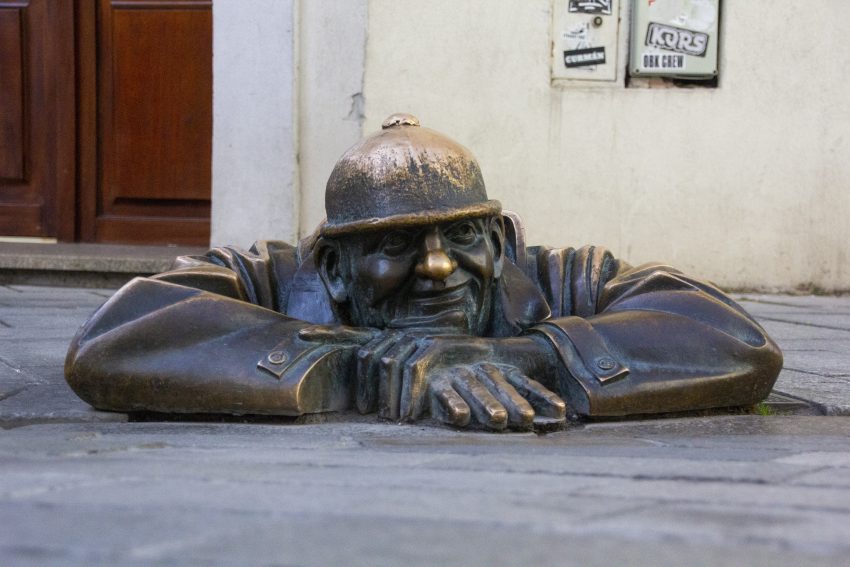
Čumil (often labeled “Man at Work”) is a cheeky bronze figure by sculptor Viktor Hulík, peering from a manhole at the corner of Panská and Rybárska Brána streets in Bratislava’s Old Town. It matters less as a monument than as a piece of post-1990s street art that signals the city’s playful, walkable public space. Visitors remember the low, street-level placement: you spot his grin in the cobblestones, then join the small crowd angling for the classic photo above the manhole cover. Kids often reach down to touch his head or pose close by, and a nearby “Man at Work” sign adds humor while warning traffic after past bumps. Local stories keep his purpose teasingly ambiguous.
Location: Panská 251/1, 811 01 Bratislava-Staré Mesto, Slovakia | Hours: 24 Hours. | Price: Free. | Distance: 0.6km

13. Old Slovak National Theater
Old Slovak National Theater
CC BY-SA 2.0 / Paul Korecky
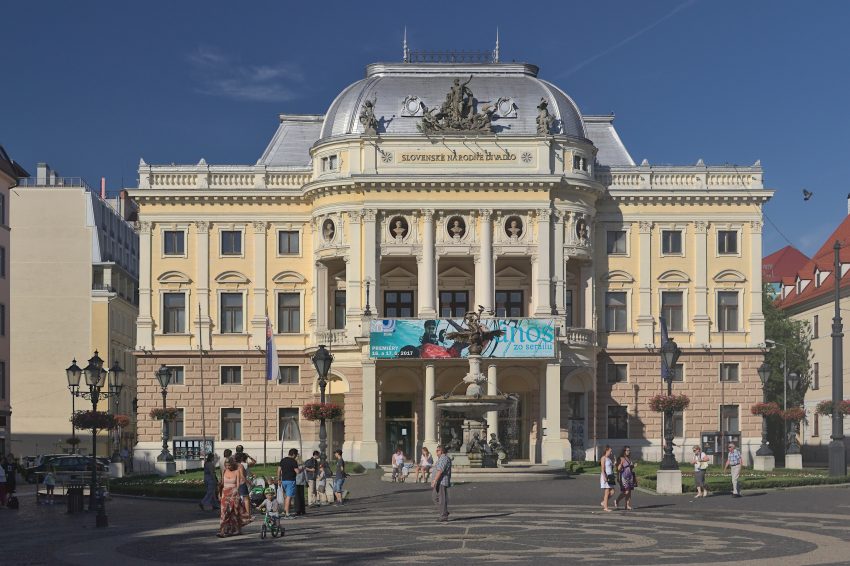
The Old Slovak National Theater is the historic Neo-Renaissance playhouse on Hviezdoslavovo Square in Bratislava’s Old Town, a working venue for drama, opera, and ballet that still sets a formal tone for the boulevard. The building was designed by Viennese architects Fellner & Helmer and opened on 22 September 1886 with Ferenc Erkel’s opera Bánk bán, conducted by the composer as Hungary’s prime minister and cabinet looked on. Outside, the Ganymede fountain (added in 1888 by sculptor Viktor Oskar Tilgner) creates a ready-made foreground for photos, especially when the façade lights up at dusk. Inside, renovations in 1969–1972 added modern backstage facilities behind the original structure.
Location: Gorkého 2, 811 01 Bratislava, Slovakia | Hours: Check official website. | Price: Prices vary by show. | Website | Distance: 0.6km

14. Johann Pálffy Palace
Johann Pálffy Palace
CC BY-SA 3.0 / JoJan
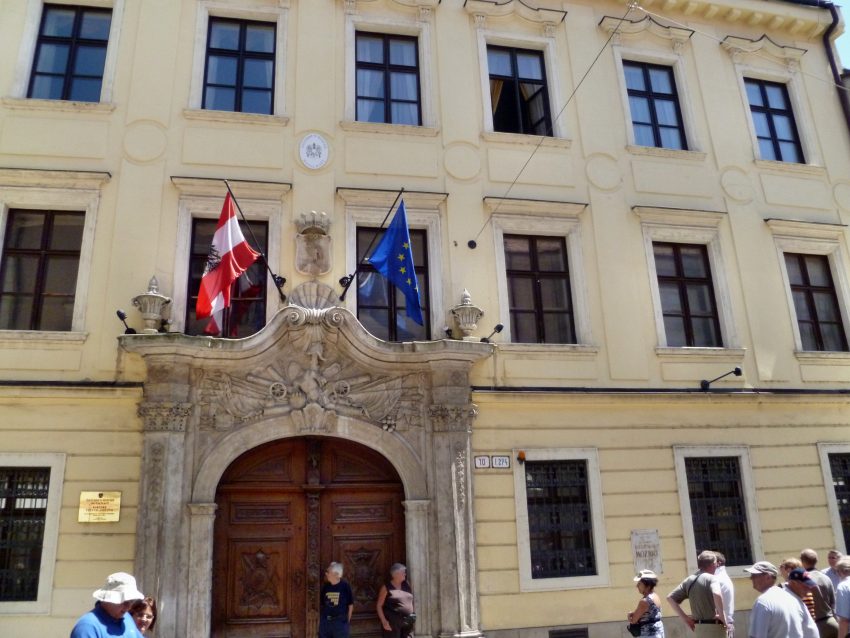
Johann Pálffy Palace is a late-Classicist aristocratic residence on Panská Street in Bratislava’s Old Town, now a main venue of the Bratislava City Gallery. Built in the 18th century for Count Leopold Pálffy, it later took on unexpected roles, including a government mint and even a setting for one of Mozart’s early concerts. Excavations beneath the building uncovered traces of a Gothic structure plus Roman and Celtic finds, tying the site to much older layers of the city. Inside, galleries spread across several levels show everything from Dutch and Flemish masters such as Rembrandt and Rubens to a small oak “Madonna and Child” carving dated to the late 1200s. The quiet courtyard is open to the public for a brief pause.
Location: Panská 19, 811 01 Bratislava, Slovakia | Hours: Monday: Closed. Tuesday – Sunday: 11:00–18:00. | Price: Adults: €8 (Mirbach Palace or Pálffy Palace); €10 (Mirbach Palace & Pálffy Palace); Under 18: free. | Website | Distance: 0.6km

15. Academia Istropolitana
Academia Istropolitana
CC BY-SA 3.0 / JoJan
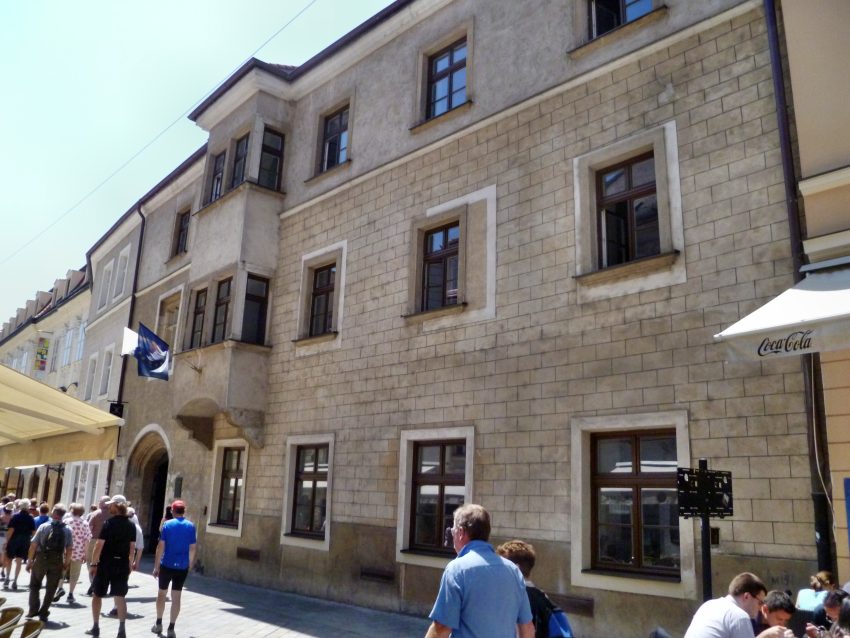
Academia Istropolitana on Ventúrska Street is the surviving home of Universitas Istropolitana, the first university founded in what is now Slovakia, established in 1465 when Pope Paul II approved King Matthias Corvinus’s plan for a center of Renaissance learning. The school lasted only until around 1490, after Corvinus’s death, but the building remains a tangible marker of Bratislava’s brief academic moment. Look for the late-Gothic/Renaissance fabric—stone portals, layered façades, and small passages that reward a slow glance from the street. Its faculty roster once included figures like mathematician-astronomer Regiomontanus and humanist Galeotto Marzio, and today the complex is used by the Academy of Performing Arts. Visitors often describe it simply as a “historic piece of the city.”
Location: Ventúrska 3, 811 01 Bratislava-Staré Mesto, Slovakia | Hours: 24 Hours. | Price: Free. | Website | Distance: 0.6km

16. Palace of Erdody
Palace of Erdody
Palace of Erdody
Public Domain / Wizzard
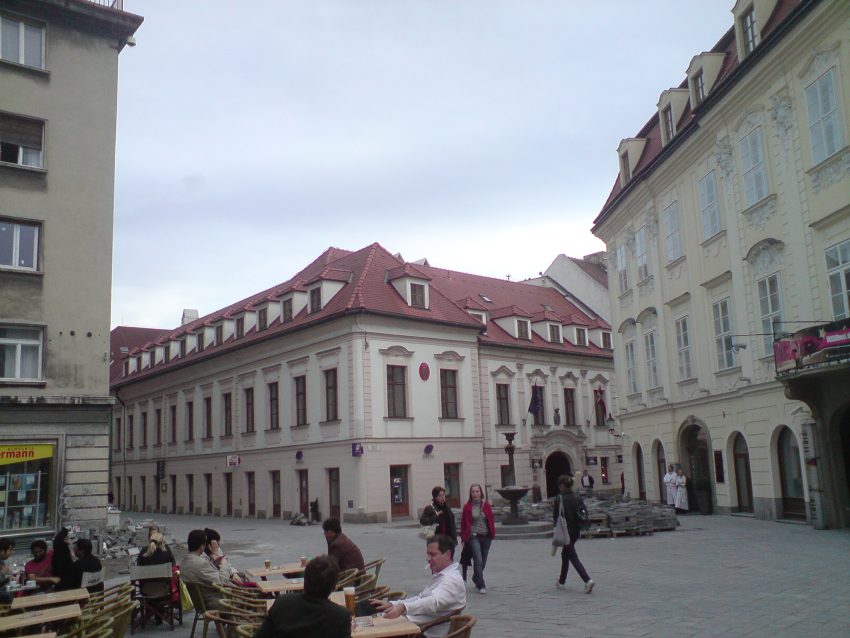
The Palace of Erdödy is a Rococo-era city palace on Ventúrska Street in Bratislava’s Old Town, built in 1770 by Mathew Walch from what had been four separate houses. It became the residence of Count George Leopold Erdödy—head of the Hungarian Royal Chamber—and was later reshaped in the 19th century for his son, Jan Nepomuk Erdödy. Look for the multi-wing layout gathered around a large central courtyard, and the vaulted interiors decorated with Rococo stucco (even if you’re mostly viewing from outside). A fourth floor was added in the early 1900s, and today the historic shell is filled with upscale cafés, shops, and boutiques; people often linger nearby to sit and relax.
Location: Ventúrska 269/1, 811 01 Bratislava-Staré Mesto, Slovakia | Hours: 24 Hours. | Price: Free. | Distance: 0.6km

17. Museum of History

Museum of History
Museum of History
CC BY-SA 3.0 / Frettie
The Museum of History sits inside Bratislava Castle on Castle Hill, using the former stronghold itself to frame Slovakia’s story from the Middle Ages to modern times. Galleries move through collections of period furniture, ethnographic objects, weapons, and economic and art material, with an especially strong numismatic display tracing changing currencies. On the third floor, visitors linger over a replica of the Hungarian Crown Jewels and coronation medals, alongside jewelry and silver treasures. The building’s mix of Gothic and Renaissance structure with Baroque interiors is part of the experience, and climbing the towers adds sweeping Danube-and-city views. Reviews often note the bright, well-kept rooms and the depth of the WWII section.
Location: Zámocká, 811 01 Bratislava-Hrad, Slovakia | Hours: Monday: 10:00–18:00. Wednesday: 10:00–18:00. Thursday: 10:00–18:00. Friday: 10:00–18:00. Saturday: 10:00–18:00. Sunday: 10:00–18:00. Closed on Tuesday. | Price: Adults: €14; Students: €7; Seniors (65–69): €8; Seniors 70+ & children under 6: free. | Website | Distance: 0.7km

18. Hviezdoslav Square

Hviezdoslav Square
Hviezdoslav Square
CC BY-SA 4.0 / Txllxt TxllxT
Hviezdoslav Square (Hviezdoslavovo námestie) is Bratislava’s broad, tree-filled pedestrian promenade at the edge of the Old Town, long used as a daily meeting place and civic stage. Recently renovated from a park-like space into a more formal boulevard, it’s lined with terraces, quiet green patches, and embassies, with the national opera house and other major institutions close by. The statue of its namesake, poet and dramatist Pavol Országh Hviezdoslav (born 1849), anchors the square and gives it a distinctly Slovak tone. In winter, a smaller Christmas market often appears here, and street performers and evening lighting make the walk feel especially atmospheric.
Location: 811 02 Bratislava-Old Town, Slovakia | Hours: 24 Hours. | Price: Free. | Distance: 0.7km

19. St. Martin's Cathedral

St. Martin’s Cathedral
CC BY-SA 3.0 / Lure
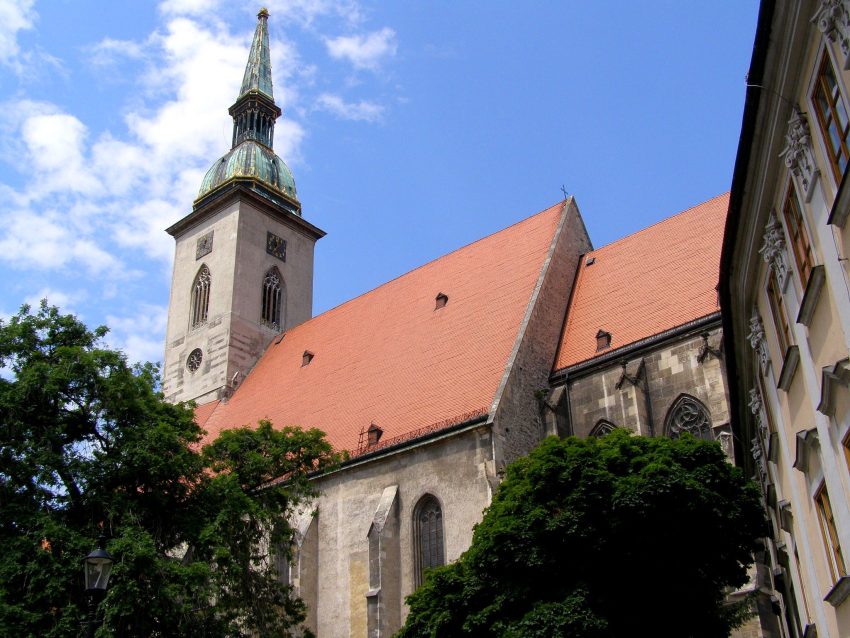
St. Martin’s Cathedral is a Gothic church on the edge of Bratislava’s Old Town, tucked below the castle hill, with a tall buttressed silhouette that photographs well from the narrow lanes and the small square outside. Construction began in 1311 and dragged on until 1452, slowed by money troubles and the Hussite Wars, with later Baroque-era additions and major 19th-century restoration after earthquakes, fires, and war damage. From 1563 it became the coronation church of the Kingdom of Hungary, where 11 monarchs and queens and eight consorts were crowned. A gold-plated, 150‑kg replica of Saint Stephen’s Crown sits atop the tower, a detail many visitors remember even if they only circle the exterior.
Location: Rudnayovo námestie 1, 811 01 Bratislava-Staré Mesto, Slovakia | Hours: Monday – Friday: 09:00–11:30 & 13:00–18:00. Saturday: 09:00–11:30. Sunday: 13:45–16:30. | Price: Free; donations appreciated. | Website | Distance: 0.7km

20. Slovak Radio Building
Slovak Radio Building
CC BY-SA 4.0 / Juandev
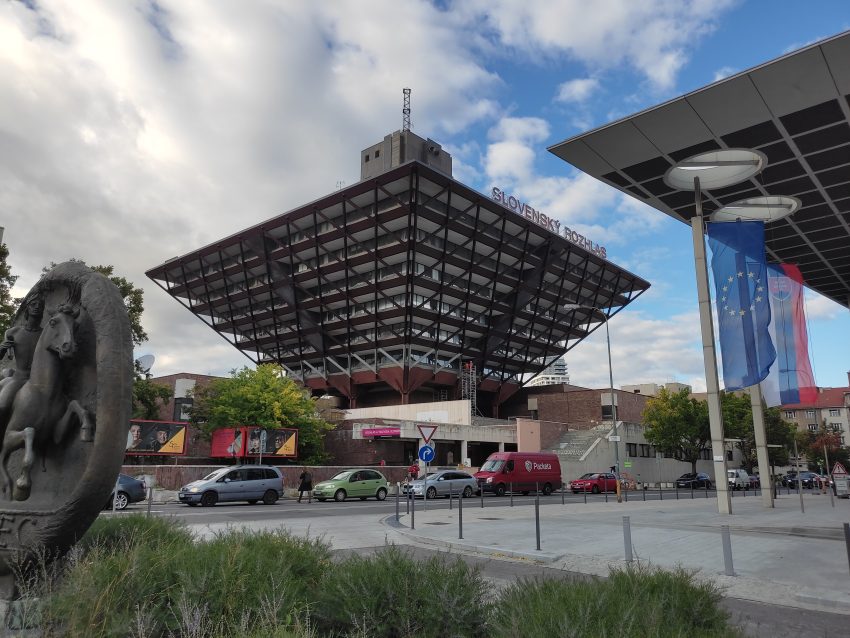
The Slovak Radio Building in Bratislava is a late-modernist broadcasting headquarters defined by its upside-down pyramid form, completed in 1983 after construction began in 1967. Designed by Štefan Svetko, Štefan Ďurkovič, and Barnabáš Kissling, it broke with the era’s expected socialist-realist look and used one of Slovakia’s first major steel-frame structures—an ambitious choice at the time. From street level, visitors remember the way the heavy mass seems to hover above the base, rewarding a slow walk around for shifting angles and bold photos, especially near dusk. Inside, when accessible, the scale continues in a 522-seat concert hall with a large organ, linking the building’s sculptural exterior to live sound and recording.
Location: 1, Mýtna 2826, 811 07 Bratislava-Staré Mesto, Slovakia | Hours: Check official website. | Price: Free (exterior); prices vary by event. | Website | Distance: 0.8km

21. New Bridge and UFO Observation Deck
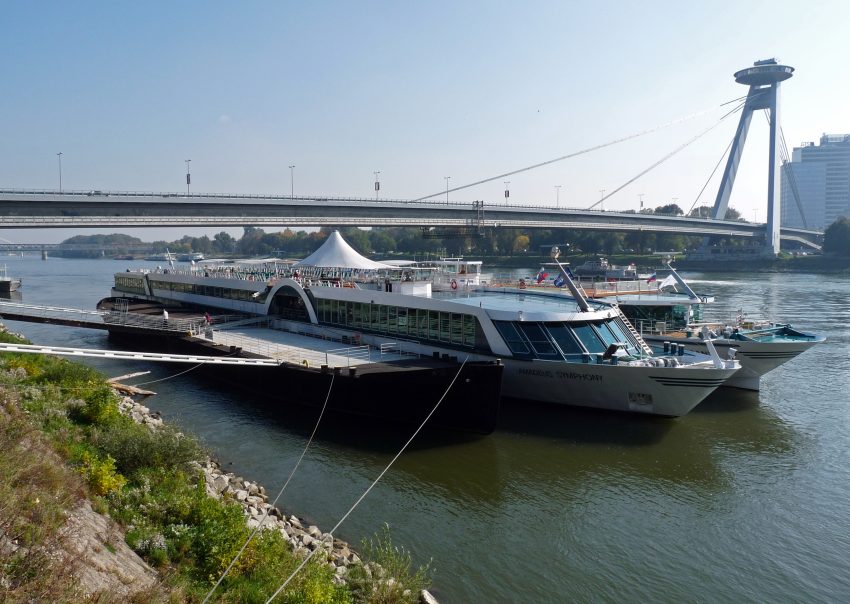
New Bridge and UFO Observation Deck
CC BY-SA 2.0 / ksills
Bratislava’s New Bridge (Nový Most), officially the Bridge of the Slovak National Uprising, spans the Danube and stitches the Old Town bank to Petržalka with a stark, modern silhouette. Built from 1967–1972, it’s an asymmetrical steel cable-stayed bridge—unusually supported by a single pylon and one plane of cables. Atop the 84.6-meter pylon sits the saucer-like “UFO,” a restaurant and observation deck that locals use as the bridge’s nickname. An elevator rises to the deck, where the city’s layout snaps into focus: castle hill, tight rooftops, and the Danube bending away toward the borders. Down below, pedestrian and bike levels make the crossing feel surprisingly calm above the water.
Location: Most SNP, 851 01 Bratislava, Slovakia | Hours: Monday – Sunday: 10:00–23:00. | Price: Check official website. | Website | Distance: 0.8km

22. Bratislava Transport Museum
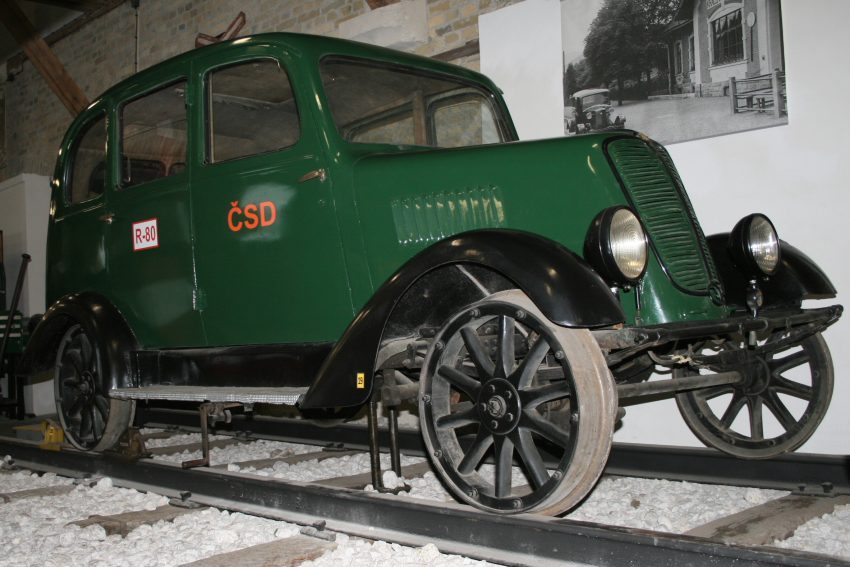
Bratislava Transport Museum
Public Domain / Rios
Bratislava Transport Museum (Múzeum dopravy) is a focused look at how mobility shaped the city, set inside Bratislava’s first steam railway station, with today’s main station close by. Opened in 1999 through a partnership of rail and motoring groups, it traces transport technology from human-powered bikes to motor cars and steam-era rolling stock. Exhibits are arranged in themed halls—think man-powered vehicles, early automobiles, and locomotive-era engineering—plus an exterior platform where the larger pieces feel most at home. The mix of mechanical equipment and vintage design details makes the evolution of everyday travel easy to grasp. Visitors often remember the dense, hands-on feel of the two main halls and the station-like atmosphere.
Location: Šancová 6419/1B, 811 05 Bratislava, Slovakia | Hours: Tuesday – Sunday: 10:00–17:00. Closed on Monday. | Price: Adults: €8; Family ticket: €18. | Website | Distance: 0.9km

23. Slovak National Museum
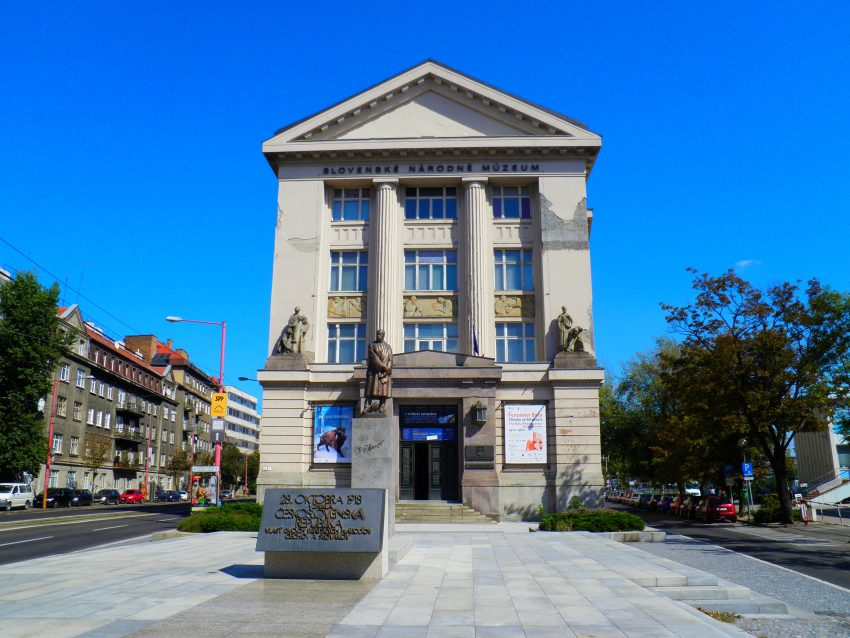
Slovak National Museum
CC BY-SA 3.0 / Mister No
The Slovak National Museum in Bratislava is Slovakia’s flagship museum institution, headquartered in a 1930 riverside building on the right bank of the Danube designed by M. M. Harminc. Founded in 1961, it anchors a nationwide network of 18 specialized museums and safeguards more than 3.5 million objects, from archaeological and numismatic finds to ethnography, crafts, and natural-science collections. Visitors often remember the neoclassical façade and the lion statue at the entrance before moving through multi-floor galleries that can range from human evolution and animals to minerals and “treasures of the earth.” It’s an easy, absorbing indoor stop when you want a clear sense of how Slovakia’s landscapes and history intersect.
Location: Vajanského nábrežie 2, 810 06 Bratislava-Staré Mesto, Slovakia | Hours: Tuesday – Sunday: 09:00–17:00. Closed on Monday. | Price: Adults: €6; Seniors, students, pupils: €3; Family (1 adult + 2 children): €9; Family (2 adults + 3 children): €15; Children under 6: free. | Website | Distance: 0.9km

24. Slovak National Gallery
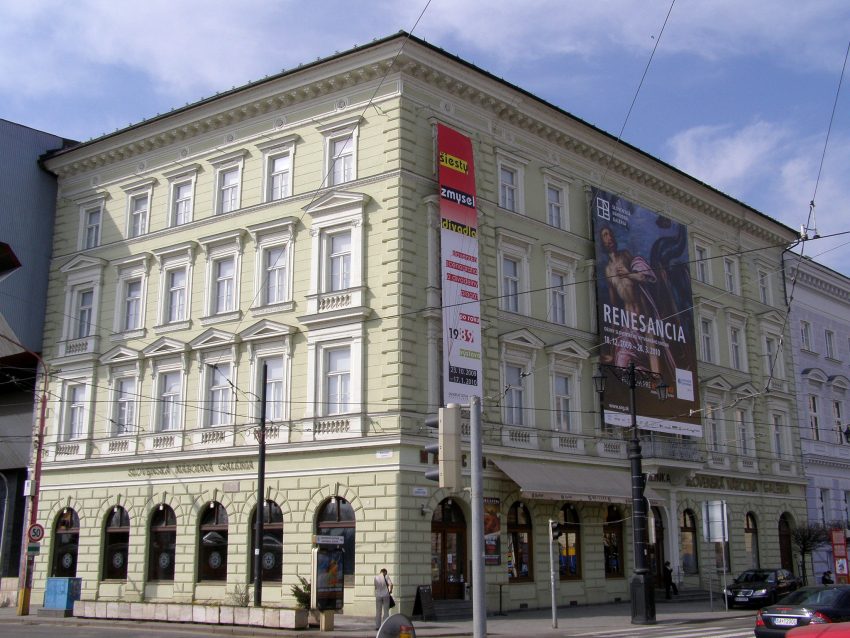
Slovak National Gallery
CC BY-SA 3.0 / Lure
The Slovak National Gallery in Bratislava is the country’s central state art institution, founded in 1949 to collect and interpret Slovak visual culture in a wider Central European frame. Its main home sits on the Danube riverfront in the historic Esterházy Palace and the adjacent Water Barracks, where Neo‑Renaissance grandeur meets later modern additions. Visitors tend to remember the imposing lion statues at the entrance and the way the complex shifts between courtyards, bridges, and calm, spacious interiors. Exhibitions move from modern Slovak art to sacred, biblically themed works, with clear, readable displays. Many travelers note that the architecture itself feels like part of the collection.
Location: Rázusovo nábrežie 2, 811 02 Bratislava, Slovakia | Hours: Monday: Closed. Tuesday: 10:00–18:00. Wednesday: 10:00–18:00. Thursday: 12:00–20:00. Friday: 10:00–18:00. Saturday: 10:00–18:00. Sunday: 10:00–18:00. | Price: Check official website. | Website | Distance: 0.9km

25. Blue Church
Blue Church
Blue Church
CC BY-SA 2.0 / Thomas Ledl
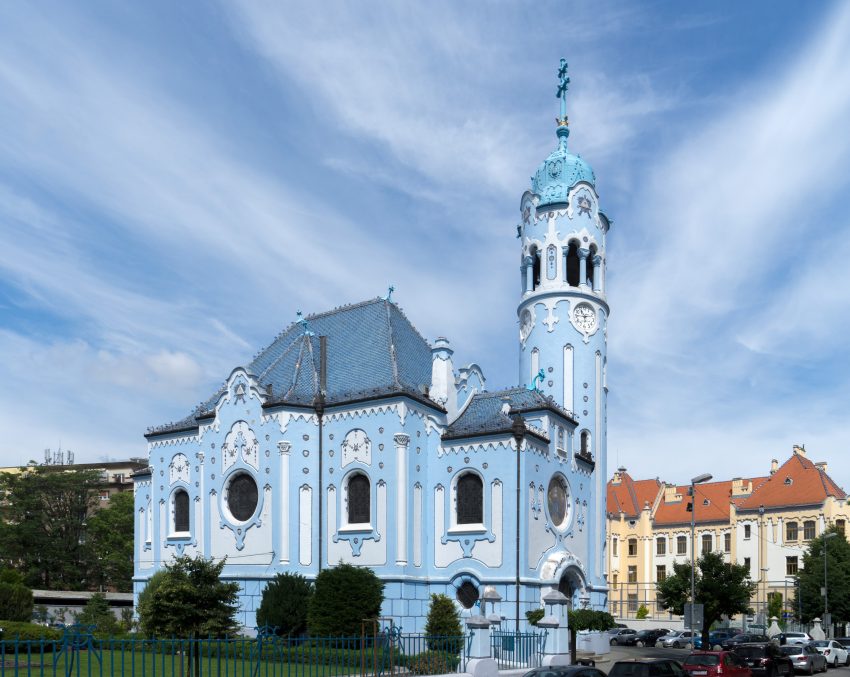
Bratislava’s Blue Church, officially the Church of St. Elizabeth, is a Hungarian Secession (Art Nouveau) Catholic church consecrated in 1908 and dedicated to Elisabeth of Hungary. Designed by architect Ödön Lechner, it’s remembered for its cohesive pastel-blue palette and the Zsolnay-patterned roof tiles made with durable pyrogranite, giving the mosaics their crisp color and texture. Outside, visitors linger over the rounded façade, blue benches, and the cylindrical tower topped by a bell dome, details that make it feel more like decorative art than a typical parish church. The interior is quieter and simpler, with a single nave, vaulted ceilings, and Romanesque-style double pillars framing doors and windows. Many travelers describe it as a fairytale building—or even a frosted cake.
Location: Bezručova 2, 811 09 Bratislava, Slovakia | Hours: Monday – Wednesday: 06:30–07:30. Thursday – Friday: 17:30–19:00. Saturday: 06:30–07:30. Sunday: 07:30–11:00 & 17:30–19:00. | Price: Free. | Website | Distance: 0.9km

26. Bratislava Castle
Bratislava Castle
Bratislava Castle
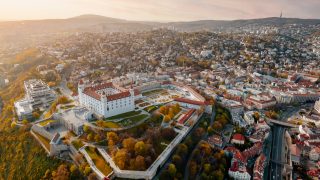
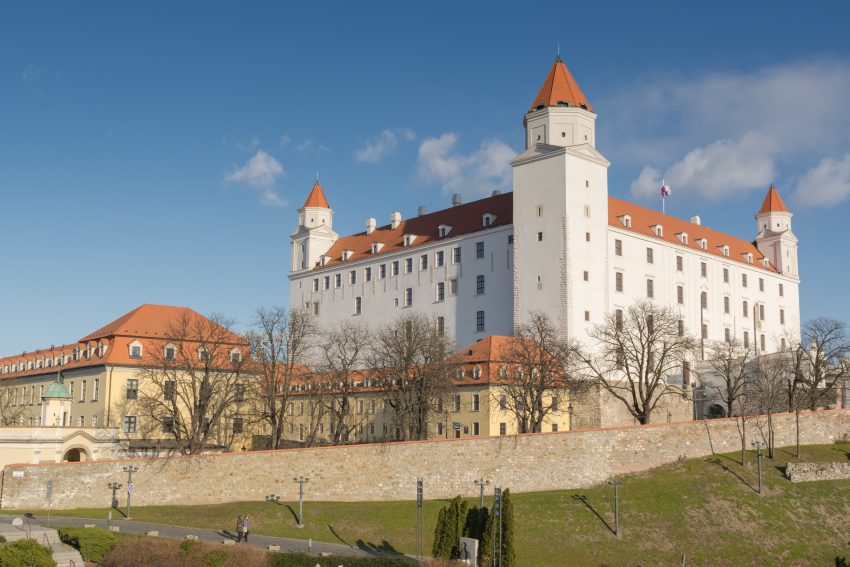
Bratislava Castle is a restored hilltop fortress in Bratislava, Slovakia, set on a rocky rise above the Danube and visible across much of the Old Town by its bright, four-towered silhouette. Built and rebuilt from the 9th to 18th centuries, the site mattered for controlling a key Danube crossing on the route between the Carpathians and the Alps, and the hill has evidence of settlement reaching back to around 3,500 BC, with Celtic and Roman traces. After the Kingdom of Hungary ended in 1781, the complex was stripped and later served as a seminary and military barracks before falling into ruin. A major restoration (1957–1968) returned it to prominence; today, visitors remember the sweeping river-and-rooftop views from the terraces and the Slovak National Museum exhibitions inside.
Location: 811 06 Bratislava-Old Town, Slovakia | Hours: Monday: 10:00–18:00. Tuesday: Closed. Wednesday: 10:00–18:00. Thursday: 10:00–18:00. Friday: 10:00–18:00. Saturday: 10:00–18:00. Sunday: 10:00–18:00. | Price: Adults: €14; Students/Children: €7; Seniors (65–69): €8; Seniors 70+ & children under 6: free. | Website | Distance: 0.9km

27. Archaeological Museum
Archaeological Museum
All Rights Reserved / www.visitbratislava.com
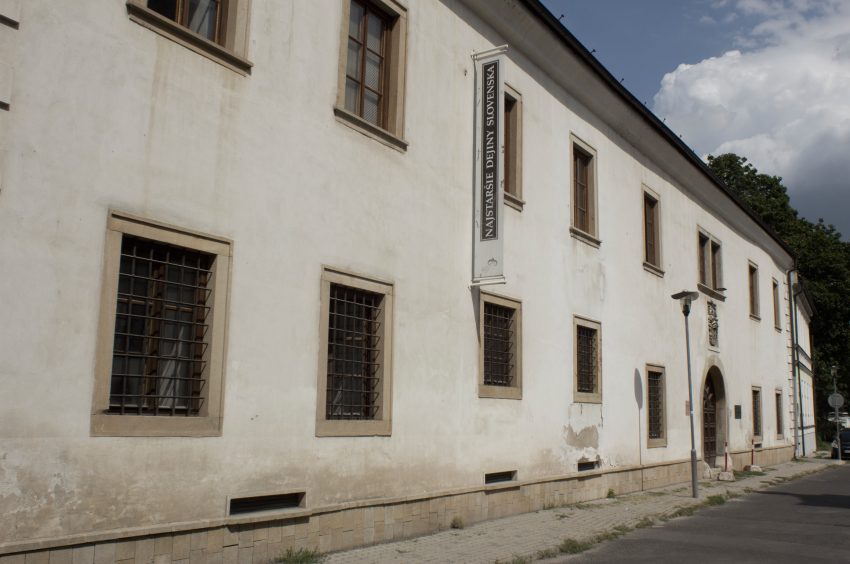
Bratislava’s Archaeological Museum, a branch of the Slovak National Museum, traces life in Slovakia from prehistory through the Middle Ages through objects recovered across the country. It occupies the Kamper Mansion (built in 1601), and the building itself is part of the experience—Renaissance proportions, four wings over two floors, and remnants of a former moat and drawbridge. Inside, you’ll see dense displays drawn from a collection of more than 136,000 artifacts, including clay vessels, metalwork, glass, and wood. The popular “Treasures of Slovakia’s Distant Past” exhibition is especially memorable for showing how materials and craftsmanship changed over time, grounding the old stones of the city in everyday human detail.
Location: Žižkova 12, 811 02 Bratislava-Staré Mesto, Slovakia | Hours: Tuesday – Sunday: 10:00–17:00. Closed on Monday. | Price: Adults: €6; Reduced: €3; Small family (1 parent + max. 2 children): €8; Large family (2 parents + max. 4 children): €14. | Website | Distance: 1.1km

28. Slovak National Theater
Slovak National Theater
CC BY-SA 3.0 / Mister No
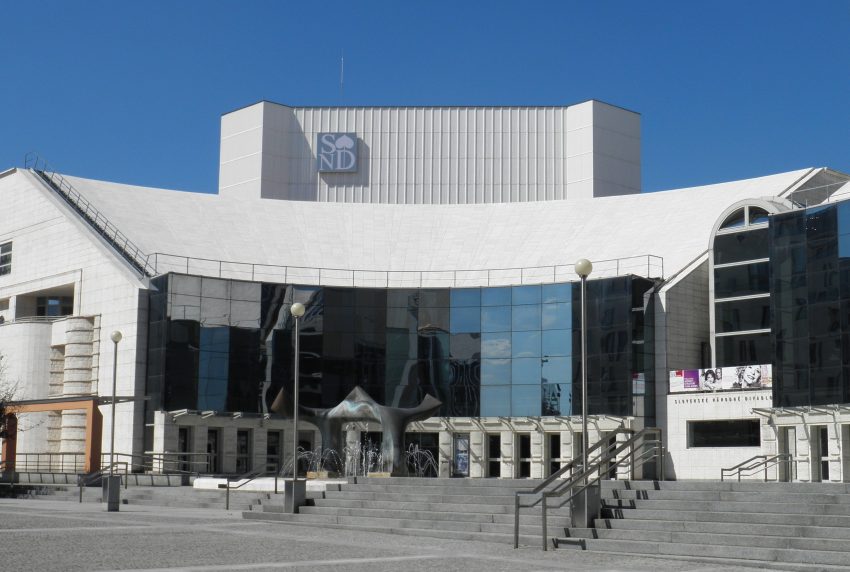
The Slovak National Theater is Bratislava’s main stage for opera, ballet, and drama, rooted in the country’s professional theater tradition since 1918. It spans two contrasting venues: the 1885–86 Neo-Renaissance historic theater on Hviezdoslav Square, designed by Fellner & Helmer, with ornate painted interiors and the Ganymede fountain (1888) out front. A 1969–72 restoration modernized the tech while keeping period character, including a chandelier built for varied lighting effects. The newer complex on Pribinova Street, opened in 2007 after a long build, seats about 1,700 and pairs performances with a contemporary setting of fountains and sculptures near the Danube.
Location: Pribinova 17, 819 01 Bratislava, Slovakia | Hours: Check official website. | Price: Prices vary by show. | Website | Distance: 1.4km

Best Day Trips from Bratislava

A day trip from Bratislava offers the perfect opportunity to escape the urban rhythm and discover the surrounding region's charm. Whether you're drawn to scenic countryside, historic villages, or cultural landmarks, the area around Bratislava provides a variety of easy-to-reach destinations ideal for a one-day itinerary.

1. Devin Castle and Fortress
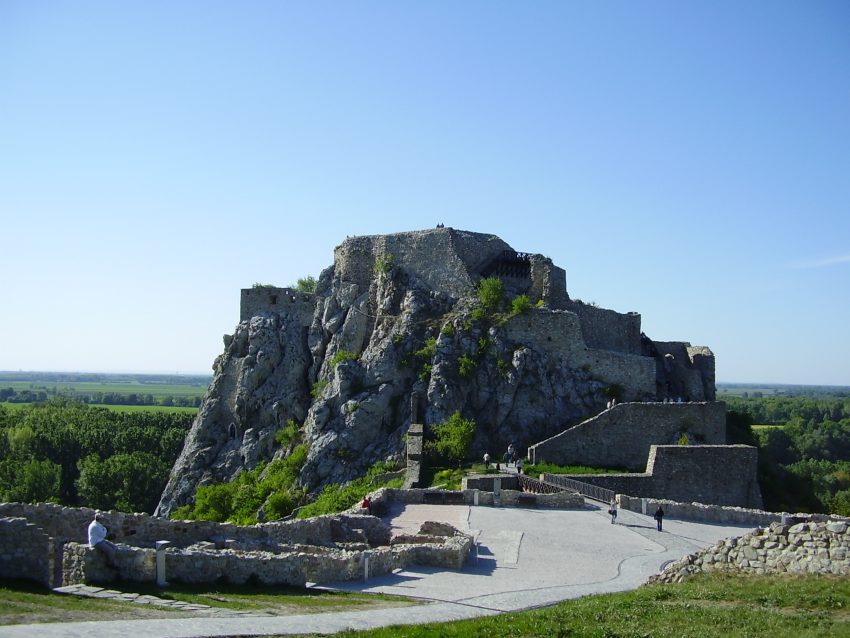
Devin Castle and Fortress
CC BY-SA 2.0 / Marzper
Perched high above the confluence of the Danube and Morava rivers, Devin Castle and Fortress is Bratislava’s most dramatic ruin: a wind-swept limestone crag crowned with towers, walls, and lookout points that feel made for panoramic photos.It’s an easy add-on to a Bratislava itinerary, whether you join a walking tour that frames the city’s borderland history or you simply come…
Location: Muránska 10, 841 10 Bratislava-Devín, Slovakia | Hours: (Summer) April – May: Tuesday – Sunday: 10:00–18:00; Closed on Monday. (Summer) June – August: Tuesday – Sunday: 10:00–19:00; Closed on Monday. (Summer) September: Tuesday – Sunday: 10:00–18:00; Closed on Monday. (Summer) October: Tuesday – Sunday: 10:00–17:00; Closed on Monday. (Winter) November – February: Tuesday – Sunday: 10:00–16:00; Closed on Monday. (Winter) March: Tuesday – Sunday: 10:00–17:00; Closed on Monday. | Price: Adults: €8 (April – October) / €6 (November – March); Concessions: €4 / €3; Family: €18 / €14 (2 adults + 3 children) or €10 / €8 (1 adult + 2 children); Under 6: free. | Website | Distance: 9.9km
Visiting Devin Castle and Fortress

2. Vienna
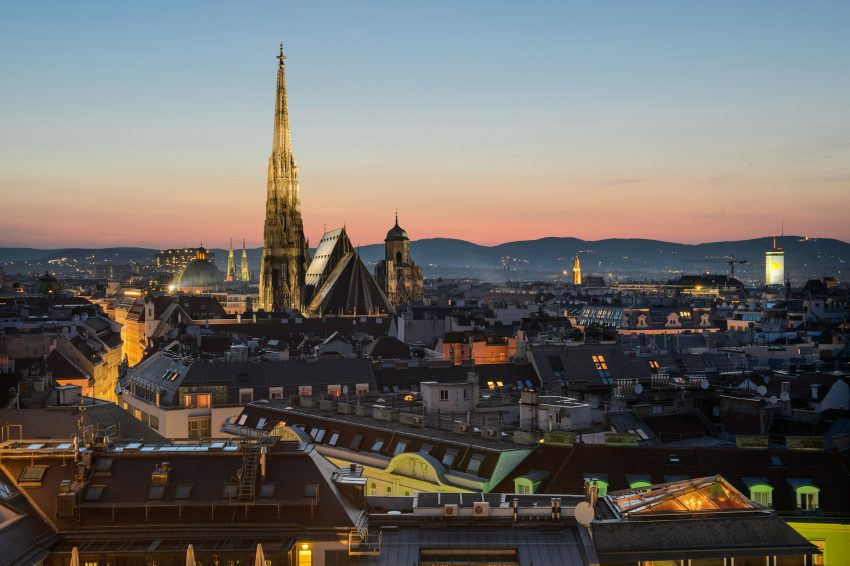
The Complete Guide to Vienna
Vienna is a grand, walkable capital where imperial architecture, coffeehouse culture, and contemporary creativity sit side by side. Set in northeastern Austria along the Danube, the city is easy to navigate by tram and U-Bahn, with distinct neighborhoods that shift quickly from palace-lined boulevards to lively local markets and vineyard-dotted hills on the edge of town. A visit to Vienna…
Visiting Vienna
Powered by GetYourGuide

3. Eisenstadt

The Complete Guide to Eisenstadt
CC BY-SA 2.0 / Leonhard Niederwimmer
Eisenstadt makes an easy, rewarding base for a cultured short break in Austria’s Burgenland, surrounded by gentle vineyards, small wine villages, and wide-open plains that feel distinctly different from the Alpine west. The city is compact and walkable, so you can move from grand architecture to cafés and cellar doors in minutes, with plenty of chances to slow down and…
Visiting Eisenstadt
Powered by GetYourGuide

4. Mikulov

mikulov
mikulov
Visiting Mikulov, located in the South Moravian Region of the Czech Republic, is a delight for those who enjoy picturesque towns with a vibrant cultural scene. The town is compact and walkable, allowing visitors to explore the main square, charming streets, and nearby vineyards with ease. Cafes, wine bars, and local restaurants make it easy to sample regional cuisine and…
Visiting Mikulov
Powered by GetYourGuide

5. Brno

cathedral Brno
cathedral Brno
Brno, the second-largest city in the Czech Republic, lies in the South Moravian Region, a part of the country known for its rolling vineyards, gentle hills, and a relaxed pace of life compared to Prague. Its location makes it a natural hub between Vienna, Bratislava, and Prague, so many visitors find it an easy and rewarding stop on a Central…
Visiting Brno
Powered by GetYourGuide

6. Melk

The Complete Guide to Melk
Melk is one of the most rewarding small-town stops on the Danube, set at the gateway to the Wachau Valley in Lower Austria. It’s compact and easy to explore on foot, yet it punches above its size with big views, riverside walks, and a lively café-and-restaurant scene that makes it feel like more than a quick photo stop. Most visitors…
Visiting Melk
Powered by GetYourGuide

Where to Stay in Bratislava

For most visitors, staying in Bratislava’s Old Town (Staré Mesto) is the easiest choice because you can walk to the main squares, cafés, riverfront, and key landmarks without relying on transport—ideal for a short break and for evenings when you want everything close by. A strong upscale option here is Marrol’s Boutique Hotel, which suits travelers who want a quieter boutique feel while still being minutes from the historic core; it’s a good pick for comfort, service, and a restful night after busy sightseeing days. For a more classic, central stay with a well-known standard, Radisson Blu Carlton Hotel, Bratislava places you right on a landmark square near the Danube, making it especially convenient for first-time visitors who want to step outside straight into the city’s main walking routes.

If you prefer a modern, design-forward area with quick access to the river promenade, shopping, and newer restaurants, the Danube waterfront/Eurovea zone is a great base—less “old streets” and more contemporary city energy, while still close to the center. In this area, Sheraton Bratislava Hotel is a reliable choice for travelers who value spacious rooms, amenities, and easy logistics (taxis, parking, and direct access to the waterfront). If you’re arriving by train or want strong transport connections while keeping costs sensible, the broader central districts just outside the Old Town can offer good value; LOFT Hotel Bratislava works well because it balances walkability with a slightly calmer setting, making it a practical base for both city exploration and day trips.

Using the our Hotel and Accomodation map, you can compare hotels and short-term rental accommodations in Bratislava. Simply insert your travel dates and group size, and you’ll see the best deals for your stay.

Bratislava Accommodation Map

How to get to Bratislava

Getting to Bratislava by air

Nearest airports: Bratislava Airport (BTS) is the closest option for direct access. Vienna International Airport (VIE) is also very convenient and often has more flight choices.

From the airport to the city: From BTS, use local buses and a short connection to reach the center. From VIE, you can use direct bus connections or train routes via Vienna’s rail network depending on your schedule.

Getting to Bratislava by train

Main rail stations: Bratislava hlavná stanica (Main Station) is the primary hub; Bratislava-Petržalka is also used for some international and regional services.

Train operators (useful links): Slovakia’s main operator is ZSSK: https://www.zssk.sk/en/ . For Austria connections, ÖBB: https://www.oebb.at/en/ . For Czech connections, České dráhy (ČD): https://www.cd.cz/en/ . For Hungary connections, MÁV: https://www.mavcsoport.hu/en .

Getting to Bratislava by Car

Driving is straightforward for regional travel, and it can be convenient if you plan to explore nearby castles, wine villages, or the Danube countryside. In the center, parking can be limited and regulated, so many visitors prefer to park at a hotel with parking or use garages and then continue on foot or by public transport.

Travelling around Bratislava

On foot: The historic center is compact and best explored walking.

Public transport: Trams and buses connect the center with districts like Petržalka and key sights; tickets are time-based and validated.

Taxis and ride-hailing: Useful late at night or for point-to-point trips; confirm pricing in-app or agree on the fare policy before riding.

Cycling: The Danube paths are popular and scenic, especially for relaxed rides along the river.

More from this area