Römerstadt Carnuntum, Vienna
Roman Site near Vienna
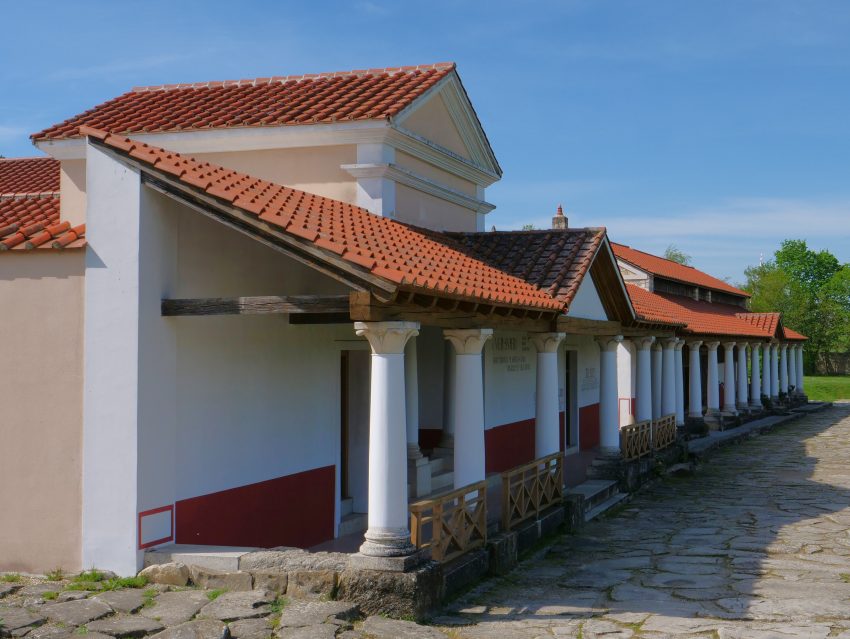
The Roman City of Carnuntum is one of those places that quietly exceeds expectations. Set in Petronell-Carnuntum, east of Vienna, it is not just a scatter of stones in a field but a serious archaeological park where reconstructed Roman buildings, original remains, and the wider landscape all work together to make the ancient city feel unusually real.
What makes it stand out is how immersive it feels. You are not only looking at ruins from a distance; you can move through reconstructed Roman houses, baths, and streets built on their original site, which makes this one of the best historical stops in Lower Austria and a very strong candidate for a half-day or full-day visit from Vienna, Bratislava, or the surrounding Carnuntum region.
Table of Contents
- History and Significance of the Roman City of Carnuntum
- Things to See and Do in the Roman City of Carnuntum
- How to Get to the Roman City of Carnuntum
- Practical Tips on Visiting the Roman City of Carnuntum
- Where to Stay Close to the Roman City of Carnuntum
- Is the Roman City of Carnuntum Worth Visiting?
- For Different Travelers
- FAQs for Visiting Roman City of Carnuntum
History and Significance of the Roman City of Carnuntum
Carnuntum was one of the most important Roman centres on the empire’s Danube frontier. From the 1st to the 4th century AD, it grew into a major military, political, and trading city, and eventually became the capital of the province of Upper Pannonia, with a population estimated at around 50,000.
That scale matters when you visit because it explains why the site feels so expansive. Carnuntum was not a minor outpost but a true frontier metropolis, positioned where imperial power, commerce, and movement across the Danube all intersected. The result today is a destination that gives you a broader sense of Roman urban life than many smaller archaeological stops can manage.
Its modern importance also comes from the way it has been presented. Rather than relying only on foundations and interpretive panels, Carnuntum has reconstructed part of its Roman quarter on the original site, allowing visitors to understand domestic life, heating systems, kitchens, wall painting, and urban planning in a much more vivid way.
Things to See and Do in the Roman City of Carnuntum
The highlight for most visitors is the Roman Quarter. This is where Carnuntum becomes memorable rather than merely educational, because the reconstructed houses feel spatially convincing and give you a proper sense of how a Roman neighbourhood worked. The underfloor heating, functional kitchens, and painted interiors are the details that stay with you.
You should also allow time for Museum Carnuntinum, which is included in the main day ticket and acts as the treasure house of the site. It adds the objects, interpretation, and wider historical frame that help the reconstructed quarter make more sense, especially if you want context rather than just atmosphere.
Beyond the ticketed core, the amphitheatres and the Heidentor add another dimension and are freely accessible. That means you can broaden your visit without pushing up the cost, and if you enjoy archaeology in landscapes rather than only inside museums, this wider circuit is part of Carnuntum’s appeal.
How to Get to the Roman City of Carnuntum
The Roman City of Carnuntum is about 45 km east of Vienna and 25 km west of Bratislava, so it works well as a regional day trip rather than a city-centre stop. The nearest major airport for most travelers is Vienna Airport, while Bratislava is also a realistic arrival point depending on the rest of your itinerary. For the best deals and a seamless booking experience, check out these flights to Vienna on Booking.com.
By train, Carnuntum is straightforward from Vienna. Regional express REX 7 connects Wien Mitte-Landstraße with Petronell-Carnuntum in about 45 minutes, and from the station the Roman Quarter is around a 15-minute walk; for Museum Carnuntinum, use Bad Deutsch-Altenburg station and walk about 20 minutes. You can easily check timetables and book train tickets through the ÖBB (Austrian Federal Railways) website. However, for a smoother experience, we recommend using Omio, which simplifies the booking process and lets you compare routes, prices, and departure times all in one place.
By bus from Bratislava, you can take bus 901 toward Hainburg and connect onward by train, though this is slower and less direct than coming from Vienna. If you are using public transport, it is worth checking the seasonal Carnuntum shuttle, which links the Roman Quarter, the museum, and Petronell station on weekends and public holidays between May and September 2026.
By car, this is an easy excursion. From Vienna, the drive is about 35 minutes via the A4 and B9, and there is free parking at each venue, which makes driving especially useful if you want to combine the Roman Quarter with the museum, amphitheatres, and nearby countryside stops in one outing. If you are looking to rent a car in Austria I recommend having a look at Discover Cars, first, as they compare prices and review multiple car rental agencies for you.
Practical Tips on Visiting the Roman City of Carnuntum
- Entrance fee: Adults €15; concessions €14; children under 6 free; children and adolescents 6–18: €8. The day ticket covers the Roman Quarter and Museum Carnuntinum, while the amphitheatres and Heidentor are freely accessible.
- Opening hours: Daily: 09:00–17:00. Seasonally open from March – November.
- Official website: https://www.carnuntum.at/en
- Best time to visit: Spring and early autumn are the most comfortable seasons because the site is very open and works best when you can walk slowly between areas without summer heat or winter closure getting in the way.
- How long to spend: Allow at least 2-3 hours for the Roman Quarter and museum, and closer to half a day if you also want the amphitheatres and Heidentor.
- Accessibility: The museum is fully accessible, but parts of the Roman Quarter include steps and uneven surfaces, so accessibility across the outdoor reconstructed area is partial rather than seamless.
- Facilities: There are toilets, a restaurant/café, a shop, a playground, bicycle parking, and free parking on site, so the practical side of visiting is well handled.
Where to Stay Close to the Roman City of Carnuntum
For a culture-heavy itinerary, the best base is either Petronell-Carnuntum for maximum proximity to the site or Hainburg an der Donau if you want a more atmospheric town base with extra dining and easy side trips.
If you want to stay as close as possible, Hotel Marc Aurel is the obvious choice, sitting just a few minutes’ walk from the Roman City of Carnuntum and working especially well for travelers who want an early start or a relaxed overnight stop after exploring the site. It is practical rather than flashy, but the location is hard to beat.
If you prefer a more characterful small-town setting, Hotel Altes Kloster is a strong pick. Set in a former monastery in the heart of medieval Hainburg, it suits travelers who want their stay to feel historic in its own right and who may also want to pair Carnuntum with time in Hainburg or even a side trip toward Bratislava.
For a quieter wellness-leaning stay, Hotel König Stefan works well near Museum Carnuntinum and the spa area. It makes particular sense if your trip mixes archaeology with a slower pace, easy local walking, and a more low-key regional base.
Is the Roman City of Carnuntum Worth Visiting?
Yes, absolutely, especially if you enjoy Roman history, archaeology, or cultural day trips that feel more immersive than a standard museum visit. Carnuntum has enough scale and enough reconstruction to make the Roman world feel legible, which is rarer than it sounds, and that makes it far more memorable than many sites where you spend most of your time trying to imagine what used to be there.
The honest pivot is that travelers who want a fast, iconic, city-centre attraction may find it too spread out and too dependent on context. If you are not especially interested in Roman history, or if you dislike open-air sites with walking between separate areas, you may be happier focusing on Vienna’s urban highlights instead.
What Other Travellers Say...
Reviews consistently praise this outdoor, interactive Roman reconstruction for its highly detailed buildings and immersive, hands-on feel, making it engaging for both history enthusiasts and families. Visitors highlight good facilities such as ample parking, clean toilets, friendly staff, multilingual information, child-friendly play and picnic areas, and an on-site café/restaurant, with dogs allowed on a lead. The site is described as easy to spend a full day at, with some areas farther apart but accessible via shuttle bus and convenient connections from nearby cities. A minor recurring suggestion is clearer on-site orientation, such as better “you are here” markers on the city model.





For Different Travelers
Families with Kids
Carnuntum is one of the better archaeology sites for families because it is spacious, visual, and easier for children to grasp than a ruin field made up only of low stone outlines. The reconstructed houses make Roman daily life feel concrete, and the playground in the Roman City Quarter helps break up the historical content with something more active.
It works best if you keep the visit focused on the Roman Quarter rather than trying to cover every satellite site in one go. Younger children will usually get more from peeking into baths, kitchens, and rooms than from trying to absorb every explanatory panel.
Couples & Romantic Getaways
For couples, Carnuntum works best as part of a broader slow-travel day rather than as a rushed checklist stop. The open landscape, the sense of deep time, and the nearby Danube and wine region make it easy to turn a visit here into something more atmospheric than a standard museum outing.
It pairs especially well with a stay in Hainburg or the wider Carnuntum region, where you can balance history with a relaxed meal or a scenic drive. If your trip leans toward culture over nightlife, this is a surprisingly satisfying addition.
Budget Travelers
Carnuntum is good value because the main ticket covers both the Roman Quarter and Museum Carnuntinum, while the amphitheatres and Heidentor are free to visit. That gives you a lot of historical substance for one admission price, especially if you are already traveling in the Vienna-Bratislava corridor.
Budget-minded travelers will usually do best by coming from Vienna by regional train and focusing on a compact half-day plan. It is not the cheapest stop if you only skim the reconstructed quarter quickly, but it becomes much better value once you treat it as a fuller archaeological outing.
History Buffs
If you are the kind of traveler who gets frustrated by sites that require too much imagination, Carnuntum is a very strong answer. Its importance as a major Roman frontier city, former capital of Upper Pannonia, and large urban centre on the Danube gives it real historical weight before you even get to the reconstructions.
What history buffs tend to appreciate most is the combination of scale and interpretation. You get domestic reconstruction, museum context, monumental remains, and the wider frontier landscape, which together make Carnuntum feel less like a single monument and more like a lost city partially recovered.
FAQs for Visiting Roman City of Carnuntum
Getting There
Tickets & Entry
Visiting Experience
Tours, Context & Itineraries
Photography
Accessibility & Facilities
Food & Breaks Nearby
Safety & Timing
The Römerstadt Carnuntum appears in our Complete Guide to Visiting Vienna!

Moira & Andy
Hey! We're Moira & Andy. From hiking the Camino to trips around Europe in Bert our campervan — we've been traveling together since retirement in 2020!
This website uses affiliate links which may earn a commission at no additional cost to you!
Planning Your Visit
Daily: 09:00-17:00. Seasonally open from March - November.
Adults €15; concessions €14; children under 6 free; children and adolescents 6-18: €8. The day ticket covers the Roman Quarter and Museum Carnuntinum, while the amphitheatres and Heidentor are freely accessible.
Nearby Attractions
- Devin Castle and Fortress (11.2) km
Castle, Historic Site and Ruins - Archaeological Museum (18) km
Museum - Bratislava Castle (18.1) km
Castle, Historic Site and Museum - Museum of History (18.3) km
Castle and Museum - St. Martin's Cathedral (18.5) km
Cathedral, Church and Religious Building - New Bridge and UFO Observation Deck (18.6) km
Attraction, Bridge and Viewing Point - Palace of Erdody (18.7) km
Attraction, Historic Building and Palace - Academia Istropolitana (18.7) km
Attraction, Historic Building and Historic Site - Palace of Zichy (18.7) km
Arts Venue, Historic Building and Palace - Johann Pálffy Palace (18.7) km
Historic Building, Museum and Palace