Melk, Austria: The Ultimate Travel Guide 2026
The Complete Guide to Melk

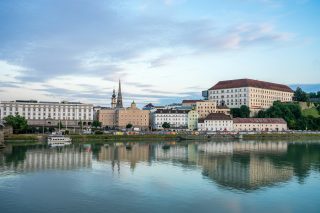
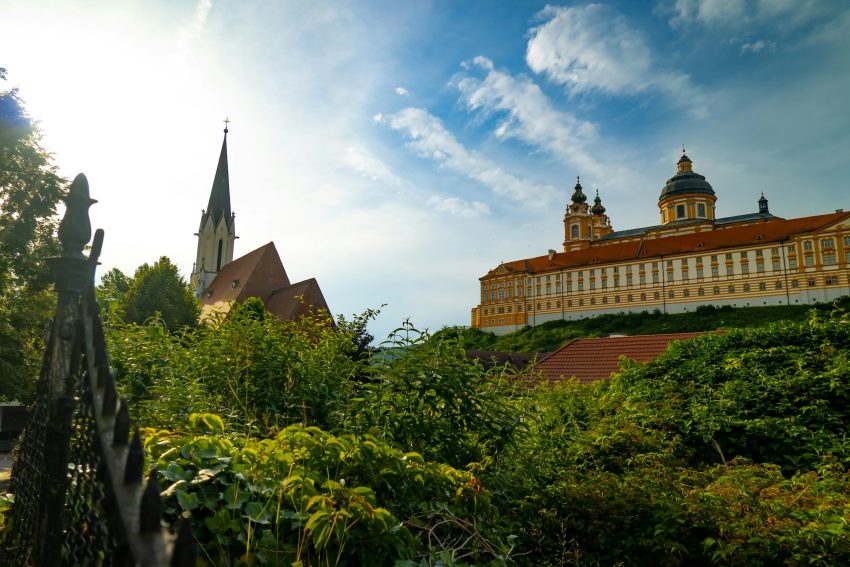
Melk is one of the most rewarding small-town stops on the Danube, set at the gateway to the Wachau Valley in Lower Austria. It's compact and easy to explore on foot, yet it punches above its size with big views, riverside walks, and a lively café-and-restaurant scene that makes it feel like more than a quick photo stop.

Most visitors come for the headline sights, but Melk also works beautifully as a base for day trips along the Danube-whether you're hopping between vineyards and villages, cycling the river path, or taking a boat ride when the season is right. The town's layout is visitor-friendly: you can arrive by train, walk to the center, and be sightseeing within minutes.

Plan to stay at least a night if you can. Early mornings and evenings are when Melk feels most atmospheric, with fewer day-trippers and softer light over the river and hills. It's also a practical place to slow down, sample Wachau wines nearby, and mix cultural visits with outdoor time without needing a car.

History of Melk

Melk in Prehistory and the Roman Era

Long before Melk became a major monastic center, the area around the Danube supported early settlement thanks to fertile land and a strategic river corridor. In the Roman period, the wider region formed part of the frontier zone influenced by trade routes and military movement, shaping patterns of settlement and defense.

Melk in the Early Middle Ages (9th–11th Centuries)

Melk rose in importance during the early medieval period as power consolidated along the Danube. A fortified presence developed, and the site became associated with regional rulers and administration. This era laid the groundwork for Melk’s later identity as a religious and cultural stronghold.

Melk and the Benedictine Foundation (11th–13th Centuries)

The establishment and growth of the Benedictine monastery transformed Melk into a center of learning, manuscript culture, and religious influence. Monastic life shaped the town’s rhythms, economy, and reputation, attracting patronage and helping to anchor Melk’s long-term prominence.

Melk in the Late Middle Ages (14th–15th Centuries)

As monastic scholarship and regional politics evolved, Melk remained significant through periods of change and occasional instability. The monastery’s intellectual life and landholdings supported resilience, while the town benefited from the steady presence of ecclesiastical institutions.

Melk in the Reformation and Counter-Reformation (16th–17th Centuries)

Religious upheavals across Central Europe affected monastic communities and local society. Melk’s Benedictine tradition endured, and renewal efforts strengthened Catholic institutions. This period set the stage for major artistic and architectural transformation in the centuries that followed.

Melk in the Baroque Golden Age (17th–18th Centuries)

Melk experienced a dramatic cultural and architectural flowering during the Baroque era, when ambitious rebuilding and artistic patronage reshaped the monastery and its surroundings. The scale and style of this transformation cemented Melk’s status as a landmark of Baroque heritage.

Melk in the 19th Century: Reform, Modernization, and New Travel

Political reforms and changing economic conditions altered monastic life and land management. Improved transport and the rise of leisure travel gradually brought more visitors, integrating Melk into broader cultural itineraries and helping to diversify the local economy.

Melk in the 20th Century: War, Recovery, and Tourism

The 20th century brought disruption and recovery, followed by a steady expansion of cultural tourism. Conservation, education, and heritage management became increasingly important, supporting Melk’s role as a destination while balancing local life with visitor demand.

Melk Today: Living Heritage and Regional Hub

In recent decades, Melk has continued to develop as a year-round stop for Danube travelers and regional explorers. Ongoing preservation and cultural programming keep its heritage visible and accessible, while modern services make it an easy base for exploring nearby landscapes and towns.

Moira & Andy
Moira & Andy

Hey! We're Moira & Andy. From hiking the Camino to trips around Europe in Bert our campervan — we've been traveling together since retirement in 2020!

Read our full story here

Visiting Melk for the first time and wondering what are the top places to see in the city? In this complete guide, I share the best things to do in Melk on the first visit. To help you plan your trip, I have also included an interactive map and practical tips for visiting!

This website uses affiliate links which earn a small commission at no additional cost to you.
Powered by GetYourGuide

15 Best places to See in Melk

This complete guide to Melk not only tells you about the very best sights and tourist attractions for first-time visitors to the city but also provide insights into a few of our personal favorite things to do.

This is a practical guide to visiting the best places to see in Melk and is filled with tips and info that should answer all your questions!

1. Wiener Straße
Wiener Straße
Wiener Straße
CC BY-SA 4.0 / Linie29
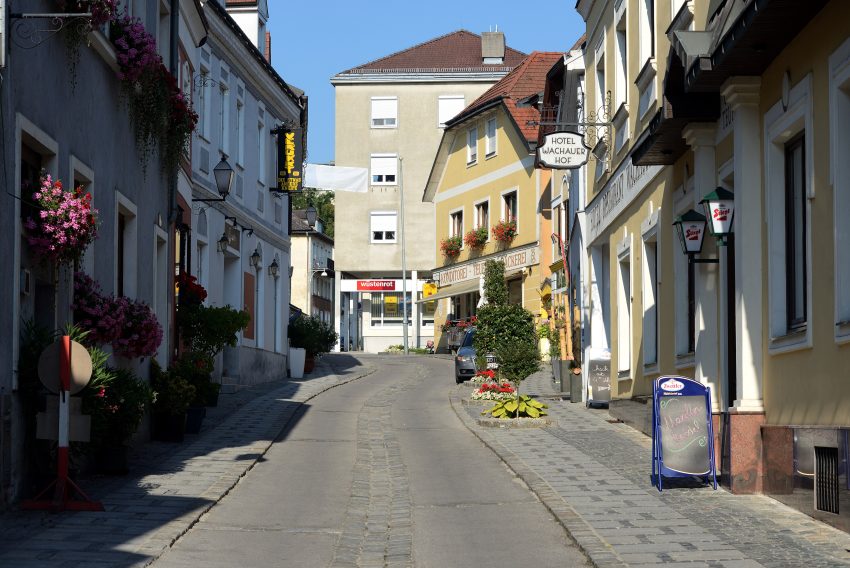
Wiener Straße is Melk’s old-town thoroughfare that once pointed toward Vienna and met the now-vanished Wiener Tor, a reminder of the town’s former gates and defenses. Walking its gentle bends beneath the abbey rock, you notice a stitched-together streetscape where Baroque facades sit beside late-historicist ornament and plainer, newer houses that keep the street feeling lived-in. Look for small, timeworn details in doorways and courtyards, and pause for the shifting views back toward Melk Abbey. A standout building is the Episcopal Seminary (1903–1905), with a grid-patterned frontage, a raised central risalit, and a chapel roof shaped in Baroque spirit.
Location: Wr. Str., 3390 Melk, Austria | Hours: 24 Hours. | Price: Free. | Distance: 1.1km

We recommend to rent a car in Austria through Discover Cars, they compare prices and review multiple car rental agencies. Book your rental car here.

2. Stiftspark

Stiftspark
Stiftspark
CC BY-SA 3.0 / Dguendel
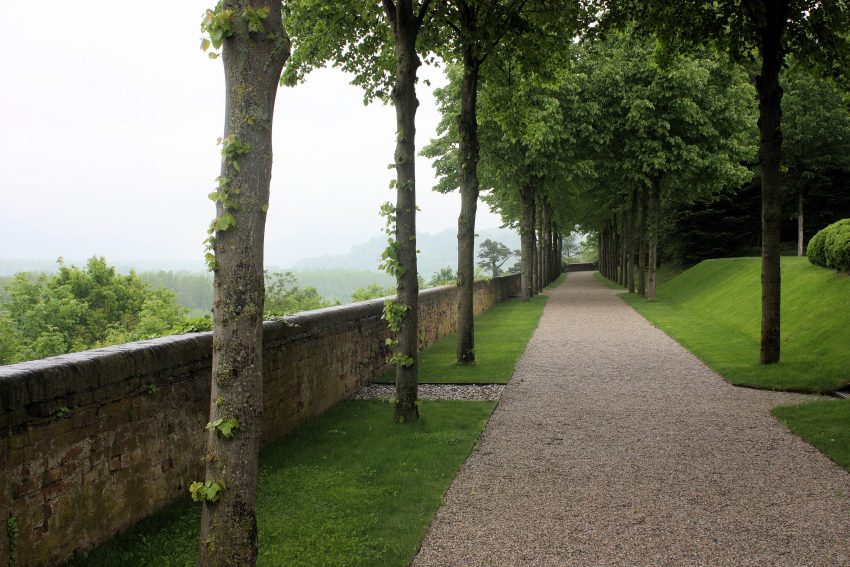
Stiftspark is the terraced abbey park beside Melk Abbey in Melk, Austria, created in the 18th century when monastic vineyards and orchards were reshaped into a designed landscape that extends the monastery’s symbolism outdoors. The walk unfolds across three terraces aligned with sightlines toward the abbey’s great dome, with pools, tree rows, and framed viewpoints that open to the Danube Valley. A standout feature is the Baroque garden pavilion (1747–48), later painted with bright frescoes and set above rose beds and venerable linden trees. Recent restoration has introduced newer themed areas such as the Mediterranean-leaning Paradise Garden and the Walafrid Strabo Garden. Visitors remember the quiet mix of shaded paths, herb plantings, and a small pond-like water feature.
Location: Abt-Berthold-Dietmayr-Straße 3, 3390 Melk, Austria | Hours: (Summer) March 28 – March 31 & October 25 – October 31: Daily: 09:00–17:00; April 1 – October 24: Daily: 09:00–18:00. | Price: Adults: €5.50; Pupils/Students: €4.00; Children (6–16): €1.50. | Website | Distance: 1.2km

Here is a complete selection of hotel options in Melk. Feel free to review each one and choose the stay that best suits your needs.

3. Barockgarten mit Pavillon

Barockgarten mit Pavillon
CC BY-SA 4.0 / Bybbisch94
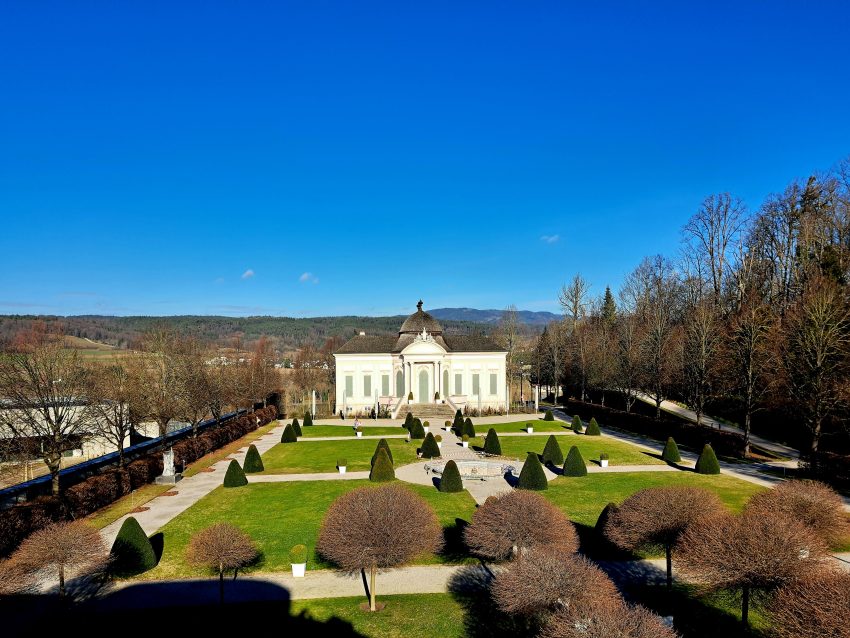
Barockgarten mit Pavillon is the formal garden and park area within the grounds of Melk Abbey, extending the abbey’s Baroque taste into living landscape design above the Danube. The small pavilion (built 1747–48 for Abbot Thomas Pauer) was meant as a place of rest and refreshment for monks, and its interior is the real surprise: Johann Wenzel Bergl’s frescoes swirl with jungle plants, exotic animals, mythic figures, and allegories, including a sun ringed by the four seasons and panels for the four known continents. Outside, visitors remember roses, clipped hedges, and crisp geometry, plus the multi-level park that unfolds into themed “garden rooms” like the Paradise, Mediterranean, and Oriental gardens. Reviews often mention the serene grounds and a clean, well-kept feel.
Location: Abt-Berthold-Dietmayr-Straße 1, 3390 Melk, Austria | Hours: (Summer) April 1 – October 31; (Winter) November 1 – March 31. | Price: Adults: €5.50; Pupils/students: €4.00; Children (6–16): €1.50 (Abbey Park only). | Website | Distance: 1.3km

Traveling to a country with a different currency? Avoid ATM transaction fees and pay in local currency with a Wise Card. Having used it for over 5 years, we've saved loads on fees!

4. Melk Abbey

Melk Abbey
Melk Abbey
CC BY-SA 4.0 / Bybbisch94
Melk Abbey (Stift Melk) is a working Benedictine monastery and vast Baroque complex set on a cliff above the Danube in Melk, Austria, founded in 1089 when Leopold II of Babenberg granted the site to monks from Lambach. The present golden-ochre ensemble rose mainly between 1702 and 1736, with theatrical frescoes and stucco by artists such as Paul Troger and Johann Michael Rottmayr. Visitors move through the “imperial” rooms—Imperial Staircase, Marble Hall, and the long Imperial Corridor—before reaching the luminous abbey church. The library, lined with tens of thousands of volumes and rare manuscripts, is the quiet counterpoint to the gilded interiors, and photo rules inside are often strict.
Location: Stiftsstr. 1, 3390 Melk, Austria | Hours: March 1 – March 27, 2026: Monday – Friday: Guided tours only at 11:00, 13:30 & 15:00; Saturday – Sunday: 10:00–16:30 (last admission 16:00). March 28 – November 1, 2026: March 28 – March 31 & November 1: 09:00–16:30 (last admission 16:00); April 1 – October 31: 09:00–17:30 (last admission 17:00). | Price: Adults: €16; Pupils & students (up to 27, with ID): €8; Family ticket (parents with child/ren up to 16): €32; Guided tour supplement: €4. | Website | Distance: 1.3km

Explore Melk at your own pace with our self-guided walking tour! Follow our curated route to discover must-see sights and local secrets that makes Melk one of the best places to visit in Austria.

5. Lebzelterhaus

Lebzelterhaus
Lebzelterhaus
CC BY-SA 4.0 / MFleischhacker
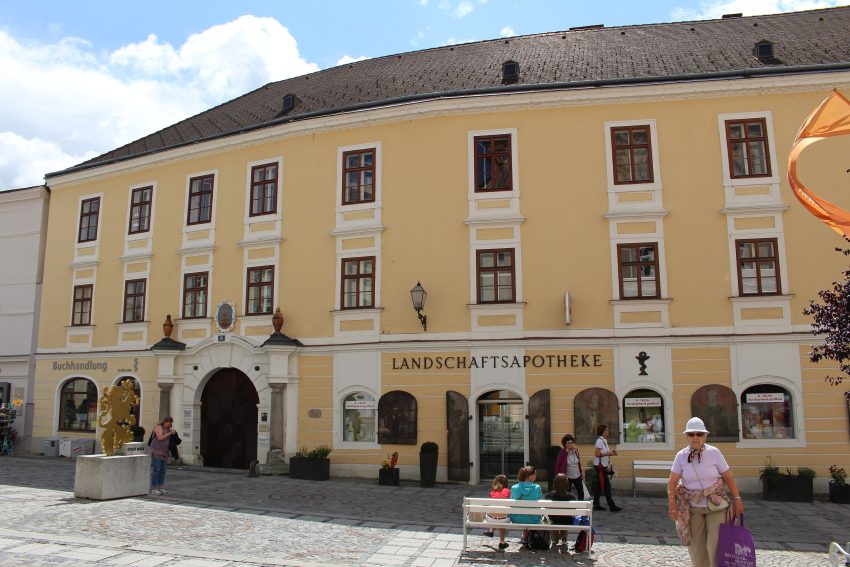
Lebzelterhaus in Melk, Austria—also known as the Gingerbread Maker’s House—is a 1657 guild house once tied to lebzelter artisans who made honey-cakes and gingerbread, with workshop and living quarters under one roof. What visitors notice first is the preserved façade: distinctive window shapes, solid masonry, and painted shutters that still hint at its early trade life. The building never became a frozen relic; it now operates as a pharmacy, keeping it part of everyday Rathausplatz routines and giving the doorway area small, symbolic nods to medicine. It’s a quick, memorable stop for close-up architectural details rather than exhibits or ticket lines.
Location: Abt Karl-Straße 27a, 3390 Melk, Austria | Hours: Monday – Friday: 08:00–18:00. Saturday: 08:00–12:00. Closed on Sunday. | Price: Check official website. | Website | Distance: 1.4km

6. Town Hall
Town Hall
Town Hall
CC BY-SA 4.0 / Michael Fleischhacker
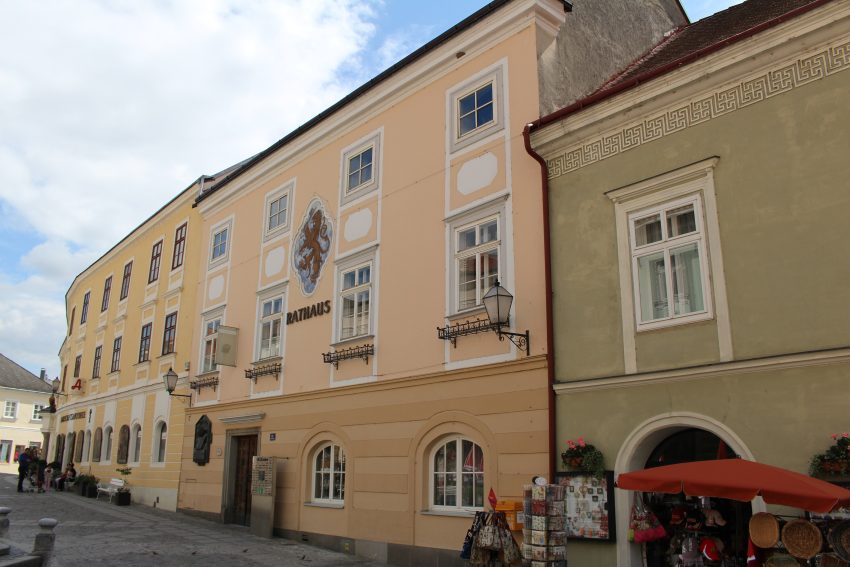
Melk’s Town Hall (Rathaus) stands on Rathausplatz, the civic center of the Old Town where daily life and visitor foot traffic naturally meet. The site once held a medieval tap house and meat market, and after repeated fires the abbot granted the property to the townspeople in 1575 so a proper Rathaus could be built. Today, later remodels leave the façade with a Baroque-tinged look, while a standout detail is the intricately worked entrance door combining wood and copper. Around it, the square is edged by characterful neighbors like the Gingerbread Maker’s House and a medieval building of uncertain origin. From this corner, lanes and alleys radiate toward the town’s former gates and the riverside.
Location: Rathauspl. 11, 3390 Melk, Austria | Hours: Monday: 08:00–12:00 & 14:00–18:00. Tuesday: Closed. Wednesday: 08:00–12:00. Thursday: 08:00–12:00 & 13:30–15:00. Friday: 08:00–12:00. Saturday: Closed. Sunday: Closed. | Price: Free. | Website | Distance: 1.4km

7. St. Johannes Nepomuk Statue
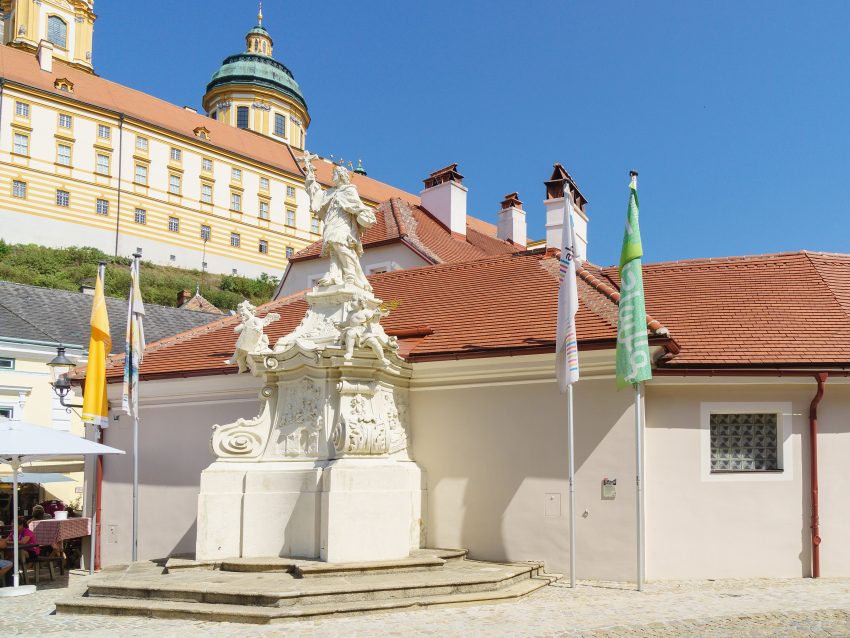
St. Johannes Nepomuk Statue
CC BY-SA 4.0 / Radler59
In the center of Melk, Austria, the St. Johannes Nepomuk Statue is a protected cultural monument and a finely carved high-Baroque work from 1736 by sculptor Peter Widerin. Up close, you can pick out the saint’s classic attributes: a priest’s biretta, a crucifix held to his chest, and a halo of five stars. Walk a full circle and the pedestal becomes the main draw, with relief panels that narrate episodes from his legend—confession, torture, the fall from a bridge into the river, and the recovery of his remains. The subject matters here because John of Nepomuk is traditionally invoked as a guardian of bridges and a defense against floods, a fitting presence in Danube country.
Location: Hauptstraße 2, 3390 Melk, Austria | Hours: 24 Hours. | Price: Free. | Distance: 1.5km

8. Mariä-Himmelfahrt-Kirche
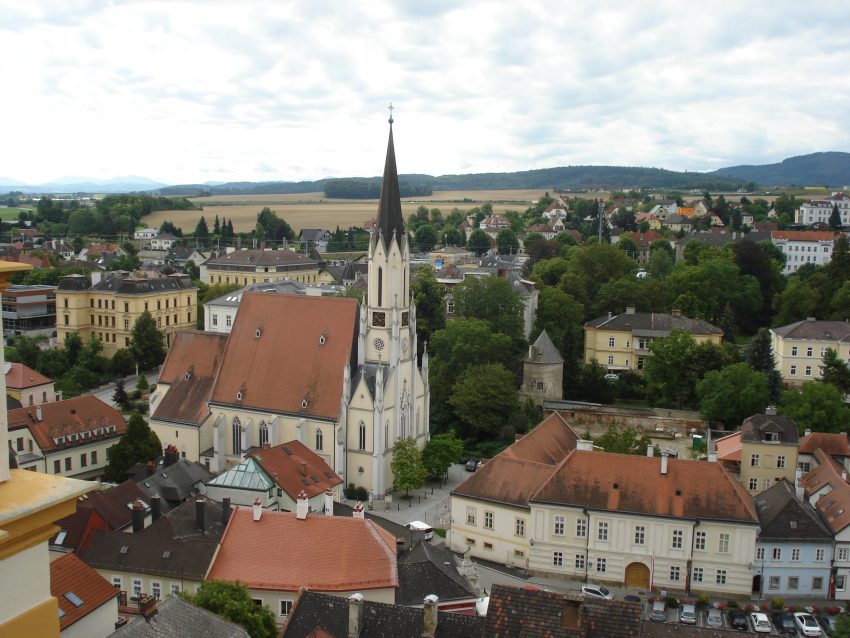
Mariä-Himmelfahrt-Kirche
CC BY-SA 3.0 / SERGiK73
Mariä-Himmelfahrt-Kirche is Melk’s parish church in the old town, a working place of worship with medieval roots and a later stewardship by the Benedictine Abbey (from 1693). Inside, it reads as a three-aisled pillar basilica: octagonal columns rise into pointed arches, with a star-ribbed vault over the choir and a net-ribbed vault along the nave. Much of what you notice up close comes from late-19th- and early-20th-century refitting—carved oak furnishings, coordinated altars, and a marble-and-iron communion rail. Look for stained glass themed on the Litany of Loreto, plus main-altar reliefs of the Adoration of the Magi and the Last Supper, flanked by reliquary shrines for Saints Coloman and Urban.
Location: Kirchenpl. 10, 3390 Melk, Austria | Hours: Daily: 08:00–18:00. | Price: Free; donations appreciated. | Website | Distance: 1.5km

9. Hauptstraße
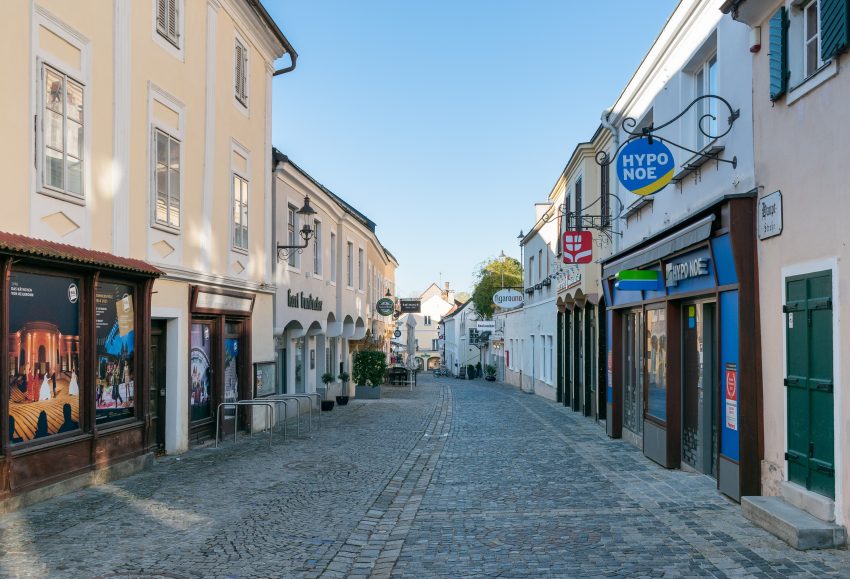
Hauptstraße
Hauptstraße
CC BY-SA 4.0 / Tournasol7
Hauptstraße is Melk’s compact main street, a walkable spine where everyday town life meets the historic center. As you stroll, you’ll notice layers of architecture—medieval plot lines beneath later Baroque façades, with 19th‑century shopfront details tying the street together—so it rewards looking above the windows. It’s a good place to browse small shops for local crafts, duck into cafés, or sample Wachau apricot specialties in tasting rooms. Watch for the “Red Thread” wayfinding marks: Melk’s 1.5‑km themed route runs through the old town and up toward the abbey, passing stops like the Old Post House.
Location: Hauptstraße, 3390 Melk, Austria | Hours: 24 Hours. | Price: Free. | Distance: 1.5km

10. Stadtpark
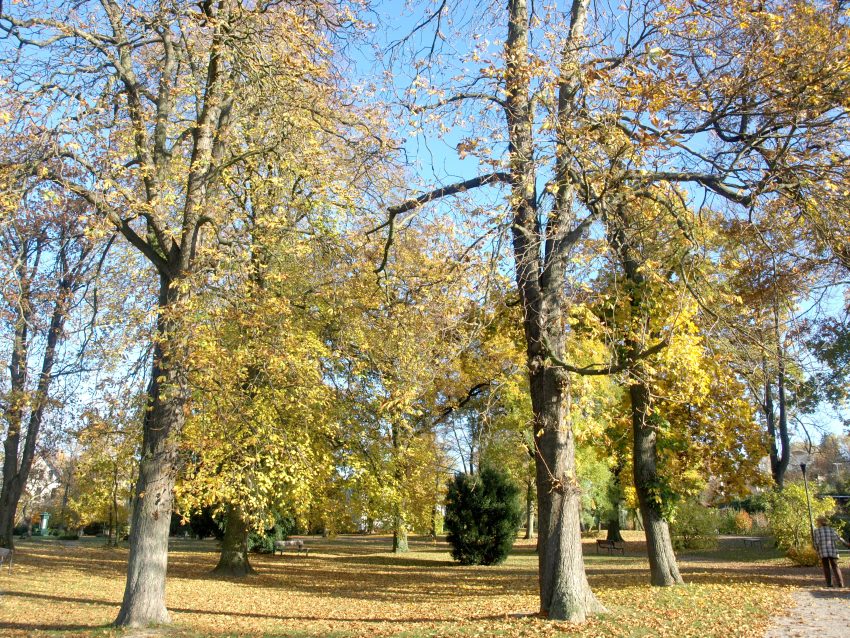
Stadtpark
Stadtpark
CC BY-SA 1.0 / Grubernst
Stadtpark is Melk’s small city park, a shaded pause between the station area and the streets leading into town. Its layout feels intentionally formal: cross-shaped and circular paths carve the greenery into four sections around a central square. You’ll notice charming extras like a pavilion, a fountain, and a tiny “weather house,” plus a 1904 memorial to Franz X. Linde, credited with helping create the park. Some paths have signs identifying different tree species, and recent updates added playful touches such as new steps, a slide, and a basket swing. Visitors often remark on how clean and cool it feels on hot days, with plenty of benches under trees.
Location: Abt Karl-Straße 4, 3390 Melk, Austria | Hours: 24 Hours. | Price: Free. | Website | Distance: 1.6km

11. Historisches Wetterhäuschen
Historisches Wetterhäuschen
CC BY-SA 4.0 / Radler59
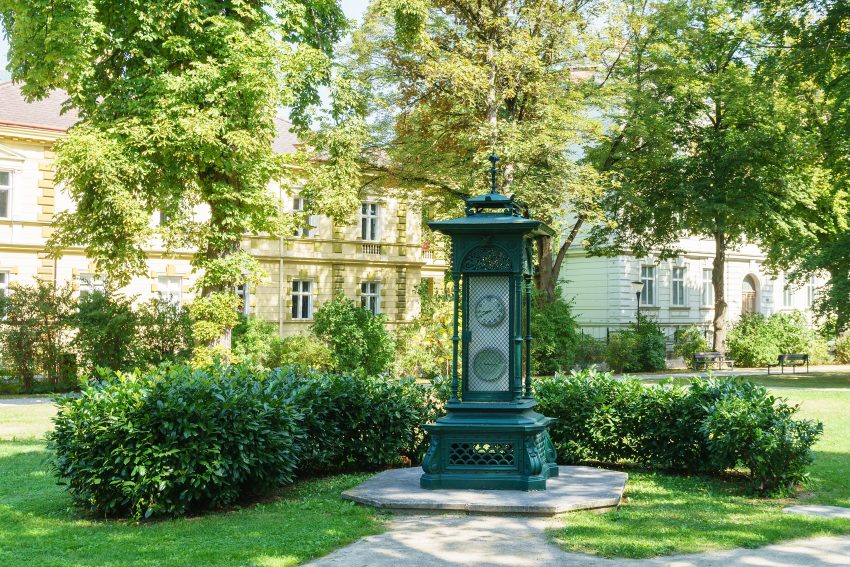
Historisches Wetterhäuschen is a petite, pavilion-shaped weather station in Melk’s Stadtpark, installed when the park was laid out in 1886 and now protected as a cultural monument. Up close you can still spot the old instruments—typically a thermometer, barometer, and hygrometer—set into a structure that once stood alongside the park’s ornamental ponds, fountains, and promenades. It matters less for accuracy today than for what it reveals about an era when public meteorology signaled civic pride and modernity, sometimes even marking directions and distances like a miniature atlas. Visitors tend to remember it as a charming, easy-to-miss detail, and one reviewer simply called it a “nice historic weather station.”
Location: 3340 Waidhofen an der Ybbs, Austria | Hours: 24 Hours. | Price: Free. | Distance: 1.6km

12. Hauptplatz
Hauptplatz
Hauptplatz
CC BY-SA 4.0 / Radler59
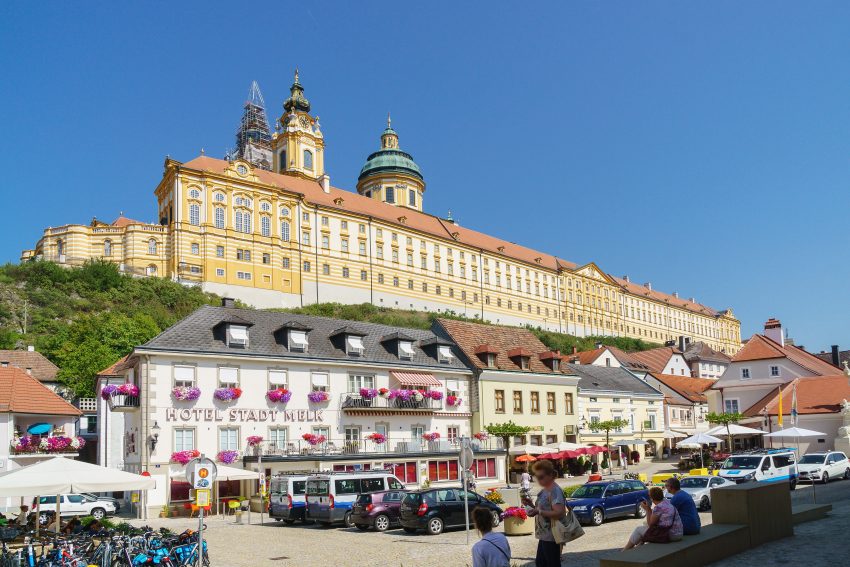
Hauptplatz is Melk’s compact main town square, the everyday meeting point where local routines and visitor foot traffic naturally converge. The buildings around it reward a closer look, with late medieval and Gothic traces such as projecting bay windows, heavy stone fronts, shuttered openings, and iron-framed doorways. On market days the square shifts into a small fairground, with stalls selling produce, flowers, Wachau-region treats, and occasional handmade crafts that echo older trading traditions. On quieter hours it’s a good place to linger at a café terrace, watch the town’s pace, and use the square as a simple mental anchor while exploring the old-town streets.
Location: Hauptpl., 3390 Melk, Austria | Hours: 24 Hours. | Price: Free. | Distance: 1.6km

13. Altes Posthaus
Altes Posthaus
Altes Posthaus
CC BY-SA 4.0 / Radler59
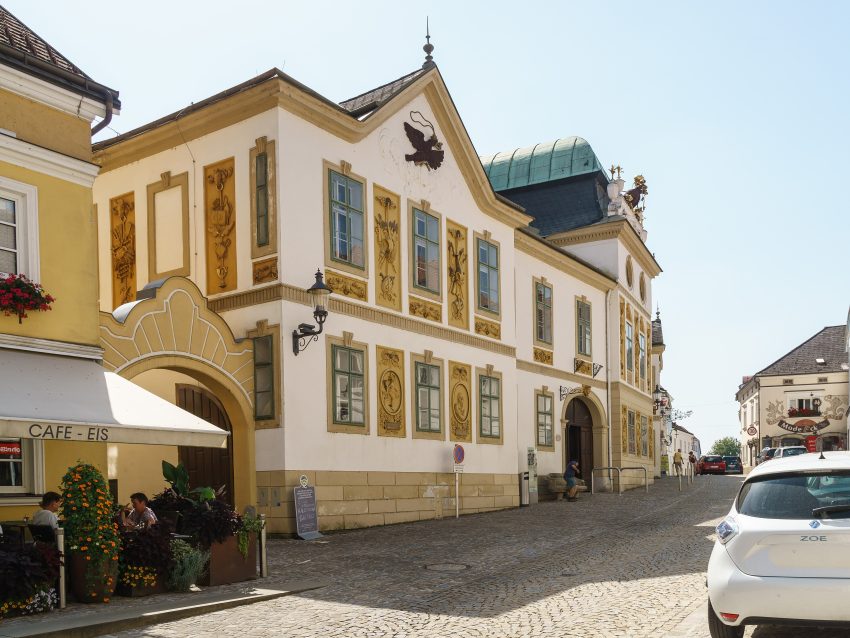
Altes Posthaus (Zur Alten Post) in Melk is a late-18th-century former post office that still reads like a public statement about communication and civic life. Commissioned in 1792, its design sits between late Baroque drama and early Classicist order, best appreciated from the sidewalk on Linzer Straße. The facade is packed with postal symbolism: stucco reliefs of saddles and mailbags, medallion portraits of postmasters (one believed to depict Josef von Fürnberg), and an allegorical Mercury watching over the scene. Above, a double-headed eagle adds imperial weight to the entrance. Even when closed or under renovation, travelers remember it as a photogenic old-town stop viewed entirely from outside.
Location: Linzer Str. 3, 3390 Melk, Austria | Hours: 24 Hours. | Price: Free. | Distance: 1.6km

14. Restaurant and Hotel Zur Post
Restaurant and Hotel Zur Post
CC BY-SA 4.0 / MFleischhacker
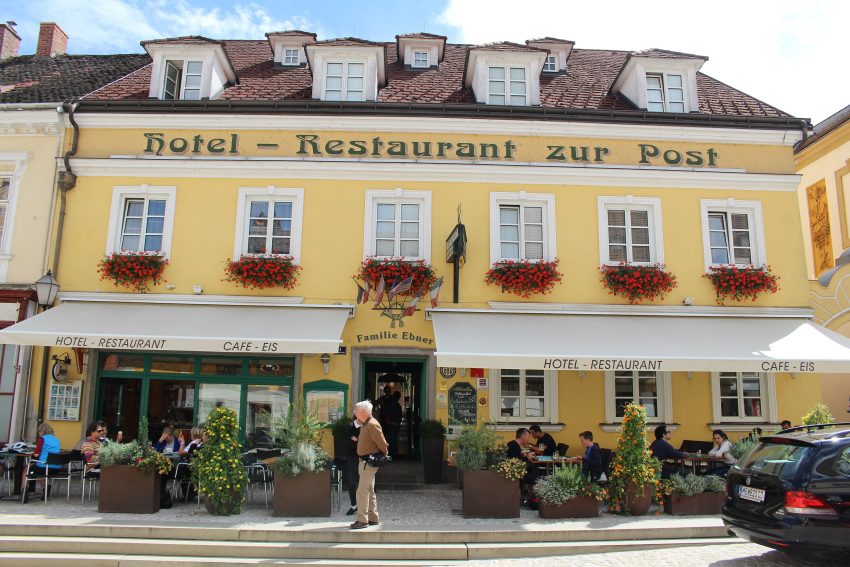
Restaurant and Hotel Zur Post is a town-square hotel and restaurant in Melk, set in a former posting-house building that still feels like a natural meeting point. Its rooms and outdoor spaces can frame direct views up to Melk Abbey, and the dining options range from a rustic Post Lounge to more formal rooms such as the Baroque Room and the Wine Delight Room. The kitchen leans on seasonal Austrian classics with a contemporary edge, using ingredients from the Wachau valley and the Mostviertel region. On warm mornings, breakfast may be served in the arcaded courtyard, with local breads, fresh eggs, and house-made jams and compotes. Travelers often remember it as a cozy stop after a cold day out, with attentive service and regional beer or wine.
Location: Linzer Str. 1, 3390 Melk, Austria | Hours: Monday: Closed. Tuesday – Saturday: 11:30–14:00 & 14:00–18:00 & 18:00–21:00. Sunday: 11:30–15:00. | Price: Free. | Website | Distance: 1.6km

15. Melk Lift Bridge
Melk Lift Bridge
Melk Lift Bridge
CC BY-SA 4.0 / Andrzej Otrębski
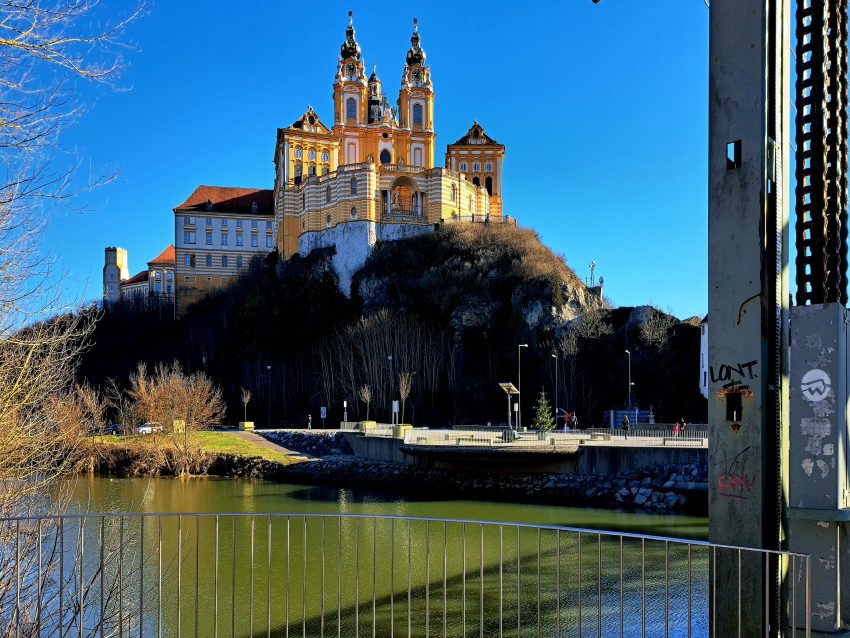
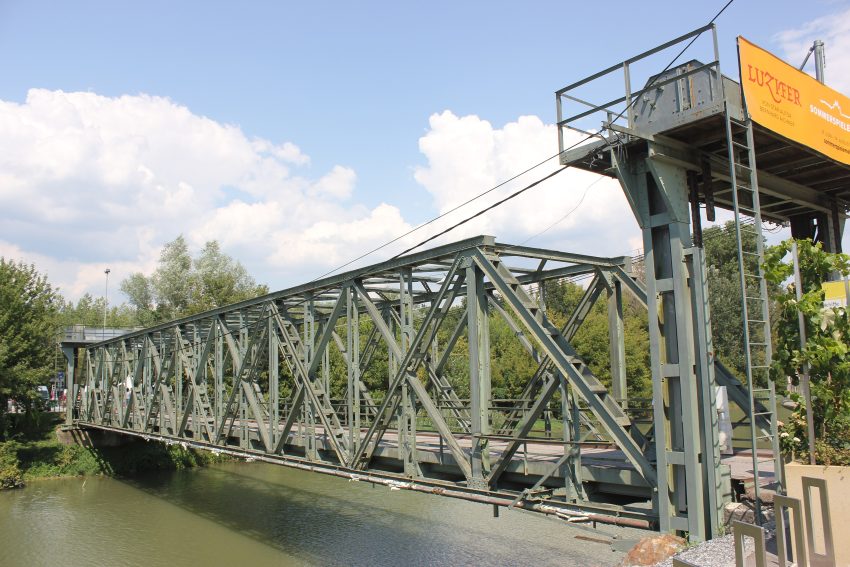
Melk Lift Bridge, also called the St. Leopold Bridge, is a former working lift bridge that now serves as a pedestrian-friendly crossing linking the old town with riverside paths and the harbour side. Built in 1937 after earlier ferry and pontoon crossings were repeatedly battered by floods, its deck once rose several metres via hoisting winches; the system was electrified in 1952. Since closing to motor traffic in 2009, it feels quieter and more human-scaled, with an appealing industrial frame against the soft river landscape. Next to it, an observation platform added with flood-protection works in 2013 delivers a clean, postcard view back to Melk Abbey—exactly the spot reviewers mention for photos and a breather.
Location: St. Leopold Brücke, Rollfährestraße, 3390 Melk, Austria | Hours: 24 Hours | Price: Free | Distance: 1.7km

Best Day Trips from Melk

A day trip from Melk offers the perfect opportunity to escape the urban rhythm and discover the surrounding region's charm. Whether you're drawn to scenic countryside, historic villages, or cultural landmarks, the area around Melk provides a variety of easy-to-reach destinations ideal for a one-day itinerary. If you are looking to rent a car in Austria I recommend having a look at Discover Cars, first, as they compare prices and review multiple car rental agencies for you.

1. Vienna
The Complete Guide to Vienna
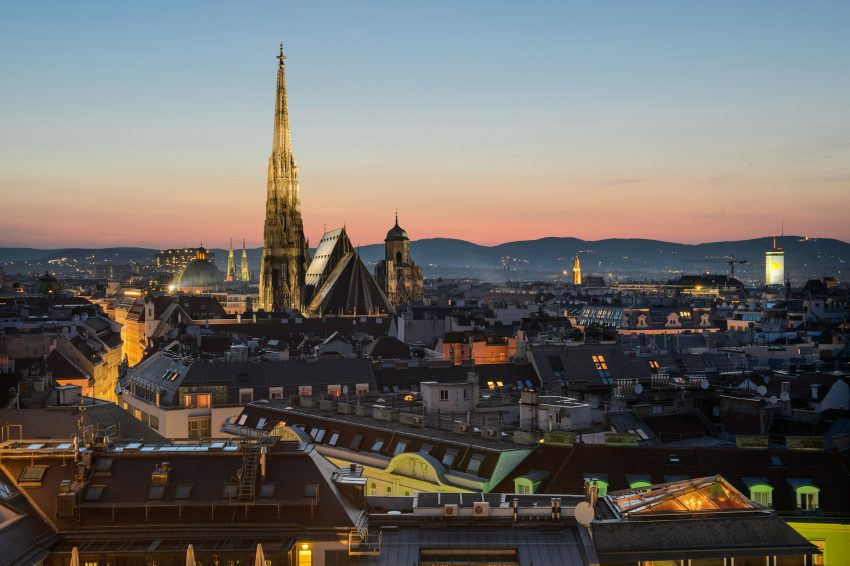
Vienna is a grand, walkable capital where imperial architecture, coffeehouse culture, and contemporary creativity sit side by side. Set in northeastern Austria along the Danube, the city is easy to navigate by tram and U-Bahn, with distinct neighborhoods that shift quickly from palace-lined boulevards to lively local markets and vineyard-dotted hills on the edge of town. A visit to Vienna…
Visiting Vienna
Powered by GetYourGuide

2. Linz

The Complete Guide to Linz
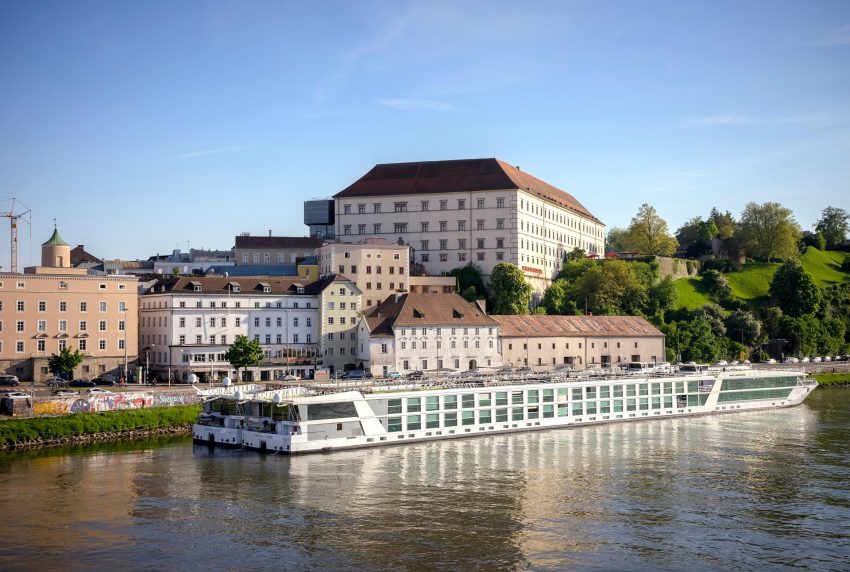
Linz is a lively Danube city that blends contemporary culture with an easy, walkable core, making it a great base for a short city break or a longer stay. You’ll find a strong mix of museums, riverfront promenades, modern architecture, and classic Austrian cafés, with plenty to do both day and night. The city feels creative and student-influenced, yet it’s…
Visiting Linz
Powered by GetYourGuide

3. Eisenstadt

The Complete Guide to Eisenstadt
CC BY-SA 2.0 / Leonhard Niederwimmer
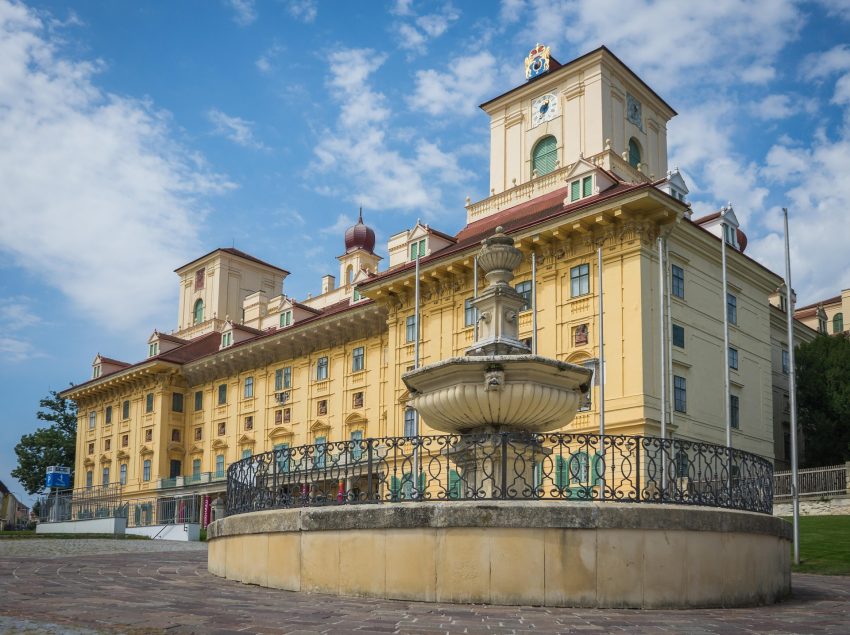
Eisenstadt makes an easy, rewarding base for a cultured short break in Austria’s Burgenland, surrounded by gentle vineyards, small wine villages, and wide-open plains that feel distinctly different from the Alpine west. The city is compact and walkable, so you can move from grand architecture to cafés and cellar doors in minutes, with plenty of chances to slow down and…
Visiting Eisenstadt
Powered by GetYourGuide

4. Český Krumlov

Český Krumlov
Český Krumlov
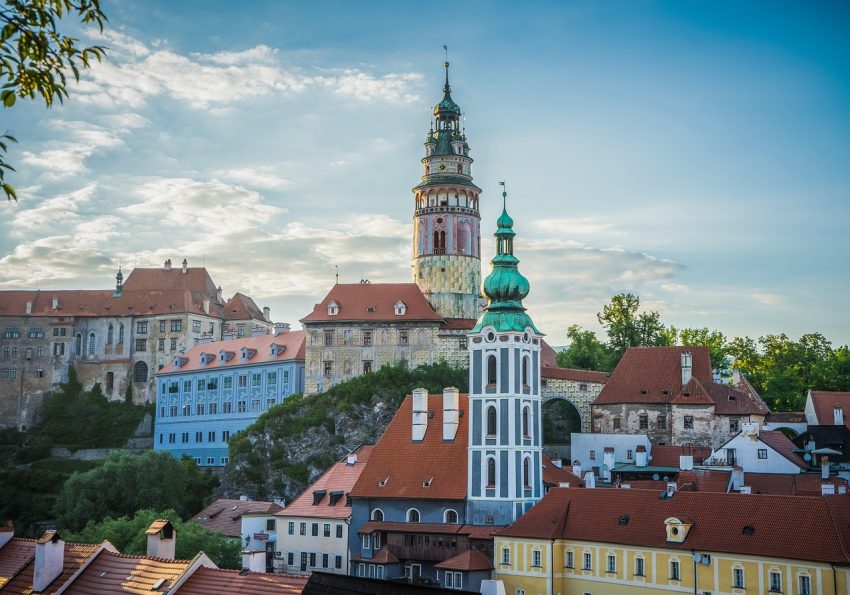
Český Krumlov, set in the South Bohemian Region of the Czech Republic, is one of the country’s most picturesque towns. Surrounded by rolling hills and nestled in a bend of the Vltava River, it has the charm of a fairytale destination, with winding cobblestone streets, pastel-coloured houses, and a skyline dominated by its castle tower. Its compact size makes it…
Visiting Český Krumlov
Powered by GetYourGuide

5. Mikulov

mikulov
mikulov
Visiting Mikulov, located in the South Moravian Region of the Czech Republic, is a delight for those who enjoy picturesque towns with a vibrant cultural scene. The town is compact and walkable, allowing visitors to explore the main square, charming streets, and nearby vineyards with ease. Cafes, wine bars, and local restaurants make it easy to sample regional cuisine and…
Visiting Mikulov
Powered by GetYourGuide

6. Graz

The Complete Guide to Graz
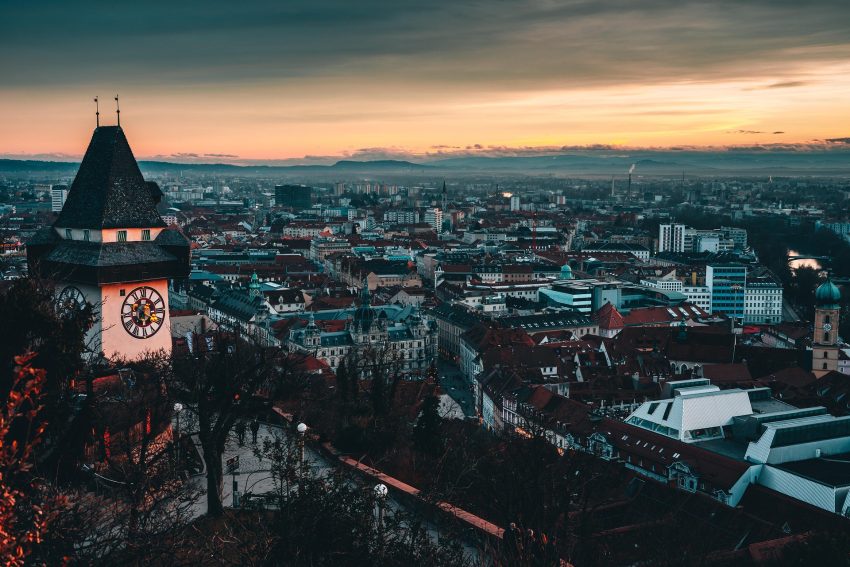
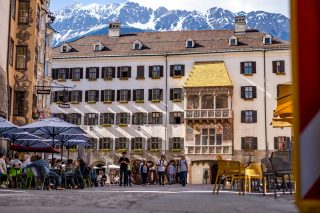
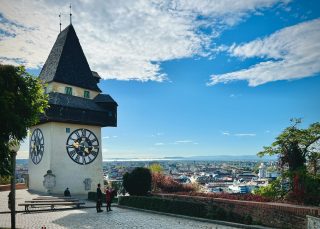
Graz is a lively, walkable city in southeastern Austria, set in the heart of Styria and surrounded by gentle hills, vineyards, and forested viewpoints. It’s a place where everyday local life—cafés, markets, student energy—mixes naturally with striking architecture and a strong food-and-wine culture. The city feels compact and easy to navigate, yet it offers enough variety to fill anything from…
Visiting Graz
Powered by GetYourGuide

7. Bratislava

The Complete Guide to Bratislava
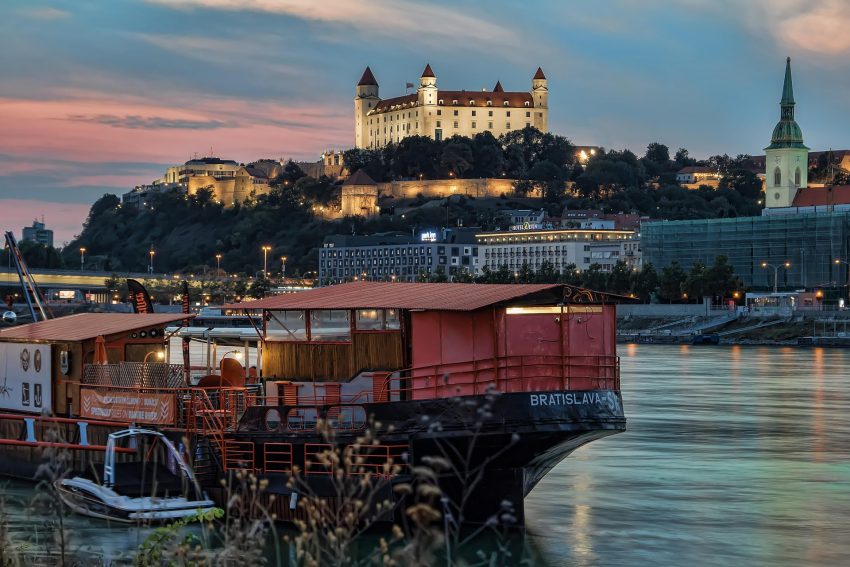
Bratislava is a compact, walkable capital that rewards slow wandering: one moment you’re in a cobbled Old Town lane lined with cafés and pastel façades, the next you’re on a riverside promenade watching boats glide along the Danube. Set in southwestern Slovakia at the meeting point of Central Europe, it’s an easy city to fit into a multi-country itinerary while…
Visiting Bratislava

8. Brno

cathedral Brno
cathedral Brno
Brno, the second-largest city in the Czech Republic, lies in the South Moravian Region, a part of the country known for its rolling vineyards, gentle hills, and a relaxed pace of life compared to Prague. Its location makes it a natural hub between Vienna, Bratislava, and Prague, so many visitors find it an easy and rewarding stop on a Central…
Visiting Brno
Powered by GetYourGuide

9. Hallstatt

View of Hallstatt Austria ove lake.
Hallstatt Austria
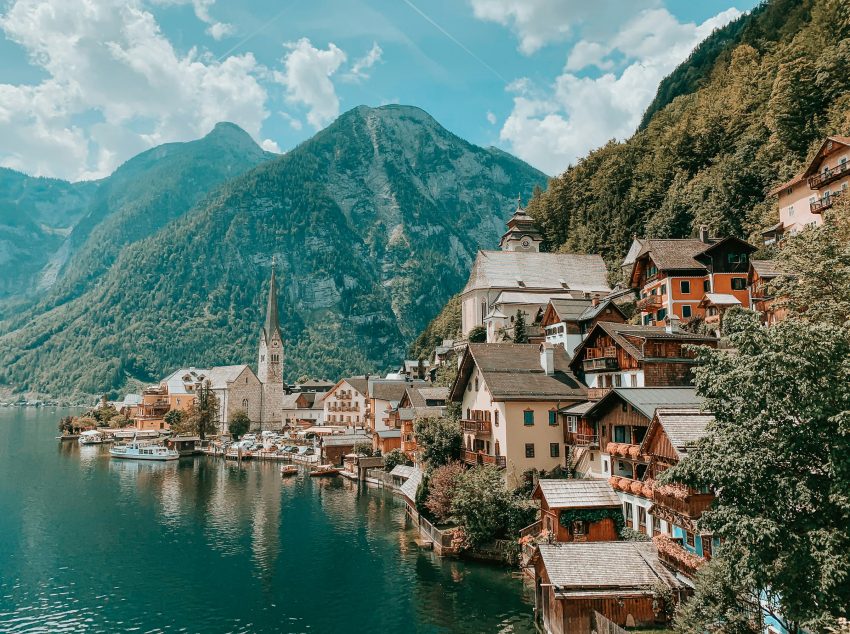
Hallstatt is one of the most memorable places to visit in the Salzkammergut region of Upper Austria, and much of its appeal comes from the way the village sits between the lake and the steep mountain slopes. It is compact enough to explore on foot, yet every corner seems to open onto another striking view, whether that is the waterfront,…
Visiting Hallstatt
Powered by GetYourGuide

Where to Stay in Melk

For Melk, the best place to stay is in or just beside the old town, where you can walk to the abbey, restaurants, the riverside, and the train station without needing a car. This area is ideal if you’re doing a Danube itinerary by rail or want to enjoy early and late hours when day-trippers are gone. A reliable, comfortable choice close to the center is Hotel Stadt Melk, which suits travelers who want to be steps from cafés and the main square. If you prefer a more classic, slightly quieter setting with easy access to both the town and onward routes, Wachauerhof Melk is well placed and convenient for short stays and day trips. For a more modern, practical stop—especially if you’re arriving by car and want straightforward logistics—Hotel-Restaurant zur Post can be a good fit, offering an easy base for exploring the surrounding area while still keeping you close to the core sights.

Using the our Hotel and Accomodation map, you can compare hotels and short-term rental accommodations in Melk. Simply insert your travel dates and group size, and you’ll see the best deals for your stay.

Melk Accommodation Map

Best Time to Visit Melk

Spring in Melk (March–May)

Spring is a fresh, scenic time to visit Melk as the Danube Valley greens up and outdoor walks become comfortable again. Days can vary from crisp to mild, so layers are useful, but it’s ideal for sightseeing without peak-summer crowds.

Summer in Melk (June–August)

Summer brings the warmest weather and the longest days, which suit river cruises, cycling, and late-evening strolls. It’s also the busiest period, so booking accommodation ahead is wise. Seasonal concerts and cultural programming are often a highlight in this time of year.

Autumn in Melk (September–November) (Best)

Autumn is often the most rewarding season for Melk: comfortable temperatures, golden vineyard colors in the wider Wachau, and a calmer pace after summer. Harvest season can bring wine-focused events in the region, making it a great time for tastings and day trips.

Winter in Melk (December–February)

Winter is quieter and can be cold, with shorter daylight hours, but it offers a more local feel and fewer tour groups. Advent and Christmas-market season in the wider area can be a highlight if you enjoy festive lights, seasonal food, and cozy indoor sightseeing.

Annual Weather Overview

  • January 2°C
  • February 7°C
  • March 10°C
  • April 17°C
  • May 18°C
  • June 23°C
  • July 24°C
  • August 25°C
  • September 21°C
  • October 15°C
  • November 8°C
  • December 5°C

How to get to Melk

Getting to Melk by air

Nearest airports: Vienna International Airport (VIE) is the most convenient major airport for most travelers.
From the airport to Melk: Take rail connections from the airport into Vienna’s main rail network, then continue by train to Melk. For timetables and tickets, use ÖBB (Austrian Federal Railways): https://www.oebb.at/en/

Getting to Melk by train

Main operator: ÖBB runs frequent services on key routes that connect well with regional lines.
Planning and tickets: ÖBB journey planner and online tickets: https://www.oebb.at/en/
International rail options: If you’re combining countries, you can also compare routes via Deutsche Bahn: https://www.bahn.com/en

Getting to Melk by Car

Driving notes: Melk is straightforward to reach by motorway and regional roads, making it convenient for a Danube Valley road trip. Expect easier parking outside the busiest summer hours, and check whether your accommodation offers reserved spaces. If you’re continuing into the Wachau, consider leaving the car parked and using boats, bikes, or local transport for the most relaxing experience. If you are looking to rent a car in Austria I recommend having a look at Discover Cars, first, as they compare prices and review multiple car rental agencies for you.

Travelling around Melk

On foot: The center is compact and walkable, with most key sights reachable without transport.
By train for day trips: Use ÖBB for nearby towns and connections: https://www.oebb.at/en/
By bus (regional connections): For regional bus routes and planning, check Niederösterreich public transport information: https://www.vor.at/
By bike: The Danube cycle path makes cycling a practical way to explore nearby riverside stretches and villages in good weather.
More from this area