Plaza de Cort, Palma de Mallorca
Square in Palma de Mallorca
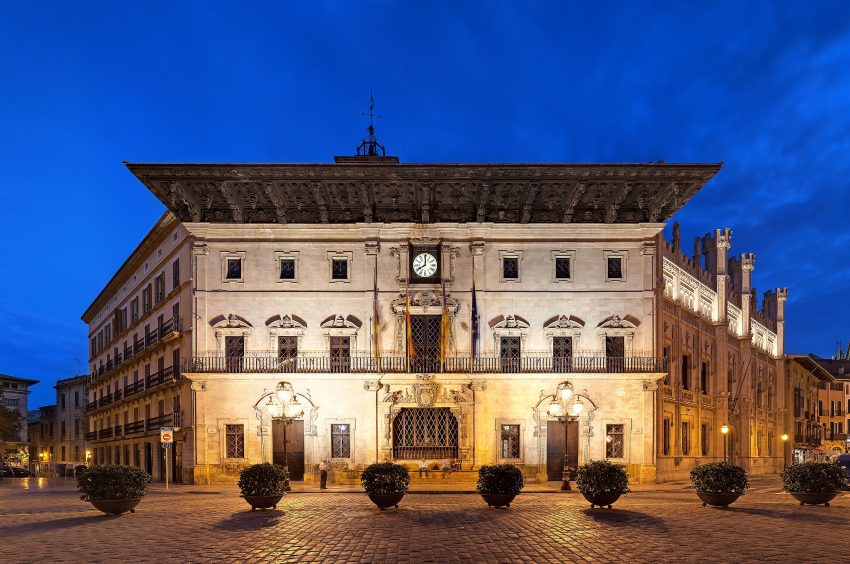
Plaza de Cort is one of those compact historic squares that tells you exactly where the heart of Palma de Mallorca really beats. Here, in the middle of the old town, the city's Town Hall faces the neo-Gothic Palace of the Council of Mallorca, creating a small but striking stage for Palma's political and civic life. The façades could not be more different: the council palace bristles with towers and a crenelated roof, while the Town Hall's Baroque frontage, with hints of Gothic and Mannerist design, feels like the classic Spanish ayuntamiento you expect to find in a Mediterranean city.
Built in the 17th century and later embellished, the Town Hall draws the eye with its deep wooden roof overhang and long balcony lined with windows and a central glass door. This is where a historic clock once chimed curfew and later rang out alarms for fires and public announcements, long before going electric in the 1960s. Today the bells are more symbolic than essential, but the building still feels like one of the top sights in Palma de Mallorca if you enjoy architecture with stories attached. Inside, giant festival mannequins representing legendary historical figures wait for their next parade, while outside the square hums with cafés, people-watching and the slow rhythm of life in the old town, making it a great place to visit on a walking tour of Palma de Mallorca.
Table of Contents
- History and Significance of the Plaza de Cort
- Things to See and Do in the Plaza de Cort
- How to Get to the Plaza de Cort
- Practical Tips on Visiting the Plaza de Cort
- Where to Stay close to the Plaza de Cort
- Is the Plaza de Cort Worth Visiting
- FAQs for Visiting Plaza de Cort
- Nearby Attractions to the Plaza de Cort
History and Significance of the Plaza de Cort
Plaza de Cort has been the civic heart of Palma for centuries, and its very name evokes the idea of “court” and council. The Town Hall, completed in 1649 and enhanced in 1680, is the star of the square, with its carefully worked Baroque façade incorporating Gothic and Mannerist touches. Architects Re Bauçà, Miguel Oliver and Bartomeu Calafat helped shape the building you see today, giving Palma a town hall that is both stately and unmistakably Mallorcan, with local materials and craftsmanship front and centre.
One of the Town Hall’s defining elements is its enormous wooden roof projecting more than nine feet beyond the façade, a dramatic cornice that both protects the balcony and adds visual weight to the building. The long balcony, with six windows and a central glass door, was once home to the famous Figuera clock that originally sat in the clock tower before a tornado in 1848 forced its relocation. A new clock installed in 1863 took on a central role in the daily life of the city, first announcing curfew, then, from 1865 until the mid-1950s, ringing out to signal fires and relay public announcements. The clock’s electrification in 1964 marks a small but telling step in Palma’s march towards modernity.
Inside the Town Hall, the atmosphere shifts from formal to almost playful when you encounter the large festival mannequins or “giants.” These figures, representing legendary and historical personalities, come to life during local festivals as they parade through the streets, reminding visitors that civic identity here is as much about celebration and shared stories as it is about administration. The Palace of the Council of Mallorca, with its neo-Gothic façade, towers and crenelations, adds another layer of symbolism to the square, representing the wider island and its governance. Together, the two buildings make Plaza de Cort a compact but powerful expression of Mallorcan civic pride.
Things to See and Do in the Plaza de Cort
Start by simply standing in the middle of the square and comparing the two main façades. The Palace of the Council of Mallorca rises with its neo-Gothic lines, pointy towers and battlement-like roofline, giving it a slightly medieval, almost romantic feel despite its relatively modern date. Opposite, the Town Hall’s Baroque façade is more sober but full of character: carved stone details, wooden eaves and the long balcony all reward a slow, careful look.
Look up at the Town Hall’s great overhanging wooden roof, which casts generous shade over the balcony below. Imagine this façade in earlier times, when the balcony would have been a stage for proclamations and the clock a crucial tool for keeping order in the streets. The story of the clock, relocated after the 1848 tornado, then replaced in 1863, and finally electrified in 1964, is a reminder that technology and tradition are always in dialogue here.
If you are part of a pre-booked group, a visit inside the Town Hall reveals another side to Plaza de Cort. You can see the large mannequins or “giants” that are brought out on special occasions, towering figures that lend colour and personality to festivals and processions. These characters embody local legends, rulers and symbolic figures, and seeing them up close gives you a sense of how important public celebrations are to Palma's identity. Between sightseeing, sit at one of the nearby cafés, order a coffee or a cold drink, and watch life unfold in the square as locals pass through on errands, meetings and everyday business.
How to Get to the Plaza de Cort
Plaza de Cort lies in the heart of Palma's old town, surrounded by narrow streets and historic buildings, just a short walk from other key sights such as the cathedral and Plaza Mayor.
Most overseas visitors arrive via Palma de Mallorca Airport, with buses and taxis running frequently into the city centre; from the main drop-off points or from Plaza de España you can walk into the old town and follow signs or maps to Plaza de Cort. For the best deals and a seamless booking experience, check out these flights to Palma de Mallorca on Booking.com.
If you are elsewhere on the island, trains from inland towns such as Inca or Manacor bring you to Estació Intermodal at Plaza de España. From there, it is an easy 10-15 minute walk through the historic streets to Plaza de Cort, or you can use a city bus that stops nearby and then continue on foot for the last few minutes. Train schedules and bookings can be found on Omio.
Drivers can follow the main roads into Palma and use one of the underground car parks on the edge of the old town or near the seafront. Once parked, you will want to explore on foot, as the streets around Plaza de Cort are narrow, often one-way and not particularly friendly to through traffic; walking lets you enjoy the architecture and atmosphere as you approach the square. If you are looking to rent a car in Spain I recommend having a look at Discover Cars, first, as they compare prices and review multiple car rental agencies for you.
Practical Tips on Visiting the Plaza de Cort
- Suggested tips: Treat Plaza de Cort as both a photo stop and a pause point; take time to admire the façades, then sit at a café terrace to soak up the rhythm of local life before heading deeper into the old town.
- Best time to visit: Late morning or late afternoon are ideal, when the light on the façades is soft and there is a pleasant mix of locals and visitors; evenings can be atmospheric when the square is lit and temperatures drop.
- Entrance fee: Free
- Opening hours: 24 Hours
- How long to spend: Around 20-40 minutes is enough to appreciate the square, take photos and enjoy a drink; allow more time if you are joining a guided visit inside the Town Hall.
- Accessibility: The square’s surface is generally flat and suitable for most visitors; access inside the Town Hall for tours may involve steps, so check details when booking if mobility is an issue.
- Facilities: Cafés, restaurants and small shops line the nearby streets, while public restrooms can be found in surrounding areas of the old town and larger nearby squares.
- Photography tip: Shoot from the corners of the square to capture both the Town Hall and the Palace of the Council in a single frame; details such as the overhanging wooden roof, balcony and neo-Gothic towers make great close-ups.
- Guided tours: Many old-town walking tours include Plaza de Cort as a stop, explaining its role in Palma's civic life and pointing out hidden details on the façades.
- Nearby food options: The lanes around Plaza de Cort lead quickly to tapas bars, bakeries and small restaurants, so it is easy to combine a visit here with lunch, dinner or a mid-morning snack.
Where to Stay close to the Plaza de Cort
Staying near Plaza de Cort puts you right in the middle of Palma's old town, within walking distance of the cathedral, the Arab Baths, Plaza Mayor and the main shopping streets. For a stylish boutique stay in a restored historic building, Boutique Hotel Posada Terra Santa offers character, comfort and a quiet ambience just a short stroll from the square. If you prefer to be a little closer to the waterfront while still having easy access to Plaza de Cort, Santa Clara Urban Hotel and Spa combines modern design with historic charm in the old town. Another appealing option is Hotel Basilica, set in a former manor house and offering an elegant base from which you can wander out to explore Cort, the cathedral and the surrounding streets on foot.
Is the Plaza de Cort Worth Visiting
Plaza de Cort is definitely worth a stop on any visit to Palma, especially if you enjoy seeing how a city's civic and political life has evolved over time. The contrasting façades of the Town Hall and the Palace of the Council of Mallorca, the story of the clock that once regulated curfew and carried urgent news, and the quirky presence of the festival “giants” all combine to give the square a distinctive personality.
It may not be as large or as famous as some of Palma's other spaces, but Plaza de Cort offers an intimate, lived-in feel that many travellers find particularly memorable. It is the kind of place where you can take a few photos, then sit with a coffee and watch people drifting across the cobbles, knowing that the same square has been at the centre of Palma's civic story for centuries. As part of a broader wander through the old town, it adds context, colour and a strong sense of place.
What Other Travellers Say...

S'Olivera de Cort, in Palma's central Plaça de Cort, is a striking, centuries‑old olive tree that dominates the square with a huge gnarled trunk and wide canopy offering pleasant shade; visitors describe it as a magnificent, much‑photographed natural landmark surrounded by attractive old Spanish buildings, shops, cafés and restaurants—an upmarket, clean spot to pause, browse souvenir and gift shops, grab a snack and enjoy the atmosphere of Palma's old town.


FAQs for Visiting Plaza de Cort
Nearby Attractions to the Plaza de Cort
- Palma Cathedral La Seu - The city's magnificent Gothic cathedral overlooking the bay, just a short walk from the square.
- Royal Palace of La Almudaina - Historic royal residence beside the cathedral, blending Islamic and Gothic influences and still used for official ceremonies.
- Plaza Mayor - A lively main square with arcades, cafés and shops, ideal for people-watching and refreshments after exploring Cort.
- Arab Baths - Intimate 10th-century hammam ruins with a tranquil garden, offering a glimpse into Palma's Islamic past.
- Passeig del Born - An elegant tree-lined boulevard nearby, perfect for a stroll past designer boutiques, cafés and grand townhouses.
The Plaza de Cort appears in our Complete Guide to Visiting Palma de Mallorca!

Moira & Andy
Hey! We're Moira & Andy. From hiking the Camino to trips around Europe in Bert our campervan — we've been traveling together since retirement in 2020!
This website uses affiliate links which may earn a commission at no additional cost to you!
Planning Your Visit
24 Hours
Free
Nearby Attractions
- Església de Santa Eulàlia (0.1) km
Church - Centre Maimó ben Faraig (0.1) km
Museum - Can Casasayas (0.2) km
Historic Building - Palau March Museum (0.2) km
Historic Building and Museum - Puerta de los Judios (0.2) km
City Gate - Bishop's Garden (0.2) km
Gardens - Plaza Mayor (0.2) km
Square - La Seu: the Cathedral of Palma (0.3) km
Cathedral - Convent of San Francisco (0.3) km
Convent - Museo de Mallorca (0.3) km
Museum