Museo de Málaga
Museum in Málaga
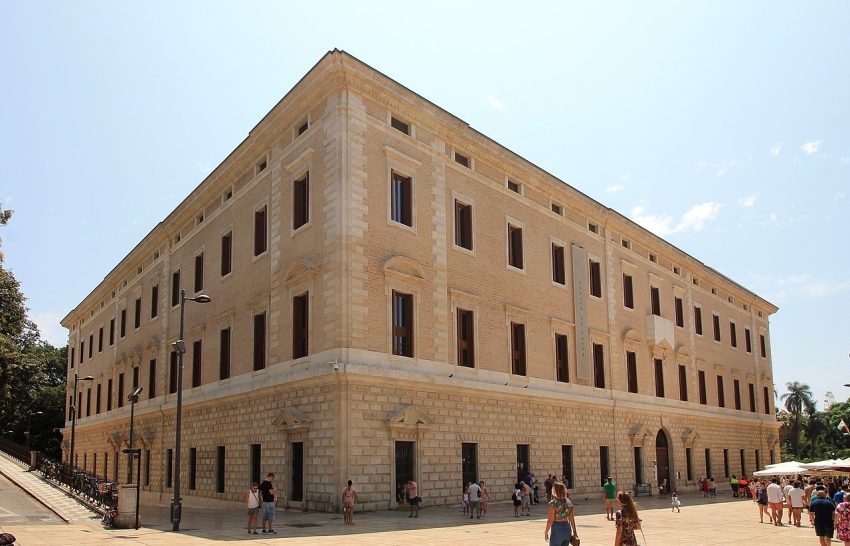
Museo de Málaga is the city's big “two-in-one” museum, bringing together fine arts and archaeology under one roof in the stately Palacio de la Aduana, just beside the Alcazaba and a short stroll from the waterfront. It's the kind of museum that works whether you have an hour to fill between landmarks or a half-day to slow down and properly absorb Málaga beyond its terraces and sunshine.
The building itself is part of the appeal: a neoclassical former customs house built for the port, with the confident symmetry and grand proportions of an Italian Renaissance-inspired palace. Inside, the collections feel thoughtfully paced across two floors-art above, archaeology below-so you can move from 19th-century Andalusian scenes to Neolithic fragments and medieval pieces in a single visit that still feels coherent rather than overwhelming.
Table of Contents
- History and Significance of the Museo de Málaga
- Things to See and Do in the Museo de Málaga
- How to Get to the Museo de Málaga
- Practical Tips on Visiting the Museo de Málaga
- Where to Stay Close to the Museo de Málaga
- Is the Museo de Málaga Worth Visiting?
- For Different Travelers
- FAQs for Visiting Museo de Málaga
- Nearby Attractions to the Museo de Málaga
History and Significance of the Museo de Málaga
Museo de Málaga was created in 1973, when the Provincial Museum of Fine Arts and the Provincial Archaeological Museum were combined into a single institution. That merger matters because it reflects the city's layered identity: Málaga is both a place of painters, patrons, and modern cultural energy, and a city built on deep archaeological foundations that reach far beyond the Roman and Moorish chapters most visitors already recognise.
Its home, the Palacio de la Aduana, adds another layer of meaning. As a customs house tied to Málaga’s port, it once represented trade, control, and the economic pulse of the city. The later renovation and reopening as a museum reframed the building as a public cultural space, even restoring details like its original gabled roof after the earlier structure was lost to fire-an architectural “return” that mirrors the museum’s wider mission of recovering and presenting the city’s story.
Things to See and Do in the Museo de Málaga
Start with the fine-arts collection on the first floor, which is particularly strong in 19th-century Andalusian landscape and genre painting. It's not a quick “greatest hits” gallery; it's more of a calm, immersive look at how the region saw itself-light, daily life, and a sense of place that makes Andalusia feel tangible rather than postcard-perfect.
Then shift to archaeology, where the tone changes completely: objects, fragments, and materials that chart human life in the area from prehistory onward. A highlight is the breadth of the collection associated with the Loring-Heredia legacy, which gives the museum a surprising depth for a city-centre visit, ranging from Neolithic finds linked to nearby sites like the Cueva de Nerja to pieces that connect directly with Málaga's medieval past, including elements associated with the Alcazaba.
One of the best ways to enjoy the museum is to treat it as a “context stop” for the surrounding monuments. Visit the Alcazaba and Roman Theatre first to get the outdoor drama, then come here to understand the quieter details-how life, craft, belief, and taste evolved in the same city you've just walked through.
How to Get to the Museo de Málaga
Málaga-Costa del Sol Airport (AGP) is the nearest airport, around 20-25 minutes by road from the city centre depending on traffic. For the best deals and a seamless booking experience, check out these flights to Málaga on Booking.com. From the airport, the simplest route is the Cercanías train to Málaga María Zambrano followed by a short taxi or bus ride into the historic centre, or a direct taxi/ride-hail if you want door-to-door ease.
If you are arriving by rail, Málaga María Zambrano is the main station for long-distance and high-speed services, and from there you can connect by local bus, taxi, or a walk if you enjoy city strolling. Train schedules and bookings can be found on Omio. For buses, Málaga's urban network makes it easy to reach the Alameda Principal / Parque de Málaga area, and from there the museum is a short, pleasant walk toward the Alcazaba.
By car, aim for a public car park near the historic centre or the port-side edge of the old town, then walk the final stretch to avoid narrow streets and restricted central zones. If you are looking to rent a car in Spain I recommend having a look at Discover Cars, first, as they compare prices and review multiple car rental agencies for you.
Practical Tips on Visiting the Museo de Málaga
- Entrance fee: Free for EU citizens; €1.50 for other visitors.
- Opening hours: (Summer) 16 June – 15 September; Tuesday – Saturday: 09:00–21:00. Sunday & Public Holidays: 09:00–15:00. (Winter) 16 September – 15 June; Tuesday – Saturday: 09:00–20:00. Sunday & Public Holidays: 09:00–15:00. Closed on Monday. Closed on 1 January; 6 January; 1 May; 24 December; 25 December; 31 December.
- Official website: http://www.museosdeandalucia.es/web/museodemalaga
- Best time to visit: Go mid-morning for the quietest galleries, or use the museum as a shaded, air-conditioned break in the hottest part of the afternoon.
- How long to spend: Allow 1.5-2.5 hours for a balanced visit to both collections without rushing, especially if you like reading labels and taking breaks between rooms.
- Accessibility: The museum is generally easier than many old-town sights thanks to its spacious interior and lifts, but expect some long gallery stretches, so pace yourself if you tire easily.
- Facilities: Plan for a comfortable visit with restrooms and seating, and consider pairing it with a café stop nearby in the Parque de Málaga or the old town afterwards.
Where to Stay Close to the Museo de Málaga
For a culture-heavy itinerary, base yourself in Málaga's Historic Centre around the Cathedral, Alcazaba, and Parque de Málaga so you can walk to major sights early and late without relying on transport.
A strong, convenient option a few minutes from the museum and the waterfront is AC Hotel Málaga Palacio, especially if you like being able to slip between old town and port areas easily. For a stylish central stay with great walkability to museums, restaurants, and evening atmosphere, Room Mate Valeria is well placed near the harbour edge of the centre. If you want a classic, very central base close to the Cathedral and the city’s main cultural spine, Hotel Molina Lario makes sightseeing days feel effortless.
Is the Museo de Málaga Worth Visiting?
Yes, particularly if you want more than a surface-level Málaga. It's one of the city's most rewarding “depth stops” because it combines art and archaeology in a setting that feels grand without being intimidating, and it connects directly to the monuments outside through objects and context you simply do not get from a quick walk-by.
Honest pivot: if your priority is only headline-name art or highly interactive exhibits, this may feel quieter and more traditional than you want. In that case, you might prefer to prioritise a more single-artist museum experience or stick to outdoor highlights like the Alcazaba and viewpoints, using this museum only if you have extra time.
What Other Travellers Say...

Malaga Museum, housed in the grand Palacio de la Aduana on Plaza de la Aduana, invites visitors into a calm, sunlit space where marble staircases, high courtyards and an interior patio frame archaeology and art collections that trace Málaga’s past; the building itself is part of the experience, with accessible elevators and staircases, a quiet café and even a Michelin-starred restaurant in the same structure. Lockers (coin-operated, refundable) and umbrella holders are provided, entry can be free for EU citizens while others pay a small fee, and visitors praise friendly staff, peaceful spots to sit and reflect, and a collection that offers a genuine sense of local culture.


For Different Travelers
Families with Kids
For families, the best approach is to keep the visit flexible: pick a handful of “anchor” rooms rather than trying to see everything. The archaeological section is often the easiest hook for kids because it feels like discovery-objects from real lives, real materials, and a story that moves through time in a way that’s naturally engaging.
If you're travelling with younger children, make it a short, high-impact visit and pair it with nearby outdoor breaks. The museum's location is ideal for this, because you can step out to the Roman Theatre area or the park quickly if attention spans drop.
Couples & Romantic Getaways
This is a good museum for couples who like to travel slowly and talk as they go, because the collections naturally prompt conversation-what Málaga looked like, how people lived, what the region valued, and how tastes changed over time. It also fits neatly into a “classic Málaga day” with the Alcazaba, a long lunch, and an evening waterfront walk.
To keep it feeling relaxed rather than box-ticky, choose either art-first or archaeology-first depending on your interests, then give yourselves permission to skip rooms that do not land. The building’s architecture and natural rhythm through the floors make it easy to tailor the visit without feeling like you missed the point.
Budget Travelers
Museo de Málaga is one of the best-value cultural visits in the city, especially if you can take advantage of the low-cost or free entry conditions. It delivers a lot of substance in a prime location, which is exactly what you want when you're building days around walkable, high-impact sights.
To keep spending down, plan a museum-and-monuments day entirely on foot: museum, Roman Theatre exterior, Alcazaba surroundings, then the park and port area. You'll get a full Málaga “story arc” with minimal transport costs.
History Buffs
If you care about how cities evolve, this museum is a must because it stitches together Málaga’s long timeline with real objects rather than simplified summaries. The archaeological collection, in particular, helps you understand how deep the roots go beyond the chapters most visitors already know.
Treat it as the indoor companion to the outdoor sites nearby. Seeing the Alcazaba and Roman Theatre is impressive; understanding the material culture behind those eras is what turns a nice day into a genuinely informed one.
FAQs for Visiting Museo de Málaga
Getting There
Tickets & Entry
Visiting Experience
Tours, Context & Itineraries
Photography
Accessibility & Facilities
Food & Breaks Nearby
Nearby Attractions to the Museo de Málaga
- Alcazaba of Málaga: The city's iconic Moorish fortress, offering architecture, gardens, and views just steps from the museum.
- Roman Theatre of Málaga: An atmospheric ancient site right at the foot of the Alcazaba, easy to slot into the same outing.
- Málaga Cathedral: A landmark Renaissance-Baroque cathedral that anchors the historic centre and rewards a slow wander.
- Museo Picasso Málaga: A major city museum focusing on Picasso's work and Málaga's modern cultural identity.
- Castillo de Gibralfaro: A hilltop castle and viewpoint that delivers the most panoramic skyline-and-sea photos in the city.
The Museo de Málaga appears in our Complete Guide to Visiting Málaga!

Moira & Andy
Hey! We're Moira & Andy. From hiking the Camino to trips around Europe in Bert our campervan — we've been traveling together since retirement in 2020!
This website uses affiliate links which may earn a commission at no additional cost to you!
Planning Your Visit
(Summer) 16 June - 15 September; Tuesday - Saturday: 09:00-21:00. Sunday & Public Holidays: 09:00-15:00.
(Winter) 16 September - 15 June; Tuesday - Saturday: 09:00-20:00. Sunday & Public Holidays: 09:00-15:00.
Closed on Monday. Closed on 1 January; 6 January; 1 May; 24 December; 25 December; 31 December.
Free for EU citizens; €1.50 for other visitors.
Nearby Attractions
- Roman Theatre (0.1) km
Historic Site and Theatre - Alcazaba (0.2) km
Castle - Málaga Cathedral (0.2) km
Cathedral - Church of San Agustin (0.2) km
Church - Picasso Museum (0.2) km
Museum - Iglesia de Santiago (0.3) km
Church - Plaza de la Merced (0.4) km
Monument, Square and Statue - Port of Málaga (0.4) km
Port - Calle Larios (0.4) km
Street - Museo del Patrimonio Municipal (0.4) km
Museum