Mirador de Caballo Blanco, Pamplona
Viewing Point in Pamplona
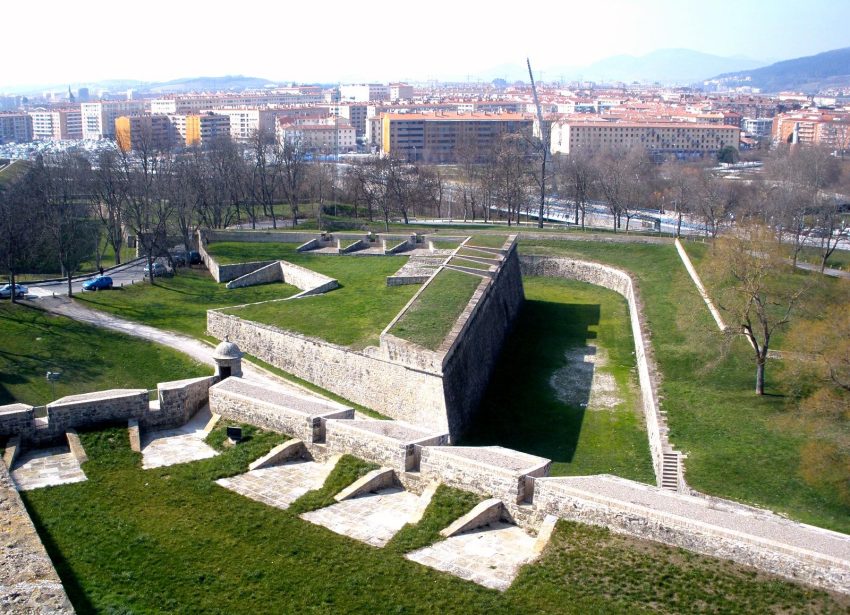
Perched on the highest part of the Bastion of Redín, Mirador de Caballo Blanco (White Horse Lookout) offers what many consider the best panoramic views in Pamplona. From this lofty viewpoint you can gaze across the old city walls, follow the curve of the Arga River, and on clear days pick out the silhouette of the Great Pyrenees Mountains on the horizon, making it one of the top sights in Pamplona for anyone who loves far-reaching cityscapes. Below you lie the neighbourhoods of La Rochapea, Chantrea and San Jorge, while directly ahead rises Mount San Cristóbal with its abandoned fort crowning the ridge.
Yet this is not just a pretty viewpoint. You are standing on what was once the most inaccessible and strategically important bastion in Pamplona's defensive system, a star-shaped work whose three points allowed cannons to cover every approach. At each tip of the star sits a Renaissance sentry box, matching those along the Ronda Barbazana, reminders that soldiers once watched from here instead of today's strolling visitors and pilgrims. Between the history, the distant mountains and the peaceful gardens nearby, Mirador de Caballo Blanco is a highlight of any walking tour of Pamplona.
Table of Contents
- History and Significance of the Mirador de Caballo Blanco
- Things to See and Do in the Mirador de Caballo Blanco
- How to Get to the Mirador de Caballo Blanco
- Practical Tips on Visiting the Mirador de Caballo Blanco
- Where to Stay close to the Mirador de Caballo Blanco
- Is the Mirador de Caballo Blanco Worth Visiting?
- FAQs for Visiting Mirador de Caballo Blanco
- Nearby Attractions to the Mirador de Caballo Blanco
History and Significance of the Mirador de Caballo Blanco
Mirador de Caballo Blanco occupies the highest part of the Bastion of Redín, long regarded as the strongest defensive point in Pamplona's walls. In the age when artillery dominated warfare, this bastion's star-shaped plan with three projecting points allowed defenders to sweep the slopes below with overlapping cannon fire, turning the approach into a deadly maze. Its position above the Arga River and commanding views in all directions made it the most inaccessible and strategically valuable segment of the walled complex.
A palace once stood on this commanding spot, though today little of it remains. The main visible survivor of that period is the Cruz del Mentidero, a small, column-like monument whose base and shaft still stand within the grounds. Despite its innocuous appearance, this cross was in fact a pillory and place of execution dating back to 1500, originally located at the meeting point of Navarrería, Curia, Calderería and Mañueta streets in the old town. Moving it here tied the new viewpoint to a darker strand of Pamplona’s history, reminding visitors that public punishment and power were once part of everyday urban life.
From the sixteenth and seventeenth centuries onwards, Pamplona's walls were continually upgraded to meet new military realities. At the foot of the Bastion of Redín, trenches were dug and new works such as the Bastion Bajo de Guadalupe were added to strengthen the line. Further down, the Revellín de los Reyes, a triangular outwork, was built to split attacking forces and protect the main walls through crossfire. When you stand at Mirador de Caballo Blanco today, looking down at seemingly peaceful green slopes and lower-level structures, you are in fact standing at the heart of a sophisticated layered defence system that once made Pamplona a true fortress city.
Things to See and Do in the Mirador de Caballo Blanco
The main draw at Mirador de Caballo Blanco is the view, so start by walking right up to the edge of the terrace and slowly turning through a full circle. One way, your eyes follow the old walls, bastions and gardens wrapped around the city; another, they track the Arga River snaking below; and in the distance you see Mount San Cristóbal with its abandoned fort perched on the highest ridge. On clear days, the outline of the Pyrenees completes the backdrop, turning this into one of the best places to visit in Pamplona for wide, cinematic vistas.
Take time to explore the details of the bastion itself. Look for the three points of the star-shaped plan and the Renaissance-style sentry boxes at their tips, matching those on the Ronda Barbazana. Standing inside or beside these guard posts, it is easy to imagine the sentries who once watched for threats beyond the walls. As you move along the edges, glance down to pick out trench lines, lower bastions and the Revellín de los Reyes further below, all designed to slow and split any attacking force before it could reach the main ramparts.
Do not miss the White Horse mansion and the Mentidero Cross. The mansion you see today was only erected in 1961, built using stones and ornamental elements salvaged from the demolished Aguerre Palace on Calle Nueva. In front of it stands the base and shaft of the Cruz del Mentidero, the former pillory and execution site from 1500 that once stood at the busy crossroads in the old town known as El Mentidero. These elements add architectural and historical texture to the viewpoint, blending layers from different centuries into one compact, evocative space where you can sit, take photos, or simply watch the light shift over the city and surrounding hills.
How to Get to the Mirador de Caballo Blanco
Most visitors arrive in Pamplona via Pamplona Airport or larger regional airports such as Bilbao or San Sebastián, then travel into the city centre by bus, taxi or hire car. For the best deals and a seamless booking experience, check out these flights to Pamplona on Booking.com. From the old town, it is a short uphill walk through historic streets towards the Bastion of Redín and the lookout.
If you are travelling by train, Pamplona's main station connects with Madrid, Barcelona and other Spanish cities.Train schedules and bookings can be found on Omio. From the station, take a local bus or taxi into the Casco Viejo, then follow signs or maps towards the city walls and the Portal de Francia; from there, paths and lanes lead up to the Mirador de Caballo Blanco. Local buses also serve stops near the old town, from which you can walk the final section to the viewpoint.
Arriving by car, follow the main roads into Pamplona and park in a central car park near the edge of the historic centre, as the streets close to the bastions are best explored on foot.If you are looking to rent a car in Spain I recommend having a look at Discover Cars, first, as they compare prices and review multiple car rental agencies for you. From your parking spot, walk through the Old Quarter towards the walls and Bastion of Redín; the lookout is clearly positioned above the Arga River and is easy to include as part of a wider walk along the ramparts.
Practical Tips on Visiting the Mirador de Caballo Blanco
- Suggested tips: Combine the viewpoint with a stroll along the nearby walls and bastions so you can appreciate both the views and the fortifications that create them.
- Best time to visit: Late afternoon and sunset are especially beautiful, with warm light on the stone walls and the Pyrenees often standing out more clearly.
- Entrance fee: Free – Mirador de Caballo Blanco is a public viewpoint.
- Opening hours: Generally accessible at all times, though it is safest and most enjoyable to visit during daylight and early evening hours.
- How long to spend: Plan 30-60 minutes to enjoy the views, explore the bastion details and take photos; longer if you link it to a full wall walk.
- Accessibility: Access involves walking up through old streets and onto the bastion, with slopes and possible steps; visitors with reduced mobility may find some sections challenging.
- Facilities: There are no dedicated facilities at the viewpoint itself; cafés, bars and toilets are available back in the Old Quarter and along routes to the walls.
- Photography tip: Bring a zoom lens or use your phone’s telephoto mode to pick out neighbourhoods, the Arga River and Mount San Cristóbal; wide-angle shots work well for capturing the star-shaped bastion and sentry boxes.
- Guided tours: Consider a guided walk focused on Pamplona’s fortifications or Camino route; many include this lookout and explain the surrounding defences in more detail.
- Nearby food options: After your visit, drop back down into the Old Quarter for pintxos and drinks, or head towards Plaza del Castillo for a wider range of cafés and restaurants.
Where to Stay close to the Mirador de Caballo Blanco
Staying in or near the Old Quarter makes it easy to visit Mirador de Caballo Blanco at different times of day, from quiet mornings to glowing sunsets. A refined central option on the main square is Gran Hotel La Perla, which places you within a pleasant walk of the bastions, cathedral and principal streets. For a more atmospheric base closer to the city walls and religious heritage, Pamplona Catedral Hotel sits near the cathedral and ramparts, giving you quick access to the lookout and Camino route. If you prefer a modern hotel beside green spaces as well as the historic centre, Hotel Tres Reyes Pamplona offers easy reach to La Taconera Park, the citadel and the paths leading towards the Bastion of Redín and Mirador de Caballo Blanco.
Is the Mirador de Caballo Blanco Worth Visiting?
Mirador de Caballo Blanco is absolutely worth visiting, especially if you enjoy big views and historic settings. From this single spot you can read Pamplona's story in layers: the star-shaped bastion and trenches that once defended the city, the distant Mount San Cristóbal fort, the Arga River and the neighbourhoods spilling out beyond the walls. Add the White Horse mansion, Mentidero Cross and constant flow of pilgrims and locals, and you have a place that feels both scenic and deeply rooted in the city's identity. For many visitors, it becomes one of the standout memories of their time in Pamplona.
What Other Travellers Say...

Mirador Caballo Blanco, at C. Dos de Mayo 11 in Pamplona, is a charming lookout near the city walls offering pleasant views over part of the city; visitors praise the vistas from atop the wall and say it's a lovely spot to relax or have a drink.


FAQs for Visiting Mirador de Caballo Blanco
Nearby Attractions to the Mirador de Caballo Blanco
- Pamplona Cathedral: The city's main Gothic cathedral with Neoclassical façade, cloister and royal tombs, located a short walk away in the Old Quarter.
- Museum of Navarra: Regional museum housed in a former pilgrims' hospital, tracing Navarre's history from prehistory to modern art.
- Bastion Bajo de Guadalupe and Revellín de los Reyes: Lower-level defensive works beneath the Bastion of Redín that show how Pamplona’s defences were layered.
- Ciudadela de Pamplona: A 16th century star-shaped fortress turned public park, offering more examples of the city's military heritage.
- La Taconera Park: A large 19th century park with gardens, sculptures and a mini zoo, ideal for a relaxing stroll after enjoying the views from the walls.
The Mirador de Caballo Blanco appears in our Complete Guide to Visiting Pamplona!

Moira & Andy
Hey! We're Moira & Andy. From hiking the Camino to trips around Europe in Bert our campervan — we've been traveling together since retirement in 2020!
This website uses affiliate links which may earn a commission at no additional cost to you!
Planning Your Visit
Generally accessible at all times, though it is safest and most enjoyable to visit during daylight and early evening hours.
Free - Mirador de Caballo Blanco is a public viewpoint.
Nearby Attractions
- Portal de Francia (0.1) km
City Gate - Catedral de Pamplona (0.2) km
Cathedral - San Fermín de Aldapa (0.2) km
Church - Albergue de Jesús y María (0.2) km
Church and Hostel - Royal and General Archive of Navarra (0.3) km
Archive and Palace - Magdalena Bridge (0.3) km
Bridge - Ayuntamiento de Pamplona (0.4) km
Town Hall - Calle Estafeta (0.4) km
Street - Museo Universidad de Navarra (0.4) km
Museum - Museum of Navarre (0.4) km
Museum