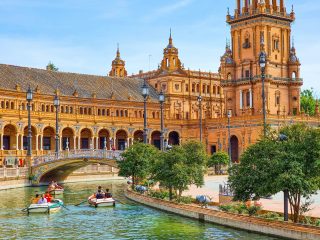
La Casa de la Ciencia, Seville
Historic Building and Museum in Seville

Casa de la Ciencia de Sevilla is a science museum set inside Seville's Peru Pavilion, a striking 1929 exposition building beside Parque de María Luisa and a short stroll from Plaza de España. The moment you walk up to it, the place feels different from a standard museum: part civic monument, part learning hub, and very much designed for curious browsing rather than “read every label” intensity.
Inside, it's a relaxed, engaging mix of permanent galleries and changing exhibitions, plus a planetarium that's especially popular with families and anyone who likes a little wonder in the middle of a city day. If you're building a balanced itinerary, this is one of the things to do in Seville when you want something educational, air-conditioned, and genuinely fun, and it slots neatly into a walking tour of Seville that includes the 1929 park area.
Table of Contents
- History and Significance of the Casa de la Ciencia de Sevilla
- Things to See and Do in the Casa de la Ciencia de Sevilla
- How to Get to the Casa de la Ciencia de Sevilla
- Practical Tips on Visiting the Casa de la Ciencia de Sevilla
- Where to Stay Close to the Casa de la Ciencia de Sevilla
- Is the Casa de la Ciencia de Sevilla Worth Visiting?
- For Different Travelers
- FAQs for Visiting Casa de la Ciencia de Sevilla
- Nearby Attractions to the Casa de la Ciencia de Sevilla
History and Significance of the Casa de la Ciencia de Sevilla
The museum’s home is part of Seville’s architectural legacy from the Ibero-American Exposition of 1929, when the city reshaped this whole area with monumental pavilions and landscaped public spaces. The Peru Pavilion stands out for its distinctive exterior, reflecting the influence of architect Manuel Piqueras Cotolí, known for blending colonial and indigenous motifs in a style that feels both decorative and symbolic.
That setting matters because Casa de la Ciencia de Sevilla isn’t just “science in a room”; it’s science housed inside a building created to represent identity, culture, and international connections. Visiting today, you get a two-for-one experience: a museum visit and a close look at one of the exposition-era buildings that helped define modern Seville’s most elegant park district.
Since opening as a public science venue, the museum has leaned into accessible, public-facing science: the kind that makes big themes feel approachable. It’s a reminder that Seville’s cultural life isn’t only palaces and baroque churches-there’s also a lively tradition of public education and exhibitions that invite everyone in.
Things to See and Do in the Casa de la Ciencia de Sevilla
Start with the permanent exhibitions, which are designed for easy wandering and quick “aha” moments. A Sea of Cetaceans in Andalucía is a crowd-pleaser because it feels immediate and local, connecting you to the marine life off southern Spain and the idea that Andalusia’s biodiversity extends well beyond what you see on land.
GeoSevilla gives you a different angle on the region, focusing on geological change and how landscapes evolve over deep time-surprisingly satisfying if you've been looking at Seville's stone, riverside setting, and parkland and wondering why the city sits where it does. Invertebrates of Andalusia rounds out the trio with a playful, slightly quirky focus that works well for kids and for adults who secretly like the “weird and wonderful” side of nature.
The planetarium is the other headline experience, and it’s worth timing your visit around a show if you can. It’s not just about stars; it’s about perspective, and it’s a lovely reset if you’ve been doing dense sightseeing. On weekends, workshops and guided activities often add extra energy, making the museum feel like a living community space rather than a static display.
Upstairs, temporary exhibitions change the tone and keep the museum feeling current, so it’s always worth checking what’s on when you arrive. Even if you only have an hour, a good strategy is permanent galleries first, then the planetarium, and finish with a quick upstairs look if time allows.
How to Get to the Casa de la Ciencia de Sevilla
If you're flying in, Seville Airport (SVQ) is the nearest airport, and the easiest plan is to get into the city first and then continue to the Parque de María Luisa area by bus, taxi, or on foot depending on where you're staying. For the best deals and a seamless booking experience, check out these flights to Seville on Booking.com. The museum's location near the park makes it especially convenient if you're already planning Plaza de España on the same day.
If you arrive by train, Sevilla Santa Justa is the main station, and from there a short taxi ride or a straightforward city-bus connection gets you to the Prado de San Sebastián area, followed by an easy walk to the pavilion. Train schedules and bookings can be found on Omio. If you’re staying centrally, walking to the museum is often the most pleasant option, because the approach through the park district feels like part of the visit.
Local buses are a practical choice in peak heat, particularly routes that pass near Prado de San Sebastián or along Avenida de María Luisa. If you're driving, aim to park once in a public car park near the park edge and walk the last stretch, rather than trying to navigate tighter central streets. If you are looking to rent a car in Spain I recommend having a look at Discover Cars, first, as they compare prices and review multiple car rental agencies for you.
Practical Tips on Visiting the Casa de la Ciencia de Sevilla
- Entrance fee: €3 (museum); €3 (planetarium); €5 (combined ticket).
- Opening hours: Tuesday – Sunday: 10:00–20:00. Closed on Monday (except public holidays). On 24 December, 31 December & 5 January: 10:00–15:00. Closed on 25 December, 01 January & 06 January.
- Official website: http://www.casadelaciencia.csic.es/
- Best time to visit: Late morning is ideal if you want a calmer, unhurried feel, while mid-afternoon is perfect if you’re using the museum as a cool break between outdoor sights.
- How long to spend: Plan 60-90 minutes for the galleries, or 2 hours if you want to add a planetarium show and a relaxed look at any temporary exhibition.
- Accessibility: The visit is generally manageable, but as a historic pavilion, some routes may be easier than others; plan a slower pace and ask staff for the most step-light path.
- Facilities: Expect a family-friendly setup with clear signage; bring water for the walk around the park district and consider timing your visit around a planetarium slot.
Where to Stay Close to the Casa de la Ciencia de Sevilla
For a culture-heavy itinerary, the best base is the Historic Centre so you can walk to Seville's headline monuments; if your priority is a greener, calmer stay near the park museums and easy transport links, base yourself around Prado de San Sebastián and El Porvenir.
A very convenient option for this area is Meliá Sevilla, which puts you right by the park district and makes it easy to plan “Plaza de España plus museums” days without extra logistics. For a comfortable stay with strong amenities and a straightforward route into the centre, Hotel Sevilla Center is a reliable pick. If you like being close to Plaza de España and the park edge for early walks and quieter evenings, Hotel Pasarela is a practical base with a very walkable location.
Is the Casa de la Ciencia de Sevilla Worth Visiting?
Yes, especially if you want a lighter, more playful museum that still feels worthwhile for adults. It's an easy way to add variety to a Seville itinerary, and the combination of planetarium, local nature themes, and the 1929 pavilion setting gives it a character that's hard to replicate elsewhere in the city.
What Other Travellers Say...

Casa de la Ciencia, set on Avenida de María Luisa near Plaza de España, is an airy science museum in a historic building featuring permanent and rotating exhibitions plus a planetarium; visitors find it compact but engaging, with interactive VR experiences, touchscreen games and a well-regarded brain exhibition (some individual labels may be only in Spanish while many exhibits offer English translations), low-cost admission, benches and toilets on each floor, and a convenient location for a short, family-friendly visit.


For Different Travelers
Families with Kids
This is one of the easiest “everyone wins” stops in Seville because the exhibitions are visual, themed, and naturally curiosity-driven. Let kids choose the order, and treat the visit like a series of short discoveries rather than one long museum march.
If you can, plan around a planetarium show and build the rest of the visit around that fixed point. The museum also works well as a reward after a big outdoor sight, because it’s a calmer space where kids can refocus without feeling like they’re being asked to be quiet for too long.
Couples & Romantic Getaways
For couples, the appeal is a slower, slightly off-the-main-track cultural stop that still feels “very Seville” thanks to the 1929 pavilion setting and the park district around it. It's a good way to balance a palace-heavy itinerary with something modern and thoughtful.
Pair it with a walk through Parque de María Luisa or an unhurried coffee nearby, and it becomes a gentle half-day that doesn't feel like checklist tourism. The planetarium can be a surprisingly charming shared experience, especially if you time it as a mid-day pause.
Budget Travelers
The ticket pricing is typically modest for what you get, and the surrounding area gives you plenty of free sightseeing to stack around it. It’s a smart option when you want a paid attraction that doesn’t demand a full day or additional transport spend.
To keep costs tight, combine it with Plaza de España, the park walks, and free exterior architecture around the exposition pavilions. You'll get a full, varied day without constantly reaching for your wallet.
History Buffs
While it’s a science museum, the building itself is a real draw for anyone interested in Seville’s 1929 transformation and the way world’s fairs shaped urban identity. The pavilion’s design gives you a direct connection to that era’s ambitions and aesthetics.
If you enjoy reading cities through their institutions, Casa de la Ciencia de Sevilla is also a good example of how historic structures get repurposed into modern public culture. It's less about ancient history and more about how the 20th century reimagined Seville as an international showcase.
FAQs for Visiting Casa de la Ciencia de Sevilla
Getting There
Tickets & Entry
Visiting Experience
Tours, Context & Itineraries
Photography
Accessibility & Facilities
Food & Breaks Nearby
Safety & Timing
Nearby Attractions to the Casa de la Ciencia de Sevilla
- Metropol Parasol (Las Setas): A striking modern landmark with rooftop views and an easy, walkable route from Calle Cuna.
- Iglesia del Salvador: A richly decorated baroque church that adds a strong architectural contrast to the palace’s house-museum feel.
- Plaza de San Francisco: A classic central square that’s ideal for people-watching and a natural link between old-town sights.
- Seville Cathedral and the Giralda: The city's essential landmark complex, reachable on foot through the historic lanes.
- Museo de Bellas Artes de Sevilla: A top art museum in a former convent setting, perfect if you want to extend the “interiors and masterpieces” theme.
The La Casa de la Ciencia appears in our Complete Guide to Visiting Seville!

Moira & Andy
Hey! We're Moira & Andy. From hiking the Camino to trips around Europe in Bert our campervan — we've been traveling together since retirement in 2020!
This website uses affiliate links which may earn a commission at no additional cost to you!
Planning Your Visit
Tuesday - Sunday: 10:00-20:00.
Closed on Monday (except public holidays).
On 24 December, 31 December & 5 January: 10:00-15:00.
Closed on 25 December, 01 January & 06 January.
€3 (museum); €3 (planetarium); €5 (combined ticket).
Nearby Attractions
- Museo Histórico Militar (0.4) km
Museum - Palacio de San Telmo (0.4) km
Historic Building and Palace - Plaza de España (0.4) km
Historic Site and Square - Parque de María Luisa (0.4) km
National Park and Park - Real Fabrica de Tabacos (0.4) km
Historic Building - Royal Alcázars of Seville (0.6) km
Historic Building and Palace - Museo de Artes y Costumbres Populares (0.7) km
Historic Building and Museum - Torre de la Plata (0.7) km
Tower - Plaza de America (0.7) km
Historic Site and Park - Barrio Santa Cruz (0.8) km
Area