Església de Santa Eulàlia, Palma de Mallorca
Church in Palma de Mallorca
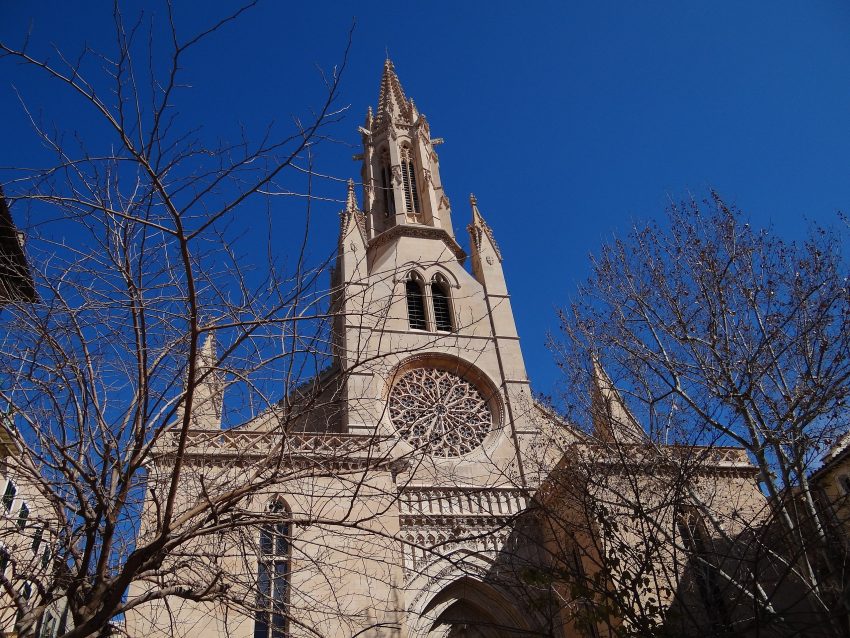
Rising above the tight streets of the old town, the Església de Santa Eulàlia is one of the best places to visit in Palma de Mallorca if you want to connect the city's modern energy with its medieval roots. Built soon after the 1229 Catalan conquest on the site of a former mosque, this imposing Gothic church became Palma's first parish, already recorded in 1236, and has witnessed everything from royal coronations to turbulent uprisings.
Dedicated to Eulalia, the young patron saint of Barcelona martyred by the Romans, the church has long been a spiritual and political reference point for the island. It hosted the first assembly of the General Grand Council of Mallorca and the coronation of Jaume II (James the Just) as king of Majorca in 1276, and later became known as the “church of conversion” after surviving Jews, following the tragic 1391 rebellion, were baptised here. Today, its Neo-Gothic façade, tall bell tower and atmospheric interior make it a highlight of any walking tour of Palma de Mallorca.
Table of Contents
- History and Significance of the Església de Santa Eulàlia
- Things to See and Do in the Església de Santa Eulàlia
- How to Get to the Església de Santa Eulàlia
- Practical Tips on Visiting the Església de Santa Eulàlia
- Where to Stay close to the Església de Santa Eulàlia
- Is the Església de Santa Eulàlia Worth Visiting?
- FAQs for Visiting Església de Santa Eulàlia
- Nearby Attractions to the Església de Santa Eulàlia
History and Significance of the Església de Santa Eulàlia
The Església de Santa Eulàlia was constructed shortly after the Catalan conquest of Mallorca in 1229, when Christian rulers began reshaping the skyline of Palma. Built directly over a former Muslim mosque, it symbolises the shift from Islamic to Christian rule in both spiritual and urban terms. By 1236 it was already listed as a parish church in the paborde of Tarragona, marking it out as the oldest parish in the city and a key node in the new ecclesiastical geography of Mallorca.
Santa Eulàlia’s importance extends far beyond its congregation. It was here that the first General Grand Council of Mallorca met, making the church a stage for early island governance, and on 12 September 1276 it hosted the coronation of Jaume II, known as James the Just, as king of Majorca. On a darker note, the church is also tied to the events of 2 August 1391, when a rebellion against the crown led to the killing of nearly 300 Jews seen as loyal to royal authority. Those who survived and did not flee converted here, which gave the church its reputation as the church of conversion and left a complex legacy woven into Palma’s Jewish and Christian histories.
Over the centuries, Santa Eulàlia has continued to evolve. The rose window and the sculpture of Saint Eulalia above the entrance, carved by Guillem Ferrer, were later additions that enhanced its Gothic character. In the 19th century, a 50 metre high bell tower was added, dramatically altering the silhouette of the church and giving it a new vertical emphasis. Joan Sureda i Veri’s 1893 restoration of the main façade introduced a more modern Neo-Gothic skin, while another restoration in 2011, prompted by severe storm damage, ensured the building remains structurally sound and visually striking. The tympanum paintings of the Annunciation on the east side and the Epiphany on the west side add further layers of devotion to this already richly storied church.
Things to See and Do in the Església de Santa Eulàlia
Start outside, where the façade tells you much of what you need to know. The Neo-Gothic front, reshaped in 1893, frames the central entrance and draws your eyes up to the rose window and the figure of Saint Eulalia carved above the portal by Guillem Ferrer. Walk around the church to seek out the painted tympana: on the east side facing Carrer del Sant Crist you will find the Annunciation, and on the west side facing Carrer de Santa Eulàlia, the Epiphany. These images help you read the church as a visual catechism as well as an architectural landmark.
Inside, the atmosphere shifts to a blend of Gothic structure and later Baroque and Neo-Gothic interventions. The main Baroque altar, crafted by Dominican friar Albert de Burgunyó, commands the centre of attention, rich in ornament and symbolic detail. As you move into the ambulatory behind the altar, look for the sequence of seven chapels, including Sant Crist de la Conquesta, Santa Catalina, Sant Lluís and the Mercy of Christ, each with its own devotional focus and artwork. Together they create a ring of smaller sacred spaces tucked behind the main choir.
If you are comfortable with heights and narrow staircases, do not miss the chance to climb the bell tower. Added in the 19th century and rising around 50 metres, it offers superb views over Palma's historic quarter, from the tangle of terracotta roofs to landmarks like the cathedral and the bay beyond. At the top, a diagrammed guide helps you identify key buildings and districts, turning the climb into a useful orientation exercise for the rest of your time in the city.
How to Get to the Església de Santa Eulàlia
Most visitors arrive in Palma via Palma de Mallorca Airport, the island's main international gateway with regular flights from Spain and across Europe. For the best deals and a seamless booking experience, check out these flights to Palma de Mallorca on Booking.com. From the airport, airport buses and taxis take you into the city centre, from where it is an easy walk through the old town streets to reach Santa Eulàlia.
If you are staying elsewhere on the island, regional trains connect towns such as Inca, Sa Pobla and Manacor with Palma's Estació Intermodal near Plaça d'Espanya.Train schedules and bookings can be found on Omio. From the station, you can either stroll through the historic centre towards the church or take a short hop on one of the city buses that serve the old quarter.
Drivers can follow the main roads into Palma and park in one of the underground or multi-storey car parks around the edge of the historic centre, then continue on foot to the church.If you are looking to rent a car in Spain I recommend having a look at Discover Cars, first, as they compare prices and review multiple car rental agencies for you. Once you are in the old town, distances are short and the route to Santa Eulàlia is a pleasant walk along narrow streets and small squares.
Practical Tips on Visiting the Església de Santa Eulàlia
- Suggested tips: Combine a visit to Santa Eulàlia with nearby Jewish-heritage sites and the cathedral to get a fuller sense of Palma's layered religious history.
- Best time to visit: Late morning or late afternoon tends to offer softer light inside and outside, and visiting between services usually makes for a calmer experience.
- Entrance fee: Church entry is free; access to the bell tower carries a small charge (around a few euros), so check current prices at the door.
- Opening hours: Typically open daily for worship and visits, with specific times for tower access; consult the posted schedule at the church.
- How long to spend: Allow 30-60 minutes if you are exploring the interior and chapels, and a little longer if you climb the bell tower.
- Accessibility: The main entrance has some steps and the interior includes uneven flooring; the bell tower is accessed via narrow stairs and is not suitable for visitors with reduced mobility or vertigo.
- Facilities: Facilities are minimal, limited mainly to the church itself; cafés, shops and public toilets are available in the surrounding streets.
- Photography tip: Capture the façade from slightly back to include the rose window and Saint Eulalia, and inside, use the main aisle and side chapels to frame depth without disturbing worshippers.
- Guided tours: Consider joining a historic-centre walking tour that includes Santa Eulàlia to hear more about the coronation, the 1391 events and the church's role as the “church of conversion.”
- Nearby food options: The area around Santa Eulàlia is full of cafés and tapas bars, making it easy to stop for a coffee or snack before or after your visit.
Where to Stay close to the Església de Santa Eulàlia
Staying in Palma's old town puts you within an easy stroll of the Església de Santa Eulàlia and many of the city's most atmospheric streets. A practical and central option is Hotel Almudaina, which offers comfortable rooms within walking distance of the historic quarter and the waterfront. For a more intimate stay in a beautifully restored historic building, Boutique Hotel Posada Terra Santa gives you a boutique base in the maze of old lanes that surround the church. If you prefer a stylish hotel close to both the old town and the marina, Hotel Basilica is another excellent choice, making it easy to combine church visits with seaside strolls.
Is the Església de Santa Eulàlia Worth Visiting?
Església de Santa Eulàlia is absolutely worth visiting if you are interested in the deeper stories behind Palma's historic facades. As the city's oldest parish church and the setting for Jaume II's coronation, it anchors some of the island's most important political and religious events, while its role in the 1391 conversions adds a poignant layer to the narrative of Jewish life in Mallorca. Add in the Gothic and Neo-Gothic architecture, the Baroque main altar and the rewarding views from the bell tower, and you have a church that repays both a quick visit and a more contemplative, lingering look.
What Other Travellers Say...

Iglesia de Santa Eulalia, on Plaça de Santa Eulàlia in Palma’s Centro, is a quiet Gothic church worth a short detour: visitors praise its serene interior with tall, slender columns, colorful stained glass windows and a detailed altarpiece, and several note you can climb to the roof and belfry for views over neighboring rooftops; the façade includes a notable rose window and neo‑Gothic elements, balconies with gargoyles, and small chapels accessible through side gates.


FAQs for Visiting Església de Santa Eulàlia
Nearby Attractions to the Església de Santa Eulàlia
- Palma Cathedral La Seu: The city's iconic Gothic cathedral overlooking the bay, just a short walk away and easy to pair with a visit to Santa Eulàlia.
- Royal Palace of La Almudaina: A former royal residence beside the cathedral, combining Moorish and Gothic elements and offering guided tours.
- Maimó ben Faraig Centre: A cultural centre and tourist information office that explores Palma's Jewish heritage, including Roman walls and exhibits on the former Jewish quarter.
- Puerta de los Judios site: The former gate to the Jewish quarter, now marked by a SEFARAD symbol on the pavement and an evocative stop for heritage-focused walks.
- Museu de Mallorca: The island's main museum, housed in a 16th century mansion and showcasing archaeology, fine arts and decorative objects from across Mallorca.
The Església de Santa Eulàlia appears in our Complete Guide to Visiting Palma de Mallorca!

Moira & Andy
Hey! We're Moira & Andy. From hiking the Camino to trips around Europe in Bert our campervan — we've been traveling together since retirement in 2020!
This website uses affiliate links which may earn a commission at no additional cost to you!
Planning Your Visit
Typically open daily for worship and visits, with specific times for tower access; consult the posted schedule at the church.
Church entry is free; access to the bell tower carries a small charge (around a few euros), so check current prices at the door.
Nearby Attractions
- Centre Maimó ben Faraig (0.1) km
Museum - Plaza de Cort (0.1) km
Square - Puerta de los Judios (0.1) km
City Gate - Convent of San Francisco (0.2) km
Convent - Bishop's Garden (0.2) km
Gardens - Museo de Mallorca (0.2) km
Museum - Plaza Mayor (0.2) km
Square - Iglesia de Montesión (0.3) km
Church - Can Casasayas (0.3) km
Historic Building - Banys Arabs (Arab Baths) (0.3) km
Baths