Esglesia de Santa Catalina de Siena, Palma de Mallorca
Church in Palma de Mallorca
Hidden in plain sight on busy Carrer de Sant Miquel, the Church of Santa Catalina de Siena is a medieval gem that most shoppers stroll past without realising how old and storied it really is. Founded by Joan Baptista Despuig of the Order of Santiago on the site of an earlier Muslim mosque, it grew from a modest convent church into one of the things to do in Palma de Mallorca if you are interested in the city's religious and architectural past.
Step through the portal and you move from the bustle of modern Palma into a cool, Baroque interior laid over Gothic bones, with a single nave, side chapels and a trapezoidal apse that still hint at the medieval structure beneath the later decoration. Today the church belongs to the Russian Orthodox parish of the Nativity of Christ, so Catholic altarpieces, Orthodox icons and a lived-in sense of worship all coexist in one atmospheric space, making it a great place to visit on a walking tour of Palma de Mallorca.
Table of Contents
- History and Significance of the Church of Santa Catalina de Siena
- Things to See and Do in the Church of Santa Catalina de Siena
- How to Get to the Church of Santa Catalina de Siena
- Practical Tips on Visiting the Church of Santa Catalina de Siena
- Where to Stay close to the Church of Santa Catalina de Siena
- Is the Church of Santa Catalina de Siena Worth Visiting?
- FAQs for Visiting Church of Santa Catalina de Siena
- Nearby Attractions to the Church of Santa Catalina de Siena
History and Significance of the Church of Santa Catalina de Siena
The story of the Church of Santa Catalina de Siena reaches back to Palma’s Islamic past. After the Christian conquest, an existing mosque on this site was adapted with some modifications in the 13th century to serve as an early Christian place of worship, before plans were made a century later for a new Gothic church. Over time, a full convent grew up around it, with the church forming the spiritual heart of the Santa Catalina de Siena community.
The foundation is closely tied to Joan Baptista Despuig, a member of the Order of Santiago, who rests within the church near the altar. The dedication to Santa Catalina (Catherine of Siena), a 14th century nun deeply involved in church politics, adds another layer of significance; she is remembered for persuading Pope Gregory XI to move the papal court back from Avignon to Rome, a turning point in medieval church history. This makes the temple not just a local parish church, but one connected symbolically to wider Catholic reforms and debates.
In 1680, architect Francisco Herrera oversaw a major remodelling that gave the church much of its present Italianate character. The space was enlarged, the main entrance reoriented towards Sant Miquel street, and the interior was richly reworked in Baroque style, while keeping the essential Gothic layout with a single nave, side chapels, a half-barrel roof and trapezoidal apse. Declared a Historic Monument in 1964, the complex nonetheless lost its residential convent buildings to demolition two years later. Then, in 2002, the church entered a new chapter when it was handed over to the Russian Orthodox parish of Natividad Cristo (Nativity of Christ), under the Moscow Patriarchate, turning this medieval Mallorcan church into an active Orthodox sanctuary.
Things to See and Do in the Church of Santa Catalina de Siena
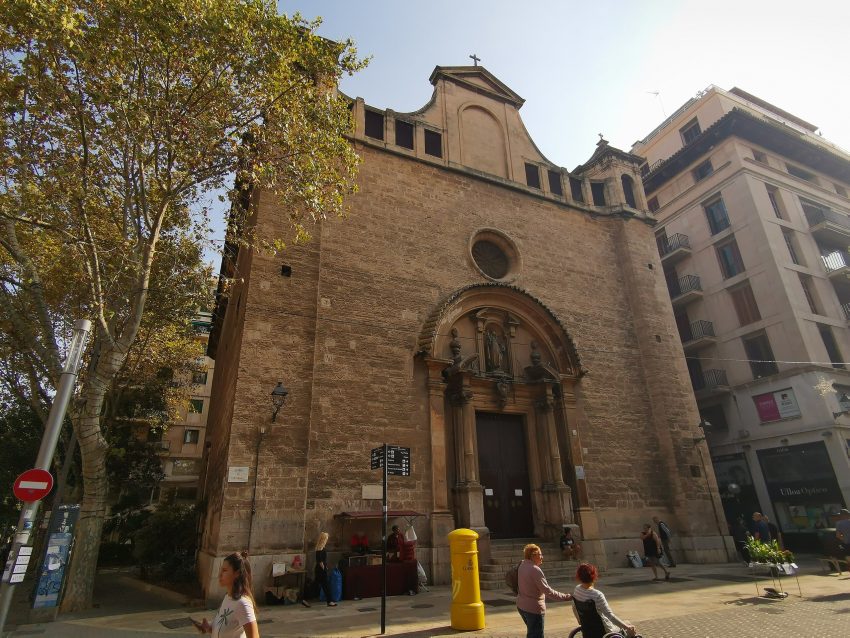
From the outside, pause to take in the subtly theatrical façade facing Carrer de Sant Miquel, a product of the 17th century Italian-style transformation. The portal, niches and architectural framing were designed to catch the eye of passers-by and to announce the church’s renewed status to the city, even as the building blended into the tight urban streetscape of Palma’s old town. It is easy to imagine this frontage as a landmark for merchants and townsfolk coming and going through the centuries.
Inside, the contrast between Gothic structure and Baroque decoration is what makes the church particularly engaging. The single nave and side chapels create a clear, linear space, but the Baroque altarpieces, stucco work and rich ornamentation add a sense of drama and movement. Look for side chapels with devotional paintings and sculpted details, and take a moment near the altar where Joan Baptista Despuig is buried, connecting the building to its founder. The unusual trapezoidal apse and half-barrel roof are architectural quirks worth seeking out as you wander.
Today’s Russian Orthodox presence adds yet another layer of interest. Depending on when you visit, you may see Orthodox icons, candles and liturgical items, or even hear choir rehearsals or services in progress, which infuse the space with a different rhythm and atmosphere from its Catholic past. If you are lucky enough to visit during a service, it offers an evocative glimpse of how an old Mallorcan church can be reanimated by a new community while still preserving its historic fabric. This spot is one of the best places to see in Church of Santa Catalina de Siena if you are fascinated by how buildings evolve through changing faiths and cultures.
How to Get to the Church of Santa Catalina de Siena
Most visitors will arrive in Palma via Palma de Mallorca Airport, the island's main international gateway with frequent flights from across Spain and Europe. For the best deals and a seamless booking experience, check out these flights to Palma de Mallorca on Booking.com. From the airport, city buses, airport shuttles and taxis run regularly into the centre, dropping you within easy walking distance of the old town.
If you are travelling from elsewhere on Mallorca, regional trains connect towns such as Inca, Sa Pobla and Manacor with Palma's Estació Intermodal, located just off Plaça d'Espanya.Train schedules and bookings can be found on Omio. From there it is only a short walk up Carrer de Sant Miquel towards Porta Pintada; as you follow the shopping street, you will find the church on your left at number 48. Buses from many island resorts also terminate around Plaça d’Espanya, making the onward walk similarly straightforward.
Travelling by car, follow the main roads into Palma and look for signposted underground or multistorey car parks around Plaça d'Espanya or the edge of the old town, then continue on foot along Carrer de Sant Miquel to the church.If you are looking to rent a car in Spain I recommend having a look at Discover Cars, first, as they compare prices and review multiple car rental agencies for you. The street itself is pedestrian-friendly and usually busy, so arriving on foot is often the most relaxing way to approach.
Practical Tips on Visiting the Church of Santa Catalina de Siena
- Suggested tips: Treat this as a quiet stop amid the bustle of Carrer de Sant Miquel, stepping inside for ten or fifteen minutes of calm and careful observation of the details.
- Best time to visit: Late morning or late afternoon, when the light filtering through the windows is softer and there is a pleasant flow of people without feeling crowded.
- How long to spend: Around 20-40 minutes is enough to appreciate the architecture, artwork and atmosphere, longer if you sit quietly or attend part of a service.
- Accessibility: The entrance is directly from the street, but as with many historic churches there may be some steps and uneven flooring; visitors with mobility concerns should approach with care.
- Facilities: There are no major visitor facilities beyond the church itself, so plan to use restrooms and cafés elsewhere in the old town.
- Photography tip: Be discreet with photography, avoiding flash during services; step back near the entrance to capture the full nave, and look up to frame the Baroque details against the curve of the roof.
- Guided tours: The church sometimes features on broader historical or religious walking tours of Palma; joining one can help weave its story together with nearby churches and convents.
- Nearby food options: Carrer de Sant Miquel and the streets around Plaça d'Espanya are full of cafés, bakeries and tapas bars, so you will have no trouble finding a coffee or snack before or after your visit.
Where to Stay close to the Church of Santa Catalina de Siena
Staying near Carrer de Sant Miquel puts you right at the junction of Palma’s old town and its shopping streets, with the Church of Santa Catalina de Siena just a short stroll away. A reliable, central option is Hotel Almudaina, which offers comfortable rooms and easy walking access to both the historic core and the marina. For a more boutique experience in a historic building, Boutique Hotel Posada Terra Santa places you in a quiet corner of the old town, still within a reasonable walk of Sant Miquel and the main sights. If you prefer to be closer to Plaça d'Espanya and transport links while staying central, UR Palacio Avenida gives you a good base for exploring the city on foot and by public transport.
Is the Church of Santa Catalina de Siena Worth Visiting?
If you are already exploring Palma’s old town, the Church of Santa Catalina de Siena is absolutely worth a stop. It may not be as grand as La Seu, but its layered history, from mosque to convent church to Baroque makeover and finally Russian Orthodox parish, makes it a fascinating example of how Mallorcan buildings evolve with the city’s changing communities. As a compact, atmospheric church right on one of the main pedestrian arteries, it offers a quick yet meaningful glimpse into Palma’s spiritual past and present.
What Other Travellers Say...
Reviews Summary
Iglesia de Santa Catalina de Siena on Carrer de Sant Miquel in Palma is a Baroque church with a simple facade flanked by two square towers and a gallery of rectangular windows; it has a Latin cross plan, central dome and a Baroque altarpiece, and the entrance is presided over by an image of Saint Catherine of Siena. Historically linked to a Dominican convent, the building was declared a historic-artistic monument and later became an Orthodox parish (the Nativity of Christ) while some reviewers note the interior is beautiful but not always open to the public; visitors also mention a statue and altar dedicated to Saint Catherine and a commemorative plaque on a side wall remembering a notable local nun.
FAQs for Visiting Church of Santa Catalina de Siena
Nearby Attractions to the Church of Santa Catalina de Siena
- Plaza de España: A major transport and meeting hub at the edge of the old town, with cafés, trees and easy connections across the island.
- Mercat de l'Olivar: A lively indoor market where you can browse fresh produce, seafood, cheeses and tapas counters in a buzzing local atmosphere.
- Juan March Foundation Museum: A small but high-quality museum housed in a historic mansion, showcasing modern Spanish art in elegant galleries.
- Church of Santa Magdalena: Another historic church within walking distance, offering a different perspective on Palma's religious architecture.
- Plaza Mayor: A handsome central square framed by arcades, ideal for people-watching from a terrace café after exploring the surrounding lanes.
The Esglesia de Santa Catalina de Siena appears in our Complete Guide to Visiting Palma de Mallorca!

Moira & Andy
Hey! We're Moira & Andy. From hiking the Camino to trips around Europe in Bert our campervan — we've been traveling together since retirement in 2020!
This website uses affiliate links which may earn a commission at no additional cost to you!
Planning Your Visit
Nearby Attractions
- Plaza de España (0.1) km
Square - Mercat Olivar (0.2) km
Market - Juan March Foundation Museum (0.3) km
Museum - Church of Santa Magdalena (0.4) km
Church - Plaza Mayor (0.4) km
Square - Can Casasayas (0.5) km
Historic Building - Plaza de Cort (0.6) km
Square - Església de Santa Eulàlia (0.7) km
Church - Convent of San Francisco (0.7) km
Convent - Centre Maimó ben Faraig (0.7) km
Museum