Duomo di Orvieto
Cathedral, Church and Historic Building in Orvieto
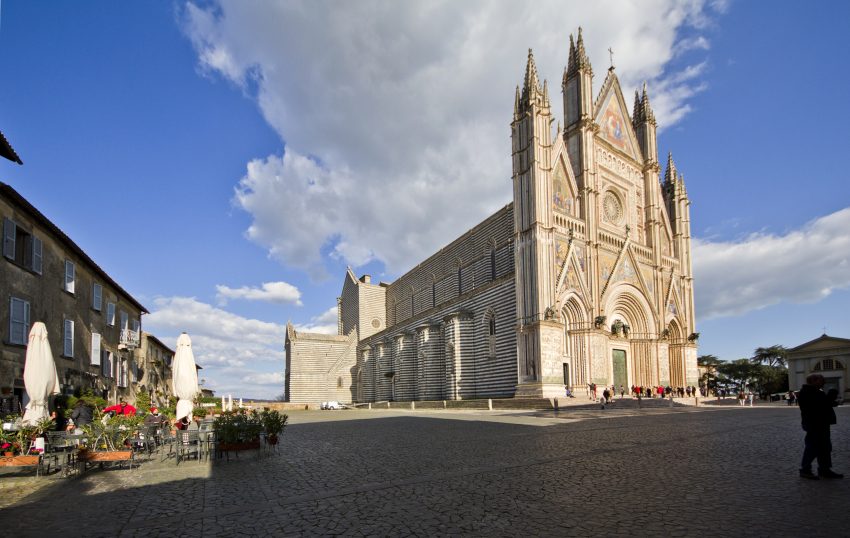
Duomo di Orvieto, in Orvieto, Italy, is the city's main cathedral and one of the clearest examples of Gothic architecture in central Italy. Built on Piazza del Duomo, it dominates the square with a façade of striped marble, sculpted scenes, bronze doors, and a gold mosaic rose window that catches the light as the day changes.
Inside, the cathedral feels much quieter than the front suggests. Visitors notice the scale of the nave, the decorated chapels, and the frescoes associated with Luca Signorelli, especially in the San Brizio Chapel. The Duomo also matters for its link to the Miracle of Bolsena and the Chapel of the Corporal, so it appeals most to travelers interested in art, church history, and buildings that can be explored at an unhurried pace.
Table of Contents
- History and Significance of the Duomo di Orvieto
- Things to See and Do in the Duomo di Orvieto
- How to Get to the Duomo di Orvieto
- Practical Tips on Visiting the Duomo di Orvieto
- Where to Stay Close to the Duomo di Orvieto
- Is the Duomo di Orvieto Worth Visiting?
- For Different Travelers
- FAQs for Visiting Duomo di Orvieto
History and Significance of the Duomo di Orvieto
Construction of the Duomo di Orvieto began in 1290, created to give Orvieto a grand cathedral worthy of its importance in medieval Italy. Over the centuries, architects, sculptors, and painters layered the building with Gothic structure, richly carved decoration, and some of the most celebrated Renaissance-era artworks in Umbria.
The cathedral is closely tied to the Miracle of Bolsena and the tradition of Corpus Domini, which helped elevate Orvieto’s religious standing and shaped the Duomo’s role as both a civic symbol and a pilgrimage destination. That blend of faith, politics, and artistry is part of why the experience feels as much cultural as it is spiritual.
Today, the Duomo remains the city’s defining landmark and a centerpiece of Orvieto’s monumental complex, with additional spaces (like underground areas and museum rooms) that deepen your understanding of how the cathedral was built, maintained, and celebrated over time.
Things to See and Do in the Duomo di Orvieto
Start outside: the façade is the headline act, with its layered marble, sculpture panels, and shimmering mosaics that change character as the light shifts. Give yourself time to step back across the piazza, then move closer to appreciate the storytelling in the carvings and the overall symmetry of the design.
Inside, the mood turns quieter and more contemplative. The cathedral is known for art that can feel like a curated gallery, especially in its chapels and along the side aisles, where sculpture and painting reward a slower pace than you might expect from a “quick church stop.”
If you enjoy context, consider pairing your visit with the connected museum and underground areas (when open) to see the Duomo as a working complex rather than a single room to walk through. It’s also worth timing your visit to avoid services, when access and photography rules may be stricter.
How to Get to the Duomo di Orvieto
The nearest major airports are Rome Fiumicino (FCO) and Rome Ciampino (CIA), with Florence Airport (FLR) also a good option if you're combining Orvieto with Tuscany. For the best deals and a seamless booking experience, check out these flights to Orvieto on Booking.com.
Orvieto is straightforward by rail, with frequent connections from Rome and Florence to Orvieto station, then a funicular up to the historic center followed by a short walk to Piazza del Duomo. Use Omnio to easily compare schedules, book train tickets, and find the best prices all in one place for a hassle-free journey across Italy.
If you’re driving, Orvieto is well connected via the A1 motorway; park at one of the lots near the funicular or outside the ZTL (limited traffic zone) and continue on foot into the center. If you are looking to rent a car in Italy I recommend having a look at Discover Cars, first, as they compare prices and review multiple car rental agencies for you.
Practical Tips on Visiting the Duomo di Orvieto
- Official website: https://www.duomodiorvieto.it/
- Entrance fee: Adults: €8; Children 11 or under: free.
- Opening hours: (January – February) Daily: 09:30–17:00. (March) Daily: 09:30–18:00. (April – September) Daily: 09:30–19:00. (October) Daily: 09:30–18:00.
- Best time to visit: Go early for a calmer interior and clearer views of the art, then return to the piazza near sunset to see the façade’s mosaics catch the light.
- How long to spend: Plan 60-90 minutes for the cathedral itself; add extra time if you also want the museum/underground areas and a relaxed loop around Piazza del Duomo.
- Accessibility: The piazza area is walkable but can involve slopes and cobblestones; if mobility is a concern, plan a route that minimizes steep lanes and ask staff about step-free access where available.
- Facilities: Expect ticketing and visitor services around Piazza del Duomo, plus cafés and restrooms nearby in the historic center rather than inside the worship spaces.
Where to Stay Close to the Duomo di Orvieto
Base yourself in Orvieto’s historic center for the easiest early-morning and after-hours access to the Duomo and the best evening atmosphere.
Palazzo Piccolomini Choose this for classic Orvieto charm and a central location that makes it easy to walk to the Duomo before day-trippers arrive.
Hotel Duomo A practical pick for being genuinely close to Piazza del Duomo, ideal if you want to pop in and out for different light and crowd levels.
Hotel Palazzo Decumani Great for travelers who want a boutique feel and the convenience of staying right among the city’s most photogenic streets.
Hotel Virgilio A strong option if you prioritize location above all else and want the cathedral essentially on your doorstep.
Grand Hotel Italia Well suited for those who want a more traditional full-service hotel feel while still being walkable to the Duomo and the main sights.
Is the Duomo di Orvieto Worth Visiting?
Yes, it's absolutely worth visiting: the Duomo di Orvieto is one of those rare places where the exterior alone can justify the trip, and the interior art makes it feel like a concentrated masterclass in Italian craftsmanship. Even if you've seen major cathedrals in Rome or Florence, Orvieto's Duomo has a distinct personality and a setting that makes the whole experience feel special.
Honest Pivot: if you’re not interested in religious spaces, art, or architecture, you may find the visit less compelling than Orvieto’s viewpoints, food-and-wine stops, or underground attractions. In that case, consider enjoying the façade and piazza from outside and spending your time on Orvieto’s streets, panoramas, and local tastings instead.
What Other Travellers Say...
Travelers overwhelmingly describe the Duomo di Orvieto as breathtaking, with a peaceful yet majestic atmosphere and standout art and architecture. Common highlights include the glowing, highly detailed façade (especially at sunset), the interior's museum-like artworks and chapels, and the overall sense of history and grandeur. A few visitors note practical downsides such as rules or restrictions around photography inside and the need to dress modestly (covered shoulders and legs), plus occasional crowding at peak times.





For Different Travelers
The Duomo works well for a wide range of visitors because it’s both iconic and easy to fit into a day trip. How much you’ll enjoy it depends on whether you want a quick “wow” moment from the façade or a deeper art-focused visit inside.
Families with Kids
Kids often respond best to the big, dramatic scale of the building and the sense of discovery in the surrounding lanes and piazza. Turn it into a scavenger hunt: spot patterns on the façade, count arches, and look for details in the carvings.
Keep expectations realistic for younger children inside, where the pace is slower and the atmosphere is quieter. A shorter interior visit paired with gelato and a stroll to a nearby viewpoint usually makes for a happier family outing.
Couples & Romantic Getaways
For couples, the Duomo is perfect for an unhurried, cinematic afternoon: arrive when the light is soft, take your time in the piazza, then wander the side streets for quiet corners and photo angles. The setting feels intimate despite the cathedral’s scale.
Make it extra memorable by planning a simple itinerary: Duomo visit, a slow aperitivo nearby, then a sunset walk along the edges of the old town. It’s a classic Orvieto rhythm that feels romantic without trying too hard.
Budget Travelers
Orvieto is a great value day trip, and the Duomo delivers a high-impact experience for a relatively modest ticket compared with many major Italian sights. You can also enjoy a lot for free just by spending time in Piazza del Duomo and exploring the surrounding streets.
To keep costs down, travel by regional train, walk as much as possible in the center, and plan your meal around bakeries or casual cafés. Prioritize the cathedral interior, then choose one additional paid attraction only if you have time.
History Buffs
History lovers will appreciate how the Duomo reflects Orvieto’s medieval ambitions and the way later generations added Renaissance art and evolving devotional spaces. It’s a building that tells a long story through layers rather than a single “finished” moment.
To go deeper, focus on the chapels and the broader monumental complex, and consider a guided visit to connect the artworks to the city’s religious festivals and political history. You’ll leave with a clearer sense of why Orvieto mattered far beyond its size.
FAQs for Visiting Duomo di Orvieto
Getting There
Tickets & Entry
Visiting Experience
Tours, Context & Itineraries
Photography
Accessibility & Facilities
Food & Breaks Nearby
Safety & Timing
The Duomo di Orvieto appears in our Complete Guide to Visiting Orvieto!

Moira & Andy
Hey! We're Moira & Andy. From hiking the Camino to trips around Europe in Bert our campervan — we've been traveling together since retirement in 2020!
This website uses affiliate links which may earn a commission at no additional cost to you!
Planning Your Visit
(January - February) Daily: 09:30-17:00.
(March) Daily: 09:30-18:00.
(April - September) Daily: 09:30-19:00.
(October) Daily: 09:30-18:00.
Adults: €8; Children 11 or under: free.
Nearby Attractions
- Museo Claudio Faina (0) km
Museum - Orvieto Underground (0.1) km
Attraction, Tour and Tunnel - National Archaeological Museum of Orvieto (0.1) km
Historic Building, Historic Site and Museum - Teatro Mancinelli (0.2) km
Arts Venue, Opera House and Theatre - Corso Cavour (0.2) km
Area, Street and Walk - Torre del Moro (0.3) km
Historic Building, Tower and Viewing Point - Palace of the Captain of the People (0.3) km
Historic Building, Historic Site and Palace - Chiesa di Santi Andrea e Bartolomeo (0.4) km
Church, Historic Building and Religious Building - Torre Dodecagonale (0.4) km
Historic Building, Monument and Tower - Piazza della Repubblica (0.4) km
Attraction, Historic Building and Square