Chiesa di Santi Andrea e Bartolomeo, Orvieto
Church, Historic Building and Religious Building in Orvieto
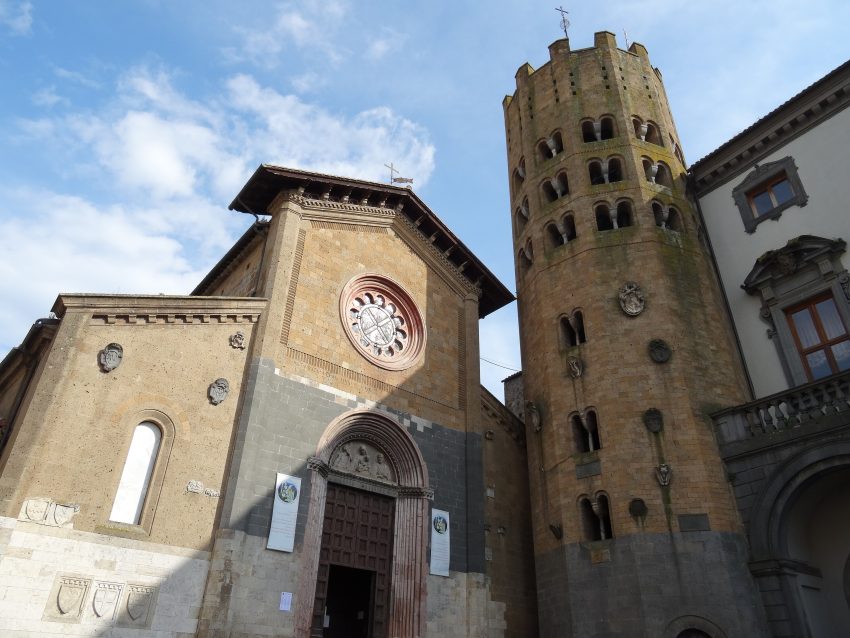
Chiesa di Santi Andrea e Bartolomeo in Orvieto, Italy, is a Romanesque church in the historic center, set among the city's older streets and squares. Its façade combines carved detail with Romanesque and Gothic features, and the bell tower gives the building a clear presence on the street. The church dates back to the 11th century, though later renovations have left it with a mixed architectural character rather than a single preserved style.
Inside, visitors find a quiet nave, a cruciform plan with a central dome, and frescoes that survive in varying condition. The church also contains important religious artworks, including an altarpiece of the Madonna and Child with Saints Andrew and Bartholomew attributed to Luca Signorelli. It is a good stop for travelers interested in church art, local history, and calmer interiors, and for anyone who prefers a shorter visit that still adds context to Orvieto’s religious landscape.
Table of Contents
- History and Significance of the Chiesa di Santi Andrea e Bartolomeo
- Things to See and Do in the Chiesa di Santi Andrea e Bartolomeo
- How to Get to the Chiesa di Santi Andrea e Bartolomeo
- Practical Tips on Visiting the Chiesa di Santi Andrea e Bartolomeo
- Where to Stay Close to the Chiesa di Santi Andrea e Bartolomeo
- Is the Chiesa di Santi Andrea e Bartolomeo Worth Visiting?
- For Different Travelers
- FAQs for Visiting Chiesa di Santi Andrea e Bartolomeo
History and Significance of the Chiesa di Santi Andrea e Bartolomeo
The church is often described as one of Orvieto’s older sacred spaces, with a Romanesque character that feels markedly different from the city’s headline act, the Duomo. Its atmosphere is more intimate and lived-in, the kind of place where you can step inside and immediately feel the temperature drop and the pace slow.
Part of its fascination is how it reflects Orvieto’s long timeline: medieval faith above ground, and deeper archaeological layers below. Visitors frequently connect the site with Orvieto’s broader “underground city” story, where caves, cisterns, and earlier structures reveal how people adapted to life on the tuff cliff.
In practical terms, the church’s significance today is twofold: it’s a peaceful architectural stop on a central stroll, and it can serve as a gateway to understanding Orvieto’s subterranean history if you arrange an underground visit in advance.
Things to See and Do in the Chiesa di Santi Andrea e Bartolomeo
Start outside and take a moment to appreciate the setting: the church sits naturally within the fabric of the old town, and the approach is part of the experience. Look up for details on the façade and the distinctive tower presence that many visitors call out as a highlight.
Inside, the mood is calm and contemplative. Travelers often mention frescoes that are beautiful but visibly time-worn, which can actually make them more evocative: you’re seeing what survives rather than something overly restored. If you enjoy quiet art-hunting, give your eyes a minute to adjust and scan the walls slowly.
If you’re interested in the underground component, plan ahead. Multiple visitors note that you can’t reliably show up and expect immediate access; booking or arranging a guided visit is the difference between “nice exterior stop” and “memorable deep-dive into Orvieto’s layers.”
How to Get to the Chiesa di Santi Andrea e Bartolomeo
The nearest major airports are Rome Fiumicino (FCO) and Rome Ciampino (CIA), with Perugia San Francesco d'Assisi (PEG) sometimes convenient depending on your route. For the best deals and a seamless booking experience, check out these flights to Orvieto on Booking.com.
Orvieto is straightforward by train, with frequent connections from Rome and Florence to Orvieto station; from there you can continue up to the historic center and walk to the church. Use Omnio to easily compare schedules, book train tickets, and find the best prices all in one place for a hassle-free journey across Italy..
If you’re driving, Orvieto is an easy stop off the A1 motorway, and you can park outside the oldest streets before continuing on foot into the center. If you are looking to rent a car in Italy I recommend having a look at Discover Cars, first, as they compare prices and review multiple car rental agencies for you.
Practical Tips on Visiting the Chiesa di Santi Andrea e Bartolomeo
- Entrance fee: Free; donations appreciated.
- Opening hours: Check official website.
- Best time to visit: Go in the morning for the quietest interior, or late afternoon when the surrounding streets feel especially atmospheric.
- How long to spend: Plan 15-30 minutes for a calm look inside; add extra time if you’ve booked an underground visit.
- Accessibility: Expect typical old-town conditions (uneven paving and steps). If you need step-free access, confirm the current entry situation before you go.
- Facilities: Facilities can be limited at small churches; plan to use cafés and public restrooms nearer the Duomo area.
Where to Stay Close to the Chiesa di Santi Andrea e Bartolomeo
Base yourself in Orvieto’s central historic center for the easiest walks to churches, viewpoints, and dinner spots.
Palazzo Piccolomini A classic, central choice with an old-town feel that makes early-morning walks to nearby sights especially easy.
Hotel Duomo Great for travelers who want to be close to the Duomo area and have a simple, convenient base for walking everywhere.
Hotel Virgilio A practical pick right in the heart of the action, ideal if you want to step out and immediately be among Orvieto’s top landmarks.
Grand Hotel Italia Well-placed for exploring on foot, with a traditional hotel setup that suits travelers who like straightforward comfort.
Hotel Corso A solid option on one of the main pedestrian routes, handy for shops, casual meals, and an easy walk to the church.
Is the Chiesa di Santi Andrea e Bartolomeo Worth Visiting?
Yes, especially if you enjoy quieter, more atmospheric stops that balance out Orvieto’s bigger-ticket sights. It’s a rewarding “slow travel” church: peaceful, historic, and easy to fold into a walk through the center, with the potential for an even richer visit if you arrange underground access.
Honest Pivot: If your time in Orvieto is extremely limited and you’re focused only on blockbuster interiors, you may prefer to prioritize the Duomo complex and a single underground attraction with guaranteed entry times. Also skip it if you dislike planning ahead, since the underground component may require advance booking.
What Other Travellers Say...
Reviews are strongly positive overall, with many travelers describing a peaceful, atmospheric church that feels like a quiet break from Orvieto’s busier sights. Common highlights include the Romanesque character, a distinctive bell tower, and frescoes that—while fading—still add charm and a sense of age. A recurring drawback is that the underground component requires advance booking, so spontaneous visits may be limited to the exterior or main church if you haven’t planned ahead.


For Different Travelers
The Chiesa di Santi Andrea e Bartolomeo works best as a flexible stop: quick if you're moving fast, or more meaningful if you're in the mood to linger and notice details.
Families with Kids
For families, the church can be a calm reset between more stimulating attractions. Keep the visit short and turn it into a simple “spot the details” game: tower, arches, old paintings, and quiet echoes.
If you book an underground visit, it can become the highlight for older kids who like hidden spaces and stories beneath the streets. Just set expectations that it’s more about history than thrills.
Couples & Romantic Getaways
Couples will appreciate the quieter, less crowded feel compared with Orvieto’s busiest monuments. It’s a lovely stop to share a few minutes of calm, especially if you’re wandering without a strict schedule.
Pair it with a golden-hour stroll through nearby lanes and a drink in a piazza afterward. The contrast between the hushed interior and lively outdoor café culture is very Orvieto.
Budget Travelers
Budget travelers will like that small churches are often low-cost to enter, and even an exterior visit gives you a lot of atmosphere for free. It’s also a great “in-between” stop that doesn’t require a long time commitment.
If you’re choosing where to spend on tickets, consider whether you want to allocate funds to an underground experience; plan ahead so you don’t miss out due to limited availability.
History Buffs
History buffs should treat this as a layered site rather than a single-room attraction. The appeal is in the sense of continuity: medieval worship space above, deeper traces of earlier phases below.
To get the most from it, add context with a guided walk or an underground visit where the story of Orvieto’s long habitation becomes more concrete.
FAQs for Visiting Chiesa di Santi Andrea e Bartolomeo
Getting There
Tickets & Entry
Visiting Experience
Tours, Context & Itineraries
Photography
Accessibility & Facilities
Food & Breaks Nearby
Safety & Timing
The Chiesa di Santi Andrea e Bartolomeo appears in our Complete Guide to Visiting Orvieto!

Moira & Andy
Hey! We're Moira & Andy. From hiking the Camino to trips around Europe in Bert our campervan — we've been traveling together since retirement in 2020!
This website uses affiliate links which may earn a commission at no additional cost to you!
Planning Your Visit
Check official website.
Free; donations appreciated.
Nearby Attractions
- Torre Dodecagonale (0) km
Historic Building, Monument and Tower - Piazza della Repubblica (0) km
Attraction, Historic Building and Square - Torre del Moro (0.2) km
Historic Building, Tower and Viewing Point - Corso Cavour (0.2) km
Area, Street and Walk - Palace of the Captain of the People (0.2) km
Historic Building, Historic Site and Palace - Pozzo della Cava (0.3) km
Attraction, Cave and Historic Site - Teatro Mancinelli (0.3) km
Arts Venue, Opera House and Theatre - Museo Claudio Faina (0.3) km
Museum - Duomo di Orvieto (0.4) km
Cathedral, Church and Historic Building - Orvieto Underground (0.4) km
Attraction, Tour and Tunnel