National Archaeological Museum of Orvieto
Historic Building, Historic Site and Museum in Orvieto
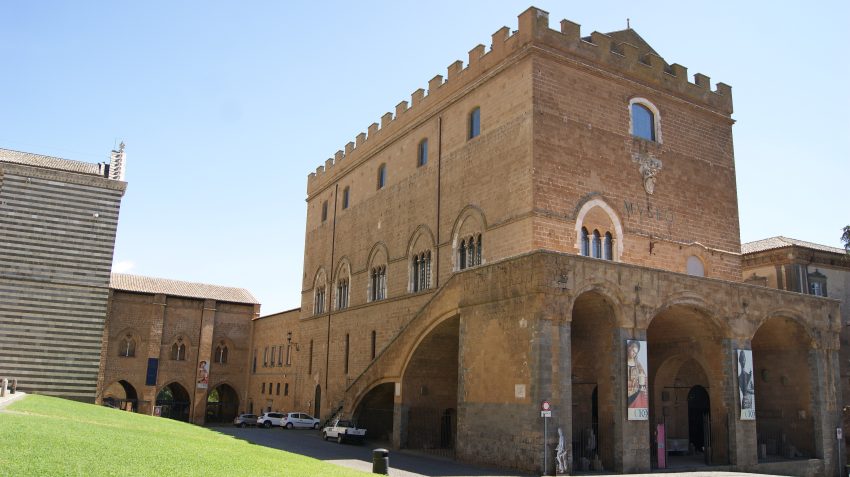
The National Archaeological Museum of Orvieto in Orvieto, Italy, is a small archaeological museum set on Piazza del Duomo inside the historic Palazzo Martino IV, part of the Papal Palace complex beside the cathedral. Since opening in 1982, it has presented finds recovered from Orvieto and the surrounding countryside, with objects ranging from early remains to material uncovered in more recent excavations.
Visitors come here for Etruscan pottery, bronzes, funerary pieces, and detached frescoes from the Golini tombs, along with local material that helps explain the city’s ancient layer beneath its medieval center. It suits travelers who want a focused museum visit, people pairing it with the Duomo, and anyone interested in Orvieto’s archaeology without spending a long stretch indoors.
Table of Contents
- History and Significance of the National Archaeological Museum of Orvieto
- Things to See and Do in the National Archaeological Museum of Orvieto
- How to Get to the National Archaeological Museum of Orvieto
- Practical Tips on Visiting the National Archaeological Museum of Orvieto
- Where to Stay Close to the National Archaeological Museum of Orvieto
- Is the National Archaeological Museum of Orvieto Worth Visiting?
- For Different Travelers
- FAQs for Visiting National Archaeological Museum of Orvieto
History and Significance of the National Archaeological Museum of Orvieto
Orvieto’s dramatic cliff-top setting has attracted people for millennia, and the museum is essentially the key that unlocks that long timeline. The collection is especially strong on the Etruscans, the sophisticated pre-Roman civilization that shaped central Italy and left behind extraordinary tomb art, ceramics, bronzes, and ritual objects.
A major part of the museum’s significance is how local it feels: many objects come from Orvieto-area necropolises and excavation sites, so you’re not just looking at “Etruscan art,” you’re looking at the material culture of this specific landscape. That context makes the museum a perfect companion to nearby archaeological sites and to Orvieto’s own urban fabric.
Housed in a historic building beside the Duomo, the museum also connects Orvieto’s medieval and Renaissance identity with its much older roots. It’s the kind of place where a short visit can meaningfully deepen your understanding of the city.
Things to See and Do in the National Archaeological Museum of Orvieto
Start with the Etruscan galleries: look for finely painted vases, bucchero (the distinctive glossy black pottery), and metalwork that shows both everyday life and elite burial customs. Many travelers find the quality surprisingly high for a smaller museum, and the displays make it easy to follow the story even if you’re not an archaeology specialist.
One of the most memorable sections is the tomb-related material, including detached fresco fragments and funerary objects that give a vivid sense of Etruscan beliefs and aesthetics. If you’ve already visited (or plan to visit) a necropolis, this is where the objects and imagery you’ve heard about become tangible.
Finally, take time for the “big room” moments: reconstructed or reassembled architectural and decorative elements (often what visitors remember most) and the pieces tied to local excavation campaigns. It’s a rewarding museum to visit slowly, but it also works well as a one-hour cultural stop between Duomo sights and lunch.
How to Get to the National Archaeological Museum of Orvieto
The nearest major airports are Rome Fiumicino (FCO), Rome Ciampino (CIA), Florence (FLR), and Perugia (PEG), with Rome usually the simplest gateway for most travelers. For the best deals and a seamless booking experience, check out these flights to Orvieto on Booking.com.
Orvieto is well-connected by train on the Rome-Florence line; from Orvieto station you can reach the historic center via the funicular and then walk or take a local bus/taxi up to Piazza del Duomo. Use Omnio to easily compare schedules, book train tickets, and find the best prices all in one place for a hassle-free journey across Italy.
If you’re driving, follow signs for Orvieto and park in one of the paid lots outside the most restricted central areas, then continue on foot or by shuttle toward the Duomo area. If you are looking to rent a car in Italy I recommend having a look at Discover Cars, first, as they compare prices and review multiple car rental agencies for you.
Practical Tips on Visiting the National Archaeological Museum of Orvieto
- Official website: https://cultura.gov.it/luogo/museo-archeologico-nazionale-di-orvieto
- Entrance fee: Adults: €4; Ages 18–25: €2; Under 18: free.
- Opening hours: Monday: Closed. Tuesday: 08:30–19:30. Wednesday: 08:30–19:30. Thursday: 08:30–19:30. Friday: 08:30–19:30. Saturday: 08:30–19:30. Sunday: 08:30–19:30.
- Best time to visit: Go mid-morning on a weekday for the calmest galleries, then pair it with the Duomo when the piazza is at its liveliest.
- How long to spend: Plan 45-90 minutes for a satisfying visit; archaeology fans can easily stretch it longer by reading the panels closely.
- Accessibility: Expect an older historic building layout; if step-free access matters, confirm current access routes before you go.
- Facilities: Bring a translation app for longer Italian-only panels, and consider downloading anything you might need in advance if mobile data is limited.
Where to Stay Close to the National Archaeological Museum of Orvieto
Base yourself in Orvieto’s historic center near Piazza del Duomo if you want the easiest, most walkable access to the museum, cathedral, and evening dining.
Hotel Duomo A classic, central choice a short walk from the museum, ideal for early starts in Piazza del Duomo and quick breaks back at your room.
Palazzo Piccolomini Chosen for its historic-building feel and convenient position between major sights, making it easy to build a relaxed walking itinerary.
Hotel Palazzo Decumani A boutique-style stay that suits travelers who want to sleep in the heart of the old town and step straight into Orvieto’s evening atmosphere.
Hotel Virgilio Included for location-first travelers who want to be as close as possible to the Duomo complex and keep logistics effortless.
Grand Hotel Italia A good pick if you like being near a main square with plenty of dining options, while still staying within an easy walk of the museum.
Is the National Archaeological Museum of Orvieto Worth Visiting?
Yes, especially if you’re even mildly curious about the Etruscans or you want more depth than a “Duomo-only” visit. It’s compact, well-located, and packed with local finds that make Orvieto’s ancient past feel immediate rather than abstract.
Honest Pivot: if you’re short on time and archaeology isn’t your thing, you might prefer to focus on the Duomo interiors, viewpoints, and one signature underground experience instead. But if you enjoy museums that are high-quality without being overwhelming, this is one of Orvieto’s best-value cultural stops.
What Other Travellers Say...
Visitors rate the museum very highly overall, praising the extensive local Etruscan collection and the quality of artifacts such as vases, bronzes, and tomb-related finds. Reviews often highlight helpful labeling (including some English) and memorable reconstructed or reassembled rooms and fresco elements. Common drawbacks include occasional reliance on Italian-only explanatory panels and minor practical issues like QR/PDF materials that may be hard to access without mobile data.





For Different Travelers
The museum works well as a flexible add-on: you can do it quickly as context for the Duomo area, or linger and let it become the “why” behind Orvieto’s long history. It’s also a smart choice when you want a quieter indoor stop in the middle of a walking day.
Families with Kids
Kids who like “treasure” displays tend to enjoy the shiny bronzes, painted pottery, and tomb-related objects, especially if you turn it into a scavenger hunt (animals on vases, patterns, myth scenes). Because the museum isn’t huge, it’s easier to keep attention spans engaged than in a big-city archaeology museum.
Pair it with a short gelato break in the Duomo area and a quick outdoor reset on the piazza. If your family prefers hands-on attractions, keep expectations realistic and treat this as a shorter cultural stop.
Couples & Romantic Getaways
For couples, the museum is a calm, atmospheric counterpoint to the Duomo crowds, and it’s easy to weave into a slow day of wandering Orvieto’s lanes. The setting in the Papal Palace complex adds a sense of place that feels distinctly Orvieto.
Make it part of a “Piazza del Duomo” half-day: museum first for context, then cathedral details, then a long lunch with Umbrian wine. It’s a low-stress plan that still feels rich and memorable.
Budget Travelers
This is a strong budget-friendly museum because it delivers real substance without requiring a full day or expensive add-ons. If you’re using city passes or combined tickets, it can become an even better value as part of a multi-stop itinerary.
Save money by staying slightly farther from Piazza del Duomo (still walkable) and focusing on free experiences around the historic center between paid sights. The museum also works well on a rainy day when you want an indoor option that doesn’t cost much time.
History Buffs
History lovers will appreciate how site-specific the collection is, with objects tied to local necropolises and excavation areas rather than a generic “best of” display. The tomb fresco material and funerary goods are especially rewarding if you enjoy reconstructing ancient life from fragments.
To get the most out of it, visit with a bit of Etruscan context in mind, then follow up with a walk to viewpoints over the surrounding countryside to imagine the ancient landscape. If you’re building a deeper archaeology day, pair it with another Orvieto museum focused on Etruscan culture.
FAQs for Visiting National Archaeological Museum of Orvieto
Getting There
Tickets & Entry
Visiting Experience
Tours, Context & Itineraries
Photography
Accessibility & Facilities
Food & Breaks Nearby
Safety & Timing
The National Archaeological Museum of Orvieto appears in our Complete Guide to Visiting Orvieto!

Moira & Andy
Hey! We're Moira & Andy. From hiking the Camino to trips around Europe in Bert our campervan — we've been traveling together since retirement in 2020!
This website uses affiliate links which may earn a commission at no additional cost to you!
Planning Your Visit
Monday: Closed.
Tuesday: 08:30-19:30.
Wednesday: 08:30-19:30.
Thursday: 08:30-19:30.
Friday: 08:30-19:30.
Saturday: 08:30-19:30.
Sunday: 08:30-19:30.
Adults: €4; Ages 18-25: €2; Under 18: free.
Nearby Attractions
- Duomo di Orvieto (0.1) km
Cathedral, Church and Historic Building - Orvieto Underground (0.1) km
Attraction, Tour and Tunnel - Museo Claudio Faina (0.1) km
Museum - Teatro Mancinelli (0.2) km
Arts Venue, Opera House and Theatre - Corso Cavour (0.3) km
Area, Street and Walk - Torre del Moro (0.3) km
Historic Building, Tower and Viewing Point - Palace of the Captain of the People (0.4) km
Historic Building, Historic Site and Palace - Chiesa di Santi Andrea e Bartolomeo (0.5) km
Church, Historic Building and Religious Building - Torre Dodecagonale (0.5) km
Historic Building, Monument and Tower - Piazza della Repubblica (0.5) km
Attraction, Historic Building and Square