Museo Claudio Faina, Orvieto
Museum in Orvieto
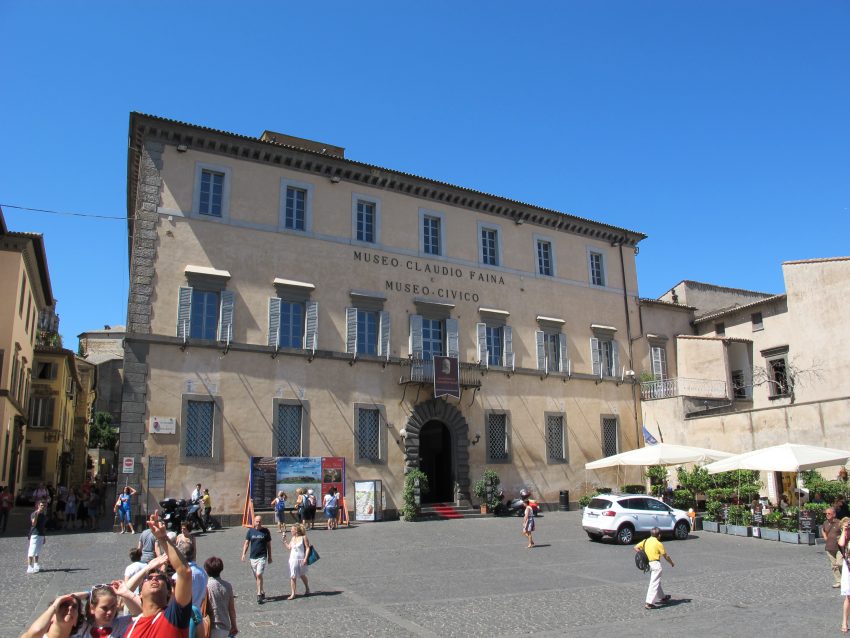
Museo Claudio Faina is an archaeological museum in Orvieto, Italy, set in Piazza del Duomo right across from the cathedral. It presents one of the city's main collections of Etruscan material, displayed inside a historic building in the heart of the old town.
Inside, visitors see pottery, bronzes, jewelry, funerary objects, and tomb replicas that help explain Etruscan life and burial customs. The museum is best for travelers who want a compact, object-focused visit that adds context to Orvieto’s ancient past. It also suits visitors who prefer a quieter museum stop after the busier cathedral square.
Table of Contents
- History and Significance of the Museo Claudio Faina
- Things to See and Do in the Museo Claudio Faina
- How to Get to the Museo Claudio Faina
- Practical Tips on Visiting the Museo Claudio Faina
- Where to Stay Close to the Museo Claudio Faina
- Is the Museo Claudio Faina Worth Visiting?
- For Different Travelers
- FAQs for Visiting Museo Claudio Faina
History and Significance of the Museo Claudio Faina
Museo Claudio Faina grew out of a 19th-century passion for collecting antiquities, when local excavations and scholarly interest brought Etruscan Orvieto back into focus. The Faina family assembled an important nucleus of artifacts, and the collection ultimately became a cornerstone for understanding the region's pre-Roman past.
Housed in a prestigious building facing the Duomo, the museum’s setting reinforces its significance: you’re not only looking at objects in cases, you’re standing in the heart of Orvieto’s monumental center. The museum also connects closely to the city’s civic archaeological story, helping visitors place Orvieto within the broader Etruscan network of central Italy.
Beyond individual masterpieces, the museum’s value is in how it frames everyday life, belief, and artistry across centuries. Ceramics, bronzes, jewelry, and sculptural fragments together create a clear narrative of trade, ritual, and evolving taste from the Etruscan period through later classical influences.
Things to See and Do in the Museo Claudio Faina
Start with the Etruscan highlights: look for finely worked bronzes, jewelry, and distinctive ceramic forms that signal status and ritual. The museum is especially rewarding if you enjoy close-looking, because many objects reveal their craftsmanship in small details like incised lines, painted figures, and delicate metalwork.
Don’t rush the pottery rooms. The progression from local Etruscan wares to Greek-influenced vases helps you see how ideas and styles traveled, and how Orvieto sat on cultural crossroads. If you’re visiting with a guide or audio context, this is where the collection becomes most legible.
Finally, build in a few minutes simply to enjoy the building and its vantage points. The museum’s interior spaces and gallery views toward the Duomo add a memorable “only in Orvieto” layer-an ideal moment for a quiet pause between the cathedral crowds and the rest of your day.
How to Get to the Museo Claudio Faina
The most convenient airports are Rome Fiumicino (FCO) and Rome Ciampino (CIA), with Perugia San Francesco d'Assisi (PEG) sometimes useful depending on your route. For the best deals and a seamless booking experience, check out these flights to Orvieto on Booking.com.
Orvieto is well connected by train, and arriving at Orvieto station is often the easiest option from Rome or Florence; from there you can continue up to the historic center via the funicular and local connections. Use Omnio to easily compare schedules, book train tickets, and find the best prices all in one place for a hassle-free journey across Italy.
If you’re driving, aim for parking areas outside the tight historic core and continue on foot into the center toward Piazza del Duomo. If you are looking to rent a car in Italy I recommend having a look at Discover Cars, first, as they compare prices and review multiple car rental agencies for you.
Practical Tips on Visiting the Museo Claudio Faina
- Official website: https://museofaina.it/
- Entrance fee: Adults: €7; Reduced: €5.
- Opening hours: (Summer) April 1 – September 30; Daily: 09:30–18:00. (Winter) October 1 – March 31; Daily: 10:00–17:00.
- Best time to visit: Go early in the day for quieter rooms, or in the last 1-2 hours for a calmer, more contemplative visit after the Duomo.
- How long to spend: Plan 45-90 minutes, depending on how closely you like to read labels and study the ceramics and small objects.
- Accessibility: Expect a historic building with potential stairs and uneven surfaces; if step-free access matters, contact the museum in advance to confirm the best entrance and route.
- Facilities: You’ll find the most useful services (cafés, restrooms, and shops) around Piazza del Duomo and along the main streets nearby; treat the museum as a focused, gallery-style stop.
Where to Stay Close to the Museo Claudio Faina
Base yourself in Orvieto’s historic center near Piazza del Duomo if you want to walk everywhere and enjoy early mornings and late evenings without day-trip crowds.
For a classic, central stay with an easy walk to the museum and the cathedral, consider a well-located hotel right in the old town. Hotel Duomo
If you want a polished, boutique feel and a convenient base for dining and strolling after museum hours, this is a strong pick. Palazzo Piccolomini
For travelers who prioritize a refined atmosphere and a memorable building to match Orvieto’s historic character, this option stands out. Hotel Palazzo Decumani
If you’d like a comfortable, reliable stay with straightforward access to the center and good value for a short cultural break, keep this on your list. Hotel Corso
For a quieter, more scenic stay that still makes it easy to reach the museum on foot (or with a short ride), choose a property with views and breathing room. Hotel Villa Ciconia
Is the Museo Claudio Faina Worth Visiting?
Yes-especially if you’re already visiting the Duomo and want a deeper, more grounded understanding of Orvieto beyond its medieval and Renaissance layers. The collection is focused, the setting is beautiful, and it’s one of the most efficient ways to connect the city to its Etruscan roots without committing to a half-day excursion.
Honest Pivot: if you’re not interested in archaeology, struggle with object-heavy displays, or have very limited time in Orvieto (for example, a quick cathedral-only stop), you may prefer to spend your hours on viewpoints, a long lunch, and a slow walk through the lanes instead.
What Other Travellers Say...


For Different Travelers
Museo Claudio Faina works best as a “context stop” that enriches the rest of your Orvieto day. Because it's central and relatively compact, it's easy to tailor the visit to your pace and interests.
Families with Kids
Kids who enjoy myths, ancient warriors, and “treasure case” objects often respond well to the museum’s small-scale highlights like jewelry and bronzes. Keep the visit short and let them choose a few favorite objects to hunt for as you move through the rooms.
Pair the museum with a gelato break in the square and a quick look at the Duomo façade to keep energy up. If your family prefers hands-on experiences, treat this as a brief cultural stop rather than the main event.
Couples & Romantic Getaways
For couples, the museum is a calm counterpoint to the busier cathedral visit, with a slower rhythm and plenty of moments for quiet conversation. The setting near Piazza del Duomo makes it easy to turn the visit into a graceful loop: museum, cathedral, then a lingering aperitivo.
The most romantic “extra” is simply the atmosphere-historic interiors, curated light, and those memorable views toward the Duomo. It’s an easy way to add depth to a day that might otherwise be all scenery.
Budget Travelers
Museo Claudio Faina is a good-value cultural stop because it delivers a concentrated collection in a prime location-no extra transport needed once you're in the center. If you're watching costs, plan it as part of a walking day that also includes free highlights like viewpoints and wandering the lanes.
To maximize value, visit when you can take your time and really read the story the objects tell. A thoughtful 60 minutes here can add a lot of meaning to everything else you see in Orvieto.
History Buffs
If you’re into the Etruscans, this museum is one of Orvieto’s most rewarding stops, offering a strong local lens rather than a generic overview. The collection helps you understand how the region fit into wider Mediterranean exchange through styles, materials, and iconography.
Treat it as preparation for the rest of your itinerary: after the museum, architectural details, street layouts, and even the city’s hilltop setting start to feel like part of a longer timeline. It’s a satisfying way to connect objects to place.
FAQs for Visiting Museo Claudio Faina
Getting There
Tickets & Entry
Visiting Experience
Tours, Context & Itineraries
Photography
Accessibility & Facilities
Food & Breaks Nearby
Safety & Timing
The Museo Claudio Faina appears in our Complete Guide to Visiting Orvieto!

Moira & Andy
Hey! We're Moira & Andy. From hiking the Camino to trips around Europe in Bert our campervan — we've been traveling together since retirement in 2020!
This website uses affiliate links which may earn a commission at no additional cost to you!
Planning Your Visit
(Summer) April 1 - September 30; Daily: 09:30-18:00.
(Winter) October 1 - March 31; Daily: 10:00-17:00.
Adults: €7; Reduced: €5.
Nearby Attractions
- Duomo di Orvieto (0) km
Cathedral, Church and Historic Building - Orvieto Underground (0.1) km
Attraction, Tour and Tunnel - National Archaeological Museum of Orvieto (0.1) km
Historic Building, Historic Site and Museum - Teatro Mancinelli (0.2) km
Arts Venue, Opera House and Theatre - Corso Cavour (0.2) km
Area, Street and Walk - Torre del Moro (0.2) km
Historic Building, Tower and Viewing Point - Palace of the Captain of the People (0.3) km
Historic Building, Historic Site and Palace - Chiesa di Santi Andrea e Bartolomeo (0.3) km
Church, Historic Building and Religious Building - Torre Dodecagonale (0.4) km
Historic Building, Monument and Tower - Piazza della Repubblica (0.4) km
Attraction, Historic Building and Square